Category: Telecom

Retail News Asia is committed to providing both local and global retailers with the latest Telecom & Telco news throughout the Asian market. This on a daily base.

  • Eastern Communications Targets Regional Enterprise Deals at BATIC 2026

    Eastern Communications Targets Regional Enterprise Deals at BATIC 2026

    Eastern Communications pitched its enterprise connectivity portfolio to regional partners at the Bali Annual Telkom International Conference in Nusa Dua, Indonesia, seeking cross-border deals across Southeast Asia. The four-day summit brought together regional operators and digital infrastructure providers to negotiate wholesale bandwidth, enterprise links, and cloud interconnects.

    The push comes as Philippine telecommunications operators prepare more than USD 2.2 billion in capital expenditures for 2026 network upgrades. Eastern Communications, which is approaching its 150th year of operations, wants to capture more corporate traffic flowing between Manila and regional hubs like Singapore and Jakarta.

    Enterprise Focus in Bali

    Company co-coordinators Atty. Aileen Regio and Jaeson Evangelista led discussions at the Bali International Convention Center from August 25 to 28. Management focused talks on international enterprise clients that require dedicated bandwidth and cross-border connectivity across the Philippine archipelago.

    “Technology may connect the world, but it is people who make those connections meaningful,” Regio said, pitching the company’s customer support and service model to international carriers looking for local landing partners.

    Regional Wholesale Traffic

    Competition for regional enterprise traffic has intensified across Southeast Asia as businesses digitize supply chains and shift workloads to distributed data centres. Philippine carriers are actively securing bilateral agreements with regional telcos to defend enterprise margins against domestic rivals and international network providers.

    Eastern Communications plans to roll out additional enterprise data products and international partner links before the end of the year.

  • Southeast Asia Targets USD 11 Billion Subsea Cable Expansion for Route Redundancy

    Southeast Asia Targets USD 11 Billion Subsea Cable Expansion for Route Redundancy

    Telecommunications operators and infrastructure investors are committing USD 11 billion between 2026 and 2035 to build new subsea cable systems across Southeast Asia. The spending will expand the number of active intra-Asian cable lines from 14 in 2025 to 19 by 2035, securing international data bandwidth for regional digital economies and hyperscale cloud providers.

    Submarine cables handle more than 99 per cent of international communications traffic in hubs such as Singapore. Under the city-state’s Digital Connectivity Blueprint, authorities plan to double the volume of subsea cable landings over the next decade, backed by an estimated SGD 10 billion (USD 7.4 billion) in predominantly private sector capital.

    Rerouting Around Maritime Chokepoints

    Engineering plans for newly announced trans-Pacific and regional cables increasingly avoid traditional, direct passages through the South China Sea. Systems including Apricot, Echo, and Bifrost run alternative paths through Indonesian and Philippine territorial waters to connect Southeast Asia directly with North America, Japan, and South Korea. Taking longer perimeter paths increases capital costs and latency, but operators accept the trade-off to shield data links from geopolitical exposure and congested straits.

    For enterprise users and cloud operators across Asia-Pacific, these southern corridors remove single-point failure risks that have historically disrupted regional supply chains. Financial platforms, retail marketplaces, and cloud providers gain lower downtime risks during localized outages, while secondary telecom operators in Jakarta and Manila secure direct wholesale access without routing entirely through Singapore.

    Equipment Supply and Infrastructure Competition

    The supply chain for physical infrastructure remains divided among a handful of global manufacturers. Japan’s NEC and France’s ASN maintain strong market positions in island networks across Indonesia and the wider archipelago, while Chinese suppliers have expanded cable contracts in Cambodia and selected Indonesian domestic systems.

    This supplier spread gives regional governments room to balance national security requirements against procurement costs. At the same time, physical reliability remains a constant operational bottleneck. International Telecommunication Union data indicates that human activity, mainly commercial fishing and vessel anchoring, causes 86 per cent of all subsea cable faults, requiring more than 200 offshore repair operations worldwide each year.

    Coordinated Regional Master Plans

    The push for network redundancy builds on policy commitments laid out in the ASEAN Digital Master Plan 2030, which directs member countries to coordinate subsea repair approvals and landing permits. Previous repair timelines often stretched for months due to overlapping maritime jurisdictions and strict cabotage restrictions in archipelagic waters.

    Attention now turns to the planned commissioning of major multi-terabit links, including the Apricot and Bifrost systems, which are scheduled to land initial capacity phases before 2027.

  • AWS Plans 420 Tbps Sta’O’Nuk Subsea Cable Linking the US and Japan by 2029

    AWS Plans 420 Tbps Sta’O’Nuk Subsea Cable Linking the US and Japan by 2029

    Amazon Web Services will build a 420 Tbps subsea cable connecting the United States and Japan, scheduled to begin commercial operations in 2029.

    The system, named Sta’O’Nuk, will run 20 fiber pairs across the Pacific Ocean, linking a new landing station in Washington state to an undisclosed site in Japan. It represents the first international subsea cable to land in Washington state in nearly three decades.

    Landing station and tribal partnership

    AWS partnered with Toptana Technologies to develop the American cable landing station and backhaul network in Ocean Shores, Washington. Founded in 2022 by the Quinault Indian Nation, Toptana is the only Indigenous-owned cable landing station operator on the US West Coast.

    Construction has begun on the Ocean Shores facility, designed to support up to four subsea cable systems. Assured Communications serves as program manager and operational service provider for the station, while the Quinault Indian Nation granted AWS permission to use the name Sta’O’Nuk, which translates to “lightning serpent” in the Quinault language.

    Washington state last saw international subsea arrivals in 1999, when Pacific Crossing-1 landed at Harbour Pointe and Alaska United East connected in Lynnwood. Toptana previously outlined a 17,700-square-foot, 1 MW station footprint when it first announced site plans in 2022.

    Transpacific cloud capacity

    Hyperscale cloud providers have shifted from purchasing capacity on shared consortium routes to financing and constructing dedicated private pipes across Asia-Pacific corridors. Direct cable ownership provides AWS with lower latency, predictable operating costs, and dedicated bandwidth between its data center regions in North America and East Asia without reliance on third-party commercial carriers.

    The Japanese landing location and local terminal partners remain unannounced as construction advances toward the 2029 target.

  • Philippine Telcos Commit over USD 2.2 Billion in 2026 Capital Spending

    Philippine Telcos Commit over USD 2.2 Billion in 2026 Capital Spending

    Philippine telecommunications operators have budgeted more than USD 2.2 billion in capital expenditure for 2026 to expand mobile networks, fiber connectivity and digital infrastructure across the country.

    Filings and guidance compiled by the Department of Information and Communications Technology put the combined baseline for the three largest networks at USD 2.21 billion. Total industry spending will rise to between USD 2.4 billion and USD 2.45 billion once DITO Telecommunity figures are added.

    Carrier Budgets and Network Expansion

    Globe Telecom leads the spending group with a guidance ceiling set below PHP 59.4 billion for 2026. PLDT has committed approximately PHP 55 billion to fund its mobile and fixed-line networks, while Converge ICT Solutions plans to deploy between PHP 17 billion and PHP 20 billion for fiber rollout.

    DITO Telecommunity plans to scale back outlays from its 2025 level of PHP 15 billion to PHP 18 billion. DICT did not release a specific 2026 allocation for the third major mobile operator, but department officials confirmed the group will maintain active network expansion.

    “Crossing the USD 2 billion mark sends a clear message: the telecommunications industry believes in the Philippines,” said DICT Secretary Henry Aguda. He noted that the capital programmes will direct resources toward data centers, cloud platforms, e-commerce support and artificial intelligence capacity.

    Policy Shifts and Network Competition

    For consumer brands and retailers across Southeast Asia, sustained telecommunications spending underpins the shift toward digital payments, omnichannel commerce and last-mile logistics. Carriers in Manila spent heavily over the past five years to establish basic 5G footprints, and the 2026 budgets shift capital toward data density, subsea links and enterprise connections rather than speculative coverage builds.

    The investment cycle aligns with market reforms under the Konektadong Pinoy Act alongside public investment in the National Fiber Backbone. The next milestone for the sector comes with third-quarter company earnings reports in November, when operators will release finalized 2026 project timelines and vendor procurement contracts.

  • Viettel Wins 240 MHz Spectrum to Enter Dominican Republic

    Viettel Wins 240 MHz Spectrum to Enter Dominican Republic

    Vietnam’s Viettel secured 240 MHz of spectrum in the Dominican Republic to deploy 4G and 5G networks across the Caribbean nation. The award expands the group’s overseas operations into an 11th foreign market after international revenue rose 23.9 per cent to USD 3.34 billion in 2025.

    Telecommunications regulator INDOTEL approved the license transfer under Resolution No. 073-2026 on August 19, 2026. The 20-year allocation covers frequencies across the 700 MHz, 2.3 GHz, and 3.6 GHz bands, combining low-band reach for remote regions with mid-band capacity for high-density mobile broadband.

    Terms of the Caribbean Concession

    Viettel Global, the international investment arm of the Hanoi-based group, won the airwaves in a competitive tender. The company is setting up a local operating business to construct the physical network and run consumer and enterprise digital services.

    Chairman and chief executive Tao Duc Thang said the group plans a long-term network build focused on modern infrastructure, with priority given to connecting underserved and rural communities across the country.

    Exporting the Southeast Asian Playbook

    The Caribbean venture follows an expansion strategy Viettel has used across Southeast Asia, Africa, and Latin America. The group operates across 10 overseas markets and holds the top mobile subscriber share in seven of them, sustaining nine straight years of double-digit international revenue growth.

    Viettel has 90 days from the August 19 resolution to finalize and sign the concession agreement with INDOTEL before breaking ground on network infrastructure.

  • Chunghwa Telecom and Askey Deploy Mobile 5G for Construction Robots

    Chunghwa Telecom and Askey Deploy Mobile 5G for Construction Robots

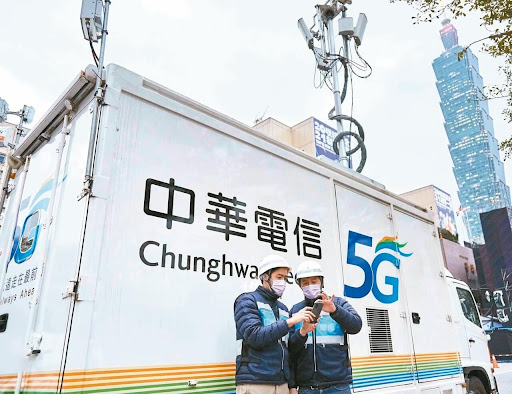
    Chunghwa Telecom and Askey Computer rolled out a portable private 5G platform in Kaohsiung. The network runs autonomous construction robots across local social housing developments.

    Field trials are underway at two municipal residential sites, Shanming Anju and Shuixiu Anju in the city’s Siaogang District. Developed alongside robotics specialist ROSO, the setup pairs Chunghwa’s dedicated 5G spectrum with Askey’s relocatable network hardware. It controls multiple machines simultaneously.

    Mobile infrastructure for hazardous site work

    Standard job sites depend on fixed network wiring that crews build and tear down as phases advance. By contrast, the portable unit moves directly between active zones. It maintains continuous, low-latency links for field machinery without fixed cabling.

    Robots handle high-risk, repetitive tasks including surface grinding and chemical spraying. Moving heavy finishing work to automated systems cuts worker exposure to fine dust, toxic fumes, and physical strain during structural fit-outs.

    Pushing private networks past factory floors

    Taiwan’s Ministry of Economic Affairs funded the initiative through its Industrial Development Administration to expand private 5G beyond manufacturing plants and smart warehouses. Across East Asia, telecom operators face steady pressure to monetize enterprise 5G. They are embedding dedicated networks into heavy industry, infrastructure development, and commercial real estate workflows.

    Project partners will redeploy the portable network gear across additional public housing sites in Kaohsiung as structural phases wrap up in Siaogang.

  • Japan AI Data Center Capacity to Quadruple by 2033 with $60 Billion Push

    Japan AI Data Center Capacity to Quadruple by 2033 with $60 Billion Push

    Japan will more than quadruple its artificial intelligence data center capacity over the next eight years through planned investments totaling $60 billion. The buildout aims to place the country directly behind the United States and China in compute scale while securing domestic data processing independence.

    Telecommunications giant NTT is driving a major share of that expansion, targeting 2 gigawatts of operational data center capacity by fiscal 2033. Trading houses and commercial operators are also stepping into the sector, including Itochu, which is preparing 10 facilities across Japan to capture surging commercial enterprise demand.

    Power Targets and Commercial Scale

    Data center developers across Tokyo and regional prefectures are racing to secure land and high-voltage grid connections required for high-density processing racks. Artificial intelligence workloads require substantially more electricity than legacy cloud hosting, forcing operators to structure long-term power purchase agreements before breaking ground.

    Japanese enterprises have accelerated their adoption of generative computing tools in supply chain planning, automated retail operations and customer service systems. Domestic infrastructure provides local businesses with lower latency and ensures sensitive corporate records stay within national borders under local privacy frameworks.

    Regional Competition and Sovereign Tech

    Across the wider Asia-Pacific region, rapid infrastructure development has sparked competing bids for power and municipal resources in key hubs such as Singapore, Malaysia and South Korea. Japan offers investors established grid stability and transparent property regulations, countering higher real estate and construction overheads.

    The investment pipeline gives enterprise software vendors and consumer brands access to dedicated domestic processing capacity that avoids overseas routing bottlenecks. What remains to be watched is how rapidly regional utility providers can deliver grid upgrades to NTT and competing operators as initial project phases break ground toward the 2033 capacity deadline.

  • KDDI Expands Starlink Direct Satellite Access to the Philippines and New Zealand

    KDDI Expands Starlink Direct Satellite Access to the Philippines and New Zealand

    Japanese carrier KDDI and Okinawa Cellular expanded their au Starlink Direct satellite service on August 31 to cover the Philippines and New Zealand.

    The cross-border rollout adds two Asia-Pacific destinations to an international coverage footprint that previously included only the United States and Canada.

    Direct satellite links for travellers

    Subscribers to KDDI’s satellite service in Japan can now access low-Earth orbit connectivity in remote areas across both partner markets without paying extra fees or filing advance applications. The service links directly with Starlink Mobile technology when users have a clear view of the sky, enabling text messaging, location sharing, and supported light data applications in regions where terrestrial cellular networks do not reach.

    Local carriers Globe Telecom in Manila and Spark in Auckland are serving as the operational partners for the rollout. Philippine coverage targets remote island corridors and dive destinations such as El Nido on Palawan Island, while New Zealand access focuses on national parks and backcountry wilderness areas.

    “By enabling access to Starlink Mobile’s satellite-powered text and light data services when overseas, we’re helping travelers stay connected in places where traditional mobile coverage isn’t available,” Spark Chief Customer Officer Mark Beder said.

    Regional race for direct-to-cell coverage

    Mobile operators across the Asia-Pacific region are increasingly turning to low-Earth orbit satellite constellations to eliminate dead zones across archipelagos and rugged terrain without building expensive land towers. By routing signals directly between standard consumer smartphones and satellites in orbit, carriers can maintain emergency contact channels for inbound tourists and rural communities without requiring dedicated satellite handsets.

    Globe and Spark are working to expand two-way satellite roaming for their own domestic customers as Starlink prepares broader direct-to-cell capabilities across the wider region.

  • India Telecom Base Hits 1.33 Billion Users as Broadband Surges Past 1 Billion

    India Telecom Base Hits 1.33 Billion Users as Broadband Surges Past 1 Billion

    India’s telecommunication network reached 1,337.54 million total telephone subscribers as national teledensity climbed to 90.28 per cent.

    Wireless accounts drove nearly the entire base at 1,288.96 million connections, while fixed-line subscriptions stood at 48.58 million.

    The network added a net 6.95 million telephone users in a single month, taking total broadband subscribers across wireline and wireless infrastructure to 1,073.44 million. Wireless broadband accounts for 1,026.60 million of those users, with fixed wireline connections supplying the remaining 46.84 million lines. Gross adjusted revenue generated across the country’s communications market totaled 229,071 crore rupees, or approximately 24 billion US dollars.

    Urban Penetration and Rural Expansion

    Urban centres recorded a teledensity of 152.11 per cent across 783.12 million subscribers, reflecting widespread dual-SIM adoption and concentrated commercial use. Rural regions accounted for 554.41 million telephone users, posting a teledensity of 60.74 per cent. The gap between city hubs and provincial districts continues to define network investment priorities for carriers upgrading optical fibre and microwave transmission infrastructure.

    Core transmission routes rely on microwave radio relay setups alongside optical fibre deployments, connecting digital exchanges and media gateways across state boundaries. The terrestrial footprint links into the Indian National Satellite System to secure coverage across remote terrain.

    Broadband Growth and Economic Scale

    Data access now dominates carrier operations, supported by spectrum allocations and coordination through the ITU-APT Foundation of India. Commercial telecom networks direct capital into network switching subsystems and signalling gateways to handle expanding digital payments and e-governance traffic. Sector operations also support broader economic activity, with trade group GSMA previously tracking direct and indirect sector employment in the millions.

    Future subscriber additions depend on converting the remaining non-broadband wireless base and expanding rural fixed-line reach beyond the current 48.58 million wired lines.

  • Reliance Jio Holds 506 Million Users but Trails in 11 Indian Circles

    Reliance Jio Holds 506 Million Users but Trails in 11 Indian Circles

    Reliance Jio reached 506 million mobile subscribers across India while trailing regional rivals in 11 of the country’s 22 telecom service circles.

    The split highlights how regional competition remains stubborn across key states even as the operator dominates aggregate national numbers.

    Regional Market Share Dynamics

    India divides its telecom market into 22 operational circles covering distinct states and metropolitan areas. Jio leads in half of those service areas, driven by heavy nationwide mobile broadband rollout. In the other 11 circles, competing operators retain the top rank through entrenched distribution channels and long-standing subscriber bases.

    Gaining ground in secondary and rural circles requires continuous capital expenditure on base stations and fiber links. Jio has focused its standalone 5G deployment to challenge rival networks where earlier market entrants built strong local brand loyalty.

    The Battle for Secondary Circles

    Across Asian telecommunications, aggregate national subscriber leads frequently mask localized market splits where regional operators protect user share and pricing power. Similar dynamics play out in markets like Indonesia and the Philippines, where provincial dominance often resists nationwide network rollouts.

    Jio now faces the operational test of lifting its rank across those 11 remaining circles as Indian operators push to convert network capacity into higher average revenue per user.

  • Indosat and Arsari Group Launch 86,000-Kilometer RAIA Grid in Indonesia

    Indosat and Arsari Group Launch 86,000-Kilometer RAIA Grid in Indonesia

    Indosat Ooredoo Hutchison and Arsari Group have launched an 86,000-kilometer digital network across Indonesia through their joint venture PT Infra Fiber Teknologi. The open-access platform, named RAIA Grid, links data centers, 5G sites, and home broadband lines to handle computational workloads and cloud traffic.

    The network operates on an open-access model, allowing third-party telecom operators, hyperscalers, data center operators, and cloud service providers to lease capacity. Built-in machine learning models manage route optimization, demand forecasting, automated deployment, and predictive maintenance across the nationwide fiber footprint.

    Connecting Data Centers and Fiber

    Former Telkomsel chief executive Hendri Mulya Syam leads the venture as president director of RAIA Grid. The platform handles data center-to-data center connections alongside fiber-to-the-home and cellular backhaul, aiming to lower data transfer latency across the Indonesian archipelago.

    Indosat president director Vikram Sinha noted that the system integrates with Indosat and technology partner Zankore to provide a foundation for full-stack artificial intelligence services. By linking wholesale transport infrastructure directly to server hubs, the operators plan to capture enterprise data processing demand that traditional carrier networks struggle to route efficiently.

    Ambitions for Computing Power

    Indonesian telecommunications groups are shifting capital expenditure away from pure consumer mobile coverage toward wholesale fiber, enterprise cloud links, and data center interconnects. With international cloud providers building facilities in Greater Jakarta and Batam, carrier revenue growth now hinges on carrying high-density computational traffic between these server campuses.

    Arsari Group deputy chief executive Aryo Djojohadikusumo indicated the partnership intends to expand beyond basic transmission into high-performance computing, including exploratory plans for domestic supercomputer assembly. The joint venture now faces the operational rollout of its route links as data center operators bring new capacity online in West Java and secondary island hubs.

  • One New-Zealand and 2Degrees Form Joint Entity to Share Mobile RAN Infrastructure

    One New-Zealand and 2Degrees Form Joint Entity to Share Mobile RAN Infrastructure

    One New Zealand and rival operator 2degrees will merge their mobile radio access network infrastructure into a jointly owned venture, pooling physical assets across the country.

    The agreement consolidates towers, antennas and base station equipment from both carriers into a single operational entity while keeping retail operations and core networks separate.

    Pooling Capital and Network Sites

    Under the planned arrangement, the two carriers will run their shared radio access network (RAN) through the new entity to cut duplicate capital expenditure and accelerate the rollout of newer wireless standards. Combining site portfolios expands coverage reach and deepens network redundancy without requiring each carrier to build standalone duplicate towers across challenging topography.

    Shared infrastructure models have gained traction across Asia-Pacific as regional operators face elevated spectrum costs and heavy 5G capital requirements. In markets like Australia and Malaysia, regulators and telcos have turned to shared active networks and wholesale single networks to protect cash flow while meeting coverage mandates.

    Operational Focus and Regulatory Steps

    One NZ indicated the structural separation allows both operators to redirect capital toward customer-facing platforms, core network features and digital services rather than tower hardware. Both companies will continue to market their mobile plans independently and compete for subscriber share across consumer and enterprise segments.

    The transaction remains subject to formal regulatory reviews and commercial approvals in Wellington before the joint business begins operational integration.

  • Vodafone Idea and BSNL Agree to Share Networks Across All Indian Circles

    Vodafone Idea and BSNL Agree to Share Networks Across All Indian Circles

    Vodafone Idea and state-owned carrier Bharat Sanchar Nigam Limited have agreed to share their mobile network infrastructure across all telecommunications service circles in India.

    The agreement allows both operators to expand operational coverage across urban and rural markets without duplicating infrastructure expenditure. Talks finalized after a direct meeting between Vodafone Idea chief executive Abhijit Kishore and BSNL chairman and managing director Robert J. Ravi.

    Terms of the Circle Sharing Agreement

    Under the framework, the two carriers will implement intra-circle roaming arrangements nationwide. The pact enables subscribers of both providers to access the partner carrier’s towers and base stations in regions where their primary network has limited coverage.

    BSNL operates an extensive footprint in rural and secondary markets across India, while Vodafone Idea maintains higher network density in key metropolitan areas and major urban hubs.

    Infrastructure Collaboration in Indian Telecoms

    The deal reflects broader pressure on Indian telecom operators to optimize network capital costs as they manage heavy operational outlays and ongoing technology upgrades. Sharing radio access networks has become an essential tool for cash-conscious operators competing against better-funded rivals Reliance Jio and Bharti Airtel.

    Both carriers will now begin technical integration across individual service zones to activate intra-circle roaming on existing spectrum bands.

  • Nifty Opens Pre-Orders for 4.2Gbps WiMAX 5G Mobile Broadband in Japan

    Nifty Opens Pre-Orders for 4.2Gbps WiMAX 5G Mobile Broadband in Japan

    Japanese internet service provider Nifty opened pre-orders for its @nifty WiMAX +5G broadband package, delivering theoretical download speeds of up to 4.2Gbps across Japan.

    The service operates as both fixed-wireless home internet and portable mobile connectivity without requiring physical fiber installation in the premises.

    Network Speeds and Usage Limits

    Users receive unmetered monthly data allowances across the WiMAX network footprint. Nifty maintains standard network controls, reserving the ability to throttle throughput during periods of severe network congestion or exceptionally heavy data consumption.

    The Push for Fixed-Wireless Access

    Japanese broadband operators increasingly pitch high-speed 5G fixed-wireless access as a friction-free alternative to traditional fiber connections in urban apartments and rental properties. Eliminating technician visits and wall drilling cuts consumer onboarding times to the arrival of the hardware, intensifying competition against fixed-line incumbents.

    Pre-orders are open now, with commercial service activation and device shipments scheduled to begin in late October.

  • India Telecom Base Hits 1.35 Billion as 5G Fixed Wireless Expands

    India Telecom Base Hits 1.35 Billion as 5G Fixed Wireless Expands

    India’s total telephone subscriber base expanded by 6.20 million connections in July 2026 to reach 1.35 billion, according to data from the Telecom Regulatory Authority of India.

    Monthly growth of 0.46 per cent lifted overall wireless subscriptions to 1.31 billion, while wireline connections ticked up 0.39 per cent to 48.01 million. National wireless tele-density crossed a key threshold, rising from 89.71 per cent in June to 90.04 per cent. Urban mobile connections climbed 0.57 per cent during the month, outpacing rural mobile subscriber growth of 0.24 per cent.

    Concentration in broadband access

    Broadband lines reached 1.094 billion at the end of July, up from 1.09 billion in June. Mobile wireless remains the primary access route for consumers, representing 1.03 billion connections after growing 0.59 per cent. Fixed wired lines rose 0.90 per cent to 48.14 million.

    Five operators control 98.59 per cent of the broadband market. Reliance Jio retained the lead with 535.12 million subscribers, followed by Bharti Airtel at 384.23 million. Vodafone Idea held third place with 129.96 million users, while state-run BSNL and Atria Convergence Technologies followed with 27.28 million and 2.47 million connections, respectively.

    Rural adoption of 5G fixed wireless

    Fixed wireless access outpaced traditional connectivity categories, climbing 2.60 per cent month-on-month to 18.84 million lines. Within that segment, 5G-based fixed wireless subscriptions reached 13.21 million, up from 12.94 million in June after adding 272,820 connections.

    Rural households accounted for 50.31 per cent of all 5G fixed wireless connections, slightly ahead of the 49.69 per cent recorded across urban centers. The split indicates that operators are relying on wireless broadband to bypass physical fiber bottlenecks outside major metropolitan areas.

    Subscriber switching remained high across the country, with 15.98 million users submitting mobile number portability requests in July. Uttar Pradesh East generated the highest churn volume with 2.29 million porting requests, followed by Uttar Pradesh West at 1.55 million.