Tag: Taiwan

  • Taiwan Targets Silicon Photonics to Cut AI Chip Power Use by 50 Percent

    Taiwan Targets Silicon Photonics to Cut AI Chip Power Use by 50 Percent

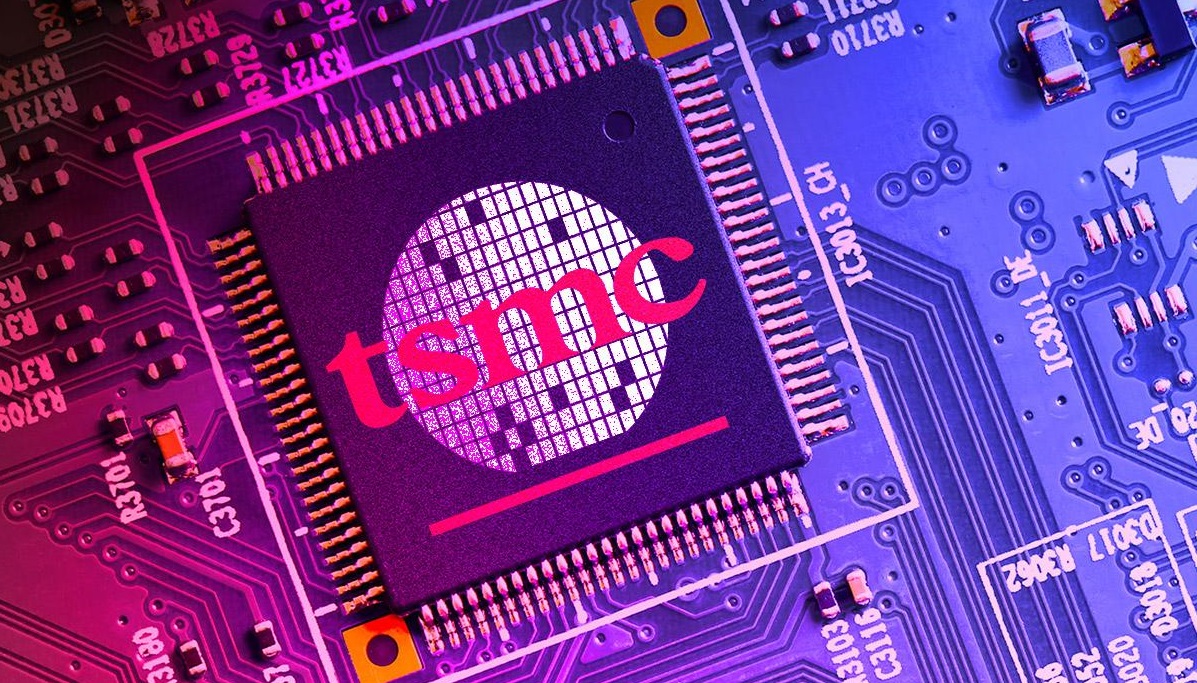
    Taiwan is mobilising its chipmaking sector to commercialise silicon photonics and copackaged optics, with the Ministry of Economic Affairs backing efforts to overcome artificial intelligence computing bottlenecks.

    The island holds over 90 percent of global manufacturing capacity for chips at 7 nanometers or below, while more than 30 firms including Taiwan Semiconductor Manufacturing Co and MediaTek Inc formed an industry alliance in 2024.

    Silicon photonics replaces conventional copper wiring between chips with optical signals. Because optical transmission generates negligible heat, the technology cuts device power consumption by 30 to 50 percent, according to the Ministry of Economic Affairs. That saving eases cooling limits in high-density AI data centres. It also clears the 1.6-terabit-per-second bandwidth ceiling that hampers electronic links.

    Optics Replace Copper Interconnects

    Heavy capital is pouring across the hardware supply chain. Nvidia invested US$4 billion into silicon photonics development in March. The chipmaker needs architectures that sustain real-time AI workloads and high-definition streaming without overheating server racks.

    Taiwanese authorities have folded the technology into their New 10 Major AI Infrastructure Projects. Funding flows through the government’s A+ Enterprise Innovation research programme. The scheme subsidises domestic research teams and equipment developers building local manufacturing tooling.

    Alliance Mobilises Heavyweights

    Execution on the ground rests on the Silicon Photonics Industry Alliance, a consortium established in 2024 with industry group SEMI. The group brings together more than 30 technology suppliers. Members include Taiwan Semiconductor Manufacturing Co, ASE Technology Holding, MediaTek and Hon Hai Precision Industry.

    Asian hardware vendors and server assemblers face shifting procurement cycles. Traditional printed circuit board layouts will yield to integrated optical packaging. As a result, component suppliers must retool production lines for optical transceivers and precision glass substrates.

    Manufacturing risks centre on packaging yields and costs. Integrating laser sources and optical waveguides directly alongside silicon dies requires packaging tolerances tighter than standard wire bonding. These yield hurdles could delay volume delivery.

    Race for Next-Generation Packaging

    Foundry and packaging operators have spent years researching optics to counter the slowdown of traditional transistor scaling. Physical node shrinking now delivers diminishing returns. Advanced packaging formats like copackaged optics have become the primary path to computing efficiency.

    Prototype lines are now running across alliance members to finalise copackaged optics standards before volume production begins for 2026 data centre hardware cycles.

  • Taiwan Sets up 431 Vaping Drop Bins Ahead of Possession Fines

    Taiwan Sets up 431 Vaping Drop Bins Ahead of Possession Fines

    Taiwan is rolling out 431 anonymous collection bins nationwide to let consumers dump e-cigarettes ahead of planned possession fines of up to NT$100,000.

    The drop-off network opens next Wednesday at municipal health bureaus, public clinics, police stations and addiction treatment centers across the island.

    Under the Tobacco Hazards Prevention Act, the manufacture, importation, sale, supply, display, advertising and use of e-cigarettes are already illegal. Taiwan’s Executive Yuan approved an amendment on June 25 to add possession to the list of prohibited acts, sending the bill to the legislature for review.

    Fines of up to NT$100,000

    Once the amendment passes and takes effect, authorities will enforce a one-month grace period. Inspectors will confiscate devices without issuing fines during that first month, the Health Promotion Administration said. After the grace period expires, anyone caught in possession of an e-cigarette faces confiscation and a fine between NT$30,000 and NT$100,000.

    Lo Su-ying, head of the HPA Tobacco Control Division, said the 431 bins feature a one-way design that prevents retrieval once a device drops inside. Local health departments will work with environmental protection agencies to transport the collected hardware to centralized disposal facilities.

    Stricter enforcement across Asia

    Regulators across East Asia continue to close legal gaps surrounding alternative nicotine products, shifting enforcement from storefronts directly to consumers. While markets such as Japan permit regulated heated tobacco devices, authorities in Hong Kong, Singapore and Taiwan have pursued total prohibitions, cutting off legal retail channels entirely.

    Taiwanese lawmakers have not yet set a date to review and vote on the draft amendment, which will establish the start date for the one-month grace period.

  • Chunghwa Telecom and Askey Deploy Mobile 5G for Construction Robots

    Chunghwa Telecom and Askey Deploy Mobile 5G for Construction Robots

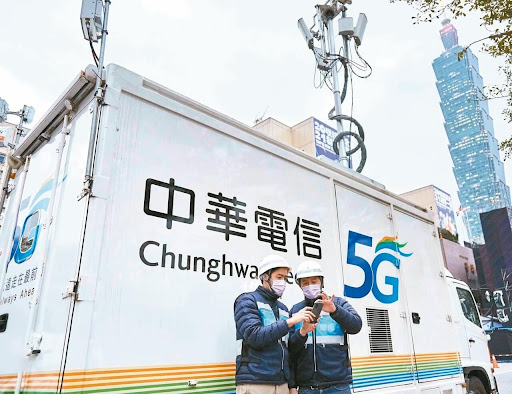
    Chunghwa Telecom and Askey Computer rolled out a portable private 5G platform in Kaohsiung. The network runs autonomous construction robots across local social housing developments.

    Field trials are underway at two municipal residential sites, Shanming Anju and Shuixiu Anju in the city’s Siaogang District. Developed alongside robotics specialist ROSO, the setup pairs Chunghwa’s dedicated 5G spectrum with Askey’s relocatable network hardware. It controls multiple machines simultaneously.

    Mobile infrastructure for hazardous site work

    Standard job sites depend on fixed network wiring that crews build and tear down as phases advance. By contrast, the portable unit moves directly between active zones. It maintains continuous, low-latency links for field machinery without fixed cabling.

    Robots handle high-risk, repetitive tasks including surface grinding and chemical spraying. Moving heavy finishing work to automated systems cuts worker exposure to fine dust, toxic fumes, and physical strain during structural fit-outs.

    Pushing private networks past factory floors

    Taiwan’s Ministry of Economic Affairs funded the initiative through its Industrial Development Administration to expand private 5G beyond manufacturing plants and smart warehouses. Across East Asia, telecom operators face steady pressure to monetize enterprise 5G. They are embedding dedicated networks into heavy industry, infrastructure development, and commercial real estate workflows.

    Project partners will redeploy the portable network gear across additional public housing sites in Kaohsiung as structural phases wrap up in Siaogang.

  • Giordano Net Profit Drops to HK$108 Million as Asian Margins Lag

    Giordano Net Profit Drops to HK$108 Million as Asian Margins Lag

    Giordano International reported a net profit drop to HK$108 million for the six months to June 30, down from HK$121 million a year earlier.

    Group revenue slipped 1 per cent to HK$1.914 billion as store counts dropped across Mainland China and Indonesia, leaving the apparel retailer heavily dependent on earnings from the Gulf Cooperation Council.

    The geographic split reveals an uneven business. Greater China, Southeast Asia and Australia generated HK$1.572 billion, representing 82.1 per cent of total sales, but produced only 61 per cent of segment results. In contrast, the GCC delivered HK$62 million in segment profit on just 18 per cent of revenue, even after traffic in Gulf stores fell by up to 40 per cent following regional disruption in late February.

    Pruning China and Sourcing Locally

    In Mainland China, Giordano cut its store footprint to 239 doors from 359 a year earlier, halving its directly operated outlets to 48. The downsizing helped narrow the mainland segment loss from HK$16 million to HK$9 million, with constant-currency revenue down 0.9 per cent at HK$334 million. Management cleared older stock through VIP.com and shifted higher-margin product lines to Tmall, intending to rebuild physical retail starting in southern China.

    Southeast Asia and Australia remained the largest regional earnings contributor at HK$86 million in segment results on revenue of HK$699 million. Indonesia, the anchor market, brought in HK$330 million after import restrictions slowed merchandise shipments and forced store closures from 199 locations to 176. The company countered the disruption by shifting production to Indonesian factories, which began delivering local stock in June.

    Taiwan proved the regional exception. Segment profit climbed to HK$21 million from HK$15 million on a 5.9 per cent constant-currency revenue gain, meaning Taiwan generated more profit than Hong Kong, Macau and Mainland China combined.

    Korean Drag and the Next Overhaul

    The company faced additional pressure from its 48.5 per cent-owned South Korean joint venture, where revenue slid 8.9 per cent to KRW59.7 billion and 19 stores closed. Giordano deliberately restricted wholesale shipments into the venture to clear excess stock, causing group wholesale revenue to decline 12.2 per cent and cutting royalty income.

    For years, Giordano relied on high-density physical networks in lower-tier Chinese cities and steady franchised wholesale to support its balance sheet. With those legacy channels retreating under fierce domestic e-commerce competition and supply chain friction, the group is now forced to extract higher gross margins from a much smaller physical footprint across Asia.

    Management plans to launch its Giordano 2.0 concept in the fourth quarter, rolling out revamped store layouts and core product lines in Hong Kong and Singapore before expanding to overseas digital channels in Europe and North America.

  • Shopee Expands Local Fulfillment Network Across Southeast Asia and Taiwan

    Shopee Expands Local Fulfillment Network Across Southeast Asia and Taiwan

    Shopee is overhauling its logistics network across Southeast Asia and Taiwan. The push aims to cut transit times and protect delivery margins across its core marketplace.

    The Singapore-based platform, owned by Sea Group, uses a mix of in-house couriers, third-party fulfillment centers, and external delivery networks. These teams process merchant orders across multiple regional hubs.

    How the routing model operates

    Merchants use a split fulfillment model. They either ship directly from their own facilities or hold stock inside platform-managed hubs. Storing fast-moving inventory near dense urban areas cuts transit distance and speeds up dispatch. Automated systems then route each parcel to external couriers or internal fleets based on carrier capacity, pricing, and destination.

    Surges during promotional events like 11.11 and 12.12 test this setup. Shopee handles these spikes by enforcing strict cut-off windows. It also synchronizes warehouse picking schedules with local freight partners.

    Cross-border friction and last-mile costs

    Last-mile transport remains the most expensive link in regional logistics. Island geography in Indonesia and the Philippines creates delivery hurdles. Heavy traffic in capital cities adds further friction, forcing platforms to run separate delivery setups for urban and rural buyers. Cross-border consignments face extra delays from customs clearance and import duties, requiring close coordination with regional freight handlers.

    Marketplace operators across the region face steady pressure to balance speed against parcel subsidies. Moving higher volumes through dedicated fulfillment nodes lowers per-package handling costs. It also helps platforms retain larger brand merchants.

    Sellers are now preparing inventory allocations for year-end shopping campaigns, setting up the network’s next operational test.

  • Taiwan Pitches Global Chip Alliances as Market Heads for 1.5 Trillion Dollars

    Taiwan Pitches Global Chip Alliances as Market Heads for 1.5 Trillion Dollars

    Taiwan President William Lai told tech executives in Taipei that international chip partnerships will anchor an industry projected to exceed 1.5 trillion dollars this year.

    Foreign semiconductor leaders continue to pour capital into the island, led by Nvidia’s annual procurement and investment topping NT$3 trillion ($94.84 billion). Micron Technology has committed more than NT$1.4 trillion to local operations, while Advanced Micro Devices pushed its research spending in Taiwan past NT$300 billion.

    TSMC’s Overseas Buildout

    Taiwan Semiconductor Manufacturing Co is matching domestic research with heavy spending abroad to insulate buyers against supply shocks. The world’s largest contract chipmaker announced an additional $100 billion commitment to its Arizona facilities in July, while its plant in Kumamoto, Japan, continues on schedule.

    In Europe, TSMC expects its Dresden fabrication facility to begin commercial chip production before the end of next year. That site will supply automotive and industrial customers across the European Union.

    For consumer electronics makers and device brands across Asia, the dual strategy offers reassurance. Taiwan is retaining cutting-edge wafer fabrication and packaging on home soil while duplicating mature and specialized capacity in Western markets to guarantee steady silicon delivery during regional crises.

    State Support for Next-Gen Tech

    Taipei plans to back corporate spending by funding core infrastructure, including power generation, water supplies, land access, and computing capacity. State research backing will focus on silicon photonics, quantum computing, and artificial intelligence robotics.

    US Undersecretary of State for Economic Affairs Jacob Helberg told attendees via video link that concentration without resilience creates systemic vulnerabilities. He pointed to the Pax Silica framework, an alliance designed to secure technology supply lines among trusted trade partners.

    Discussions continue this week as the Semicon Taiwan trade exhibition runs through Friday at the Taipei Nangang Exhibition Center.

  • Google to Roll Out Two AI Chips a Year and Expand Taiwan Hub

    Google to Roll Out Two AI Chips a Year and Expand Taiwan Hub

    Google will accelerate its custom artificial intelligence chip rollout from a two-year cycle to two processors annually while expanding its Taiwan research footprint by 60 per cent.

    The revised schedule shifts the company away from its traditional multi-year hardware cadence as competition for proprietary cloud computing silicon intensifies across the tech sector.

    Faster Silicon Cadence

    Amin Vahdat, Google’s senior vice president and artificial intelligence infrastructure chief, announced the accelerated timeline during a keynote address at Semicon Taiwan in Taipei on Wednesday. The company plans to release two bespoke chips every year and expects to lift that frequency even further over time.

    Backing the faster production tempo requires more engineering capacity on the ground. Google is growing its dedicated research and development floor space across Taiwan by 60 per cent to house expanded design and testing teams.

    Regional Hardware Footprint

    Taiwan sits at the centre of global advanced semiconductor fabrication and packaging. By enlarging its local engineering hubs, Google tightens operational proximity to key foundry partners, contract assemblers and component supply chains that manufacture its custom processing units.

    For cloud platforms and enterprise services operating across Asia-Pacific, in-house silicon helps control operational power costs and workload efficiency in regional data centres. Competing tech operators across the region are running similar programs to secure custom processing capacity.

    The company will now focus on staffing the expanded Taiwan design facilities ahead of its next scheduled processor rollouts.

  • Taiwan Pledges NT$40 Billion to Train 500,000 AI Specialists by 2040

    Taiwan Pledges NT$40 Billion to Train 500,000 AI Specialists by 2040

    Taiwan will allocate more than NT$40 billion (US$1.26 billion) next year across 10 major artificial intelligence projects to train 500,000 technical specialists by 2040.

    President William Lai confirmed the funding commitment in Taipei, tying the long-term headcount target to the government’s newly established AI Talent Ark Project. The program combines basic technical schooling, professional upskilling, and data-driven instruction to supply engineering talent to domestic hardware and software sectors.

    Building Domestic GPU Capacity

    Alongside the training quota, the Ministry of Digital Affairs is targeting the installation of at least 10,000 graphics processing units across local data centers within 12 months. The compute capacity will be developed through private investment under a build-own-operate framework.

    Minister of Digital Affairs Lin Yi-ching designated domestic AI computing facilities as public infrastructure eligible for private capital. The policy requires data centers to operate under Taiwanese legal jurisdiction so that commercial models remain compliant with local data governance standards.

    The ministry is also assembling a sovereign AI training corpus by opening state datasets to domestic and foreign developers. The goal is to build base models capable of handling Taiwanese language variants and local commercial contexts without relying entirely on offshore platforms.

    Sovereignty and Network Resilience

    Taiwan’s push mirrors parallel infrastructure plays across East Asia, where governments in Tokyo and Seoul are funding domestic compute clusters and localized foundation models to avoid complete reliance on US cloud hyperscalers. For technology hardware makers and enterprise software vendors operating in the region, the plan secures subsidized access to local high-performance compute capacity and a steady supply of specialized engineers.

    Network resilience forms the secondary layer of the digital sovereignty push. Lin noted that low-Earth-orbit satellite systems remain an active priority to safeguard data traffic against potential disruptions to undersea telecommunications cables.

    The digital ministry will roll out the private investment terms for the build-own-operate compute centers later this fiscal year, with the first 10,000 GPU deployments expected on line before late 2027.

  • TSMC Agrees to Produce Three 3Nm Chips for Xiaomi

    TSMC Agrees to Produce Three 3Nm Chips for Xiaomi

    Taiwan Semiconductor Manufacturing agreed to produce three custom chips for Xiaomi, including a next-generation three-nanometre smartphone processor starting in 2026.

    The contract ties the $2.0 trillion Taiwanese foundry directly into the Chinese brand’s hardware expansion across flagship handsets, smart devices and automotive platforms. Xiaomi plans to deploy the primary 3nm design, designated the Xring O3, in its premium smartphones before rolling out two companion processors for consumer artificial intelligence devices and autonomous vehicle controls.

    Expanding beyond data centres

    Adding Xiaomi diversifies TSMC’s advanced-node order book at a time when top-tier 3nm wafer allocation has remained heavily concentrated among Western computing and mobile clients. Handset manufacturers in Asia have spent three years attempting to bring proprietary silicon in-house to reduce their dependence on merchant chipmakers. Xiaomi’s commitment to custom designs manufactured on TSMC’s cutting-edge lithography mirrors earlier silicon strategies from rival hardware makers, though extending those designs into vehicle autonomy widens the operational scope.

    For consumer tech brands in Asia, controlling chip architecture allows tighter software integration across connected ecosystems, from living-room appliances to electric sedans. The arrangement secures advanced fabrication capacity for Xiaomi while providing TSMC with volume demand outside its core server and cloud computing base.

    Wafer volume targets

    Initial commercial success hinges on the manufacturing yield and delivery pace of the Xring O3 line during 2026. Market performance will depend on the speed at which Xiaomi ramps retail shipments of its 3nm handsets and incorporates the subsequent automotive silicon into its production vehicles.

  • Canadian Chip Startups Team up with Taiwan Foundries on Advanced Packaging

    Canadian Chip Startups Team up with Taiwan Foundries on Advanced Packaging

    Canadian semiconductor developers showed design automation and packaging technologies in Taipei, seeking integration with Taiwan’s high-volume manufacturing lines ahead of SEMICON Taiwan.

    The Canada-Taiwan Semiconductor Co-Creation Forum 2026 brought together specialized tech firms offering solutions for bottlenecks in artificial intelligence hardware, hybrid bonding and analog circuit layout.

    Targeting packaging bottlenecks

    Rather than funding domestic wafer fabrication plants, Canadian firms are positioning themselves upstream in research, design tools and specialized metrology. AsterQuanta presented an AI-driven platform that applies reinforcement learning to automate analog circuit design, a discipline that still depends heavily on manual engineering adjustments.

    Digitho introduced programmable photomask software designed to adjust lithography patterns dynamically based on placement offsets of chiplets during heterogeneous integration. The system aims to increase interconnect density by adapting exposure patterns directly on the substrate.

    Metrology and vacuum subsystems

    In quality control, ICSPI presented micro-scale atomic force microscopy systems built onto one-square-millimetre chips. Operating multiple AFM probes in parallel allows high-throughput, nanoscale surface measurement required for hybrid bonding and advanced copper pad inspection.

    Meaglow exhibited hollow-cathode plasma source reactors engineered to reduce oxygen contamination in thin-film nitride layers. Toronto-founded AI processor developer Tenstorrent, which established an operating unit in Taiwan last year, also outlined its RISC-V and neural network processor roadmap.

    For Asian foundries and packaging houses facing skilled engineering shortages and tighter hybrid bonding tolerances, adopting specialised toolsets from overseas research hubs provides immediate productivity gains without rebuilding core manufacturing infrastructure.

    The participating suppliers now face qualification trials to demonstrate throughput and defect-reduction targets on standard 300mm wafer production lines across Taiwanese contract manufacturers.

  • Taiwan Convenience Chains Expand Southeast Asian Goods as Migrant Numbers Double

    Taiwan Convenience Chains Expand Southeast Asian Goods as Migrant Numbers Double

    Taiwan convenience operators FamilyMart and 7-Eleven are rewiring hundreds of store layouts to target more than 870,000 Southeast Asian migrant workers now living on the island. FamilyMart has installed dedicated import sections across 1,200 outlets, roughly 30 percent of its total network, after sales in the category jumped 70 percent last year.

    Government labour data shows the island’s migrant workforce expanded from 390,000 in 2011 to over 870,000 this year. When including international students, spouses, and undocumented workers, the consumer cohort reaches an estimated 1.2 million people. A study by non-profit group One-Forty found these residents visit convenience stores every two days on average, relying on them for food, parcel pick-ups, and cross-border remittances.

    Halal hot food and bilingual shelves

    FamilyMart began testing dedicated shelves in residential and manufacturing districts in 2020. Those sections stock roughly 100 packaged items from Indonesia, Vietnam, Thailand, and the Philippines, supported by dual-language Chinese and English labelling alongside halal marks. The chain introduced pork-free hot food stations across 220 locations near transport hubs, hospitals, and industrial zones in 2024, and now distributes halal-certified ready-to-eat meals to 700 stores.

    Rival operator 7-Eleven has rolled out Southeast Asian merchandise fixtures to 400 branches. Its inventory focuses on high-turnover staples such as Indonesian instant noodles and sambal, Philippine dried mangoes, Thai roasted peanuts, canned coconut water, and energy drinks placed near universities and factory zones.

    Supermarkets tailor fresh produce

    Supermarket chain PX Mart is adjusting its own assortments in response to heavy footfall around manufacturing clusters. At its branches near the Hukou Industrial Park in Hsinchu County, one quarter of migrant worker shoppers visit more than once a week. PX Mart has divided its foreign range into four core groups: packaged groceries, instant meals, household goods, and fresh produce tailored by nationality, adding specific herbs for Vietnamese cooks and personal care lines imported from Indonesia.

    Convenience retailers across East Asia frequently tweak shelf space to protect store yields as domestic populations age and shrink. In Taiwan, where convenience store density is among the highest in the world, shifting floor space toward Southeast Asian staples allows operators to extract higher basket sizes from a daily captive audience without adding physical square footage.

    Store planners are now watching whether 7-Eleven expands its 400 dedicated sections deeper into residential neighbourhoods, while FamilyMart continues rollouts of halal-certified hot food counters across remaining transit-hub locations.

  • Taiwan Indicts Eight over Smuggling 74 Nvidia AI Servers to China

    Taiwan Indicts Eight over Smuggling 74 Nvidia AI Servers to China

    Prosecutors in Taiwan indicted eight corporate managers on Monday over an illicit scheme that exported 74 advanced Nvidia artificial intelligence servers to Chinese buyers. The transactions generated more than $21.2 million in illegal proceeds through diverted shipments of Supermicro servers powered by Nvidia B300 graphics processing units.

    The Keelung District Prosecutors’ Office filed charges of breach of trust and forgery against distribution and sales managers from Taiwan units of Nvidia and Supermicro Computer Inc., as well as executives at distributor Albatron Technology and local server vendor Flying Tiger Technology. Strict manufacturer rules require buyers of advanced B300 hardware to hold whitelist approval, certify end users, and undergo on-site inspections for orders larger than eight units. Flying Tiger secured whitelist status through undisclosed methods in February 2025 before faking facility checks with data center operator Chief Telecom to clear an initial order of 130 servers.

    Routes through third markets

    When the original buyer failed to fund the purchase, conspirators rerouted the hardware across Asia to bypass export barriers. The group moved two servers from the first order and 50 servers from a second batch of 64 units directly to Chinese buyers through Indonesia. A third batch sent eight units through Japan and Hong Kong before Taiwanese customs halted the remaining 56 units on the island.

    Trading firm Long Wins and customs broker Chance See International handled logistics and false documentation to mask the destination of the cargo. In a related transaction, executives routed NT$39.16 million ($1.2 million) in Albatron assets through four bogus invoices issued by Quintai Electronics, triggering additional charges under Taiwan’s Securities and Exchange Act.

    Supply chain crackdowns in Asia

    The case shows how cross-border merchant networks continue to build transit routes through Southeast and East Asian hubs to feed mainland demand for restricted computing power. Washington has barred direct shipments of cutting-edge AI silicon to China since 2022, yet enterprise hardware continues to slip through regional third-party distributors that exploit weak verification loops between system builders and end facilities.

    Taiwan authorities are pursuing the fugitive head of Flying Tiger Technology, who collected the $21.2 million in export revenue, while the eight indicted managers await trial dates in Keelung.

  • Taiwan Plans Ban on Auto-Renewing Subscriptions with Fines up to NT$50 Million

    Taiwan Plans Ban on Auto-Renewing Subscriptions with Fines up to NT$50 Million

    Taiwan will ban automatic subscription renewals for digital services and require explicit user consent, the Executive Yuan announced in Taipei.

    Companies that conceal renewal terms face fines of up to NT$50 million ($1.57 million) per violation under proposed regulatory amendments. The cabinet said service providers must scrap pre-ticked consent boxes and allow customers to manually confirm any recurring payment schedule through a clearly labeled checkbox.

    Contract Rules and Cancellation Parity

    The Ministry of Digital Affairs will amend the Mandatory and Prohibited Clauses for Standard Contracts in Online Retail Transactions to enforce the ban. Under the updated framework, platforms must clearly disclose subscription durations, recurring fee structures and cancellation procedures before a customer signs up.

    Ending a recurring plan must become as simple as starting one. Regulators will require businesses to build cancellation workflows that match the ease of their sign-up funnels. Platforms must also send a separate advance notice to users before any scheduled renewal charge goes through.

    Under Article 42 of the Fair Trade Act, initial concealment of subscription terms carries fines between NT$50,000 and NT$25 million ($1,570 to $784,831). Operators that fail to fix non-compliant interfaces before a set deadline face recurring penalties ranging from NT$100,000 to NT$50 million for each infraction.

    Targeting Dark Patterns in Digital Commerce

    Scrutiny over subscription traps has sharpened across Asia-Pacific markets as streaming, software and direct-to-consumer apps shift revenue models toward recurring billing. Regulators across the region are cracking down on deceptive user interface designs, commonly known as dark patterns, that lock shoppers into recurring payments with hidden clauses and overseas corporate registrations.

    Taiwanese consumer protection rules will also void hidden terms entirely. Under Article 12 of the Enforcement Rules of the Consumer Protection Act, clauses presented in ways that are difficult to detect or understand will not legally bind the subscriber.

    The policy overhaul follows legislative questioning by Chinese Nationalist Party (KMT) lawmaker Liao Hsien-hsiang, who highlighted user financial losses tied to overseas digital providers. The cabinet is working against a one-month timeline to formalize the regulatory draft and submit the revised contract provisions.

  • Taiwan Fuel Retailers Freeze Pump Prices for Fourth Week as Currency Offsets Crude

    Taiwan Fuel Retailers Freeze Pump Prices for Fourth Week as Currency Offsets Crude

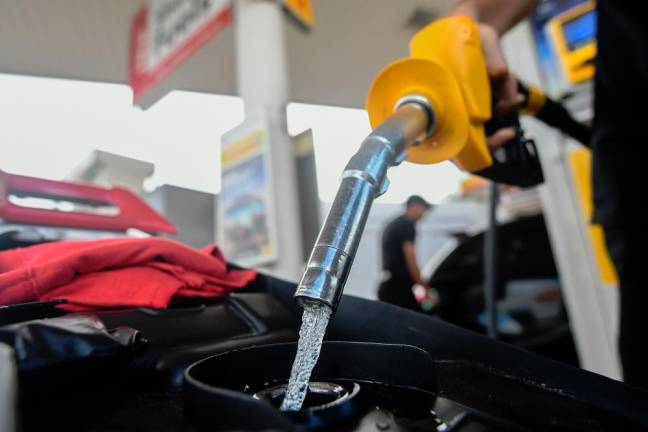
    CPC Corp and Formosa Petrochemical held Taiwan retail fuel prices steady this week, freezing forecourt rates for a fourth consecutive week despite crude topping US$93 a barrel. The decision leaves domestic transport costs stable across thousands of service stations as logistics networks enter the late-summer freight cycle.

    Retail unleaded gasoline remains at NT$30.5 per liter for 92-octane, NT$32 for 95-octane, and NT$34 for 98-octane at both retail chains. Premium diesel holds at NT$29.3 per liter at state-run CPC stations and NT$29.1 per liter at Formosa pumps.

    Crude Spike Versus Currency Gains

    International crude rallied last week after geopolitical friction between the United States and Iran threatened oil supplies. CPC calculates weekly domestic price adjustments through a floating formula weighted 70 percent to Dubai crude and 30 percent to Brent.

    Under that formula, Taiwan’s baseline import crude basket averaged US$93.01 per barrel last week, up from US$89.84 the week before. Foreign exchange movements absorbed the shock. The New Taiwan dollar appreciated to an average of NT$31.901 against the greenback from NT$32.194 a week earlier, cutting the landed cost of dollar-denominated crude deliveries.

    Pump Rates at the Forecourt

    Price stability at the pump shields commercial delivery fleets and consumers from short-term commodity spikes. Fuel distributors across Southeast and East Asia have faced margin compression over the past two quarters as crude volatility tests state-managed pricing mechanisms and retail price caps.

    Both refiners will review their pricing formula at the close of trading on Friday, with market attention focused on whether the US$93 crude threshold forces an adjustment in next week’s retail slate.

  • Taiwan Consumer Confidence Dips Despite Strong Economic Forecasts Amid Inflation Fears

    Taiwan Consumer Confidence Dips Despite Strong Economic Forecasts Amid Inflation Fears

    Taiwanese consumer confidence has fallen, with sentiment regarding the economic outlook and spending weakening this month, despite official predictions of the strongest economic growth in decades. A recent survey by Cathay Financial Holding Co. Revealed that inflation concerns and volatility in financial markets are contributing to this cautious mood among consumers.

    The survey highlighted a drop in consumer optimism toward the local stock market and overall risk appetite following recent equity swings. Factors such as heightened tensions between the US and Iran, rising oil prices, and expectations for higher US interest rates have made investors more conservative. Frequent stock trading halts in South Korea and renewed questions about the sustainability of the artificial intelligence (AI) boom have fueled market volatility.

    Divergence in Economic Views

    Consumers now anticipate inflation to average 2.3 percent this year, surpassing the government’s estimate of 2.07 percent and the central bank’s 2 percent target. Their economic growth expectations also fall short of official projections, with consumers anticipating an 8.94 percent expansion this year on average, significantly lower than the government’s forecast of 11.05 percent, which would mark the fastest pace in nearly four decades. Only about one-quarter of respondents expect growth to exceed 10 percent.

    This divergence between official forecasts and household expectations suggests that the benefits of Taiwan’s AI-led economic expansion have not yet translated into stronger consumer confidence. Higher energy costs, inflation risks, and financial market swings are adding to uncertainty, which in turn has led to a weakened willingness among consumers to make major purchases. The index for durable-goods spending has consequently moved into negative territory.

    Investment Sentiment

    Despite the cautious consumer sentiment, Taiwanese equities remain the most preferred investment target for the next six months, selected by 57 percent of respondents. In comparison, 24 percent favored US stocks. For those planning to increase investments, confidence in Taiwanese companies’ ability to sustain earnings was the most frequently cited reason, followed by optimism regarding the economy’s overall strength.

    RetailNews Asia observes that similar patterns of economic growth failing to fully translate into consumer confidence have been seen across other Asian markets, particularly where global economic headwinds and local inflationary pressures create a disconnect between macro-indicators and household spending power. This trend often prompts retailers to adapt strategies to cater to more value-conscious consumers or focus on essential goods over discretionary purchases.

    The survey, conducted from August 1 to August 7, gathered 12,580 responses from customers and members of Cathay Life Insurance Co. And Cathay United Bank Co.