Retail News CRM

Tag: baidu

  • Baidu Unveils Musesteamer: Ai-driven Video Generator And Enhances Search Engine Capabilities

    Baidu Unveils Musesteamer: Ai-driven Video Generator And Enhances Search Engine Capabilities

    Baidu Introduces AI-Driven Video Generator and Revamps Search Engine

    Baidu, the Chinese technology company, unveiled a new artificial intelligence (AI) tool called MuseSteamer and launched a significant upgrade to its search engine on Wednesday.

    The MuseSteamer: A Revolutionary AI Tool

    MuseSteamer, an AI-driven video generator, can produce videos up to ten seconds long. The model is designed especially for businesses and is available in three different versions: Turbo, Pro, and Lite.

    This business-oriented tool marks a departure from the prevalent approach, with most AI video generators targeting individual consumers via subscription-based models. Interestingly, Baidu has yet to reveal a consumer-oriented application for MuseSteamer.

    The recent trend within the AI community has seen significant advancements in the realm of text-to-video or image-to-video generators. Leading AI firms and major technology companies, including ByteDance, Tencent, and Alibaba, have all introduced their models to the market.

    Enhancements to Baidu’s Search Engine

    Aside from the launching of MuseSteamer, Baidu unveiled a significant upgrade to its search engine. The update includes a redesigned search box capable of handling more extended queries. It also supports voice and image-based searches. Employing Baidu’s advanced AI technology, the platform now delivers more targeted content to its users.

    This search engine overhaul comes as Baidu faces stiff competition from AI-based chatbots like ByteDance’s Doubao and Tencent’s Yuanbao, which are gaining popularity among users.

    Questions & Answers

    What is Baidu’s new AI tool called?
    The new AI tool launched by Baidu is called MuseSteamer.

    What is the primary purpose of the MuseSteamer?
    MuseSteamer is an AI-driven video generator designed primarily for business use. It can create videos up to ten seconds long.

    What improvements has Baidu made to its search engine?
    Baidu has redesigned its search box to accept longer queries and support voice and image-based searches. The platform now also displays more targeted content using Baidu’s AI technology.
  • Baidu Bags China’s First Fully Driverless Robotaxi Licenses

    Baidu Bags China’s First Fully Driverless Robotaxi Licenses

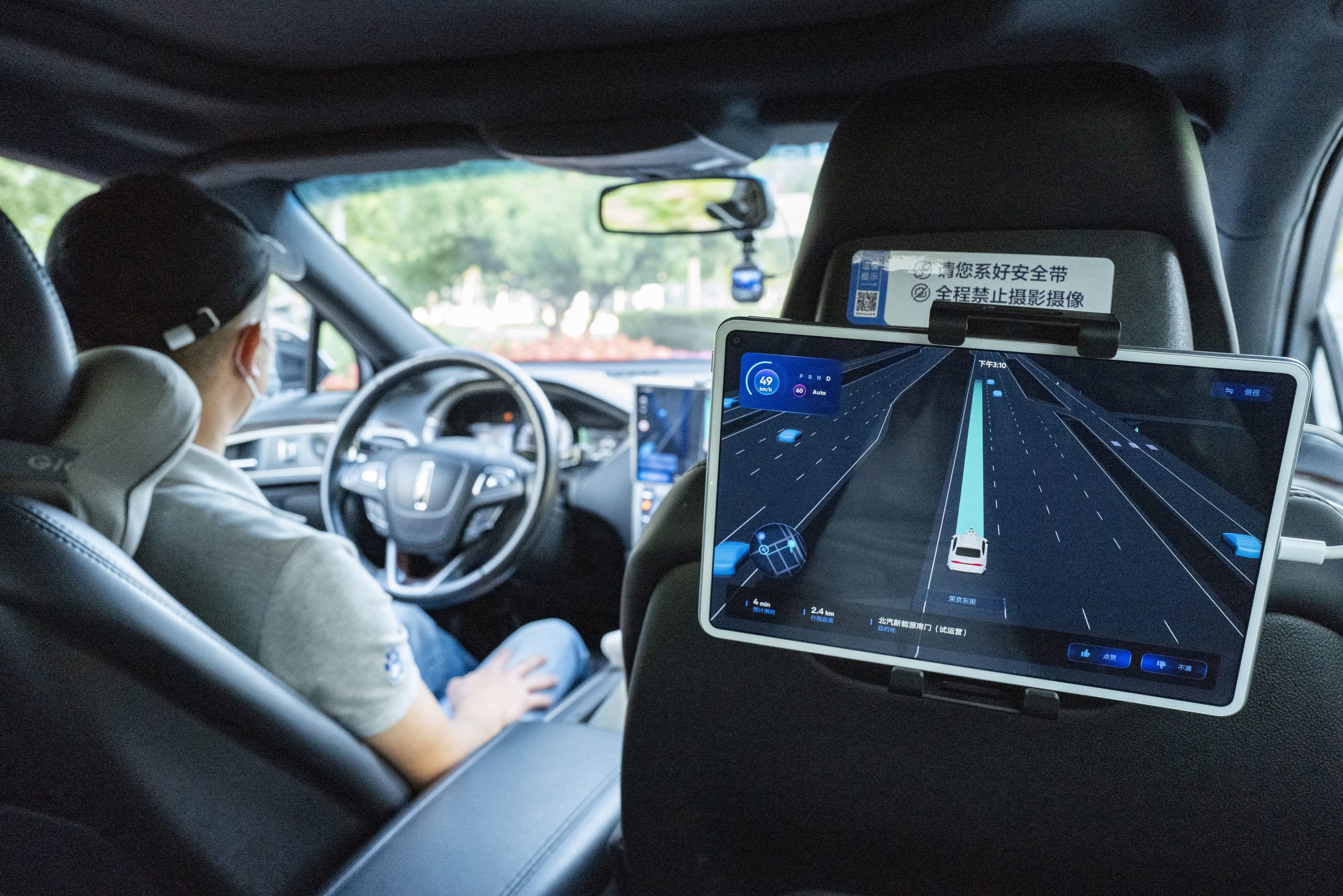
    China search engine giant Baidu Inc said on Monday it has obtained permits to operate fully driverless robotaxi services on open roads from two Chinese cities, the first of their kind in the country.

    The permits, awarded by the southwestern municipality of Chongqing and the central city of Wuhan, allow commercial robotaxis to offer rides to the public without human safety drivers in the car. They come into effect on Monday.

    Baidu said they marked a “turning point” in China’s policy-making towards autonomous driving.

    “These permits have deep significance for the industry,” Wei Dong, chief safety operation officer of Baidu’s Intelligent Driving Group, told Reuters in an interview. “If we think of the exploration of space, this moment is equal to landing on the moon.”

    At first, Baidu will deploy a batch of five fee-charging robotaxis in each city, where they will be allowed to operate in designated areas from 9 a.m. to 5 p.m. in Wuhan and 9:30 a.m. to 4:30 p.m. in Chongqing, the company said in a statement.

    The service areas span 30 square km (11.58 square miles) in Chongqing’s Yongchuan District and 13 sq km in the Wuhan Economic & Technological Development Zone.

    In April, Baidu’s Apollo and Toyota Motor Corp-backed Pony.ai said that they received permits in Beijing to deploy robotaxis without safety drivers in the driver’s seat on open roads within a 60 sq km area. But the Beijing permits  still require them to have a safety driver in the passenger seat. These services have started.

    Baidu is also in talks with local governments in Beijing, Shanghai and Shenzhen, to secure licenses within a year to test fully-driverless and unpaid robotaxis in those cities, according to Wei.

    China’s efforts to fast-track autonomous vehicle trials and permits come as U.S. regulators are also pushing ahead with milestone-setting autonomous driving policies.

    In January, self-driving company Cruise received a permit from the California Public Utilities Commission that allows it to offer paid and fully driverless rides from 10 p.m. to 6 a.m. in select streets in San Francisco.

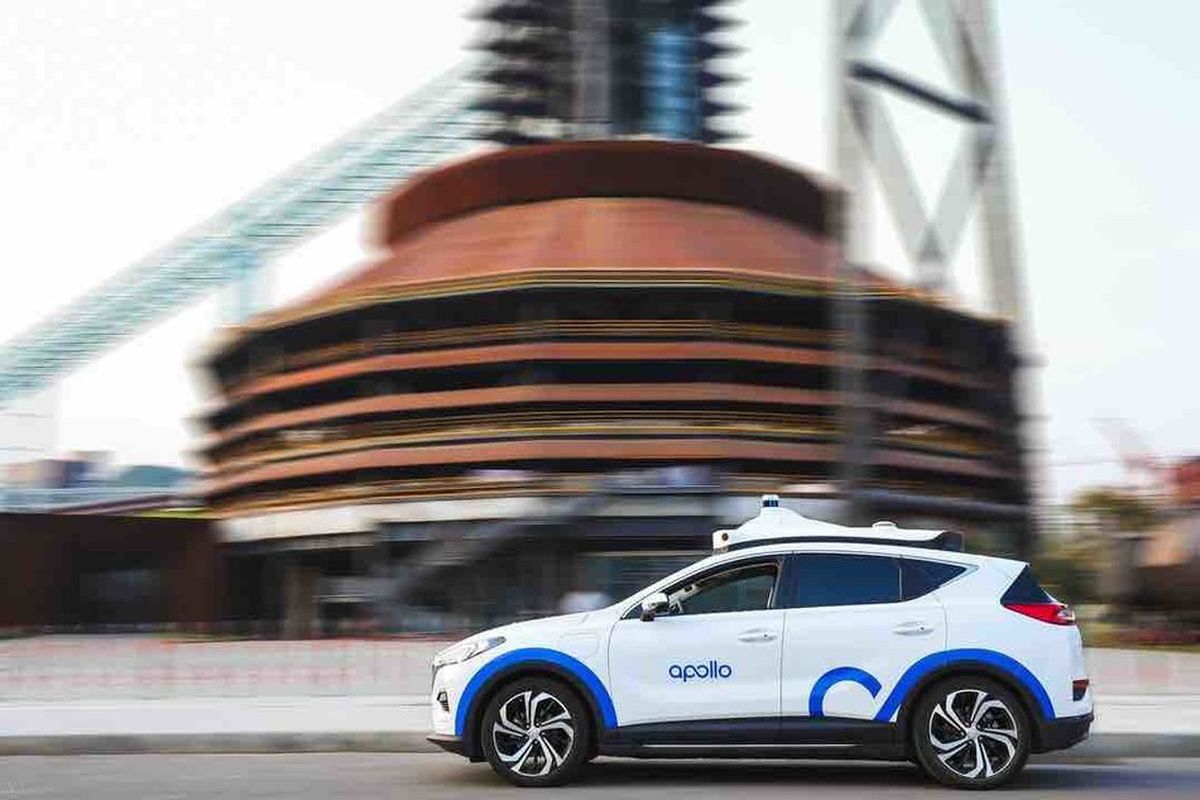
    Apollo Go, Baidu’s robotaxi service, has operated over 1 million rides across 10 Chinese cities since its launch in 2020.

    Baidu has not reported any problems with the service and has not given a breakdown for how much it has invested in the project.

  • Baidu’s Electric Vehicle Firm Jidu Unveils First ‘Robot’ Car

    Baidu’s Electric Vehicle Firm Jidu Unveils First ‘Robot’ Car

    The concept car, which is free of door handles and can be fully controlled via voice recognition, was launched through an online press conference held on Baidu’s metaverse-themed app Xirang.

    Jidu, an EV venture controlled by Baidu and co-funded by Chinese automaker Geely, plans to mass produce the model, which would be 90% similar to the concept car, in 2023.

    The ‘robot’ EVs will possess autonomous Level 4 capabilities that need no human intervention as well as utilize Qualcomm’s 8295 chips, which will enable users to access voice assistance offline when internet connection is poor.

    Baidu’s EV-making plan comes as tech companies around the world race to develop smart cars after Tesla’s success in commercializing electric vehicles.

    Besides equipping the vehicle with autonomous driving software technology powered by Baidu, Jidu will also build two lidars and 12 cameras alongside the car. Lidars are detection systems, similar to radars, which use pulsed laser light rather than radio waves.

    “The Jidu robocar aims to meet users’ needs for intelligent travel … and intelligent cabin in the new era,” said Joe Xia Yiping, Jidu chief executive, adding “the ultimate goal is to realize a fully driverless transportation experience.”

    Jidu cars will target users who like cutting-edge technologies, Luo Gang, head of operations at Jidu, told Reuters in an interview on Wednesday.

    The EVs will be manufactured in Hangzhou Bay in China’s eastern city of Ningbo, where Geely has several plants.

    Jidu has hired ex-Cadillac designer Frank Wu as its head of design, and Wang Weibao, a former member of Apple Inc’s EV initiative Project Titan, as its head of intelligent driving.

    Jidu’s first model will be priced above 200,000 yuan ($29,914.59), Baidu chief executive Robin Li said on a conference call last month.

    Smartphone maker Xiaomi Corp and Didi Global are among other Chinese tech giants who are pursuing auto-making ambitions.

  • Swiss Re, Baidu Team Up In Autonomous Driving Business

    Swiss Re, Baidu Team Up In Autonomous Driving Business

    Swiss Re and Chinese tech group Baidu are teaming up to help advance autonomous driving, the Swiss reinsurer said on Friday.

    Swiss Re will provide risk management expertise and insurance products for Baidu’s autonomous driving business, it said without giving any financial terms.

    “This partnership will advance risk management research and insurance protection for autonomous vehicles, representing an important step forward in building a comprehensive ecosystem of mobility services,” Swiss Re said in a statement.

  • Baidu’s JiDu Teases Level 4 Self Driving Car

    Baidu’s JiDu Teases Level 4 Self Driving Car

    Self-driving cars were invented by Google and the Google of China, Baidu, isn’t behind its American counterpart. It has created a new brand called JiDU which has announced plans for launching a self-driving car by 2023. They are calling it the robocar which will be fully unveiled at the Beijing auto show in April.

    “JiDU has completed the visual and functional design of the Robocar concept car, which will make its debut in April as planned. Let’s set off towards an infinitely possible future together,” said Yiping Xia, CEO of JiDu.

    In the teaser, one can easily see that the car is riddled with sensors that come out of its hood, almost like small turrets and they are retractable and hidden by flaps. The car also seems to have frameless doors that open outward.

    The robocar maker has also revealed that it has specifically designed a new logo called the Pixel J which it claims is the first logo that has been designed specifically for an autonomous vehicle.

    In China, autonomous cars are taking off as are robotaxi services. Already there is the Xpeng P5 which boasts some serious autonomous capabilities as it has become the world’s first production car with a LiDAR and has some advanced autonomous capabilities.

    Apart from JiDu, Baidu also has the Apollo robotaxis which leverages the QNX operating system.

  • Baidu’s Apollo Aims To Offer Robotaxi Service to 3 Million Users In 2023

    Baidu’s Apollo Aims To Offer Robotaxi Service to 3 Million Users In 2023

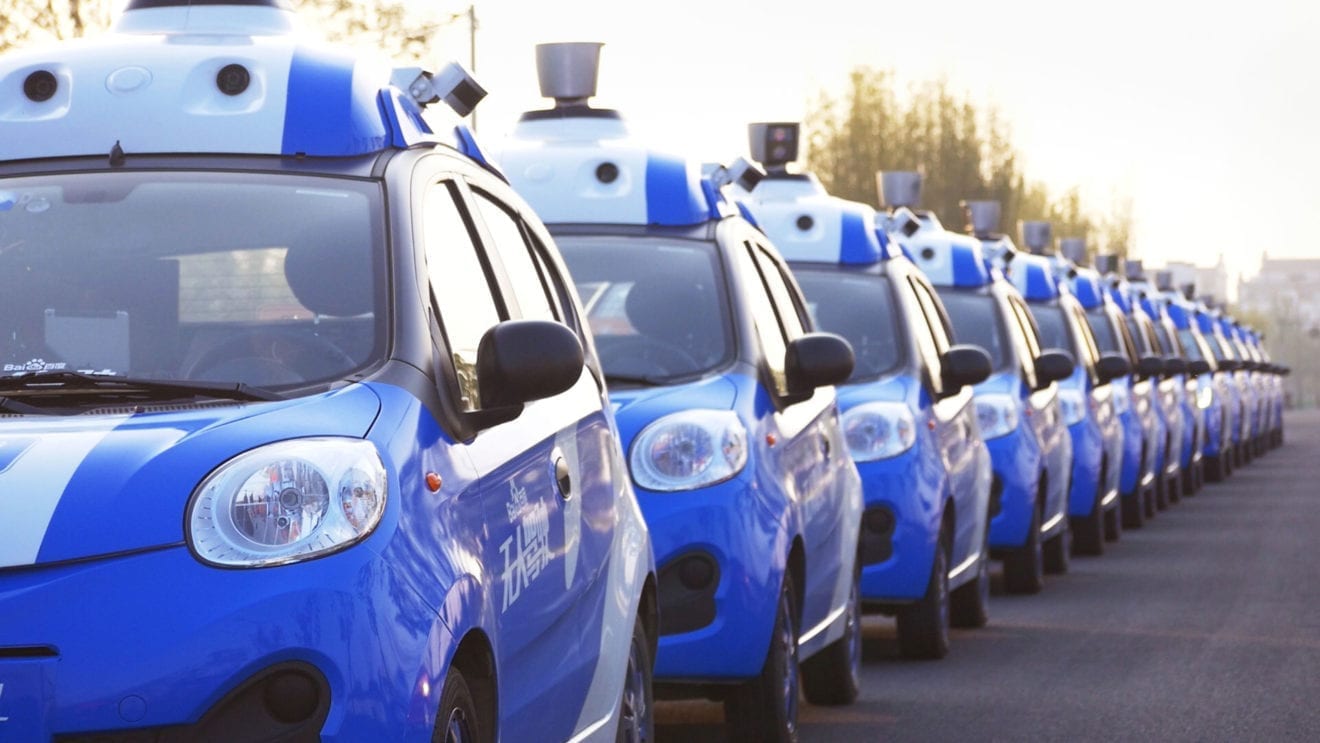
    Chinese tech giant Baidu said on Thursday its smart driving unit Apollo plans to cater to a total of 3 million users in China with a fleet of 3,000 robotaxis in 2023.

    Baidu also announced that it is partnering with BAIC Group’s electric vehicle (EV) brand ARCFOX to develop Apollo Moon, EV robotaxis that are set to be mass-produced at a cost of 480,000 yuan ($74,766.36) per unit.

    The duo will produce 1,000 Apollo Moon EVs in the next three years, Baidu told a press conference in Beijing.

  • Crypto Exchange Searches Blocked in China

    Crypto Exchange Searches Blocked in China

    Chinese users were reportedly unable to find results for popular cryptocurrency exchanges on major search engines in the country.

    Keyword searches for trading platforms such as Binance, OKEx and Huobi yielded no results, according to various media outlets.

    The searches were conducted on major search engines like Baidu, Sogou, Zhihu, and Weibo.

    This marks yet another sign of further tightening on cryptocurrencies, especially with regards to online content.

    Earlier this month, multiple popular Weibo accounts featuring related content were reportedly suspended or shut down over violation of the social media platform’s rules.

  • Baidu Plans Smart EV Company, To Make Cars At Geely Plant

    Baidu Plans Smart EV Company, To Make Cars At Geely Plant

    China’s Baidu Inc plans to form a company to make smart electric vehicles (EV), two sources familiar with the matter said, with manufacturing to be carried out at plants owned by automaker Geely. Baidu, the leading search engine company in China, will take a majority stake and absolute voting power in the new company. The venture will revamp some of Geely’s existing car manufacturing facilities to make the vehicles, with in-car software input from Baidu and engineering know-how from Geely, sources told Reuters.

    The companies are in talks to use Geely’s EV-focused platform, Sustainable Experience Architecture (SEA), for future product development, one of the sources, who declined to be identified as the plan was private, said.

    Baidu, which is developing autonomous driving technology and internet connectivity infrastructure, did not immediately respond to a request for comment. Geely declined to comment.

    Baidu’s Nasdaq-listed shares jumped more than 4% after Reuters reported the plan.

    Reuters had already reported last month that Baidu was contemplating making its own EVs and had held talks with Geely, Guangzhou Automobile Group Co Ltd (GAC) and China FAW Group Corp Ltd’s Hongqi on a possible venture.

    Baidu’s rival Alibaba has formed an EV joint venture with China’s biggest automaker SAIC Motor Corp while China’s Didi Chuxing is making EVs designed for ride-hailing services with BYD. Cheered by Tesla Inc’s success in the commercialization of EVs, internet giants including Tencent Holdings Ltd, Amazon.com Inc and Alphabet Inc, have also developed auto-related technology or invested in smart-car startups. People familiar with the matter said last month Apple is pushing to design an electric vehicle and batteries, aiming at a possible 2024 launch.

    Hangzhou-based Geely, China’s highest-profile automaker due to group investments in Volvo Cars, Daimler AG and Malaysia’s Proton, is expanding EV production. Shares of its main listed company, Geely Automobile, which aims to sell 1.53 million vehicles this year, jumped over 10% on Friday.

  • Baidu is considering designing and building electric vehicles

    Baidu is considering designing and building electric vehicles

    China’s Baidu is considering making its own electric vehicles and has held talks with automakers about the possibility, three people with knowledge of the matter said, the latest move in a race among tech firms to develop smart cars.

    The search-engine leader, which also develops autonomous driving technology and internet connectivity infrastructure, is considering contract manufacturing, one of the people said, or creating a majority-owned venture with automakers.

    The initiative would be a step up from internet peers such as Tencent Holdings, Amazon, and Alphabet Inc., which have also developed auto-related technology or invested in smart-car startups.

    Baidu has held preliminary talks without reaching any decisions, with automakers including Zhejiang Geely Holding Group Guangzhou Automobile Group Co. and China FAW Group Corp.’s Hongqi, on a possible venture, the people said.

    They declined to be identified as the talks are private.

    Baidu declined to comment. GAC said it has a strategic partnership with Baidu and that any further cooperation was subject to discussion. Geely said it was not familiar with the matter. FAW did not respond to a request for comment.

    Baidu established the autonomous driving unit Apollo in 2017. The unit mainly supplies technology powered by artificial intelligence and work with automakers such as Geely, Volkswagen Group, Toyota Motor, and Ford Motor Co.

  • Baidu to buy live-streaming platform Joyy

    Baidu to buy live-streaming platform Joyy

    Baidu, China Internet search and AI giant, has agreed to pay $3.6 billion in cash for the Chinese live-streaming business of JOYY. The deal may help Baidu catch up in the fast-growing live and short video sectors, where it trails TikTok-owner Bytedance and social media leader Tencent.

    Driven by changes in consumer behavior that were accelerated by the coronavirus pandemic, Baidu earlier this year confirmed plans to grow its existing short content streaming activities based around the app called Haokan. Baidu is also the majority owner of perennially loss-making generalist streaming platform iQIYI.

    The oft-rumored acquisition of JOYY’s china businesses takes Baidu significantly further in the direction of short-form and may provide benefits to the YY Live business it is buying.

    “This transaction will catapult Baidu into a leading platform for live streaming and diversify our revenue source,” said Robin Li, co-founder and CEO of Baidu in a filing.

  • When robot take over Hotel management

    When robot take over Hotel management

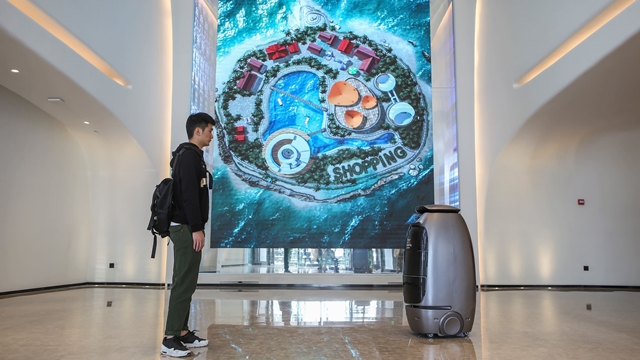
    An automated Alibaba hotel is set to open in Hangzhou. The move showcases the e-commerce giant’s technological capacity and serves to diversify its scope of business – with a view to demonstrating and selling its data-driven innovations. The company has claimed the hotel will be more efficient than manned properties within a comparable price range.

    The Alibaba hotel, which has already accepted bookings, features robotics, facial recognition, smart speakers, voice-activated lighting and room service, and automated alerts for cleaning. Hotel guests will be able to purchase any item featured in the rooms on Alibaba’s website.

    The hotel’s features are well in advance of similar voice-command technologies recently offered to the hospitality industry by Chinese search engine Baidu, although a similar hotel was launched by Shenzhen firm Smart LYZ in Chengdu earlier this year.

    A statement from the company read: “The solutions deployed at Alibaba’s Future Hotel can be used to streamline the operation of [China’s] hospitality sector while improving the experience of guests.”

  • Baidu sales, profit lift on increased online ads

    Baidu sales, profit lift on increased online ads

    China’s Baidu reported strong sales and profit in the recently closed second quarter, on the back of surging online advertising revenues.

    The Internet search engine said total revenues rose by nearly 25 percent to 26 billion yuan, marking the sixth straight quarter of revenue growth at the company.

    For the three months ended June 30, online advertising sales gained 25 percent to 21.1 billion yuan, said the Beijing-based Baidu, showing the video platform and newsfeed provider remained unhinged by the internet censorship spike to hit China in recent months.

    The US-listed media company said net income rose 45 percent to 6.4 billion yuan, or 18.14 yuan per American depositary share/

    “We are able to maintain a high standard and a close dialogue with [Internet] regulators,” Robin Li, Baidu’s chief executive, told investors in a conference call when discussing the earnings and the firm’s ability to dodge censorship restrictions.

    Baidu’s streaming service iQiyi Inc. also reported better-than-projected sales with its subscriber base increasing by 75 percent to 67.1 million users.

    The company continued to invest in Artificial Intelligence with research and development costs into AI doubling to 4 billion yuan in the latest quarter from 2 billion yuan in the first quarter of 2016.

    The driver of the costs involved staff, particularly as the company lost it chief operating officer in May, Lu Qi. Qi was the spearhead behind the AI investment.

    Looking ahead, the company said it expects third-quarter revenue of 27.37 billion-28.77 billion yuan, representing an increase of 23-30 percent year-over-year.

  • Alibaba said to buy out Baidu

    Alibaba said to buy out Baidu

    Alibaba Group Holding Ltd. plans to buy out Baidu Inc. and other investors in Chinese startup Ele.me to shore up its delivery network, a person familiar with the matter said, placing its biggest bet yet in online food and local services.

    An acquisition would hand Alibaba the biggest chunk of Chinese online food delivery and pit it directly against Meituan Dianping, backed by Tencent Holdings Ltd. Ele.me – which means “hungry yet?”. Meituan runs an army of delivery people on motorbikes across the country that could enhance Alibaba’s last-mile ability to get parcels to customers’ doorsteps and complement its Koubei neighbourhood services business.

    Alibaba, which owned 23 per cent of Ele.me as of May, plans to buy the stock from existing investors including Baidu, the person said, requesting not to be named because the matter is private.

    It is unclear how much Alibaba agreed to pay, but Ele.me was said to have been valued at between US$5.5 billion (S$7.23 billion) to US$6 billion in a May fundraising last year.

    The startup then bought Baidu’s delivery business at a US$500 million valuation in August 2017, a person familiar said at the time. The current talks are ongoing and it’s possible terms may change or the deal may not be completed.

    Alibaba, Ele.me and Baidu declined to comment.

    Alibaba shares rose 0.47 per cent to US$194.19 Monday in New York, the highest in four weeks. Baidu rose 2.2 per cent to US$256.25, the highest in more than a month.

    If the deal goes through, Alibaba and Meituan will dominate a Chinese food delivery market that Analysys estimates reached 67.7 billion yuan (S$14.1 billion) in 2017’s final quarter, up 16.2 per cent from the previous three months.

    For Baidu, it is another exit from a business considered peripheral to its core operations in search and artificial intelligence.

    “With its online traffic and Koubei business, Alibaba could create a lot of synergy with this acquisition,” said Steven Zhu, a Shanghai-based analyst with Pacific Epoch.

    “This would be a drag on the margin, because Alibaba now owns more delivery men and inventory, but it has no choice because long-term wise most consumption still takes place offline.”

    Alibaba has taken steps to shore up its logistics in recent months, taking over longtime delivery affiliate Cainiao and drawing up plans to invest in warehouses.

    Unlike e-commerce rival JD.com Inc. however, which builds and runs its own fleet of delivery people, Alibaba’s last-mile capabilities have been confined mainly to third-party partners. Its investments in so-called “new retail,” such as brick-and-mortar stores and grocery chain Hema, also help shore up the network, by providing delivery points and warehousing for parcels.

  • BlackBerry software to be used in Baidu’s self-driving platform

    BlackBerry software to be used in Baidu’s self-driving platform

    BlackBerry said on Wednesday it will collaborate with Chinese internet search firm Baidu Inc to tap the fast-growing autonomous vehicle market.

    BlackBerry, which has developed software QNX Hypervisor 2.0 to run complex computer systems in vehicles, said Baidu will use its software for its self-driving open platform, Apollo.

    “By integrating the BlackBerry QNX OS with the Apollo platform, we will enable carmakers to leap from prototype to production systems,” said Li Zhenyu, general manager of Baidu’s intelligent driving division.

    The automotive industry is one of the fastest-growing segments of the technology market, as automakers race to add more features toward building self-driving cars.

    As part of the agreement, BlackBerry and Baidu will also integrate Baidu’s smartphone integration software for connected cars and its AI system to run on the BlackBerry QNX Platform, the Canadian software maker said.

    U.S.-listed shares of BlackBerry were up 4 percent at $12.50 in premarket trade.

  • Huawei teams with Baidu on AI development

    Huawei teams with Baidu on AI development

    Huawei has entered a partnership agreement with Chinese search giant Baidu covering AI platforms and technology, internet services and content ecosystems.
    The two companies plan to develop an open mobile and AI ecosystem using Huawei’s HiAI platform and Baidu Brian, a collection of AI assets and services.
    The HiAI platform is being developed on Huawei’s embedded AI chipset, the Kirin 970. The chipset was used in the Huawei Mate 10, the world’s first smartphone powered by an embedded AI chipset, which launched earlier this year.
    The planned joint AI ecosystem will use Huawei’s neural network processing unit and Baidu’s PaddlePaddle deep learning framework to empower AI developers and provide consumers with a rage of AI offerings and smart services.
    In addition, the partners will work together on voice and image recognition for smart devices to enable more efficient human-machine interaction, and jointly build an augmented reality ecosystem for consumers.
    “The future is all about smart devices that will actively serve us, not just respond to what we tell them to do,” commented Richard Yu, CEO of Huawei’s consumer business group.
    “With a strong background in R&D, Huawei will work with Baidu to accelerate innovation in the industry, develop the next generation of smartphones, and provide global consumers with AI that knows you better.”