Retail News CRM

Tag: Balenciaga

  • Balenciaga Turns Heads with Voluminous Capes and Feathered Fashions at Paris Haute Couture Show

    Balenciaga Turns Heads with Voluminous Capes and Feathered Fashions at Paris Haute Couture Show

    Under the scorching midday sun, models strutted around a circular runway, donning oversized gowns, capacious capes, and trousers encrusted with ostrich feathers. This dramatic display marked designer Pierpaolo Piccioli’s debut haute couture collection in Paris, showcased on a sweltering Wednesday.

    Piccioli’s collection, designed for the autumn/winter season, comprised rich cashmere coats, elongated leather gloves, and feather-laden gowns. As the heatwave intensified in the city, these magnificent creations gracefully passed by spectators who were attempting to cool down by fanning themselves.

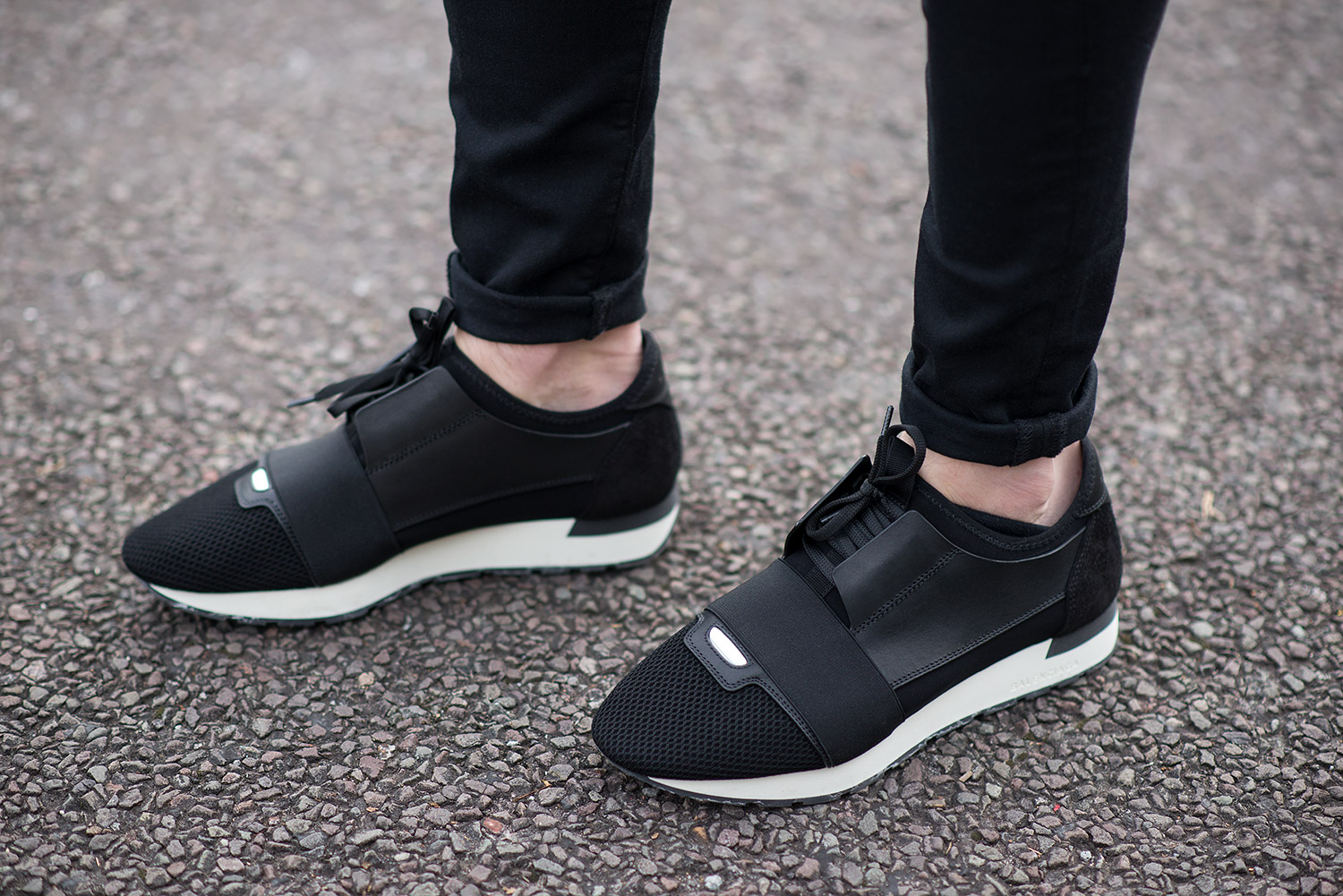
    The collection featured dresses with expansive balloon hems and jackets with curved backs, a nod to the unconventional, architectural fashion that Cristobal Balenciaga, the brand’s founder, was renowned for. Piccioli, with his 16-year tenure as creative director for Valentino under his belt, took the reins at Balenciaga a year prior and is keen to leave his imprint on the brand. His task is to balance the legacy of his predecessor, Demna, who during his 10-year stint introduced streetwear phenomena such as “ugly” oversized sneakers.

    Balenciaga, a component of the Kering luxury group, might be one of the smaller fashion houses, but it shares the limelight with other illustrious brands such as Gucci, Yves Saint Laurent, and Bottega Veneta. In 2020, the fashion house revived its haute couture collection, which had been on a hiatus since 1968.

    The show concluded with Piccioli’s appearance, accompanied by 30 of his key creative team members, all clad in white lab coats. They received a round of applause. The front-row attendees included renowned actors Demi Moore and Cynthia Erivo, with Kering’s CEO, Luca de Meo, also observing the spectacle that unfolded across the gardens of the historic Cite Universitaire student housing complex.

    Questions & Answers

    Who is Pierpaolo Piccioli?
    Piccioli is a renowned fashion designer who previously served as the creative director of Valentino for 16 years. He took over Balenciaga a year ago.

    What constituted the primary theme of Piccioli’s debut collection for Balenciaga?
    Piccioli’s debut collection was characterized by oversized forms and unconventional, architectural fashion, reminiscent of the styles that Cristobal Balenciaga, the brand’s founder, was known for.

    When did Balenciaga reinstate its haute couture collection?
    Balenciaga reinstated its haute couture collection in 2020, after a hiatus that began in 1968.
  • Balenciaga Unveils First Duplex Flagship Store in Hong Kong: A New Level of Luxury at K11 Musea

    Balenciaga Unveils First Duplex Flagship Store in Hong Kong: A New Level of Luxury at K11 Musea

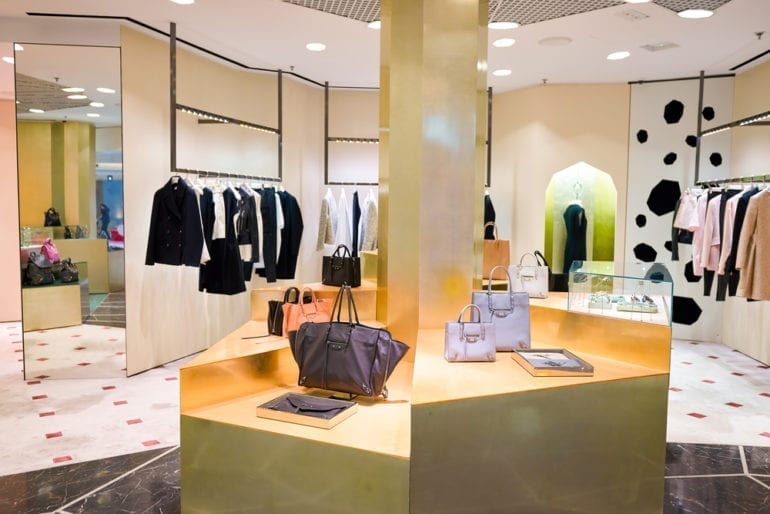
    Balenciaga, the luxury fashion brand, has launched its first ever two-level flagship store at K11 Musea, located in the bustling Tsim Sha Tsui district of Hong Kong.

    Details of the New Store

    Occupying a generous 461 square meters of retail space spread over two levels, the store offers a vantage point over Salisbury Road. The interior design cleverly juxtaposes industrial materials with high-end luxury finishes, a design concept that the brand refers to as its ‘Raw Architecture’ aesthetic.

    The store’s extensive inventory includes both men’s and women’s ready-to-wear collections, footwear, bags, accessories, jewelry, and eyewear. It also features products exclusive to this store.

    Innovative Features

    In addition, the new flagship store includes an exclusive area for Very Important Clients, designed for private appointments. This is a first for Balenciaga in Hong Kong. The design of this area takes inspiration from the fitting rooms of Balenciaga’s Paris Couture Store.

    Part of a Wider Luxury Brand Upgrade

    This launch comes as part of a larger luxury brand upgrade program at K11 Musea. In recent times, the retail complex has seen significant store upgrades from other high-end brands including Audemars Piguet, Van Cleef & Arpels, and Dior Beauty.

    Furthermore, K11 Musea has recently become home to the Delvaux Hong Kong flagship store and the largest Tory Burch store in the city, as part of its ongoing efforts to enhance its luxury brand portfolio.

    Questions & Answers

    What is unique about the new Balenciaga store in Hong Kong?
    The new store is Balenciaga’s first two-level flagship store in Hong Kong. It also introduces a private appointment area for Very Important Clients, a first for Balenciaga in the city.

    What is the ‘Raw Architecture’ aesthetic?
    ‘Raw Architecture’ refers to Balenciaga’s signature design style that combines industrial materials with high-end luxury finishes.

    What is the significance of the store’s location at K11 Musea?
    The store’s location at K11 Musea is significant as the retail complex is currently undergoing a luxury brand upgrade program. The complex is home to a number of high-end brands and is actively enhancing its luxury brand portfolio.

  • Client data exposed in Gucci, Balenciaga and McQueen cyberattack

    Client data exposed in Gucci, Balenciaga and McQueen cyberattack

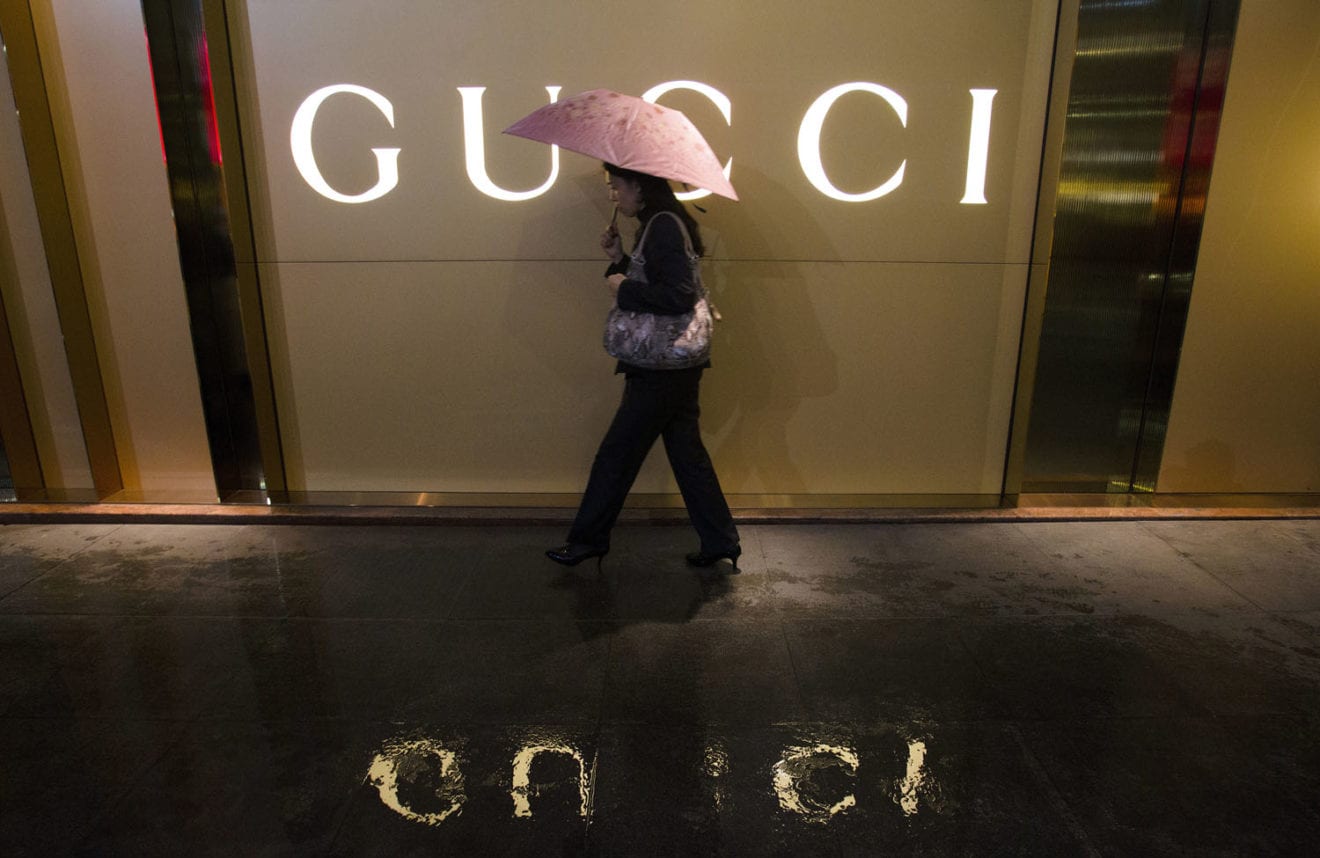
    Luxury brands Gucci, Balenciaga, and Alexander McQueen have fallen victim to a cyber attack, leading to the potential theft of millions of customer’s private details. The assault targeted Kering, the French corporation that owns these prestigious labels.

    Kering recognized and confirmed the breach but did not publicly name the brands impacted. In a statement made in June, they reported that “an unauthorized third party momentarily gained access to our systems and accessed limited customer data from some of our Houses”.

    This incident is not an isolated event but seems to be part of a broader trend impacting luxury brands and retailers throughout the year. Other brands that suffered similar breaches include Cartier, owned by Richemont, and labels under LVMH. In July, a data leak affecting approximately 419,000 customers at LVMH’s Louis Vuitton was being investigated by Hong Kong’s privacy watchdog.

    The stolen customer data reportedly includes names, email addresses, phone numbers, addresses, and the total amounts spent at the brands’ stores. Notably, Kering has reassured that no financial information, such as credit card or bank account numbers, was stolen during the attack.

    The hackers, referring to themselves as “Shiny Hunters,” allege to have data associated with 7.4 million unique email addresses.

    In response to the breach, Kering stated that its brands promptly reported the incident to the relevant authorities and notified customers in accordance with local regulations. However, Kering did not provide a response when questioned about the countries impacted by the cyber attack.

    Questions & Answers

    What brands were affected by the cyber attack?
    The affected brands include luxury labels Gucci, Balenciaga, and Alexander McQueen, all owned by French parent company Kering.

    What kind of customer information was stolen during the breach?
    Reportedly, the stolen client data includes names, email addresses, phone numbers, addresses and the total amounts spent at the brands’ stores. However, no financial information like credit card or bank account numbers were compromised.

    How did Kering respond to the cyber attack?
    Kering reported that its brands immediately disclosed the breach to relevant authorities and notified customers as per local regulations. However, they did not comment on the specific countries affected by the attack.

  • Balenciaga brings haute couture to Shanghai museum environment

    Balenciaga brings haute couture to Shanghai museum environment

    Balenciaga has taken its exclusive 50th Couture Collection to Shanghai, China, the first time it has introduced haute couture outside Paris.

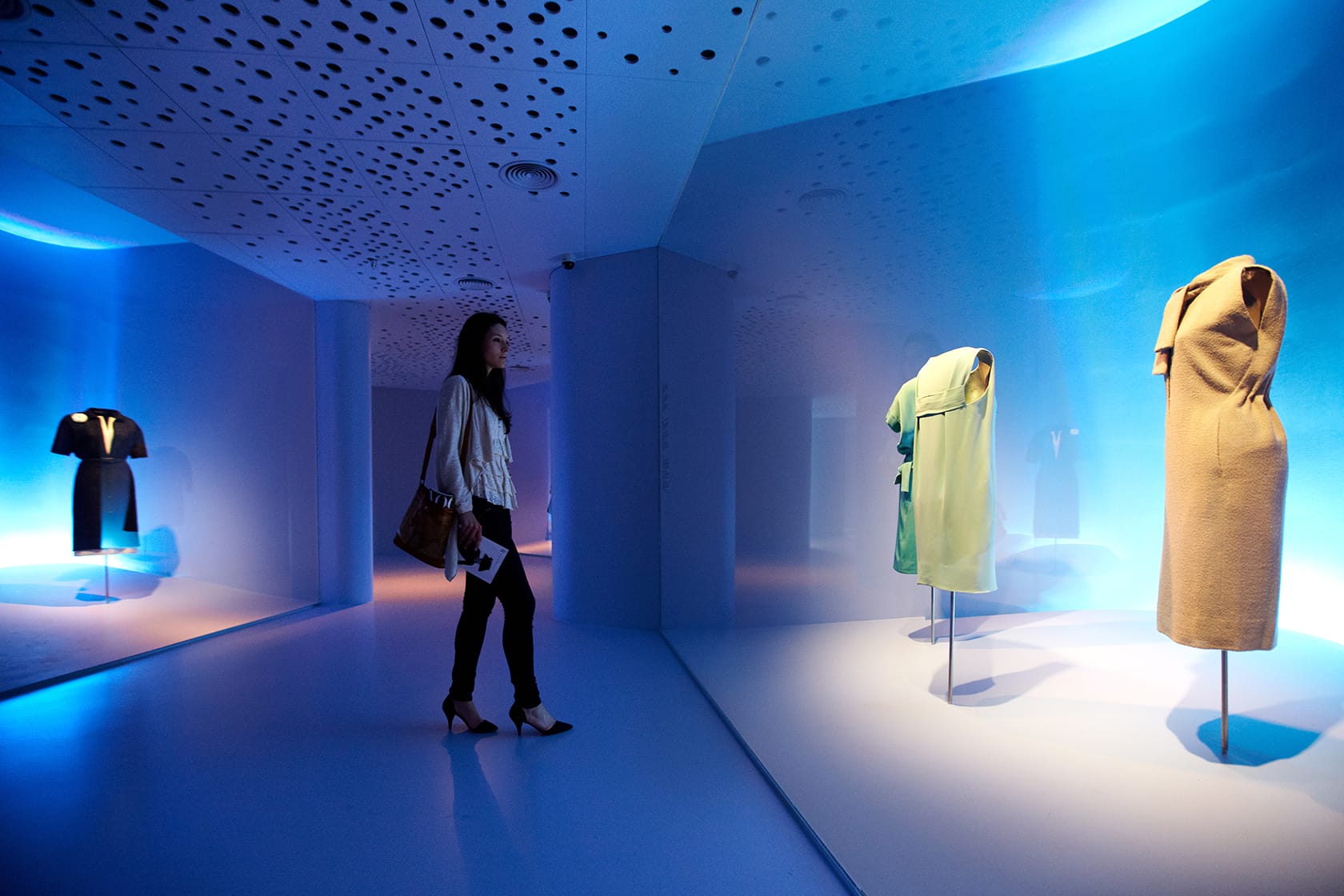
    Presented at the Tank Shanghai museum, the collection features 30 looks created by Demna Gvasalia, creative director at Balenciaga. The museum was refurbished for the five-day event, housing a couture salon, a showroom, a grand hall, and a banquet room.

    “As China isn’t able to travel to Europe, either, I felt it was our duty to bring the Balenciaga 50th Couture Collection there,” said Gvasalia. “I’m proud to share with China this very important moment celebrating the culture, craftsmanship, and heritage of Balenciaga in an exhibition featuring my first couture collection.”

    The exterior was decorated with cream-colored curtains to hide the spaces’ new interiors.

    “Once inside, guests experience an environment that draws on the aesthetic tropes of Balenciaga’s recently restored historic couture salon and atelier, 10 Avenue George V,” the company said in a statement.

    The launch of haute couture in China celebrates the 50th anniversary of the last collection by Cristobal Balenciaga, demonstrating the brand’s ambition to take a bigger bite out of the growing Chinese luxury market.

  • Balenciaga faces backlash over Chinese Valentines Day-exclusive mockery

    Balenciaga faces backlash over Chinese Valentines Day-exclusive mockery

    Luxury label Balenciaga has drawn widespread scorn in China over promotional material for a new handbag range.

    In celebration of yet another Chinese Valentines Day (QiXi), Kering-owned Balenciaga has released four limited-edition bags of its Hourglass collection on Tmall.

    Graffitied on the bag are Chinese phrases such as “He loves me”, “I love you”, “You love me” and “I love me”. Each of these bags sell for US$2000.

    The campaign is stylised with an amateur Photoshop aesthetic – ones referenced to the Chinese “senior pictures” (similar to the likes of India’s infamous WhatsApp ‘Good Morning’ images), where a stock image is paired with a bold Microsoft Art text. The Balenciaga QiXi campaign features models in front of a stock image backdrop with pixelated Valentines images Photoshopped on top.

    The dated image has received backlash online with netizens calling the brand out for its gaudy – and even insulting – designs. A hashtag shortly surfaced not long after its debut, with #BalenciagaChineseValentinesCampaignisTacky (self-translation), drawing more than 220,000 discussions and 180 million views on Weibo. Another hashtag trending on social media was #BalenciagaInsultsChina.

    The Balenciaga backlash is yet another example of failure by a Western brand designing limited-edition exclusives, specifically geared towards the Chinese market, but getting the pitch and tone all wrong.

    With the continuing focus on China and desperate attempts to win more of their wallet share, many local consumers are shifting their spending towards domestic labels with ‘more authentic’ intentions.

  • Reliance to launch Balenciaga in India

    Reliance to launch Balenciaga in India

    Indian retailer Reliance Brands is to launch Spanish fashion label Balenciaga in India.

    The move comes shortly after Reliance signed a deal to bring US luxury jewelry brand Tiffany and Co to India last July, with the first store opening last month in New Delhi.

    The first Balenciaga in India store will open in the Jio World Centre mall in Mumbai.

    Reliance now holds a portfolio of more than 45 international luxury and premium brands.It operates more than 682 stores.

    Balenciaga is a Basque heritage label that was acquired by Kering nearly 20 years ago. It sells in several locations in Asia, including Hong Kong, Indonesia, and Mainland China. It achieved US$15 billion in sales in 2018.

  • AirPass helps Aussie retailers woo Chinese shoppers

    AirPass helps Aussie retailers woo Chinese shoppers

    Recently, Australia fintech company AirPay Financial Technologies announced its regional collaboration with China leading mobile payment technology company SwiftPass to form a new lifestyle brand “AirPass”. Connecting Australian merchants directly with Chinese consumers, AirPass lets local retailers accept WeChat Pay and Alipay both online and offline, as well as reach overseas markets to make the most of the global Chinese spending boom.

    AirPass is a lifestyle brand backed by Australian fintech startup AirPay Financial Technologies, in partnership with leading Chinese mobile payment provider SwiftPass. The new brand brings China’s most popular ePayment, eStore, eCard, eMarketing and eWallet services to Australia, allowing Chinese tourists, students and migrants to make over the counter purchases by simply scanning a QR code on their smartphone.

    The payment platform can also be integrated into Australian e-commerce websites and mobile apps, taking advantage of AsiaPay’s PayDollar payment gateway. Supporting multiple shopping cart plugins, PayDollar provides a one-stop online payment solution allowing local merchants to accept Alipay, WeChat Pay, Visa, MasterCard, Amex, PayPal and ZipPay

    “AirPass is providing a user-friendly platform for Australian retailers to build their own eStore to facilitate marketing and payment – which is the key to entering the Chinese consumer market,” says SwiftPass Technologies VP Tong Liu.

    Meanwhile, the AirPass app for iOS and Android lets Australian retailers connect directly with Chinese shoppers. AirPass assists Australian retailers and brands with setting up their own WeChat eStore to tap into Chinese social marketing channels. This allows local retailers to sell products via the WeChat ecosystem, reaching new customers in China along with Chinese communities around the globe.

    AirPass’ arrival in Australia comes as Boxing Day saw record high sales to Chinese shoppers across major retailers and shopping centre groups such as Westfield, Chadstone, QVB and Pacific Fair.

    “We are thrilled to announce our regional partnership with SwiftPass and recently launch WeChat Pay and Alipay to Australia’s largest and oldest pearling company Paspaley,” says AirPay Financial Technologies chief executive Jimmy Zhu. “There is huge demand from the market pushing us to deliver more advanced payment and marketing products.”

    Another Australian family-owned luxury retailer, Harrolds recently launched a WeChat Official Account and will soon accept WeChat Pay and Alipay in-store.

    Other luxury brands such as Gucci, Saint Laurent, Bottega Veneta, Balenciaga, Valentino, Mulberry, Givenchy, Off-White, Marais, Furla, Folli Follie and Sneakerboy are also adopting the AirPass platform in order to better reach Chinese shoppers.

  • Balenciaga launches first in-house eyewear line with Dover Street Market

    Balenciaga launches first in-house eyewear line with Dover Street Market

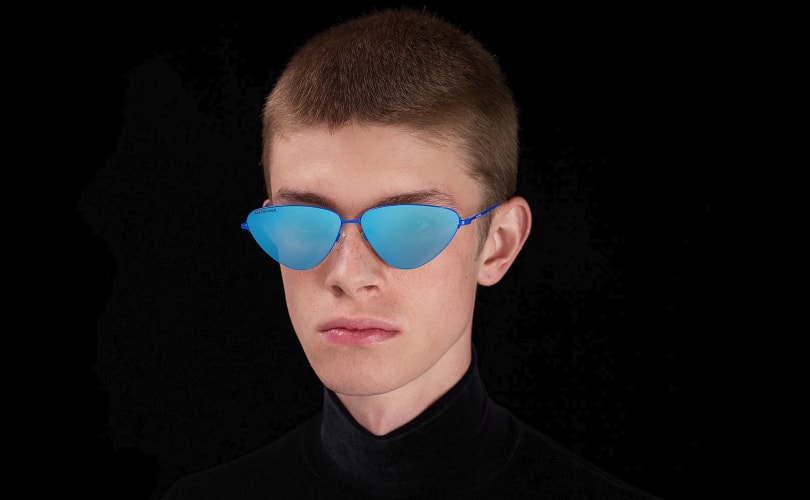
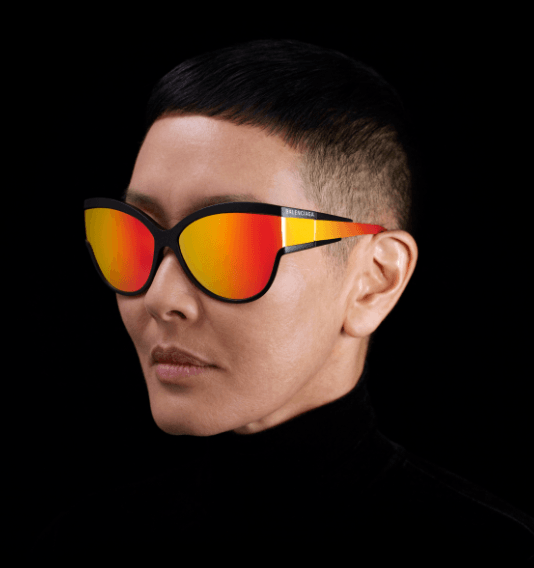
    French luxury house Kering has launched its first in-house Balenciaga eyewear line at British Dover Street Market stores. The new collection is exclusive to the DSM chain in the US, UK, Japan, Singapore and China, as well as the brand’s e-commerce channel. The high-end products are valued between US$290–570, with both sunglasses and prescription frames available.

    The Balenciaga eyewear line represents the first in-house Kering Eyewear product range. Previous Balenciaga collections were produced under Marcolin Eyewear, the creator of shades for numerous luxury labels.

  • Why is Kering buying its shares back?

    Why is Kering buying its shares back?

    Kering, which owns Gucci, Saint Laurent and Balenciaga, said it planned to buy back up to 1 percent of its share capital over a 12-month period. According to the luxury-goods group, the total amount of the share buyback agreement would not exceed €300 million (about $342 million) and the price would not exceed €480 per share.

    A stock buyback, also known as a share repurchase, occurs when a company buys back its shares from the marketplace. This means that by paying shareholders the market value per share, a company like Kering can reabsorb a portion of its ownership that was previously distributed among public and private investors.

    But what are the reasons for this?

    Each share represents a small stake in the ownership of the company. There can be several reasons for a share buyback, such as preserving stock price, but in Kering’s case, the move suggests that the company’s senior management is confident about the business and believes its shares are undervalued.

    Undervaluation can occur for multiple reasons. Kering’s management may believe the business is undervalued due to investors’ jittery sentiment around the China market and their ability to see potential in the company’s long term performance.

    Shares in Kering hit a record high of around €522 in June, but dipped in the past three months over worries that white-hot megabrand Gucci was running out of steam.

    The stock rose again in late October after the group reported a better-than-expected rise in third-quarter revenue.

    Sales growth for the conglomerate had been expected to slow from 31.5 percent a quarter earlier to the 22.5 percent rise forecast in a poll of analysts by Inquiry Financial.

    But Gucci sales proved stronger than expected.

    Buying back shares is also a common way for companies sitting on big cash piles to do something about it, and the ideal time is usually after a drop in the stock price.

    It wasn’t Kering’s stocks alone that fell earlier this month.

    Shares in European luxury-goods companies including French rival LVMH sunk, with analysts citing concerns over a consumer slowdown in China, its single biggest market.

    Part of this is due to a crackdown by customs officials, which limits the amount individual Chinese travellers can bring back from abroad.

    “In the most recent weeks, Kering has suffered more than its fair share of pain on the back of the luxury sector downward adjustment following concerns on Chinese consumer confidence,” said Luca Solca, head of luxury goods at BNP Exane Paribas.

    “This has come as investors wanting to reduce exposure to the sector have chosen to lock in gains in stocks that had performed the most, like Kering.”

    Since Chinese consumers account for 32 percent of the worldwide total of luxury sales and about one third of them shop overseas, this is a worry for brands.

    In addition, there is the continued issue of daigou (grey market shopping agents) and the fact that China’s economy is growing at its slowest pace since the financial crisis.

    Gucci president and chief executive Marco Bizzarri acknowledged these challenges.

    “I control what I can control,” he said.

    “Currency fluctuations, traffic flows, daigou duties. It is something we cannot control as a company, so as a CEO I need to control what I can. I hope that Chinese customers are now going to spend more in China, so we’ll do our best to increase their shopping experience here.”

    Jean-Marc Duplaix, Kering’s financial director, said during Kering’s third-quarter earnings call, which came after luxury stocks fell, that the company was seeing an improvement in the retention of Chinese millennial customers and demand had not dipped.

    “In terms of spending power, the situation is still quite sound in China,” he said. “All the events especially in China we had in September or in October, we saw quite good figures. I think that underlying trends are still very, very, very solid.”

    Earlier this year, Bizzarri said that Gucci’s eventual target is to achieve €10 billion ($11.6 billion) in annual revenue.

    “We don’t expect short-term growth issues at Gucci, and anticipate more positive surprises on operating leverage,” said Solca.

  • Gucci powers Kering third quarter sales

    Gucci powers Kering third quarter sales

    Kering sales growth significantly outpaced its rivals during the third quarter, up 27.6 per cent as reported and 27.5 per cent on a comparable basis, to €3.402 billion. In Kering-operated stores, Asia Pacific sales rose 33.3 per cent on a comparable basis, bettered only by North America’s 36.1 per cent increase. Growth in online sales exceeded 80 per cent and wholesale sales rose 27 per cent.

    “We are extraordinarily proud of the remarkable performances Kering delivers quarter after quarter,” said chairman and CEO Francois-Henri Pinault. “Our growth, whose pace is unprecedented in the luxury sector, is sound, well balanced and sustained across all regions and distribution channels.”

    Pinault said the company’s enduring success comes down to the talent of each of its brands in “creating strong emotional ties with its customers, conceiving a bold, generous creative universe, and reinventing its codes”.

    “Beyond short-term developments, we know that the secular growth of the luxury market, but particularly our solid fundamentals and the discipline with which we implement our strategy, will continue to support our operating and financial outperformance.”

    Gucci led Kering sales growth during the quarter, with sales up 35.1 percent and strong performance across all distribution channels, regions and product categories. Gucci Asia-Pacific sales soared 41.9 per cent.

    Yves Saint Laurent sales rose 16.1 per cent, driven by the strong performance of iconic lines and the success of new collections.

    While Bottega Veneta sales were down 8.4 per cent on a comparable basis, the label is in a transitional phase led by recently appointed creative director Daniel Lee (ex Celine). His first full collection will go on sale early next year.

    Kering’s other houses (labels) achieved a 32.3 per cent increase in sales, driven by  “exceptional momentum” at Balenciaga and ongoing growth at Alexander McQueen. New collections and extended iconic lines from Boucheron, Pomellato and Qeelin were “very well received”.

    The watches and jewellery categories delivered what the company described as “solid performances”.

  • The 15 hottest online luxury brands in 2018

    The 15 hottest online luxury brands in 2018

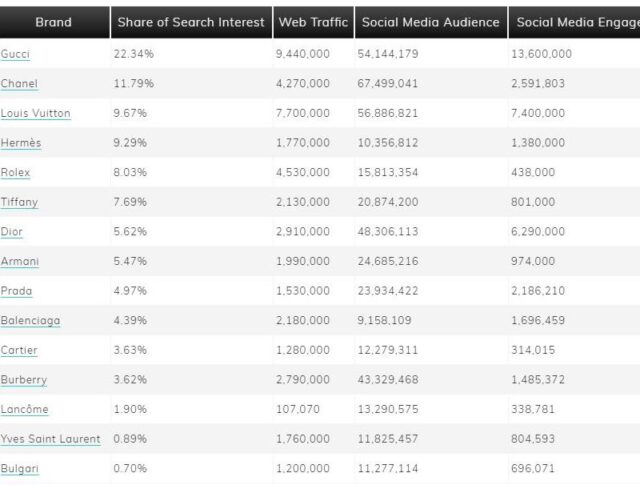
    Some brands have embraced digital better than others, as evidenced by their popularity online. According to a new report by Luxe Digital, the top 15 most popular luxury brands online are particularly successful at building online awareness but also at forging deep emotional connections with their audience—particularly young affluent consumers.

    The ranking provides a good gauge of the sales potential of the brands for this coming year-end.

    It’s also a great source of inspiration and best practices for luxury leaders. By exploring how the top high-end brands are performing online, one can understand the reasons for their popularity and how their approach could be replicated.

    Gucci is leading the 2018 ranking, followed by French houses Chanel and Louis Vuitton.

    Interestingly, it is Italian fashion brand Balenciaga that saw the most impressive growth thanks to its fresh take on luxury streetwear.

    The Direct-to-Consumer approach emerges as a winning strategy for luxury

    The ranking is largely dominated by fashion brands, although Rolex and Tiffany made it to the top 10.

    It is worth noticing that Lancôme is the only beauty brand to appear in the list, finishing at the 13th position.

    A noticeable trend is the Direct-to-Consumer retail model which is increasingly more adopted by luxury brands. The DTC approach emerges as a great way for high-end brands to control their brand identity online and own their customers’ data.

    Influencer marketing is also playing a key role in 2018. Virtually every brand in the top 15 has collaborated with social media influencers to shape the conversations online and drive brand discovery amongst untapped audiences.

    For luxury fashion specifically, high-end streetwear is clearly making the buzz this year.

    Other noticeable trends for 2018 include more interest in sustainable practices and social causes. Natural cosmetics, natural and vegan beauty products, in particular, are also generating a lot of online interest.

    The rising share of affluent Millennials and Gen Z consumers

    These trends are mainly driven by the growing portion of more socially-conscious, affluent Millennials and Generation Z consumers.

    This shift in consumers’ values and preferences combined with the disruptive impact of new technologies are challenging the traditional notions of luxury.

    As the sophisticated younger generations become important luxury shoppers, modern luxury brands are evolving their offerings to appeal to their specific tastes.

    Luxury brands are also adapting their marketing strategy to offer a seamless shopping experience both online and offline in line with the younger affluent consumers’ growing expectations.

    Conscious of the essential role that new technologies play in driving their narrative, luxury leaders are finally embracing digital technologies.

    For brands, it is clear that the ability or inability to pivot to this new reality will continue to widen the gap between the successfully agile luxury brands and the slow adopters.

  • Luxury group Kering reports positive numbers

    Luxury group Kering reports positive numbers

    Fashion giant Kering’s decision to focus the business on luxury appears to be paying off.

    In what chairman and CEO Francois-Henri Pinault termed “dazzling top-line and earnings performances” during the first half year, total revenue rose 33.9 per cent on a comparable basis and operating margin rose above 30 per cent for the first time in the company’s history.

    Kering sales in Asia rose by 37.6 per cent, excluding Japan, where sales rose by 30.7 per cent. That growth rate lagged the US, (up 45.4 per cent) but was well ahead of Kering’s home European market’s 25.1 per cent. Online sales more than doubled.

    While the growth occurred across most of the company’s brand portfolio, Gucci clearly led the way with sales up 44.1 per cent on a comp basis and margin from recurring operations reaching 38.2 per cent. Yves Saint Laurent sales rose 19.7 per cent.

    Revenue from Bottega Veneta was stagnant, up just 0.9 per cent, but all the other houses collectively rose by 36.5 per cent, led by Balenciaga and Alexander McQueen.

    First-half year consolidated revenue was €6.432 billion, up by 26.8 per cent before taking into account exchange rate influences and changes to the group structure. A year earlier, Kering’s portfolio included sportswear label Puma, a majority stake of which has since been spun off.

    Net income rose 185.7 per cent to €2.36 billion, although just over half of that was a capital gain resulting from the sell-down of Kering’s Puma stake.

    Pinault said Kering’s growth was “grounded in the exclusivity and desirability of our brands”.

    “The development model we implement across our houses paves the way for increased value creation as well as profitable, sustained and consistent organic growth. While facing increasingly demanding comps and an uncertain global environment, we will once again substantially enhance our financial and operating performances in 2018.”

  • It is sneaker time for luxury fashion

    It is sneaker time for luxury fashion

    What do you get when luxury fashion meets sport? $10,000 sneakers.

    High-end brands such as Kering’s Gucci, Prada and Balenciaga are increasingly looking to sneakers for growth, putting them in direct competition with sportswear giants like Nike, Puma PMUG.DE and Adidas, and giving rise to ever-more striking and expensive designs.

    Luxury groups say they are now increasing investments and marketing budgets to face down their new opponents.

    “When I saw sneakers were going to be a thing, I fought it for a bit,” Salvatore Ferragamo’s (SFER.MI) designer Paul Andrew said at a conference. “We’re definitely now investing heavily in that category, getting in very specialized people”.

    Global sales of sneakers – or trainers – rose 10 percent to 3.5 billion euros last year, outperforming a 7 percent rise in handbags, according to consultancy Bain & Co.

    “It’s not really even a trend anymore – it’s become a category,” said Bruce Pas, Men’s Fashion Director at U.S. department store Neiman Marcus.

    Both luxury groups and sports companies are looking to cash in on a booming market. Premium sneakers can start at around $400 but can easily rise as high as $3,000, for a pair of Christian Louboutin’s leather, crystal-embellished sneakers.

    Limited editions can sell for well over $10,000, including the Chanel X Pharrell Hu Race Trail or Nike’s Air Jordan 3 Retro DJ Khaled Grateful.

    Sneakers are a big driver of the luxury shoe business, which accountancy firm EY says is the fashion industry’s fastest-growing area.

    The rise of luxury sneakers is part of the growing influence of casual and streetwear in high-end fashion, where it is now acceptable to team sneakers with a tailored suit.

    Upmarket brands are tapping into street style to refresh their looks and young buyers are driving the shift. “Millennials” – born between the early 1980s and mid-90s – already represent a third of the luxury market, according to Bain.

    Several luxury group executives recently noted the importance of sneakers for their business and the need to step up their game to face the rising competition.

    Emilio Macellari, finance chief of Italian luxury goods company Tod’s – a pioneer in the sector, having launched its first Hogan luxury sneaker in 1986 – said “there is no brand that is not currently considering its (sneaker) offer”.

    Pointing out how times are changing, he said luxury brands were now “under attack” from sportswear companies, on top of the usual competition from their luxury peers.

    But so-called “sneakerisation” could steal market share from more traditional and formal-looking footwear, industry operators say.

    “What has changed is competition, with a clear overlap,” said Claudia D’Arpizio, partner at Bain & Co. “Luxury consumers are buying Nike and Adidas and vice-versa”.

    “If (luxury groups) go the sports way… it is only positive,” said Puma Chief Executive Bjorn Gulden said. “If that is a trend that pulls the sneaker market up, we can only be happy.”

    Analysts also say the intensifying competition is unlikely to erode profit margins because the market is expanding.

    “There is large space for prices moving up,” said Erwan Rambourg from HSBC. “The ‘luxurisation’ of sneakers could possibly impact margins positively”.

  • The $1,290 Balenciaga “T-shirt shirt” goes viral

    The $1,290 Balenciaga “T-shirt shirt” goes viral

    Pushing all those social media buttons and getting everyone het up to such an extent that they have just become complicit in making an item in the men’s collection a veritable phenomenon simply on the back of an Instagram post.

    When will we stop swallowing the bait? One moment there’s a picture online, and the next it has spawned 1,000 memes — all of which lead back to the source, and all of which play right into the hands of the very canny designer Demna Gvasalia.

    He understands as well as anyone how to ride the hype cycle and bend the free-floating and often indiscriminate desire of the digisphere to use fashion as target practice to his own advantage.

    It is, of course, of the T-shirt shirt, a men’s wear product from the Balenciaga fall 2018 collection that is exactly what it sounds like: a cotton T-shirt twinned to a cotton button-up shirt in complementary colors that can be worn with the long-sleeved shirt draped on the front, or the T-shirt draped off the back.

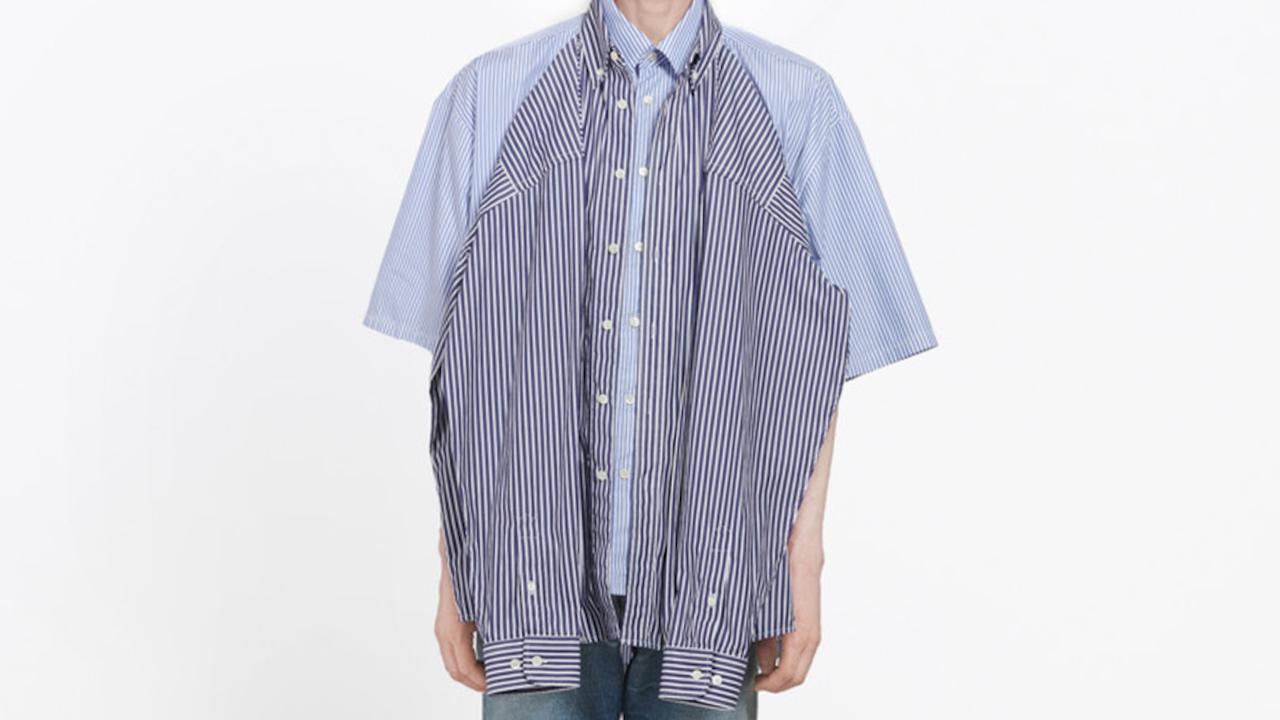
    It costs $1,290 and is currently available to order. It’s not quite two-for-one, but close. It’s in the same family as the Double Shirt (a short-sleeved button version with the long-sleeved one that costs $1,490) and has a sibling in the spring women’s collection (a version that costs $1,690 is sold out at the Balenciaga store online), though no one seems to have registered any outrage about that one yet.

    In collection context, the T-shirt shirt could be seen as smart, pointed commentary on our conflicted relationship with the whole idea of smart casual dressing and obsession with becoming the next Mark Zuckerberg by shedding the corporate uniform.

    But on its own in various Instagram posts, with a young man looking serious and pouty while draped in multiple empty sleeves, it went viral on tides of self-amused commentary about fashion’s ridiculousness.

    The Twitterati had a field day! The Daily Mail weighed in! So did Perez Hilton. Fortune and CBS did stories. Those are just a few of the reactions, which have come from India, Mexico, Germany, Britain and Canada, among other places. Most of them could be summed up as: Look at everyone freaking out about the crazy fashion types making weird stuff.

    Though Balenciaga declined to comment on the reactions, this is not the first time the brand has turned the potential of social media mockery over what is perceived as a silly product into a strategy.

    It began just over a year ago, when a leather version of the classic IkeaFrakta shopper that cost $2,145, instead of the original’s 99 cents, sent the internet into a similar frenzy about apparent fashion excess — and then sold like hot cakes.

    That may have been a fluke, but then came the embellished platform Crocs for $850, which again produced shock and horror online — and were sold out on some sites before they even arrived, thanks to the number of pre-orders engendered by all that chat. And now we have the T-shirt shirt.

    Are you seeing the same pattern I am seeing? With both Balenciaga, where Mr. Gvasalia has been creative director since October 2015, and his own brand, Vetements, the designer has made something of an art form out of appropriating the basic clothing (or high fashion) common denominators that we have long taken for granted and twisting and torquing them into new forms that demand a rethink. Now he is doing exactly the same thing with our reactions.

  • Trend of ‘ugly’ summer collection

    Trend of ‘ugly’ summer collection

    From mop shoes to bejewelled crocs, ‘ugly fashion’ is 2018’s most pervasive trend.

    In fact, it has popularised items that are so deeply uncool, wearing them proves, ironically, just how cool you are.

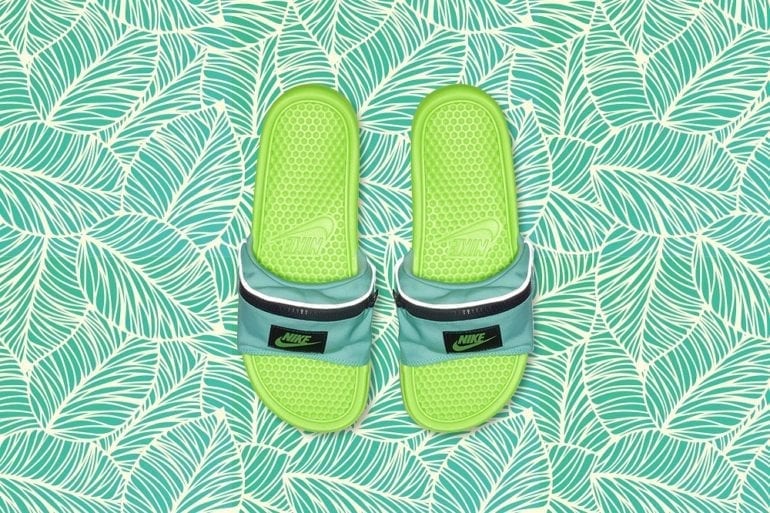
    The latest addition to the trend: Nike’s ‘fanny-pack’ – or as we call them in the UK, ‘bum bag’ – Benassi slides. They are sandal slides with a handy zip pouch for you to keep your… well, we’re still trying to figure that part out.

    The shoe might not be available yet, nor do we know how much this reworked Nike classic is going to cost, but having a bumbag on your foot has sent the Twitterverse into a frenzy.

    The latest addition to the trend: Nike’s ‘fanny-pack’ – or as they are called in the UK, ‘bum bag’ – Benassi slides. They are sandal slides with a handy zip pouch for you to keep your some of your belonging, not sure what yet.

    The shoe might not be available yet, nor do we know how much this reworked Nike classic is going to cost, but having a bumbag on your foot has sent the Twitterverse into a frenzy.

    But mostly, people have just been wondering what to do with this extra pocket space. The truth about ‘ugly fashion’ is that it definitely creates quite a buzz online, and cascades of UGC.

    But they are not the only shoes in the ugly fashion universe. In fact, sported by the likes of Gigi Hadid and Kendall Jenner, ‘ugly’ footwear companies like crocs have enjoyed a higher market value thanks to the effect of the trend.

    Basically, ugly fashion is here to stay.