Tag: bangkok

  • AMD Ryzen processor box art revealed by Thai retailer

    AMD Ryzen processor box art revealed by Thai retailer

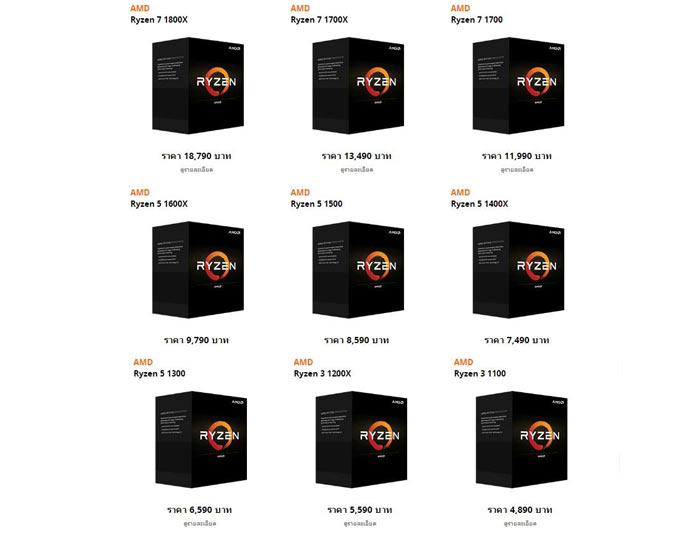
    Another day, another AMD Ryzen leak / rumour / news morsel… or two. Particularly interesting today we see what is claimed to be an AMD Ryzen box art matrix from Thailand. The web images don’t only show the products which will be soon on sale but the prices, in Thai Baht naturally. In a similar vein a Belgian online retailer has let slip its prices for the AMD Ryzen 7 range of CPUs.

    Looking at the single box art close-up we have available, above, via WCCFTech, the box design is rather simple and mainly black. Just because these have appeared on a Thai retailer site doesn’t mean they are representative of what AMD will ship either. It’s hard to know if the retailer images are overcompressed or just shoddily put together as placeholders, maybe by the retailer itself.

    Perhaps more important than the box images, if they are genuine, is another price indication at this time. Looking over the nine CPUs and prices in Thai Baht we see a price range from the Ryzen 7 1800X at 18,790 Baht (£430), down to the Ryzen 3 110 at 4,890 Baht (£112). Its possible to click through the above image matrix on the Thai retail site and get more details. You can find a full set of these pictures in the source article, one is included below for reference.

  • Krungsri gears up for return of investors from Japan

    Krungsri gears up for return of investors from Japan

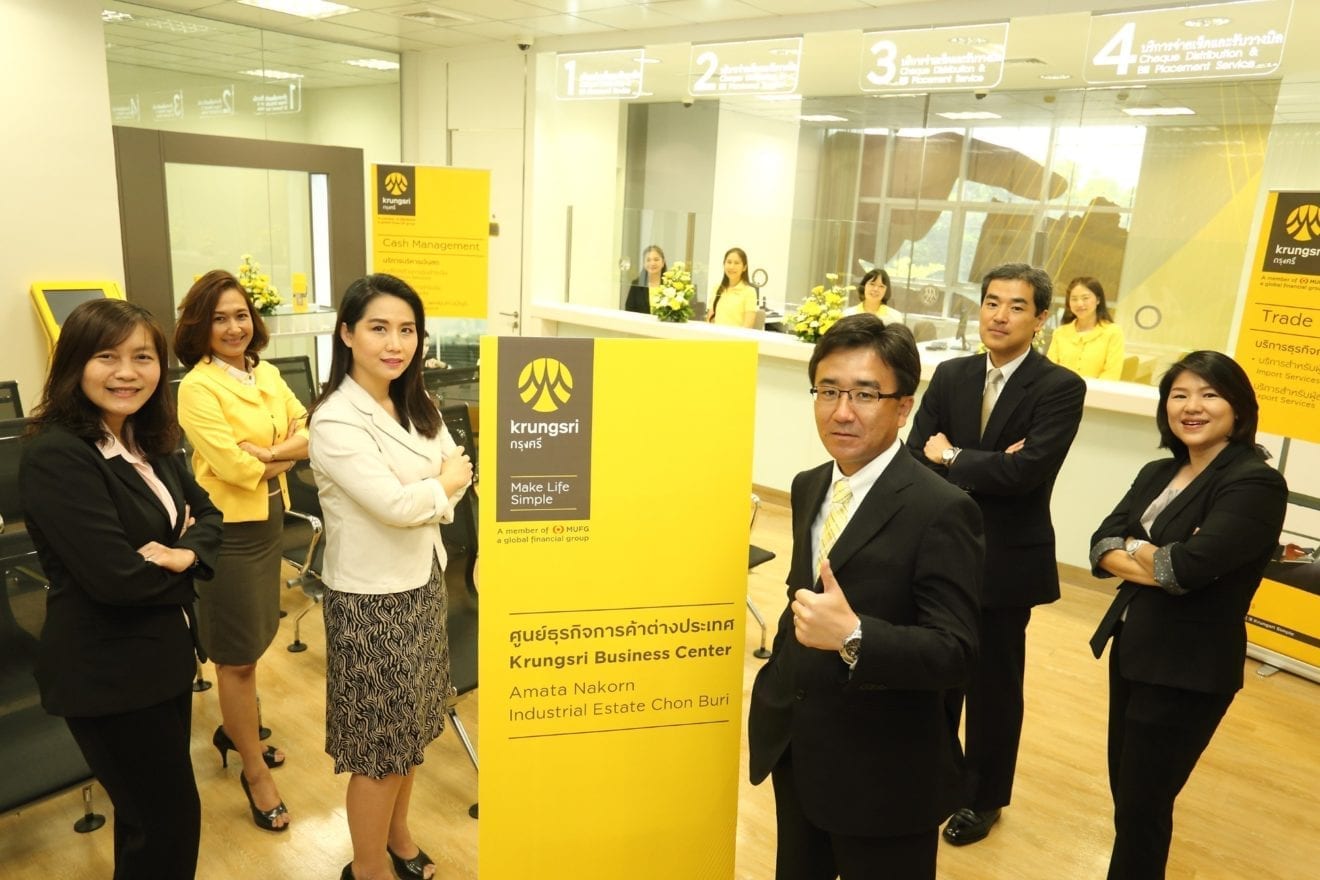
    Bank of Ayudhya, commonly known as Krungsri, is reinforcing its commercial banking after seeing a return by Japanese companies considering investment in the Kingdom in light of the government’s “Thailand 4.0” industrial goals.

    Pornsanong Tuchinda, head of commercial banking, said yesterday that healthcare and wellness and real estate were currently the priority focus of Japanese businesses looking to invest in Thailand again since the government announced the Thailand 4.0 industrial-development policy.

    The actual level of new Japanese investment will be seen when these companies have a clear picture of development plans under the policy, he added.

    Japanese companies invested in Thailand have been a crucial part of the customer base for Krungsri’s commercial-banking operations since 2015, reflecting the successful integration between the Thai bank and BTMU (Bank of Tokyo-Mitsubishi UFJ) Bangkok Branch, which is part of Japan’s MUFG (Mitsubishi UFJ Financial Group), he said.

    Pornsanong said Japanese investors were currently eyeing healthcare and wellness business in Thailand because of this country’s increasingly “greying” population.

    Japan has expertise in healthcare and wellness in light of its own ageing population, while real estate is another business that investors are keen on because of its being tourism-related.

    The bank will offer investors total financial solutions, catering to corporate customers that may not only require financing but also financial advice and business-matching services, he said, adding that Krungsri would therefore focus more on how to deliver a package of solutions to such clients.

    A number of medium-sized Thai hospitals also are interested in expanding their healthcare and wellness business, presenting a further opportunity for the bank’s commercial-banking arm, he said.

    Last year, the unit enjoyed loan growth of 11 per cent, with outstanding lending rising to Bt642 billion thanks to the financing of major deals involving Siam City Cement, which acquired a cement business in Sri Lanka; Central Group, which purchased a retail business in Vietnam; and Thai Union Group, which acquired a business in the European Union, Pornsanong said.

    Excluding those large deals, loan growth was 7-8 per cent.

    This year, while the bank’s commercial-banking arm targets 5-per-cent growth due to fewer big deals on the horizon, it should still outpace its peers thanks to the recovering Thai economy and Thailand 4.0-related business activity, he predicted.

    Moreover, with the unit’s customer base sufficiently large for the provision of improved total solutions, it wants to give more importance to the quality of customers and offer value-added solutions to its current clients, he explained.

    Commercial banking at Krungsri covers corporate customers with annual sales revenue of more than Bt1 billion, and small and medium-sized enterprises with annual revenue below that level.

    Based on the loan-growth target of 5 per cent, most lending this year will be contributed by medium-sized enterprises, a segment in which the bank has witnessed lending demand, he said.

    “These firms [mid-sized enterprises] are more confident in the Thai economy, and many of them are in retail, where there is purchasing power but consumer sentiment |has not yet returned. If sentiment improves, purchasing power will be released and SMEs will benefit.

    “On the other hand, most corporate customers are not requiring new lending at present, as they first want to see how the global trade situation settles,” the commercial-banking head said.

  • Thailand’s first 5G demo achieved 5.7Gbps speeds

    Thailand’s first 5G demo achieved 5.7Gbps speeds

    The first live 5G end-to-end demonstration in Thailand using Ericsson’s 5G test bed and 5G-ready core achieved 5.7Gbps throughput and 3 milliseconds latency.

    The three-day showcase was held in late January, and Ericsson said the demonstration marks a step towards realizing the Thai government’s vision of a Digital Thailand.

    “We expect to have broadband connectivity everywhere in Thailand, both big cities and over 75,000 villages nationwide by 2018,” commented Takorn Tantasith, secretary general of regulator NBTC.

    “Along with the fixed internet deployment, we plan to release more spectrum bandwidth of 380 MHz by 2020, which will add to the existing 420 MHz already allocated to the telecommunications industry.”

    Nadine Allen, Head of Ericsson Thailand, disclosed that according to Ericsson’s Digital Thailand report, Thai consumers are ahead of, or on par with, global peers when it comes to embracing ICT and they are ready for the Internet of Things.

    She said the multi-gigabit speeds afforded by 5G will ensure that the technology is a viable and cost-effective alternative to residential fiber connections.

    Other technology innovations presented in the showcase include advancements in Radio Network Evolution, Industrialized Cloud, Connected Industries, and Digital Business Solutions.

  • Thai start-up sector tipped to double in value as support grows

    Thai start-up sector tipped to double in value as support grows

    The size of the Thai start-up sector is expected to double this year, with especially high growth potential seen in the areas of fintech (financial technology) and tech for the healthcare, logistics and retail industries.

    Meanwhile, US tech giant Cisco is investing more than US$100 million (Bt3.5 billion) to support start-ups in Asia-Pacific.

    The Thailand Tech Start-up Association (TTSA) has predicted that the overall value of the start-up market in the Kingdom will double to more than Bt20 billion, with over 600 start-ups by the year’s end.

    The main factors driving this growth are people’s increasing access to information technology, government support for innovation and start-ups, and a rise in venture capital and private-sector support.

    Oranuch Lerdsuwankij, chief executive officer of start-up website Techsauce, said the sector would expand strongly this year due to collaboration and support from the private sector and government bodies such as the Bank of Thailand (BOT).

    The central bank has issued a consultation paper on “FinTech Regulatory Sandbox Guidelines”, with the purpose of the regulatory sandbox being to allow business operators to test their financial products or services in a live but limited environment, without being fully subject to all the requirements that are normally applicable.

    Through the sandbox, the BOT aims to facilitate new financial innovation while still ensuring consumer protection and financial-system stability.

    The central bank’s regulatory sandbox can offer its fintech products or services to consumers within the limited scope as approved by the BOT under somewhat lenient rules, as specified by the bank on a case-by-case basis.

    Start-up contests and events will also play an important role in driving the growth of start-ups as a whole, Oranuch said.

    Moreover, the banking industry this year will provide much more direct investment or create limited partnerships in fintech start-ups, she said, adding that the arrival of Alibaba in Thailand is another important factor that will benefit small local fintech developers.

    Corporate businesses such as banks and other financial institutions will increasingly develop accelerate programmes to support start-ups, and work with fintech start-ups to seek ways to provide better financial services to support their customers’ lifestyles and behaviour, the CEO said.

    The TTSA will also ask the government to support start-ups in terms of a capital-gains tax exemption to drive the growing sector as a whole.

    Vatsun Thirapatarapong, managing director of Cisco Systems (Thailand), said Cisco was investing over $100 million in Asia-Pacific start-ups with good potential via a venture-capital operation named Monk’s Hill Ventures (MHV).

    Besides investing in countries such as China, Singapore and Malaysia, MHV has invested in two Thai start-ups, one in the field of logistics and the other in gaming.

    The company will utilise a start-up’s solution and product, as well as bundled start-up services, application and platform, with Cisco’s own products to expand the business both locally and on the international market, the MD explained, adding that Cisco had started to invest in Thai start-up businesses a couple of years ago.

    Acting as an enabler

    “We want to see start-ups that utilise information technology to support disruptive business, such as in the logistics area by developing an application to support logistics optimisation. We are an enabler to support start-ups in terms of training and consulting, and as a marketing arm,” Vatsun said.

    Wiwat Wongwarawipat, president of InStep group – a product development services firm – said there was high growth opportunity for start-ups in Thailand catering to the financial, healthcare and retail industries, since user behaviour was rapidly changing in terms of people accessing new technology to support and improve their quality of life.

    Wiwat has personally invested in four Thai start-ups in the fintech and health tech areas.

    Moreover, his company is planning to set up a venture-capital operation to support local start-ups in in high-potential areas, including fintech, health tech and innovative tech for the logistics and retail industries.

  • Apple’s In-Store Story, Android Pay Goes Wearable And Samsung Open For Business In Thailand

    Apple’s In-Store Story, Android Pay Goes Wearable And Samsung Open For Business In Thailand

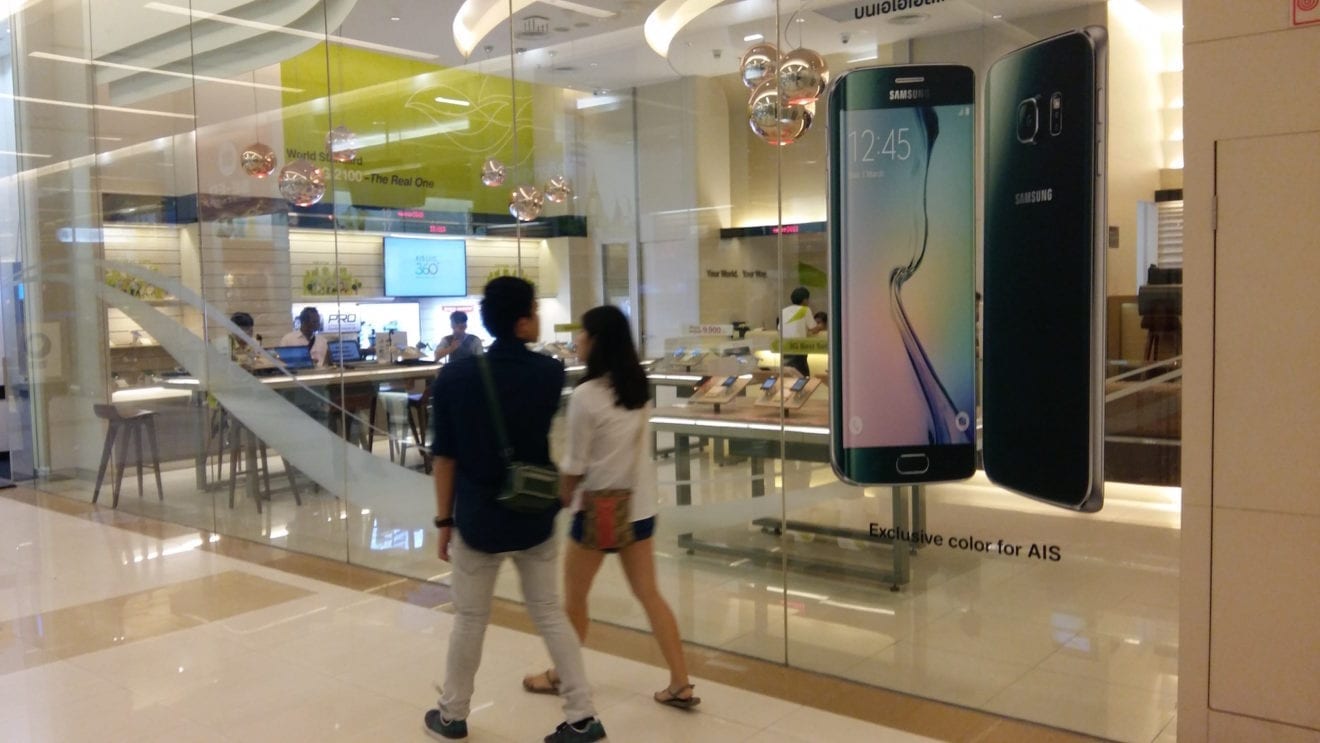
    Samsung’s global march added another stopping point this week, as Thailand became the latest nation to come online for Samsung Pay. That announcement comes as most of the global payments-watching community was watching Samsung Pay’s imminent foray into India.

    Speaking of watching — and watches

    After four months of waiting, Android Pay has finally made the leap onto an Android Wear-powered smartwatch — thanks to a bit of as assist from LG. It’s not Android Pay’s first foray onto a wearable, but it is the first time Android Pay will be open for business on a smartwatch not made by Samsung.

    Apple’s move this week is about merchants. New research suggests that Apple Pay has gone from being accepted at 16 percent of U.S. merchants to 36 percent of U.S. merchants — which said report notes is good enough to make it the most favored form of in-store mobile payment among American merchants.

    So how’d all the territory grabbing come out this week – and who gained the most ground? Well…

    Samsung Pay In Thailand

    Samsung Pay is not entirely new to Thailand — the service has been rolling out slowly under the radar since a November soft launch with about 100 retail partners — but as of Tuesday, Samsung Pay was out in full for any Thai customer interested in taking it for a smartphone spin.

    And, it should be noted, Samsung has great expectations for the Thai market and has set a goal of attracting 1 million users to the platform by the end of the year.

    “Thailand is the ninth country in 10 markets globally with which we have established our mobile payment presence, and the third country in Asia-Pacific apart from Singapore and Australia,” said Elle Kim, vice-president for the payment business group at Samsung Electronics.

    Kim noted that Thailand presents a natural opportunity for a mobile payments platform — given the government’s national e-payment scheme and the widespread use of smartphones and e-commerce.

    At launch, to use the service, customers must use a Visa or Mastercard issued by one of the nation’s six largest banks: Bangkok Bank, KTC Credit Card, Citibank, Siam Commercial Bank, Kasikornbank and Krungsri Consumer.

    Those six collectively cover about 70 percent of the cards issued in Thailand — Samsung has confirmed that by the end of the year it hopes to have upped that to covering 90 percent of the nation’s card holders.

    And it is a 90 percent that Samsung will compete for unopposed, since neither Apple nor Android Pay have any immediate plans to take on the Thai market. As of right now, mobile payment transaction value in Thailand is estimated to reach US$4 million in 2017. That figure is forecast to reach $36 million by 2021.

    Samsung is also widely expected to announce an expansion into India for Samsung Pay by the end of the quarter — with more international expansion slated for 2017.

    Android Pay And Android Wear – Better Together?

    After a very public announcement of Wear 2.0 last October that included Android Pay — the updated and enhanced version of Android OS for wearables — the world sort of had to wait a while to see it in action, since there was no wearable on the market sporting the feature.

    That changed this week with a pair of new watches from LG that marked a collaborative design effort with Google: the Watch Sport and the Watch Style.

    The big change involves making the watch a device capable of standing apart from a smartphone — a true computer for the wrist.

    And while that extends to many of the Wear’s various features, it is drawing praise particularly in relationship to the Android Pay support now available on the wearable.

    Unique to this version of wearable-based payment, however, is its level of independence. Android Pay runs as a standalone app on the watch — a connected smartphone is not necessary to pay for stuff (though a phone pairing is necessary to set up Android Pay on the watch for the first time). Android Pay on a watch does not actually even need an internet connection for a limited number of transactions (though to fully complete the transaction the watch must eventually go online).

    Android Pay is not entirely new to wristbased devices — Samsung’s smartwatches support it — but as of this week, Android Pay supported by Android’s wearable OS is now on the market for the first time — though not the last.

    Google has announced that many more Wear 2.0 watches will be out in the market by the end of the year — presumably to satisfy a consumer demand that will make itself apparent any day now.

    Apple’s Adding Merchants

    According to new published data from Boston Retail Partners, Apple Pay has garnered the largest percentage of U.S. merchants supporting mobile in-store payments, with 36 percent of said merchants accepting the 2.5 year old mobile payments app. The study further suggested that an additional 22 percent of retailers will accept Apple Pay in the next 12 months and 11 percent on top of that plan to do so within the next one to three years.

    Apple’s lead is notable — but also highly explainable by time. Apple Pay is the granddaddy of in-store mobile payments apps, so it’s had more time to add merchants to its roster. But as we’ve noted, being present at the POS is only half the battle for Apple Pay — consumers still have to chose to use it. So far, by our numbers here at PYMNTS, they aren’t — at least 19 out of every 20 who can.

    Which, as it turns out, maybe the lesson this week. More is good — more devices, more ground and more merchants — but only if at the end those things net more customers — and more transactions.

    We’ll keep you posted on how more turns into market share for transactions. By the way, we’ll be releasing totally new data on mobile payments adoption – based on what consumers actually do at the point of sale when they are paying for what they bought – at Innovation Project 2017. This new study will measure adoption for the major in-store “Pays” – Apple, Android, Samsung, and Walmart (at Walmart only, of course).

  • Soo Kee to add shine to Thai market in $1.2m joint venture

    Soo Kee to add shine to Thai market in $1.2m joint venture

    Home-grown jeweller Soo Kee Group is setting up a joint venture in Thailand. The collaboration is with leading Thai jeweller Aurora Design and will be set up with an initial paid-up capital of 30 million baht (S$1.2 million). Soo Kee will hold a 40 per cent stake and Aurora a 60 per cent stake, according to a memorandum of understanding signed yesterday.

    The joint venture firm will sell gold and diamond products under Soo Kee’s Love & Co brand, which was set up in 2007 to focus on bespoke engagement rings and wedding bands.

    Soo Kee will also license and supply intellectual property rights, products and support. Group chief executive Daniel Lim said after the signing ceremony at Soo Kee’s Changi Business Park headquarters that the plan is to take the bridal jewellery concept to Thailand, where there is a gap in the market.

    “Thailand is a huge market for jewellery. It’s also highly fragmented as far as diamond consumption is concerned,” he noted.

    “There are no decent business concepts yet to capture the diamond market, which is similar to what it was like in Singapore 20 to 30 years ago when people traditionally bought gold and the diamond market was underdeveloped.”

    He noted that last year, the Thai jewellery market, mostly consisting of diamond and gold, was worth more than 76 billion baht.

    Soo Kee started talks with Aurora, which has more than 170 stores across Thailand, last year as part of regional expansion efforts.

    Mr Lim said the initial plan is to have 20 retail points in Thailand in the first five years. Soo Kee expects to break even after the first year.

    Mr Lim added: “We will target key cities and strategic locations as part of the first phase.

    “We’re looking at concept stores and depending on the location, there are also opportunities in high-end department stores, where we can possibly open boutiques within them to exploit their traffic flow and footfall.”

    Aurora chief executive Aniwat Srirungthum said the firms are looking at cities such as Bangkok and tourist hot spots such as Phuket and Pattaya.

    Mr Aniwat said: “We are confident of Love & Co’s market potential, and this will widen our product offering and strengthen our capability to grow our customer base.”

    Soo Kee also said yesterday that it will be the first Asian partner of The International Institute of Diamond Grading & Research, part of diamond giant De Beers.

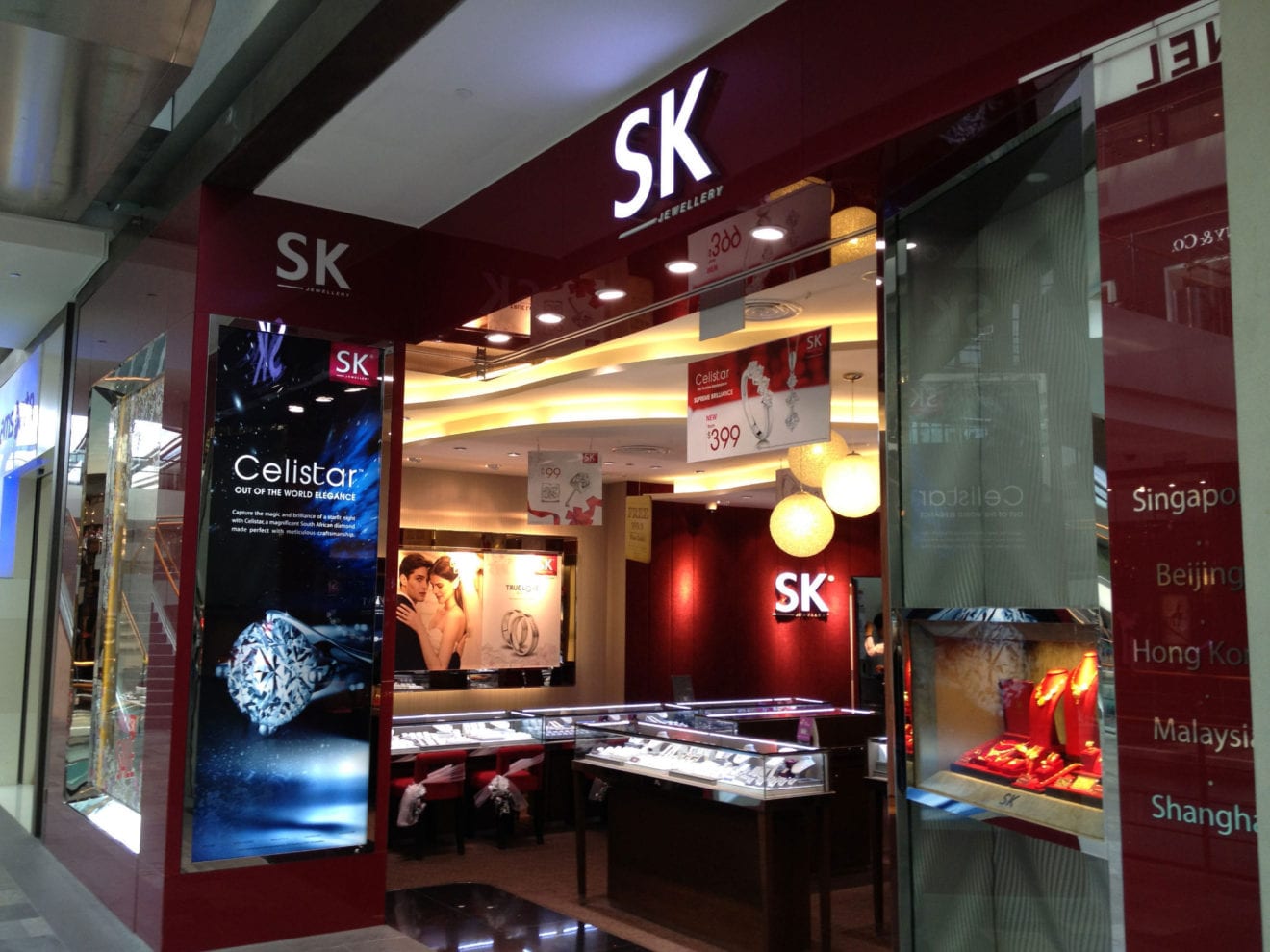
    Soo Kee, whose other brands are Soo Kee Jewellery, SK Jewellery and SK Bullion, is keen on growing in the region.

    Mr Lim said: “Thailand is important to us, but we will not stop here. Thailand is also recognised as the most important bullion market in the region.

    “Be it in the form of gold jewellery or bullion, we see other possible opportunities in Thailand. We are definitely interested in the regional markets and are constantly looking out for new opportunities.”

  • Samsung Pay Service Comes To Thailand

    Samsung Pay Service Comes To Thailand

    Similar to Android Pay from Google and Apple Pay from Apple, Samsung Pay works like other mobile payment platform by using NFC. Samsung Pay, which was made to build brand loyalty from consumers allows users to pay for things online with their smartphone or smartwatch.

    Samsung has fully unveiled the Samsung Pay in the Thailand. The company aims to entice at least one million users within this year. The mobile payment platform was already made available in Malaysia, Singapore and China a while ago. Samsung apparently already boasts a network of 100 retail partners found in Thailand following a soft launch just in November of 2016. Thailand has been working to adopt a more cashless society much like other Western countries.

    “Samsung is the first phone maker jumping into the mobile payment fray in Thailand,” said the Thai corporate Vice President for IT and Electronics of Samsung Electronics, Wichai Pornpratang. The company is expecting to bring in one million customers using Samsung’s Pay service by the end of the year.

    Consumers can use the Samsung Pay by just tapping their compatible Samsung smartphone on near field communication (NFC) or magnetic security transmission (MST). Doing this will allow them to proceed to making payments in stores.

    Samsung Pay is considered as one of the best mobile payment solutions but it can only be supported on the Galaxy S7 family, Galaxy S6 family, Galaxy Note 5, Galaxy A5 and Galaxy A7. Samsung Pay Mini, however, was reportedly just launched and what’s nice about the service is that it is not limited to just Galaxy smartphones. With an Android smartphone that has a 1280 x720 pixel resolution or higher than Android 5.0 Lollipop, the Mini version will function well. An offline payment option feature, however, that can be found on the Samsung Pay is nonexistent on the Samsung Pay Mini.

  • AEON cooperates with Thai Airways to organize “Journey of Happiness with Thai Airways 2017”

    AEON cooperates with Thai Airways to organize “Journey of Happiness with Thai Airways 2017”

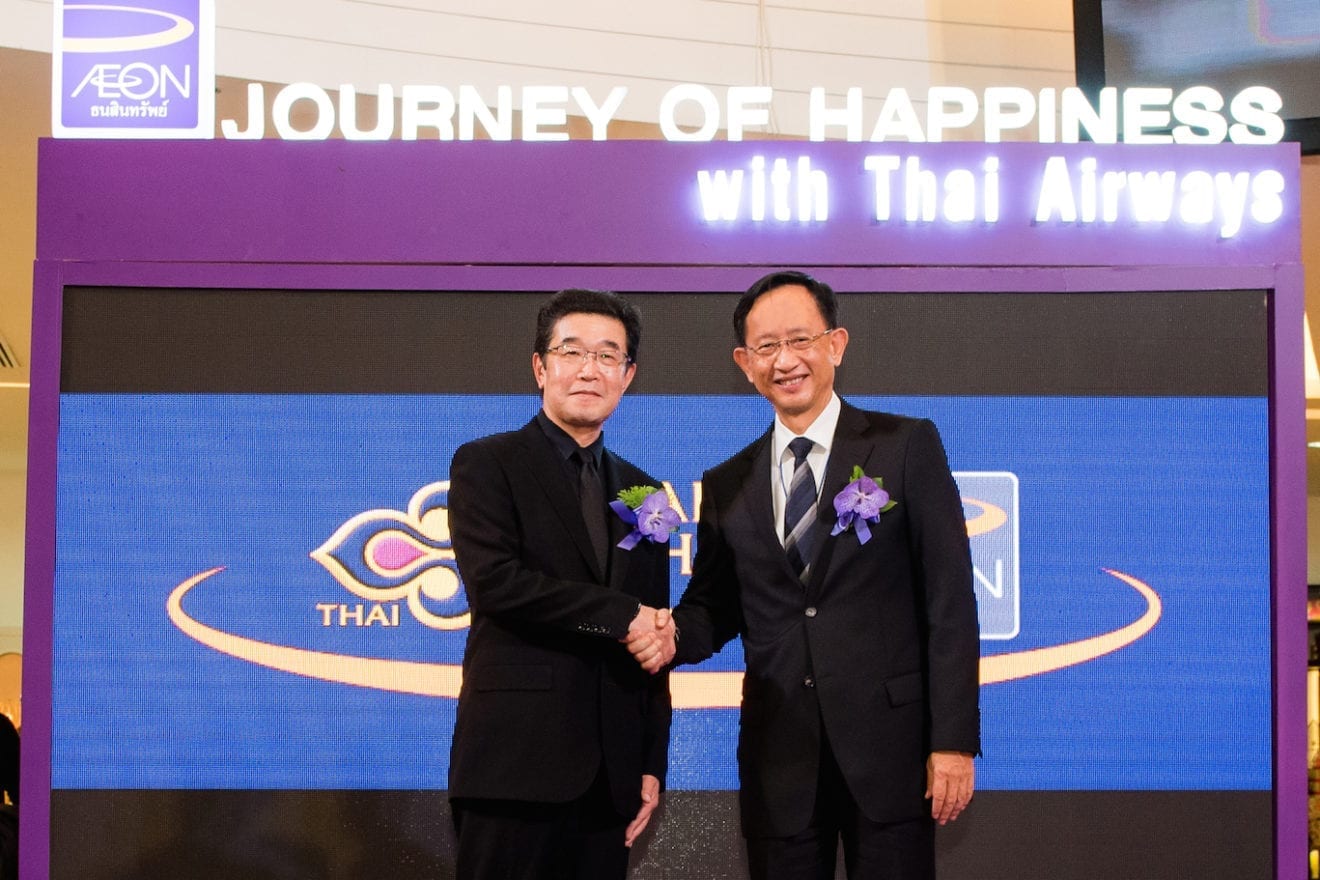
    Kiyoyasu Asanuma (left), Managing Director of AEON Thana Sinsap (Thailand) Public Company Limited together with Teerapol Chotichanapibal, Executive Vice-President Commercial of Thai Airways International Public Company Limited joined the recent launch of “Journey of Happiness with Thai Airways 2017” campaign at Fashion Hall, Siam Paragon. The campaign offers privileges to AEON credit cardholders from AEON, Thai Airways, H.I.S, and JCB partners.


  • SCB Securities to use Thai Decide system for institutional customers

    SCB Securities to use Thai Decide system for institutional customers

    Decide is a state-of-the-art trading platform provided as a service and co-located at the SET Data Centre, which supports retail and institutional trading on both the Stock Exchange of Thailand and Thailand Futures Exchange.

    SCB Securities chief executive officer ML Thongmakut Thongyai said: “After the successful implementation for our institutional customers we look forward to exploiting the power of Thai Decide for our retail customers.”

    Thibaud Langlet, general manager of Serisys for Southeast Asia, said: “Leading financial institutions like SCB Securities need world-class platforms like Decide to allow them to win in today’s rapidly changing landscape. Providing Decide as a service allows us to ensure high quality and cost efficiency.”

    Coaching conference in May

    The “APAC2017 Coaching Conference” will be held in Bangkok from May 25-27, and its organisers promise it will be an inspiring place where coaches and leaders explore how coaching creates sustainable value within teams, corporations and society.

    The highlights include a leading-edge “East meets West” pre-conference day on May 25, featuring Dr Marshall Goldsmith, Venerable Vudhijaya Vujiramedhi, and the governor of the Bank of Thailand, Veerathai Santiprabhob.

    The conference programme features 35 speakers from five continents, including international coaching experts Goldsmith and Dr Stephen Murphy-Shigematsu.

    Thai cooking class

    Hospitality company Dusit International has rolled out a new Thai cooking class, giving participants the chance to learn how to make a selection of Thailand’s most famous dishes.

    Open to hotel guests and the general public at selected Dusit Hotels and Resorts worldwide, each hands-on session is conducted by a seasoned Thai chef and includes a choice of three authentic recipes, followed by a sit-down lunch or dinner.

    Among the available recipes are signature favourites such as khao pad gai (chicken fried with rice), pad thai goong (fried noodles with prawns), tum yum goong (spicy soup with prawns), massaman lamb shank curry, and chicken satay.

    FWD launches ‘Cancer Fighter’

    FWD Life Insurance has launched “Cancer Fighter”, a new insurance product that covers all stages of cancer from first diagnosis onwards.

    The package provides benefits at early diagnosis to cover medical treatments, including ongoing chemotherapy and radiotherapy recovery benefits, said chief marketing officer Aman Kapoor.

    The “Cancer Fighter” gives a significant lump sum (50 per cent of sum assured) when the cancer is detected early to help pay for the best medical treatments at the early stage to beat the disease.

    In cases where cancer is detected at a later stage, full benefit (100 per cent of sum assured) will be given to the customer. Moreover, an additional 40 per cent of sum assured will be provided for ongoing chemotherapy and radiotherapy treatments to help with full recovery.

    The “Cancer Fighter” plan can be bought with a main life-insurance policy from FWD, is available for customers aged 16-65 years, and can be renewed up to age 84 years.

  • SK Telecom, CAT to launch IoT network in Thailand

    SK Telecom, CAT to launch IoT network in Thailand

    SK Telecom has teamed up with Thai state-owned operator CAT Telecom for a project to deploy a LoRa-based IoT network and services in Thailand.

    Under the agreement, the operators plan to deploy a LoRa-based IoT pilot network in Bangkok and Phuket and launch IoT pilot services from April.

    SK Telecom will be responsible for deploying LoRa-based IoT networks in central areas of Bangkok and the entire Phuket province. The company has also been contracted to provide consulting services.

    In Phuket, SK Telecom and CAT will initially launch a LoRa-based vehicle location tracking service, and plan to follow this up with more IoT services including smart metering and smart street lighting services.

    In central Bangkok, the companies plan to offer an IoT-based location tracking service for tourists, designed to prevent children and the elderly from going missing near the Grand Palace during the mourning period recently deceased king Bhumibol Adulyadej.

    “SK Telecom will contribute to the growth of the ICT industry in Thailand by working together with CAT Telecom in the area of IoT, while nurturing a new ICT ecosystem by cooperating with many related companies,” SK Telecom EVP and head of IoT Cha In-hyok said.

    “Going forward, SK Telecom will collaborate with CAT Telecom in more areas to create more success stories in Thailand and other Southeast Asian markets.”

    SK Telecom and CAT also announced that Tree Pay, the joint venture established by the two companies as well as Korean digital payment company NHN KCP, has launched a payment gateway service in Thailand.

    Tree Pay will combine technologies from SK Telecom and NHN KCP to develop an innovative payment gateway supporting online, offline and mobile payment. CAT will meanwhile work with the Thai government to develop business opportunities for the new venture.

  • Thai airlines raise domestic fares

    Thai airlines raise domestic fares

    Thailand’s low-cost airlines are increasing fares on domestic routes in a respond to a massive increase in excise tax on jet fuel that came into effect last week. The government increased the fuel tax on all domestic flights from 20 satang to THB4  per litre, claiming it was overdue, while bringing the tax more inline with the THB6 a litre tax on diesel fuel.

    Nok Air, Thai Lion Air and Thai AirAsia issued statements, Tuesday, saying they would raise fares on domestic routes to reflect the “real cost increase by THB150 per sector”. It will increase roundtrip fares by THB300.

    This additional cost will be included in all fares posted on Nok Air’s website as of 6 February 2017 onwards, the statement read.

    Thai AirAsia and Thai Lion Air announced the same increase, effective 1 February (Air Asia) and 6 February (Lion Air).

    Bangkok Airways announced later in the day  that it would increase fares by THB200 per sector, effective 8 February.

    Excise Department  director general, Somchai Poolsavasdi, said the increase should generate more than THB4 billion from domestic jet fuel consumption, which is expected to reach 1.2 billion litres a year.

    Excise tax on lubricants has also been raised, to THB5 a litre from zero previously, he said.

    He noted that land transport companies pay THB6 in excise tax on a litre of diesel fuel, while airlines have enjoyed a 20 satang tax (100 satang = THB1) for years. The  tax is not applied to international flights originating or transiting in Thailand.

    The department hiked the fuel tax to create fairer competition in business, he said. It was a reference to rail and bus transport that has suffered a mass migration to airline travel.

    Inter-city bus fares will be slightly more competitive when compared with airline fares after the THB150 is added to air fares. By 2016,  jet fuel costs had declined by 36% since 2014 and this allowed low-cost airlines to quote fares that were almost identical to long-distance bus fares (air-conditioned buses).

    While offering a token helping-hand to bus operators, the government’s other hand will snatch THB4 billion in taxes ultimately from travel consumers.  It is unlikely  to persuade travellers to return to long-distance bus transport noted as the second most dangerous form of transport after the infamous Toyota commuter van.

    Thai aviation has been rising rapidly in recent years powered by low-cost airlines at the expense of land transport. Jet fuel consumption, will exceeds 1 billion litres this year, the director general reported.

    Association of Domestic Travel advisor, Yutthachai Soonthronrattanavate, told Voice TV media that the tax increase would impact badly on domestic tourism.

    “As airlines increase fares to compensate, the burden falls squarely on the consumer’s’ shoulders,” he said.

    “The tax measure will hurt airlines operating domestic flights flying about one hour and using 8,000 to 9,000 litres per trip …it will increase an airline’s costs…in turn passengers will then have to spend more on flights.”

    In the past when fuel prices were high, airlines immediately passed part of the cost to consumers in the form of a “fuel surcharge.”   They eventually were forced to include the surcharge as part of the base fare rather than lumping it with service fees and taxes at the close of the transaction.

    Thailand’s Ministry of Tourism and Sports is counting on domestic tourism to boost earnings and share the benefits of tourism beyond the main gateways.  Low-cost airlines are the main driver allowing urban Thais to explore their country safely and at competitive prices.

    Government officials will argue there are alternatives such as rail and road transport, but the standard and safety of those alternatives lags far behind air travel.

    It would take a massive investment to upgrade rail transport to offer fast inter-city rail travel that could be considered  a credible alternative to low-cost airline travel. It’s decades away which means for most travellers  low-cost airlines continue to be the only choice to get around the country quickly and safely.

    In the TV interview, Yutthachai said the excise department should have staggered increases step by step to give airlines a chance to adjust while cushioning the impact on consumers.

  • BMW to invest RM126mil to build PHEVs in Thailand

    BMW to invest RM126mil to build PHEVs in Thailand

    It appears that the production of BMW plug-in hybrid models in the region is set to increase, with BMW Group Manufacturing Thailand set to invest 1 billion baht (RM126.2 million) in the production of petrol-electric vehicles at its plant in the Amata City Industrial Estate, Rayong.

    The investment has been earmarked for the improvement of line operations there, in order to facilitate the increase of plug-in hybrid production. Of that amount, 488 million baht (RM61.6 million) has already been spent to kick off production of these vehicles last November. The company has spent 3.7 billion baht (RM467 million) on the plant from 2000 to 2015.

    The rest of the investment will be used to double the production capacity in Thailand this year; the company currently builds 20,000 BMW and MINI cars and 10,000 BMW Motorrad motorcycles a year. President of BMW Group Thailand Stafan Teuchert said that the two-year investment is meant to prepare for future demand both domestically and abroad, with Munich seeking any opportunity to export vehicles from Thailand.

    The company has exported a limited amount of cars to Malaysia since 2006 and around 1,000 motorcycles to Malaysia and China since 2015, but began shipping large amounts of completely built up (CBU) X3s and X5s to China last year. It aims to export 10,000 units of those models in 2017 – mostly to China – and is also eyeing other markets in ASEAN for opportunities.

    Locally, BMW plans to bring in more advanced technology to build plug-in hybrid batteries in Rayong by mid-2018, further reducing retail prices in Thailand. The company currently imports the batteries from Europe.

    Existing Thai-built BMW plug-in hybrids include the 330e Luxury and X5 xDrive40e M Sport, priced at 2.59 million baht (RM326,900) and 4.69 million baht (RM592,000) respectively – around 490,000 baht (RM61,800) and 690,000 baht (RM87,100) lower than if they were imported. Teuchert said that the company plans to produce the 740e this year and the 530e in 2018.

    In order to support the increase in the number of plug-in hybrid vehicles in Thailand, BMW plans to increase the number of charging stations in Bangkok to 12 this year, up from the current five. It expects sales of electric cars, mainly PHEVs, to rise from 5% of total car sales to 15% in 2017.

    Meanwhile, BMW currently assembles the 330e Sport, 330e M Sport and X5 xDrive40e in Malaysia, priced at RM248,800, RM258,800 and RM388,800 respectively, on-the-road without insurance. It also expects to export the 3 Series, 5 Series and 7 Series from Malaysia to Vietnam and the Philippines from next year.

  • Brandline – Bring Your Brands to Life

    Brandline – Bring Your Brands to Life

    Consumers are exposed to more than 3000 messages a day. The real question now is, what will make your brand stands out? As consumers only spend a few seconds in front of retailer shelf, are the in-store messages targeted properly and relevant? Hence, design solutions that boost the traffic and sales potential in retail environments are sorely needed.

    As the expert in merchandising and in-store communication, HL Display Thailand has the most innovative design and ideal solutions to create a more desirable shopping experience and brand awareness that includes

    • Creating a place where the consumers want to shop
    • Developing impulse buying and customer loyalty
    • Making differentiation from competition
    • Increasing basket size and footfall

    Communicate the brand values and product benefits with Brandline™, the collection of shelf liners, highlighters and accessories, specifically designed to create highly effective on-shelf communication and segmentation. Extending the message areas with additional accessories such as lighting is also reinforcing brand awareness and instantly adding positive disruption visually.

    https://www.youtube.com/watch?v=DUECYwjKfjA

    Health and Beauty category for instance, is a category characterized by many new products introductions coupled to variety of pack sizes and shapes. State of the art message conveyer, cosmetic front rails, sample tester holder, lighting accessories are becoming a must have in store environment, and this is when Brandline™ becomes even more important than ever.

    For further information, Bangkok based HL Display Thailand can be directly contacted during office hour at +66 2276 2445 with the attention to Mr. Thanasun Sakchuenyod, or e-mail to thanasun.sakchuenyod@hl-display.com or info.asia@hl-display.com. Visit the company website at www.hl-display.com/asia

  • NBTC plans to allocate 380 MHz more mobile spectrum

    NBTC plans to allocate 380 MHz more mobile spectrum

    Thailand’s telecoms regulator NBTC plans to release 380 MHz of additional spectrum to the industry to set the stage for 5G and accommodate burgeoning demand for mobile data and IoT services.

    The regulator is aiming to auction 180 MHz of 2600-MHz spectrum this year as part of this process, citing NBTC secretary-general Takorn Tantasith.

    According to the plan, this will be followed by auctions of 90 MHz of 1800-MHz spectrum and 20 MHz of 850-MHz spectrum by March 2018, then 90 MHz of 700-MHz spectrum by 2020.

    While to date up to 420 MHz of bandwidth has been allocated for mobile use, Takorn said this will not be sufficient to keep pace with rapid developments in network technology and online service innovation, let alone the eventual deployment of 5G and the new use cases it will bring.

    The planned auctions will bring the total bandwidth allocated for telecoms use up to 800 MHz, significantly higher than the 700 MHz recommended by the ITU, the report notes.

  • Thai MVNOs must use fingerprint SIM registration

    Thai MVNOs must use fingerprint SIM registration

    Thailand’s MVNOs will need to implement a new online fingerprint ID registration system for both prepaid and postpaid mobile SIMs by March, after regulator the NBTC declined to exempt them from complying with the new registration regime.

    The online registration system is being introduced as a requirement for both mobile operators and MVNOs as part of an NBTC decision from late last year.

    But MVNOs had been calling on the regulator to exempt them from the order on the grounds that it will impose additional costs that may make it difficult for them to compete with the major operators.

    NBTC secretary general Takorn Tantasith as stating that the regulator has decided that consumer interests must be put first, and a fingerprint system will be required to ensure greater security in mobile banking as Thailand moves towards becoming a cashless society.

    He also said operators will be able to deduct the costs of implementing the system from their annual universal service obligation fee.

    The new online fingerprint ID system will complement the existing compulsory SIM registration system. While operators are required to implement access to the system, end-users will choose whether to submit their fingerprints.