James Cronk, global director, Financial Services Industry, at US-based Cisco, said the banking and financial-services sectors were now “transferring their legacy environment into digital transformation to support digital payment”.
Around 4.5 per cent of Thai banking customers currently use digital payment, a proportion that will rise significantly in the next few years, driven by the development of information-technology infrastructure and security, he said.
Cisco’s comprehensive economic analysis estimates that digital innovation in retail banking will drive US$405 billion (Bt14.4 trillion) in value globally from 2015 to 2017.
Last year, financial services as a whole captured just 29 per cent or $117 billion of that opportunity. Moreover, more than 90 per cent of the potential value is driven by key digital-use cases, including sales and services transformation, next-generation workers, video-based advice, mobile payment and connected ads, Cronk said.
Cisco has six platforms and solutions to support digital transformation in financial services – customer experience, workforce experience, agile IT-fast IT, analytics and insights, cyber security and liability, and risk compliance and management – the global director said.
Having a road map to digital value in retail banking means banks will be positioned “to enable IT agility and operational effectiveness, create differentiation in their business strategies from those of competitors, and define disruptive new digital-enabled business processes”, he explained.
Vatsun Thirapatarapong, managing director of Cisco in Thailand and Indochina, said the ratio of digital-banking users in Thailand would increase to 10 per cent of all banking users in the next three years, due to the popularity of using e-payment among generation-Z individuals, the usage of mobile first/cloud first, as well as start-ups developing fintech (financial technology) solutions to support digital payment.
Moreover, IDC has reported that consumers expect banks to deliver highly personalised hi-tech services coupled with the convenience of anytime, anywhere.
This group of consumers is growing and accounted for about 4.5 per cent of banking customers in the Asia-Pacific last year, according to the global IT market-intelligence firm, which expects the segment to grow to about 15 per cent by 2020.
Meanwhile, the Bank of Thailand has reported that there are currently around 12.9 million users of mobile banking in the Kingdom. The value of Thailand’s online retail market is expected to reach $10 billion-$15 billion by 2020, up from less than $2 billion last year, the central bank said.
The mobile penetration rate reached almost 87 per cent of the population, with smart-phone penetration at 50 per cent, while 50 per cent of all online transactions are done via mobile devices, it added. E-payments are expected to surge from Bt68.2 billion last year to Bt143 billion in 2020.
Moreover, Thailand is entering in the first stage of the government’s national e-payment policy and, when the e-payment system is fully operational next year, the estimated cost savings for banks and businesses will be around Bt75 billion per year, the Bank of Thailand said. The Thai Bankers’ Association’s Payment System Office has agreed on a new fee structure, which will lower the cost of digital banking.
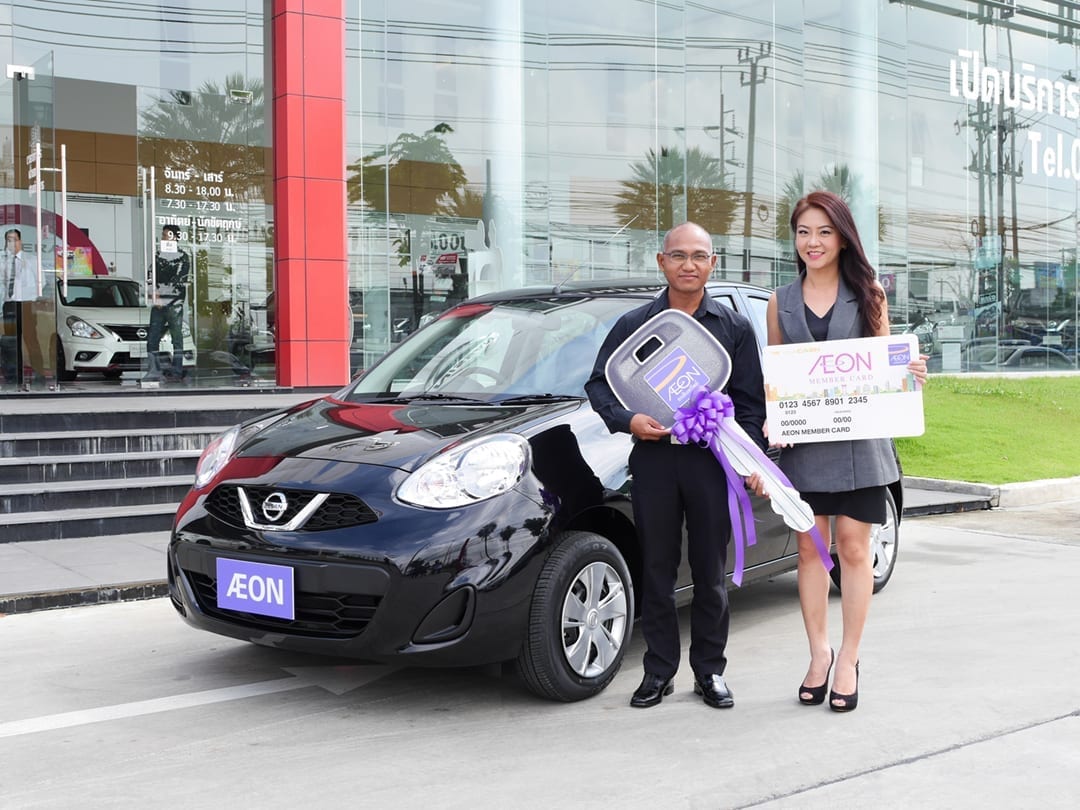
Saranya Pipoppinyo (right), Vice President Marketing of AEON Thana Sinsap (Thailand) Public Company Limited, hands over keys to a Nissan March, valued at 451,000 baht, to Suthit Saisuwan from Sisaket, the lucky winner of the grand prize from the AEON Promotion Your Cash Car Lucky Draw campaign which had run from July 1 to September 30.
Jamie’s Italian by Jamie Oliver is pleased to announce its opening head chef for the first Jamie’s Italian restaurant in Thailand, set to open in the fourth quarter of this year. Alex Barman, a dynamic and passionate chef with more than 11 years of culinary experience, will be leading the kitchen team as head chef of Jamie’s Italian Siam Discovery.
Born in North Wales, UK, Alex started working in restaurants at a young age while still studying, beginning his culinary career as a kitchen assistant in a local hotel restaurant, and then progressing to be a sous chef in a local bistro, and head chef for Whitbread Group in Cardiff. In 2010 he joined the Jamie’s Italian family in Cardiff as a commis chef, moving swiftly through the ranks and taking his first head chef role for Jamie’s Italian in Cheltenham and Birmingham. He was also a member of the training support team for the opening of Jamie’s Italian Westfield, Stratford near the London 2012 Olympic Stadium. Alex moved to Singapore three and a half years ago to open the first Jamie’s Italian in Asia in VivoCity, where he started as the sous chef and was quickly promoted to head chef. In 2015, he moved to Bali as head chef for the new restaurant, Jamie’s Italian Kuta Beach.
“Everything we serve is made with care,” Alex Barman, the head chef of Jamie’s Italian Siam Discovery said. “Good food is as the heart of everything we do. We are fully committed to supporting Jamie’s fight for better food worldwide, and his mission to make good food accessible for everyone.”
As with all Jamie’s Italian outlets, the Siam Discovery restaurant will remain committed to sourcing only the best freerange, sustainable and ethically sourced ingredients. The restaurant will also work closely with Thai farmers to showcase local, responsibly grown produce.
Alex said: “One of the most exciting parts of the job so far has been sourcing ingredients that fit in with Jamie Oliver’s food ethos. It’s not always easy, but it is always enjoyable as I have been able to meet some really amazing people. I am very passionate about sourcing and working with great local suppliers who are as passionate about great ingredients and the food ethos behind them, as I am. I’m really looking forward to seeing these ingredients feature throughout our menu.”
“Since moving to Asia I’ve always wanted to work in Thailand and experience the culture, people and amazing local food on a regular basis, not just for a holiday, as you never really get to experience the real country and people on short breaks. It’s such a diverse and dynamic country with big differences from one province to another, making it very exciting to travel around and experience all the country has to offer. I love cities and actively seek to work and live in big, bustling, dynamic cities in which Bangkok has to be one of the best so far I’ve lived in.”
Alex said: “Jamie’s Italian food is simple, rustic and inspired by dishes eaten all over Italy, delivered to the local market at affordable prices, which means it’s great for any occasion. I will also be creating some fantastic daily specials, maximising ingredients I can get at short notice from local markets and suppliers. I’m really looking forward to using some of the interesting products that are available here to create some brilliant dishes, with a new brigade of talented local chefs, and seeing our first guests enjoy our food.”
Expats’ favorite supermarket, Foodland, plans to expand lots over the next five years. The chain has doubled its yearly investment budget to THB500 million to open four or five new grocery stores and add three new types of restaurants to their roster.
Some of the new locations are already open. There is now a Foodland at The Street community mall on Bangkok’s Ratchadaphisek Road. Another Foodland opened yesterday at Rama 3’s The INT Intersect community. A third is opening soon at the Terminal 21 in Nakhon Ratchasima. The other locations have not yet been announced.
Foodland’s new restaurants will include a Japanese ramen chain, a Hong Kong-style roasted-goose dining spot and a Singapore-style street food restaurant.
Chief executive officer Somsak Teerapattanakul said, “As I am getting older, I want to speed our expansion as much as possible. Starting from next year, we plan to open four or five new Foodland stores for five consecutive years,” Somsak said.
These expansion plans means that the company’s sales might reach THB10 billion in 2017, which would be 25 percent higher than the THB8 billion they should hit this year.
Thai mobile service provider TrueMove has deployed Procera’s ScoreCard technology to monitor the quality of experience (QoE) its network is delivering to subscribers across 2G, 3G, and 4G LTE.
ScoreCard is being used for raw QoE KPI intelligence and the visualization of network performance, thereby helping to guide capex investments and better service planning.
TrueMove’s management can quickly use the data and visualization to further aid business investment decisions, maximize ROI, and reduce churn among the subscriber base.
“Mobile operators are increasingly differentiating their offerings by delivering a differentiated experience to subscribers,” said Viriya Upatising, CIO at TrueMove.
“Procera’s solutions enable TrueMove to see the actual experience delivered to their subscribers in real-time, and ScoreCard provides unique QoE KPIs and visualization that is ensuring the experience is a good one for all subscribers.”
As higher bandwidth mobile devices, connected cars, and the Internet of Things (IoT) continue to proliferate, TrueMove needs better intelligence about the QoE delivered to subscribers to maximize the return on investment for its capex.
ScoreCard has been deployed across TrueMove’s network to measure the quality of mobile broadband delivery. No Personally Identifiable Information (PII) is collected from the subscribers, but the overall quality of the broadband service is measured and fed back to a centrally deployed Procera Insights system.
ScoreCard has already identified several areas of investment that will improve the QoE of the TrueMove network, and action has been taken to enhance the subscriber experience based on ScoreCard’s recommendations.
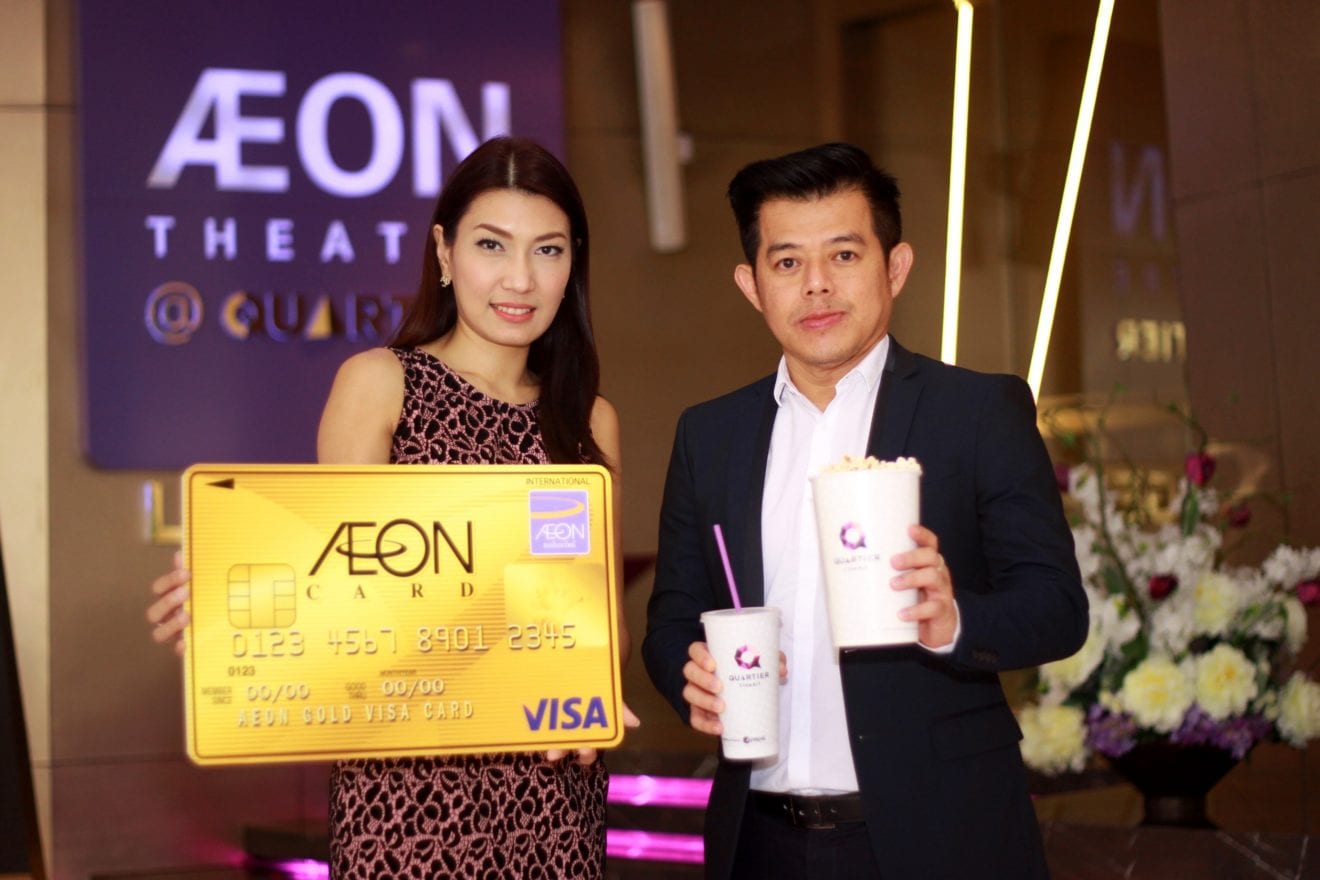
AEON Thana Sinsap (Thailand) Public Company Limited will be offering information on its different financial services and special promotions at the 11th Money Expo Chiangmai 2016. Services include Personal Loan, Your Cash, Cash Withdrawal, AEON Credit Cards and Member Cards application service.
AEON customers who make financial transactions at the expo will also be in with a chance to win a 1-Baht gold necklace, John Lang Ford Bag or AEON Umbrella. Furthermore, AEON customers who has the financial transaction that meet AEON’s conditions will receive Caggioni Luggage or Big C Gift Voucher valued at 2,000 Baht maximum. Additionally, AEON is giving a special interest 0% installment on gold.
The 11th Money Expo Chiangmai 2016 will be held from Nov 18 – 20, 2016 at Chiangmai Hall, Central Plaza Chiangmai Airport.
Thai state-owned operator CAT Telecom will cut its wholesale 850-MHz network leasing prices by 10% to help the companies using the network under an MVNO model improve profit margins.
CAT plans to implement the price cuts by the end of the year, citing comments from president Col Sanpachai Huvanandana.
Several MVNOs had asked CAT to lower its rates to help reduce operating costs and help MVNOs struggling to compete stay above water.
But Sanpachai insisted that the rates are not too high, and that it is instead competitive pressures and low ARPUs that are leaving MVNOs finding it difficult to compete.
CAT currently has five companies providing 3G services on the operator’s 850-MHz network – TrueMove subsidiary Real Move, Samart i-Mobile, Penguin operating unit the White Space, 168 Communication and Data CDMA.
According to the report, Samart i-Mobile recently returned 300,000 mobile numbers to save rates on numbering fees after determining that the company can not profitably provide services due to a high network leasing cost. Thai mobile operators pay a fee of 1 baht ($0.029) per month per mobile number.
PayPal, a global leader in digital payments, has appointed Somwang Luangphaiboonsri as Country Lead of its Thailand subsidiary.
As Country Lead, Mr. Somwang will be responsible for assisting PayPal to capitalize on the explosive growth of cross-border e-commerce in the Thai market. Together with the newly-established PayPal Thailand team, Mr. Somwang will also be focused on educating Thai merchants on the growth opportunities available in the global e-commerce marketplace.
Rahul Shinghal, General Manager for PayPal Southeast Asia said, “I am pleased to announce Somwang’s appointment as the Country Lead for the Thailand office. Somwang has been instrumental in many of our partnership dealings with Thai merchants, including Thai Airways. I am excited to see the growth of our offerings to customers in the market.”
Having spent more than 16 years in the finance and technology industries, Mr. Somwang is a veteran in the e-commerce space. Prior to joining PayPal, Mr. Somwang co-founded a domestic online payment service provider and built the company to be the platform of choice for many Thai consumers. He is well-entrenched in the Thai payments scene, and is also asecretary of the Thai E-Commerce Association and the secretary of Thailand ePayment and eMoney Association.
“Fintech is a hot topic right now and Thai businesses will need guidance to help them navigate through the fast-changing payment innovations in order to tap on the consumer growth opportunity. I am looking forward to PayPal introducing new solutions for its Thai merchant partners for their evolving customer needs and building PayPal’s presence in Thailand,” said Mr. Somwang.
The appointment of Mr. Somwang is just one of the latest steps taken by the digital payments company to reinforce its position in Thailand this year. PayPal has been actively building its merchant portfolio to enable Thai businesses to have access to a seamless cross-border payment experience. In August 2016, an MoU was signed with the Department of International Trade Promotion (DITP) to promote and facilitate cross-border trade for Thailand’s small and medium sized businesses. PayPal also onboarded leading travel businesses including Centara Hotels & Resorts, Centre Point Hotels Group, and Thai Airways as merchant partners that same month, being the sole payment provider for their cross-border online payments.
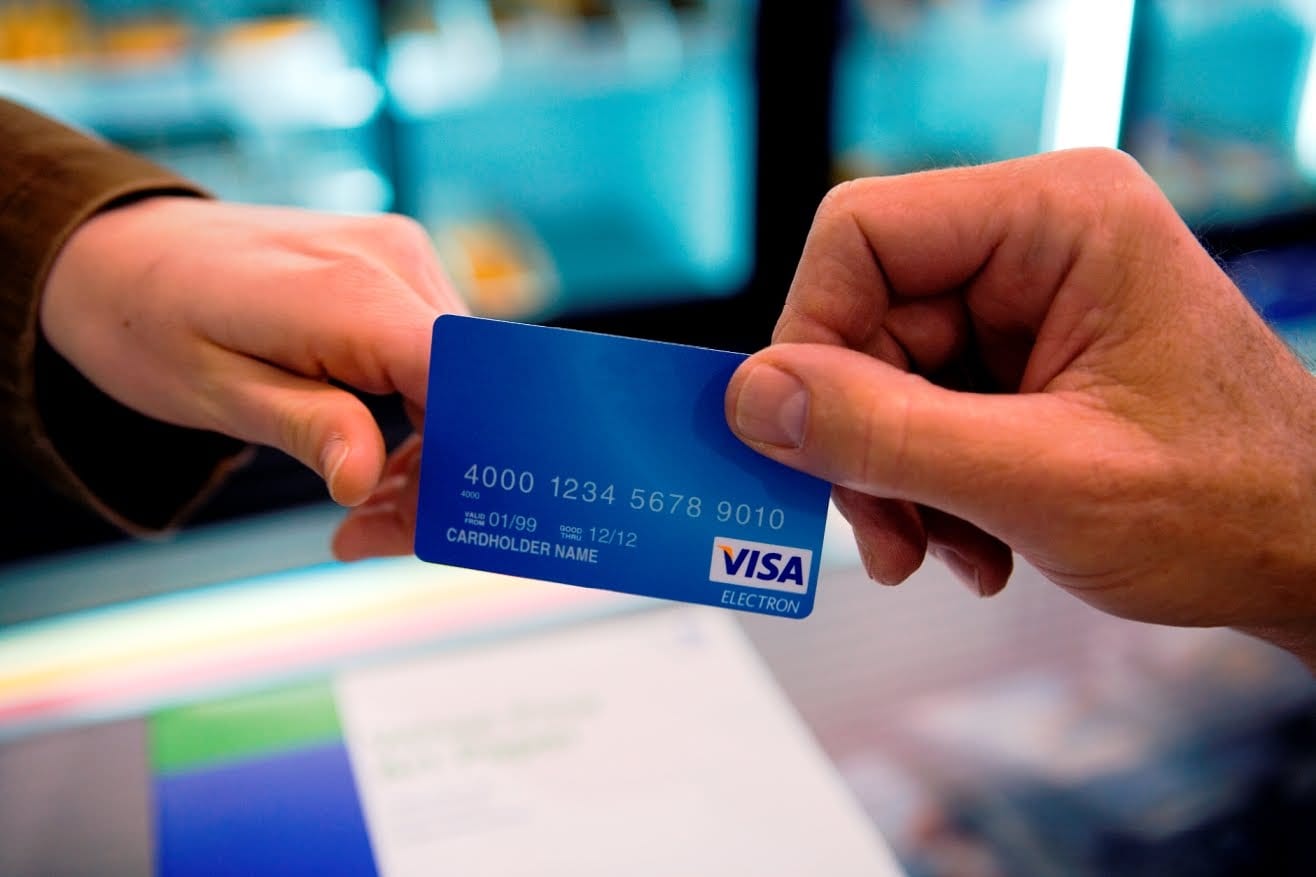
Whether paying with contactless cards or mobile wallets, Thais prioritize security over convenience and are more likely to use contactless payment methods when they know strong security measures are in place, according to a recent study conducted by Visa.
The Visa Mobile Wallet and Contactless Study found that the majority of Thais (82 percent) believe security is more important than convenience when it comes to mobile and contactless payments.[1] With accelerated growth in financial technology (FinTech), public and private sectors are grappling with ways to increase consumer confidence in electronic payments, particularly when it comes to transactions carried out on mobile devices.
The average Thai spends around 160 minutes a day on their mobile devices.[2] By the end of 2016, it is estimated that around 20 million people will own smartphones in Thailand, a figure expected to rise to 24.8 million by 2019.[3] Although internet access and mobile device ownership among Thais are on the rise, uptake of mobile financial services has been gradual, partly due to Thai consumers being unaware of advancements in cyber security, and technology.
Suripong Tantiyanon, Visa Country Manager, Thailand said: “Based on our study, the more secure the mobile payment experience is, the more willing Thai consumers will be to use it. We’re confident this cautious yet optimistic attitude, coupled with Visa’s multilayered approach to security, will drive the uptake of mobile transactions in Thailand.”
The Visa study, independently conducted by YouGov on behalf of Visa, examines Thais’ attitudes towards mobile and contactless payments alongside those of other Southeast Asian markets, namely Singapore and Malaysia. It finds that the three biggest fears in mobile wallet security are hacking of mobile phone (73 percent), theft of mobile phone (65 percent) and getting charged for unintended purchases (63 percent).
“Among the respondents, only 39 percent said they would consider using third-party mobile wallets. But within this particular group of potential adopters 74 percent are already aware of how encrypted tokens eliminate the risk of personal data theft,” added Mr. Suripong.
Visa Token Service (VTS) ensures mobile and contactless payments are secure as well as convenient. VTS replaces cardholder information, such as account numbers and expiration dates, with a unique digital identifier (a “token”) that can be used for payment, via a user’s mobile wallet, without exposing the cardholders’ more sensitive account information.
Tokenization hides consumers’ confidential account information during digital transactions, making digital payments more secure. According to the study, approximately 55 percent of Thais are familiar with VTS, with awareness highest among those that are also familiar with mobile wallet technology.
Just under half of Thais (46 percent) believe paying with a mobile device is as safe as with physical cards; a figure likely to increase in the future, as people become more familiar with advancements in Visa’s mobile payment systems.
Three in five Thais (61 percent) believe that one day they will no longer need to carry a card or cash and will instead be able to use their mobile wallets for everyday spending.
“Once Thais become familiar with innovative security measures, such as encrypted tokens, they are much more likely to use mobile and contactless payments more regularly,” said Mr. Suripong.
Legal representatives from both TrueMove and Dtac have slammed the new computer misuse act for moving the burden of proof to ISPs to prove their innocence while True said that the Single Gateway government mass surveillance program was still alive and well.
Speaking at a recent seminar entitled Online life: which way shall we go, Akarawit Jongsawasdiworakul from Dtac’s legal division said that unlike the US’ common carrier law, Thailand’s computer misuse act article 15 puts telcos at risk of criminal prosecution for the actions of their subscribers as service providers face the same criminal liability as their users for, say, an illegal posting.
Dtac has to invest significant resources into monitoring its users to stay safe legally, resources that could have better been invested in 5G, he said.
Unlike most aiding and abetting clauses in Thai law in which the aider gets two-thirds of the punishment, the computer misuse act doles out the same punishment to the service provider as it does to the criminal using it.
However, the latest draft amendment is much worse. In trying to fix that glaring problem, the new version lays out a system where authorities can issue orders to service providers to block the offending post. The law then goes on to say that if the service provider can prove they complied with the order, then they are exempted from any punishment.
Akarawit said that the computer misuse act shifts the burden of proof. Instead of the prosecution proving guilt, the service providers will now have to prove their innocence to a court.
He also noted that under the current law, censorship orders must be only via a court order. The new version only needs an order from a “the official in charge” without any judicial oversight.
Suporn Hornchaiya from True’s legal division, added that the definition of service provider is so vague that anyone with an unsecured WiFi hotspot would be subjected to the full force of the law.
Suporn said that today authorities use article 20 to block websites, not just those which are a threat to national security or good morals which are allowed under the law, but also use it to block gambling websites and copyright infringement sites which is not allowed under the law. He noted that courts regularly grant blocking orders for the latter.
Suporn said True has in the past appealed a court order, but the appeal was not accepted as the courts said that True was not an affected party to the blocking order.
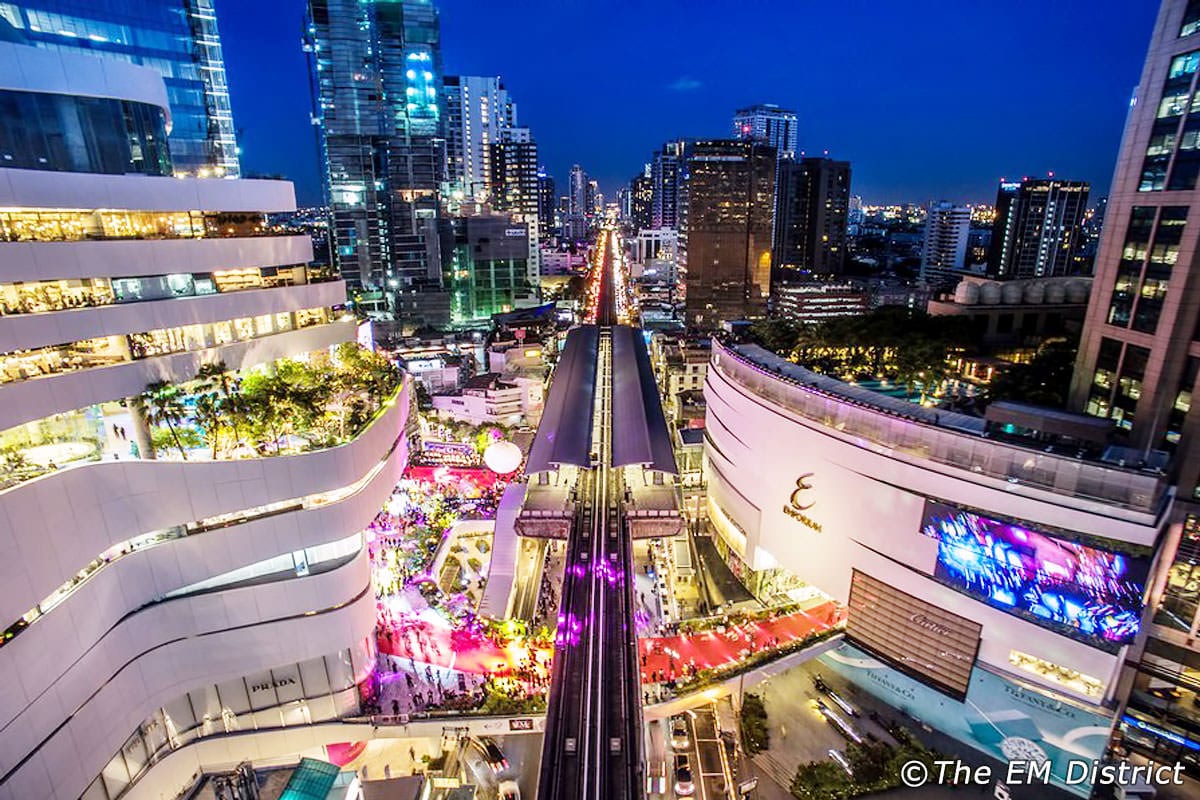
Asia is home to more than half the world’s most dynamic retail hubs, according to new research that reinforces images of the region’s mall-strewn megacities.
The research, by professional services and investment management company JLL, says 12 of the fastest-growing retail cities are in Asia, with eight in China alone — another indication that global economic growth is increasingly driven by the Asia-Pacific region.
JLL lists Dubai as the world’s fastest-growing retail destination, with Shanghai second and Beijing third. Places 9 to 13 are occupied by Bangkok, Chengdu, Kuala Lumpur, Jakarta and Manila, respectively. Only two European cities make the top 20 — Moscow and Istanbul — with none from Africa. Mexico City is the sole city from the western hemisphere, sitting at number 19.
Overall, JLL lists London as the “most attractive” city for retailers, with Hong Kong second and Paris third. Dubai, Singapore, Shanghai, Tokyo and Beijing all make the top 10, with Bangkok, Taipei, Seoul and Osaka in the top 20.
Shanghai at night. The Chinese megacity is projected to be one of the world’s retail hubs in the coming years (Photo: Simon Roughneen)
The study looks at the presence of 240 international retail brands in 140 cities — which altogether make up 36% of the world’s gross domestic product, 13% of the global population and a third of total worldwide consumer spending.
“The search for growth is escalating the penetration of international brands across the world’s most attractive retail cities, especially in Asia,” said David Zoba, chairman of JLL’s Global Retail Leasing Board.
Asia catching up
Many Western economies continue to suffer from slow growth — in stark contrast with Asia, where the International Monetary Fund predicts overall growth of more than 5% in 2016-17 and describes the region as “the engine of the global economy.”
Asia is urbanizing rapidly as economies develop and incomes rise, meaning that big global brands will increasingly look to Asia as a source of consumers. World Bank research shows that nearly 200 million people in the East Asia and Pacific region –excluding India and its heavily populated neighbors such as Pakistan — moved from the countryside to cities during the decade after 2000.
In 1800, only 3% of the world’s population lived in cities, a figure that rose to 13% by 1900. Now more than half the world’s population is urbanized, with projections that 70% or more of the world will live in urban areas by 2050. And while in the 19th and 20th centuries urbanization was mainly a Western and Japanese phenomenon, developing countries are catching up fast, particularly in Asia.
Despite the steady rural-urban shift, only 36% of East Asia’s population had moved to urban areas by 2010, with only Japan, Malaysia, South Korea and Taiwan having larger urban than rural populations.
While China had by far the largest absolute numbers of people moving to cities, smaller countries such as Cambodia, Laos and Vietnam showed higher rates of urbanization. Laos more than doubled its small urban population, while high-growth economies such Cambodia and Vietnam both had between 4% and 4.5% annual urban population growth rates. Retail investors are noticing opportunities even in smaller cities such as Phnom Penh, where Japanese mall operator Aeon opened the city’s first large shopping mall in 2014.
Asia’s cities will continue to grow over the coming decades as the region becomes wealthier. McKinsey Global Institute expects that in the next 15 years, “the center of gravity of the urban world will move south and, even more decisively, east.” According to MGI, half of global GDP in 2007 came from 380 developed world cities, with the 22 biggest cities in developing countries contributing a mere 10%.
However, MGI predicted that by 2025 half of the cities in its 2007 rankings will not make the list, with 136 developing world cities entering its ranking of the 600 biggest urban economies — including 100 from China alone.
“By 2025, developing-region cities of the City 600 will be home to an estimated 235 million middle-class households earning more than $20,000 a year at purchasing power parity (PPP),” MGI reported. The figure is larger than the 210 million such households expected in the cities of developed regions.
Thinktank Oxford Economics said that cities such as Chengdu, Hangzhou and Wuhan “will become as prominent in 2030, in economic terms, as cities like Dallas and Seoul are today.”
Shift east
The thinktank predicted that by 2030 eight European cities will drop out of the global top 50 cities ranking, measured by GDP, while nine Chinese cities will join that group, taking the Chinese total to 17, which will be more than North America and four times more than Europe.
In turn, the thinktank said, this will mean more Asian consumers with money to spend. “Starting from a comparatively low base today, China will boast some 45 million high-income urban households (exceeding $70,000 per annum at 2012 prices and exchange rates) by 2030, putting it well ahead of Europe and hot on the heels of North America. Shanghai will jump from a rank of 69th today to 8th for its number of high-income households in 2030,” Oxford Economics said.
Otherwise, however, the seven megacities with the most high income residents will remain the same as today, with Tokyo leading New York, London, Osaka, Los Angeles, Paris and Chicago.
But Asian cities are set to add tens of millions of middle-income households (incomes between $10,000 and $70,000) to their ranks by 2030. Jakarta will be home to 9.4 million, with 7 million to 9 million more in each of Chongqing, Shanghai, Tokyo and Beijing, the projected top five cities ranked by population of middle-income households, according to the thinktank.
JLL said that for retailers, vying for market share in emerging economies is sometimes risky, but the potential prize — market access to vast populations and rapidly expanding middle classes — outweighs any perils.
For example, China’s anti-corruption crackdown has had “a knock-on effect” on the luxury goods market in the world’s second-biggest economy, said James Hawkey, JLL’s head of retail for China. But retailers are nonetheless “increasingly comfortable dealing with these risks, and generally have their eyes on the long-term prize of establishing a strong position in major world markets.”
Although incomes and spending power remain lower in many Asian countries and cities than in the West, part of the attraction of smaller, less-developed markets is relatively low rental costs.
“Places like Ho Chi Minh City, Jakarta and Bangalore present an opportunity for retailers to establish their brands at rents of less than $2,000 per square meter per year with projected in-store sales increasing by 8% to 10% until 2019,” JLL reported.
Wealthy mid-sized cities or trade-oriented city-states such as Singapore and Hong Kong also benefit from high numbers of visitors such as tourists or business travelers.
But Asia’s urbanization will not mean that rural dwellers will be ignored by retailers, particularly in China.
“Retail potential in Asian hubs is strongly influenced by what is happening in their hinterlands — what is happening in nearby provinces and/or countries,” Steven McCord, JLL’s head of research for northern China, told the Nikkei Asian Review.
“Shanghai exerts a ‘gravity effect’ over its surrounding cities and provinces due to its size and the wealth of its retail offer. Therefore, close to 80 million people within day-trip distance to Shanghai will regularly travel to that city for large shopping sprees,” McCord added.
In a first for the Asean region, Thai operators AIS and Dtac have teamed up to facilitate cross-network VoLTE calls.
The operators enabled AIS-Dtac VoLTE calls last week and plans to implement cross-network 4G video calls from Tuesday.
Cross-network VoLTE calls are being made available to both prepaid and postpaid customers at no additional cost.
While each of Thailand’s top three mobile operators – AIS, Dtac and True Corp – recently launched VoLTE, the functionality had previously only been available for within-network calls.
Industry watchers believe the move may be an attempt by market leaders AIS and Dtac to fend off competition from fast-growing challenger True Corp. But the Nation quotes True Corp’s chief commercial officer Kittinut Tikawan as stating that the company is confident it can negotiate simila deals with both AIS and Dtac.
The move will also pave the way for the launch of the iPhone 7 and iPhone 7 Plus in Thailand later this month.
Financial Services Authority (OJK) Chairman Muliaman D. Hadad said that the OJK is in the process of exploring the possibilities of expanding Indonesian banking industry overseas.
“The most possible [cooperation] is with Thailand, because there have been two or three meetings,” Muliaman said.
Muliaman said that similar cooperation will also be established with other countries. Muliaman explained that Thailand serves as an important stepping stone to establish cooperation with Cambodia, Vietnam, Laos, and Myanmar. “Why Thailand? Because Thailand has dominant business [partnership] with its neighbouring countries,” Muliaman added.
Muliaman said that there are lots of possibilities for Indonesia to expand its financial industry to Thailand. Moreover, several of Indonesian business sectors have started to expand to Thailand, including property and trade.
Aviliani, an economist from the Institute for Development of Economics and Finance (Indef) praised OJK’s plan to integrate the national banking industry with ASEAN. Aviliani said that the integration is important to allow Indonesian banks to open branch offices and conduct business activities in neighbouring countries. However, Aviliani asserted that the policy may not always favour the banking industry. “Banks will always reflect on market potential,” Aviliani said.
Aviliani added that the potential for overseas banking market is not quite as large as the domestic market. “Opening [branch offices] overseas will be difficult if [banks] cannot profit. But when foreign banks expand to Indonesia they will reap benefits because [Indonesia] has a large market potential,” Aviliani said.
TrueMoney, a subsidiary of Ascend Group, announces the launch of TrueMoney Myanmar and the launch of its fund transfer solution, TrueMoney Transfer.
TrueMoney Myanmar aims to be a leading financial service provider, offering bill payment, mobile topup, remittance, and cash collection services. With two offices, one in Yangon and one in Mandalay and a network of 3,000 agents nationwide, TrueMoney Myanmar is working continuously to expand its services and agent network to fulfill its mission of enabling everyone access to innovative financial services, leading to better lives because we believe that financial access should be a basic right for everyone.
TrueMoney is also launching TrueMoney Transfer, the company’s first international money transfer solution. Fast, easy, safe, and affordable, TrueMoney Transfer enables real-time fund transfers from Thailand to Myanmar, allowing Burmese migrant workers to significantly reduce the expense and risks associated with sending money to family back home.
Fast with real-time fund transfers, easy with 250 transfer spots in Thailand by end-2016 and 681 transfer spots in Myanmar, safe with a passcode to receive the money that only the sender knows, and affordable with transaction fees starting at 50 Baht. To celebrate the launch of the TrueMoney Transfer service, TrueMoney is waiving the transfer fees for all transactions until October 31, 2016. Transfer fees usually start at only 1,818 MMK per transaction.
Migration within and across Myanmar’s long borderline has been long-standing. In an aim of improving relatives’ standard of living, many Burmese have chosen to cross borders in search of decent work and income. To date, according to the United Nations (UN), Thailand is home of almost 2 million hard working Burmese sending 2,8 billion Kyat back home annually, namely 1 million Kyat per person per year.
“Transferring money to loved ones has undoubtedly become a crucial need for Burmese migrants and their families. However, a large number of Myanmar workers remain unbanked, dueto a variety of reasons such as, but not limited to legal status, language barrier, and access to banking services. We have developed TrueMoney Transfer to give a faster, safer, more secured and affordable alternative to the commonly used informal channels”, said Ms. San Thaw Da Wun, Country Director of TrueMoney Myanmar.
Indeed, sending money from Thailand to Myanmar can be very expensive and uncertain. Because no other options are available to date, Myanmar migrant workers are placing their trust and savings within informal networks, which are complicated, time-consuming – it can take up to 4/5 days to send funds –, and unsafe – there is no guarantee that the intended receiver will ever receive the money.
Mr. Lawt Aung, Senior Product Executive of TrueMoney said, “TrueMoney Transfer will deeply change the lives of millions of hard-working people who do not have access to proper banking services. The network we have built throughout Myanmar is the stronger existing. Our 681 TrueMoney Transfer spots in Myanmar cover 91 percent of migrant workers’ hometowns such as Mon, Tarintharyi, Kayin, Shan, Yangon, and Bago, bringing services for money transfer in rural areas where banks don’t even have a representation. The solution will enable money transfer from Thailand to Myanmar only. By end of 2016, the 250 transfer spots in Thailand will be concentrated in areas with a large population of Myanmar migrant workers such as Bangkok, Samut Sakhon, Samut Prakarn, Tak, Ranong, Kanchanaburi, and Phuket.”
Ms. San Thaw Da Wun added, “It has never been that simple to transfer money internationally”.
Users can simply register a user account at one of TrueMoney’s official agent shops in Thailand, show their ID, and instantly transfer funds to Myanmar. After informing the agent of the receiver’s name and mobile number and the amount to be transferred, the sender will be told the exact amount the receiver will receive. The sender will also receive an 8-digit code via SMS. The receiver can immediately use the given code, in addition to their identification and mobile phone number, to receive cash at any of the TrueMoney Transfer spots in Myanmar.
TrueMoney has developed this new innovation to offer a cross-border remittance service that is fast, easy, safe, and affordable to upgrade the standard of living of everyone.
TrueMoney Transfer – Fact Sheet
TrueMoney – Key information
About TrueMoney Thailand Company
TrueMoney is an Ascend Group subsidiary and the first e–payment provider in Thailand that has been granted a license from the Ministry of Finance and the Bank of Thailand to offer cross-border remittance service
About TrueMoney Transfer solution
TrueMoney has been developing the TrueMoney Transfer solution to help unbanked individuals as well as migrant workers to safely send money to their loved ones and to give them an alternative to costly and unsecured informal money transfer solutions
Key information about TrueMoney Transfer
TrueMoney Transfer, Thailand’s first fast, easy, safe, and affordable remittance solution for migrant workers
With 250 TrueMoney Transfer spots in Thailand by end- 2016 and 681 in Myanmar, a very affordable cost as well as no fee applied for receiving money, this is the most accessible platform available to date
You can transfer up to 30,000 Baht per transaction and up to 200,000 Baht per day
The transfer fee is waived until October 31, 2016 (normally 50 Baht for 100-5,000 Baht transferred)
TrueMoney Transfer is available for individual customers only
Process to set–up an account
To use TrueMoney Transfer simply register for the service by showing your ID and mobile phone number at one of TrueMoney’s official agent shop. This process is one time will take just a few minutes.
Then, you’ll need to give the receiver’s details and mobile phone number before handing over the money you wish to transfer. The TrueMoney Transfer officer will let you know exactly how much money the receiver will get in the destination currency.
You will then get an 8–digit transaction code via SMS to your registered mobile phone number.
The receiver simply need to show the 8–digit transaction code, ID, and their mobile phone number to any TrueMoney Transfer spot in Myanmar to get the cash right away.
Target users
Unbanked individuals and migrant workers who wants to transfer money back to Myanmar
Transaction fee (Conditions as stipulated by the company)
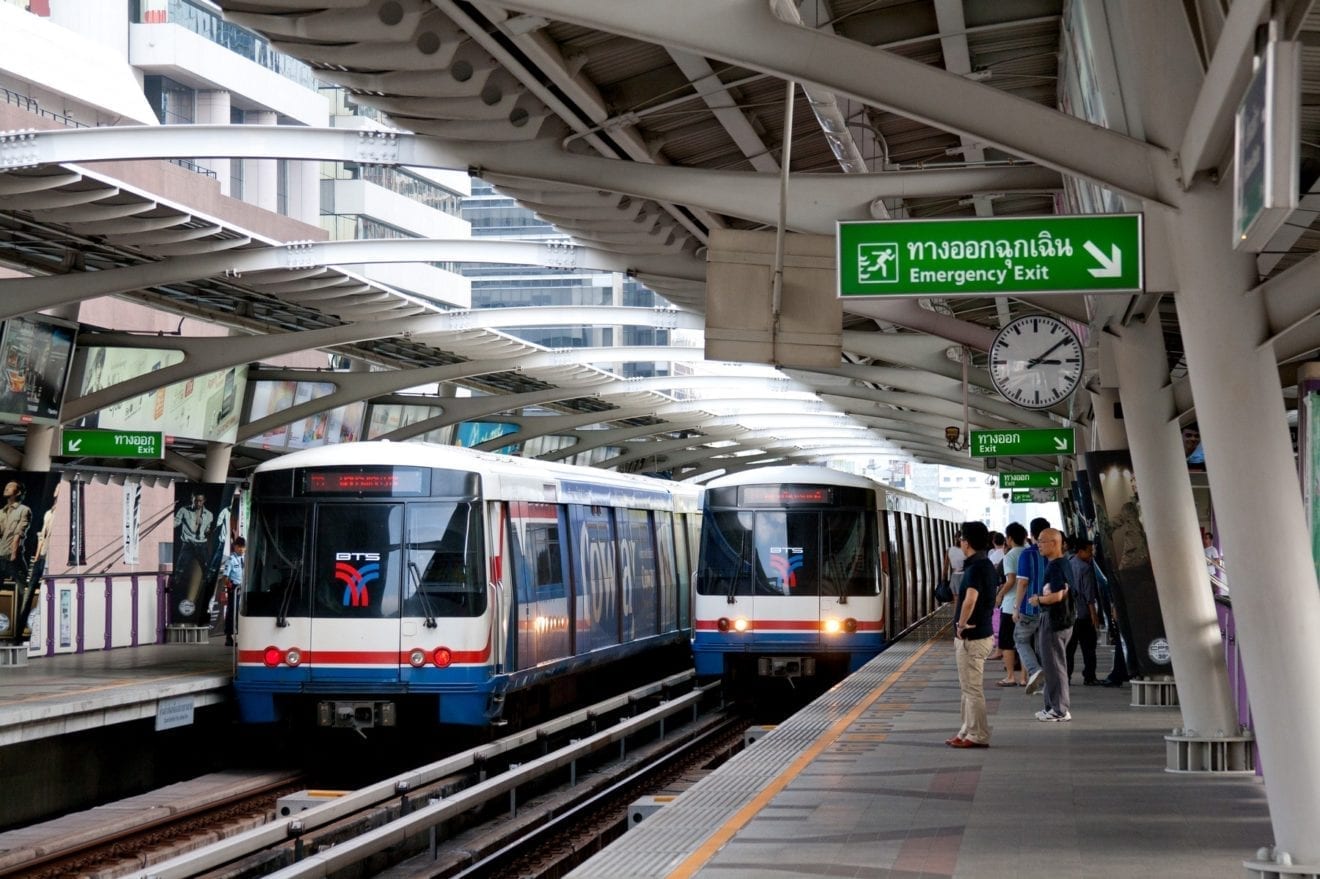
The little tokens and even plastic smart cards now used in the mass transit systems will soon be outdated once the media business unit of BTS Group Holdings introduces new services that will enable skytrain fares to be paid with a smartphone.
By the first quarter next year, BTS commuters will just have to swipe the barcode embedded in the Rabbit Line Pay application at the turnstile. No more queues to get change, tokens or cards.
With the new mobile service, you just swipe your Rabbit Line Pay card and walk through the turnstile, says Mr Kavin.
“Next year, we’re going to change the entire BTS system, enabling users of Rabbit Line Pay [a function embedded in the Line app] to cover skytrain fares via smartphones or mobile devices,” says Kavin Kanjanapas, chief executive of BTS Group, which owns a majority stake of VGI Global Media Plc.
Line is the most popular instant messaging platform in Thailand with more than 33 million active users.
“The new mobile ticketing service will be a great convenience to commuters and perfectly serve modern Bangkok lifestyles, as you just swipe your barcode embedded in the Rabbit Line Pay application and walk through the turnstile,” says Mr Kavin, also chairman of VGI’s executive committee.
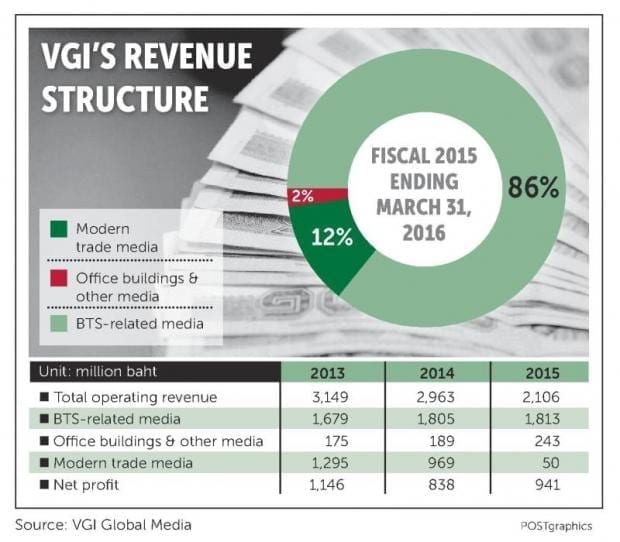
The innovative mobile ticketing service shows just how far VGI has come since its humble beginnings. Founded in 1995 with initial registered capital of only 1 million baht, the company was intended to provide marketing and advertising services for the Bangkok Mass Transit System Plc (BTSC), which operates the skytrain.
The company’s registered capital today is 858 million baht, with 686 million in paid-up capital. VGI is now Thailand’s major provider of out-of-home (OOH) media solutions, having more than 10,000 large still-image screens installed in the BTS skytrain network and at large retail stores nationwide.
It also has more than 11,000 square metres of advertising space in the product display zones of large, modern stores and around 5,000 digital screens and other types of OOH advertising at BTS stations, Tesco Lotus, Big C and Watson stores, along with large office towers throughout Bangkok.
It further holds licences to manage various forms of advertising at 13 airports operated by Airports of Thailand Plc and the Civil Aviation Department.
In addition, the company runs retail shops in 23 BTS stations, on top of radio networks covering nearly 2,000 stores in Thailand.
Like the BTSC, whose situation became critical in the wake of the 1997 financial crisis when passenger number was low due to a sharp decline in purchasing power, VGI struggled during its first three years of operations.
After seeing low ridership number of fewer than 100,000 a day (in contrast with original projections of 600,000 a day), almost every advertiser who had booked space with VGI asked to scrap their deals and withdrew their deposits.
As with the BTSC, VGI spent nearly 10 years battling financial constraints. It started seeing a glimmer of hope after the BTSC, which shared a huge portion of the group’s debt, exited its rehabilitation plan in 2008 and merged with Tanayong, the property development firm Mr Kavin’s father, Keeree Kanjanapas, founded in 1968.
The merged company became BTS Group Holdings in 2010, which focuses on four core businesses: mass transit, property, media and services.
After the group’s strong business revival, VGI itself has been successful in developing its lifestyle media network, mainly through active mergers and acquisitions (M&A) over the past couple of years, acquiring stakes in SET-listed Master Ad Plc, the country’s largest OOH advertising company, aviation media company Aero Media, and most recently Rabbit Card and its related online business.
The latest acquisition will enable VGI to enter into an e-payment business that offers Rabbit Card as a payment tool for travelling on the skytrain and for purchasing merchandise from leading retailers nationwide.
Rabbit Line Pay will also enable users to buy goods online and from brick-and-mortar retail stores. It also lets VGI extend its services to cover online payment for skytrain fares and retail purchases within Rabbit Card’s network of merchants nationwide through their mobile devices.
Additional Rabbit businesses comprise other online ventures operated by Rabbit Internet, including Rabbit Daily, which provides lifestyle content through a web portal, and Rabbit Finance, which is a licenced, leading online financial products comparison website previously known as ASK Hanuman.
This strategic move will allow VGI to raise the effectiveness and measurability of its advertising campaigns.
VGI aims to create a new media advertising platform, Data-Centric Media Hypermarket, that can directly reach targeted audiences. It is projected to bring VGI’s daily audience from 1.9 million people to 25 million (mostly active Line users). It has also set a long-term revenue target of 8.2 billion baht over the next five years, up from 3.9 billion in 2015.
To fulfil the ambitious new media advertising platform, Mr Kavin says VGI still needs to complete two to three acquisition deals.
“Over the last 3-4 years, we’ve spent more than 3 billion baht on M&A, mainly on Master Ad, and most recently Rabbit Card,” said Mr Kavin. “From next year onwards, M&A will no longer be our focus. Rather, we will look to the integration of all our businesses to create the best synergy within VGI,” he says.