Tag: bangkok

  • Vietnam state investment arm SCIC partners Thai Kasikornbank

    Vietnam state investment arm SCIC partners Thai Kasikornbank

    Vietnam’s government investment arm SCIC, the state investor in the country’s biggest firm Vinamilk, has inked a deal with Thai Kasikorn Bank to unlock more investment opportunities in Vietnam. SCIC, or the State Capital Investment Corporation, said the collaboration will help woo foreign investors into the country as well as improve its investment climate through the exchange of expertise.

    Thailand has accounted for significant investments into Vietnam, notably in the retail sector. TCC Holding and Central Group put a war chest to acquire retail assets in Vietnam over the past two years to secure top positions in this $118 billion market. SCIC last year sold 5.4 per cent of Vinamilk to Thai beverage firm F&N in a $500 million deal. F&N had been already a major shareholder at the dairy company with an 11 per cent interest.

    Thai brewer Singha also played big with a $1.1 billion infusion into Masan Group’s units. Thai investors are also beefing up their direct investments. Direct investment and M&A capital from Thailand in Q1, 2017 were valued at $168 million, a surge of 20 times compared to the same period in 2016. Vietnam has been seen as a magnate for foreign investors thanks to its stable economic annual growth of some 6.5 per cent, blended with a rising middle class and improving infrastructure.

    The total new committed FDI and M&A capital into the country in the first four month of this year reached $10.6 billion, in which share purchases accounted for $1.36 billion, according to the General Statistics Office. The SCIC represents the State ownership in shares of major local businesses, including Vinamilk, Hau Giang Pharmaceutical, Vietnam Construction and Import-Export JSC, tech firm FPT, insurer Bao Viet and Traphaco. In March, the sovereign wealth fund had also signed a similar agreement with Singapore property developer Keppel Land to promote investment opportunity in Vietnam.

  • Harley-Davidson plans a Thailand factory to serve SE Asian market

    Harley-Davidson plans a Thailand factory to serve SE Asian market

    otorcycle maker Harley-Davidson said on Thursday it will build a plant in Thailand, a major Asian automotive hub, to serve the growing Southeast Asian market, a move criticized by a U.S. labor union.

    The company did not give a figure for the planned investment in Thailand’s Rayong province, southeast of Bangkok.

    Katie Whitmore, Harley-Davidson public relations manager, said the company had its best results in Asia-Pacific in 2016, though she gave no numbers.

    The Thailand facility “will allow us to be more responsive and competitive in the ASEAN region and China,” Harley-Davidson public relations manager Katie Whitmore said.

    “Increased access and affordability for our customers in the region is key to growth for the company in total,” she said. “There is no intent to reduce H-D U.S. manufacturing due to this expansion.”

    The plant would let Milwaukee-based Harley-Davidson avoid Thailand’s up to 60 percent tariff on imported motorcycles and help it get tax breaks when exporting to Thailand’s neighbors, thanks to a trade arrangement among members of the Association of Southeast Asian Nation (ASEAN).

    Harley opened a plant in India in 2011. It also assembles motorcycles at a plant in Brazil.

    After the New York Times reported on Harley’s planned Thai investment, United Steelworkers (USW) International President Leo W. Gerard on Tuesday said the decision was “a slap in the face to the American worker and to hundreds of thousands of Harley riders across the country.”

    USW represents members at Harley plants in two U.S. states and 850,000 workers in North America.

    Gerard also said that production outside the U.S. “puts in jeopardy the success that has propelled Harley over the years.”

    Whitmore said motorcycles assembled in Thailand would have the same “authentic look, sound and feel” as those manufactured in the U.S.

    Demand for Harley motorcycles in the U.S., the company’s biggest market, continues to be slow as its loyal baby boomer demographic changes ages.

  • Healthy food delivery startup IndieDish announced as winner of TOP 100 Fight Club Thailand

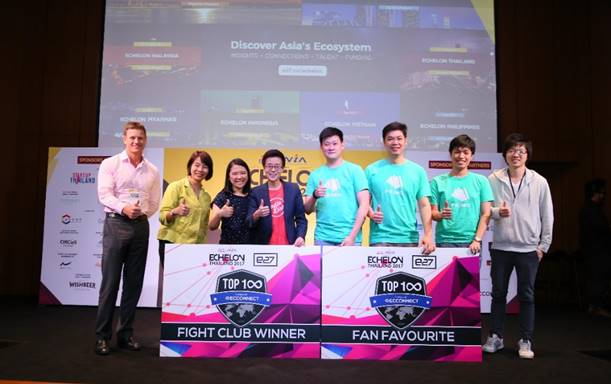
    Healthy food delivery startup IndieDish announced as winner of TOP 100 Fight Club Thailand

    IndieDish was announced winner of the TOP 100 Fight Club Thailand at Echelon Thailand 2017, an enriching two-day tech conference organised by e27, in collaboration with Startup Thailand and the National Innovation Agency.

    Echelon Thailand 2017 is a digital insight, connections, talent, and funding platform crafted to connect people across Thailand, the gateway to Asia’s thriving tech startup community.

    Thirteen Thai-based startups were shortlisted from over 100 entries to battle for the coveted prize, which includes two tickets to the Echelon Asia Summit in Singapore, access to a VIP dinner with invited investors and corporates and a free TOP 100 Exhibition booth at the event.

    Founded by two ex-Amazon employees, IndieDish not only delivers healthy food at a relatively cheap price of THB 89 per meal on average, it also makes the delivery process efficient in traffic-congested Bangkok.

    IndieDish optimises its logistics algorithm by using a pre-order system. Based on the pre-orders it receives, which can be made a week in advance, IndieDish will work out the most efficient route for its delivery drivers. IndieDish has delivered over 18,000 meals so far. It doesn’t offer on-demand/same day delivery services but it is working on providing this service in the future.

    The judges were impressed with how thoroughly the team had thought through the delivery process and were drawn to IndieDish’s mission to broaden healthier food choices in the country.

    Meanwhile, the fan favourite prize, based on a live audience poll, was awarded to Primo, an app that organises and consolidates promotions from a user’s credit cards and membership cards. The app then pushes personalised deals based on the user’s preference.  Based on the user’s spending limits, Primo then recommends which deals best fit their budget.

    Even though the remaining startups may not have won a prize, they will be considered for qualification into the TOP100 Finale at Echelon Asia Summit 2017 this June 28-29 in Singapore and the e27 platform will continue to support them by connecting them to various stakeholders and investors in the regional ecosystem all year around.

  • Tata Aims to Build on Recent Truck Gains in Thailand

    Tata Aims to Build on Recent Truck Gains in Thailand

    Indian automaker Tata is moving production in Thailand as part of a company reset that aims to increase its Thai sales 83% this fiscal year to roughly 3,000 units.

    With a 10-year contract up at the Thonburi Automotive Assembly Plant in the south of Bangkok, Tata has signed a renewable 5-year pact with the Bangchan General Assembly plant, 20 miles (34 km) west of central Bangkok.

    Since its opening in 1970, Bangchan has been the home to assembly operations for 14 brands.

    Production will begin at Bangchan after the installation of assembly equipment at a cost the Bangkok Post puts at TB500 million ($14.5 million). The facility will have a capacity of 8,000 Tata Xenon pickups and 2,500 Tata Super Mint pickup trucks in a 1-shift operation.

    Tata says Xenon production will launch in September.

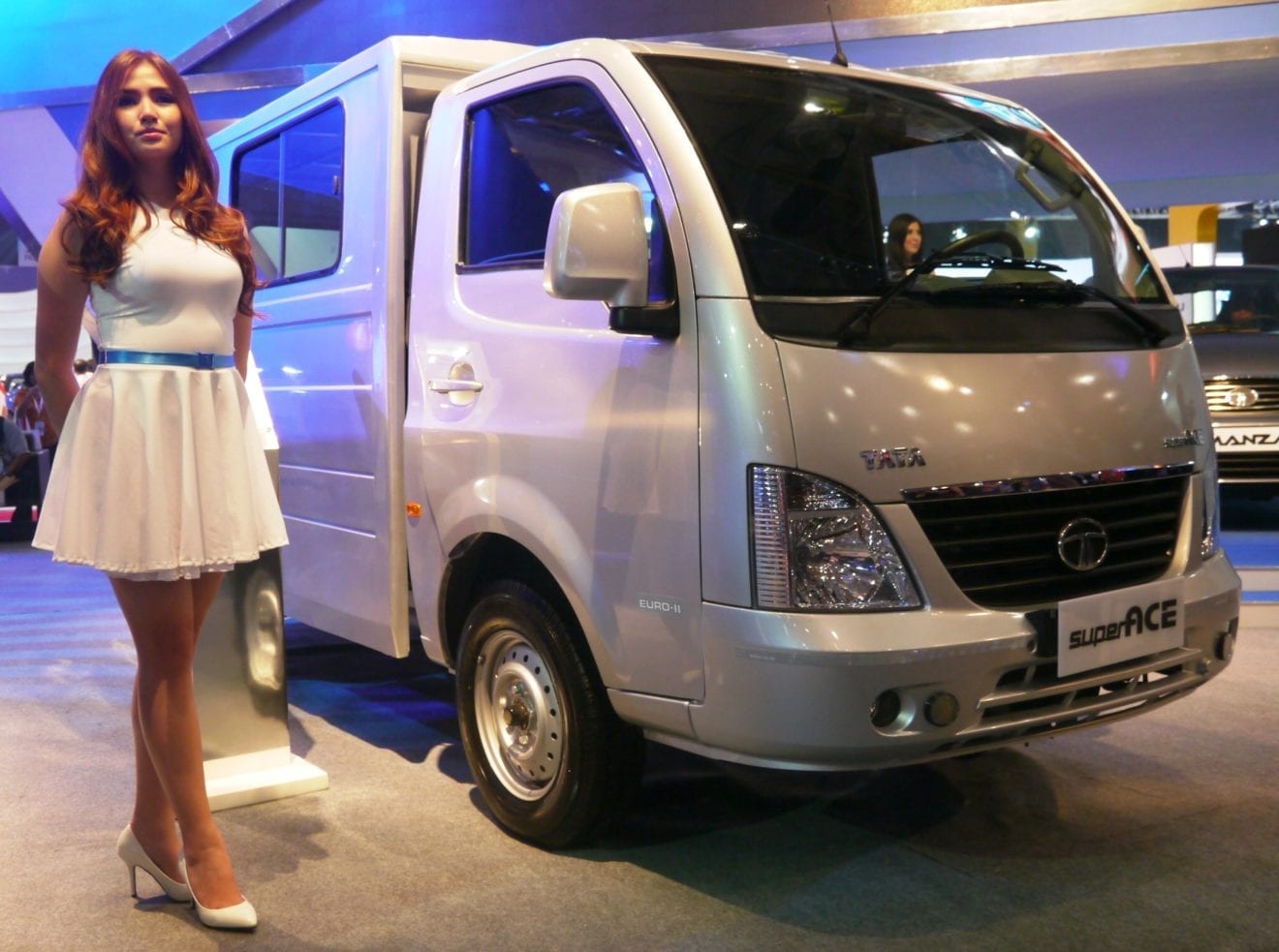
    The automaker says its Tata Super Ace line will be assembled in both right-hand and left-hand drive versions.

    To help reach its local sales target, Tata says it also will introduce more models to local showrooms.

    Tata Thailand CEO Sanjay Mishra says sales grew 19% year-on-year in the 2016 fiscal year ending March 31. “Fiscal year 2016 marked Tata’s best retail performance in Thailand ever,” he says in a statement.

    “Fiscal-year 2017 is a big step for the company’s future – we are making announcements for exciting new models as well as assembly upgrades and initiatives, new investment for the Super Ace Mint small truck and emerging opportunities that will deliver profitable and sustainable growth in Thailand.”

    Sales of Xenon pickups, the automaker’s core product in the Thai market, rose 38% to 1,398 units last year, The Nation newspaper reports.

    “With the major-change Xenon pickup to be launched in Q4 of this year, we expect to deliver 2,100 units of the new model – 1,800 domestic and 300 export – 500 units of the Super Ace Mint truck for a market share of about 10% for this type of car, 300 units of the Ultra and 100 units of heavy trucks this year,” Mishra says.

    “Our goal is being a full-range trucking solution provider, and we will be the only player in the entire commercial-vehicle segment.”

  • Hitachi aims to become leader of Thai elevator market by 2020

    Hitachi aims to become leader of Thai elevator market by 2020

    Hitachi’s elevator and escalator distributor in Thailand is projecting aggressive sales growth to restore its top position in the local market in the next three years.

    Michael Tang, vice president of Hitachi Elevator (Thailand) Co., who has taken on a new role as head of its sales and marketing unit, said the company aims to increase its market share to 25 percent in 2020 from the current 17 percent in pursuit of market leader Mitsubishi Electric Corp.

    Hitachi was the market leader before the Asian financial crisis in 1997, which caused sales to decrease, Tang said.

    To attain the goal, the company needs to achieve annual sales growth of 20 percent on average and is seeking to sell 1,000 units this year, up 18 percent from 850 units in 2016. Of the 2017 total, elevators are expected to account for 70 percent and escalators 30 percent.

    Thailand’s elevator and escalator market, totaling about 5,500 units last year, is expected to grow 3 to 5 percent this year thanks to business expansion in the real estate and retail industries as well as public utility development in the country.

    Demand for home elevators will grow significantly in the next one to two years due to the rapidly aging population in Thailand, Tang said.

    The company forecasts that demand from the private sector, especially department stores and hospitals, will increase as government spending on infrastructure projects will motivate them to invest more, boosting the sales ratio of that sector to 65 to 80 percent in 2020.

    Hitachi expanded the annual capacity of its Thai plant from 1,500 units to 2,500 units last year and opened a regional training center in the country early this year to train and educate engineers from other Asian countries as well.

    The Japanese company plans to continue selling Thai-built products in overseas markets, expecting to boost the Thai arm’s revenue from exports to 60 percent of the total in 2020 from 10 percent at present.

  • AEON in Collaboration with Bangkok Bank launches “Get A Chance to Win Gold with AEON”

    AEON in Collaboration with Bangkok Bank launches “Get A Chance to Win Gold with AEON”

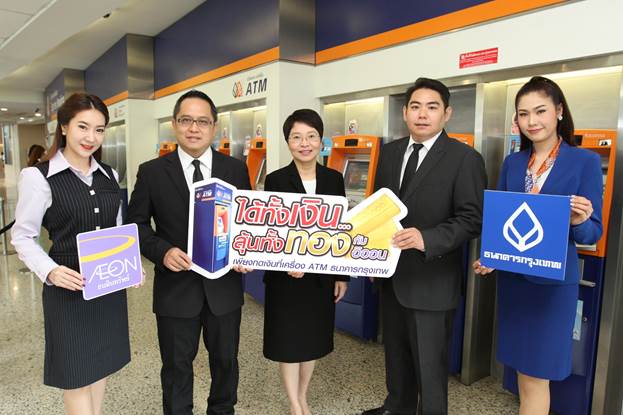
    Mr.Nuntawat Chotvijit, Marketing Director of AEON Thana Sinsap (Thailand) Public Company Limited (second left) together with Ms. Prassanee Ouiyamaphan, Executive Vice President of Bangkok Bank (center), and Mr. Arjharn Petchdee, Senior Vice President of Bangkok Bank (second right), announced the launch of “Get A Chance to Win Gold with AEON” promotional campaign, which runs until June 30.

    AEON Your Cash cardholders are eligible to participate in the campaign by making cash withdrawals of at least 1,000 baht at Bangkok Bank ATMs. The prizes, worth 753,750 baht in total, include 5 gold bars worth 100,000 baht each and 25 (50 Satang) gold necklaces valued at 10,150 baht each.

  • AIS projecting 5% revenue growth for 2017

    AIS projecting 5% revenue growth for 2017

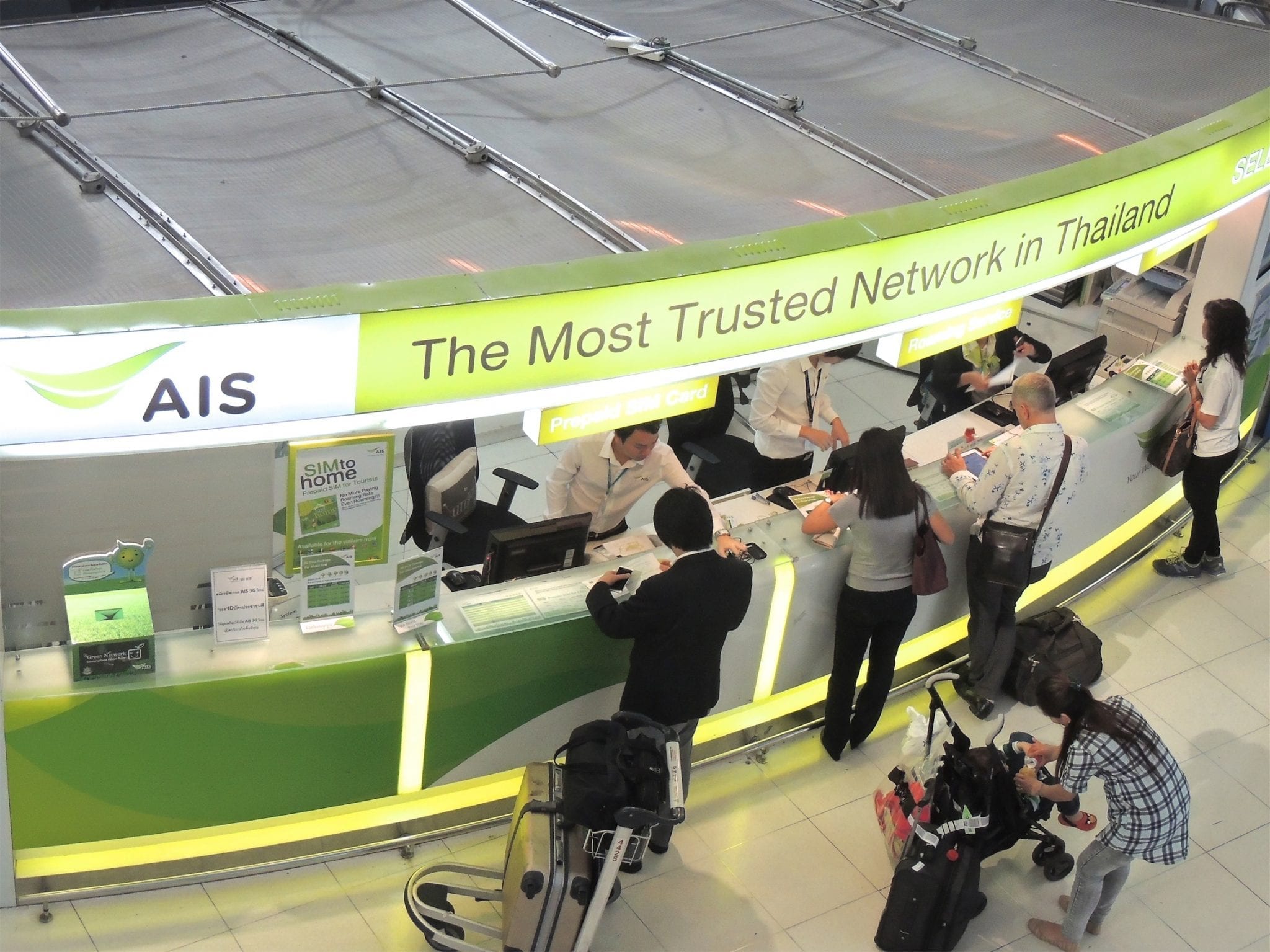
    Thailand’s AIS is projecting a 5% increase in revenue and a 44% growth in ebitda this year as a result of strong growth in 4G customers.

    AIS VP of investor relations Nattiya Poapongsakorn as stating that the operator is expecting service revenue for the year of 129 billion baht ($3.75 billion), with the majority expected to come from data services.

    AIS’ total 4G customer base roughly doubled in the past 12 months to reach 12 million by the end of March, which compares to a 3G customer base of 24.6 million and a 2G subscriber base of 4 million.

    AIS aims to increase its revenue market share to 50% this year, up from 48% as of March. She said the operator’s 4G users have an ARPU of 400 baht, compared to just 250 baht overall.

    For the first quarter, AIS reported service revenue of 31.4 billion baht, with data services accounting for 57% of this.

    The operator meanwhile plans to spend around 45 billion baht to expand its networks in 2017, with 40 billion to be spent on mobile networks and the remainder on fiber infrastructure. But the company plans to reduce its handset subsidy budget after incurring subsidy costs of 10 billion baht last financial year.

  • AOT concession revenues up by 6.49% across Thai airports

    AOT concession revenues up by 6.49% across Thai airports

    Non-aeronautical revenues accounted for 43% of the total generated by Airports of Thailand (AOT) within its HY1 fiscal year period, at the country’s 38 airports (October 2016 to March 2017).

    These include the most significant civil aviation airports of Suvarnabhumi and Don Mueang in Bangkok, plus AOT’s four regional airports handling international traffic, including Chiang Mai, Phuket, Hat Yai and Mae Fah Luang-Chiang Rai.

    Over the six-month period the two main airports of Suvarnabhumi and Don Mueang respectively handled 29.9m passengers (+4.36%) and 18.5m (+7.47%).

    Concession revenues for the six months, including those from King Power International Group (KPIG), came in at Bht27,277.86m (+6.49%) as net profits over the same period were recorded at Bht11,496.13m (+14.26%). At the same time, EBITDA was reported at Bht17,066.87m (+6.37%).

    In a statement, Airports of Thailand said: “The overall aviation industry of Thailand during October 2016 to March 2017 improved compared to the same period last year.

    Chinese Tourist Numbers Increase

    “The number of Chinese tourists who visited Thailand has recovered after an extreme decline around the end of the year 2016 as a consequence from the repressive measures against illegal tours by the government.

    “The recovery of Chinese tourist numbers resulted from an adaption of the entrepreneurs. The entrepreneurs offered high quality tour packages which attracted potential tourists to Thailand.

  • AEON Your Cash Awards 1 Million Baht Worth of Gold to Lucky Winner

    AEON Your Cash Awards 1 Million Baht Worth of Gold to Lucky Winner

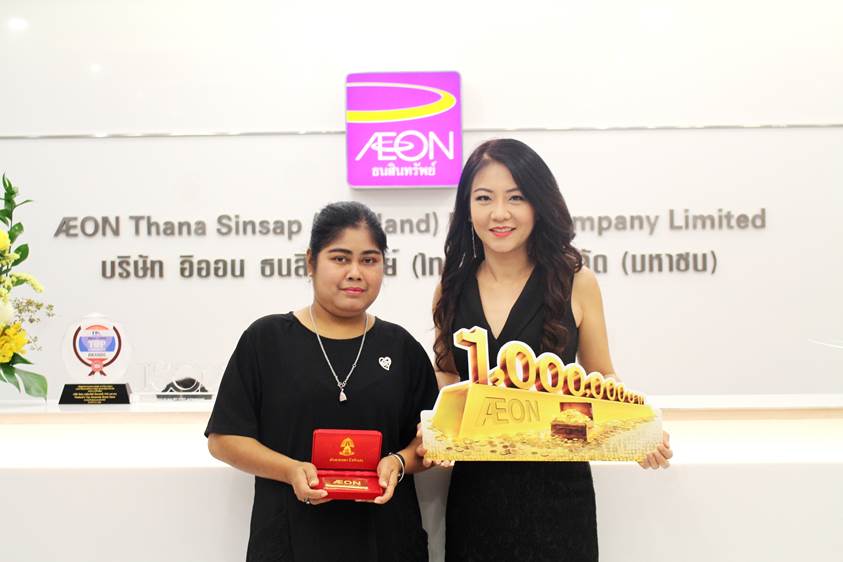
    Ms.Saranya Pipoppinyo (right), Vice President Marketing of AEON Thana Sinsap (Thailand) Public Company Limited, awarded a gold bar, valued at 1 million baht, to Ms. Jirarat Khunthong, a lucky winner from Trang province, as part of “Win Gold Worth THB1 Million with AEON”. The campaign was eligible for AEON Your Cash customers who withdrew cash or transferred Your Cash loan at least 1,000 baht from 1 January – 28 February 2017.

  • Mercedes-Benz ditches E220d in favour of E350e in Thailand

    Mercedes-Benz ditches E220d in favour of E350e in Thailand

    Sales of the diesel-powered executive saloon cease as the German automaker wants plug-in hybrids to account for 30% of total annual sales.

    Mercedes-Benz (Thailand) has launched its fourth plug-in hybrid vehicle: the E350e which follows the C350e, S500e and GLE500e.

    Like the C350e, the E350e uses a 2.0-litre petrol-turbo engine in conjunction with an electric motor, whose power from the lithium-ion battery can also be revitalised from the wall socket. The S500e and GLE500e employ a bigger 3.0-litre V6 petrol motor.

    Combined outputs in the E350e are rated at 286hp and 550Nm, while the maximum all-electric driving range is claimed at 33km. As the E350e spews out 44g/km of CO2 on the combined cycle, it is eligible for the new 5% excise tax imposed on locally made plug-in hybrids producing no more than 50g/km.

    There are three trims for the E350e: Avantgarde 3.49 million baht, Exclusive 3.79 million baht and AMG Dynamic 4.09 million baht.

    The similarly priced E220d has been dropped from the Thai E-class model lineup as Mercedes-Benz wants to promote plug-in hybrids in the country.

    Mercedes-Benz hopes that plug-in hybrids will account for 30% of total annual sales which is why diesel versions and other pure petrol derivatives aren’t available anymore. The same has happened in the C, S and GLE model ranges.

    BMW, meanwhile, is gearing up to launch the 530e in Thailand at the end of this year to rival the E350e. Volvo is also said to be preparing the introduction of the S90 T8.

    Unlike Mercedes-Benz, BMW is still selling diesel versions of the X5, 3 and 7-series as it wants to offer Thai customers with two distinct types of propulsion. BMW hopes that plug-in hybrids will account for 15% of annual sales this year.

  • TOT ready to take over True’s fixed operations

    TOT ready to take over True’s fixed operations

    Thai state-owned operator TOT is ready to take over concessionaire True Corporation’s fixed line operations upon the expiry of the concession agreement in October.

    TOT has spent months preparing the operational procedures that will be needed to take over the provision of services to around 1.2 million customers.

    As part of Thailand’s transition to a licensing regime, the 25-year build-operate transfer concession agreement will be allowed to expire on October 26. True had been paying 18% of its total revenue to TOT under this concession.

    Once the concession expires True will transfer its fixed line network assets and customers to TOT.

    The operator will lose fixed line service revenue of around 2 billion baht ($57.7 million) per year, while TOT expects to be able to realise revenues of 2.8 billion baht per year from the assets.

    TOT plans to start writing to True customers in July informing them of the scheduled takeover of the fixed line operations. The state operator already has its own fixed line business, with around 3.4 million subscribers nationwide.

    According to the report, TOT meanwhile plans to spend around 400 million baht this year on fixed line maintenance and repair.

  • Duolingo Launches in Thailand With a Free English Language Course for Thai Speakers

    Duolingo Launches in Thailand With a Free English Language Course for Thai Speakers

    Duolingo, the most popular language-learning platform and most downloadededucation app in the world, announced today its launch in Thailand with a free English language course for Thaispeakers. Using Duolingo, Thai speakers can learn to read, write and speak English through fun, game-like lessons. Duolingo is available now as a free app on the App Store and Google Play, and on the web at Duolingo.com.

    With more than 170 million users worldwide, Duolingo stands out for its free learning content, game-like approach to teaching, and bite-sized lessons that can be done in five to ten minutes per day. This appeals to anyone in Thailand who lacks time and resources to sign up for expensive language classes.

    “Of the 1.2 billion people worldwide who are learning a foreign language, 800 million are learning English in order to improve their job prospects and gain access to better life opportunities,” said Luis von Ahn, CEO and co-founder of Duolingo. “We started Duolingo to make language education free and accessible to everyone, and are excited to now offer the first free online English language course for Thai speakers. We hope the course will help open up new educational and job opportunities for Thais, while providing a fun learning experience.”

    The Duolingo English course for Thai speakers is the first free language-learning program of its kind in Thailand. Like most of Duolingo’s courses, this one was created by a team of bilingual volunteers. The team behind this course includes Songphon Klabwong, chief technology officer of a Bangkok-based software company, who was previously a lecturer of Computer Science at Rajamangala University of Technology.

    “During the time I was teaching, I noticed that the language barrier among my students was one of the biggest challenges to their learning experience and encouraged my students to start learning English,” said Klabwong. “When I found out that Duolingo was developing an English course for Thai speakers, I was inspired by the company’s mission and decided to contribute to the course. I am hopeful that it will encourage more Thais to develop their English skills.”

    For Thais who already read, write and speak English, Duolingo currently offers 22 language courses, with plans to add Japanese, Korean and even Klingon, the extra-terrestrial lingo from Star Trek, this year, too.

    Based in Pittsburgh, Pennsylvania in the United States, Duolingo has raised USD $83.3 million in venture capital from investors including Google Capital, Union Square Ventures, New Enterprise Associates, Kleiner Perkins, Hollywood actor Ashton Kutcher and internationally renowned author Tim Ferriss. While all learning content on Duolingo is free, the company monetizes through optional in-app purchases, ads at the end of lessons and a relatively low-cost English language certification test that is widely accepted at universities and organizations around the world.

    Duolingo is available on Android, iOS, Windows devices and the Web with seamless switching between platforms.

  • Standardized payment QR code to launch in Thailand

    Standardized payment QR code to launch in Thailand

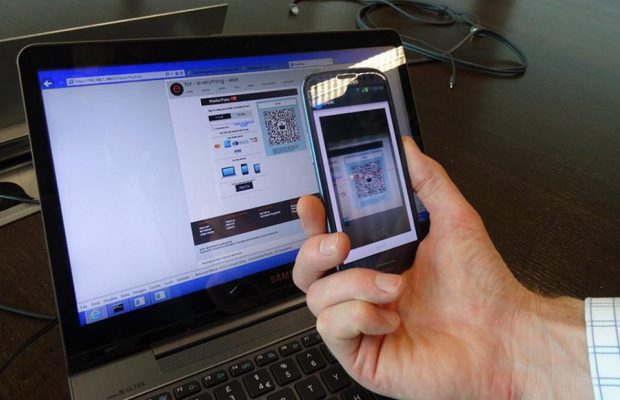
    Top payment card companies Mastercard, UnionPay International and Visa have jointly introduced a standardized QR code for mobile payments in Thailand.

    The new standardized code allows merchants to easily accept electronic payments without the need to invest in physical point-of-sale machines. They need only have a piece of paper with their unique QR code for consumers to scan.

    Customers with a Mastercard, UnionPay, or Visa card can use a mobile application to scan the code using both smartphones and feature phones with a camera function.

    In future, the standards are intended to be globally interoperable and useable anywhere they have been expected.

    The standardized code is expected to be implemented by banks and merchants across Thailand by the third quarter.

    The initiative also meshes with the Thai financial sector’s Electronic Data Capture (EDC) expansion initiatives under the government’s National e-Payment Roadmap, which aims to support the nation’s transition to a cashless society.

    The launch of the Standardized QR Code signals exciting times for Thailand as consumers move quickly to adopt new payments technology,” Mastercard country manager for Thailand Donald Ong said.

    “Our own research, for example, shows that 50% of young consumers across South East Asia would use the QR code straightaway, and we believe this reflects the demand in Thailand.”

  • Mastercard, UnionPay International and Visa Make E-Payments in Thailand Easier

    Mastercard, UnionPay International and Visa Make E-Payments in Thailand Easier

    Mastercard, UnionPay International and Visa today introduced a Standardized Quick Response (QR) Code for payments, accelerating Thailand’s transition to a cashless society.

    The Standardized QR Code supports the Bank of Thailand’s cashless agenda to drive innovation, interoperability, and security in payments.

    In order to pay, consumers holding a Mastercard, UnionPay, or Visa card can simply use a mobile application with Standardized QR Code support to scan the merchant-presented QR code. QR Code works on both smart phones and feature phones with camera function.

    By establishing standard specifications for QR code payments, consumers and merchants in Thailand now have more options to pay electronically without compromising on security and convenience. The Standard QR Code is simple to set up and use and provides three key benefits.

    First, consumers will not need to scan different QR codes to make payments with Mastercard, UnionPay and Visa. Merchants will only need to display one QR code at the storefront or through the acquiring bank’s mobile application.

    Second, by routing the transactions through global-standard processing networks, consumers can enjoy a fast, convenient and secure payment experience.

    Third, the standards are intended to be globally interoperable and with the right mobile application consumers will be able to use the same standard QR code to make payments everywhere the standards have been adopted.

    The Standardized QR Code is intended to be implemented by banks and merchants across Thailand by the third quarter of 2017 and will contribute to the financial sector’s Electronic Data Capture (EDC) expansion initiatives under the National e-Payment Roadmap introduced by Ministry of Finance.

    A readily accessible and secure payment processing option for all stakeholders, the Standardized QR Code for payments will contribute to the growth and speed of electronic payment adoption across the country, lowering the cost for accepting electronic payments.

    In the future, Thai consumers will benefit from being able to make QR code based payments when traveling outside of Thailand.

    Mr. Donald Ong, Country Manager, Thailand and Myanmar, Mastercard, said, “The launch of the Standardized QR Code signals exciting times for Thailand as consumers move quickly to adopt new payments technology. Our own research, for example, shows that 50% of young consumers across South East Asia would use the QR code straightaway, and we believe this reflects the demand in Thailand. This demand will grow further as the technology is rolled out at small shops across the country, and includes bill payments and cash on delivery as well. Developed in line with global standards, this QR code solution means Mastercard users have even more peace of mind, as well as extra convenience when paying for goods and services. This is yet another strong offering as Mastercard supports Thailand’s evolution towards a cashless society.”

    Mr. Wenhui Yang, General Manager for UnionPay International Southeast Asia, said, “UnionPay now chairs an international workgroup with other payment networks to develop a global QR Code Standard for payments. As an international payment network, UnionPay aims to provide payment solutions that are tailored to the needs of the local market, to enable choice and ease of payment for consumers and businesses alike. The Standardized QR Code is an innovative step forward in the right direction for Thailand’s payment industry. By enabling consumers and merchants to pay and process QR codes easily and securely, this will accelerate the development of the local payments industry, as we continue to work with the Bank of Thailand on payment solutions that will benefit the people of Thailand. We believe the Standardized QR Code has the potential to support and strengthen the Thai economy and help Thailand become a truly cashless society.”

    Mr. Suripong Tantiyanon, Visa Country Manager, Thailand, said, “Visa is proud to have contributed to the development of Standardized QR Code in Thailand as we believe it has the potential to significantly accelerate the growth of electronic payments acceptance in the country. This is especially true for consumers as well as small merchants, as it lowers cost and is easy to implement, eliminating the need for traditional POS hardware. The success of mVisa worldwide has proven a QR code solution to be scalable, secure and easy to use. Increased use of electronic payments has contributed to meaningful economic growth, with more than USD 3.18 billion or about THB 113 billion added to Thailand’s GDP from 2011 to 2015. We look forward to continuing to partner with our clients, merchants and the government to innovate and expand access to digital payments in Thailand, driving inclusive growth for everyone, everywhere.”

  • Siam Piwat reinforces its position as ‘the Icon of Innovative lifestyle’ with another success

    Siam Piwat reinforces its position as ‘the Icon of Innovative lifestyle’ with another success

    Siam Piwat, owner and operator of the world-renowned retail destinations such as Siam Paragon, Siam Center, and Siam Discovery as well as main partner and owner of ICONSIAM, the iconic landmark of Thailand’s prosperity by the Chao Phraya River, has further cemented its position as ‘the Icon of Innovative lifestyle’ in the retail and real estate business after Thailand’s only hybrid retail store Siam Discovery – The Exploratorium has won the World Retail Award for Store Design of the Year — another testament to the company’s success in retail business expansion, ushering in new chapter in the history of Thailand’s retail industry by becoming the first and only corporate from Thailand to receive such accolade from this prestigious award show.

    In winning the World Retail Award for Store Design of the Year, Siam Discovery – The Exploratorium not only beat its world-class competitors but was also the only Asian mall to rank in the top ten for the Best Experience Initiative category.

    Chadatip Chutrakul, Chief Executive Officer of Siam Piwat Co., Ltd., stated, “After having launched our five-year policy and investment plan in 2014, Siam Piwat has consolidated its position as the ‘thought-leader’ and aims to incorporate ‘novel experiences that meet the customers’ needs’ in its every core business. We have invested in new businesses, especially retail businesses, and introduced new ideas to expand the success of the retailers and our business allies, so that we can always offer fresh and exciting experiences.

    Following the core investment plan, Siam Piwat has written a new phenomenal chapter in Thailand’s retail history by relaunching Siam Discovery as the country’s largest lifestyle specialty store. Siam Discovery – The Exploratorium is a conceptual twist on medium-size retail business by incorporating innovative ideas, a proof of Siam Piwat’s much-coveted success in making a difference in retail industry.

    “We understand that the life cycle of retail business has been shortened considerably: some product categories/ brands achieve huge popularity for only a limited period of time due to consumers’ continuous search for newness as well as the rise of e-commerce and online shopping. Siam Piwat puts each and every detail into consideration for each and every project. All the projects that have been developed during the past 3 years follow 4 key strategic rules to ensure long-term success: 1) To innovate and stay ahead of others  2) Being customer-centric  3) The Creation of Shared Values and 4) Building Partnerships,” added Chadatip.

    To Innovate and Stay Ahead of Others

    Creating innovations and offering different, exhilarating experience has been the core of Siam Piwat’s development projects. Each and every project comes with a new, unique modern lifestyle concept that belongs to a class of its own and at times, is the first of its kind in Thailand or even in the world.

    Being Customer-Centric

    Technology has brought a dramatic change in consumer behaviors, most notably higher competition as a result of fast connectivity and accessibility and long-term consumer behavior has become much more difficult to predict. Siam Piwat has readied our operation in preparation for those rapid changes and an understanding of consumer group and their diverse needs is essential for our business development.

    The Creation of Shared Values

    Siam Piwat has set a goal in creating brand value for not just Siam Piwat’s own business, but also brands and products of tenants and partners by revolutionizing the marketing plan. Transforming “shared values” into “commercial values” is the heart and soul of successful brand management, hence the utmost need to create bond and loyalty among customers by making it relevant to their fast-changing everyday life.

    Building Partnerships

    Siam Piwat believes that through partnership and collaboration with stakeholders, we will create a long-term engagement that leads to healthy growth of business. If we do it in the right way, it can bring about business sustainability.