Retail News CRM

Tag: Bank Indonesia

  • Indonesia December Inflation Cools, Stays Within Bank Indonesia Target

    Indonesia December Inflation Cools, Stays Within Bank Indonesia Target

    Indonesia’s December annual inflation rate eased, but the pace was quicker than expected, data from the Central Statistics Agency, or BPS, showed on Wednesday. The annual inflation rate in December was 3.13 percent, the agency said, lower than November’s 3.23 percent, but quicker than the median forecast of 2.98 percent. The December rate was well within Bank Indonesia’s target range of 2.5 percent to 4.5 percent for 2018.

    On a monthly basis, the consumer price index rose 0.62 percent due to rising food prices and transportation fares.

    The annual core inflation rate, which excludes government-controlled and volatile prices, was 3.07 percent, matching the poll’s prediction and representing a slight acceleration from November’s 3.03 percent.

    The central bank raised interest rates six times last year to defend the rupiah, which hit its lowest in 20 years in October. However, the currency pared some losses closer to the end of the year due to capital inflows

  • Indonesia Needs to Raise Rate to Stay Ahead of the Curve

    Indonesia Needs to Raise Rate to Stay Ahead of the Curve

    Bank Indonesia, the country central bank, needs to raise its benchmark interest rate on Thursday (25/09) or risks to be left behind the curve and sees a further weakening of the rupiah, economists said.

    “Bank Indonesia must be ahead of the curve amid the trend of rising global interest rates,” said Cyrillus Harinowo, a former central banker and now a commissioner at Bank Central Asia, Indonesia’s third-largest lender by market capitalization.

    Bank Indonesia has increased its benchmark 7-day reverse repo rate by 125 basis points so far this year, while the Federal Reserve has raised its interest rates by 175 basis points. That narrowed the interest rate differential between Indonesia’s interest-bearing assets and similar assets in the US, making the former more risky to hold for foreign investors.

    Cyrillus said Bank Indonesia has 12 times a year to raise the benchmark rate, compared to 4 times in the US, which should give it more leeway for adjusting its monetary policy.

    A Reuters poll showed that 20 out of 25 economists predict Bank Indonesia will increase its 7-day reverse repurchase rate by 25 basis points (bps) to 5.75 percent.

    Three other analysts see BI making a bolder move of hiking by 50 bps, while the last two predict the central bank will stand pat.

    The rupiah has lost about 9 percent against the dollar this year amid a sell-off of Indonesian assets due to rising US interest rates, contagion fear from other emerging market crises and the US-China trade war.

    Since BI’s last hike on Aug. 15, the currency has hit its lowest level since the 1998 Asian financial crisis and continued to trade near that level.

    Indonesia’s economy fundamental today, however, is far different from two decades ago, Tony Prasetiantono, the head of the Center for Economic and Public Policy Studies at Gajah Mada University (UGM).

    That time the rupiah nosedived by almost 600 percent from 2,300 a US dollar to 15,000. Indonesia’s economy contracted in 1998. Today it is still growing albeit at a slower pace of 5.17 percent compared to the government target of 5.4 percent.

    “Another indicator is inflation. Currently, it is around 3.5 percent while in the 1998 crisis it was 78 percent,” Tony said.

    “And the main thing is that the banking fundamentals are very healthy at the moment, much different from 1998,” he said.

    August Trade Deficit

    Fed officials have signaled a likely quarter-point rate increase at their meeting which ends early Thursday Asia time.

    Fakhrul Fulvian, Trimegah Securities economist, said he changed his view on Thursday’s decision from a hold to a 25 bps hike after “not as good as we had estimated” August trade data. The month’s deficit was $1.02 billion, much wider than the $680 million the market expected.

    The government has taken steps to curb imports, including imposing higher tariffs on over 1,000 imported goods, widening biodiesel use and delaying big infrastructure projects.

    “A relatively high level of foreign currency debt explains why the Indonesian authorities are worried when the currency falls sharply,” said Capital Economics, one of the large majority seeing a 25 bps hike on Thursday.

    Foreign investors own about 37 percent of Indonesian government bonds.

    BI officials have repeatedly pledged to be “ahead of the curve” in setting monetary policy.

    On Friday, Governor Perry Warjiyo said that investors had begun to resume buying emerging-market assets, and this plus exporters converting their earnings had increased the domestic supply of dollars.

    He also said inflation should stay benign until the end of the year despite the rupiah’s fall. The annual rate in August was 3.20 percent, within BI’s 2.5-4.5 percent target range.

    Satria Sambijantoro, Bahana Sekuritas economist and one of the two in the poll predicting a hold on Thursday, said Indonesian bonds, at current rates, are attractive.

    “The central bank is already ahead of the curve,” he said.
  • Indonesia’s Dollar Supply Increases as Investors Return

    Indonesia’s Dollar Supply Increases as Investors Return

    The value of the rupiah has stabilized in recent days as the domestic supply of dollars has increased due to inflows from returning investors and more exporters converting their earnings, Bank Indonesia Governor Perry Warjiyo said on Friday (21/09).

    “The rupiah has stabilized and it tends to strengthen,” Perry said. “Many fund managers have begun to invest and allocate their portfolios to emerging markets. So what was going out has begun to return.”

    The rupiah traded at 14,815 to the dollar at 1.05 p.m. in Jakarta on Friday, marginally stronger than Thursday’s closing.

    Perry also said inflation is expected to stay benign this year despite the rupiah’s fall, saying the rate is seen near the lower end of Bank Indonesia’s 2.5 percent to 4.5 percent target range. The annual inflation rate stood at 3.20 percent in August.

    Bank Indonesia has raised interest rates four times since mid-May to defend the rupiah, which fell to its weakest in 20 years amid wider emerging market selloffs. It will meet again next week to review monetary policy.

  • Indonesia Central Bank Raises Key Rate to Aid Rupiah, Flags Chance of More Hikes

    Indonesia Central Bank Raises Key Rate to Aid Rupiah, Flags Chance of More Hikes

    Indonesia’s central bank raised its benchmark interest rate for the second time in two weeks on Wednesday (30/05) and flagged more possible hikes as it escalated a battle to boost the fragile rupiah and contain capital outflows.

    Newly appointed Bank Indonesia Governor Perry Warjiyo pledged more action to promote financial and economic stability to bolster Indonesian assets amid an emerging market sell-off.

    The central bank “will continue to calibrate global and domestic market developments to utilize room for further rate hikes in a measured way,” Perry said after a meeting.

    On May 25, one day after being sworn in for a five-year term, Perry called Wednesday’s off-cycle meeting. On May 17, Bank Indonesia raised its key rate by 25 basis points to shore up the rupiah, then trading at its weakest since October 2015. Perry said the additional meeting was needed as a “pre-emptive, front-loading and ahead of the curve step” in response to expectations of higher US interest rates, which could push US Treasury yields higher.

    Rahul Bajoria, an economist for Barclays in Singapore, said the two hikes in two weeks “very forcefully signals to the market that the new governor is very serious about maintaining financial stability, and the institution is willing to be pre-emptive in managing risks that are emanating largely from external drivers.”

    Currency First

    Stephen Innes, head of Asia-Pacific currency trading at Oanda, said Wednesday’s decision showed “currency first and nothing else really matters.”

    The governor said Bank Indonesia will discuss loosening its “macroprudential” rules at its meeting in late June, and new ones should be released “soon.” He earlier said the central bank is looking at housing mortgages, but he did not give any details.

    In 2016 and 2017, Bank Indonesia cut its benchmark rate by a total of 200 bps in a bid to boost sluggish lending and economic growth.

    Perry said he expects loan growth to reach 12 percent at the end of 2018 compared with a year earlier. During much of 2017 and until April this year, annual loan growth was in single digits. April’s growth rate was 8.9 percent.

    With loan growth low and consumption weak, Indonesia’s annual economic growth has been stuck at about 5 percent.

    On Monday, Finance Minister Sri Mulyani Indrawati said: “We are ready to take any kind of policy to support Indonesia’s economy,” adding that if short-term measures mean slightly lower growth, “then that consequence has to be accepted.”

    The government has a 2018 growth target of 5.4 percent. Bank Indonesia said on Wednesday that it still expects expansion of 5.2 percent, better than last year’s 5.07 percent.

    Sound Key Indicators

    The rupiah, one of the worst performers among Asian currencies this year, barely moved following the rate announcement. It was trading at about 13,985 per dollar at the time it was made.

    Sri Mulyani and other senior officials on Monday sought to shore up confidence in Southeast Asia’s biggest economy at a time Indonesia, like other emerging markets, has seen an outflow of funds as US assets become more attractive due to rising interest rates.

    Key economic indicators are sound, Perry said, noting that the annual inflation rate is seen at 3.6 percent at the end of 2018, while the current-account deficit is expected to below 2.5 percent of gross domestic product, which Bank Indonesia considered “healthy.”

    Harry Su, managing director at financial research firm Samuel International, said the central bank “is now doing more proactive and forward-looking policy, particularly with regard to a possible higher current-account deficit, as well as inflationary pressure stemming from the current higher oil price environment.”

    All but one of 18 analysts in a Reuters poll expected Bank Indonesia to raise the key rate on Wednesday.

  • Indonesia Central Bank Steps Up FX Swap Auctions to Support Liquidity

    Indonesia Central Bank Steps Up FX Swap Auctions to Support Liquidity

    Bank Indonesia will conduct three foreign-exchange swap auctions this week to ensure there is enough rupiah liquidity in the market following its benchmark interest rate hike, a senior official at the central bank said on Monday.

    Bank Indonesia raised its key rate, the seven-day reverse repo rate, by 25 basis points to 4.50 percent on Thursday last week to bolster the rupiah and stem capital outflows.

    The three Bank Indonesia swap auctions this week are more than the two conducted last week and the one conducted each week in April. Analysts say the increase in frequency could be a pre-emptive move to provide rupiah liquidity to banks before customers start taking cash for spending related to Ramadan and the Idul Fitri celebration.

    The overnight contract for the Jakarta Interbank Offered Rate (Jibor) rose to 4.22528 percent on average the following day, from 4.02500 percent.

    “Even though the seven-day reverse repo rate was hiked 25 basis points, we must maintain enough rupiah liquidity in the money market,” said Nanang Hendarsah, head of monetary management at Bank Indonesia. “With more FX swaps, there will be more rupiah liquidity.”

    Andry Asmoro, an economist at Bank Mandiri, said this measure is likely a part of the central bank’s policy mix where the central bank “wants to tighten to guard against volatility in the market, but on the other hand it also wants domestic liquidity to be stable.”

    Bank Indonesia’s currency intervention has caused rupiah liquidity to tighten. While its sovereign bond buying operations could sterilize this effect, Andry said the central bank has been less active with these operations.

    Late last month, Bank Indonesia Governor Agus Martowardojo announced that the central bank would increase the auction frequency to twice a week from once a week, amid increasing open market intervention to shore up the rupiah.

    The rupiah has been under pressure in past weeks as United States Treasury yields rose and the dollar rallied. The currency continued to fall despite Bank Indonesia’s rate hike and on Monday it softened further to trade at 14,195 to the dollar, its weakest since October 2015.

    Under the auctions, the central bank swaps rupiah funds with commercial banks’ foreign-currency holdings for a period, which allows the banking system access to extra liquidity.

    Nanang said Bank Indonesia will review whether to conduct two or three FX swap auctions each week, depending on market conditions.

    So far this month, Bank Indonesia has sold swap contracts worth nearly $2.7 billion, mostly with one-month and three-month tenors.

    Prior to this, the central bank had not sold any FX swap contracts this year, either because there were no bids in the auctions or because it had refused all bids, according to its website.

  • Bank Indonesia to issue commercial paper regulation July-end

    Bank Indonesia to issue commercial paper regulation July-end

    Bank Indonesia (BI), Indonesias central bank, will issue a regulation related to the issuance of commercial paper (CP) within two weeks or by the end of July 2017.

    This is following the need by various non-bank corporations to publish the paper as short-term funding for working capital.

    The Head of BIs Finance Market Development Department, Nanang Hendarsyah, said here, Tuesday, that the regulation would regulate CP issuance and trading.

    For technical rules, BI will issue a derivative regulation that will manage the supporting institutions, such as rating agencies and public accounting firms.

    Once the supporting institutions are ready, Nanang remarked, BI would issue a technical regulation for non-bank corporations as issuing institutions.

    “Technical regulations for supporting institutions will be issued in September 2017, while for issuing agencies they will be issued in December 2017,” Nanang revealed.

    The commercial paper issuance is expected to increase this year. The number of non-bank corporations in Indonesia is over 500, and the demand for short-term funds through money market instruments is enormous.

    Previously, BI had also issued a regulation on issuance and trading of instruments for Negotiable Certificate Deposit (NCD).

    Although it is same as commercial paper, as a one-year short-term instrument, NCD is issued by a banking corporation.

    Banks can buy commercial paper in money markets. In addition to banks, investors who can absorb commercial paper include securities companies, individuals, investment managers, pension funds and insurance, through mutual fund products and foreign investors.

  • Bank Indonesia sets chip technology standard for ATMs, debit cards

    Bank Indonesia sets chip technology standard for ATMs, debit cards

    Bank Indonesia has set National Standard Indonesian Chip Card Specification (NSICCS) as the country’s technology benchmark for ATMs and debit cards of all card providers across the country.

    The regulation was officially implemented during a meeting attended by Bank Indonesia deputy governor Sugeng, bankers and the Indonesia Payment Systems Association (ASPI) on Wednesday in Jakarta.

    The central bank also appointed ASPI to oversee the implementation of the NSICCS and to develop it through observation of several aspects, such as security and technology development.

    “The implementation of a standard was aimed at increasing the security of transactions and encouraging the creation of an interoperability instrument, which was in line with the National Payment Gateway program,” the central bank wrote in an official statement.

    Bank Indonesia through its letter, No.17/52/DKSP on the requirement of a six digit PIN number for all debit and ATM cards utilizing magnetic stripe technology, tried to improve on the security aspects of transactions.

    The NCICCS technology will not only be implemented in the ATM and debit cards, but also in the system, which processes transactions within the cards. The full implementation is expected to finish at the end of 2021.

    The implementation of the NCICCS is part of an ongoing effort to mitigate fraud and align ATM and debit card standards in Indonesia with the best practices on the international level, Bank Indonesia wrote.

  • BI launches food price information center

    BI launches food price information center

    The central bank of Indonesia, Bank Indonesia (BI), has launched a Strategic Food Price Center website (PIHPS) application which will serve as a reference of pricing information to help those in charge of making policy on inflation management.

    BIs Governor Agus Martowardojo said, at the PIHPS launch here on Monday, that data collection was one of important factor in controlling price to manage inflation.

    “The success of inflation policy application requires not only information but also supporting data. We follow the presidents directive, stated on April 11, 2016, to develop food information system center,” Agus stated.

    He explained that at an early stage, PIHPS will focus on 10 food commodities that contribute more than 50 percent to inflation of the volatile foods category.

    Referring to PIHPSs website at www.hargapangan.id site, the 10 strategic food commodities are rice, beef, chicken, chicken egg, red chili, cayenne pepper, onion, garlic, cooking oil, and sugar.

    Controlling the prices of these 10 food commodities has become the foundation of BI and the government to control inflation of volatile foods.

    Data presented by PIHPS is compiled from 164 traditional markets from 34 provinces. The data collected from 9.00 to 11.00 Jakarta time will be validated by BI at 10.00 to 12.00 and then published at 13.00 Jakarta time.

    PIHPS can be accessed at www.hargapangan.id or by downloading PIHPS National at android and Apple iOS operating system for free.

    In future, the Central Bank will develop the application by extending data coverage that includes modern markets, wholesalers, and producers, Agus remarked.

    “In 2018, we will collect data at the producer level for the 10 commodities, and we will also develop the site, hoping that wider access to food information will gradually lower the price fluctuations,” Agus revealed.

    Through PIHPS, the Central Bank wants to keep the inflation at 3-5 percent this year by paying particular attention to volatile foods, considering that its pressure from administered prices will be high following the energy subsidy adjustment policy that is applied this year.

    BI and the government want to keep volatile foods inflation in the range of 4-5 percent year on year from this year.

    The government has listed an overall inflation assumption of 4 percent in the 2017 State Budget.

  • Bank Indonesia is seeking to integrate electronic payment

    Bank Indonesia is seeking to integrate electronic payment

    Bank Indonesia (BI) is seeking to integrate electronic payment system of various banks and issuers on toll roads during the Eid al-Fitr homecoming in June.

    BI Transformation Center Executive Director Onny Widjanarko said that the central bank has done the trial on the electronic payment integration on the toll road between Surabaya and Sidoarjo. The next trial will be implemented in Cikopo-Palimanan (Cipali) toll booths.

    Onny added that the central bank has options to integrate electronic payment system on toll roads during homecoming. The use of hybrid cards is one of the options.

    The option will be taken if the integration of technical infrastructure for toll payments could not be realized in time before the homecoming season. However, Onny said that BI would need to consult with industry working group and another regulator i.e. the Public Works and Public Housing Ministry.

    “We had wanted to implement the integrated payment systems during lebaran (Eid) but we are still discussing it in the working group whether select toll gates could adopt hybrid cards but we have to consult with the government,” he said.

    Santoso, the director of private lender Bank Centra Asia (BCA), the issuer of BCA Flazz cards in Cipali, said the bank would allow other banks to join its toll road payment system.

    “In Cipali and Gresik, BCA has encouraged [other] banks to integrate their payment systems. Meanwhile, other toll roads which are operated by Bank Mandiri must first be discussed because Mandiri has a special partnership with other state-owned lenders and state-owned toll operator Jasa Marga,” Santoso.

  • Bank Indonesia (BI) reported that lending grew 8.4 percent

    Bank Indonesia (BI) reported that lending grew 8.4 percent

    Bank Indonesia (BI) reported that lending grew 8.4 percent year on year (YoY) to Rp4,333 trillion in February 2017, or an increase compared to January 2017 at 8.2 percent YoY.

    Working capital loans (KMK) and investment loans grew by 11.8 percent YoY and 9.7 percent YoY, respectively, BI spokesman Tirta Segara stated in a written statement in Jakarta on Sunday, April 2, 2017.

    “KMK in February amounted to Rp2,042 trillion, whereas Investment Loans amounted to Rp1,119 trillion,” Tirta said.

    Bank Indonesia reported that working capital loans, particularly in processing sector grew by 8.2 percent YoY compared to 1.2 percent YoY in January 2017, and financial sector, such as real estate and services grew by 21.8 percent YoY compared to 13.5 percent YoY in January 2017.

    As for investment loans, according to BI, significant growth of 15.8 percent YoY in trade, hotel and restaurant took place in February 2017 compared to 10.9 percent YoY in January 2017. The financial sector, such as real estate and services, also grew by 15.9 percent YoY compared to 13.5 percent in January 2017.

    Moreover, Bank Indonesia noticed that micro, small and medium-sized enterprises (SMEs) grew significantly by 29.8 percent YoY or Rp946.3 trillion compared to 8.5 percent YoY in January 2017. “Lending growth in SMEs occurred in working capital and investment loans,” Tirta said.

    Meanwhile, property sector tumbled in February 2017 with 15 percent YoY growth or Rp706 trillion compared to January 2017 at 15.1 percent YoY.

  • Bank Indonesia Prepares for Fed Rate Hike

    Bank Indonesia Prepares for Fed Rate Hike

    Bank Indonesia Governor Agus Martowardojo said the central bank is preparing for the impact of Fed Fund Rate (FFR) hike in March. Agus said there were clear signs of a US’ interest rates increase during The Federal Reserves’ monthly meeting in February.

    “The probability is 90 percent, that’s why all market participants are getting ready,” the former finance minister said yesterday.

    Agus said that although a Fed Rate hike will likely be followed by a rupiah correction, the impact will not negatively impact the domestic monetary situations.

    He claimed the country’s economic resilience is quite strong, referring to the sustained economic growth in the range of 5.0 percent. Similarly, inflation has been within a safe range of three to five percent in the last two years.

    Other defensive factors are Indonesia’s healthy balance of payments that goes well in hand with a controlled current account deficit. As of February 2017, the country’s balance of payment was at a surplus of US$4.5 billion. The foreign exchange reserve was around US$116.9 billion.

    Bank Mandiri chief economist Anton Gunawan predicts the Fed Fund Rate will rise three times this year. However, he said there is a tendency that investors will prefer Asian markets rather than return to America’s.

    Anton said the rupiah could still see a fairly stable exchange rate to trade between Rp13,200 and Rp13,400 per US dollar.

    “The hedging liability also serves to reduce pressure on the rupiah,” he said.

  • Bank Indonesia warns illegal money changers to apply for license

    Bank Indonesia warns illegal money changers to apply for license

    Bank Indonesia (BI) has warned unlicensed non-bank money changers to apply for a license during the ongoing transition period as a requirement to operate legally.

    The central bank has imposed the transition period since Oct. 6 last year when it issued a regulation and circular concerning the licensing requirement. The unlicensed money changers were given until April 7 to submit applications.

    BI will work together with the National Police, the Financial Transaction Reports and Analysis Centre (PPATK) and the National Narcotics Agency (BNN) to crack down on illegal money changers that fail to comply with the regulation after the transition period ends.

    “Applicants need only to submit a written application attached with several documents to Bank Indonesia. It is free of charge,” said BI executive director of payment system policy and supervision Eni V. Panggabean in a press briefing on Monday.

    Money changers, formally called non-bank foreign currency exchange businesses, comprise transactional activities related to currency exchange through a trading mechanism of foreign currency banknotes as well as the purchase of traveler’s checks.

    “One of the requirements for non-bank money changers to apply for a license is to become a limited company that should be fully owned by Indonesian citizens,” Eni said.

    The central bank’s warning came following findings by the National Police, the PPATK and the BNN regarding the rising trend of money laundering activities involving illegal money changers, which were used for transactions related to graft, narcotics and terrorism.

  • Bank Indonesia forecasts current account deficit at 1.8% of GDP

    Bank Indonesia forecasts current account deficit at 1.8% of GDP

    Bank Indonesia (BI) had forecast that the countrys current account deficit last year would fall to 1.8 percent of the national gross domestic product (GDP) as compared to 2.06 percent a year earlier.

    The decline in the current account deficit would chiefly be the result of steady trade surplus, BI Deputy Governor Perry Warjiyo stated here on Friday.

    According to the Central Statistics Agency, the country had recorded a trade surplus of US$840 million in November 2016, although it fell from $1.21 billion a month earlier.

    “Hence, we forecast the current account deficit in the fourth quarter of 2016 to reach 1.9 percent of the GDP,” Warjiyo remarked at the BI Head Office.

    Current account is an indicator of the exports of goods and services from a country to other nations and vice versa. Current account is divided into current accounts of goods and services.

    When current account is in deficit, it means that imports are larger than exports. If the current account deficit steadily falls, exports and imports are improving.

    On the other hand, the declining current account deficit will improve the balance of payment (NPI), which comprises current account, capital and financial account, and foreign exchange reserves.

    “Indonesias foreign exchange reserves at the end of December 2016 rose to $116 billion, suggesting that the NPI will be positive (surplus), coupled with large foreign capital inflows,” Warjiyo added.

  • Bank Indonesia releases new notes, coins

    Bank Indonesia releases new notes, coins

    Bank Indonesia released on Monday seven new banknotes and four coins bearing the pictures of 12 national heroes. The launch of the new notes and coins was attended by President Joko “Jokowi” Widodo and Bank Indonesia governor Agus Martowardojo in Jakarta, Antara news agency reported.

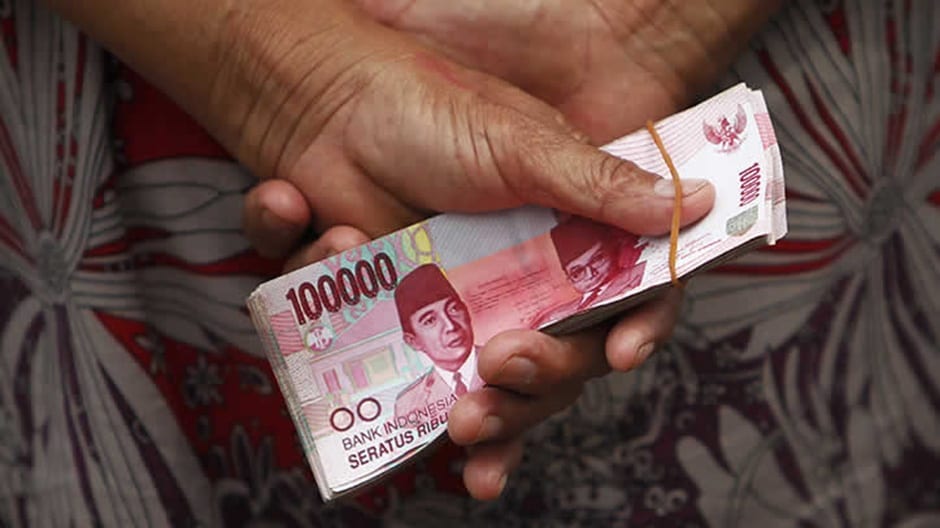
    The new notes are the Rp100,000, Rp50,000, Rp20,000, Rp10,000, Rp5,000, Rp2,000 and Rp1,000, while the new coins are Rp1,000, Rp500, Rp200, and Rp100.

    Indonesia’s founding fathers, Soekarno and Mohammad Hatta, will be featured on the Rp100,000 note, while Djuanda Kartawidjaja and Sam Ratulangi are on the Rp50,000 and Rp20,000 notes, respectively.

    Other national heroes featured are Frans Kaisepo, Idham Chalid, Mohammad Hoesni Thamrin, Tjut Meutia, I Gusti Ketut Pudja, TB Simatupang,  Tjiptomangunkusumo and Herman Johannes.

  • Bank Indonesia launches financial technology office

    Bank Indonesia launches financial technology office

    Bank Indonesias governor Agus Martowardojo has launched the Financial Technology (Fintech) Office that will serve as a think-tank in developing the financial services industry.

    “Technology innovation in financial sector is now a must. Therefore, innovation must be a continuous process,” Agus said in his speech while opening the Fintech Office here on Monday.

    He explained that the Fintech Office will have four roles to play. First, it will serve as a facilitator in ideas exchange among Fintech regulators and industry players.

    Second, Fintech Technology will contribute with business intelligence that will facilitate the system and generate tools to transform raw data into new information for analysis material.

    The third role that the Fintech will play will be to provide assessments besides testing various ideas and regulations. It will also help as a coordination and collaboration platform for Fintech stakeholders.

    “We will make it a one stop service accessible to the financial players where we will explain the policies that we issue,” Agus noted.

    The Fintech Office, he added, would also act as a regulatory sandbox or a policy formulating laboratory.

    “Such a sandbox will be a restricted platform for innovation development as well as policy testing and evaluation,” Bank Indonesias Deputy Governor Ronald Waas noted.

    However, he added, not all Fintech business segments will be included in Fintech Office as it has been specified that the facility will be for the new Fintech businesses which are not regulated by Bank Indonesia as a payment system authority.

    “The businesses included in Fintech Office will be the breakthrough ones or the new ones” Ronald noted.

    Data obtained from Financial Service Authority shows that currently, 120 Fintech companies have a total asset value of Rp100 billion (about US$7.4 million), a 50 percent increase over the early 2015 figure.