Tag: Bank Indonesia

  • Bank Indonesia warns illegal money changers to apply for license

    Bank Indonesia warns illegal money changers to apply for license

    Bank Indonesia (BI) has warned unlicensed non-bank money changers to apply for a license during the ongoing transition period as a requirement to operate legally.

    The central bank has imposed the transition period since Oct. 6 last year when it issued a regulation and circular concerning the licensing requirement. The unlicensed money changers were given until April 7 to submit applications.

    BI will work together with the National Police, the Financial Transaction Reports and Analysis Centre (PPATK) and the National Narcotics Agency (BNN) to crack down on illegal money changers that fail to comply with the regulation after the transition period ends.

    “Applicants need only to submit a written application attached with several documents to Bank Indonesia. It is free of charge,” said BI executive director of payment system policy and supervision Eni V. Panggabean in a press briefing on Monday.

    Money changers, formally called non-bank foreign currency exchange businesses, comprise transactional activities related to currency exchange through a trading mechanism of foreign currency banknotes as well as the purchase of traveler’s checks.

    “One of the requirements for non-bank money changers to apply for a license is to become a limited company that should be fully owned by Indonesian citizens,” Eni said.

    The central bank’s warning came following findings by the National Police, the PPATK and the BNN regarding the rising trend of money laundering activities involving illegal money changers, which were used for transactions related to graft, narcotics and terrorism.
  • Bank Indonesia forecasts current account deficit at 1.8% of GDP

    Bank Indonesia forecasts current account deficit at 1.8% of GDP

    Bank Indonesia (BI) had forecast that the countrys current account deficit last year would fall to 1.8 percent of the national gross domestic product (GDP) as compared to 2.06 percent a year earlier.

    The decline in the current account deficit would chiefly be the result of steady trade surplus, BI Deputy Governor Perry Warjiyo stated here on Friday.

    According to the Central Statistics Agency, the country had recorded a trade surplus of US$840 million in November 2016, although it fell from $1.21 billion a month earlier.

    “Hence, we forecast the current account deficit in the fourth quarter of 2016 to reach 1.9 percent of the GDP,” Warjiyo remarked at the BI Head Office.

    Current account is an indicator of the exports of goods and services from a country to other nations and vice versa. Current account is divided into current accounts of goods and services.

    When current account is in deficit, it means that imports are larger than exports. If the current account deficit steadily falls, exports and imports are improving.

    On the other hand, the declining current account deficit will improve the balance of payment (NPI), which comprises current account, capital and financial account, and foreign exchange reserves.

    “Indonesias foreign exchange reserves at the end of December 2016 rose to $116 billion, suggesting that the NPI will be positive (surplus), coupled with large foreign capital inflows,” Warjiyo added.

  • Bank Indonesia releases new notes, coins

    Bank Indonesia releases new notes, coins

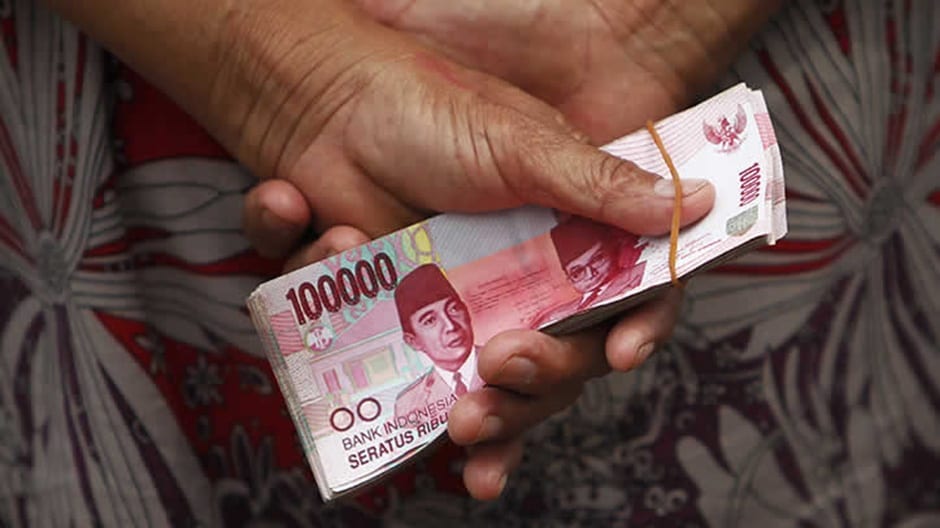
    Bank Indonesia released on Monday seven new banknotes and four coins bearing the pictures of 12 national heroes. The launch of the new notes and coins was attended by President Joko “Jokowi” Widodo and Bank Indonesia governor Agus Martowardojo in Jakarta, Antara news agency reported.

    The new notes are the Rp100,000, Rp50,000, Rp20,000, Rp10,000, Rp5,000, Rp2,000 and Rp1,000, while the new coins are Rp1,000, Rp500, Rp200, and Rp100.

    Indonesia’s founding fathers, Soekarno and Mohammad Hatta, will be featured on the Rp100,000 note, while Djuanda Kartawidjaja and Sam Ratulangi are on the Rp50,000 and Rp20,000 notes, respectively.

    Other national heroes featured are Frans Kaisepo, Idham Chalid, Mohammad Hoesni Thamrin, Tjut Meutia, I Gusti Ketut Pudja, TB Simatupang,  Tjiptomangunkusumo and Herman Johannes.

  • Bank Indonesia launches financial technology office

    Bank Indonesia launches financial technology office

    Bank Indonesias governor Agus Martowardojo has launched the Financial Technology (Fintech) Office that will serve as a think-tank in developing the financial services industry.

    “Technology innovation in financial sector is now a must. Therefore, innovation must be a continuous process,” Agus said in his speech while opening the Fintech Office here on Monday.

    He explained that the Fintech Office will have four roles to play. First, it will serve as a facilitator in ideas exchange among Fintech regulators and industry players.

    Second, Fintech Technology will contribute with business intelligence that will facilitate the system and generate tools to transform raw data into new information for analysis material.

    The third role that the Fintech will play will be to provide assessments besides testing various ideas and regulations. It will also help as a coordination and collaboration platform for Fintech stakeholders.

    “We will make it a one stop service accessible to the financial players where we will explain the policies that we issue,” Agus noted.

    The Fintech Office, he added, would also act as a regulatory sandbox or a policy formulating laboratory.

    “Such a sandbox will be a restricted platform for innovation development as well as policy testing and evaluation,” Bank Indonesias Deputy Governor Ronald Waas noted.

    However, he added, not all Fintech business segments will be included in Fintech Office as it has been specified that the facility will be for the new Fintech businesses which are not regulated by Bank Indonesia as a payment system authority.

    “The businesses included in Fintech Office will be the breakthrough ones or the new ones” Ronald noted.

    Data obtained from Financial Service Authority shows that currently, 120 Fintech companies have a total asset value of Rp100 billion (about US$7.4 million), a 50 percent increase over the early 2015 figure.

  • Indonesia central bank surprises with another cut to key rate

    Indonesia central bank surprises with another cut to key rate

    Indonesia’s central bank surprised the market on Thursday by cutting its benchmark interest for a sixth time this year, renewing efforts to spur sluggish lending and growth.

    Bank Indonesia (BI) cut the 7-day reverse repurchase rate by 25 basis points to 4.75 per cent. “In the midst of a weak global economy, we believe this monetary easing will strengthen efforts to push domestic demand, including for credits, so that it could support the momentum for economic growth,” BI said.

    Thirteen of 17 economists in a Reuters poll had expected the benchmark to be kept at 5.00 per cent on Thursday.

    The central bank made six cuts to its benchmark this year by a total of 150 basis points.

    In August, it switched its benchmark from the 12-month reference rate to the 7-day reverse repurchase rate to try to more directly affect market rates.

    The economy gained some momentum in the second quarter, with good crops higher government spending helping push annual growth to 5.2 per cent.

    But the central bank said state spending cuts, sluggish bank lending, and weak global trade probably weakened third quarter growth to around 5 per cent. BI’s outlook for 2016 is between 4.9-5.3 per cent.

    So far, BI’s 2016 rate cuts have had limited impact on commercial banks’ lending. In August, it grew just 6.83 per cent from a year earlier, the weakest since November 2009.

    Indonesia is due to announce third quarter growth early next month.

    In September, Indonesia’s annual inflation rate was near the lower end of BI’s target band, at 3.07 per cent. The rupiah has been stable, trading near 13,000 a dollar since July. The third quarter’s current account deficit is expected to stay at a comfortable level.

    Ng Weiwan, economist at ANZ said real interest rates in Indonesia “remain elevated despite the rate cuts this year.”

    “Credit growth will be constrained with the overhang from the non-performing loan and the deposit rate caps limiting the interest that banks can pay for deposits,” Mr Ng added.

  • Bank Indonesia still has chance to slacken its monetary policy

    Bank Indonesia still has chance to slacken its monetary policy

    Bank Indonesia (BI) Governor Agus Martowardojo said the central bank still likely has a chance to relax its monetary policy in the second half of this year.

    “Seeing the condition in August, we can say that there is still a chance to slacken monetary policy but whether it will be carried out next September or October will depend on the data” the central bank governor said in Jakarta on Wednesday.

    BIs board of governors meeting on August 18-19 decided to maintain its 7-Day Reverse Repo Rate (BI 7-day RR Rate) at 5.25 percent with a deposit facility (DF) interest rate of 4.5 percent and lending facility (LF) being lowered by 100 basis points from 7.0 percent to 6.0 percent.

    BI began introducing the 7-Day RR Rate last April. At the BIs board of governors meeting on April 21, 2016, the BI Rate was fixed at 6.75 percent and the BI Repo Rate at 5.50

    Besides this, the BI also maintained a symmetrical and narrow interest rate corridor where the lower limit of DF Rate is set 75 basis points below the 7-Day RR rate and the upper limit of LF Rate is set 75 basis points above the 7-Day RR Rate.

    The decision is in line with the efforts to maintain the macroeconomic stability by continuously preserving the momentum of domestic economic growth amid weakening global economic performance.

    With macroeconomic stability, controlled inflation at targeted range, good current transaction deficit and stable currency rate, room for monetary relaxation is still open.

    The BI also continues to take abreast of short-term domestic global economic development, particularly the possibility for the Fed to raise its Fund Rate. “We wilL see it in September there will be flight to quality with regard to reports on the improvement of the United States economy.”

  • Bank Indonesia cuts benchmark interest rate to 6.50 per cent

    Bank Indonesia cuts benchmark interest rate to 6.50 per cent

    Indonesia’s central bank cut its benchmark interest rate again by a quarter point to 6.50 per cent Thursday amid slow and uneven recovery of the global economy.Bank Indonesia spokesman Tirta Segara said the cut, the fourth this year, was decided at a two-day meeting of the Board of Governors.The key interest rate was lowered in January after staying at 7.5 per cent since February 2015. Cuts of another quarter point followed in February and March.Segara said the central bank will continue monitoring global economic developments that will have an impact in Indonesia.

    He noted that the country is expected to feel effects from the U.S. economy, which is not in solid recovery as indicated by weakening of consumption and employment as well as low inflation.The central bank believes that the easing of monetary and macro-prudential policies will strengthen the government’s attempts to boost sustainable economic growth through acceleration of structural reforms.Domestic economic growth in the second quarter of 2016 is expected to improve although not as strong as previously expected, the central bank said in a statement.

    It sees that various steps are still needed to boost domestic demand to continue to strengthen the momentum of economic growth, and with these developments, the overall economic growth for 2016 is estimated to be in the range of 5 per cent to 5.4 per cent.

  • Bank Indonesia Reduces RTGS to Rp100 mn

    Bank Indonesia Reduces RTGS to Rp100 mn

    Bank Indonesia will reduce the minimum limit of fund transfer through the instrument of “Real Time Gross Settlement” (RTGS) to Rp100 million from Rp500 million at present. The new limit would be effective as from July 1, a Central Banks Executive Director Bramudija Hadinoto said on Monday, June 7, 2016.

    The reason for the cut is that the Central Bank wants transfer of fund larger than Rp100 million is allowed for certain appropriation as fund larger than Rp100 million is already put in the category of non retail fund. RTGS is an electronic transfer system at real time. The central bank has two systems of fund transfer — RTGS and clearing systems. RTGS transfer is done at once and clearing take a process of two hours .

    The cut in the minimum limit of fund transfer through RTGS, is expected to result in an increase in frequency of transfers to 55,000 times from normally 39,000 times a day from and clearing transactions are expected to decline in frequency from 470,000 times to 450,000 times day.

  • Indonesian retailers making sales again

    Indonesian retailers making sales again

    Following a lacklustre trading year, Indonesian retailers are starting to find their sales figures turning around.

    Electronics, automotive parts and clothes have all seen an uptick in demand, reports The Jakarta Post.

    Ramayana Lestari Sentosa, which runs department stores for low- to middle-income consumers, has targeted its sale to grow by 7 per cent this year to Rp8.3 trillion (US$640 million) after shrinking 2.7 per cent last year, when the country’s economy had its weakest growth, at 4.79 per cent, since the 2009 global financial crisis.

    The latest Bank Indonesia retail sales index (IPR) shows 11.6 per cent growth year-on-year in March to 196.7, the highest level since July last year.

    Ramayana has 114 outlets in 54 cities.

    In Bandung’s electronics centre, ITC Kebon Kelapa, west Java, mobile phone retailers are finally seeing their sales pick up after plunging by up to 50 per cent at the start of the year.

    Retailer Ronny Suryadi says his sales plunged in January and February before picking up by 20 per cent in March when new models became available, dragging down the prices of the older phones. “Both consumers who prefer new types, although pricey, and old types with lower prices gain from the momentum, and as sellers we reap more revenues.”

    The index for information and telecommunications device sales was the highest at 409.9 in March, with the fastest growth (33.9 per cent year on year). The broader non-food index improved 12.4 per cent, while the food index grew 11.1 percent.

    “As non-food recorded higher growth than food, it shows that middle- and upper-income classes buy more,” says economist Enny Sri Hartati at the think tank Institute for Development of Economics and Finance (INDEF). It’s not bad, because the segment accounts for 40 per cent of the population.”

    Other than electronic devices, auto spare parts and accessories also had positive progress with 4 per cent growth, sitting at 110.2 on the bank index.

    Meanwhile, Nielsen’s first-quarter Consumer Confidence Index survey for Indonesia shows that 82 per cent of the 500 respondents say this year is the right time to spend more. The index has risen from 115 in December to 117 at the end of the quarter.

  • Parkson revenue falls

    Parkson revenue falls

    Despite contributions from new outlets, Parkson Retail Asia’s department stores have seen third-quarter group revenue fall by 15.6 per cent to S$98.4 million (US$71.5 million), with a 14.4 per cent drop to S$294.6 million for the nine months of its current financial year.

    The Parkson revenue decline reflects same-store revenues falling in Malaysia and Vietnam, plus the weakness of the Malaysian ringgit resulting in lower figures because of the reporting currency being Singapore dollars.

    A pre-tax loss of $7.5 million was recorded by the group for the third quarter, with factors including provision made on loans to managed stores of $4.9 million, and initial losses associated with new stores.

    Same-store sales growth in Malaysia fell 17.4 per cent in the third quarter, but figures for the corresponding quarter last year were bolstered by sales before the introduction of a Goods & Services Tax (GST) on April 1 2015. Also, consumer confidence was below the 100-point threshold for the seventh consecutive year, as reported by the Malaysian Institute of Economic Research.

    Vietnam same-store sales fell 8.2 per cent for the quarter, with a difficult and increasingly crowded retail environment, the company said. For the nine months, a pre-tax loss of $4.9 million has been recorded.

    Sales were flat in Indonesia, edging up just 0.1 per cent. However, the company says consumer sentiment is robust with Bank Indonesia reporting the consumer confidence threshold at 111.1 points, a little down on the 119.1 points at the same time last year. For the nine months, a $3.2 million pre-tax loss was recorded.

    In Myanmar, Parkson same-store sales fell 7.6 per cent, affected by supplier uncertainty about plans to close the FMI Centre, where the store is located, for re-development. However, a new location has been secured, with the new store expected to open by March.

  • BI Urged to Stimulate Housing Market

    BI Urged to Stimulate Housing Market

    Indonesia Property Watch (IPW) CEO Ali Tranghanda asked Bank Indonesia to issue a more progressive regulation on Loan to Value (LTV) in order to tackle issues with a slowdown in the national housing market recovery.

    “For the middle-lower segment, particularly houses with loan liquidity facility (FLPP), the LTV can be fully provided so that the down payment is set to 0 percent,” Ali said in a press release on Friday, May 6, 2016.

    For the middle segment, Ali suggested that the LTV should be set to 90 percent, so that the down payment would stand at 10 percent. Meanwhile, Ali said that BI should strictly govern the LTV for upper segments, “because the upper segment is a subject to massive speculations, although it has impacts on the housing market,” Ali added.

    According to Ali, policies that can hamper the cash flow of middle-lower segments includes the requirement for developers to market homes that are under construction.

    “BI is expected to stimulate the housing market movement,” Ali added.

    Ali explained that the relaxed policy could be implemented until the housing market fully recovered. Given with the current market condition, Ali said that BI should not burden the housing sector with strict regulations.

    The national housing market has so far not shown signs of recovery. After a growth in sales figure in the fourth quarter 2015, the trend did not continue in the first quarter of this year. The IPW reported that the housing market in the first quarter plummeted by 23.1 percent compared to the previous quarter, or was down by 54.09 percent compared to the first quarter of last year.

    Data from the IPW revealed that almost all regions experienced a decline in sales, and the middle segment remained the largest market share at 52.19 percent. Meanwhile, the upper and lower segments accounted for 28.27 percent and 19.54 percent of the housing market share, respectively. Earlier in the fourth quarter 2015, the upper segment dominated the market share.

  • Bank Indonesia Wins 3 CSR Awards

    Bank Indonesia Wins 3 CSR Awards

    Bank Indonesia (BI) has received three awards in the The 8th Annual Global Corporate Social Responsibility (CSR) Summit and Awards. Two gold awards are for Excellence in Provision of Literacy and Educational Award with market capitalization above US$1 billion and Empowerment of Women Award. While bronze award was achieved for Product Excellence Award.

    BI’s Communication Department Director Abronas Hutabarat attended the event to receive the awards. He originally intended to attend the international forum to introduce BI’s CSR programs. “We didn’t expect to receive the awards. These are the result of synergy and hard work put in by my colleagues in BI’s Communication Department,” Abornas said after receiveing the awards in Nusa Dua, Bali, Thursday evening.

    Abornas said that BI always made CSR programs on a yearly basis which focus on community empowerment. According to him, BI’s CSR programs are comparable to those of its international counterparts.

    There are seven categories in The 8th Annual Global CSR Summit and Awards, namely Best Environmental Excellence Award, Best Community Programme Award, Excellence in Provision of Literacy and Education Award, Empowerment of Women Award, Best Workplace Practice, CSR Leadership Award, and Product Excellence Award.

    Of the categories, BI got nominated in 4 categories. Arbonas said the four categories are Best Community Programme Award, Excellence in Provision of Literacy and Education Award, Empowerment of Women Award, and Product Excellence Award.

    Arbonas said one of the gold awards were given for BI Corners CSR program, in which BI provides libraries in all universities in Indonesia. Last year BI built 106 BI Corners. This year BI is targeting to build 150 BI Corners. He hoped that in the next five years BI could build 1,000 BI Corners in the all educational levels to support financial literacy. In addition, BI helps female entrepreneurs in managing business units and bookkeeping to make the businesses bankable.

    The Annual Global CSR Summit and Awards is the most prestigious recognition awards program for Corporate Social Responsibility of various agencies in Asia. The awards are given to agencies who are able to make contributions to environmental sustainability, product innovation, community empowerment and CSR management and transparency.