Tag: bank

  • UBP Acquires Japanese Asset Manager

    UBP Acquires Japanese Asset Manager

    Swiss-based Union Bancaire Privée has acquired a new asset manager specializing in Japanese small-cap equities.

    According to a statement, UBP has acquired 100 percent of the shares issued by Angel Japan Asset Management (AM). Founded in 2001, Angel Japan AM is a Tokyo-based independent investment advisor specializing in Japanese small-cap equities.

    Hirotaka Usami leads the firm and houses five investment professionals including four portfolio managers with an average experience of 24 years.

    It currently manages three strategies (IPO, new growth and steady growth) with total assets under advisory of $1.2 billion.

    Following the transfer of ownership, Hirotaka Usami will become chairman of Angel Japan AM’s newly created board of directors while current chief operating officer Ryota Bando will be appointed chief executive officer.

    Angel Japan AM’s current employees are expected to remain with the firm.

    Other than the changes to its governance structure and directors, there will be no changes to Angel Japan AM’s current investment process, investment philosophy, investment style and investment team.

    The acquisition follows a successful partnership since 2018 with Angel Japan AM advising UBP’s Japanese small-cap equities strategy and outperforming the relevant benchmark.

    The acquisition of Angel Japan AM underscores UBP’s high conviction on the investment opportunities in the global small-cap equity segment, notably in Japan, and as to the team’s unique ability to seize them, said UBP asset management co-CEO and head of institutional clients Nicolas Faller.

    Taking on the ownership of Angel Japan AM will not only broaden our distribution channels to onshore Japanese clients but will also strengthen our in-house capabilities and value proposition to serve our offshore clients better.


  • Vontobel CEO Plans to Step Down

    Vontobel CEO Plans to Step Down

    After 22 years at Vontobel the CEO of Bank Vontobel plans to retire from his CEO post next year.

    CEO Zeno Staub has asked the board of directors to resign his mandate at next year’s Annual General Meeting in April, Vontobel said in an emailed statement Wednesday. Staub served as the investment company’s CEO for 12 years.

    Staub plans to become more active in Swiss politics and will run as the top candidate for Switzerland’s Center Party «Die Mitte» in the National Council elections in the fall of 2023.

    It is a sign of a strong democracy when citizens such as Zeno Staub, who can look back on a long and successful career in business, want to assume a political role. We wish Zeno Staub every success in his endeavors, Chairman Andreas E.F. Utermann said in the statement.

    However, Staub is not cutting off all ties to Vontobel: After a one-year cooling-off period, he will stand for election as an ordinary member of the board of directors at the general meeting of shareholders 2025.

    Chief Operating Officer Felix Lenhard, is also stepping down at the end of the year, the statement said. Lenhard, who sat on the executive committee of Vontobel Holding and Bank Vontobel, wishes to spend more time with his family.

    Lenhard’s successor will also be determined by year-end.

  • Bank deposit interest rates continue to fall

    Bank deposit interest rates continue to fall

    Many banks have cut deposit interest rates this month, bringing the average rate to below 9.

    The rate is half a percentage point lower than at the start of this year for terms of less than six months, and one point lower for longer tenors.

    Some banks offered nearly 10% earlier this year.

    As of May 15 more than half the banks offered rates of up to 7-8%, and the rest, slightly higher.

    After a period of rapid growth at the end of 2022, deposit interest rates began to plateau at the beginning of this year as liquidity became abundant, even excessive, according to analysts, especially compared to the end of October last year when a run occurred on Saigon Commercial Bank (SCB).

    Besides, bank lending has eased off, meaning funds mobilization is not an urgent need for them.

    Deposits of less than six months carry a maximum interest rate of 5.5%.

    Banks that offer the highest rates, ranging from 8.5% to 8.9%, include SeABank, ABBank, VietABank, HDBank, and VietBank.

  • BNP Paribas Bags Credit Suisse Specialist Team

    BNP Paribas Bags Credit Suisse Specialist Team

    The revolving door at Credit Suisse keeps spinning, as the Swiss bank loses a team of specialists to BNP Paribas.

    BNP Paribas is strengthening its equities team in London by hiring Credit Suisse’s event-driven team. Susan Stryker Marinello, an event-driven specialist for the EMEA region at the Swiss bank, and risk arbitrage traders Andy Martin and Simon Scott are joining the French bank.

    Before their stint at Credit Suisse, the team of specialists previously worked together at Citi.

    The hiring of the unit is an important step following BNP Paribas’ acquisition of Exane in 2021, the sources added. As part of that acquisition, BNP Paribas brought equity trading, research, and derivatives activities in-house after a 17-year partnership with Exane. It said the new hires are part of BNP’s expansion into cash equities following Exane’s return.

    Neither Credit Suisse nor BNP Paribas had any comment.

  • Techcombank remains on track to hit 2025 targets

    Techcombank remains on track to hit 2025 targets

    Techcombank has set a CASA (current account savings account) target of 55% by 2025 by investing in digitalization and increasing lending to retail customers and SMEs.

    At its recent annual general meeting, CEO Jens Lottner said he was optimistic about the bank’s ability to achieve the targets despite market volatility.

    Lottner said though Vietnam’s economy has recovered, higher borrowing costs, tighter credit and slower GDP growth in the first quarter of 2023 remain challenges.

    The challenges for the banking sector include the high-interest rates, tight liquidity that has pushed up the cost of funds, compressing the net interest margin, and the volatility in the bond and real estate markets.

    Techcombank has entered the third year of its five-year transformation journey, and stuck to its medium-term targets that focus on three pillars: Data, Digital and People.

    According to Lottner, the bank’s digital transformation accelerated significantly in 2022 due to heavy investments in digital technologies.

    In 2022 the lender deployed digital platforms for its retail and business customers, including the Techcombank Mobile and Techcombank Business apps. Around 90% of customer transactions are conducted via the bank’s digital platforms.

    “Techcombank is investing in digitalization to create seamless experiences for customers in both online and offline channels,” Lottner said.

    “This process requires investment, technology capability and integrating various systems and platforms across the bank.”

    “Techcombank is now at an inflection point, and ready to accelerate.”

    The bank is employing artificial intelligence to create human-like interactions with customers over digital platforms, analyze data to understand the needs of individual customers and offer each customer the right products and services throughout their financial lives.

    “The technology application helps reduce the customer acquisition cost while enhancing customer value,” Lottner explained.

    Techcombank has been adding around one million new customers a year and plans to add another 2-3 million by 2023, primarily through digital channels.

    Techcombank plans to allocate more of its credit quota to retail customers and SMEs to diversify its credit book while reducing exposure to the property sector, thus improving risk diversification.

    By increasing lending to retail and SMEcustomers, Techcombank aims to broaden its exposure to growing sectors such as fast-moving consumer goods, auto, utilities, and others.

    But Lottner said this strategy would be flexible and depend on market dynamics.

    As demand returns, the strategic shift to retail and SMEs is expected to resume in the second half of the year.

    Techcombank has set a CASA target of 55% by 2025. Increasing the CASA ratio is the bank’s top priority. In 2022, it had a CASA ratio of 37%.

    Lottner remained optimistic about the real estate and bond markets.

    “As customer confidence returns and interest rates fall, appetite among affluent customers for bonds, stocks and real estate will rise. The need to transact and move money in and out of assets will lead to a shift from term deposit accounts back into CASA.

    “Techcombank is working hard to strengthen its wealth proposition through better products, more experienced relationship managers and advisory processes to ensure its products are ideally suited to the individual risk-return expectations of every customer.”

    Techcombank is strengthening its offerings in transaction banking for SME customers while enhancing its credit underwriting capabilities.

    Techcombank is launching new initiatives to drive the acquisition of account relationships.

    It plans to launch new cash and liquidity management and treasury management services on the corporate banking side. For merchants, the bank is preparing to launch a series of new offerings in the coming months while it is also releasing a host of new digital features and functionalities to drive online retail customer engagement, as well as new rewards and loyalty platforms.

    “I am confident that we should be able to go to 55% CASA ratio if we continue to follow our strategy,” Lottner said.

    In 2023 Techcombank continues to invest in digital transformation and transition to the cloud to meet customers’ evolving needs.

  • Standard Chartered cuts Vietnam growth forecast to 6.5%

    Standard Chartered cuts Vietnam growth forecast to 6.5%

    Standard Chartered has reduced Vietnam’s GDP growth forecast for this year by 0.7 percentage points to 6.5%.

    In a release Thursday the British bank said it amended the forecast it had made in January of 7.2% growth after considering external factors more carefully with Vietnam’s macro indicators slowing down in the last four months.

    Exports have declined by 11.8% year-on-year, and the trade surplus is US$6.4 billion. Inflation for April was 2.8%, the third consecutive month of decline, though core inflation – not including food and energy prices — was 4.6% as retail sales jumped by 11.5%.

    FDI fell by 17.9% to $8.9 billion. Imports decreased by 15.4% year-on-year.

    “Vietnam imports a lot, so import indicators going down considerably shows that economic activity is slowing down despite strong domestic consumption”, Tim Leelahaphan, the bank’s economist for Thailand and Vietnam, said.

    Many other international financial institutions have also adjusted their Vietnam growth forecasts downward.

    The IMF has reduced it from 6.2% to 5.8%, the World Bank from 6.7% to 6.3%, and the ADB from 6.7% to 6.5%.

    Vietnam’s economic growth this year is likely to be constrained by the global economic downturn, monetary tightening in developed countries, rising commodity prices, and geopolitical issues.

    The government targets 6.5% growth, but there are challenges ahead with the GDP only growing by an annualized 3.32% in the first quarter.

    Minister of Planning and Investment Nguyen Chi Dung expressed concern about growth at a recent meeting, saying to achieve the target the economy needs to grow at 6.7%, 7.5% and 7.9% in the next three quarters.

    Standard Chartered predicted that the State Bank of Vietnam would reduce the refinancing rate by 0.5 percentage points to 5% by the end of the second quarter and maintain that rate until the end of 2025.

    But it did not rule a hike in rates, especially towards the end of the year, due to the possibility of the central bank focusing more on stability than growth.

    “Since the start of 2023 the SBV has turned to supporting the economy’s recovery,” Leelahaphan said.

    “Besides cutting interest rates, it also helped struggling businesses by giving them more time to deal with illiquidity.”

    Since April loan terms have become easier, with banks rolling over debts for up to 12 months and cutting interest rates.

    But the real estate market needs more support, with all measures taken until now only helping relieve short-term loan repayment pressure, he added.

  • UBS Announces its Game Plan and Leadership Team

    UBS Announces its Game Plan and Leadership Team

    The legal integration of UBS and Credit Suisse will close in the next few weeks. The team to manage the new venture has also been announced. Ulrich Koerner resurfaces.

    Following UBS’s government-imposed takeover of Credit Suisse on March 19, there has been much speculation about who would lead the new entity and what it would look like. UBS Group AG will manage the two parent companies of UBS AG and Credit Suisse AG, each with its subsidiaries and branches, to serve its clients and deal with counterparties, according to a statement from UBS Tuesday.

    Overall responsibility falls to the UBS Group board of directors and the UBS executive board. Until the two entities integrate further, Credit Suisse will rely on its established governance and risk control frameworks, with some new policies added so that UBS can effectively oversee it.

    This is a pivotal moment for UBS, Credit Suisse, and the entire banking industry. Together we will solidify and represent the Swiss model for finance worldwide, one that is capital-light, less reliant on taking risks, and anchored by stability and high-touch service. This transaction will allow us to offer attractive returns to our shareholders and give us the capacity to further invest and grow, said UBS CEO Sergio Ermotti.

    The overall structure will comprise five business divisions, encompassing seven functions and four regions, with each represented by an executive board member of the group, all reporting to Ermotti. In addition, Credit Suisse CEO Ulrich Koerner becomes a member of the UBS Group’s executive board. The new divisions are as follows:

    • Iqbal Khan remains President of Global Wealth Management
    • Rob Karofsky remains President Investment Bank
    • Sabine Keller-Busse remains President of Personal & Corporate Banking and President of Switzerland
    • Suni Harford remains President of Asset Management and Lead for Sustainability & Impact
    • Beatriz Martin Jimenez becomes Head Non-Core and Legacy and President EMEA. She remains UBS’s Chief Executive for the UK and continues in her role as Group Treasurer until a successor is named.

    As previously announced, UBS will continue to evaluate all options for the Swiss business of Credit Suisse, which is considered the crown jewel of  Credit Suisse. It will «communicate further on this matter in the coming months,» according to the statement.

    Within the functional structure, UBS announced that Sarah Youngwood will be departing.

    • Todd Tuckner is appointed Group Chief Financial Officer. He will become a member of the Group Executive Board with immediate effect and take on the role of CFO at the close of the acquisition. He will succeed Sarah Youngwood, who has decided to leave the firm after the transaction closes.
    • Michelle Bereaux will be Group Integration Officer. She has spent nearly 23 years at UBS and has held various leadership roles across the firm.
    • Mike Dargan will be Group Chief Operations and Technology Officer
    • Stefan Seiler will be the Group Head of Human Resources and Corporate Services.
    • Christian Bluhm will remain Group Chief Risk Officer
    • Barbara Levi will remain Group General Counsel
    • Markus Ronner will remain Group Chief Compliance and Governance Officer

    Tuckner, Martin Jimenez, Bereaux and Seiler also become members of the executive board at the close of the transaction.

  • UBS Gaming Out Different Scenarios for Credit Suisse

    UBS Gaming Out Different Scenarios for Credit Suisse

    All options appear to be on the table. Switzerland’s largest institution could keep the rescued bank’s investment banking business. Or it might spin off its domestic retail franchise in an IPO.

    UBS continues considering various options for Credit Suisse, citing people familiar with the matter.

    In March, the Swiss government prodded Switzerland’s largest bank to rescue its competitor, which is the country’s second-largest institution.

    The news agency indicated that a number of scenarios are being envisaged. They include keeping Credit Suisse’s troubled investment banking business while selling the remainder rumps of the failed franchise.

    As part of that, UBS also appears to be studying plans to potentially list the Swiss business in an initial public offering once it assumes control of the rescued bank.

    The news agency said the sources queried spoke on condition they remained anonymous. It added that all considerations remain preliminary as attention is currently focused on completing the takeover. Any decision to proceed with an IPO could take months after its successful conclusion.


  • Techcombank sells headquarters building for $72M

    Techcombank sells headquarters building for $72M

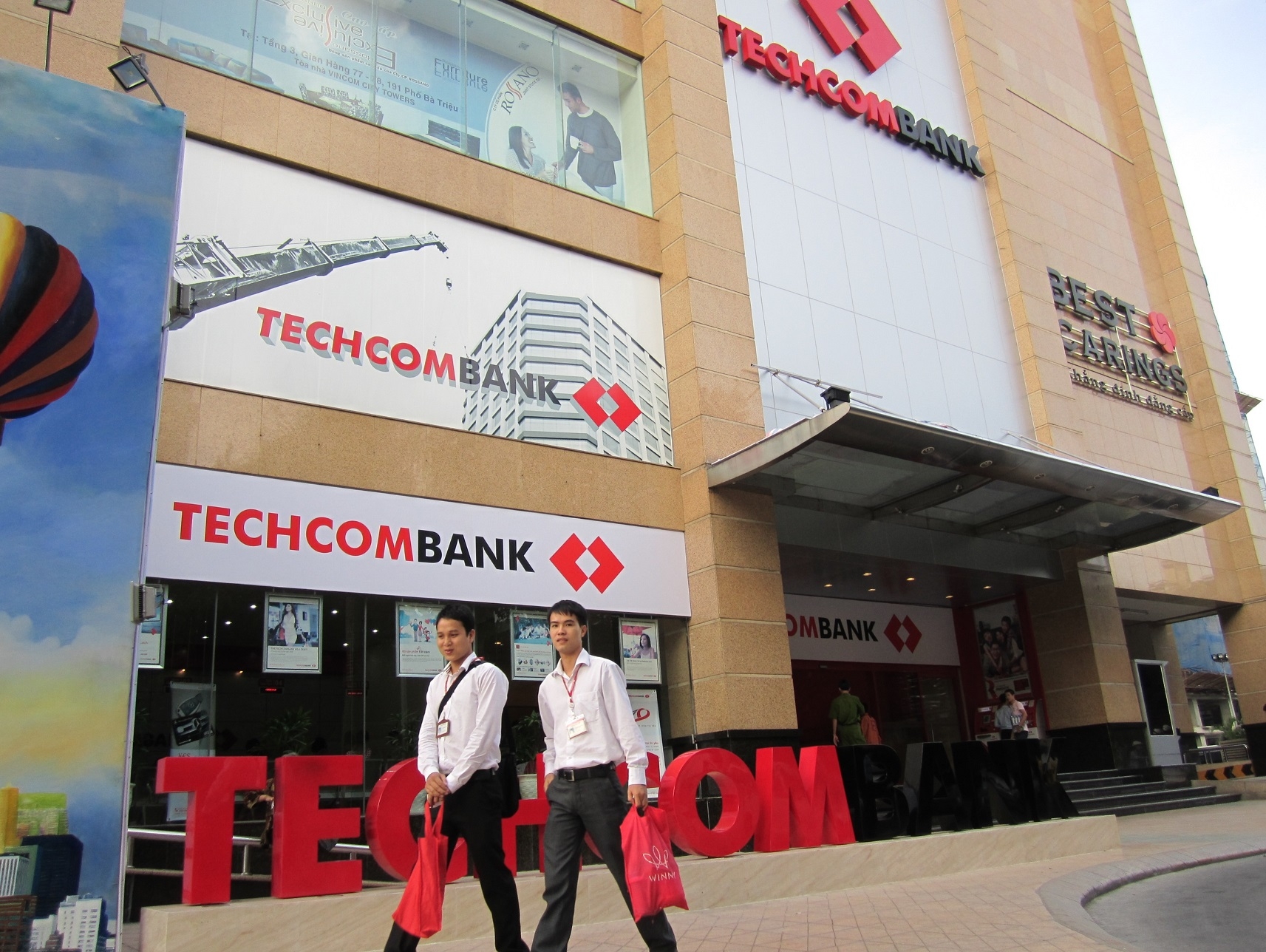
    Techcombank has sold its building in Hanoi for VND1.7 trillion (US$72.49 million), making a profit of over VND730 billion.

    It had bought the building on 191 Ba Trieu Street in Hai Ba Trung District 10 years ago from conglomerate Vingroup, changed its name to Techcombank Tower and made it its headquarters.

    Earlier this year Vietnam’s biggest private bank moved to its headquarters to 6 Quang Trung Street in Hoan Kiem District.

    Techcombank reported pre-tax profits of VND5.6 trillion for the first quarter, down 17% year-on-year.

    Its credit growth for the period was 10.6%.

  • In February UBS Deemed Credit Suisse Takeover Undesirable

    In February UBS Deemed Credit Suisse Takeover Undesirable

    UBS was preparing a Credit Suisse takeover scenario months before it happened in March. A document filed with the US Securities and Exchange Commission (SEC) provides insight into the process.

    Just weeks before the takeover of Credit Suisse, the UBS board of directors deemed a takeover of its rival undesirable, according to the latest documents the Swiss bank recently filed with the US Securities and Exchange Commission (SEC). An Edgar filing provides insight into the processes leading up to the merger of the two credit institutions.

    Between October 2022 and February 2023, a UBS board of directors strategy committee reviewed developments at Credit Suisse. In early December, management, on behalf of the Strategy Committee, made a preliminary assessment of the impact of a transaction with Credit Suisse if UBS were asked to take an active role in the rescue of its competitor. An initial evaluation was presented to the Strategy Committee on December 19.

    Subsequently, the Strategy Committee, at its meeting on February 20, and the Board of Directors, at its meeting on February 22, concluded that a takeover of Credit Suisse was not desirable for UBS. Still, further analysis was necessary to prepare for a scenario in which the competitor ran into serious financial difficulties.

    In doing so, the Strategy Committee and the Board considered the uncertainty of a reliable valuation of Credit Suisse, its recent business performance and risks, other potential liabilities, and the overall uncertainty of the transaction.

    The Board instructed management to monitor ongoing developments at Credit Suisse and to consider measures that could address UBS’s concerns if UBS had to consider an acquisition of Credit Suisse.

    From January through mid-March 2023, teams of UBS employees, outside legal counsel, and Morgan Stanley, which was asked to assist with the theoretical analysis, conducted financial analyses, according to the SEC filings.

    They evaluated potential legal structures and measures that could address UBS’s concerns in a scenario where the Swiss government actively supported UBS’s acquisition of Credit Suisse. UBS also reviewed the potential negative impact on its bank if Credit Suisse were to be wound down.

  • Stock dives to 5-week low

    Stock dives to 5-week low

    Vietnam’s benchmark VN-Index dropped 0.63 percent to 1034.85 points Tuesday, lowest in five weeks.

    The index closed 6.51 points lower after losing 1.55 points on Monday.

    Trading on the Ho Chi Minh Stock Exchange (HoSE) increased by 3% to VND9.42 trillion ($401.14 milllion).

    The VN-30 basket, comprising the 30 largest capped stocks, saw 27 tickers lose.

    MSN of conglomerate Masan Group fell 2.7%, followed by HDB of HDBank and NVL of property developer Novaland Group, both with a 2.1% drop.

    STB of Ho Chi Minh City-based lender Sacombank lost 2%, and PDR of Phat Dat Real Estate Development closed 1.9% lower.

    Only two blue chips gained. HPG of steelmaker Hoa Phat Group rose 1.9% and VCB of state-owned lender Vietcombank went up 0.5%.

    Foreign investors were net sellers to the tune of VND139.72 billion, mainly selling VIC of private conglomerate Vingroup and STB of Ho Chi Minh City-based lender Sacombank.

    The HNX-Index at the Hanoi Stock Exchange, where mid and small caps list, was down 1.00% while the UPCoM-Index at the Unlisted Public Companies Market was up by 0.12%.

  • Clients Flooded UBS With New Money in Late March

    Clients Flooded UBS With New Money in Late March

    The merger of UBS and Credit Suisse is expected to result in a behemoth wealth and asset manager, drawing all eyes to the institutions’ first quarter results at the start of the week.

    During the first quarter we saw strong net new fee-generating asset and net new money inflows in global wealth management and asset management, UBS CEO Sergio Ermotti said in a statement accompanying first quarter results.

    The global wealth management (GWM) business attracted $28 billion of net new money during the first quarter, of which $7 billion «came in the last ten days of March, after the announcement of our acquisition of Credit Suisse,» UBS said. Those results should ease some of the concerns that assets being taken out of Credit Suisse are headed to other firms.

    Moreover, UBS brought in $20 billion in new fee-generating assets in its GWM unit and $14 billion in asset management (AM).

    In the Americas region, vital to the Group’s growth plans, the GWM business brought in $8 billion of new money and $4 billion of new fee-generating assets. In Switzerland, new money inflows were $10 billion, while $8 billion in new fee-generating assets were reported along with $2 billion in new loans in GWM and P&C, according to the report.

    EMEA reported new money inflows of $4 billion and generated $3 billion in new assets. Net interest income increased almost 60 percent on the back of higher euro rates. Asia was also a bright star for UBS, bringing in $6 billion of net new money and $5 billion in new fee-generating assets, which marks a 17 percent growth rate over the past twelve months.

    Overall invested assets for GWM were $3 trillion at the end of the first quarter, down from $3.1 trillion in the first quarter of last year.

    UBS said it is focused on completing its acquisition of Credit Suisse in the second quarter of this year, which «will advance our strategy, particularly in global wealth management and Switzerland.» UBS reported that net profit attributable to shareholders was $1.029 billion in the first quarter, about half of the $2.136 billion in the same quarter a year ago. Its Group CET1 ratio was 13.9 in the first quarter, down from 14.2 in the fourth quarter of last year.

    It was a different story on Monday at Credit Suisse, where clients moved 47.1 billion francs of their wealth elsewhere.

  • MB launches banking app in Laos

    MB launches banking app in Laos

    Military Commercial Joint Stock Bank Laos branch (MB Laos) released a new banking application for individual customers in Vientiane, Laos, on Monday.

    Several Laotian government officials and representatives of the State Bank of Laos and MB attended the app launch ceremony.

    MB Laos app will increase customers’ convenience and optimize their banking experience on digital channels with advanced technology.

    The app helps customers manage their finances by providing online savings services, loans application, as well as local and foreign currency account management. Other features include bill payment, scanning Laos QR codes for payment, phone recharging, and money transfers from payment accounts to Umoney E-Wallet.

    It also provides users with a safe, secure and fast online money transfer and saving services.

    “With the new digital banking product, MB Laos is expected to bring the best experience to existing customers, while also attracting new ones,” an MB Laos representative said.

    The MB Laos app is available to download on the App Store and Google Play.

    Customers will have the opportunity to receive 20,000 Lak when opening a new account in the app.

    Find more information on this website.

    Email: [email protected].

    Hotline: 021 752 777

    Address: MB Building, No 10 Kaysone Phomvihane Avenue, Phonexay Village, Saysettha District, Vientiane Capital, Laos PDR, Vientiane, Laos.

  • UBS Can Use Repurchased Shares to Fund Credit Suisse Takeover

    UBS Can Use Repurchased Shares to Fund Credit Suisse Takeover

    Instead of raising new capital to fund its takeover of Credit Suisse by issuing new shares, UBS will repurpose some of those it obtained as part of a repurchase program.

    In March of last year, UBS launched a $6 billion stock buyback program, scheduled to run until the end of March of next year as part of a capital reduction, which has now been amended, according to a statement Tuesday.

    To fund its government-imposed take over on March 19 of rival Credit Suisse for three billion Swiss francs, and avoid raising new capital, UBS sought changes to the terms of the buyback. Instead of canceling the repurchased shares, they will be used to complete the takeover.

    A maximum of just over 178 million «UBS Merger Shares» will be required for the transaction, where one share will be exchanged for 22.48 shares of Credit Suisse. To date, UBS bought back 298.5 million shares through the program, corresponding to 8.5 percent of those registered,

    In the interest of the shareholders of UBS, the board of directors of UBS has decided not to implement a capital increase. Instead, already issued own shares of UBS shall be used for the completion of the Merger, according to the statement.

    As of April 14, UBS owned either directly or indirectly 473.2 million of its registered shares or 13.4 percent of voting rights. Black Rock is UBS’s largest shareholder at just under five percent. Artisan Partners, Dodge & Cox in the US, and Norway’s Norges Bank each own just over three percent.

    UBS said it does not know its intentions concerning the sale of shares as part of the buyback program.

    On April 2, UBS requested permission from the Swiss Takeover Board to approve the amended repurchase program and received it on April 12.

  • Apple Card Savings Account is here: Impressive 4.15% Interest Rate

    Apple Card Savings Account is here: Impressive 4.15% Interest Rate

    Starting today, you can open an Apple Card Savings account with an annual percentage yield (APY) of 4.15%.

    We have been hearing rumors about this Apple Card Savings account recently, but now it’s finally official in a blog post on the Apple Newsroom.

    The main benefit of this account is the high APY. At 4.15%, Apple says this rate is 10 times the national average. The account operates in partnership with Golden Sachs.

    It’s also good to know that the Apple Card Savings account comes with no fess, minimum deposits, or minimum balance requirements.

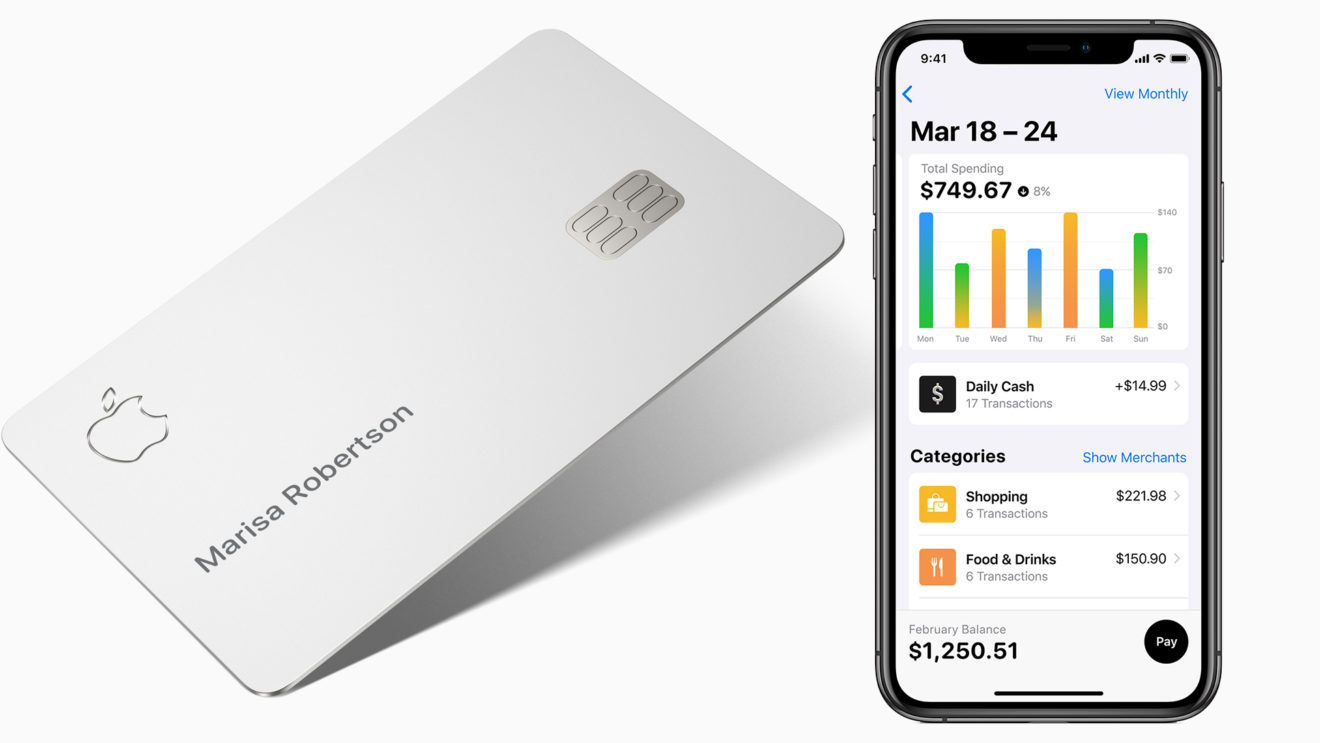
    Apple Card holders can get between 2% and 3% cash back on purchases made via Apple Pay, and 1% cash back on transactions made with the physical card. So these Daily Cash balances will immediately go into the Savings account, so you can start earning interest.
    Users also gets a neat dashboard right in the Wallet app, where they can track account balance and interest earned over time.
    Here is how you open a savings account in the Apple Wallet app:
    • Tap on the Apple Card
    • Tap on the circle with three dots at the top of the screen
    • Tap Daily Cash
    • Select Set Up Savings.