Tag: bank

  • ABK named ‘Best Retail Bank in Kuwait’

    ABK named ‘Best Retail Bank in Kuwait’

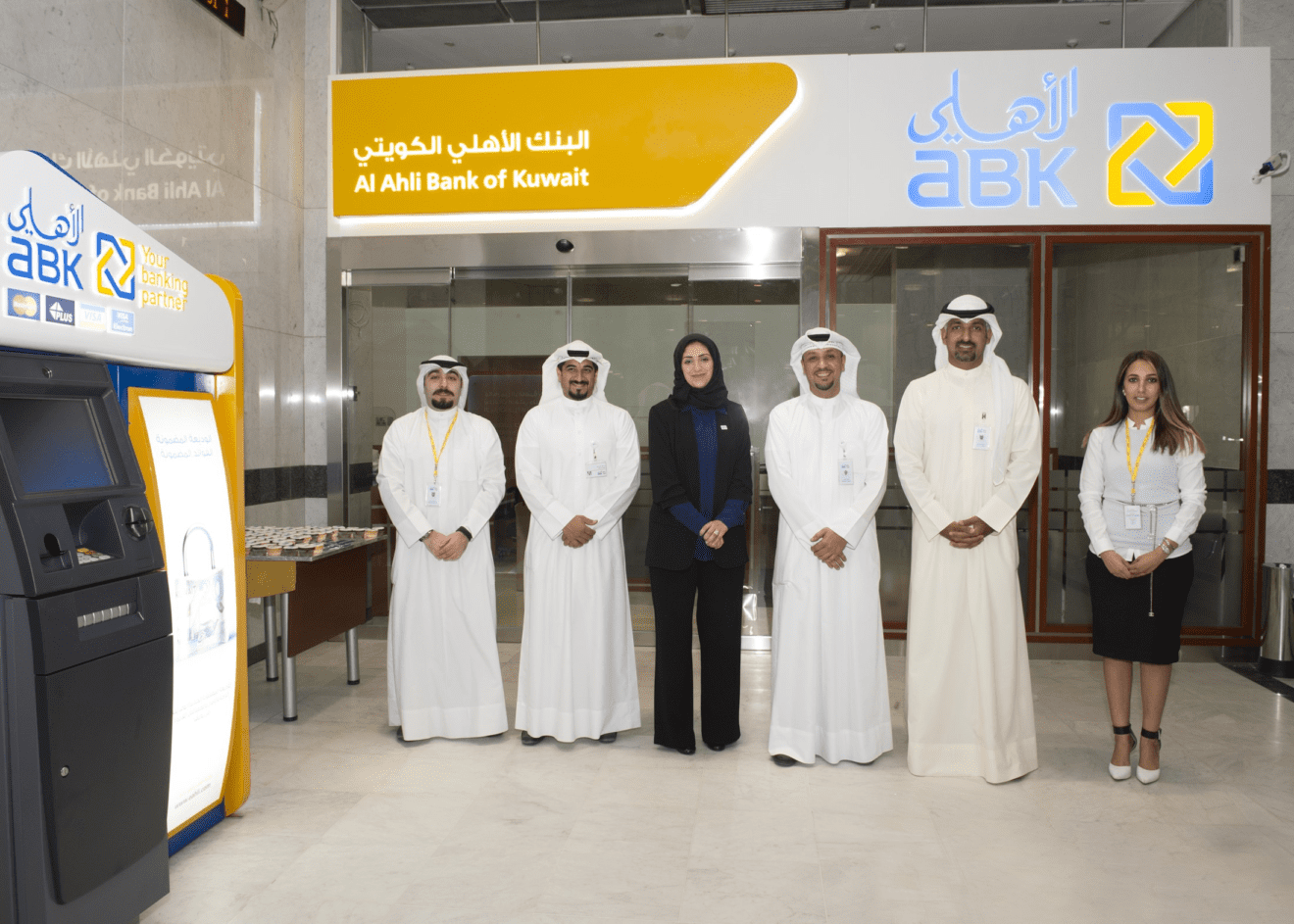
    Al Ahli Bank of Kuwait (ABK) was recently recognized as the ‘Best Retail Bank in the Middle East’ by the Asian Banker; one of the most prestigious awards programs in the industry of financial services and one of Asia’s leading consultancies in financial services research, benchmarking and intelligence. The award was received by Stewart Lockie, General Manager Retail Banking at ABK, during an awards ceremony that was held on March 16th, at the W Hotel in Hong Kong.

    The ‘Best Retail Bank in the Middle East’ award reaffirms the Bank’s outstanding initiatives and  solid performance and demonstrates its unwavering efforts to provide superior services to its customers through the implementation of its ‘Simpler Banking’ strategy, which focuses on creating a simpler banking model offering convenience, speed and security.

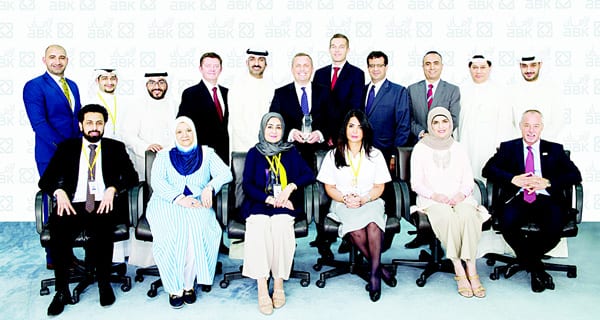
    Stewart Lockie with Retail Banking staff

    Commenting on the Bank’s achievement, Stewart Lockie, General Manager Retail Banking at ABK said, “It is an honor to be recognized as the ‘Best Retail Bank in the Middle East’ by the Asian Banker since we received the award last year for Most Improved Retail Bank. ABK made a tremendous effort throughout 2015 to make substantial enhancements and developments to its services and systems with the aim of to simplify the banking process. I would like to thank the judging committee for realizing this effort and rewarding us for it and I would also like to congratulate the Retail Banking team on this award, and thank them for their continuous hard work and diligence.”

    ABK recently deployed a series of new enhancements to its systems as part of its ‘Simpler Banking’ strategy, such as reducing ‘End to End Loan’ processing time from six days to one day and the account opening process from nine hours to six minutes. It also introduced ‘Biometric Verification’ as an enhancement to its mobile banking system, as an additional security measure, in addition to several other developments.

    The Bank will continue to build on this great success and introduce further developments and enhancements that serve to differentiate ABK‘s services and support its ‘Simpler Banking’ strategy, with focus on delivering more convenience, security and speed.

  • The Philippines-headquartered BDO Unibank Sets up Representative Office at DIFC

    The Philippines-headquartered BDO Unibank Sets up Representative Office at DIFC

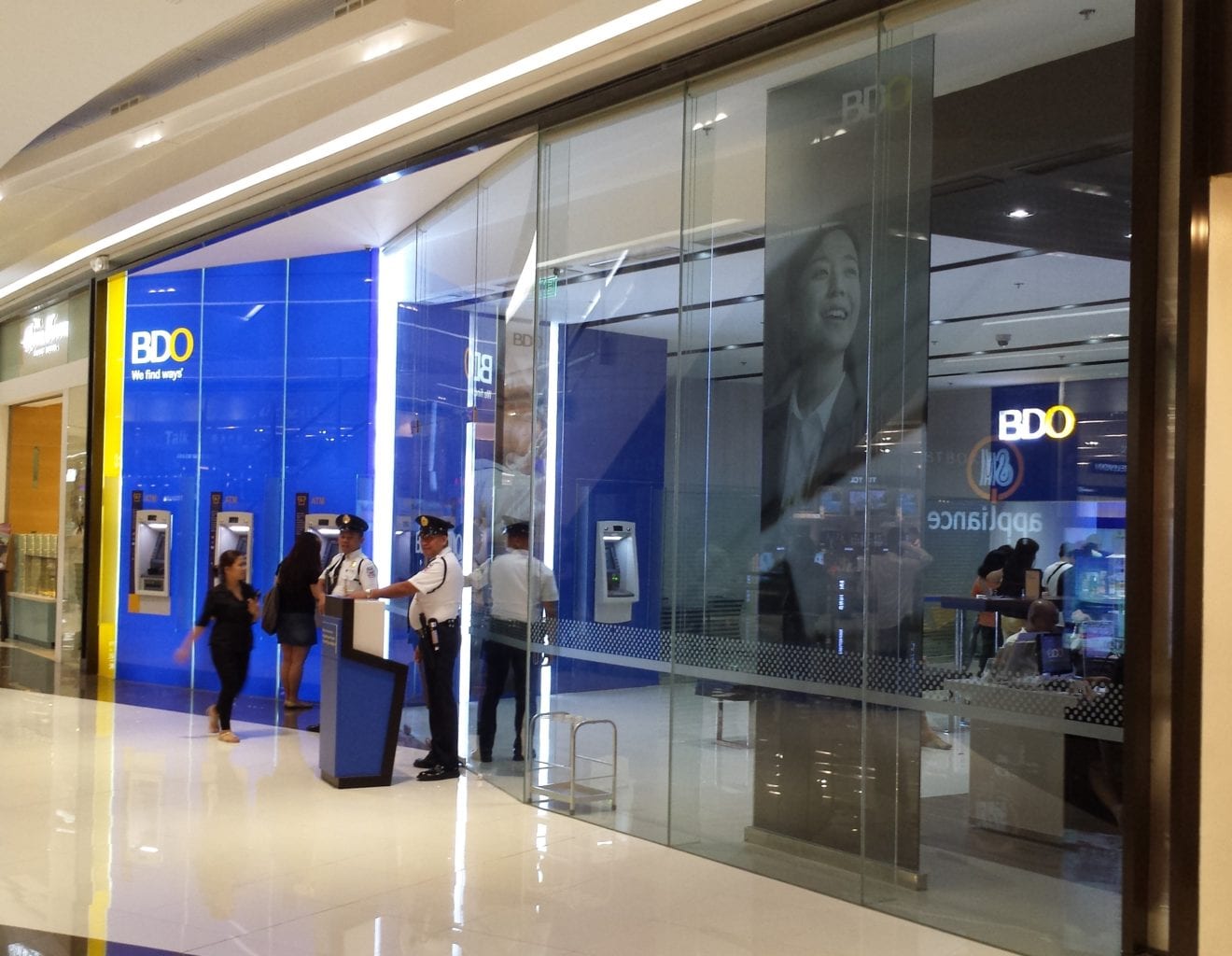
    Dubai International Financial Centre (DIFC), the financial and business gateway between the Middle East, Africa and Asia, today welcomed BDO Unibank – the first Philippine bank to operate in its premises.

    The UAE is home to an estimated 700,000 Filipino expatriates and BDO Unibank’s objectives include supporting them, while facilitating investments and money flow to the Philippines.

    Arif Amiri, Deputy CEO of DIFC Authority , said: “We are pleased to welcome BDO Unibank, a leader in the financial services field from the Philippines. This is a direct outcome of our overall strategy to facilitate integration between the Asian and Middle Eastern companies.”

    “We remain conscious of the diverse demographic constituents of the UAE and are committed to catering to the evolving requirements of each population segment,” Amiri added.

    BDO Unibank, the largest bank in the Philippines, provides a variety of corporate, commercial and retail banking services, including traditional loan and deposit products. This is in addition to treasury, trust banking, investment private banking, cash management, leasing and finance, remittance, insurance, retail cash cards and credit card services.

    Commenting on the decision to set up base in DIFC, Nestor V Tan, President and CEO – BDO Unibank said: “BDO Unibank’s establishment of a representative office in Dubai is driven by its objective to further widen our overseas network to provide support to the Overseas Filipino Workers (OFWs) and residents. This expansion into Dubai will boost our capability to service the needs of our countrymen in the entire Middle East and, hopefully, make the bank a catalyst for the progress of financial inclusion of the expatriates in the Philippines.”

    Committed to concretising its position as one of the world’s top five financial hubs, DIFC announced its 10-year growth strategy in June this year, aiming to maximise symbiosis amongst clients and further expand the Centre’s regulatory and physical infrastructure.

    Asia remains a key strategic focus for DIFC. As part of this priority, the Centre has been proactively engaging with players in the region through roadshows in China and India.

    DIFC aims to grow the financial sector’s share of the UAE economy to 18 per cent of the GDP by 2024, compared to its 12 per cent share in 2013.


  • HSBC to rebrand Britsh retail operation as HSBC UK..

    HSBC to rebrand Britsh retail operation as HSBC UK..

    The bank, which is based in Britain and has operations in 73 countries, announced in June that it would rebrand its UK business – and fuelled speculation it could potentially sell them off – as a result of the rules that require high street banking to be ringfenced from investment banking.

    HSBC announces today that the name of its UK ring-fenced bank will be HSBC UK.

    It was not immediately clear whether the red and white logo that HSBC uses across its global operations, and which features on airbridges at Heathrow airport, will remain part of its UK facias.

    “Adding “UK” [will] distinguish the ring-fenced bank from the non-ring-fenced bank”, it helpfully pointed out.

    The famous old Midland Bank name will NOT be revived on the high street after finance giant HSBC decided against restoring the brand.

    Feedback indicated that the HSBC brand represents strength and connectivity, supporting the domestic and global ambitions of our customers.

    The news comes just days after HSBC became the latest UK bank to be affected by a processing error which temporarily affected payments to customers.

    However, a person close to the bank said the decision about the branding of its ring-fenced operation should not lead investors to draw conclusions about the outcome of the domicile review.

    But in a statement this morning, HSBC said that after a “consultation process with retail, private and commercial banking customers, as well as customer-facing staff” (we wonder how much that cost), it had chose to opt for HSBC UK.

    But the business was bought by HSBC in 1992 and branches were re-named in 1999.

    It has been hit by the banking levy introduced since the financial crisis – seen as a key reason why HSBC is considering relocating away from London and possibly back to Hong Kong where it originated.

    While HSBC’s bill from the Bank Levy will reduce over time, the impact on its overall tax burden remains unclear because of a new Corporation Tax surcharge that the Chancellor has also chose to implement on banks which make profits of more than £25m.

  • Hong Kong banks launch hotline to fight back against torrent of phone scams

    Hong Kong banks launch hotline to fight back against torrent of phone scams

    All retail banks in Hong Kong have set up hotlines for customers to verify the identities of their employees in a bid to battle a flood of phone scam cases.

    Banking chiefs said yesterday the hotlines – some exclusively for the purpose of verifying employees’ information – would be available through the websites of the Hong Kong Monetary Authority and Hong Kong Association of Banks, with each of the 21 retail banks also putting hotline information on their websites.

    Phone scams have evolved and increased in recent months, with scammers posing as bank employees trying to sell products to government departments and even the central government’s liaison office. Hongkongers have handed over more than HK$182 million over the past couple of months in cases that most often involve fake mainland officials.

    However, the authority’s deputy chief executive, Arthur Yuen Kwok-hang, said so far banks had received only 200 calls regarding cold-callers.

    “The numbers are low – much lower than we anticipated. I think this is because there isn’t this awareness among the public yet,” said Yuen.

    Yesterday, the Mandatory Provident Fund Schemes Authority – which handles the retirement funds of Hongkongers – received an inquiry about a suspicious call from its hotline. The MPFA confirmed the hotline only took incoming calls and reiterated that “it never contacts people to sell MPF products or set up meetings”.

    HKAB chairman George Leung Siu-kay said banks would never ask for full personal information of clients over the phone or by email.

    “[A bank employee] will only ask for partial information – like the last three digits of a Hong Kong identity card number,” said Leung. “They will never ask for passwords.” He also warned against calling back phone numbers on the caller ID.

    Leung said there were no statistics on the number of scam cases banks had dealt with since July, but they would “keep watch for suspicious transactions, especially among vulnerable groups”.

  • Banks in Singapore staring to offer higher fixed deposit rates

    Banks in Singapore staring to offer higher fixed deposit rates

    The upcoming Singapore Savings Bonds and stricter rules on how much capital banks must hold may be driving lenders to offer enticing promotional rates for fixed deposits.

    A shortage of funds on deposit available to banks for lending might also have prompted them to step up the competition for cash.

    Putting $25,000 into a 12-month fixed deposit now yields 1.5 per cent at OCBC and 1.45 per cent at Maybank, up from around 0.25 per cent to 0.7 per cent a year.

    Ms Kum Soek Ching, head of South-east Asia research at Credit Suisse, noted that banks could be offering promotions to prepare for the sale of the Singapore Savings Bonds (SSB), which could attract investments that would normally go into a fixed deposit.

    The bonds offer investors with a longer horizon a higher yield than fixed deposit rates, she said.

    Singapore Savings Bonds will start being issued in October and have a term of up to 10 years. They offer yields linked to long-term Singapore Government Securities, which have been between 2 and 3 per cent over the past 10 years.

    SSBs will start being issued in October and have a term of up to 10 years.

    They offer yields linked to long-term Singapore Government Securities, which have been between 2 and 3 per cent over the past 10 years.

    Dr Chua Hak Bin, head of emerging Asia economics at Bank of America Merrill Lynch, noted that the sale of SSBs would “intensify competition for retail deposits and pressure rates higher”.

    He added that the Government intends to issue up to $4 billion of bonds this year, an amount roughly equal to the increase in retail deposits over a six-month period.

    But some analysts believe SSBs will likely only marginally impact bank deposits in the short term.

    Mr Kumar Rachapudi, senior rates strategist for Asia at ANZ Research, said the amount of SSBs to be issued this year is small compared to total bank deposits, which are about $550 billion.

    The total bank deposits would at most be reduced by the amount of SSBs issued – only up to $4 billion – he added.

    Furthermore, retail investors are allowed to buy only up to $100,000 worth of SSBs, he said, adding: “There is no such cap on deposits.”

    Increasing liquidity requirements may also pressure foreign banks into raising rates, analysts here noted.

    Foreign banks deemed systemically important – such as Citi, HSBC, Maybank and Standard Chartered – will have to hold more high quality assets, like deposits, from January next year, noted Mr Chan.

    Ms Kum added that foreign banks could feel the pressure of increased deposit competition more, as they have a much smaller base of low-cost Singdollar deposits.

    However, local banks enjoy this larger base because of their home town advantage.

    The reduced pace of retail deposits, in the light of slower economic growth and a rate hike in the United States, would put further pressure on short-term rates, Dr Chua said.

    Local and foreign banks The Straits Times spoke to said their promotions were part of regular efforts to keep fixed deposit interest rates competitive.

    They also said they expected the SSBs to complement, not compete, against fixed deposits.

    Mr Matthew Colebrok, head of retail banking and wealth management at HSBC Singapore, said fixed deposits offered investors flexibility on terms while not limiting deposit amounts.

    They complemented saving bonds, which are used to meet long-term needs, he added.

  • BRI eyes syndicated loans as it opens Singapore branch

    BRI eyes syndicated loans as it opens Singapore branch

    State-owned Bank Rakyat Indonesia (BRI) will provide syndicated loans as part of a strategy to attract Indonesian companies following the opening of the lender’s branch office in Singapore.

    The lender will allocate at least US$100 million in the first year to Indonesian companies that are seeking offshore funding, an executive says.

    “We are aiming to lend at least $100 million of syndicated loans in the next 12 months. We already have some prospective loans in the pipeline, but the process will not be instant,” Azizatun Azhimah, general manager for BRI’s Singapore branch, said on the sidelines of the branch opening on Wednesday.

    Loans for any projects would be assessed based on their potential value, feasibility and compliance to the lender’s requirements, Azizatun said.

    BRI president director Asmawi Syam said the bank saw syndicated loans as a prospective type of lending to help boost its international business as well as finance infrastructure developments in Indonesia.

    “We can learn much about that type of loan in Singapore and collaborate with local and international banks here to grab opportunities.”

    According to Asmawi, demand for infrastructure financing will increase as more Singaporean investors get attracted to start investing in Indonesia’s infrastructure and other sectors following President Joko “Jokowi” Widodo’s visit to the city-state on Tuesday, saying that “the launch of BRI Singapore branch is well timed with the state visit”.

    “President Jokowi has invited Singaporean investors to help develop our infrastructure, so that BRI hopes to build a bridge between them and Singaporean and international banks as BRI is more experienced in financing infrastructure projects in Indonesia, such as power plants, seaports, airports and toll roads,” Asmawi said.

    President Jokowi met over 150 Singapore business leaders at a dialogue on Tuesday to discuss Indonesia’s economic priorities, foreign investments and partnerships in conjunction with his state visit to meet Singapore’s Prime Minister Lee Hsien Loong.

    Indonesia, Southeast Asia’s largest economy, needs to boost its infrastructure development and revitalize its manufacturing sector so as to achieve 7 percent economic growth by 2019.

    Asmawi said BRI was prepared to join the competition in the international banking business as it would ensure the competitiveness of the pricing offered by its services, adding that “our overall services will cover funding and lending facilities for corporate customers, including treasury, priority banking and trade finance”.

    “The Singapore market has big potential, so that we hope to break even in revenue in the second year, which is faster than the average overseas branches of banks,” Asmawi said while refusing to mention the revenue target.

    The new Rp 30 billion (US$2.2 million) Singapore offshore branch adds to BRI’s four existing overseas offices — BRI New York Agency, BRI Cayman Island Branch, BRI Hong Kong Representative Office and BRI Remittance Office.

    The Singapore branch will be able to provide wholesale banking services, such as trade finance and remittance as well as wholesale fund management.

    The branch, which is categorized as an “offshore branch” according to Monetary Authority of Singapore’s (MAS) regulation, has limited operation in wholesale or corporate banking services. Meanwhile, foreign banks under the “full branch” category in Singapore are allowed to operate wholesale and retail banking services as well.

    MAS granted the license to BRI in June after the bank applied in 2013 to be one of the players in Singapore’s foreign bank market in preparation for the ASEAN Economic Community’s (AEC) financial and banking integration in 2020, when certain grades of banks and financial companies will be allowed to operate freely across the region.

    On the sidelines of the launch, Coordinating Economic Minister Sofyan Djalil said the government applauded BRI’s move in entering Singapore’s banking market as the city-state was famous for being difficult to penetrate due to tight restrictions and requirements for foreign banks.

    “This action is positive because we are entering the AEC, so that our banks should prepare themselves to operate regionally. By being exposed more to the international market, BRI is expected to tap more resources to improve itself and its customers as well as to contribute to Indonesia’s economy.”


  • Singapore-based DBS mulls expanding retail banking in India

    Singapore-based DBS mulls expanding retail banking in India

    Global turmoil may have forced many foreign banks to exit non-profit making India businesses but Singapore-headquartered DBS Bank has a different story to sell: retail banking.

    The lender is now planning to expand its retail footprints through remittance business between Singapore and India, and domestic secured and unsecured loans business.

    DBS is the only bank to have applied to RBI to convert its branches into a wholly-owned subsidiary.

    “The online remittance volumes from Singapore to India through our platform, DBS India Remit, have doubled over the past one year,” said Rahul Johri, managing director, head – consumer banking. “This not only generates fee income for DBS but also creates a platform to attract customers to other banking services of DBS.”

    “We are also planning to introduce personal loans, credit cards and multiple-currency foreign exchange cards in the next nine to 18 months,” he told ET.

    DBS India Remit, the online platform for inward foreign exchange remittances to India for DBS Singapore non-resident Indian clients, has brought down funds transfer time to just four hours for DBS India account holders. This service is now available in five metros.

    But it takes 48 hours to transfer funds in far-flung cities and towns in India. DBS will soon extend the service to smaller cities and towns as well.

    DBS now sees 60,000 transactions involving $150-160 million per month. The size and scale were half a year ago.

    “The service will become a differentiator for us to attract Singapore-based NRIs to bank with us as we grow our distribution reach,” Johri said. About 2.5 lakh NRIs bank with DBS in Singapore.

    DBS India offers home loans and loan against properties, launched last December. The lender expects to attain a book size of Rs 3,000 crore in the next three years from Rs 100 crore now. So far, it is selling such products primarily to affluent customers in five cities, including Pune, Mumbai, Delhi, Kolkata and Bengaluru.

    “As we garner more business and the processes become robust, we will enter new markets,” said Johri.

    “We would define a road map for branch expansion once we start operating under the subsidiary route subject to central bank approvals.”

    During 2014-15, the bank incurred a loss of Rs 275 crore as it wrote off loans in the construction and infrastructure sectors, which had gone bad. In the previous year, it had posted a profit of Rs 2 crore. Its overall loan book grew 4.55 per cent to Rs 15,845 crore. The bank did not grow its construction and infrastructure portfolio during the year.

    Asset quality improved due to write-offs and increased provisioning. Net non-performing asset ratio reduced to 4.15 per cent during the year, from 10.19 per cent in the previous year.

  • Rising wealth in Hong Kong, mainland China boosts Hang Seng Bank

    Rising wealth in Hong Kong, mainland China boosts Hang Seng Bank

    From its base in Hong Kong, Hang Seng tops Bloomberg Markets’ ranking of the world’s strongest banks for the second year in a row —by being everything HSBC isn’t. While the two share roots in Hong Kong, HSBC embarked on a global expansion to become Europe’s largest lender. It moved its headquarters to London in 1993 and set up shop in almost every major country.

    Now, HSBC is struggling to reduce costs. The 150-year-old bank, which bought its first stake in Hang Seng in 1965 and today owns 62 per cent, has announced about 87,000 job cuts since 2011. “The time of the global financial conglomerates is coming to an end,” says Ismael Pili, a Hong Kong–based analyst at Macquarie Group who rates Hang Seng underperform. “What you should really be doing is trying to be strong in your domestic market.” Gareth Hewett, an HSBC spokesman in Hong Kong, declined to comment.

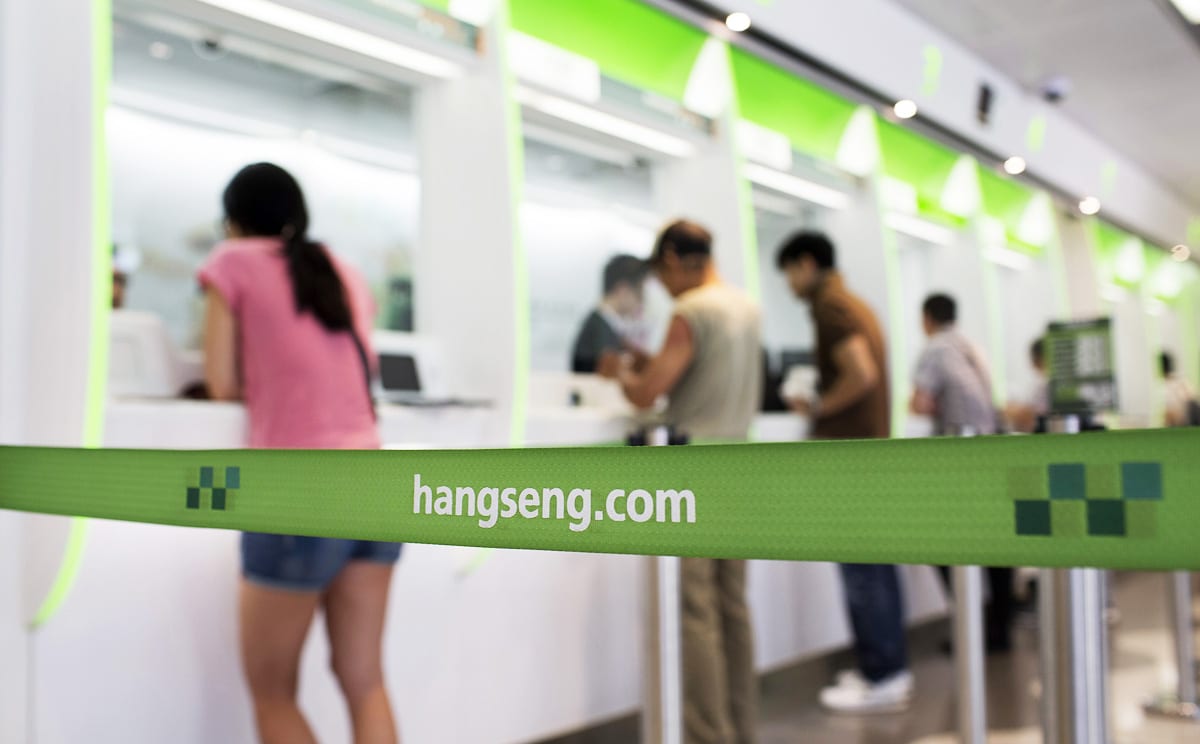
    Hang Seng is embracing that strategy, Bloomberg Markets magazine reports in its September issue. It has peppered Hong Kong’s subway stations and malls with its lime-green signage. More than half of residents 18 and older bank at its 240 outlets in Hong Kong. That presence makes Hang Seng Hong Kong’s No. 2 bank in terms of branches and provides a solid base of deposits from which to expand corporate lending and wealth management. CEO Rose Lee, 62, caters to her most-valued clients in the company’s 24th-floor dining room over a broth infused with five kinds of finely chopped snake meat. Hong Kongers swear the brew nourishes their blood.

    The invigorating powers of snake soup aside, Hang Sengis benefiting from rising wealth in Hong Kong and mainland China. It’s one of six Asian banks in Bloomberg’s top 20—five of them in the top 10. Japan’s Norinchukin Bank repeats in second place, after having tied for that spot a year ago.  Singapore’s Oversea-Chinese Banking is No. 3 in our fifth annual ranking of lenders whose assets total US$100 billion (RM381.37 billion) or more. Two other Singapore banks are ninth and 10th.

    Across Asia, the International Monetary Fund expects gross domestic product growth to average 5.6 per cent this year, triple the European Union’s 1.8 per cent. And Asia’s rich are getting richer. The 4.69 million individuals in the Asia-Pacific area with at least US$1 million in assets boosted their combined wealth11 per cent last year to a total of US$15.8 trillion, the fastest pace in the world, Royal Bank of Canada and Cap Gemini say. “Asian banks stand out because of the huge wealth creation in the region,” says Arthur Kwong, head of Asia-Pacific equities at BNP Paribas Investment Partners in Hong Kong. “A lot of the banks are well capitalised.”

    Asia’s strongest lenders, and their global counterparts, are improving the quality of their capital. Cooperative bank Norinchukin lost ¥1572 billion (RM17.54 billion) in the fiscal year that ended in March 2009 when it bet the cash of its members, mostly farmers and fishermen, on toxic US mortgage-backed securities. Today, CEO Yoshio Konois investing in high- grade bonds at home and abroad, including sovereign debt. “Our goal is to keep capital at a level that’s sufficiently above what is required globally,” says Shinichi Saitoh, a senior managing director at Norinchukin. The bank has a 17.6 per cent ratio of Tier 1 capital to risk-weighted assets for the ranking period, putting it fifth in the high-quality-capital category that includes equity and some subordinated debt.

    The Basel Committeeon Banking Supervision has been pushing all banks to improve capital standards. The latest measures, known as Basel III, more than triple the minimum amount of core capital lenders need to at least 7 per cent of their risk- weighted assets. National regulators can set stricter rules. Bloomberg’s ranking considers capital strength among its five ranking criteria. The others are nonperforming assets, loan-loss reserves, deposits, and efficiency. Bloomberg is displaying a bank’s assets in the chart for the first time this year.

    If Hang Seng has a weakness, it’s mainland China. Its Shanghai-based unit has about 50 outlets in major cities. The bank focuses largely on Hong Kong companies that want to do business on the mainland rather than on retail customers. Those companies are facing slowing growth: China’s GDP increased 7.4 per cent last year, down from an average of 9.8 per cent during the past four decades. Chinese banks’ bad loans surged in the first quarter by the most since at least 2004, with defaults spreading to state-owned giants. Because of China, Hang Seng more than doubled its provision for bad loans last year to HK$1.14 billion (RM560.61 million). Even so, it isn’t retreating from the world’s second-largest economy. “We won’t scale back our China business,” Lee said during an earnings press conference in February. “Instead, we will focus more on customers that are doing business in both China and Hong Kong.” She declined to comment for this story.

    Capital strength buoyed the top banks of Europe. No. 13 Swedbank suffered the biggest losses of any major lender in the Nordic countries in 2009. CEO Michael Wolf took the helm that March and raised a total of 27.5 billion kronor (RM12.20 billion) in two share sales to improve the bank’s capital ratio. Today, Swedbank is the ranking’s best capitalized, with a 22.4 per cent Tier 1 capital ratio.

    Europe tied Asia with six lenders in the top 20 — thanks primarily to Nordic banks. Sweden’s regulator has been raising capital requirements for the biggest banks since 2011. Swedbank and two other Swedish banks posted the highest capital ratios in our ranking. “Nordic banks are as safe as they could be,” says Wilhelm Heinrichs, a fund manager at Allianz Global Investors in Frankfurt.

    It wasn’t always that way. Annika Falkengren, chief executive of No. 12 SEB, is focusing on high-quality capital and cautious domestic lending after leading the bank through the financial crisis. When Falkengren, 53, became CEO in 2005, she says, she knew of potential risks in the Baltic states of Estonia, Latvia, and Lithuania from a credit-fueled housing boom. But she didn’t anticipate the shock that followed Lehman Brothers’ bankruptcy in 2008. To shore up the bank after losses in the Baltics, Falkengren raised 15.1 billion kronor in a 2009 share sale. She cut 1,500 jobs and reduced the bank’s reliance on short-term borrowing to improve its funding profile. Then she began building capital buffers and has continued to bolster equity to this day. “Ever since Lehman, I had a very strong focus on creating a rock-solid balance sheet,” Falkengren says.

    At the end of 2014, SEBhad a 19.5 per cent Tier 1 capital ratio, a low ratio of nonperforming assets to total assets, and a 15.3 per cent return on equity, profitability most major European banks can only dream of. HSBC and Deutsche Bank, Germany’s biggest bank by assets, are struggling to hit 10 per cent.

    Falkengren remains careful as she seeks to grow in the Nordic countries and Germany and slowly moves into the U.K. In corporate banking, SEB lends mainly to blue-chip clients such as Electrolux, Europe’s biggest home appliance maker, and others it knows well. For retail customers, it’s limiting the sum Swedes can take out in mortgage loans to five times their household’s gross annual income. “We’re trying to make sure our clients are not taking too much risk,” she says.

    Like Hang Seng and Norinchukin, Singapore’s strongest banks are targeting markets they know well. That’s helping them curb bad debts and build a strong capital base, says Jean-Charles Sambor, Asia-Pacific director at the Institute of International Finance. The Tier 1 capital ratio at Oversea-Chinese Banking and the other Singapore banks exceeded the Basel III guideline at the end of 2014.

    Oversea-Chinese Banking, Southeast Asia’s second-largest lender by market value, has ambitions beyond plain banking in Asia. It operates in 18 countries and territories from Malaysia to China and was among the first to reopen a branch in Myanmar this year after 49 years of military rule. “Our strategic direction is to become a leading, well-diversified Asian financial services group with a broad geographical footprint,” CEO Samuel N. Tsien says. He says the ability to get funding and revenue from both developed and emerging Asian markets helps stabilize the bank’s capital base when regional economies fluctuate.

    Canada, which dominated the 2012 ranking that considered banks’ 2011 fiscal years, has two entries in the top 20: Desjardins at No. 5 and Canadian Imperial Bank of Commerce at No. 18. CIBC is the only North American bank to appear in the ranking all five years.

    The US has three entries: newcomer Capital One Financial in McLean, Virginia, at No. 6; No. 14, Citigroup; and No. 15, Winston-Salem, North Carolina–based BB&T, the ninth-largest US commercial bank by assets. New York–based Citigroup, the world’s twelfth-largest bank in terms of assets in the ranking period, is the only large global lender among the 20 strongest. The biggest US banks by assets, led by JPMorgan Chase and Bank of America, didn’t make the list.

    Capital One—with its quirky ads that ask, “What’s in your wallet?”— gets its strength from US consumers and their prolific credit card spending and abundant auto loans. Richard Fairbank, the only CEO of a top US lender who’s still running the company he founded, has transformed the business. Starting with a credit card consulting firm in 1988, Fairbank has built one of the biggest US regional banks and consumer finance companies. His method: announcing acquisitions including Hibernia in 2005, North Fork Bancorp in 2006, and biggest US online lender ING Direct in 2011.

    Capital One’s consumer push helped it top the loan-loss- reserves-to-nonperforming-assets category. It’s benefiting from low credit card delinquencies as US banks’ quarterly write- offs on the cards slid to less than 3 per cent last year, the US Federal Reserve says. The bank’s consumer focus has also brought scrutiny. In 2012, the Consumer Financial Protection Bureau ordered Capital One to pay US$210 million to settle charges of deceptive marketing of such credit card products as identity theft monitoring. The bank didn’t admit or deny wrongdoing. The US Justice Department and others are investigating Capital One’s subprime-auto-financing business. Julie Rakes, a spokeswoman for Capital One, declined to comment.

    Another newcomer, National Commercial Bank, joins the top 20 at No. 4, the only Saudi Arabian lender ever to make the ranking. Controlled by the government, it’s the second-largest Middle Eastern bank, with assets of almost US$120 billion. Saudi oil wealth — a projected US$172 billion in export revenue this year — buoys the bank: About 8.4 per cent of its deposits, or 28 billion riyals (RM28.69 billion), come from the government.

    NCB has taken a conservative approach to investments. Its rising nonperforming loans, a significant portion made to the former owners, led the government to take over the bank in 1999. Since then, it’s pushed into Saudi Treasuries and expanded retail outlets. “The bank has maintained a very liquid balance sheet,” says Murad Ansari, director of equity research at EFG Hermes Holding in Riyadh, Saudi Arabia. “It uses its scale to its advantage, whether that’s in retail, where it can attract inexpensive deposits and do more lending, or in corporate, where it uses its large equity base to do bigger deals.” The bank could suffer from declining oil prices and slow loan growth amid an economic downturn, Ansari says.

    Even top banks in Asia face similar risks. Sluggish credit growth, rising competition, nonperforming loans, and the challenge of maintaining high-quality capital are potential problems, BNP’s Kwong says. Macquarie’s Pili attributes his underperform rating on Hang Seng to its declining interest margins and shrinking market share in non-consumer loans, among other things.

    For Rose Lee and Hang Seng, such issues might mean it’s time to reach out to clients over a few more bowls of strength- promoting snake soup.