Tag: bank

  • OCBC Deputy President Retires

    OCBC Deputy President Retires

    OCBC’s deputy president will retire after 22 years with the Singaporean bank. OCBC deputy president Ching Wei Hong will retire at the end of September, according to an exchange filing.

    Ching first joined OCBC in November 1999 as head of transaction banking and has since held various senior roles including chief financial officer, chief operating officer and chairman of Bank of Singapore before being named deputy president in early 2020.

    I am deeply grateful to Wei Hong for building a strong foundation upon which our wealth management and consumer banking businesses will grow from strength to strength. Please join me in wishing him a healthy and happy retirement, according to a report citing an email from chief executive Helen Wong.

    Separately, the bank has appointed Sunny Quek as acting head of global consumer financial services, effective October 1, as well as director of OCBC Securities, subject to regulatory approval.

    Quek will report to Wong and Bank of Singapore CEO Bahren Shaari. Quek is currently OCBC’s head of consumer financial services in Singapore.

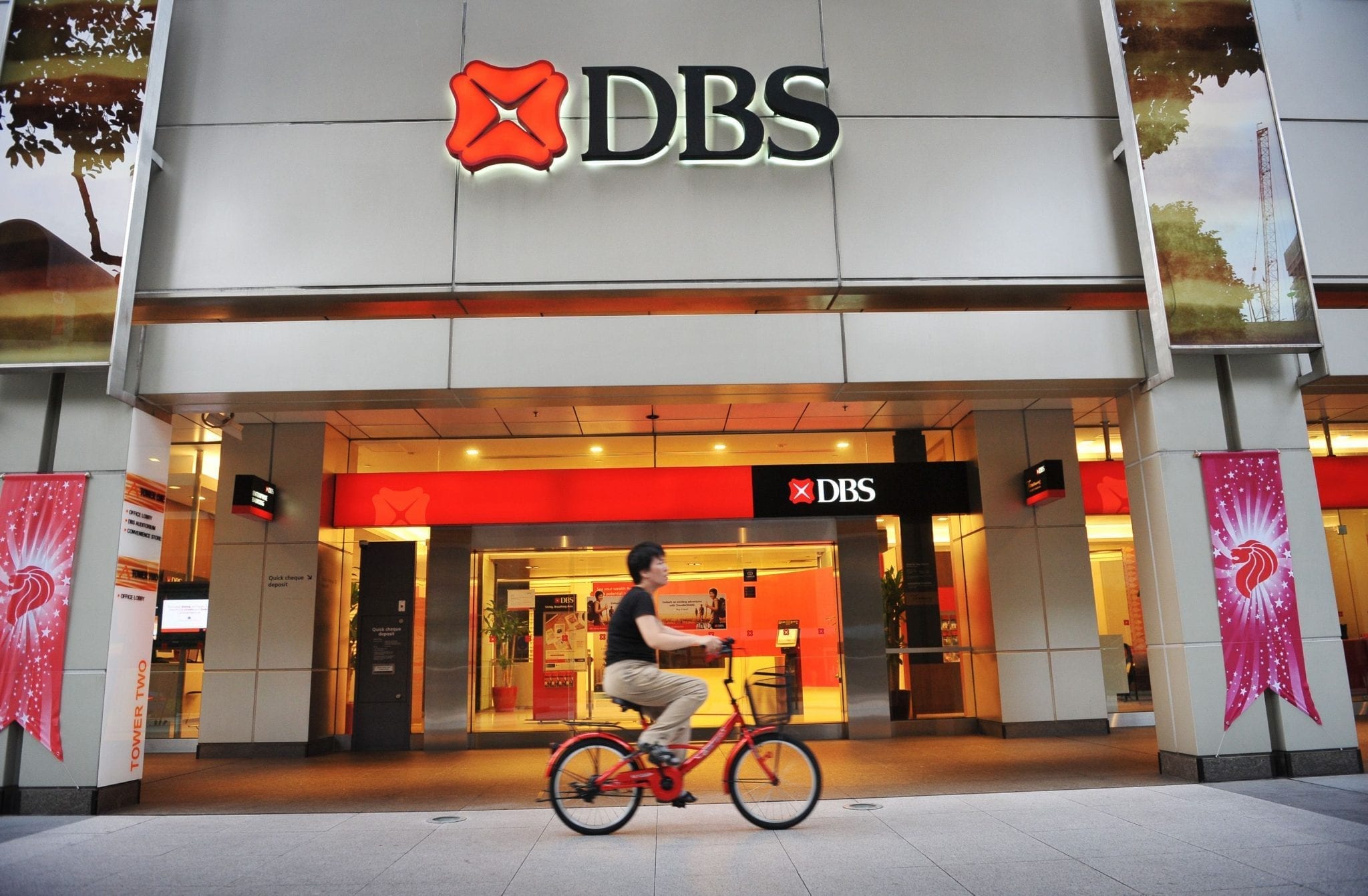
  • DBS Reports Progress on Digital Exchange

    DBS Reports Progress on Digital Exchange

    The Singapore bank, one of the first traditional lenders in the region to launch its own digital exchange, now has S$100 million in digital assets in custody.

    I’m quite pleased, it is going quite well,» chief executive Piyush Gupta said on Tuesday during a briefing with analysts after presenting the bank’s second-quarter 2021 financial results, Blockworks reported.

    The exchange – DDEx – now has around 400 clients and did around $133 million in transactions during the quarter, Gupta said. Its assets under custody are also up 60 percent since May, when it had an investor base of 120 clients and some S$80 million in digital assets under custody.

    At the same time, Gupta said his target was to grow the digital exchange’s investor base to about 1,000 customers this year, adding that he expects the volume to pick up once the exchange extends its trading hours past the Singapore business day.

    DDEx launched in December 2020 with an initial offering that covered cryptocurrency trading of bitcoin, ether, bitcoin cash, and XRP, now expanded to include digital stocks and bonds. In May 2021, the bank launched a crypto trust offering that combined wealth planning services with emerging digital currencies.

    Overall, the bank posted a record-high profit of S$3.71 billion ($2.75 billion) for the first half of 2021, marking 54 percent year-on-year growth.

  • SFC Fines UBS Over Regulatory Breaches

    SFC Fines UBS Over Regulatory Breaches

    Hong Kong’s Securities and Futures Commission reprimanded and fined UBS over regulatory breaches covering various areas including transparency client suitability.

    The SFC fined UBS AG and UBS Securities Asia Limited HK$9.8 million ($1.26 million) and $1.75 million, respectively, over various regulatory breaches, according to a statement.

    The issues covered areas ranging from lacking disclosures to client suitability issues.

    The SFC’s probe found that UBS failed to make proper disclosure of its financial interest in some Hong Kong-listed companies covers in its research reports for 14 years, between May 2004 and May 2018.

    The failure was caused by multiple data feed logic errors in a legacy data source used by UBS for tracking its shareholding positions, the securities regulator said.

    The SFC also found that UBS failed to fulfill various processes across client suitability and sales.

    It said the Swiss bank, in various time periods, failed to obtain valid standing authorities from clients who were not qualified as professional investors; record client order instructions; fully assess client derivatives knowledge; and disclose the stop loss event feature in a structured note.

    The SFC considers that UBS failed to act with due skill and care and put in place adequate systems and controls to ensure compliance with the applicable regulatory requirements,» the regulator said in the statement.

  • UOB Rides Economic Recovery

    UOB Rides Economic Recovery

    The bank posted a record quarterly wholesale banking income of $848 million, and a record AUM in wealth management in the first half of 2021.

    UOB posted second-quarter earnings of S$1 billion ($740 million), unchanged from the first quarter, which brought first-half earnings of S$2 billion, according to financial statements released on Wednesday.

    Net profit was 29 percent higher in the first half of the year compared to 2020, driven by strong business momentum and lower credit allowance, and 48 percent higher than the second half of 2020, supported by the group’s strong customer franchise and lower credit allowance, UOB said.

    Core Business Growth

    The bank noted healthy contributions across its core businesses, with income growing 5 percent to S$4.9 billion, fee income growing 28 percent to S$1.2 billion, and loans growing 6 percent to S$299 billion.

    Cross-border income, which contributed to 29 percent of wholesale banking income, grew by 5 percent, while a recovery in market sentiment saw assets under management growing by 7 percent to S$137 billion, UOB said.

    Total expenses remained stable at S$2.15 billion and cost-to-income ratio for the year improved from 45.6 percent to 43.8 percent. The bank also reduced its allowances to S$383 million, from S$682 million a year ago, noting that asset quality remains within expectations, with strong reserve coverage from the proactive general allowance taken in last year. Total credit costs on loans eased to 24 basis points.

    In a media briefing on Wednesday morning, UOB deputy chairman and CEO Wee Ee Cheong said the bank is positive about its outlook and expects profits to continue to rebound, backed by strong single-digit growth in loans and double-digit growth in non-interest income. It also expects growth in Asean markets to improve as vaccination rates increase, which will further boost its performance.

    The past quarter, the bank launched products like digital wealth manger SimpleInvest, which Wee said has received an «overwhelmingly positive response.» It is also working on distributed ledger and asset tokenization initiatives like digital bond issuance on Marketnode, and collaborating on central bank digital currencies.

    The bank also expressed an interest in potentially acquiring Citi’s retail assets in the Asia Pacific region, to strengthen its regional franchise.

    With the lifting of MAS restrictions, UOB is resuming its dividend payout ratio of 50 percent, which translates to 60 cents per ordinary share.
  • OCBC Profits Surge from Reduced Allowance

    OCBC Profits Surge from Reduced Allowance

    OCBC’s net profit for the second quarter surged due to an economic recovery that enabled substantially reduced allowances.

    OCBC’s posted a net profit of S$1.16 billion ($860 million) in the second quarter, according to its latest results, marking a 59 percent surge from S$730 million in the same period last year.

    The bank’s quarterly performance was in line with the S$1.14 billion consensus forecast from a Bloomberg survey of five analysts.

    OCBC registered S$2.66 billion of net profit in the first half, up 86 percent year-on-year.

    Like many other peers in the banking industry, OCBC has benefitted from an economic recovery that has enabled a reduction of reserves linked to bad assets.

    It posted S$393 million in total allowances compared to S$1.41 billion last year.

    The reduction was driven in no small part by lower allowances for impaired assets (from S$793 million to S$283 million) driven last year largely by exposures to «a number of corporate customers in the oil trading and offshore support vessels sectors».

    In addition to reduced allowances, the bank also benefitted from strong wealth management income which grew 25 percent in the first half to S$2.14 billion which represents 39 perfect of OCBC Group’s total income.

    OCBC’s private banking arm, Bank of Singapore, saw assets under management grow 11 percent to S$169 billion, driven by continued net new money inflows and positive market valuations.

    OCBC also declared a dividend of 25 Singapore cents per share compared to 15.9 Singapore cents a year ago.

    At a ratio of 42 percent, this marks the first dividend payout since the Monetary Authority of Singapore lifted its cap on locally incorporated banks and financial firms in the city-state, originally set at 50 percent of 2019’s dividends per share.

    While the long-term trajectory of global economic recovery is positive, we remain watchful on the current operating environment in view of the recent virus resurgence and heightened safety measures in our key markets,» said OCBC group chief executive Helen Wong. We stay firmly committed to supporting our customers during this difficult period.

  • HSBC Names Head of Qatar Private Banking

    HSBC Names Head of Qatar Private Banking

    The bank has named a long-standing stalwart to enhance HSBC’s client proposition in Qatar.

    HSBC has named Ibrahim Al Abed as its head of private banking in Qatar, according to an announcement on Wednesday.

    Based in Qatar, Al Abed reports to Sobhi Tabbara, global market head, Middle East and North Africa, Private Banking, and Abdul Hakeem Mostafawi, CEO of HSBC Qatar.

    Al Abed joined the HSBC’s Qatar office in 1999 and has worked across Digital Business Services and Global Operations before moving to Wealth & Personal Banking, after which he joined Markets & Securities Services in 2004 to become the head of corporate sales.

    In the announcement, Tabbara said Qatar is a «very important market for Private Banking in MENAT.»

    HSBC’s history spans 67 years in the Gulf nation, where it offers a full suite of banking products and services, including wealth management and personal banking, commercial banking, global banking and markets, and security services.

  • Deutsche Bank Stalwart Decamps for State Street

    Deutsche Bank Stalwart Decamps for State Street

    State Street hires a Deutsche Bank executive as head of product management in the Asia Pacific region, according to a statement.

    Jeslyn Tan joins the firm after 22 years at Deutsche Bank. She will be responsible for developing and driving an end-to-end product strategy for the Asia Pacific region.

    Based in Singapore, Tan reports globally to Brenda Lyons, global head of asset servicing product, and regionally to Mostapha Tahiri, chief executive officer for Asia Pacific.

    Tan brings 26 years of deep experience in product management in Asia Pacific, and was most recently Deutsche Bank’s global head of product management, and has held numerous senior roles at the German lender during her tenure.

    We are well-positioned to better serve our clients by responding accurately and offering the right products and services to clients in the rapidly changing environment in the region, Tahiri said in the statement.

  • StanChart Nabs HSBC Private Banker

    StanChart Nabs HSBC Private Banker

    Standard Chartered Private Bank has expanded its Southeast Asia unit with the addition of a relationship manager from rival HSBC.

    Nipud Sud joins Standard Chartered Private Bank as an executive director and relationship manager, according to a note, effective August 2.

    Based in Singapore, Sud reports to senior client partner Suresh Nair who joined the bank in January this year and reports to private banking team lead of Singapore and Malaysia Adeline Chow.

    Sud has 18 years of banking experience, including ten in private banking with Citi, J.P. Morgan and, most recently, HSBC covering ASEAN and Hong Kong clients.

  • StanChart Profits Rise from Improved Loan Impairments

    StanChart Profits Rise from Improved Loan Impairments

    Pre-tax profit at Standard Chartered rose in the first half and beat analyst estimates, resulting in the resumption of interim dividend payments.

    Standard Chartered registered $2.68 billion in pre-tax profit, according to its latest first-half results, marking a 37 percent increase compared to $1.95 billion in the same period last year.

    The bank’s $2.55 billion in statutory pre-tax profit beat its compailed average analyst estimate of $2.23 billion.

    Despite lower income (5 percent decrease) and higher operating expenses, Standard Chartered still saw profits rise due to improved loan impairments fuelled by the economic recovery.

    The bank posted a net release of $47 million in credit impairments – including a net release of $67 million in the second quarter – marking a $1.61 billion decrease year-on-year.

    The Asia-focused British lender also announced the resumption of interim dividend payments of $94 million – or 3 cents per share – alongside a $250 million share buyback.

    I am encouraged by our positive performance in the first half of 2021 despite an uneven recovery from Covid-19,» said Standard Chartered group chief executive Bill Winters.

    We are more confident in achieving our return on tangible equity targets and we are pleased to announce today an additional share buy-back program together with the resumption of our interim dividend payment.

  • DBS Appoints Global Head of Transactions Services

    DBS Appoints Global Head of Transactions Services

    DBS has appointed a group head of global transaction services, succeeding John Laurens who will be retiring.

    Lim Soon Chong has been named to the role, according to a statement, effective August 1 this year.

    Laurens, who first joined DBS in 2014, will remain as a senior adviser to support the transition until December 31.

    Lim is currently group head of investment products and advisory for DBS’ consumer banking and wealth management unit as well as group head of product management for global transactions services. Ex-group head of trade product management and 20-year banking veteran Sriram Muthukrishnan will take over Lim’s latter role.

    Lim joined DBS in 2006 and has taken on various senior roles across the bank’s consumer, wealth, corporate treasury, and risk management divisions. He will maintain his role as head of digital for DBS’ institutional banking group.

    We remain committed to efforts to rotate our senior leaders around different functions and markets to hone their business acumen and technical skill sets to ensure they are well equipped to navigate the challenges and opportunities of tomorrow, Lim said.

  • Nearly Half of Singaporeans Own Cryptocurrency

    Nearly Half of Singaporeans Own Cryptocurrency

    Despite market volatility and regulatory pressures, the outlook for crypto adoption remains positive especially in Singapore where nearly half of its residents own the digital asset class, according to a survey.

    43 percent of Singaporeans own cryptocurrency, according to a survey by Independent Reserve, a digital set exchange with operations in the city-state since 2020. And adoption is expected to continue to rise with 46 percent of respondents plan to buy crypto in the next 12 months.

    Naturally, awareness has been high in Singapore with 93 percent claiming they have knowledge of cryptocurrencies and 90 percent claiming they heard of bitcoin.

    Unsurprisingly, younger individuals have led adoption rates at 66 percent for those aged 26 to 45 compared to 31 percent cumulatively for all other age groups.

    The same age group was also twice as likely to buy crypto in the next 12 months at 61 percent.

    Crypto adoption is expected to increase in Singapore with 59 percent of Singaporeans believing it will reach mass-scale adoption and 70 percent for those under the age of 45.

    The price outlook is also positive with half of the respondents expecting bitcoin’s value to rise to S$50,000 by 2030. 13 percent of those under 45 forecast bitcoin’s price to reach S$250,000 by the same year. The data is based on a survey of 1,000 Singaporeans conducted by Independent Reserve.

    Independent Reserve also launched its inaugural Cryptocurrency Index for Singapore and scored it at 63 out of 100 using criteria based on awareness, adoption, trust and confidence.

    With digital currency gaining momentum worldwide, Singapore continues to emerge as a key hub in Asia due to its robust and well-regulated financial markets infrastructure and openness to new technologies,» said Independent Reserve CEO Adrian Przelozny.

    The strong awareness and adoption of crypto among Singaporeans in the survey findings are probably a natural reflection of the country’s progressiveness and commitment to preparing for the future.

  • BNP Paribas Nets Ex-Credit Suisse NRI Banker

    BNP Paribas Nets Ex-Credit Suisse NRI Banker

    BNP Paribas Wealth Management has hired an ex-Credit Suisse banker to oversee the non-resident Indian market.

    Aditya Chauhan will join BNP Paribas Wealth Management as a market head for non-resident Indians (NRI), sources said, and he is expected to be accompanied by a team of bankers. Based in Singapore, Chauhan will oversee all NRI bankers in the city-state and Hong Kong.

    Chauhan was most recently working for Credit Suisse where he was also an NRI banker that reportedly began coverage of the Sri Lanka market in 2018 with a team of relationship managers. A spokesperson for the bank declined to comment.

    In 2021, BNP Paribas Wealth Management has made a number of senior private banking hires in Asia.

    In addition to Chauhan, it added longtime Citi banker Kevin King as its China market head in March and ex-Standard Chartered banker Michael Yong-Haron as its Hong Kong CEO earlier this year.

  • UBS Plans to Up Pay for Junior Bankers and Directors

    UBS Plans to Up Pay for Junior Bankers and Directors

    UBS Group is reportedly planning to raise the salaries of global banking analysts, associates, and directors, marking the latest global bank to increase pay for talent.

    In their first year, analysts will earn about $100,000 annually, according to a «Reuters» report citing unnamed sources, followed by $105,000 in the second year and $110,000 in the third year.

    Associates will earn $175,000 to $225,000 and directors will make around $275,000.

    The salaries increases will come into effect from August 1, the report added.

    UBS is the latest global bank to increase salaries in order to attract and retain talent, particularly for non-senior positions.

    This follows similar moves by Wall Street banks to incentivize younger financial workers, particularly after first-year analysts at Goldman Sachs complained about a gruesome work-life of long hours and cutthroat deadlines in an internal survey leaked earlier this year.

  • BoS Adds Sustainability to Investment Financing Framework

    BoS Adds Sustainability to Investment Financing Framework

    The bank will be incorporating environment, social and governance (ESG) factors when assessing loan financing, as part of its push for sustainable investing.

    The loan quantum for investment financing will be higher for mutual funds that are rated AAA or AA in the MSCI ESG Fund Ratings, Bank of Singapore (BoS) said in an announcement.

    Previously, financing against mutual funds was based on the volatility of the asset’s value, liquidity of the asset and the credibility of the fund manager. Now, the advance ratio – the maximum percentage amount of the market value of the collateral that could be extended as a loan – will be increased by 5 percentage points for such funds, the announcement said.

    BoS said that investment financing is commonly used by high-net worth individuals in growing wealth and enhancing investment returns. The private bank registered a compounded annual growth rate of close to 10 percent in the loans for investment financing from 2016 to 2020.

    By adding an ESG lens to our lending framework, we hope to create a direct and positive impact in the investment of highly rated ESG assets, starting with mutual funds, Alexandre Lotfi, BoS global chief risk officer, said.

  • HSBC Snags UBS Investment Management Specialist

    HSBC Snags UBS Investment Management Specialist

    He will lead HSBC’s investments and wealth solutions team in Asia, which covers global private banking and wealth and personal banking.

    HSBC has appointed Stefan Lecher as regional head of investments and wealth solutions (IWS), Asia Pacific, with effect from 3 October 2021, according to an announcement on Thursday. He will be based in Hong Kong, reporting to Lavanya Chari, global head IWS.

    Lecher joins from UBS, where he has held a number of senior roles in global wealth management and asset management over the past 17 years, most recently as APAC head CIO for global investment management.

    HSBC said the appointment is key to its Asia wealth strategy, which targets becoming a leading wealth manager in the next five years, with $3.5 billion in investment.