Tag: bank

  • Australian dollar rises

    Australian dollar rises

    The Australian dollar has risen Thursday, buying 67.59 US cents from 67.11 US cents on Wednesday.

    Yesterday, the local currency hit a 10-year low of 66.77 US cents after New Zealand’s central bank cut the country’s cash rate by a larger than expected 50 basis points.

    The Aussie was trading as high as 67.83 US cents on Wednesday morning but fell more than 1.5 percent after the Reserve Bank of New Zealand cut its official cash rate to 1.0 percent in an attempt to reheat the country’s cooling economy.

    The Aussie’s biggest one-day decline since April dropped it more than one cent to as low as 66.77 US cents as RBNZ governor Adrian Orr spoke to media and said further cuts were possible.

    At 1335 AEST, the Australian dollar was worth 66.90 US cents, just above what had been its lowest level since March 18, 2009.

    The RBNZ’s move came a day after the Reserve Bank of Australia held the local cash rate at 1.0 percent but said it was prepared to reassess after weighing the impact of 0.25 percentage point cuts in June and July.

  • HSBC Singapore Expands Foreign Mortgage Solutions

    HSBC Singapore Expands Foreign Mortgage Solutions

    Responding to growing interest among clients, HSBC Singapore now offers mortgages for investment residential properties in five cities across Australia.

    HSBC Singapore is hoping to tap on the growing number of Singaporeans who plan on buying investment properties abroad with the launch of its first overseas mortgage solution, the bank announced on Thursday.

    HSBC International Mortgage will be offered in Singapore in either Singapore or Australian dollars for investment residential properties in and around Sydney, Melbourne, Perth, Brisbane and Adelaide, with other overseas destinations to be added over time.

    Successful applicants will get HSBC Premier status, which gives them access to a relationship manager in Singapore and Australia to facilitate the process, the bank said.

    We went with Australia as the first market for this solution given the close affinity that Singaporeans have for the country on the back of their business, education, holiday or familial ties. as a result of business, education, holiday and familial ties, Ranojoy Dutta, head of Retail Products, HSBC Bank (Singapore), said.

    The bank also highlighted its own Beyond the Bricks report from 2018, which indicated that one-third of mass affluent Singaporeans currently have overseas property investments, and 70 percent plan to buy investment properties abroad.

    Singapore’s real estate investment in Australia grew 141 percent in 2018 to $3.5 billion, despite skyrocketing property prices, according to Real Capital Analytics data. According to Knight Frank’s 2018 Wealth Report, Australia was the second-most popular destination for prime property purchases among wealthy Singaporeans.

  • Standard Chartered Banks on Chinese Fintechs

    Standard Chartered Banks on Chinese Fintechs

    Standard Chartered has launched a Shanghai-based innovation lab to tap China’s tech market and improve its own capabilities.

    The eXellerator innovation lab in China alongside others in Singapore Hong Kong, London, Kenya, and San Francisco are part of the bank’s SC Ventures unit, a research and development arm focused on innovation and fintech.

    With the launch of the eXellerator, Standard Chartered aims to deepen its contribution and participation in China’s vibrant technology and innovation ecosystem, the bank said, highlighting various tech competencies including artificial intelligence, biometrics and mobile payments that could improve its client products and experiences.

    In addition, the bank also highlights the opportunity for such fintechs startups to scale their solutions across the bank’s global business and leverage the opportunity to co-create new businesses and operating models in the process.

    Rapid changes in financial technology are reshaping the future of the global banking industry, especially here in China which is home to some of the world’s most established companies leading the way in areas like artificial intelligence and Big Data, said Jerry Zhang, CEO of Standard Chartered Bank (China), stressing the Chinese market’s strategic importance to the group.

    Alex Manson, global head of SC Ventures echoed the sentiments emphasizing that a mere online banking app will not be enough to rewire the DNA. To truly rewire the DNA in banking, we need to go beyond just offering a digital interface, he said. Our eXellerators create an environment which combines innovation from both in and outside the Bank.

    The rewiring is well underway in Asia with various milestones recently achieved. In Hong Kong, it established a strategic joint venture with major local telecoms PCCW and HKT, alongside travel service provider Ctrip to build a standalone digital bank. And in India, it will be launching an open digital platform targeting SME clients with various financial and business solutions.

  • HSBC Tops Retail Banking Satisfaction Survey

    HSBC Tops Retail Banking Satisfaction Survey

    HSBC received the highest score among banks in three of the six factors measured in the study: product offerings, fees and problem resolution.

    HSBC Bank ranks the highest in retail banking customer satisfaction among banks in Singapore, according to results of a survey of retail banking customers published on Thursday.

    The 2019 Singapore Retail Banking Satisfaction Study, published by consumer insights company J.D. Power, was conducted among 2,515 customers from May to June 2019. It looks at their satisfaction with the products and services provided by their primary financial institution.

    The study measures overall satisfaction in six factors: account activities (39 percent weight); account information (17 percent); facility (12 percent); product offerings (12 percent); problem resolution (11 percent); and fees (10 percent). HSBC had an overall score of 769 out of 1,000, which was above the average of 749. In all, eight banks were ranked. OCBC Bank placed second with 764, and DBS placed third with 752.

    In contrast to its high score in Singapore, HSBC fared poorly in Hong Kong – the bank scored 677 in the J.D. Power 2019 Hong Kong Retail Banking Satisfaction Study, released in February – below the study average of 688 and only one point above the bottom-ranked bank. The leader, Citibank, scored 722.

  • Nearly 5,000 HSBC Banking Jobs Face Ax

    Nearly 5,000 HSBC Banking Jobs Face Ax

    HSBC reiterates continuity in its business strategy, despite the recent CEO exit, underlining a potential axing of more than 4,700 jobs as part of its ongoing cost-cutting measures.

    HSBC’s finance director Ewen Stevenson noted that up to 2 percent of jobs (currently 237,865 employees globally), or 4,754, could but slashed as part of the overall group strategy to cut 4 percent of the bank’s wage costs. It anticipating cost savings from targeting senior roles, attrition, as well as $650 to $700 million in severance costs, saved moving forward, according to a report.

    This is in addition to cuts announced in June 2018 by former CEO John Flint that covered areas such as digital banking and productivity improvement, which is expected to save an additional $0.5 to $2.5 billion from then to 2020.

    The new announcements follow the recent unexpected exit of former CEO Flint who was at the helm for a mere 18 months. Pundits are expecting even more strategic changes to come including a potential reduction to its global footprint.

    HSBC Chairman Mark Tucker had then noted that the bank needed to respond to «an increasingly complex and challenging global environment» with a shift in leadership. Circumstances change and we need to adapt, he said.

  • Apple Card terms specify that iPhone holders can’t jailbreak their phone

    Apple Card terms specify that iPhone holders can’t jailbreak their phone

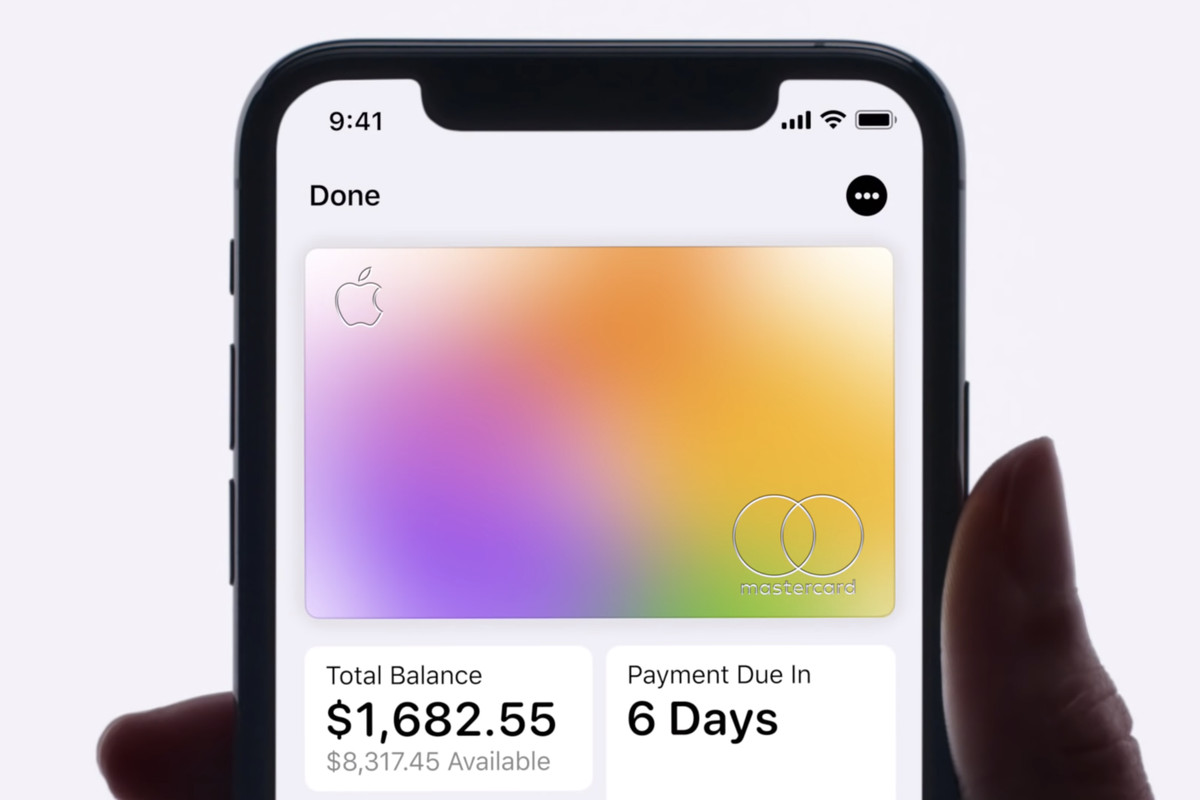
    Back in March, Apple introduced the Apple Card. The virtual card sits in the iOS Wallet app, although an actual physical card can be ordered. For privacy reasons that card will not include the account number, but will have the user’s name on the card. Apple Card users will face no fees. That’s right, say goodbye to Late fees, Annual fees, International fees, and Over-limit fees. Card users will get back 2% of the value of transactions made outside of the Apple ecosystem and 3% of those purchases made from the App Store, Apple Store, and other Apple properties. Transactions paid for with the physical card will get 1% back. These rebates will be computed daily and made available each day.

    The card is expected to launch sometime this month and investment banking firm Goldman Sachs is Apple’s partner for this project. Goldman Sachs has posted the Apple Card Customer Agreement and this reveals some interesting things. First of all, depending on the card user’s credit ratings, the annual interest on the card will range from 13.24% to 24.24%. Future changes will be based on any rate hike or cut made to the Prime Rate. This is the rate that banks charge their best customers for loans.

    To be eligible for an Apple Card, you must have an Apple ID that is associated with a valid iCloud account. There must be an active email address connected to the Apple ID, with Apple’s two-factor authentication turned on. And those iPhone users who “jailbreak” their phone to remove iOS software restrictions are at risk of having the account closed. In addition, the Apple Card cannot be used to buy casino chips, lottery tickets, and cryptocurrencies. In other words, you can’t use the Apple Card to buy Bitcoins. This is probably not devastating news for the majority of consumers looking to open an Apple Card account.

    “If you make unauthorized modifications to your Eligible Device, such as by disabling hardware or software controls (for example, through a process sometimes referred to as “jailbreaking”), your Eligible Device may no longer be eligible to access or manage your account. You acknowledge that use of a modified Eligible Device in connection with your Account is expressly prohibited, constitutes a violation of this Agreement, and could result in ours denying or limiting your access to or closing your Account as well as any other remedies available to us under this Agreement”-Apple Card user agreement.

    So if you own a jailbroken iOS device, you’re not allowed to use it to apply for the card. And if you have an iPhone that you used to obtain a card, you cannot jailbreak it. Pretty simple rules. In fact, all of the terms and conditions of the Apple Card can be found on the Goldman Sachs website.

    The Apple Card will be another business in Apple’s Services unit. After the iPhone, this segment is the second-largest in terms of revenue for the company, and it is the tech giant’s second most profitable division. Apple is aiming to hit $50 billion in annual revenue by next year for the Services group, double the $25 billion the unit grossed in 2016. For Apple’s fiscal third-quarter covering April through June, the company reported record Services revenue of $11.5 billion. The reason why this business is so important to Apple is that it is less dependent on iPhone shipments and is more dependent on the global active number of iPhones. At the beginning of this year, that number was approximately 900 million. Other businesses under the Services umbrella include the App Store, iCloud, Apple Music, Apple TV+, Apple News+, Apple Arcade (once it launches), AppleCare, Apple Pay and more.

  • Citi To Cut Hundreds Of Trading Jobs

    Citi To Cut Hundreds Of Trading Jobs

    Global banks continue to feel the pinch from slowed trading with Citi joining its peers to lighten their trading operations with hundreds of related jobs expected to be axed in 2019.

    The American lender is expected to slash jobs according to multiple media reports. A Bloomberg report noted that the job cuts will occur over the course of the year and will be focused on its fixed income and equity trading business, including 100 jobs in the latter—nearly 10 percent of the whole division.

    Excluding a one-off sales of a stake in a trading venture, combined revenue from fixed income and equity trading fell 5 percent at Citigroup in the second quarter.

    A drop in trading revenue has affected the banking sector as a whole, especially American banks which have a heavy reliance on the business. The five largest American Wall Street banks reported an 8% decrease in trading revenues in the second quarter after a 14 percent decrease in Q1.

    In addition to weaker sentiments and market uncertainty, numerous longer-term structural drivers have been in play to pressure bank’s trading businesses. Hedge funds, traditionally the major revenue source for bank trading, has failed to recover from its heydays and faces outflows due to competitive low-cost funds. Online trading has not only taken significant market share from banks but continues to pressure margins.

    Citi joins Deutsche Bank as the latest heavyweight to headline job cuts in trading. Earlier this month, the German lender announced plans to exit equity trading and cut 18,000 jobs globally.

  • Citi Asia Execution Services Head Joins From JPMAM

    Citi Asia Execution Services Head Joins From JPMAM

    Citi hires J.P. Morgan Asset Management’s former Americas head of trading to run its Asia Pacific execution business. Curt Engler has been named as Citi’s Asia Pacific (APAC) Head of Execution Services. A key focus under his leadership will be to ensure Citi’s franchise continues to embrace the latest technology to meet the changing needs of clients.

    Curt’s market knowledge of operating in the world’s largest equity market and the market infrastructure changes he has worked through will be invaluable for Citi and our clients as Asian markets continue to evolve rapidly, said Richard Heyes, Head of Equities, Asia Pacific, in a media statement on Thursday.

    Curt, who has worked in financial markets for over 20 years – joins from J.P. Morgan Asset Management (JPAM) in New York, where he was Head of Trading for the Americas. Prior to JP Morgan Asset Management Curt was a trader and analyst at Blackrock, in the Quantitative Equity Group.

    At J.P. Morgan Asset Management since 2010, Curt was responsible for the daily activity of the trading desk and oversaw the trading operations of over $250 billion in assets under management. He also led the build-out of trading technology to support significantly increased levels of automation and the usage of analytics to improve execution performance.

    Based in Hong Kong, Curt will be responsible for Citi’s regional execution business. where he will be responsible for Citi’s cash execution business that spans 12 markets across the region.

    «Asia-Pacific is a key market for our global equities business and I am confident this addition to the strong bench will support further growth with clients across the region,» said Dan Keegan, Global co-head of Equities.

  • DBS Inks Sustainability-Linked Loan in Indonesia

    DBS Inks Sustainability-Linked Loan in Indonesia

    The export financing sustainability-linked loan is the first of its kind in Indonesia. DBS Bank Indonesia has signed a sustainability-linked export financing loan with wooden door manufacturer PT Sumatera Timberindo Industry (STI), the bank said in a press release on Wednesday.

    DBS said the loan is evaluated based on a target of obtaining timber and raw materials from sources certified by the Forest Stewardship Council (FSC). Its interest rate will be reduced for each shipment of raw material that has an FSC certification that the raw material is responsibly sourced.

    STI is a FSC-certified company focused on responsible sourcing, manufacturing and exporting of sustainable-certified products. According to director Hidayat Ang, STI’s synergies with DBS in advancing sustainability support the company’s long-term growth and empower the local community to do good for the environment.

  • HSBC Private Banking Boosts Philippines Coverage

    HSBC Private Banking Boosts Philippines Coverage

    HSBC Private Banking continues its hiring drive in Asia with the addition of three relationship managers focusing on the Philippines high-net-worth segment, both in on and offshore locations.

    In its onshore private bank in Manilla, HSBC has hired Valerie See-Tang and Janice Marie Laurel as relationship managers. See-Tang was previously a branch head of HSBC’s Quezon City branch and Laurel was a premier team leader of HSBC’s Ortigas branch.

    In its offshore center in Hong Kong, the bank is adding Carmen Wong, most recently with J.P. Morgan in the same role and market. Previously, Wong held other roles with Deutsche Bank and Citi.

    The Philippines market teams in Manila and Hong Kong report to Bala Balagopalan, market head for Philippines and Japan, North Asia, HSBC Private Banking.

    We are delighted to welcome new talent to our team to serve the increasing wealth needs of our Philippines’ clients, said Kevin Herbert, co-head for North Asia, HSBC Private Banking.

    Not only do we have one of the largest private banking teams supporting the Philippines market, we believe our strong business heritage, global network, and experience working with families across generations, all give us a competitive edge.

    According to the bank, the increased Philippines coverage occurs amid continued market uncertainty and increasingly sophisticated needs. This has sparked a range of demand that the bank is confident it can fill.

    We’re seeing more demand for alternatives, particularly in private equity and private credit, as well for managed solutions,» Herbert continued.

    In addition, a number of successful family businesses are on the cusp of inter-generational wealth and business transfer. So our knowledge and experience of legacy planning and family governance, are key elements of our offering that Philippines clients value.

  • Consumer Fintech Use Goes Mainstream

    Consumer Fintech Use Goes Mainstream

    The use of fintech products and services in Singapore has grown substantially in the past two years, though the country still lags China and India by a large margin.

    The fintech adoption rate among Singapore consumers has almost tripled to 67 percent in 2019 from just 23 percent in 2017, according to the «Global FinTech Adoption Index 2019» published by professional services firm EY.

    The report, its third edition, was based data gathered from an online survey of over 27,000 consumers in 27 markets. Leading the index were mainland China and India, which both recorded 87 percent consumer fintech adoption, followed closely by Russia and South Africa (both 82 percent).

    Singapore has enjoyed significantly increased rates of consumer fintech adoption and we expect even higher rates in the future, due to the supportive regulatory environment. Singapore may be a relatively small business-to-consumer (B2C) market by size, but it is a hotbed for innovation and a great launchpad for startups and businesses to build their technology, test it, and then scale across Southeast Asia, Varun Mittal, EY Global Emerging Markets FinTech Leader, said.

    The report credited fintech’s phenomenal rise to the increasing consumer and SME awareness and engagement with fintech products and services. When the report was first published in 2015, the average global adoption rate stood at 16 percent. It is now 64 percent, with money transfers and payment services driving awareness globally.

    Crucially, EY noted that maturing fintech challengers are having a growing influence on the market, actively driving legacy and non-financial organizations to develop their own fintech products and services.

    Among other findings, the report said that consolidated platforms have an edge, with 6o percent of consumers preferring to access services through a single platform, and that non-financial players are on the rise, with 68 percent of respondents saying they are willing to consider a financial proposition by a non-financial company.

  • Battle for HK Retail Customers Begins as HSBC Scraps Fee

    Battle for HK Retail Customers Begins as HSBC Scraps Fee

    As banks in Hong Kong brace for fierce competition from virtual banks, HSBC on Wednesday said it is scrapping minimum balance fees and associated charges.

    HSBC announced on Wednesday that it will scrap the minimum balance fee that applies to its 3 million customers in Hong Kong. From August 1, it will be the first bank in Hong Kong to go back to providing free basic banking services to retail customers who hold its passbook accounts, statement accounts, personal and advance integrated accounts and super ease accounts.

    To reinforce HSBC’s commitment as Hong Kong’s leading bank, it will also waive off associated charges faced by small depositors, like counter transaction fees.

    «More than 3 million retail banking customers will benefit from the removal of our below-balance fees, counter transaction fees and annual fees for most our personal savings accounts,» said Greg Hingston, HSBC’s head of retail banking and wealth management in Hong Kong, who was quoted in «South China Morning Post».

    Introduced 18 years ago, the monthly charge of HK$50 for small depositors with a passbook savings account and other basic accounts with a balance below HK$5,000 (US$640), is seen as a penalty on some of the bank’s most loyal customers.

    The move comes as the Hong Kong Monetary Authority (HKMA) issued eight virtual bank licenses since March. The virtual bank licensees, who operate solely online, are not allowed to charge a minimum balance fee to small depositors. Such zero-cost bank accounts would likely lure millions of customers away from banks who are still charging small depositors.

    The move is likely to be followed by other big lenders as they brace for the intense competition from the virtual banks due to come online later this year. Hang Seng Bank, a unit of HSBC, is also considering a plan to scrap its minimum-balance fee, according to a spokesperson.

    «Banks should draw up their fees structures in accordance with their own corporate strategies, service models and costs,» an HKMA spokesperson said. «However, the HKMA has constantly reminded banks to keep in mind the public’s expectations and needs in basic banking even while they run their banks based on business principles.»

  • Grab explores digital-only banking licence in Singapore

    Grab explores digital-only banking licence in Singapore

    Grab, Southeast Asia’s most valuable start-up, is exploring a move into Singapore banking as regulators in the Southeast Asian city-state consider allowing online-only banks, four people with knowledge of the process said.

    Grab is close to hiring a consultancy to advise it on its banking potential and is gearing up to apply for a digital-only bank licence in Singapore if the banking regulator decides to open up the sector, said the people, who declined to be identified as they were not authorised to speak to the media.

    Singapore-headquartered Grab’s interest in what would be its first foray into banking has not been reported before.

    When asked for a response, the Monetary Authority of Singapore (MAS) referred Reuters to its comments issued last month when it said it was studying the potential for allowing “digital-only banks with non-bank parentage” into its market.

    Hong Kong, Singapore’s fierce financial centre rival, began issuing licences earlier this year.

    A potential entry by Grab – backed by Japan’s SoftBank Group Corp – and others would mark the biggest shake-up in years for a market dominated by DBS Group Holdings Ltd, Oversea-Chinese Banking Corp and United Overseas Bank Ltd.

    The MAS could make a decision in the next couple of months on whether to admit digital-only banks with non-bank parentage, as well as the eligibility applicants, the people said.

    The city-state’s banking regulator is likely to issue only two to three licences in the first phase, two of the people said.

    The interest from Grab underscores how Asia’s non-banking firms are keen to challenge traditional banks by leveraging their technology and their user databases to offer banking services to retail customers and small businesses.

    Securing a digital banking licence in Singapore could help seven-year-old Grab to benefit from its existing data on transport movements, payment transactions and consumer behaviour, the people said.

    Last year, Grab teamed up with Japan’s Credit Saison Co Ltd to provide loans in Southeast Asia.

    Global fintech players are among other groups expected to seek licences in Singapore, with some of them looking to form joint ventures, said two of the people.

    Consultants said a digital banking licence could also appeal to Singapore Telecommunications Ltd (Singtel), which is expanding beyond its traditional carrier services into areas such as mobile payments and cybersecurity.

    “It is too premature to comment but having ventured into mobile financial services, we are open to exploring the feasibility of such an opportunity should it arise,” a Singtel spokeswoman said in an emailed response.

    In Hong Kong, affiliates of Alibaba Group Holding Ltd and Xiaomi Corp, and consortia led by Standard Chartered PLC and BOC Hong Kong Holdings Ltd were among those who won the digital-only banking licences.

    “In Hong Kong, the guidelines were quite precise in terms of what applicants had to prove in order to get a virtual banking licence, more so than in Europe,” said Dan Jones, APAC partner at consultancy Capco Digital.

    “It will be interesting to see whether MAS goes down a similar route to Hong Kong … so that the only people who can apply are established companies, rather than literal start ups.”

    As in Hong Kong, online-only banks in Singapore are also expected to launch by offering services such as savings accounts, personal loans and travel insurance, two of the people said.

  • NZ dollar Rises

    NZ dollar Rises

    The New Zealand dollar lifted Thursday, trading at 65.39 US cents at 0800 in Wellington from 65.26 at 1700. The trade-weighted index was at 71.88 from 71.91.

    The kiwi was at 51.66 British pence from 51.96, at 58.19 euro cents from 58.32, at 70.63 yen from 70.71, and at 4.5096 Chinese yuan from 4.5064

  • Citi’s Retail Business Grows Despite Branch Cuts

    Citi’s Retail Business Grows Despite Branch Cuts

    Citi has closed hundreds of branches in Asia in recent years, shrinking its network from 600 to roughly 250, according to «Reuters.» Despite downsizing its physical network, Citi is benefitting from the increasing shift towards digital banking among retail banking customers.

    This (digital banking) has kind of evened the playing field for us because today, customers are online. We are no longer relying on having the number of branches to reach out to them, especially in a market like Singapore, said Charles Wong, Citibank Singapore’s head of retail banking.

    Last October, Citi rolled out a virtual remote engagement feature for Singapore clients to speak with relationship managers on demand using screen sharing and video capabilities. The following month, it revamped its Citi Mobile app to offer a cleaner user interface and new features such as a multi-currency wallet.

    The bank is also targeting to enable customers to open accounts with the bank digitally in the third quarter of this year. The aim is to enable all branch transactions to be carried out on the mobile app within the next two to three years.

    Citi’s bets to serve retail banking clients via its mobile app and online services in Singapore appear to be paying off – its first-quarter revenue this year was up about 10 percent from a year ago, even as its physical branches have been cut back from 18 to 15 last year.

    Digital acquisitions of retail banking customers grew 20 percent in Q1 from the year-ago quarter, said Wong. «In terms of how we generate interest and leads in the digital world through digital partners, versus generating leads through the traditional marketing channels, that has come up significantly as well,» he added.