Retail News CRM

Tag: beef

  • Australian Beef Exports Surge Amid Us-china Trade Tensions: A Shift In Global Market Dynamics

    Australian Beef Exports Surge Amid Us-china Trade Tensions: A Shift In Global Market Dynamics

    The Australian beef industry has recently experienced a surge in exports to China, taking market share formerly held by the US. This shift has transpired in the wake of US President Donald Trump’s return to the White House and the ensuing trade tensions between the US and China. The shift of trade from the US to Australia has channelled hundreds of millions of dollars that were once funneled into the US cattle industry into Australian coffers.

    A Shift in Beef Trade

    US beef exports to China, which were valued at approximately A$182 million per month, experienced a significant decline when permits at several American meat facilities were allowed to expire by Beijing in March. This situation was further exacerbated by the trade war initiated by Trump. Other agricultural exports from the US to China have also taken a hit since Trump resumed power. The most notable among these is soybeans, with US farmers missing out on billions of dollars’ worth of exports in the current harvest season.

    In addition to these factors, US beef exports have generally been on a downward trend in recent years due to drought conditions shrinking the national cattle herd, leading to reduced production and record high prices. However, the slump in trade with China has been both more sudden and severe.

    According to Chinese trade data, the value of US beef exports to China dropped dramatically to just $12 million in July and $14 million in August, compared to $179 million and $189 million during the same period a year earlier.

    Australia’s Beef Boom

    Simultaneously, Australia has seen a surge in its beef exports to China. These shipments have soared from $212 million a month in the two years leading up to March to $335 million in July and $342 million in August. From April through August, US beef exports to China were valued at $587 million less than if trade had remained at the average levels from the previous two years. During this same period, Australian shipments were worth $474 million more.

    While Brazil, China’s largest beef supplier, has also increased its exports in recent months, Australia has reaped the most benefits due to its grain-fed beef, which most closely resembles US products.

    Matt Dalgleish, a meat and livestock analyst at Australian consultancy firm Episode 3, noted that this shift has been beneficial for Australia, helping to drive up cattle prices.

    The Future of Beef Trade

    Despite these changes, there is potential for US beef exports to rebound. Trade negotiations between Beijing and Washington could potentially end the current impasse, according to Joe Schuele, a spokesperson for the US Meat Export Federation.

    Even in the case of a trade agreement being reached, it could still take several years for the US to regain its former market share, according to Dalgleish. This is due in part to Australia’s beef production reaching an all-time high and its meat being significantly cheaper than that of the US.

    Adding another layer of complexity to the situation is an ongoing investigation by Beijing into beef imports, which could potentially result in trade restrictions to address a surplus of beef in China. The outcome of this investigation is expected to be released by November 26.

    Questions & Answers

    What caused the shift in beef exports from the US to Australia?
    This shift can be attributed to a combination of expired permits for American meat facilities, initiated trade war by President Donald Trump, and drought conditions in the US which led to reduced beef production.

    How has this shift impacted Australia’s economy?
    This shift has resulted in a boom for the Australian beef industry, driving up cattle prices and channeling hundreds of millions of dollars into the Australian economy.

    What could potentially alter the current state of beef trade?
    Potential changes in the beef trade could be prompted by the ongoing Beijing investigation into beef imports and the outcome of ongoing trade negotiations between the US and China.

  • JD Super Strikes $69.7M Partnership with Australian Beef Suppliers to Elevate Product Range

    JD Super Strikes $69.7M Partnership with Australian Beef Suppliers to Elevate Product Range

    In a bold move destined to shake up the meat market, JD Super, the supermarket division of JD.com, has inked a significant procurement agreement valued at $69.7 million (RMB500 million) with three leading Australian beef suppliers: Coles, Bindaree Food Group, and Stanbroke. This strategic alliance signals JD Super’s commitment to bolster its direct global sourcing initiatives while introducing Chinese consumers to premium beef products.

    A Tasty Range of Products Just for You

    The deal encompasses a diverse array of beef offerings, including grass-fed, grain-fed, Angus, and Wagyu varieties, all sourced directly from the heartbeat of Australian agriculture. This direct-from-producer blueprint not only promises fresher meat for consumers but also aims to cut out intermediaries, effectively lowering prices.

    Power Players in Australia Took Notice

    For the Australian beef suppliers, the partnership with JD Super is a golden opportunity. Coles, with its more than 110 years of experience, processes around 500,000 cattle annually, while Bindaree Food Group is ramping up operations with an expansion of its feedlot to accommodate 35,000 head of cattle weekly. Stanbroke, managing an impressive 1.2 million hectares of pastureland, provides internationally certified beef. With JD Super’s vast reach of 600 million users, these suppliers can significantly enhance their brand presence in the lucrative Chinese market.

    A Game-Changer for the Retail Landscape

    In a landscape where time is of the essence, JD Super stands out as the only e-commerce platform in China sourcing beef directly from Australia. This not only positions the retailer as a pioneer but also empowers Australian beef producers to leverage advanced digital tools and JD’s established supply chain to lower retail prices and boost sales. Talk about a win-win situation!

    Questions & Answers

    What is the significance of JD Super’s agreement with Australian beef suppliers?
    The agreement enhances JD Super’s direct global sourcing strategy, providing Chinese consumers access to a variety of premium beef products while allowing Australian suppliers to build brand visibility in China.

    What types of beef products are included in the deal?
    The agreement covers a wide range of beef products, including grass-fed, grain-fed, Angus, and Wagyu, sourced directly from producers in Australia.

    How does this partnership benefit Australian beef suppliers?
    The partnership grants Australian suppliers direct access to JD Super’s extensive user base of 600 million, enabling them to lower retail prices, increase sales, and strengthen brand recognition in the Chinese market.

  • Kobe beef sells for $11 a kilo online

    Kobe beef sells for $11 a kilo online

    Some online stores are selling what they claim to be Kobe beef, the premium Japanese variety that usually costs VND6-15 million (US$242-605) per kilogram for a mere VND280,000 ($11).

    Le Thu, a seller in Hanoi, said she had imported two shipments of the meat to fulfill large orders.

    “The beef is cut into neat 250-gram portions that look very appealing. It is also cheaper than other imported beef. So families who enjoy a good steak are very fond of it.

    “Previously Kobe beef was rare because there was very little imported. Now customers can order as much as they want at a cheap price.”

    Mai Anh of HCMC advertised that the meat originally cost VND600,000 but is currently sold at a 50% discount.

    At that price, her “Kobe beef” is even cheaper than American beef.

    The businesses claim it is genuine Japanese Kobe beef imported in large quantities from various countries, and hence the low price.

    “This meat is of high quality and delicious, the cheap price is because of the large supply,” Anh said, adding she sold over two tons in the past week.

    But consumers are not so easily convinced.

    Lien of HCMC’s Tan Phu District is shocked to see such a cheap price, even if it was thanks to a 50% discount.

    “I am doubtful about the quality because I have never bought it at this price.”

    Many others have also raised similar concerns.

    Some who bought it remarked that the meat quickly falls apart when thawed and cooked, and its quality is not like the beef they buy at specialized Japanese supermarkets.

    Nguyen Thi Loan, the owner of a chain of imported beef stores in HCMC, said the cheap “Kobe beef” sold on the market is actually “aukobe” beef imported from Australia.

    This is officially imported at VND600,000-800,000 per kilogram.

    But consumers should exercise caution since beef sold at VND200,000 is probably is close to expiration date, she said.

    Aukobe beef is produced by injecting fat into the meat to artificially create the marbling the authentic Kobe beef from Japan naturally has thanks to a special cattle raising process and unique diet.

    Kobe beef from Japan is one of the most expensive types in the world.

    In Vietnam, it is imported from Japan in very small quantities by legitimate importers and sold at millions of dong per kilogram, with the best cuts costing as much as VND18 million.

  • Indian beef imports half local price

    Indian beef imports half local price

    Beef and buffalo meat imported from India are being sold for VND60,000-100,000 (US$2.47-4) per kilogram on some online marketplaces in Vietnam, half the price of local beef.

    According to data from the General Department of Vietnam Customs, Vietnam imports meat and meat products from 44 countries worldwide. In the first 10 months of 2023, it imported 127,000 tons of meat and meat products from India, making the country Vietnam’s biggest meat supplier with a 22.2% market share.

    In the same period, the average price of these imported products decreased 6.8% year-on-year, down to VND72,000 (US$3) per kilo.

    Oanh, who operates a meat import business in Ho Chi Minh City’s Tan Binh District, said beef imported from India had never been as cheap as it has been in previous years.

    Some online marketplaces sell Indian beef brisket for just VND63,000 a kilo, and topside for VND107,000-110,000 a kilo.

    In comparison, Vietnamese beef fillet is currently priced at VND250,000-280,000 per kilo, while American and Australian beef can fetch as much as VND350,000-450,000 a kilo, Oanh said.

    Toan, who runs a frozen meat importer in District 7, said this year, he imported all cuts of Indian beef and buffalo meat.

    These products are well-liked by meat processing facilities and restaurants due to their low prices and quality on par with beef from other countries, Toan said.

    “They were imported through official quotas and vacuum-packed before being shipped to Vietnam, so they meet all food safety regulations.”

    Cattle and buffaloes are raised on a large scale in India and the country accounts for 58-60% of the world’s cattle and buffalo population, yet consumption of beef and buffalo meat is very low in the country.

    Therefore, most of the beef produced in India is exported and the abundance of supply causes prices to plummet.

    Smuggling is also to blame, says the Animal Husbandry Association of Vietnam, an organization representing the livestock and veterinary industry.

    According to official statistics, there were131 cases of cattle and poultry smuggling in Vietnam over the first nine months of 2023, up 14.5 times from the previous year.

  • Australian beef production on the rise amid global decline

    Australian beef production on the rise amid global decline

    Despite a global trend of production decline, beef production in the southern hemisphere – including Australia – is on the rise, reports Rabobank in the Global Quarterly Beef Q4 2023.

    However, increases in Australia and Brazil have yet to offset the production declines in Europe and the US.

    The report said Australian cattle prices dropped down 28 percent since June, while New Zealand and Brazil also saw prices fall by smaller amounts.

    Cattle prices in the US were steady, while Canadian prices rose three percent between June and October. The bank expects global beef production across “monitored markets” to decline by one percent year-on-year in 2023, with 2024 following a similar pattern.

    The report also highlights ongoing strong consumer demand in the US, with reduced cattle and beef supplies, while in Asia, weak demand and high inventory levels are putting pressure on the market.

    Moreover, the bank expects North American cattle prices to remain high while Southern Hemisphere prices remain soft.

    Regarding Australia, Rabobank’s senior animal proteins analyst Angus Gidley-Baird believes that the country’s beef sector has reached the bottom of the market.

    “We believe that the producer uncertainty causing prices to drop has eased and, as we head toward summer, producers will be more certain about what stock numbers they will run, returning some stability to the market.”

    However, processing numbers are expected to see some change in the coming months.

    “Abattoirs are believed to have been running strongly for the last seven months, to the extent possible given labor constraints,” says Gidley-Baird.

    “With the holiday season approaching and some cattle still backed up in the system, it is uncertain if plants will shut down at year-end, as is normal, before adding additional shifts in the new year or if they use this period to get through some of the cattle that have built up in the system.”

    Looking ahead, Rabobank expects the ongoing slow global economic recovery to limit consumers’ expenditure and likely curb their spending on beef next year, particularly in Asian countries. Consumers are being more cautious in their purchase decisions, and this trend is expected to continue into next year.

  • Snackinar beef strips offer natural snacking alternative to jerky

    Snackinar beef strips offer natural snacking alternative to jerky

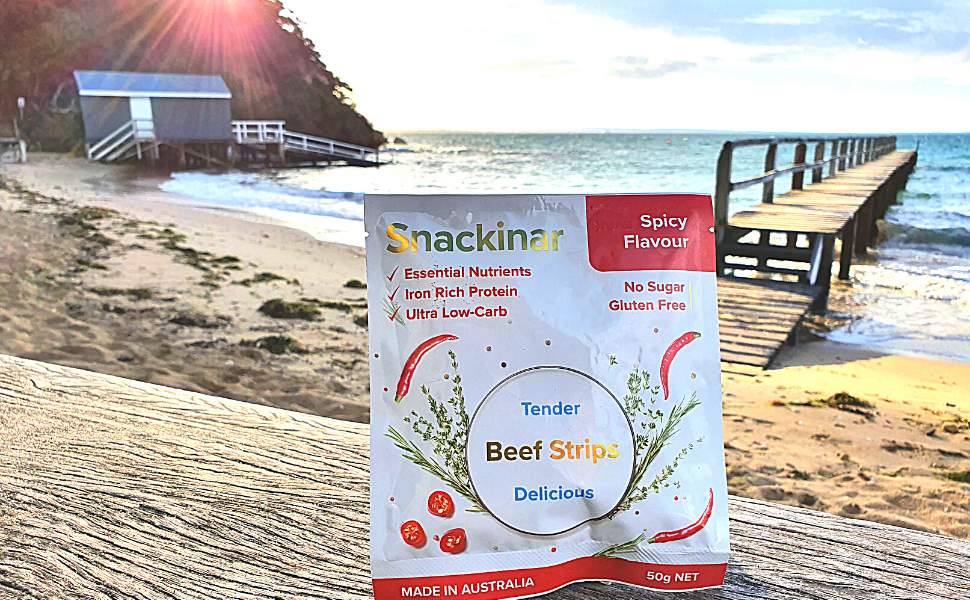
    As more consumers seek healthier options, Snackinar, a new brand in the Australian beef industry, has launched a range of ready-to-eat meat snacks called Beef Strips.

    An alternative to beef jerky, the ready-to-eat meat snacks use only natural seasonings like herbs, spices, salt, garlic, and chemical additives, said Snackinar.

    According to founder Michael Hearne, the Beef Strips were developed in search of great-tasting and convenient protein snacks – sans the sugar.

    “Snacks have typically undermined that, and almost all of the high-protein options available today are laden with carbs, which we know is basically sugar. You might as well eat chocolate,” said Hearne.

    “Snackinar products are high in protein and essential nutrients without the sugar. For me personally, it’s the perfect post-exercise snack, and I’ve heard they’re a nice change from cheese when sipping wine.”

    Snackinar Beef Strips are currently available on Amazon Australia.

  • Beef prices rise as global supply gets ‘very tight’

    Beef prices rise as global supply gets ‘very tight’

    Beef prices are reaching record levels in some international markets with localized disruptions – including droughts and increased consumer demand in some countries – exerting a “dramatic impact” on global trade, according to Rabobank.

    In its Q2 Beef Quarterly research, the bank says a fundamental shift is underway in international beef market dynamics creating a “very tight” global market for beef cattle.

    The report’s co-author, Rabobank senior animal proteins analyst Angus Gidley-Baird, says local factors include the post-drought herd rebuilding in Australia which has reduced the number available for slaughter, and soaring demand in the US as restaurants reopen after Covid-related trading restrictions. Meanwhile, Chinese consumers are eating more beef.

    “Given the growth in demand (for beef) and global trade, pressures created in the system now mean that what may once have been considered slightly abnormal seasonal conditions (for example) are now causing major shifts to markets,” the report says.

    In the US, wholesales prices in April were running 18.5 percent higher than those of April 2019 and retail prices were up by 11.5 percent.

    “This is the result of a number of factors, including renewed competition between foodservice and retail triggered by the reopening US economy, combined with grilling season, high consumer incomes, and strong exports,” he said.

    In Australia, successive years of drought have forced farmers to liquidate stock resulting in the country’s smallest beef cattle herd in 30 years. East Coast cattle slaughter was down 30 percent in April, for example. These factors underpinned a 30-per-cent year-on-year surge in young cattle prices in February last year and a further 20 percent last February.

    But it is not all bad news for local farmers, said Gidley-Baird.

    “While lower volumes and higher prices make competing in the global market more difficult, the tight market situation is working in Australia’s favor and creating less resistance to our high prices,” he said.

    “We believe that current cattle prices in Australia will ease as cattle numbers increase and producer demand dissipates. However, as the supply chain overcomes the disruption here and consumers adjust their price expectations, we believe the market will adjust and a new baseline will be established.”

    In China, efforts to increase local beef production are failing to match increasing demand from consumers, forcing the country to rely on imported beef which is in short supply and commanding a higher price. Many Chinese consumers have switched from pork to beef after an outbreak of African swine fever.

    “While part of the beef consumed as a substitute for pork and will shift back when pork production recovers, we expect strong Chinese beef demand to remain as new markets have been established,” said Gidley-Baird.  “This will continue to drive Chinese beef imports from the global market.”

    Australia’s beef exports were down 22 percent in April and are running 11 percent below the five-year average. China accounted for just 17 percent of that, down from 24 percent in 2019.

  • Vietnam to work on cheaper premium Japanese beef

    Vietnam to work on cheaper premium Japanese beef

    Vietnamese businesses are racing to raise upmarket Japanese cattle at home to produce cheaper Wagyu beef. Beef from cattle raised in Vietnam is 2-4 times cheaper than imported ones. Two years ago, Huy Long An Limited Company in the southern province of Long An imported thousands of Wagyu cattle, from which the famous Japanese beef is produced.

    Vo Quang Huy, the company’s director, said his company has signed a deal with Japan’s Sawai Farm to develop a farming model for Wagyu beef in Vietnam.

    “We are selling the beef on a trial basis to hotels and restaurants. The product will hit the markets in 2019, when production is stabilised. Although it’s difficult to raise them (Wagyu) in Vietnam, they’re worth a lot,” Huy said.

    He said a kilo of Wagyu beef can sell for VND700,000 ($30) to VND1 million ($42.84) a kilogram.

    Like the Huy Long An company, the Kobe Beef Vietnam company has also been breeding Wagyu cattle in the Central Highlands province of Lam Dong. Nguyen Tri Vu, general director of the company, said he imported genetic material for the Japanese breed from the U.S.

    The company is currently rearing 420 cows, and on average sells one every week. Each cow is worth VND200-250 million ($8,567- 10,708), many times higher than that of other cow breeds in the market today. Each kilogram of ‘Viet Wagyu’ sells for VND2-4 million ($85.67- 171.34) per kilogram.

    “This beef is mostly sold to restaurants, hotels and gourmets, mainly in Hanoi, Ho Chi Minh City and Da Lat. This is a premium breed. It costs VND150,000 ($6.43) a day to feed one cow. They are also fed some materials that have to be imported, hence the high price,” Vu said.

    Local beef now costs from VND100,000-500,000 ($4.4-22.02) per kilogram.

    Other Japanese farms have also announced their intention to start raising cattle in Vietnam.

    Speaking on the potential of the market, an agriculture expert said that demand for Japanese beef was increasing, but among those with high earnings.

    Import prices are relatively high, with the cheapest around VND1 million (($42.84)) per kilogram and the most expensive nearly VND19 million ($815.89), and the average ones at VND9 million ($386.47) per kilogram. On the other hand, beef from cattle raised in Vietnam have very competitive prices.

    However, if the local breeders do not establish good brands, they could lose market share to products of no clear origin, he said

    Vietnam’s cattle industry is failing to meet the country’s increasing demand for beef, forcing local consumers to turn to imported products, the expert added.

    Last year, the country imported more than 262,300 live cattle, and nearly 42,000 tons of beef and buffalo meat valued at more than $410 million, according to the Animal Husbandry Department under the Ministry of Agriculture and Rural Development.

    The deputy director of the department, Tong Xuan Chinh, said Vietnamese people’s diets have changed drastically in recent years, and they’re now eating more beef and buffalo meat.

    Average consumption has doubled to 5-6 kilograms of beef and buffalo meat per year in the past decade, but the cattle industry has been unable to keep up with the rise in demand. Local supplies of beef and buffalo meat only meet 80 percent of the current demand, he said.

  • Vietnam can import beef from Brazil again, says Deputy PM

    Vietnam can import beef from Brazil again, says Deputy PM

    Vietnam will consider importing beef from Brazil again if food safety conditions are ensured, Deputy Prime Minister Vuong Dinh Hue has said.

    At the recent Vietnam-Brazil Trade and Investment Forum attended by around 100 enterprises in Sao Paulo, Brazil, he also said Vietnam could become the top importer of corn and soybeans.

    A quality control scandal in Brazil early last year led to 20 countries, including Vietnam, suspending the import of Brazilian meat. Many countries have since resumed imports after receiving explanations and commitments from the Brazilian government.

    It was said the forum that Brazil will also increase import of coffee, catfish and shrimp from Vietnam.

    Hue noted that in 10 years of trading and investment relations, import-export turnover of Vietnam and Brazil has reached $4 billion, most of it from agricultural products.

    Vietnam’s imports from Brazil in 2017 reached $1.8 billion, according to the General Statistics Office of Vietnam.

  • Passion Delivery doubles offering in two months

    Passion Delivery doubles offering in two months

    Within two months, the number of suppliers and products trading through new Thailand online marketplace Passion Delivery has doubled.

    Directly connecting customers with local producers and importers of artisanal food and drink products, cookware and healthy lifestyle goods, the platform has increased its range from 600 products from 25 suppliers to more than 1200 products from 45 suppliers.

    Co-founder/CEO Ian Soo says the increased choice has inspired more than 1000 people to create accounts.

    “We always knew that people passionate about cooking want as much choice as possible,” says Soo. “Orders grow every month, proving this.”

    Passion Delivery is achieving an average basket size of more than THB2400 (US$70) an order.

    Soo, with wife Sara, founded the business in 2014 after being frustrated by the lack of availability of quality, locally produced food products and ingredients in Bangkok.

    “We’d seen a lot of great food and met some really passionate producers at local farmers’ markets,” says Sara Soo, “but we found it difficult, if not impossible, to find their products in shops. We thought that other people must share our frustration, so we created Passion Delivery.”

    It started as a specialist online order and delivery business from their home, offering just 25 products from three suppliers.

    Eventually, the marketplace was launched as a virtual shop window, connecting customers with suppliers, who fulfil and deliver the orders.

    Passion Delivery plans to expand the marketplace to 4000 products with 2500 customers by year-end.

  • Brazil beef imports halted, citing food safety concerns

    Brazil beef imports halted, citing food safety concerns

    1.9 million pounds (861,825 kilograms) of Brazilian beef products were refused entry to the U.S. The United States announced Thursday a halt to all imports of fresh beef from Brazil, the world’s second-largest producer, citing “recurring” food safety concerns.

    The ban will remain in place until satisfactory “corrective actions” are taken, the U.S. Department of Agriculture said in a statement.

    “Although international trade is an important part of what we do at USDA, and Brazil has long been one of our partners, my first priority is to protect American consumers,” U.S. Agriculture Secretary Sonny Perdue said.

    “That’s what we’ve done by halting the import of Brazilian fresh beef.”

    The statement said all meat imports from Brazil had been inspected since March, when some of the country’s top meat producers became embroiled in a tainted-meat scandal.

    During that time, the Department of Agriculture’s food safety and inspection service rejected 11 percent of Brazilian fresh beef imports, compared with only one percent of shipments from other nations, it added.

    Since implementation of the increased inspection measures, 106 lots — approximately 1.9 million pounds (861,825 kilograms) — of Brazilian beef products were refused entry to the U.S. “due to public health concerns, sanitary conditions, and animal health issues.”

    “It is important to note that none of the rejected lots made it into the U.S. market,” the statement added, noting that the “Brazilian government had pledged to address those concerns, including by self-suspending five facilities from shipping beef to the U.S.”

    “Today’s action to suspend all fresh beef shipments from Brazil supersedes the self-suspension,” it added.

    Brazil’s beef production is second only to that of the United States, according to USDA data.

  • Entrepreneur is trying to cure Hong Kong’s meat addiction

    Entrepreneur is trying to cure Hong Kong’s meat addiction

    David Yeung believes that meat is the new tobacco. But the long-time vegetarian and practicing Buddhist won’t try to get you to stop eating meat. He just wants you to consider eating less.

    That’s what he’s trying to do with the citizens of Hong Kong, who collectively have the highest per-capita meat and seafood consumption in the world, according to a 2015 study by Euromonitor. His life’s mission is to get the citizens of our planet — particularly his home city — to cut out eating animals at least one day a week. And it’s working: Menus inspired by his “Green Monday” philosophy appear in hundreds of restaurants across Hong Kong, and at schools and universities around the world.

    Though Mr Yeung grew up in Hong Kong, he spent over a decade living in New York. When he was 16, his family moved to nearby New Jersey to be closer to the fashion industry. His father was one of the four founders of the global clothing company Tommy Bahama. Mr Yeung graduated from Columbia University in 1998 with a degree in engineering, spent a few years consulting for PwC and then launched a software startup (now defunct). He grew up eating meat, but in 2001 he dove into Buddhist philosophy, a core tenet of which is the truth of suffering. It wasn’t a big leap for Mr Yeung to go from looking inward to looking outward, and he quickly concluded that by changing his diet he could stop the suffering of animals.

    Shortly before moving back to Hong Kong, he read about Meatless Monday, a campaign that urged Americans to take one day each week off from eating meat. “I thought the word meatless was not the best choice. People aren’t going to say, ‘Oh, today let’s go meatless,’” he said. He also figured that regardless of language, ethnicity, geography and gender, “green” was a universally known word. “Monday”, too. “These have to be two of the top 50 words that people around the world learn,” said Mr Yeung. So he made it positive and actionable: “Green Monday.”

    Today, you can find Green Monday vegetarian menus offered at hundreds of restaurants around Hong Kong. It’s incorporated into the food service at over 600 universities in 31 countries, 84 of them in the US, including Mr Yeung’s alma mater. You’ll find Green Monday menus at several hotel chains and even at Bon Appétit Management Co ., which is best known for managing Google’s dining empire. The one thing he insists on when he signs up new partners is that they don’t remove meat entirely from the menu. This may seem counterintuitive, but it’s a mind shift. “If you completely remove choices for people, that’s when you get a backlash,” he said.

    These small but important partnerships provide the foundational arm of Mr Yeung’s Green Monday empire with helpful branding to grow its name recognition; to date, it works with more than 2,000 schools. As a mission-based entrepreneur, he makes it an integral part of his social-impact goals, which Mr Yeung defines as bringing a triple-bottom-line to his organization: His work is good for the business, the community and the environment.

    After several successful years promoting Green Monday, Mr Yeung opened the world’s first plant-based retail store in 2015. Think 7-11 (grab-n-go food) meets Muji (clean, functional design) meets Hello Kitty café (fun). He named it Green Common . It was a place for people to eat delicious vegetarian food that riffs on Chinese classics — such as Hainan Chicken, minus the bird — and then take home the newest plant-based groceries. There are non-edible items too, including reusable water bottles, green cleaning products, skincare, cookbooks and vegetable growing kits. In addition to investing in plant-based products, Mr Yeung has become the distributor of choice for American brands that want to break into the Asian market, such as Follow Your Heart, Daiya, Califia Farms, Gardein, and Miyoko’s Creamery. Today, there are four locations, all in iconic Hong Kong retail spots including Harbour City Mall and Landmark Alexandra House.

    What Mr Yeung is most excited about is the April launch of the Beyond Meat burger — a pea-protein, plant-based burger that looks like meat (the pink hue on the inside comes from beets) and tastes like meat. (Really.) Sales are already more than double the projections, a great sign for its broader acceptance. As an investor in the US startup, Mr Yeung has become one of its biggest advocates. “He has been enormously supportive of our brand,” said Ethan Brown, chief executive officer of Beyond Meat and a fellow plant champion. Brown had wanted to expand into the international market, but he needed the right partner. “It was an easy decision to make,” said Brown. “He handles all the marketing and distribution, and he’s positioned the burger in the only way that someone that lives [in Hong Kong] could do.” The one tricky piece was naming the dish. Because there is no word for ‘beyond’ in Cantonese, Mr Yeung calls it the “future burger”. For the entrepreneur, the burger was from the future and for the future.

    Mr Yeung’s journey towards social entrepreneurship wouldn’t have gone anywhere without two key figures. One of them is Green Monday co-founder Francis Ngai, a local investor who previously founded Social Ventures Hong Kong, a philanthropic venture fund that invests in social mission-based startups that work to address urban challenges such as wealth discrepancy, handicap accessibility and elderly issues in Hong Kong. The two shared a diet and a cause. “We would have lunch for hours and talk about ideas to change the world,” said Mr Yeung. At one of those lunches, Mr Ngai said, “David, is there anything we can do with food that is social?” Mr Yeung put down his chopsticks and said, “Duh”.

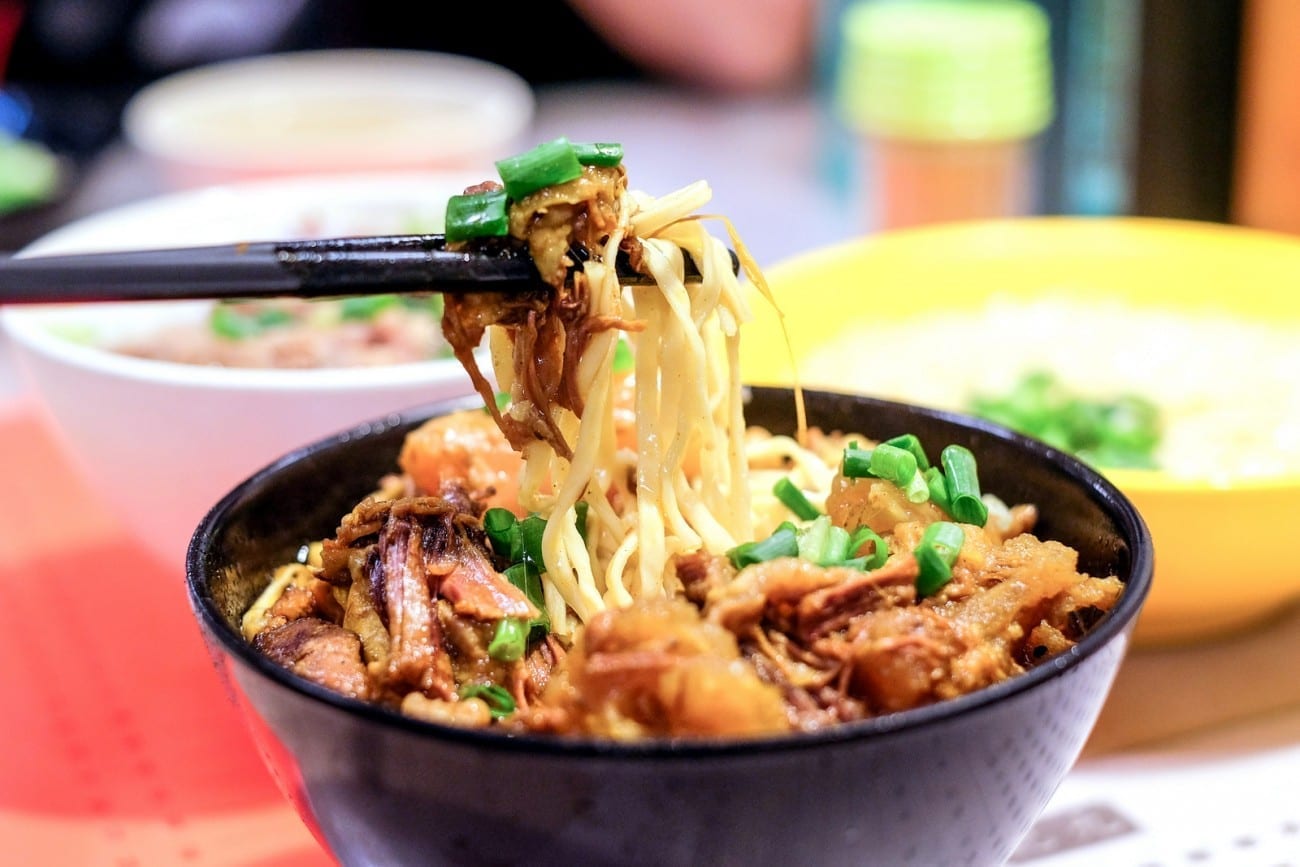
    At the time, all that the two vegetarians could order were beef noodles — and then ask the server to hold the beef. “But they charge you the same, and they give you that look,” recalled Mr Yeung. The look that says you are giving them trouble.

    The other influence was Mr Yeung’s father, who oversaw the manufacturing side of Tommy Bahama before it sold for $325 million in 2003. In living the Buddhist philosophy — an awareness of those less fortunate — Mr Yeung’s father gave a good deal of his income to charity. These two men inspired Mr Yeung to create his for-profit business, along with his charitable foundation. The third piece of his plant-forward company is a venture fund that focuses on impact investments. Green Monday Ventures pilot fund invested in Beyond Meat, and its second fund invested in Perfect Day, a cellular agriculture company making dairy from cell culture;  Lighter, which provides meal-planning technology and services; and other food-tech startups.

    It may be hard to keep track of all of Mr Yeung’s efforts, but it’s clear that his outreach has, in some way, nudged his fellow Hong Kongers toward a more sustainable lifestyle. PizzaExpress, a UK-based chain with over 20 stores in Hong Kong, has experienced double-digit growth in its vegetarian menu sales on Mondays, and it sees a halo effect on other days. Said Liam Collette, the general manager of PizzaExpress for Hong Kong, United Arab Emirates and Singapore, “We have more than doubled the people eating vegetarian [menu items] on Monday, but we have also had a sustained uplift of overall customers on Mondays. I see this a success for us and for customers.” A third-party study of over 1,000 people, sponsored by Green Monday, found that before the launch, only 5% of the autonomous territory’s more than 7 million inhabitants had a goal of adjusting their consumption. Today, 22% of Hong Kong’s inhabitants report practicing some form of plant-based diet. Other signs? In 2013, Hong Kong had only 130 vegetarian restaurants, and today there are close to 250. Financially, Mr Yeung is on track, too. Revenue for the entire organization, including retail and wholesale, should fall somewhere in the $10 million to $12 million range.

    Mr Yeung’s next target, after Hong Kong? Mainland China. “The food industry is going through a lot of change,” he said, undaunted by the scope of this challenge. “We are exactly at a point where disruption is due.”
  • Chinese supermarkets pull Brazil meat from shelves as food safety fears grow

    Chinese supermarkets pull Brazil meat from shelves as food safety fears grow

    Some of China’s largest food suppliers have pulled Brazilian beef and poultry from their shelves in the first concrete sign that a deepening scandal over Brazil’s meat processing industry is hitting business in its top export market.

    The moves by Sun Art Retail Group, China’s biggest hypermarket chain, and the Chinese arms of global retail giants Wal-Mart Stores and Metro AG come days after China temporarily suspended Brazilian meat imports. Safety fears over Brazilian meat have grown since police accused inspectors in the world’s biggest exporter of beef and poultry of taking bribes to allow sales of rotten and salmonella-tainted meats.

    A spokeswoman for Sun Art Retail, which operates 400 Chinese hypermarkets, said on Wednesday the chain had removed beef supplied by top Brazilian exporters BRF SA and JBS SA from its shelves from Monday. Brazilian beef accounts for less than 10% of Sun Art’s beef supply, she said. Wal-Mart has also removed Brazilian meat products from its stores, a person familiar with the matter said. He declined to be quoted because of the sensitivity of the matter.

    Germany’s Metro has withdrawn Brazilian chicken legs and wings from its Chinese stores, said a manager, who declined to be named as he was not allowed to speak to media. The retailer, with 84 stores in China, does not sell Brazilian beef. JD.com, one of China’s biggest online retailers, said in an emailed statement it had also removed all listings for imported Brazilian meat and is reviewing orders in process.

    While Brazilian officials sought late on Tuesday to reassure consumers that the investigation had revealed only isolated incidents of sanitary problems, the reaction by Chinese retailers suggests that the probe could have far-reaching repercussions for the world’s top meat exporter. Chinese consumers appeared largely unconcerned or unaware of the scandal in Brazil, with few people commenting on the issue on the country’s vibrant social media networks.

    But the country has been hit by its own safety scandals in the past, making retailers sensitive to any potential risks.

    “We removed the product already on March 20,” said Sun Art’s spokeswoman, noting it was ahead of the Chinese government’s first official comment on the issue. Brazil is the top supplier of beef to China, accounting for about 31 percent of its imports in the first half of 2016. Much of it is used in canteens and foodservice and branded Brazilian beef is less prominent in supermarkets than Australian beef.

    Importers are expected to wait a few more days before seeking out alternative supplies, which will likely be more costly than Brazil’s. “It’s a 45-day lead-time to get any product here. What if they lift the ban by the end of the week?” said an industry source who declined to be identified. Hong Kong, the second-biggest buyer of Brazilian meat in 2016, has also issued a ban on imports, following similar steps by Japan, Canada, Mexico and Switzerland.

    Major Hong Kong supermarket chain PARKnSHOP said it had removed Brazilian pork, beef and chicken from shelves. “To cater for the needs of customers, we will increase the supply of meat and poultry products from other countries,” it said in a statement, without elaborating.

  • Sout Korea Costco stores’ move to all US beef a positive for exporters

    Sout Korea Costco stores’ move to all US beef a positive for exporters

    On the heels of two Costco stores in South Korea beginning the transition to sourcing chilled beef from US sources, with the remaining 11 to make a similar shift from Australian beef to US imports, officials from the Iowa Beef Industry Council (IBIC) were part of a trade mission to get a closer look at the supply chain in South Korea. The US Meat Export Federation’s (USMEF’s) Spring Seminar drew more than 200 representatives to make the Feb. 11-18 trip, which also included members of the Iowa Pork Producers Association and representatives from the beef-processing segment and pork exporting officials from the US.

    USMEF officials coordinated tours of the processing plant and cold storage facility at Haesung Provision and Kyunwoo Foods, followed by a visit to a Costco warehouse in Kwangmyung. The recent resumption of red meat exports to South Korea was a windfall for USMEF and its members and the decision by Costco, the region’s largest importer, to convert the remaining 11 stores to selling US beef exclusively signals more positive trade relations moving forward.

    “The retail market is vital for US beef. Costco’s announcement to move from 17 percent to 100 percent US beef in their stores is exciting for cattle producers,” said Dave Rueber, an IBIC member and Iowa beef producer who was part of the mission. “USMEF has been working on this for 13 years. This will result in a 15,000 metric ton increase in beef purchases this year.”

    Expectations of record exports of chilled beef to South Korea are based on the momentum realized in 2016, when beef exports jumped 31 percent in value (to $1.059 billion) and 42 percent in weight (to 179,280 metric tons).

    Knowing South Korea is one of the most social media-savvy cultures in the world, USMEF invited well-known bloggers and foodservice professionals to network with attendees in addition to hosting a cookbook launch, which focuses on US meats.

    “As beef producers, we cannot become complacent, we must continue to focus on building long-term beef demand and being aware of future opportunities,” said Daryl Strohbehn, another Iowa beef producer who made the trip. “As an industry, we have to continue listening to what our consumers want, including our overseas customers.”

  • ‘Grocerant’ Offers Korean Consumers Another Great Way to Enjoy US Beef

    ‘Grocerant’ Offers Korean Consumers Another Great Way to Enjoy US Beef

    Working to displace competitors of US beef in the growing South Korean retail sector, USMEF used social media and a celebrity chef to showcase US beef ribeye, striploin and chuck flap tail during a “grocerant” promotion.

    The event was held at PK Market, a high-end grocery selling premium food items, and was funded by the USDA Market Access Programme (MAP) and the Beef Checkoff Programme.

    PK Market, part of the vast Emart retail chain, includes a steakhouse called “Butcher’s Table” that allows consumers to enjoy steak cuts they purchase in the store’s grocery area.

    “The Butcher’s Table is what is referred to as a “grocerant,” meaning that it as a grocery store and restaurant under one roof, and it is becoming a big part of the ‘steak culture’ in South Korea,” explained Jihae Yang, USMEF director in Korea.

    “It also is part of a move toward ready-to-eat and pre-packaged meals favored by busy people. Korean consumers buy a steak and then take it to the Butcher’s Table kitchen and have chefs there cook it with vegetables. This service provides the customer with a great steak that might cost two or three times more at a restaurant.”

    During the promotion, USMEF had celebrity chef Mihal Ashminov grill US beef cuts. While the guests enjoyed their steaks, Chef Ashminov provided them with information about the advantages of US beef and explained a few of the best ways to cook a steak.

    To draw attention to the promotion, an online campaign was launched that included Syrup Table, the most popular Korean “foodies” app with a total of 13.5 million subscribers and 1.2 million monthly active users. USMEF’s promotion was featured on the main rolling banner at the top of the Syrup Table website. A total of 5,700 participated in the campaign, with 12 winners chosen for the US beef tasting opportunity.

    Officials with Emart described the event as a great opportunity to experience US beef steak and to promote superior quality of US beef to PK Market customers, adding that Emart recently began promoting thick-cut steak at locations across the country.

    “Retailers in Korea have been trying to offer various meat items and new applications to address consumer trends in the market,” said Mr Yang. “Steak is currently one of the most popular food trends and as a result, some retail chains are developing various steak items. Retailers are also taking an interest in steak items that address the desire for convenience and quick meals.”