Retail News CRM

Tag: beef

  • Koreans consume more foreign beef over expensive local hanwoo

    Koreans consume more foreign beef over expensive local hanwoo

    South Koreans consumed more American and other foreign beef than expensive local beef last year, a move that has lowered the country’s self-sufficiency rate for beef to below 40 percent over 13 years, a state-run think tank said Thursday.

    Last year, South Koreans consumed 362,000 tons of foreign beef, accounting for 62.3 percent of the total beef consumption in the country, according to the Korea Rural Economic Institute.

    South Korea halted imports of U.S. beef in 2003 following the outbreak of a mad cow disease. Seoul lifted the ban in late 2008, which led to mass demonstrations among people in fear of their safety.Australian beef came to 178,000 tons, making up 49 percent of total beef imports. American and New Zealand beef stood at 42 percent and 6 percent, respectively.

    Still, the market share of American beef in South Korea has gradually been on the rise in recent years.

    In comparison, South Koreans consumed 219,000 tons of domestic beef, known as hanwoo last year, accounting for 37.7 percent of the total beef consumption in the country, according to the institute.

    It marked the first time that South Korea’s self-sufficiency rate for beef fell below 40 percent since 2003 when it stood at 36.3 percent.

    The decline came as South Korean consumers shunned expensive local beef.

    The wholesale prices of local beef once hit nearly 20,000 won ($17) per kilogram last year.

    Retail prices of the best quality local beef for bulgogi, a grilled marinated beef dish, came to 4,578 won per 100 grams last year, compared to 2,464 won for American beef for bulgogi, according to the institute.

    The prices of local beef have been on the rise since late 2015 as the number of cattle is continuing to fall.

    Domestic farms cut the number of cattle as the prices of local beef went down and the government helped some farms shut down to stem the decline of local beef following a free trade deal with the United States.

    South Korea’s anti-graft law — which took effect in September — is also adding to the woes of the local beef industry.

    Local beef was one of the favorite gifts during major holidays, but was overtaken by health products, according to major retailers.

    The law imposes tight limits on free meals and gifts that can be accepted by government officials, journalists and private school teachers to try to curb the deep-rooted tradition of excessive hospitality. The maximum value of a gift that a person subject to the law can receive has been set at 50,000 won.

  • US Beef Market Share Grows in South Korea

    US Beef Market Share Grows in South Korea

    Despite a regain in consumer interest for imported pork, ostensibly because of bird flu, South Korea’s pork imports slightly decreased over the past year, both overall and from the U.S.

    Contrastingly, beef imports volumes have surged, with the U.S. product the main beneficiary.

    Korea Customs Service figures provided by Meat Export Federation South Korea director Ji-Hae Yang show South Korea’s January-November overall pork imports very slightly dipped from 422,766 to 421,123 metric tons. During the same period, imports from the U.S. went down 4% from 129,224 to 124,093 tons. December 2016 import figures are not available yet.

    South Korea is highly self-sufficient in pork, and domestic production continues to rise, Yang says, explaining the stagnancy of imported product volumes.

    However, it appears consumers have gained interest in imported pork, even if that has not been reflected yet in import volume figures. Sales of imported pork rose 8.7% year-on-year from January to November 2016 at South Korea’s largest retail discount chain E-mart, The Korea Herald reported. The newspaper explained the rise as being a result of declining consumer interest in chicken because of bird flu.

    Things were bright on the beef side, though, with an overall import rise of 25% from 276,852 to 346,878 tons. U.S. beef fared even better, rising 47% from 98,712 to 145,376 tons. U.S. beef market share also rose 6.2% from 35.7% to 41.9%.

    Meanwhile, although beef imports from the U.S.’ main competitor, Australia, rose 10% from 158,080 to 173,104 mt, Aussie beef suffered an almost 8% market share loss, from 57.1% to 49.9%.

    U.S. beef has benefited both from record-high prices and a production decline of South Korea beef, as well as drought in Australia, which has reduced numbers of grazing and feedlot cattle there. “We had drought in the U.S. three to four years ago and we have recovered completely, so that is why we are at an advantage this year,” Yang said.

    Another reason for the import increase of U.S. beef is recovery of consumer confidence in the product’s safety, Yang said. MEF South Korea measures South Korea consumer confidence in U.S. beef with Gallup South Korea every six months. The latest survey, done in December, showed a 52% confidence point, she said.

    In comparison, the March 2012 survey showed confidence at only 15.4%, but still up from a very low 5.3% two years earlier, Yang said.

  • Vietnamese invest heavily in Australian cattle industry

    Vietnamese invest heavily in Australian cattle industry

    Meat and Livestock Australia (MLA) has unveiled that the first large-scale purchase of an Australian cattle ranch – for beef production – by a Vietnamese company has been made, in the Northern Territory, south of Katherine.

    The purchase of the US$13.6 million cattle ranch by An Vien Pastoral Holding and Agriculture Company is the first far-reaching Vietnamese agricultural investment in the land down under on record, says MLA.

    Per MLA, Pham Nhat Vu, chair of the An Vien Media Group holding company, was listed the official successful bidder of record for the purchase of the 200,000-hectare cattle ranch.

    The deal includes the purchase of 10,000 head of Brahman cattle.

    Commenting, an MLA spokesperson said: When you see high-net-wealth individuals and global corporations making beef investments in Australia, it shows confidence in the Australian beef industry and gives confidence that they believe the consumption of red meat globally is strong.

    Though An Vien did not initially respond to requests for comments on the deal by GlobalMeatNews, says MLA, it is widely speculated the impetus for the investment is that it is much easier for Vietnamese to invest in big ranches in Australia than procure the large amounts of land needed in the Southeast Asian country.

    It is a very complicated undertaking in Vietnam to get even a 100-hectare size plot of land, which is the bare minimum necessary to operate a large-scale ranching operation, says a local Vietnamese rancher.

    For comparison purposes, there are many cattle operations in Australia that cover thousands of hectares each, he says, adding that the move makes good strategic business sense.

    Even though Australian taxes are much higher compared to those in Vietnam, weather and market conditions are more favourable and even a comparatively small US$4 million investment could provide a solid rate of return.

    While Vietnam is better known for receiving foreign direct investment rather than providing it, in recent years, forward thinking Vietnamese companies have been looking to invest in numerous countries— from Laos to Russia, and Australia.

    A spokesperson for the Australian Trade and Investment Commission (Austrade) disclosed that in 2015, Vietnamese outward foreign direct investment into Australia was US$348 million, while Australian investment into Vietnam was an estimated US$1 billion.

    Vietnamese also are acquiring a growing taste for beef, and the An Vien Pastoral Holding and Agriculture Company might be targeting exports back to their home market.

    An Austrade spokesperson said there had been an exponential growth in the number of cattle exported by Australia to Vietnam over recent years, with a peak in 2015 of 360,000 head.

    He forecasts that 200,000-live head of cattle would be imported into Vietnam from Australia in calendar year 2017, in part fuelled by the lack of import tariffs from Australia to Vietnam.

    In addition, the Austrade spokesperson noted that the Vietnam government considers live cattle as a useful input that can have added value within Vietnam through slaughtering and processing.

    Beef consumption per capita per year in Vietnam, according to official sources, currently stands at 2.5 kilograms in a nation of an estimated 95 million people, which is expected to grow in coming years.

  • AHDB Reports Beefy Christmas in Hong Kong

    AHDB Reports Beefy Christmas in Hong Kong

    The two pre-packed premium steak lines are listed in Park N Shop, Fusion, Taste and International stores in the territory and Macau and are available now. The launch is supported by publicity and PR.

    This launch comes after major successes for UK lamb, beef and pork products in 2016 with Hong Kong supermarket chains such as Welcome, Aeon and City Super. UK beef exports year to end of October are up 18 per cent in value, making the territory the largest destination for UK beef outside the EU.

    Jean-Pierre Garnier, the Head of Meat Exports for AHDB says: “We are delighted with the level of retail interest for our products. Hong Kong is a very competitive market for meat and, at the top end, congested with offer from all over the world.

    “Nonetheless, we offer a unique, grass-fed, tender and flavoursome product that is attracting a high premium against beef from other origins. The Hong Kong lamb market is smaller but we are leader at the top end of the market.

    “Premium pork, sausages and pork pies have also strong and growing sales. AHDB is consistently investing in promotion in Hong Kong. In 2017, we are planning a large presence at the Hofex and Restaurant & Bar food shows as well as food service and retail promotions.”

  • Indonesia Considers Importing Cows from Mexico

    Indonesia Considers Importing Cows from Mexico

    Indonesia is considering to import cows from Mexico and negotiations are now underway for that, an agriculture ministry official disclosed on Wednesday.

    “Private parties and a local government were currently in the process of negotiations,” Syukur Iwantoro, an expert staff on innovation and technology under the ministry, said after attending a calf harvest event.

    Regarding permit for import of up to 400,000 heads of cows, he admitted that private parties would be given full authority for this purpose and negotiations were on with partners in Mexico.

    Iwantoro noted that the government would ensure that cows to be imported from Mexico are free of foot and mouth disease.

    “So far, the government has been in touch with a number of countries, including Australia, in connection with beef supply,” he disclosed.

    He recalled that the government has put in place several alternatives to prevent escalation of beef prices in various regions in the country.

    “Price of beef in different regions in Indonesia varies from Rp85,000 to more than Rp100,000 per kilogram,” he pointed out.

    The imported cows were to be distributed in Jakarta and surrounding areas.

    “The country is now importing almost 700,000 heads of cows. So far, most of the cows are being imported from Australia,” he stated.

  • Indonesia to set retail beef prices

    Indonesia to set retail beef prices

    The Trade Ministry says it will set reference prices for a number of basic food items at the consumer level, including beef.

    Writing in today’s Agri Commodities Daily Alert, Comm Bank’s Tobin Gorey said the policy announced yesterday was effectively a government mandated price ceiling, aimed at maintaining domestic price stability.

    “The retail price range for fresh beef will reportedly be between 50,000‑105,000 rupiah (A$5‑A$10.60/kg),” Mr Gorey said.

    “Fresh beef is currently trading at around 114,000 rupiah (A$11.55/kg) in Jakarta wet markets.”

    The announcement follows earlier news that Indonesia will officially begin importing lower cost buffalo meat from India. The buffalo meat is being sourced from 10 meatworks located in foot and mouth disease (FMD)-free zones.

    Indonesia is Australia’s largest export market for cattle and fifth biggest market for boxed week. Last year Australia exported 618,323 live cattle worth A$548.8 million and 39,134 tonnes of boxed beef valued at A$244m.

  • Hong Kong gets early taste of Hanwoo, Korean beef that rivals Kobe

    Hong Kong gets early taste of Hanwoo, Korean beef that rivals Kobe

    Since late last year, premium Korean beef, called Hanwoo, has been making its way onto menus in some Hong Kong restaurants, as the city is one of the first places allowed to import it. Hanwoo refers to cattle indigenous to Korea which are raised only in the country, unlike wagyu (Japanese beef), which is bred in countries outside Japan, including Australia and the United States.

    One of its biggest fans is Korean-American chef Judy Joo, whose restaurant Jinjuu in Lan Kwai Fong was one of the first in Hong Kong to serve it.

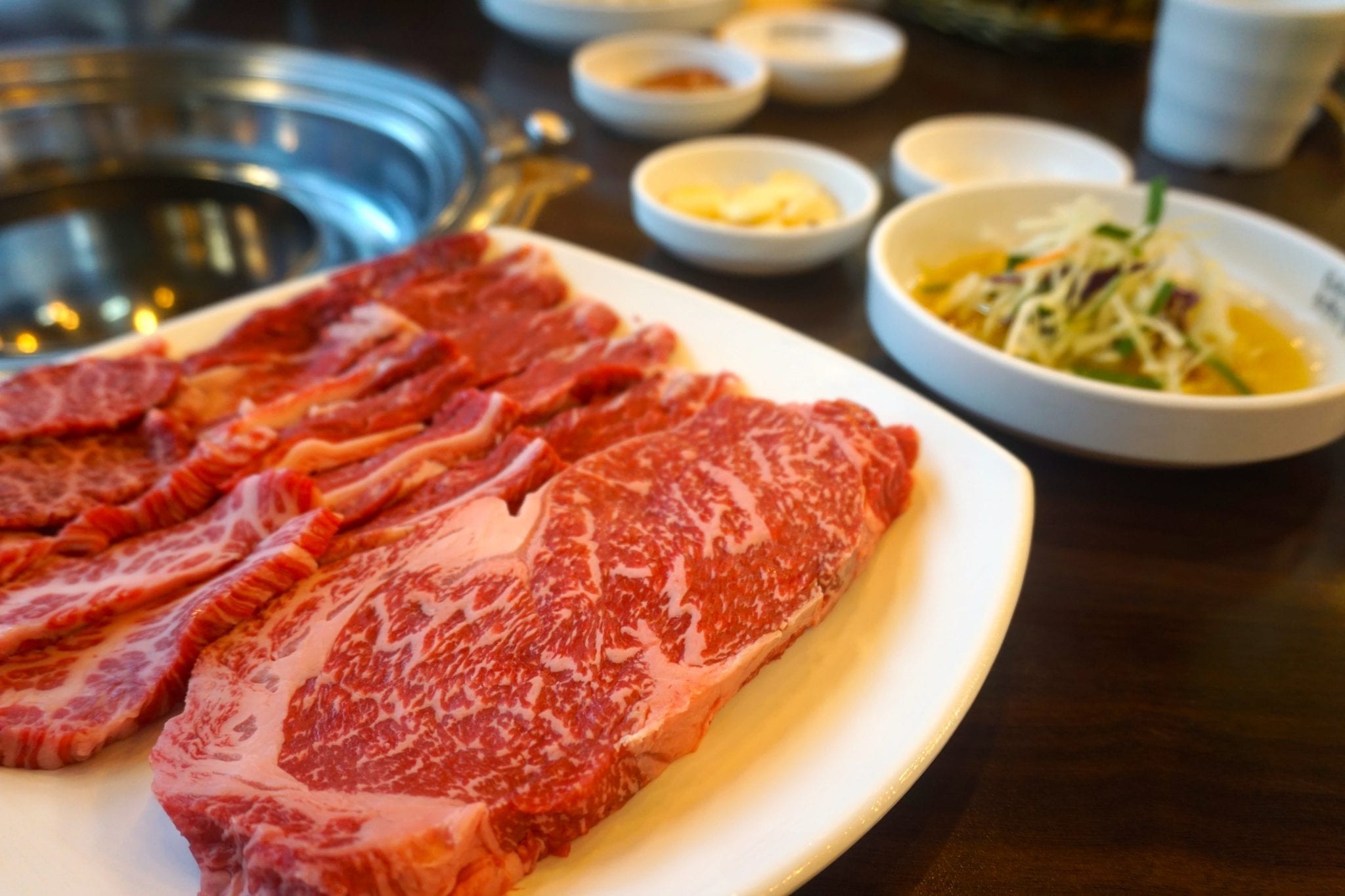
    “It’s similar to Kobe beef and wagyu, and there are different types of Hanwoo, depending on which farm you go to,” she says. “It’s basically coveted for its high marbling. Wagyu and Hanwoo of the same grade look similar. But Hanwoo has a rich texture and is deeply marbled so it has a sweeter taste.”

    She has visited farms that raise Hanwoo cattle, and reports the animals are “raised like humans”. “Some farmers give them beer,” Joo adds.

    Each farmer has his own secret recipe for the cattle’s feed mixture, which for the most part is made up of barley and mixed grains. Joo says many farmers include fermented pine needles in the feed.

    “It’s a healthy way for the cattle to get probiotics so they don’t need hormones,” she explains. “It’s a more organic way to raise them, and they don’t need to inject as much medicine so they are more healthy.”

    In addition to the organic approach to feeding Hanwoo cattle, Joo says they are free-range, grazing on grass, though there isn’t much land for pasture, as 70 per cent of Korea’s geography is mountainous. Joo says the central and southern parts of Korea are where cattle farms are located, with each one typically raising about 40 cattle at a time.

    She says the best cuts of Hanwoo beef are rib-eye, fillet and sirloin, and adds it can be more expensive than wagyu. Her restaurant recently introduced steak boards featuring Hanwoo and USDA beef that diners can cook on sizzling hot stones. The 200-gram marinated sirloin bulgogi is HK$680 and is grade 9, the highest quality available.

    But when it comes to taste, the chef-owner says it’s about personal preference. “Hanwoo beef is very popular in Korea and people can’t get enough of it. You just need to try it.”

    Elite Fresh Food Company is the first firm in Hong Kong to import Hanwoo beef. Associate director Andrew Lee Chi-ho says the company was in talks with officials in Korea for more than two years before it was allowed to bring the first shipment into Hong Kong last December.

    “It’s a very special breed because it takes a long time to get consistent cattle,” he explains. “It takes five to 10 generations, 15 to 30 years, to get consistent marbling, flavour and good structure.”

    Lee says until recently Korean beef was rarely exported because there is so much demand for it domestically. As a result, Hong Kong importers like himself have to pay a premium to buy Hanwoo beef.

    We can only get the parts that don’t sell well in Korea … But this works out for the Hong Kong market because those cuts are popular here

    Andrew Lee

    “We can only get the parts that don’t sell well in Korea [where they prefer short ribs], like rib-eye and sirloin. But this works out for the Hong Kong market because those cuts are popular here.”

    He says the cost of Hanwoo beef is about the same as Japanese-raised wagyu, selling at about HK$240 per 100 grams retail. When it comes to taste, Lee also seems partial to Korean beef.

    “They are two different products. Wagyu has highly intense marbling that is very fatty and melts in the mouth, but is oily and lacks a strong beef flavour. Hanwoo is very tender, has good marbling and has more beef flavour. It also has a wider application for other cuisines because of this,” Lee explains.

    For example, steaks are usually grilled to medium rare or medium for optimum taste. But Lee claims Hanwoo beef can even be cooked well done and it still tastes good. “Wagyu beef has a ratio of 70 per cent fat and 30 per cent meat, whereas with Hanwoo it’s about 50-50 or 60-40. American beef is more lean, with a maximum of 15 to 20 per cent fat.”

    Lee reports Elite Fresh Food’s first shipment of Hanwoo beef to Hong Kong totalled 700kg. Now it ships twice a month, bringing in 1.5 tonnes to 1.7 tonnes a month. It’s not a lot when you compare it to the seven to nine tonnes of wagyu the company imports each month.

    The Steak House Winebar + Grill at the InterContinental Hong Kong recently featured Hanwoo beef on its menu. Restaurant manager Franco Leung Wai-keung agrees with Lee’s assessment of Korean beef, saying that when the rib-eye or striploin is chargrilled, the fat drips off and tastes less oily than wagyu.

    “It’s in between wagyu [grade] A5 and US beef, but they don’t have as strong a beef taste as Hanwoo,” he says.

    Leung says overall feedback during a recent two-month promotion was mostly positive. He says the restaurant is already planning to put the premium Korean beef back on the menu soon.

    “They taste the quality,” he reports, adding Hanwoo is best complemented with more acidic Italian or Spanish wines.

    At the nearby Oyster & Wine Bar at the Sheraton Hong Kong Hotel & Towers, chef de cuisine Oscar Chow Kwok-ho says he first tried Hanwoo on a trip to Korea two years ago during a cooking competition.

    Chow says locals took him to a store that served the premium beef and he was deeply impressed by the taste and texture. He finally managed to get Hanwoo on the menu in February, and diners can have a starter of Hanwoo beef carpaccio, then a main course of either chargrilled sirloin or rib-eye.

    He reports that his guests enjoyed the Korean beef, as it is rare in the Hong Kong market. He says the price in the restaurant is reasonable when compared to other premium beef (HK$1,100 for Hanwoo versus HK$1,300 for wagyu).

    Six places in Hong Kong to get your hands on Hanwoo beef

    Oyster & Wine Bar

    18/F, Sheraton Hong Kong Hotel & Towers, 20 Nathan Road, Tsim Sha Tsui, tel: 2369 1111 ext 3145

    Mr Steak Café

    Shop 702, 7/F, New Town Plaza Phase 1, 18 Sha Tin Centre Street, Sha Tin, tel: 2691 6263

    Shop G03A, Maritime Square, 33 Tsing King Road, Tsing Yi, tel: 2449 9945

    Myung Ga

    Shop 2702, 27/F, iSquare, 63 Nathan Road, Tsim Sha Tsui, tel: 2369 1177

    Shop 1, 13/F, World Trade Centre, 280 Gloucester Road, Causeway Bay, tel: 2882 5056

    Jinjuu

    UG/F, California Tower, 32 D’Aguilar Street, Lan Kwai Fong, tel: 3755 4868
     

  • 385.5 tons of beef illegally imported to Indonesia in 2016

    385.5 tons of beef illegally imported to Indonesia in 2016

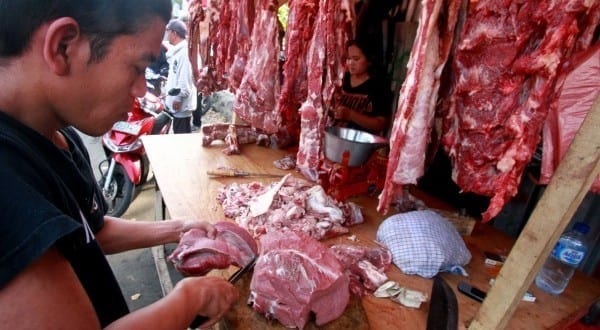
    Indonesias Finance Minister Bambang Brodjonegoro said the surge in beef smuggling or illegal beef imports in 2016 have risen to 385.5 tons.

    “In 2015, Indonesia managed to prevent 23.4 tons (of beef being imported illegally). Until June 2016 we have foiled 385.5 tons of illegal beef imports attempts,” said Bambang here Thursday.

    Bambang said 21.8 tons of illegally imported beef had been given to the Coordinating Ministry of Peoples Empowerment and Culture before being distributed by the Ministry of Social Affairs among the needy.

    The Customs and Finance Ministry are also making efforts to monitor the goods entering Indonesia illegally.

    Besides giving away 21.8 tons of smuggled beef that is beyond the states quota, an auction for 163 tons of beef will also be held in the next two days.

    “We will hold an auction for smuggled beef found in seven containers, amounting to a total of 163 tons, which was imported from Australia and New Zealand on May 21, 2016,” Bambang said.

    Furthermore, the ministry is currently preparing for the auction and expects the meat to be distributed immediately after that.

    “We will ask the winning bidder to sell it at affordable prices to the public. Under the direction of the president the affordable price of beef is around Rp80.000,” he added.

  • China beef processor launches online store

    China beef processor launches online store

    Speaking during last week’s inaugural Beef Festival in Chongqing, China’s largest metropolis, Feng Jiyu, general manager of Hengdou Agriculture Co, which operates a beef processor of the same name, said the company had been establishing a nationwide network of warehouses which would allow it to deliver nationwide once the company’s website was set up.

    Hengdou, said Feng, had established a marketing headquarters in Beijing and branch offices in all the country’s key population belts, including northerly Shenyang but also the populous central province of Henan and the wealthy southern cities of Guangzhou and Shenzhen.

    The announcement about an own-name online retail operation came after Hengdou, in March, launched nine new packaged meat products, such as cooked liver, tripe and brisket, prepared in various Chinese styles and frozen for quick cooking. The firm already sells a range of frozen steaks and dried jerkies. These are retailed via key Chinese online sites such as Taobao.com, Tianmao.com and Jingdong.com. Hengdou sells 150g packaged frozen steaks online for RMB22 with five-steak packs selling for RMB178 on Jingdong.com, a food-focused online retailer.

    The firm gives consumers instructions on how to cook beef such as steaks in ‘Western’ ways: Chinese cooking tends to emphasise the use of stir-fried cubes of beef as well as clay-pot cooking of variety/offal cuts.

    According to Feng, Hengdou is keen to maximise online sales both of gift boxes and convenience snack products. But it is also looking to sell wines, olive oils and other high-margin imported food products which it currently markets in marketing material to educate customers on how to consume beef.

    “We will increase both our online and our offline presence,” Feng told journalists in Chongqing. Notably, the firm last month opened a brand-name store in Beijing’s fashionable Wangjing district. “It is vital to use offline stores to build brand recognition,” said Feng. His retail clients include Walmart, RT-Mart and Carrefour outlets in China.

    Traceability is a key marketing point for Feng, who said online customers would be drawn to the company’s ability to trace meat – all of which, Feng said, came from the company’s own 300,000 herd of Simmental and Chinese-native Luxi cattle, fed in feed-lots adjacent to company slaughtering facilities in northern and south-western China.

    Hengdou has seen online retail shake up China’s traditional retail market in the past few years, with consumers switching to frozen and convenience meals in a manner before unseen in China where wet markets – most without any refrigerated meat – and supermarkets have long dominated.

    Based in Sichuan, one of China’s fastest-growing regional economies, Hengdou stands to gain from rising beef consumption, according to Feng, who pointed to average per capita beef consumption of “5kg per capita in China compared to 45kg in developed countries”.

    Long-term, China has the potential to export branded beef products to Muslim and other countries, stated Liu Changde, head of the beef committee at the China Animal Husbandry Association (CAHA), a government body. CAHA and the Chongqing government teamed up with Hengdou to organise the Beef Festival, which saw demonstrations on how to cook beef as well as how to recognise “water-injected and fake beef” according to an invitation to the event sent to China-based journalists.