Tag: Benz

  • 2019 Mercedes-AMG C43 Launch Details Out

    2019 Mercedes-AMG C43 Launch Details Out

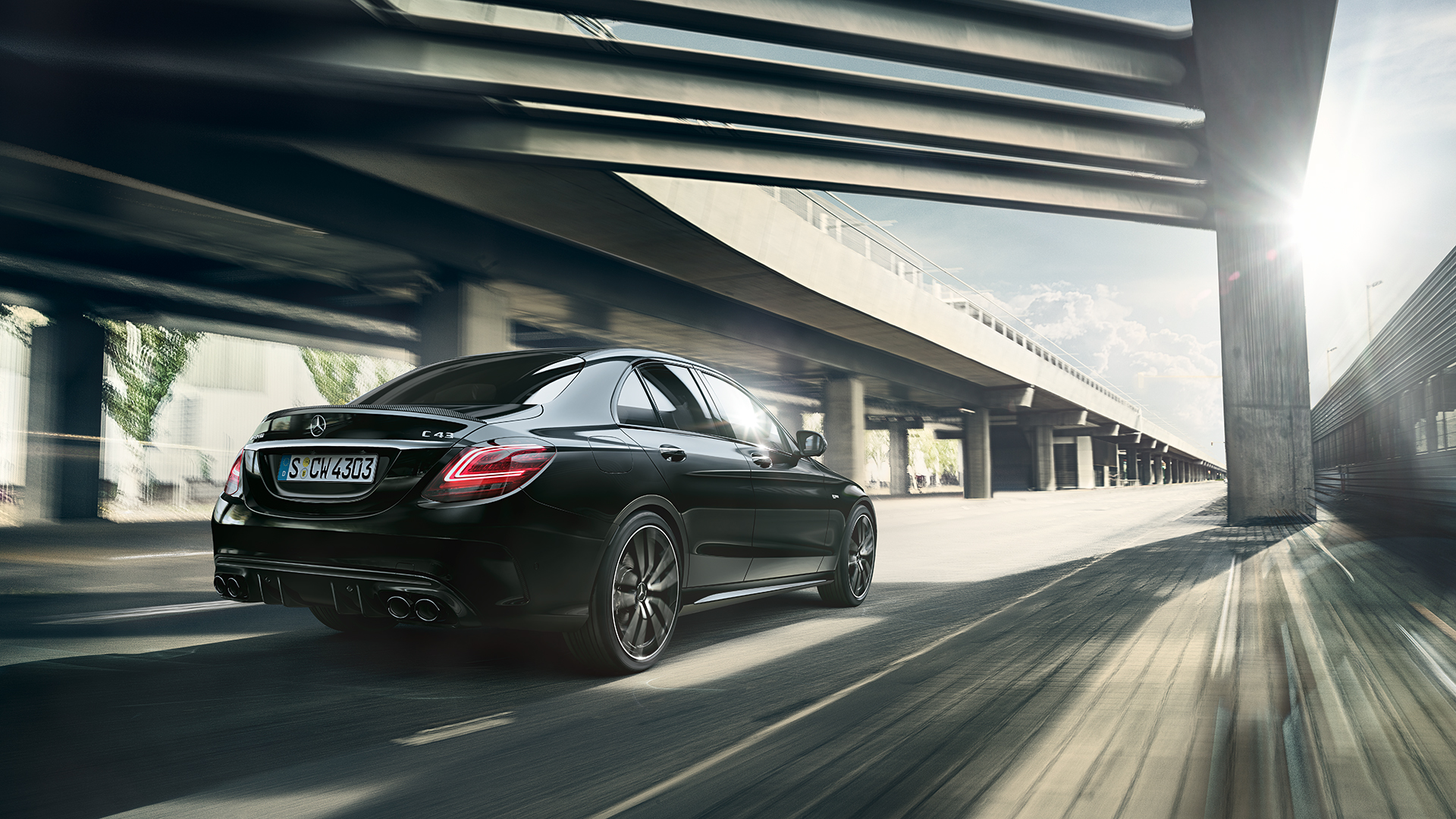
    Mercedes-Benz kick started 2019 with the launch of the V-Class and back then it promised us that this year will be the year of a whole bunch of launches. Come March, we’ll see the company launch the AMG C43 Coupe and what a beautiful car it is. It was more than 2 years ago that the company launched the AMG C43 in India and it was in March 2018, that the company revealed the facelift of the car. Finally it’s all set to make its mark in the country and it’s a welcome addition to the AMG portfolio.

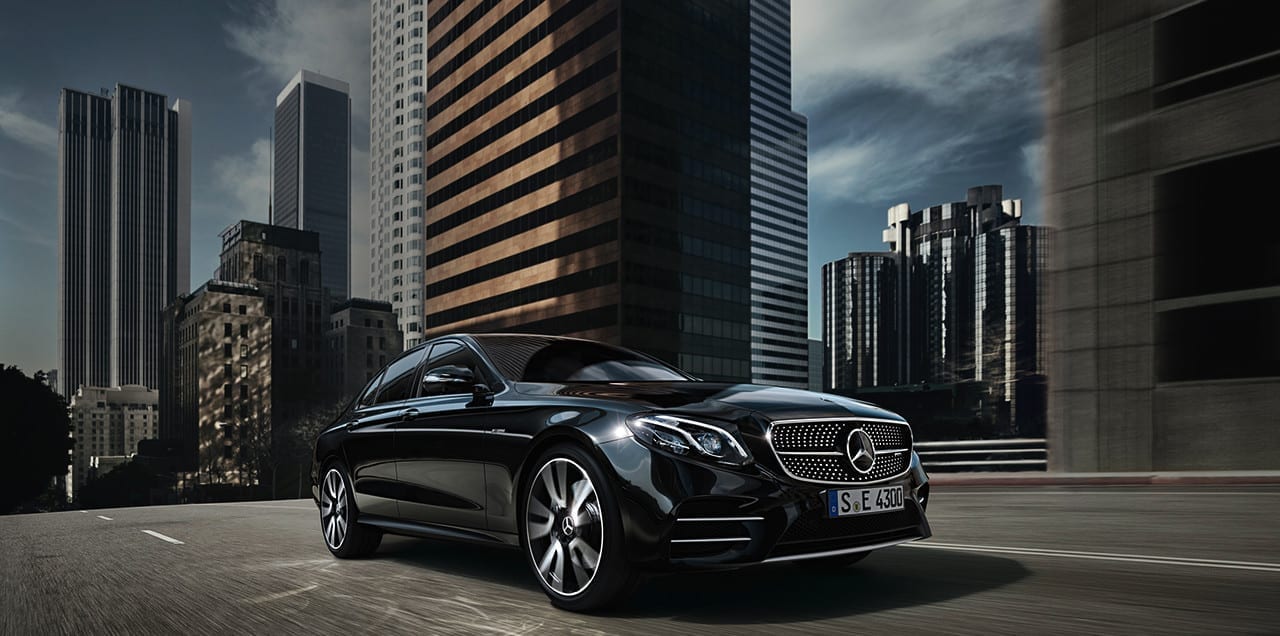
    In terms of design, the exterior of C43 4Matic is more expressive than some of its siblings in the C-Class range. New distinguishing features include the AMG radiator grille with twin louvre in matt iridium silver and the front apron. The side air curtains in the front apron, attachment on the cross fins plus the trim element on the front splitter are finished in silver chrome. At the rear, the two round twin tailpipe trim elements in high-gloss chrome gives a sporty look. The spoiler lip on the boot lid is painted in the vehicle color. The optional AMG styling package has a more expressive front splitter, with the standard-fit spoiler lip, broader side skirt inserts and flics in the rear bumper are finished in high-gloss black.

    On the inside, the upholstery is in Artico man-made leather or Dinamica microfibre in black with red top stitching. Matching the seat design, the door centre panels and dashboard are finished in Artico man-made leather with red top stitching. Aluminium sports pedals with black studs, trim elements in black piano lacquer with light longitudinal-grain aluminium, the black roof liner and the red seat belts create further sporty highlights. The fully digital instrument cluster with 12.3-inch screen diagonal comes with three AMG-specific display styles of ‘Classic’, ‘Sport’ and ‘Supersport’.

    The Mercedes-AMG C43 Coupe is powered by a 3.0-litre V6 engine that now delivers 385 bhp, about 23 bhp more than before. The AMG-tuned motor offers a peak torque of 520 Nm. The top speed is electronically limited to 250 kmph. The motor is mated to an AMG Speedshift TCT 9G transmission and is assisted by a rear-biased AMG Performance 4MATIC all-wheel drive.

    The Mercedes-AMG C43 Coupe will be priced at around ₹ 75 to ₹ 80 lakh and it’ll go up against the likes of the Audi S5 Coupe as it does not have a direct rival in the country yet.
  • 2018 a record-breaking year for Mercedes Malaysia

    2018 a record-breaking year for Mercedes Malaysia

    Mercedes-Benz Malaysia (MBM), the distributor of Mercedes-Benz marque in Malaysia, posted a record-breaking performance in 2018 spurred by the consumption tax holiday and customer-centric strategy. President and CEO Dr Claus Weidner said vehicle sales grew 9% to 13,079 units from 12,045 units recorded in the previous year, lifting the company’s market share to 2.4% from 2.3%, previously.

    “Our efforts to invigorate the brand experience for our increasingly diverse fans have been fruitful and we are happy to retain our position as the number one premium brand in Malaysia,“ he said at the company’s briefing on the 2018 full-year performance and outlook for 2019.

    In June last year, the first month of the tax holiday period following the government’s move to abolish the goods and services tax, MBM posted the highest monthly sales in the company’s history at 1,750 units.

    Weidner said other areas of business also showed improvement with total vehicles serviced last year growing by 16% from the previous year to 148,800 units and in-house financing increasing by 23% year-on-year to RM2.7 billion.

    “Four out of every 10 cars sold were financed by our in-house financing,“ he said.

    Five out of every 10 cars sold, meanwhile, were insured by its in-house service.

    A total of 20 new and facelift models were launched last year to further complement the company’s extensive product line-up, he said.

    Going forward, Weidner said MBM was confident of surpassing last year’s performance driven by demand for compact and premium sport utility vehicles as well as the company’s holistic approach and customer-centric strategy.

    “We will also continue to rejuvenate our models portfolio to continue making it desirable to customers,“ he said.

    On the number of launches for this year, he said it would be around last year’s figure.

    Weidner disclosed that the company planned to restructure its plant in Pekan, Pahang to increase the localisation of components and upgrade the technology to improve efficiency and quality.

    However, he did not disclose the amount of investment for the plant restructuring.

  • Mercedes-Benz retains No. 1 foreign car brand in Korea for 4 straight month

    Mercedes-Benz retains No. 1 foreign car brand in Korea for 4 straight month

    Mercedes-Benz has successfully defended its dominance as the largest foreign car seller in the Korean imported car market for four straight months in September 2017.

    But, the BMW 520d has held the lead as the best-selling model for two consecutive months after it snatched the crown from Mercedes-Benz’s E-Class sedan in August 2017.

    According to the Korea Automobile Importers and Distributors Association (KAIDA) on Oct 13, a total of 20,234 imported vehicles were sold in September, up 20.6 percent from a year ago and 15.3 percent from a month ago.

    By brand, Mercedes-Benz ranked first after selling 5,606 units. It was followed by BMW (5,299 units), Land Rover (1,323 units), Lexus (1,128 units), Honda (1,022 units), MINI (933 units), Ford (832 units), Chrysler (767 units), Toyota (755 units), Nissan (541 units), Volvo (466 units) Jaguar (414 units) and Peugeot (306 units), according to KAIDA data.

    Land Rover was the most noticeable among them as it has moved up four notches to the third largest seller only in a month thanks to the Discovery Sport TD4 that sold 600 units.

    The best-selling model in September 2017 was BMW 520d, delivering 1,382 units, followed by BMW 520d xDrive with 886 units and Mercedes-Benz’s E200 with 854 units.

    Six out of 10 imported vehicles sold in Korea last month were from Germany, the statement said, and seven out of 10 imported vehicles sold during the first nine months of the year were from Europe.

    The share of imported vehicles in the Korean passenger car market rose to 15.1 percent in the first nine months of the year from 14.6 percent during the same period last year, an association spokeswoman said.

  • Kuehne + Nagel to provide production logistics to Mercedes-Benz

    Kuehne + Nagel to provide production logistics to Mercedes-Benz

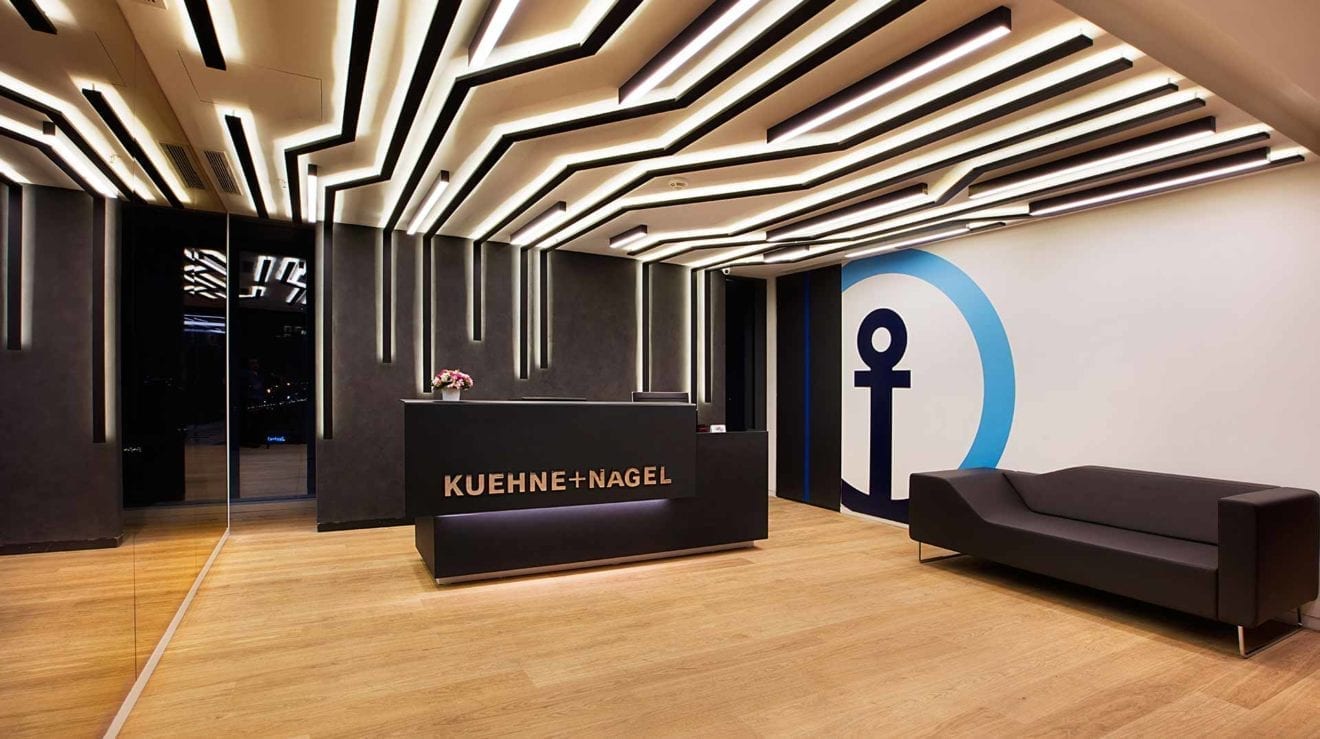
    Kuehne + Nagel announced a new multi-year contract with Mercedes-Benz Vans, LLC, part of the Daimler AG Group, to implement a production logistics solution for its new assembly line and production facility in Charleston, South Carolina. The solution will provide flexible and efficient materials management as well as just-in-time deliveries for the assembly process.

    Kuehne + Nagel’s contract logistics team engineered a multi-year innovative production logistics operations plan utilizing a modern logistics center that will include vision picking smart glasses and automated guided vehicles (AGVs). Comprehensive services will include goods receiving, inventory management and just-in-time picking and sequencing for delivery to the car makers’ assembly line and production facility.

    For the implementation, Kuehne + Nagel is utilizing its successful customer transition and integration model, which includes multiple disciplinary project management and dedicated resources from the logistics provider’s national, regional and corporate organizations. In order to ensure reduce inventory, increase quality, and reduce total costs for each unit built, Kuehne + Nagel will use its KN Production System (KNPS), an in-house developed structured methodology based on lean supply chain principles.

    “We are delighted to expand our 15-year global relationship with Daimler AG and Mercedes-Benz,” said Bob Mihok, president and CEO, Kuehne + Nagel North America. “Our supply chain services in the new Charleston, South Carolina Sprinter van plant will improve assembly line productivity and enhance vehicle production. We look forward to adding value to our customer’s supply chain for many years to come.”

  • Korea emerges as top Asian importer of Benz, BMW

    Korea emerges as top Asian importer of Benz, BMW

    Korea has become Asia’s largest importer of Mercedes-Benz and BMW vehicles this year, as the two German carmakers sold more vehicles in Korea than Japan for the first time ever.

    Chinese motorists buy more Mercedes-Benz and BMW vehicles than Koreans do. But both firms roll out and sell their models through joint ventures with local Chinese firms. Hence, Korea is the populous continent’s de facto leader in terms of Mercedes-Benz and BMW vehicle imports.

    The Korea Automobile Importers and Distributors Association (KAIDA) said that Mercedes-Benz sold 24,877 cars in the first fourth months of this year, while BMW sold 18,115, up 48 percent and 32.4 percent from a year earlier, respectively.

    The luxury carmakers sold 21,365 and 15,818 cars respectively in Japan during the January-April period, up just 0.7 percent and 2.2 percent from the previous year.

    Based on its larger population and higher income, Japan has remained the largest Asian importer of the two luxury brands. Japan’s population is more than double that of Korea and its GDP per capita is 20 percent higher than that of Korea.

    But Korea dethroned Japan this year because of a months-long sales ban on Audi-Volkswagen vehicles here. The carmaker stopped selling its vehicles in Korea after the emissions scandal last summer but it did not face such troubles in Japan.

    During the sales suspension, Mercedes-Benz and BMW increased their sales in Korea’s import car market.

    The two combined to sell 57 percent of the import cars in Korea over the four months, up from 41 percent last year. In Japan, however, the figure only edged up from 38 percent to 40 percent.

    Analysts expect Mercedes-Benz and BMW will dominate the market for a while. The KAIDA also said BMW sold more cars than Mercedes-Benz in April.

    Mercedes-Benz maintained its top position until this March but fell to second place due to a short supply of its popular new E-class model. Lexus came in third in the number of sales, followed by Toyota and Honda.

  • Valmet to build new Mercedes-Benz compact cars

    Valmet to build new Mercedes-Benz compact cars

    Finland’s Valmet Automotive said on Wednesday it had signed a new contract to build future Mercedes-Benz compact cars for Daimler AG.

    The company said it would hire about 1,000 staff to help with its existing contract under which it manufactures Mercedes-Benz passenger cars and SUVs. The plant currently has 2,300 employees.

    The facility is one of the bright spots in the Finnish economy which is slowly recovering from a decade of stagnation.

    In January, Chinese battery maker Contemporary Amperex Technology Ltd bought a 22 percent stake in Valmet Automotive.

  • Mercedes-Benz begins local assembly of CKD E-Class

    Mercedes-Benz begins local assembly of CKD E-Class

    Mercedes-Benz Distribution Indonesia (MDI), the local distribution arm of German car manufacturer Daimler AG, launched on Tuesday the fifth generation of its mid-size luxury sedan E-Class.

    The sedan is assembled from the completely knocked-down (CKD) version in its Wanaherang plant, following an earlier move to introduce the completely built-up (CBU) version last August.

    MDI president director Roelof Lamberts said the local production of the E-Class was expected to help boost sales of the model in Indonesia.

    “The E-Class contributed to a quarter of our sales last year. We hope with the new generation, this contribution can be increased to a third of total sales this year,” he said during the launch ceremony.

    MDI last year saw its sales rise slightly by 3 percent to 3,371 vehicles.

    The pricing of the new model will be listed at the upcoming auto show in April, Lamberts added.

    Currently, the CBU version of the E-Class is sold for Rp 1.3 billion (US$97,600) per vehicle.

    There are two types of CKD E-Class vehicles that will be introduced into the domestic market, namely the luxury E-250 Avantgarde and the sportier E-300.

  • Mercedes-Benz to overtake BMW as largest premium carmaker

    Mercedes-Benz to overtake BMW as largest premium carmaker

    Mercedes-Benz is expected to reach its goal of becoming the largest premium carmaker four years early – a feat achieved, ironically, only after it stopped chasing market share and focused on making stylish high-tech cars loved by consumers.

    Introducing an elegant, sporty design and establishing itself as a pioneer in new technologies like autonomous driving has helped revive the Mercedes brand which analysts say will help keep the Stuttgart-based carmaker ahead of the pack.

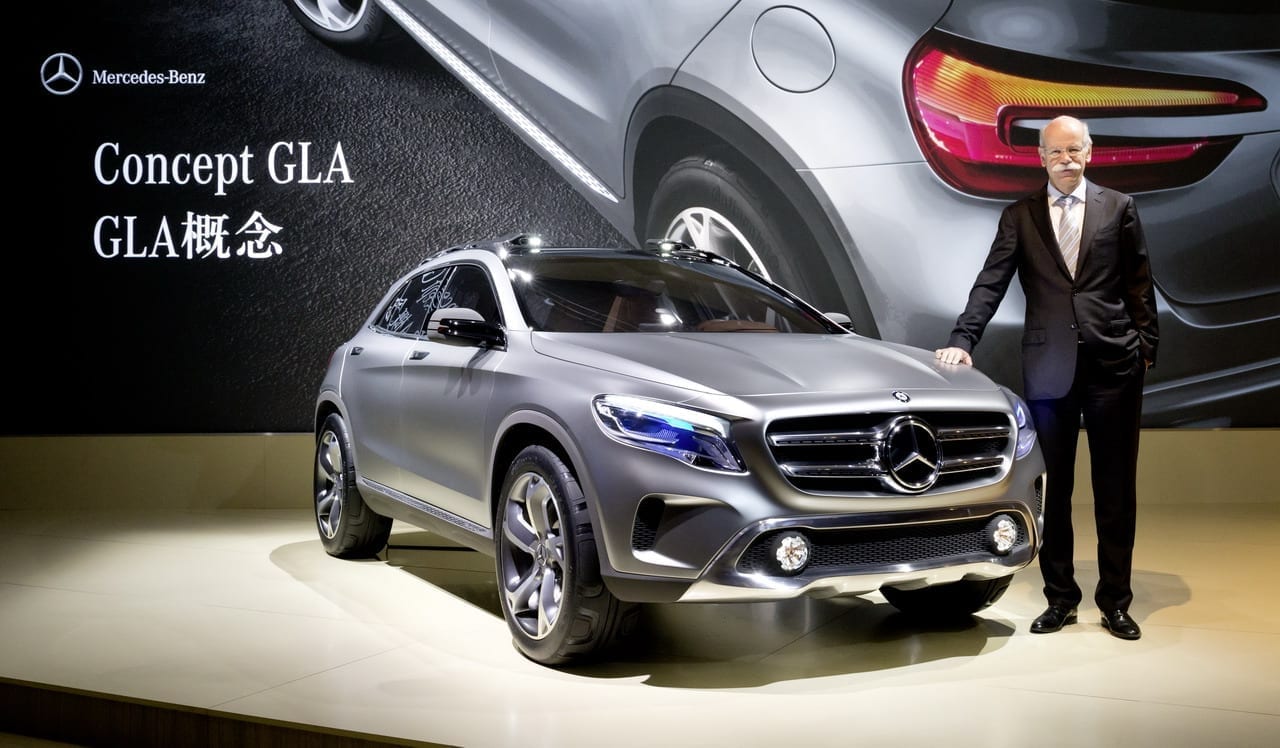
    The achievement is a coup for Daimler Chief Executive Dieter Zetsche, who struggled to revive the company following a messy divorce from mass market brand Chrysler in 2007. Less than four years ago Zetsche faced restive shareholders, worried that the automaker was lagging behind rivals BMW and Volkswagen AG’s Audi brand.

    “We had some deficits, cost and quality problems. Design was not top-notch. And with Chrysler we were no longer a pure premium carmaker,” Zetsche told Reuters in an interview held late in 2016 in his office at Daimler’s headquarters in Stuttgart, Germany.

    On Sunday, Daimler said it had sold 2.08 million Mercedes-Benz branded passenger cars in 2016, a lead that BMW, which has held the premium sales crown since 2005 and is due to release annual sales figures on Monday, is not expected to beat.

    Including sales of the Smart brand, Daimler sold 2.23 million passenger cars last year, the company said.

    Zetsche has presided over a renaissance in the design and technology of Mercedes vehicles, refocused the company on technological superiority instead of short-term sales goals, and adapted the entrepreneurial mindset of Silicon Valley to the traditionally risk averse culture of Stuttgart.

    Daimler is also preparing for a new era when the auto industry’s business model moves beyond manufacturing and selling cars, to lure customers interested in pay-per-minute transport solutions provided by autonomous cars.

    Zetsche set the goal of making Mercedes the best-selling luxury carmaker by 2020 at the company’s 125th anniversary in 2011, a year when even Audi sales overtook those of Mercedes, pushing it into third place.

    “Since then we worked hard and today we are leading or among the leaders when it comes to innovation, quality, design and security,” Zetsche said.

    Daimler traditionalists were shocked by the volume target, fearing that selling too many vehicles may dilute the exclusivity of their cars and reduce the appeal of the Mercedes brand in the long run.

    But consumer electronics companies like Apple had already proven that the pull of their brand did not suffer with increased volume sales so long as they offered the best customer experience.

    Audi was gaining traction with customers thanks to cool designs, so Zetsche appointed a young designer, Gorden Wagener to head up Mercedes design. He introduced an elegant and sporty style to spruce up Stuttgart’s Teutonic limousines. Mercedes cars were also equipped with state-of-the-art digital display technology, luring smartphone savvy customers.

    It was a change for Mercedes where engineers always believed they were producing the best cars in the world, but measured quality mainly using technical or engineering criteria, a strategy which often led to powerful cars with expensive and complex technical innovations.

    Today, Mercedes-Benz follows its motto “the best or nothing” by thinking about whether customers would notice or benefit from a new technological innovation, and by benchmarking the brand against competitors, Zetsche said.

    The company’s renaissance began in earnest in May 2013 with the launch of a new flagship S-class. To burnish its credentials as a technology leader, Mercedes developed a prototype version which drove around 100 kilometres (62 miles) autonomously the same year.

    Rather than designing a limousine which appealed mainly to rear seat passengers, the new S-Class featured large digital display screens on the dashboard, a deliberate attempt to appeal to a younger, driver-focused audience.

    The same youthful design approach was used for the new C-Class and E-class designs, which are now the company’s volume sellers.

    Mercedes also revived the Maybach brand, a marque targeting the ultra-luxury sector which the company had stopped making after the prior bespoke design failed to gain traction, leading the car to sell only 200 times in its final year of production.

    Since Maybach’s latest revival in February 2015, Daimler has sold 15,000 cars.

    “The rewards we are reaping today are the logical consequence of careful preparation,” Zetsche said.