Tag: bi

  • The role of telecoms in a growing big data analytics market

    The role of telecoms in a growing big data analytics market

    In today’s data-driven world, more organizations are investing in big data analytics to improve business performance and build business resiliency as the world experiences unprecedented digitalization.

    According to IDC, big data and analytics (BDA) spending in the Asia-Pacific region, has been on the rise. In 2020, revenue for BDA solutions reached US$22.6 billion, representing a growth of 12% from the preceding year. IDC predicts that this revenue will grow with a five-year CAGR of 15.6% for the period from 2019 to 2024.

    Banking is the top vertical leading the overall BDA market, followed by the telecommunications sector, where big data analytics has been applied to predictive customer churn analysis, for instance.

    Since telecom operators handle billions of records every day, the use of big data converts raw data into meaningful insights that are valuable to enterprises and the government.

    In the region, China accounts for the largest share of the BDA solutions market, driven by banking and state and local government. Even Chinese factories have turned to big data to focus on the domestic market when exports were disrupted last year. When overseas demand dropped and China was at the height of the pandemic, factories turned to e-commerce giants like Alibaba and JD.com to track consumer behaviors. Within just three months, Alibaba successfully helped 300,000 Chinese export factories to focus on local consumers.

    To secure tech supremacy, China is investing heavily in emerging innovations. Last month, China’s state media announced a US$3 billion plan to build a supercomputing center to analyze data obtained from space by the end of the year. The center will provide big data services for industries such as the aerospace and marine sectors as early as next year.

    Taking cues from the central government, companies are also investing in big data. Last month, tech giant Tencent and venture capital firm Sequoia China led a US$25 million funding round in a Chinese big data startup to capitalize on global digitalization efforts.

    In Malaysia, where big data analysis is still in its early stages, IDC has forecasted that the BDA market will grow from US$1.1 billion in 2021 to US$1.9 billion in 2025. In this research commissioned by Malaysia Digital Economy Corporation (MDEC), findings show that the services sector will dominate the BDA market, contributing 64% of total spending, followed by banking and telecommunications, with both contributing to a third.

    Malaysia has plans to become a regional data hub leader, with capabilities such as big data, IoT and AI. Last month, Microsoft announced that it is establishing its first data center in Malaysia’s Greater Kuala Lumpur area. Estimated to cost US$1 billion, this investment is expected to create 19,000 jobs and generate US$4.6 billion in revenue for Malaysia.

    New revenue sources across sectors
    Amid big data growth and advances in big data analytics, global telecom operators are well-positioned to take advantage to compete. Apart from transforming customer experiences within to reduce customer churn and improve operational efficiency, the telecommunications industry is in a unique position to mine the sheer volume of data for other sectors as data becomes a key differentiator to stand out among competition.

    Insights into big data present telecom operators monetization opportunities when offered to organizations across increasing industries that are recognizing its perks. Such industries include logistics and shipping, as well as the retail industry.

    In the logistics industry, for instance, historic data and pattern analysis that take into consideration seasons and cycles can be used for predictive analytics. Insights from data can be used to predict future volumes, route planning using real-time analytics on weather and traffic conditions for route optimization, and more efficient dispatch of transportation vehicles to prevent delays. Predictive analysis also enables robotic systems to scale inventory management in warehouses as needed. Essentially, big data analytics offers visibility and transparency throughout the supply chain so that firms can better respond to immediate real-time information for smoother operations.

    Big data also promotes client segmentation and target marketing to attract and retain existing clients in the retail sector. For example, telecom operators can run analytics on consumer data that are sought after by retailers to enhance existing targeted marketing campaigns. More specifically, behavior analytics carried out by telecom operators can help retailers connect with their buyers both online and offline and decide if it is worthwhile opening a store or franchise in a particular precinct.

    Given that the telecommunications industry is inextricably linked to organizations in today’s digital age, data-driven insights are an important driver for the continued relevance and prosperity of organizations across diverse sectors. The onus is on telecommunications operators to tap on this growth area.

  • Docomo Ventures invests in Singapore’s Kpisoft

    Docomo Ventures invests in Singapore’s Kpisoft

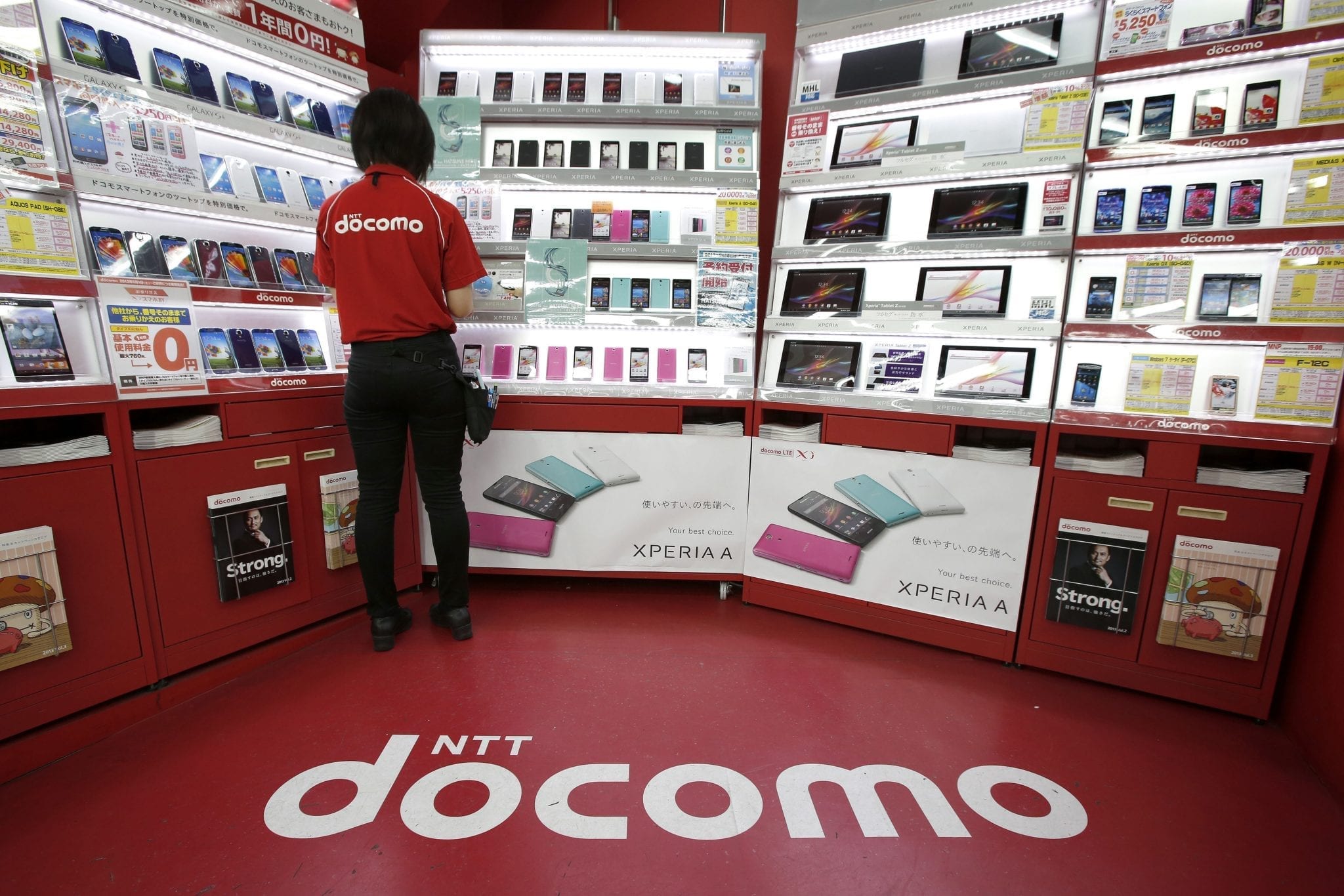
    NTT Docomo Ventures, a wholly owned subsidiary of NTT Group, has made an investment in Singapore-headquartered cloud-based enterprise management solutions provider Kpisoft.

    NTT Docomo Ventures has acquired shares of Kpisoft through its third-party allotment, the company said. Financial details of the transaction were not disclosed.

    According to Docomo Ventures, the solution provided by Kpisoft is designed to analyze data that exists in EPM, BI, human resources management and other relevant systems within an enterprise on a single platform.  The solution has a function that can automatically distribute the analytical findings directly to individual employees in an action proposal form by using machine learning and natural language processing.

    This enables enterprises to make use of analytical findings on enterprise performance and directly and automatically support the actions of individual employees, the company noted.

    Docomo Ventures further said it has made the investment because it “highly expects” the services and knowhow Kpisoft provides will bring added values to EPM or BI the NTT Group offers.

    Reliance Jio Digital Services acquires Haptik

    Meanwhile India’s Reliance Industries, through its subsidiary Reliance Jio Digital Services, has acquired artificial intelligence firm Haptik for Rs 700 crore ($100 million).

    Reliance Jio will hold about 87% of the business with the rest being held by Haptik founders and employees through stock option grants, according to a company release.

    As part of the transaction, Haptik’s existing major shareholder Times Internet will exit the company.

    Akash Ambani, director at Reliance Jio Digital Services said the acquisition underlines the company’s commitment to further boost the digital ecosystem and provide Indian users conversational AI enabled devices with multi-lingual capabilities.

    “We believe voice interactivity will be the primary mode of interaction for Digital India,” Ambani said in a statement.

    “We are delighted to announce this partnership, and look forward to working with the experienced team of Haptik in realizing this vision for offering greater connectivity and rich communication experiences to the billion+ Indian consumers.”

    Founded in 2013, Haptik is chat based virtual concierge mobile application. It client base includes Samsung, Coca-Cola, Future Retail, KFC, Tata Group, Oyo Rooms and Mahindra Group.

    The Haptik team will continue to drive growth of the business, including the enterprise platform as well as digital consumer assistants.

    “This transaction enables Reliance Jio to leverage Haptik’s capabilities across various devices and touch points in the consumer’s journey. The investment focus is on enhancement and expansion of the platform, with an addressable market opportunity of over 1 billion users in India,” the company said in a statement.

  • India’s big data market set to hit $16b by 2025

    India’s big data market set to hit $16b by 2025

    India’s big data analytics sector is set to record impressive growth in the coming years, WNS Global Services has predicted.

    The sector is expected to witness eight-fold growth to reach $16 billion by 2025 from the current $2 billion, according to industry experts. The sector is also looking at registering compound annual growth rate (CAGR) of 26% over next five years.

    India is currently among top 10 big data analytics markets in the world.

    “The government, industry and academia can collaborate to build an ecosystem to generate sustainable solutions by harnessing the power of big data and digital innovation,” said WNS Global Services Group CEO Keshav Murugesh.

    “The combined power of harnessing big data and digital solutions can drive tremendous results in improving the citizen experience, implementation efficiency and boosting the nation’s economy.”

    Murugesh was speaking at the Emerging Worlds Conference workshop organised by Indian School of Design and Innovation (ISDI) in collaboration with MIT Media Labs. “India is a diversified country with a wide array of challenges, and it is pertinent that we as citizens of this country, innovate to find effective solutions that can make a difference to the billion lives that live here,” he said.

    “If big data can be put to cutting-edge use for our corporations and clients, it can very well be a catalyst for the economy and the country.”

    The workshop brought together industry leaders, technical experts, data scientists, innovators, academic institutions, implementation collaborators and progressive corporate collaborators to source national challenges and potential solutions.

  • Bank Indonesia sets chip technology standard for ATMs, debit cards

    Bank Indonesia sets chip technology standard for ATMs, debit cards

    Bank Indonesia has set National Standard Indonesian Chip Card Specification (NSICCS) as the country’s technology benchmark for ATMs and debit cards of all card providers across the country.

    The regulation was officially implemented during a meeting attended by Bank Indonesia deputy governor Sugeng, bankers and the Indonesia Payment Systems Association (ASPI) on Wednesday in Jakarta.

    The central bank also appointed ASPI to oversee the implementation of the NSICCS and to develop it through observation of several aspects, such as security and technology development.

    “The implementation of a standard was aimed at increasing the security of transactions and encouraging the creation of an interoperability instrument, which was in line with the National Payment Gateway program,” the central bank wrote in an official statement.

    Bank Indonesia through its letter, No.17/52/DKSP on the requirement of a six digit PIN number for all debit and ATM cards utilizing magnetic stripe technology, tried to improve on the security aspects of transactions.

    The NCICCS technology will not only be implemented in the ATM and debit cards, but also in the system, which processes transactions within the cards. The full implementation is expected to finish at the end of 2021.

    The implementation of the NCICCS is part of an ongoing effort to mitigate fraud and align ATM and debit card standards in Indonesia with the best practices on the international level, Bank Indonesia wrote.

  • BI launches food price information center

    BI launches food price information center

    The central bank of Indonesia, Bank Indonesia (BI), has launched a Strategic Food Price Center website (PIHPS) application which will serve as a reference of pricing information to help those in charge of making policy on inflation management.

    BIs Governor Agus Martowardojo said, at the PIHPS launch here on Monday, that data collection was one of important factor in controlling price to manage inflation.

    “The success of inflation policy application requires not only information but also supporting data. We follow the presidents directive, stated on April 11, 2016, to develop food information system center,” Agus stated.

    He explained that at an early stage, PIHPS will focus on 10 food commodities that contribute more than 50 percent to inflation of the volatile foods category.

    Referring to PIHPSs website at www.hargapangan.id site, the 10 strategic food commodities are rice, beef, chicken, chicken egg, red chili, cayenne pepper, onion, garlic, cooking oil, and sugar.

    Controlling the prices of these 10 food commodities has become the foundation of BI and the government to control inflation of volatile foods.

    Data presented by PIHPS is compiled from 164 traditional markets from 34 provinces. The data collected from 9.00 to 11.00 Jakarta time will be validated by BI at 10.00 to 12.00 and then published at 13.00 Jakarta time.

    PIHPS can be accessed at www.hargapangan.id or by downloading PIHPS National at android and Apple iOS operating system for free.

    In future, the Central Bank will develop the application by extending data coverage that includes modern markets, wholesalers, and producers, Agus remarked.

    “In 2018, we will collect data at the producer level for the 10 commodities, and we will also develop the site, hoping that wider access to food information will gradually lower the price fluctuations,” Agus revealed.

    Through PIHPS, the Central Bank wants to keep the inflation at 3-5 percent this year by paying particular attention to volatile foods, considering that its pressure from administered prices will be high following the energy subsidy adjustment policy that is applied this year.

    BI and the government want to keep volatile foods inflation in the range of 4-5 percent year on year from this year.

    The government has listed an overall inflation assumption of 4 percent in the 2017 State Budget.

  • Bank Indonesia (BI) reported that lending grew 8.4 percent

    Bank Indonesia (BI) reported that lending grew 8.4 percent

    Bank Indonesia (BI) reported that lending grew 8.4 percent year on year (YoY) to Rp4,333 trillion in February 2017, or an increase compared to January 2017 at 8.2 percent YoY.

    Working capital loans (KMK) and investment loans grew by 11.8 percent YoY and 9.7 percent YoY, respectively, BI spokesman Tirta Segara stated in a written statement in Jakarta on Sunday, April 2, 2017.

    “KMK in February amounted to Rp2,042 trillion, whereas Investment Loans amounted to Rp1,119 trillion,” Tirta said.

    Bank Indonesia reported that working capital loans, particularly in processing sector grew by 8.2 percent YoY compared to 1.2 percent YoY in January 2017, and financial sector, such as real estate and services grew by 21.8 percent YoY compared to 13.5 percent YoY in January 2017.

    As for investment loans, according to BI, significant growth of 15.8 percent YoY in trade, hotel and restaurant took place in February 2017 compared to 10.9 percent YoY in January 2017. The financial sector, such as real estate and services, also grew by 15.9 percent YoY compared to 13.5 percent in January 2017.

    Moreover, Bank Indonesia noticed that micro, small and medium-sized enterprises (SMEs) grew significantly by 29.8 percent YoY or Rp946.3 trillion compared to 8.5 percent YoY in January 2017. “Lending growth in SMEs occurred in working capital and investment loans,” Tirta said.

    Meanwhile, property sector tumbled in February 2017 with 15 percent YoY growth or Rp706 trillion compared to January 2017 at 15.1 percent YoY.

  • Bank Indonesia forecasts current account deficit at 1.8% of GDP

    Bank Indonesia forecasts current account deficit at 1.8% of GDP

    Bank Indonesia (BI) had forecast that the countrys current account deficit last year would fall to 1.8 percent of the national gross domestic product (GDP) as compared to 2.06 percent a year earlier.

    The decline in the current account deficit would chiefly be the result of steady trade surplus, BI Deputy Governor Perry Warjiyo stated here on Friday.

    According to the Central Statistics Agency, the country had recorded a trade surplus of US$840 million in November 2016, although it fell from $1.21 billion a month earlier.

    “Hence, we forecast the current account deficit in the fourth quarter of 2016 to reach 1.9 percent of the GDP,” Warjiyo remarked at the BI Head Office.

    Current account is an indicator of the exports of goods and services from a country to other nations and vice versa. Current account is divided into current accounts of goods and services.

    When current account is in deficit, it means that imports are larger than exports. If the current account deficit steadily falls, exports and imports are improving.

    On the other hand, the declining current account deficit will improve the balance of payment (NPI), which comprises current account, capital and financial account, and foreign exchange reserves.

    “Indonesias foreign exchange reserves at the end of December 2016 rose to $116 billion, suggesting that the NPI will be positive (surplus), coupled with large foreign capital inflows,” Warjiyo added.

  • Qlik and Esri Singapore join forces to redefine visual analytics

    Qlik and Esri Singapore join forces to redefine visual analytics

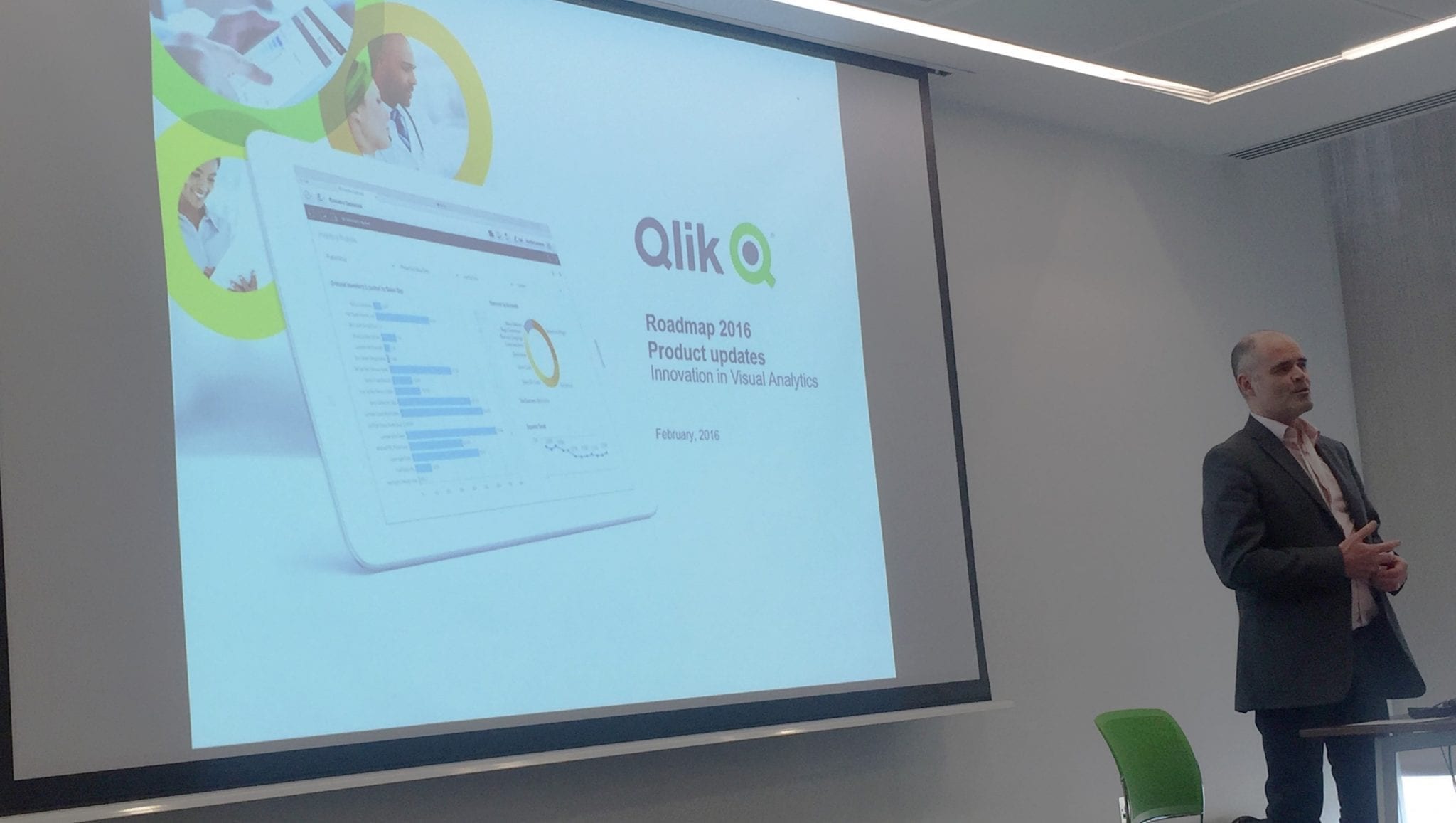
    Qlik, a leader in visual analytics, today announced its technology partnership with Esri Singapore, the country’s leading Geographic Information System (GIS) technology provider.

    The collaboration will see Esri Singapore and Qlik working together to educate industries on the benefits of synergising geographic and spatial analytics.

    Smart mapping: making intelligent decisions with geographic information

    Esri’s ArcGIS Online is a collaborative, cloud-based technology platform that allows users to easily create, share and access content rich maps, applications and data. The technology collects location information contained within an organisation’s data and translates static data into useful, intelligent maps. Different locations have unique characteristics, and organisations need to identify, qualify and understand the connections between people, places and events. When mapping analytics is combined with a powerful visual analytics platform, organisations can add a new dimension to the practice of analysing information by translating complex datasets into the universal language of smart maps.

    Additionally, by integrating location information with data in real-time, businesses can unearth relationships, patterns and trends that would otherwise remain hidden. Esri’s ArcGIS Online maps are compatible with both QlikView and Qlik Sense. The Qlik Sense extension is available on Qlik Branch – a collaborative workspace and open exchange that provides customers, developers and partners simplified access to the open and powerful APIs of Qlik solutions. “More than 80 per cent of our business data is location related. From understanding your customer information and their behaviours to managing chronic illness, pandemic patterns, and even business impact due to accessibility of transport networks – location essentially links different sets of business information together to provide executives with better informed decision making.

    Through our partnership with Qlik, we aim to help organisations understand the value of letting users see their data in new and provoking ways, allowing them to develop actionable plans to address real-world challenges, said Thomas Pramotedham, Chief Executive Officer, Esri Singapore. “From retail sales performance to urban planning, being able to seamlessly merge intelligent mapping with visual analytics is critical to smart, data-driven decision-making. Qlik is proud to partner with Esri Singapore to promote the benefits of combining mapping technology and visual analytics for organisations to drive better decision making. We look forward to pursuing more innovative projects together in the future,” said CK Tan, Product Marketing, Qlik Asia Pacific.

  • Bank Indonesia retains benchmark rate amid global uncertainty

    Bank Indonesia retains benchmark rate amid global uncertainty

    Bank Indonesia (BI) decided on Thursday to keep its seven-day reverse repo rate at 4.75 percent in response to global uncertainty following the outcome of the recent US presidential election.

    “BI is responding to the uncertainty in consideration of a stable condition in the domestic economy,” BI governor Agus Martowardojo said in a press conference at the central bank’s office in Jakarta on Thursday.

    Agus added that after the US election, which saw the victory of Republican candidate Donald Trump, global uncertainty as a result of the economic programs of the new government had made the rupiah volatile. A week after the Nov. 8 election, the rupiah depreciated 2.23 percent to Rp 13,340 per US dollar, but the year-to-date figure still shows that the currency appreciated by 2.97 percent.

    “We need to be careful with upcoming US policy, such as expansionary fiscal movement, trade protectionism and a Federal Reserve rate hike,” Agus said.

    Moreover, he added, the US economy had shown signs of recovery with better economic growth, decreasing unemployment and increasing inflation, which increase the odds of the Fed increasing its benchmark rate next month and put pressure on the world economy.

    A Fed rate hike would potentially lead to capital outflow from emerging economies, like Indonesia, as investors would likely move their money in search of better yields.

  • Aussie mobile customers’ private data up for sale

    Aussie mobile customers’ private data up for sale

    Private information on Australian mobile subscribers are being sold off by unscrupulous members of offshore call centers, according to an investigative report.

    The private details of customers from the market’s three operators – Optus, Telstra and Vodafone – are being offered for sale by a call center business named AI Solutions, run by Indian businesman Imran Khan.

    Information including home addresses, dates of birth, alternative numbers, billing statements and call history are being offered for between A$350 ($260) and A$1,000, the report states. Prices are higher for VIPs , politicians, police and celebrities.

    Security industry sources spoken to for the report say the practice of call center workers selling off Australian customer details has been long-standing, and potentially involves more than one company.

    In a press statement, a Vodafone Hutchison Australia spokesperson said the company is “aware there are individuals who do attempt to illegally access data through various channels from companies and organisations which hold customer information,” and has “invested millions of dollars over recent years in security systems and processes, and have a number of safeguards in place to prevent unlawful access of customer information.”

    For offshore call centers, security safeguards include paperless offices, a no mobile phone policy, no access to third party websites, email monitoring, role based systems access, continuous agent training and disciplinary process.

    An Optus spokesperson said the company has referred the matter to federal police, and Telstra said the company does everything it can to protect customer data.

  • Verimatrix boosts access to subscriber intelligence

    Verimatrix boosts access to subscriber intelligence

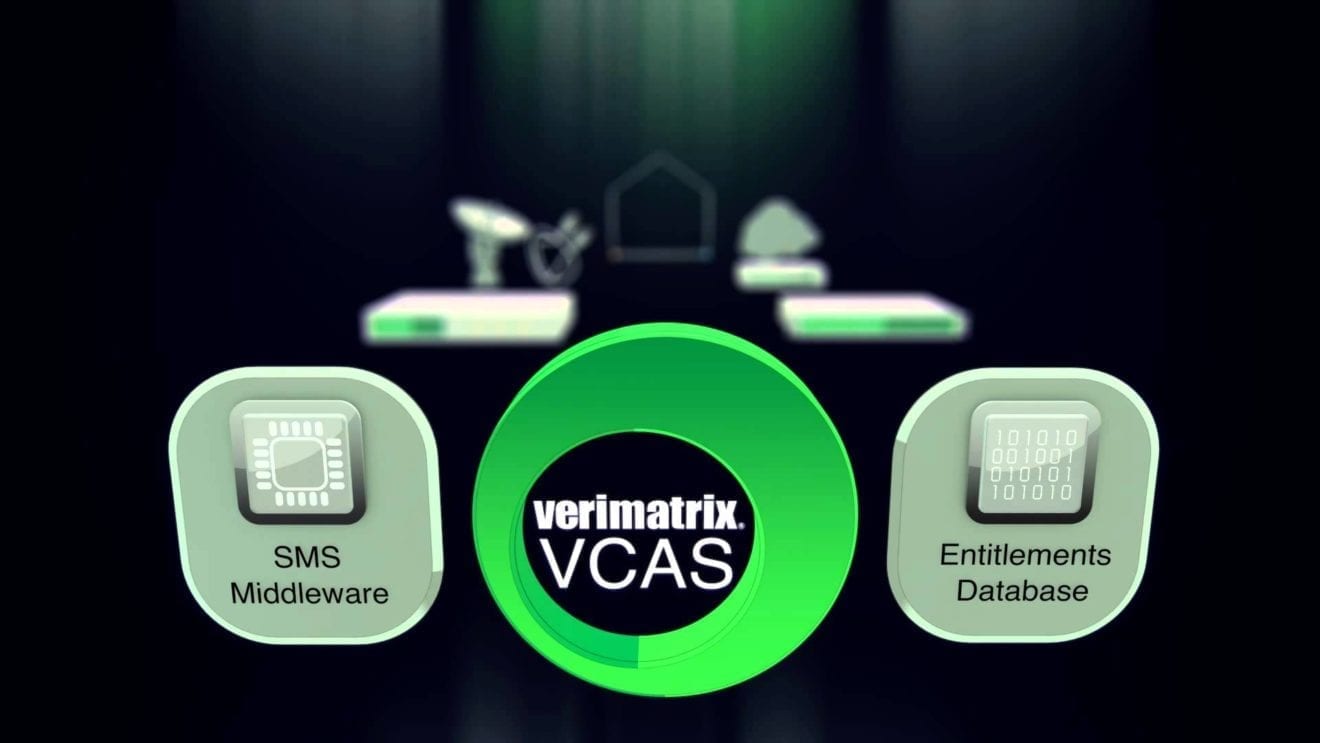
    Verimatrix has made available its quick-start evaluation program for Verspective Operator Analytics, which promises to help operators better understand how to securely and rapidly collate data from various sources in video services and demonstrate the benefits of actionable analytics across multiple departments in their organization.

    Through the availability of this program, service providers have the opportunity to expand their analytics capabilities with more census-based data sources and complement traditional network monitoring analytics to get a comprehensive view of subscriber intelligence and network performance.

    Implemented in the cloud, the Verspective Operator Analytics evaluation program consists of a pre-configured, software-based analytics platform that can quickly integrate with an operator’s key sources of operational and consumption data, including VOD, CDN or client device sources. Service providers also receive a set of report templates that help analyze data and determine return on investment (ROI) potential.

    “We have recognized the need to provide a secure entry point that service providers can use to adopt a centralized analytics approach that ties together insights from operations, product development and marketing,” said Steve Oetegenn, president of Verimatrix.

    “The Verspective Operator Analytics evaluation program provides that point of entry, plus the confidence knowing that data is both secure and compliant with appropriate privacy regulations,” said Oetegenn.

  • Bank Indonesia launches financial technology office

    Bank Indonesia launches financial technology office

    Bank Indonesias governor Agus Martowardojo has launched the Financial Technology (Fintech) Office that will serve as a think-tank in developing the financial services industry.

    “Technology innovation in financial sector is now a must. Therefore, innovation must be a continuous process,” Agus said in his speech while opening the Fintech Office here on Monday.

    He explained that the Fintech Office will have four roles to play. First, it will serve as a facilitator in ideas exchange among Fintech regulators and industry players.

    Second, Fintech Technology will contribute with business intelligence that will facilitate the system and generate tools to transform raw data into new information for analysis material.

    The third role that the Fintech will play will be to provide assessments besides testing various ideas and regulations. It will also help as a coordination and collaboration platform for Fintech stakeholders.

    “We will make it a one stop service accessible to the financial players where we will explain the policies that we issue,” Agus noted.

    The Fintech Office, he added, would also act as a regulatory sandbox or a policy formulating laboratory.

    “Such a sandbox will be a restricted platform for innovation development as well as policy testing and evaluation,” Bank Indonesias Deputy Governor Ronald Waas noted.

    However, he added, not all Fintech business segments will be included in Fintech Office as it has been specified that the facility will be for the new Fintech businesses which are not regulated by Bank Indonesia as a payment system authority.

    “The businesses included in Fintech Office will be the breakthrough ones or the new ones” Ronald noted.

    Data obtained from Financial Service Authority shows that currently, 120 Fintech companies have a total asset value of Rp100 billion (about US$7.4 million), a 50 percent increase over the early 2015 figure.

  • BI Revises Regulation on E-Money

    BI Revises Regulation on E-Money

    Bank Indonesia (BI) will make another revision to regulation on electronic money and introduce electronic wallet in the Bank Indonesia Regulation. The new regulation on the payment transaction processing is expected to be finalized in November 2016.

    Bank Indonesia deputy governor Ronald Waas said that one of the revision points is related to the expansion of electronic money basis. Currently, Ronald revealed, there are two types of electronic money, namely server-based and card-based electronic money. BI is considering adding gadget-based money as a new category.

    “Currently we have Samsung Pay and Apple Pay. They don’t use cards,” Ronald said in Jakarta on Wednesday, November 9, 2016.

    Ronald explained that there are two categories of e money, namely Know Your Customer (KYC) and non-Know Your Customer (nKYC).

    In the new regulation, BI has planned to require electronic money issuer with total active members of no less than 300,000 to register the electronic money.

    “[Electronic money issuer] with below 300,000 users doesn’t need to obtain a permit, but they need to report. In addition, they have to establish a legal entity,” Ronald said.

    In terms of minimum balance, Ronald clarified that there would be no revision regarding the matter. The minimum balance for non-registered electronic money is Rp 1 million (US$77), while that for registered one is Rp 10 million (US$770).

  • Orange Business launches IoT and analytics suite globally

    Orange Business launches IoT and analytics suite globally

    Orange Business Services has announced the worldwide launch of Datavenue, its IoT and data analytics modular suite.

    Datavenue will help multinational and large national corporations seize the endless opportunities offered by the IoT revolution, the operator said.

    Already 56% of decision makers consider IoT as strategic. Use cases include improving safety and user experience within smart cities by connecting street lights or parking meters, as well as improving quality of life by connecting medical devices to monitor a person’s health remotely.

    Datavenue is supported by Orange Business Services’ 700 IoT and analytics experts worldwide, as well as data scientists, developers, consultants, statisticians and IoT security experts.

    Datavenue includes four modules:

    1. Select relevant objects and sources of data. Orange offers a range of certified and tested connected objects, such as sensors, cameras or modules to connect existing assets. Datavenue has a catalog of data that includes population movement analytics using anonymized data from mobile networks.
    2. Connect objects reliably with the most suitable and secured networks. A truck travelling cross borders or an agricultural sensor in a field would require different networks. To address the wide diversity of needs, Orange provides a range of connectivity options. These include future-proof global cellular networks and innovative capabilities, such as eUiCC, worldwide fixed and satellite networks, as well as low-power solutions, such as LoRa.
    3. Manage data to improve efficiencies and create enhanced services. For example, a construction company can monitor cranes worldwide to prevent problems and reduce maintenance costs. Managing data in real-time enables technicians to solve issues remotely or to arrive on site with the right material, reducing service interruptions. Orange offers both cloud-based and on-premises software solutions, encompassing remote device management, processing and visualization.
    4. Control key elements of enterprise transformation projects. Orange experts aim to provide end-to-end security and data protection, integration with information systems and service scalability. Throughout the entire project and beyond, customers can rely on Orange to ensure the solutions are future-proof and adapted to market evolutions.

    “We have developed extensive vertical expertise around IoT and data analytics in several sectors, including automotive, industry, smart cities, healthcare and smart homes,” Orange Business Services VP of IoT and analytics Olivier Ondet said.

    “Our solutions have already improved performance and employee safety through industrial machinery monitoring, enhanced patient care with remote assistance, and enriched citizen well-being with smart city services. This is now all being brought together to support the international launch of Orange Datavenue.”

    Datavenue was first launched in France in 2015. Orange today operates more than 10 million active B2B objects and processes 65 million items of technical data per minute – all fully compliant with data protection regulations.

  • Hangzhou to harness Alibaba Cloud’s AI, analytics tools

    Hangzhou to harness Alibaba Cloud’s AI, analytics tools

    Alibaba Cloud announced at its recent Computing Conference that it will provide its AI, deep learning and data analytics capabilities for two new cutting-edge developments in China.

    Initiated by the Hangzhou government, the “Hangzhou City Brain” is set to address the city’s urban living challenges. As the hub to consolidate data and provide real-time analysis, the “Hangzhou City Brain” will rely on Alibaba Cloud’s AI program ET and big data analytics capabilities to perform real-time traffic prediction with its video and image recognition technologies.

    The project will support transportation departments’ efforts to ease traffic congestion and provide users with real-time traffic recommendations and travel routes.

    “By establishing the Hangzhou City Brain, Hangzhou is taking the lead in harnessing artificial intelligence and deep learning technologies to promote greater sustainability and improve the quality of urban living for Chinese citizens. Alibaba Cloud is proud to support and be part of this important development, “said Dr Jian Wang, chairman of Alibaba Group’s technology steering committee.

    With automated traffic system capabilities, intelligent adjustments of traffic lights will be performed on the spot; when a vehicle changes direction, the green light will automatically be extended. The pilot of world’s most advanced smart traffic management system in the Hangzhou’s Xiaoshan District, which started in September this year, has since seen an increase in traffic speed by 11%.

    The project is being led by the Hangzhou government in coordination with 13 firms including Alibaba Cloud. As part of the project, a research and development team of scientists from various companies has been formed.

    Forming the backbone of the “Hangzhou City Brain” data processing and analysis capabilities is Apsara, Alibaba Cloud’s large scale computing operating system, which is able to cluster millions of servers into a super computer and to support a multitude of cloud-based services by analyzing terabytes of data points. This computational engine is one of the largest of its kind in the world and uses propriety algorithms.

    Paving the way for astronomical data storage and analytics

    Aiming to leverage its technologies for astronomical data collection and analysis, Alibaba Cloud also announced at the Computing Conference its research collaboration with the National Astronomical Observatory of China (NAOC) on deep space exploration.

    The plans are to set up a data and research centre for astronomy, as well as a virtual solar observatory which will be supported by Apsara’s massive scalability and advanced capabilities to process astronomical data.