Tag: bi

  • BI to Introduce Coin Deposit Machine

    BI to Introduce Coin Deposit Machine

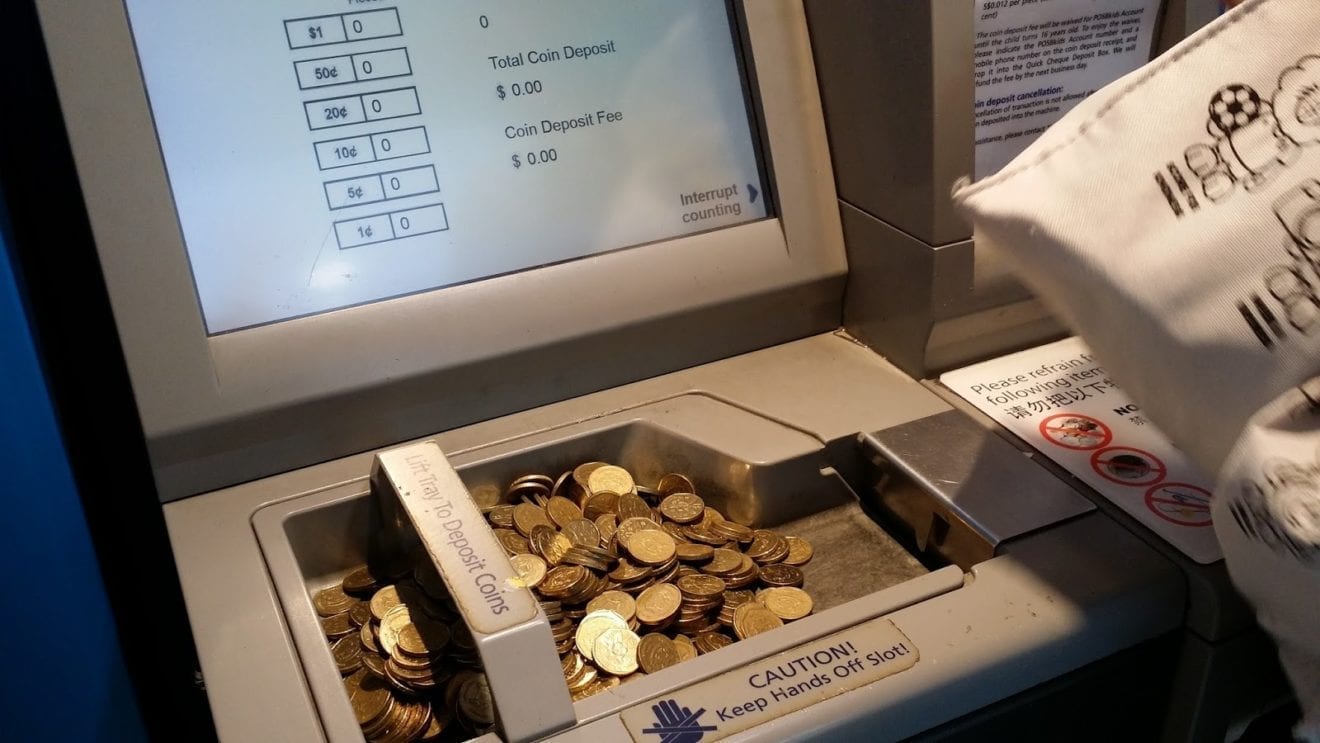
    Deputy Director of the BI Financial Management Department Asral Mashuri in Jakarta, Tuesday 4, 2016, said that Bank Indonesia (BI) is planning on implementing a coin deposit machine to ease people in saving the form of money.

    “The machine would look like an ATM, but this one is for coins, and the machine can sort out the money; which is one thousand and one hundred. It would be easy for people to use,”  he said.

    According to Asral, nowadays, many people keep the coins and left it uncirculated. The uncirculated coins have forced BI to reprint it, although coins have a longer lifespan than paper money.

    A coin deposit machine is hoped to help banking institutions in retracting the coins. “This also accelerates the money circulation, and later on, banking institutions can retrieve money from people’s savings,” Asral said.

    He added that it will be implemented as soon as possible. The study is still ongoing; it will be realized but not in the coming months. “The machine will be available for the public to use soon as possible,” Asral said.

  • Teradata boosts customer experience with behavioral insights

    Teradata boosts customer experience with behavioral insights

    Teradata now offers the Teradata Customer Journey Analytic Solution, a complete set of capabilities for discerning the behavioral paths of each individual customer.

    The solution determines the next best interaction and delivering a consistent, personalized brand experience through every channel and touch point. It also uses Teradata’s consulting services, as well as technologies that enable real-time customer data integration, advanced behavioral analytics and multi-channel marketing automation.

    Further, the solution enables CMOs who want to truly understand each individual customer experience to move beyond old school one-to-one marketing tactics that rely on purchases and traditional customer profiling.

    The insights resulting from Teradata’s Customer Journey Analytic Solution enable marketers to optimize objectives such as response and conversion rates, service delivery, churn, and customer satisfaction – leading directly to high-impact business outcomes such as increased revenue and customer retention.

    Customers today require every interaction with a brand to be consistent, but also personalized and relevant. This is despite the ever-expanding range of channels that make building a complete picture of each individual customer extremely challenging.

    “Managing every customer as an individual, based on their interactions with your company, requires not only the integration of different types of data but understanding it through the application of complex multi-genre analytics,” said Dan Harrington, EVP for consulting and support services of Teradata. “Even the best-known companies feel this is a ‘boil the ocean’ project – making sense of billions of events for millions of customers, in real time.”

  • BI Targets 11% Credit Growth

    BI Targets 11% Credit Growth

    Governor of central bank Bank Indonesia Agus Martowardojo said that BI is targeting bank credit growth by 11 percent next year.

    According to him, the target is expected to be reached due to the influx of fresh funds into financial institutions through the tax amnesty.

    “We consider that the tax amnesty will bring enough funds,” he said in Jakarta on Friday.

    The estimate, however, is lower than that of the original target of 12.7 percent.

    According to Agus, the change coincided with the approval of the 2017 economic growth target of 5.1 percent.

    Assumptions credit growth of 12.7 percent, he said, is met if the government and the House of Representatives agreed on economic growth target of 5.2 percent.

    The cause of the slow growth of credit is the weakening global economic growth, which is below 3.5 percent, he added.

  • Bank Indonesia to launch national payment gateway

    Bank Indonesia to launch national payment gateway

    Bank Indonesia will soon issue a new policy in payment system — “National Payment Gateway” (NPG) — to prevent outflow of fund in the “e-commerce” transactions that will help redress the countrys domestic trade balance .

    “Soon we will issue a policy of national payment gateway. All payment systems in the country from various providers will be connected in what we call inter-connectivity and inter-operability. Jut wait and see,” Deputy Governor of the central bank Perry Warjiyo said here on Friday .

    Perry said with the NPG all domestic transactions would be wrapped up in the country without the use of foreign payment system service.

    “This is important before we start cooperation with other countries that all transactions made in Indonesia could be settled in the country ,” Perry said.

    With the NPG we could increase domestic trade balance in each transaction made in Indonesia without relying on financial service of agency, he added.

    Perry said NPG also would support payment system in tourism industry, which the government actively develops as a potential foreign exchange earner.

    Bank Indonesia encourages the government to develop and modernize the countrys tourism industry to grow to become a new economic growth driver amid the slump that hits the export and mining sector which have lost their most of role as the economic backbone.

    Perry said the tourism industry could help accelerate the economic development in mid term.

  • Bank Indonesia still has chance to slacken its monetary policy

    Bank Indonesia still has chance to slacken its monetary policy

    Bank Indonesia (BI) Governor Agus Martowardojo said the central bank still likely has a chance to relax its monetary policy in the second half of this year.

    “Seeing the condition in August, we can say that there is still a chance to slacken monetary policy but whether it will be carried out next September or October will depend on the data” the central bank governor said in Jakarta on Wednesday.

    BIs board of governors meeting on August 18-19 decided to maintain its 7-Day Reverse Repo Rate (BI 7-day RR Rate) at 5.25 percent with a deposit facility (DF) interest rate of 4.5 percent and lending facility (LF) being lowered by 100 basis points from 7.0 percent to 6.0 percent.

    BI began introducing the 7-Day RR Rate last April. At the BIs board of governors meeting on April 21, 2016, the BI Rate was fixed at 6.75 percent and the BI Repo Rate at 5.50

    Besides this, the BI also maintained a symmetrical and narrow interest rate corridor where the lower limit of DF Rate is set 75 basis points below the 7-Day RR rate and the upper limit of LF Rate is set 75 basis points above the 7-Day RR Rate.

    The decision is in line with the efforts to maintain the macroeconomic stability by continuously preserving the momentum of domestic economic growth amid weakening global economic performance.

    With macroeconomic stability, controlled inflation at targeted range, good current transaction deficit and stable currency rate, room for monetary relaxation is still open.

    The BI also continues to take abreast of short-term domestic global economic development, particularly the possibility for the Fed to raise its Fund Rate. “We wilL see it in September there will be flight to quality with regard to reports on the improvement of the United States economy.”

  • Airtel adopts BI platform from Cloudera

    Airtel adopts BI platform from Cloudera

    India’s Bharti Airtel has adopted Cloudera Enterprise as part of efforts to build a 360-degree view of its customers in India.

    The deployment aims to help the operator better leverage customer data to execute successful omni-channel campaigns and influence buyers in India’s highly competitive market.

    Airtel’s product offerings in India include wireless and fixed services, mobile commerce, high speed DSL broadband, IPTV, DTH, and national and international long distance services to carriers.

    With over 265 million customers across its India operations, Airtel needs to make sense of and leverage the huge volumes of customer and network data it collects on a daily basis from its multiple channels, which was previously stored in multiple traditional systems built over a period of time.

    With Cloudera Enterprise now at the core of Airtel’s information architecture, the massive volumes of data are in a centralized location, and available to all business users and groups.

    “As part of our digital journey at Airtel, our main focus is on providing the best customer experience with our new business intelligence (BI) and analytics platform, powered by Cloudera,” Airtel group CEIO Harmeen Mehta said.

    “Now, we are able to gain an even greater technical edge, empowering our marketers with intelligent data and analytics to make better decisions and improve the entire customer lifecycle with customized offerings.”

  • gen-E launches OpsCenter InfiniView BI platform

    gen-E launches OpsCenter InfiniView BI platform

    gen-E launched its business intelligence platform OpsCenter InfiniView, which “goes deeper and broader than current advanced analytics software” by combining and analyzing data across an entire business and comparing it against thousands of industry best practice KPIs.

    The automated results and recommendations are presented via a real-time dashboard view to help leaders make better decisions, improve efficiency, and gain full insight into the health and performance of their business.

    OpsCenter InfiniView analyzes aggregated data and adds context to the data streams on how it impacts each other. This provides a top-down business perspective on what is happening in the environment and the reasons behind it to see how and what needs to be done to adjust the KPI.

    “Though advanced analytics has certainly accelerated digital transformation initiatives of some companies, current market solutions stop at providing visual representations of data, leaving much of the heavy lifting of analysis to department heads and business leaders,” said Marc Hayden, gen-E CEO. “OpsCenter InfiniView provides decision making support through actual insights – it’s more intelligent business analytics.”

  • BI Urged to Stimulate Housing Market

    BI Urged to Stimulate Housing Market

    Indonesia Property Watch (IPW) CEO Ali Tranghanda asked Bank Indonesia to issue a more progressive regulation on Loan to Value (LTV) in order to tackle issues with a slowdown in the national housing market recovery.

    “For the middle-lower segment, particularly houses with loan liquidity facility (FLPP), the LTV can be fully provided so that the down payment is set to 0 percent,” Ali said in a press release on Friday, May 6, 2016.

    For the middle segment, Ali suggested that the LTV should be set to 90 percent, so that the down payment would stand at 10 percent. Meanwhile, Ali said that BI should strictly govern the LTV for upper segments, “because the upper segment is a subject to massive speculations, although it has impacts on the housing market,” Ali added.

    According to Ali, policies that can hamper the cash flow of middle-lower segments includes the requirement for developers to market homes that are under construction.

    “BI is expected to stimulate the housing market movement,” Ali added.

    Ali explained that the relaxed policy could be implemented until the housing market fully recovered. Given with the current market condition, Ali said that BI should not burden the housing sector with strict regulations.

    The national housing market has so far not shown signs of recovery. After a growth in sales figure in the fourth quarter 2015, the trend did not continue in the first quarter of this year. The IPW reported that the housing market in the first quarter plummeted by 23.1 percent compared to the previous quarter, or was down by 54.09 percent compared to the first quarter of last year.

    Data from the IPW revealed that almost all regions experienced a decline in sales, and the middle segment remained the largest market share at 52.19 percent. Meanwhile, the upper and lower segments accounted for 28.27 percent and 19.54 percent of the housing market share, respectively. Earlier in the fourth quarter 2015, the upper segment dominated the market share.

  • Singapore businesses embracing analytics tools

    Singapore businesses embracing analytics tools

    According to Gartner, more than 75 percent of companies globally are investing or planning to invest big data in the next two years. In 2015, SAS saw an increased adoption in analytics solutions across various industries – a clear indication that Singaporean businesses are also recognizing the value of analytics in driving business outcomes.

    “We’ve seen an uptake in the adoption of analytics solutions by companies spanning across several verticals, including retail, transport and hospitality. We also see more non-technical employees embracing analytics, and this is largely driven by tools like SAS Visual Analytics, which has interactive, self-serving capabilities to allow anyone to explore and discover insights on their own,” said Francis Fong, Managing Director, SAS.

    Regardless of the size of an organization, its data or the complexity of its services, businesses are now able to take charge of its data quickly and easily. SAS Visual Analytics, uses an interactive interface that works to identify relationships, explore options and uncover hidden opportunities, allowing businesses to make precise decisions faster than ever before.

    Key customer wins in 2015:

    •    Club 21: a global luxury retail company, was looking to get a more holistic understanding of customer spending and shopping behaviors online and offline. With SAS Visual Analytics, they were able to discover insights to move them closer to surfacing omnichannel shopping patterns and merchandising affinity trends. This led to the retail brand integrating their point-of-sale and membership data to gain a more holistic understanding of sales patterns and member performances and habits.

    “The SAS VA tool is new to our organization.  Our goal is to use this tool to enable our teams to move beyond data collection to surface patterns and associations through visualization.  This tool allows our teams to extract insights faster and more strategically because we can finally see and understand data in a way that is custom to our businesses, marketing channels and customer segmentations.” Mei Lee, Senior Vice President, Digital, CRM & e-Commerce.

    •    SMRT: is Singapore’s premier multi-modal land transport operator. Like other large organizations which have a range of business functions and, correspondingly, a number of business units, SMRT had the challenge of collecting data from disparate sources, and synthesizing and analysing it. In 2013, SMRT invested in an Information Fusion capability and SAS Visual Analytics provided the platform through which a strategic dashboard view was built, allowing, among other things, for individual business units and the Group as a whole to track, trend and analyse operational performance.

    Henry Cheng, Head, Information Fusion Center, SMRT, said, “We required a tool that would allow us to have a single dashboard view across the entire Group to guide our decision making, and SAS Visual Analytics was able to provide that. The solution’s easy-to-use, self-service environment has allowed us to run data models across different business units to gain useful insights.”

    •    Far East Hospitality: Singapore’s largest hotels and serviced residences operator, tapped on SAS to help them consolidate and analyze information in a single source. The availability of decision trees and path analyses, in particular, helped Far East Hospitality develop a better data view and make more informed decisions, improving their tracking of flight details and finance data, and strengthening their risk management strategies. Taking into account the higher proportion of nontechnical experts compared to data experts in a typical organization, solutions like SAS Visual Analytics enabled employees to easily grasp the basics on data analytics, with its easy deployment and user friendly interface.

    “There are many strategic and tactical components that goes into a price.  Like most hotels, we have many data variables in our decision making of the price.  It is difficult to pull all this data together, and statistically interpret which factors contribute to success.  We want to become more forward looking, and make this process more intentional and proactive by using tools that can help us visualize the data quickly, and streamline the data access and analysis. We chose SAS Visual Analytics as it fulfilled the requirements: the ability to quickly visually analyse our various data in one single platform, the ability to build analytical models, and the ability to share the analytics and reports in different formats and devices,” Malcolm Leong, Far East Hospitality Management.