Retail News CRM

Tag: billion

  • Amazon Settles For $2.5 Billion With FTC: Prime Subscribers To Benefit While Market Dominance Remains Unaffected

    Amazon Settles For $2.5 Billion With FTC: Prime Subscribers To Benefit While Market Dominance Remains Unaffected

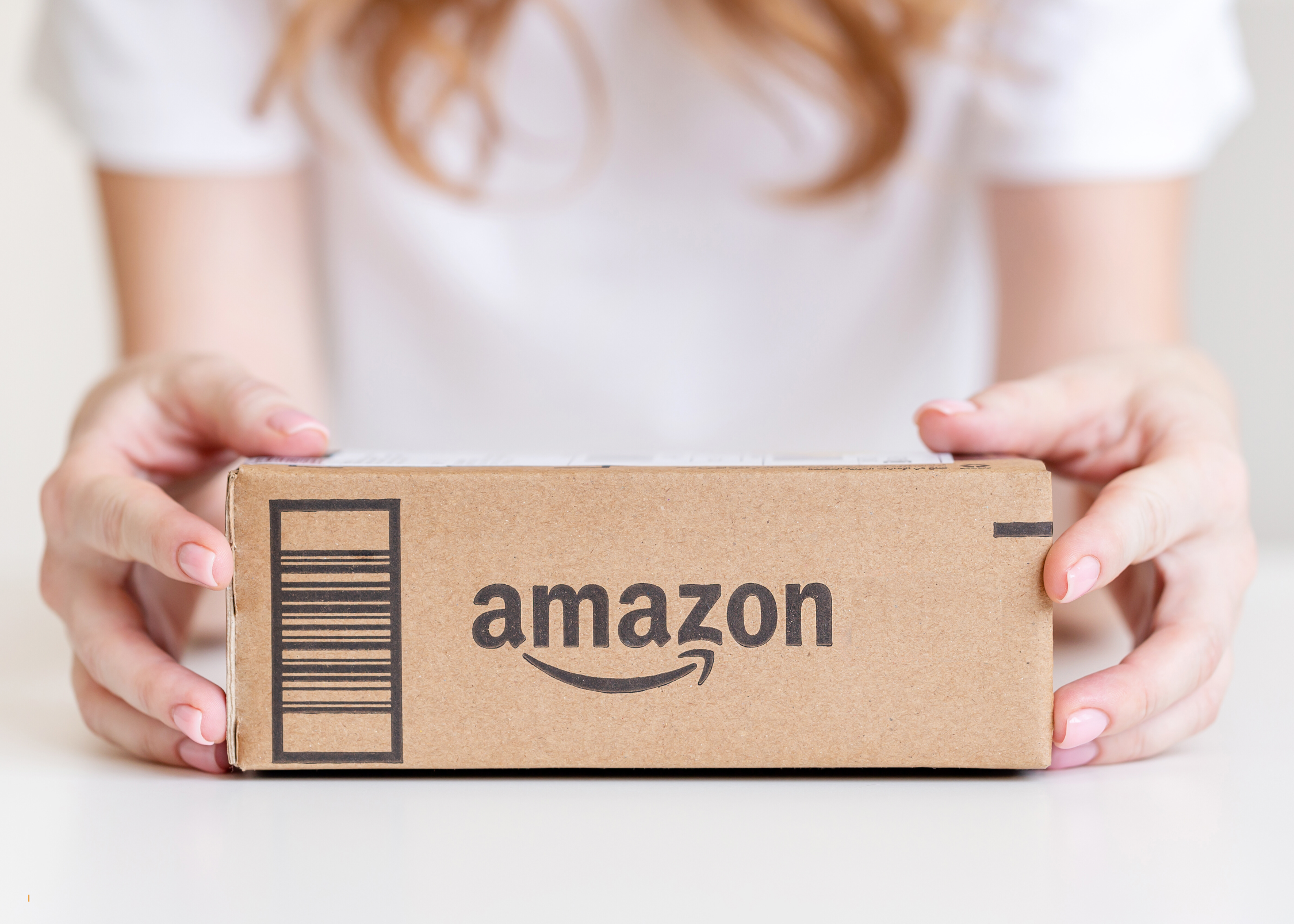
    Amazon has agreed to a settlement of $2.5 billion with the Federal Trade Commission (FTC), following allegations of misleading customers to increase subscriptions. The settlement, however, is unlikely to significantly impact Amazon, given that the company generates approximately the same amount every 33 hours. Amazon’s share value remained relatively stable following the news of the settlement.

    Prime Subscribers To Receive Reimbursements

    Approximately 35 million Prime subscribers are eligible for a share of a $1.5 billion fund established by Amazon as part of the settlement, with the remaining $1 billion to be paid as a fine to the FTC. A key point to note is that Amazon has not accepted any wrongdoing in relation to the settlement.

    Prime subscribers who signed up between 23rd June 2019 and 23rd June 2025 via certain offers, and utilised few of the associated benefits, will automatically receive $51 according to the terms of the settlement. In addition, those who attempted and failed to cancel their Prime subscription during this period will be able to submit claims for payment.

    Amazon’s Statement on Settlement

    Amazon released a statement indicating that the settlement will allow the company to continue to prioritize its customers. The company emphasized its commitment to ensuring that subscribing and unsubscribing to Prime is straightforward and that the service provides significant value to its millions of loyal members worldwide.

    As a requirement of the settlement, Amazon will be making changes to its Prime subscription process. This will include the introduction of a clear and conspicuous button to decline a Prime subscription and to facilitate easier cancellation. The company will also be more transparent with the terms and conditions of subscriptions during enrollment and will engage an independent supervisor to oversee compliance.

    Amazon maintains that most of the required actions are already in progress, with little need for additional changes. However, in the FTC’s case, it alleged that Amazon executives disregarded recommendations to clarify the subscription and cancellation procedures between 2017 and 2022.

    FTC’s Tough-on-tech Victory

    The settlement is seen as a significant success for the FTC’s stringent tech regulation policy, marking the second-largest restitution in the history of the agency. FTC Chair, Andrew Ferguson, hailed the settlement as a monumental win for the millions of Americans frustrated with deceptive subscriptions that are challenging to cancel.

    The settlement arose during an FTC trial in Seattle federal court, where it was argued that Amazon sought to enroll members indiscriminately. The agency suggested that Amazon’s subscription and cancellation practices were deceptive, citing internal discussions referring to the methods as “‘a bit of a shady world” and “an unspoken cancer.”

    Impact on Prime’s Market Dominance

    Despite the settlement, the market dominance of Prime, a key growth driver for Amazon, is not expected to be significantly affected. Prime, introduced in 2005 at $79 per year, rose to $139 in 2022 and generated $23.9 billion in subscription revenue in the first half of 2025.

    Although Amazon has committed to amending certain practices as part of the agreement, analysts do not anticipate these changes to affect Prime’s popularity. Zak Stambor, an Emarketer analyst, points out that despite the changes facilitating easier cancellation, the program remains deeply embedded in most American households.

    Questions & Answers

    What is the total sum of the Amazon-FTC settlement?
    The settlement totals $2.5 billion, with $1.5 billion set aside as reimbursements for Prime subscribers and the remaining $1 billion being paid as fines to the FTC.

    What changes is Amazon expected to implement as part of the settlement?
    The company will introduce a clear and conspicuous button for declining Prime subscriptions and simplify the cancellation process. It will also work on improving the transparency of subscription terms and conditions during enrollment.

    Will the settlement affect the market dominance of Amazon Prime?
    While Amazon will make changes to some of its practices as part of the settlement, analysts don’t forecast these changes to significantly affect Prime’s market appeal.


  • Nvidia’s $100 Billion Investment In Openai: A Game-changer For Ai Development And Market Dynamics

    Nvidia’s $100 Billion Investment In Openai: A Game-changer For Ai Development And Market Dynamics

    On Tuesday, Nvidia’s shares fell by $5.18 or 2.82%, closing the regular trading session at $178.43. The stock retreated, losing more than half of the 4% increase it saw on Monday. This came after the technology company announced its plans to invest up to $100 billion in ChatGPT parent company, OpenAI. The partnership will enable OpenAI to construct data centers powered by 10 gigawatts of “compute capacity” from Nvidia’s AI systems.

    The Advantage of GPUs in AI Systems

    Nvidia’s AI systems run on the company’s GPU (Graphics Processing Unit) chips. The reason GPUs are favored over CPUs (Central Processing Units) in AI systems is due to their proficiency in parallel processing. This means that GPUs can have multiple cores working on the same data simultaneously. On the other hand, a CPU processes data sequentially, handling tasks one at a time.

    Future Developments

    The first phase of this partnership is expected to begin implementation in the latter half of 2026 using the Nvidia Vera Rubin platform. This represents Nvidia’s next iteration of AI and data center platform, set to replace the existing Blackwell architecture. Named after a pioneer in the field of astronomy, the Vera Rubin platform is designed for large rack systems as opposed to single-chip options. The platform’s design allows it to manage and process vast amounts of data concurrently.

    The Excitement Surrounding the Partnership

    Jensen Huang, Nvidia’s founder and CEO, expressed his enthusiasm about the partnership, asserting that Nvidia and OpenAI have been challenging and pushing each other forward for a decade. He believes that this investment and infrastructure partnership marks a significant leap forward by deploying 10 gigawatts to enable the next era of intelligence.

    Echoing Huang’s sentiments, OpenAI cofounder and president Greg Brockman stated that the organization had been closely collaborating with Nvidia since OpenAI’s early days. They have utilized Nvidia’s platform to develop AI systems that hundreds of millions of people use every day. The deployment of ten gigawatts of compute with Nvidia signifies an exciting phase in extending the frontier of AI and scaling its benefits to everyone.

    The AI Landscape

    OpenAI currently boasts over 700 million weekly active users, and its partnership with Nvidia is set to benefit humanity by developing innovative AI solutions. The deal is expected to be finalized in the coming weeks.

    In the tech sector, AI continues to be a prevalent topic, and as a result, Nvidia’s shares have become a new standard for the industry. Nvidia’s market value now stands at $4.34 trillion, surpassing the likes of Apple ($3.78 trillion) and Microsoft ($3.79 trillion).

    Microsoft has invested $13 billion in OpenAI, but instead of acquiring a specific percentage of ownership, Microsoft entered into a profit-sharing agreement, receiving 49% of OpenAI Global, LLC’s profits annually until a certain limit is reached.

    Additionally, Alphabet, the parent company of Google, has also established itself as a leader in AI with a market value of $3.06 trillion. Over the past year, Alphabet’s shares have seen a 55% increase, even outpacing Nvidia’s 47% year-on-year gain.

    Questions & Answers

    Why are GPUs preferred over CPUs in AI systems?
    GPUs excel at parallel processing, which allows multiple cores to work on the same data simultaneously. In contrast, CPUs handle tasks one at a time, processing data sequentially.

    What is the significance of Nvidia’s partnership with OpenAI?
    The partnership marks a significant progression in the field of AI. With Nvidia’s investment, OpenAI can build data centers powered by 10 gigawatts of compute capacity, extending the frontier of intelligence and scaling the benefits of AI to everyone.

    How does the Nvidia-OpenAI deal impact the AI landscape?
    The deal, among others, signifies a change in leadership within the AI industry. It further cements Nvidia’s position as a market leader, with its shares now emerging as the new standard for the sector, surpassing even tech giants such as Apple and Microsoft.

  • Dolce & Gabbana Reports 4% Revenue Growth Despite Retail Challenges; Sets High Ambition For Beauty Division

    Dolce & Gabbana Reports 4% Revenue Growth Despite Retail Challenges; Sets High Ambition For Beauty Division

    Dolce & Gabbana, the revered Italian luxury fashion brand, has unveiled financial figures for the fiscal year that came to a close on March 31. The company saw its revenue climb by 4 per cent, translating to a total of US$2.2 billion.

    Revenue Drivers and Losses

    The primary catalyst behind this revenue growth was an 11 per cent surge in wholesale sales, accounting for 46 per cent of the brand’s total revenue. Unfortunately, the company also witnessed a 3 per cent decline in retail sales, indicative of challenges in crucial markets such as Europe and Asia.

    Despite the increase in revenue, Dolce & Gabbana’s net loss expanded to $136 million from the previous fiscal year’s figure of $15 million.

    Department Specific Performance

    Notably, the fashion and home division of the company experienced an 8 per cent revenue drop to $1.4 billion. This downturn is attributable to weakened demand in Europe and China, with the effect partially mitigated by gains in the Middle East, South America, and South Africa.

    On the other hand, the beauty segment posted strong figures, with sales escalating by 30 per cent year-over-year to approximately $699 million.

    Expansion and Future Endeavors

    From 2022 onwards, Dolce & Gabbana has broadened its makeup offerings to encompass more than 100 products. The brand plans to further expand this range to a complete line of 350 SKUs and has recently launched a skincare line, the Fresh Skin Collection.

    In terms of future goals, the company has set its sight on achieving $1.1 billion in annual beauty sales by the end of fiscal 2027. This objective emerges as part of their strategic shift from licensing to direct management of the beauty division.

    Additionally, Dolce & Gabbana has obtained $116 million in medium-term financing and has extended the maturity of a $345 million term loan to 2030.

    Questions & Answers

    What was the primary driver behind Dolce & Gabbana’s revenue growth?
    The primary driver was an 11 per cent increase in wholesale sales, which now account for 46 per cent of the brand’s total revenue.

    How did Dolce & Gabbana’s beauty segment perform in the past fiscal year?
    The beauty segment performed exceptionally well, with sales seeing a 30 per cent year-over-year increase to approximately $699 million.

    What are Dolce & Gabbana’s future plans for their beauty division?
    The company plans to achieve $1.1 billion in annual beauty sales by the end of fiscal 2027, following its strategic shift from licensing to direct management of the beauty division.

  • Skechers Reports Strong Q2 Growth Of 13.1%, Bolstered By International Market Success

    Skechers Reports Strong Q2 Growth Of 13.1%, Bolstered By International Market Success

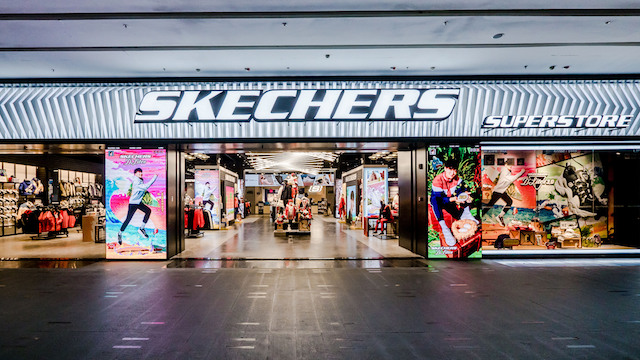
    Skechers, the global footwear leader, reported its financial results for the second quarter of 2025, reflecting an overall positive growth across its various business channels. The company’s total revenue for the quarter was recorded at US$2.44 billion, marking a 13.1% increase compared to the same period in the previous year. This growth is primarily attributed to robust demand in both its wholesale and direct-to-consumer channels.

    A Closer Look at the Financials

    The net income of Skechers witnessed a significant surge of 21.5%, reaching $170.5 million, up from $140.3 million registered in the corresponding period of the previous year. The wholesale revenue for the quarter was also on an upward trajectory, accounting for $1.30 billion, a 15% increase from the prior-year period. Direct-to-consumer sales also followed suit, with an increase of 11% totaling $1.14 billion, compared to $1.03 billion noted a year earlier.

    In terms of domestic sales, the figures remained relatively stable, registering a marginal decrease of 0.2%. While wholesale sales experienced a decline of 7.5%, direct-to-consumer sales offset this with a 7.6% rise.

    International Market – A Strong Growth Driver

    The international market emerged as a key growth driver for Skechers with international sales constituting about 64.6% of the total revenue in Q2, a noticeable increase from approximately 60% a year earlier. This growth was spurred by a significant 29.6% increase in wholesale international sales and a 13.3% rise in direct-to-consumer international revenue.

    Despite a decline in China sales, which dropped 8.2% to $287.2 million, sales in the Asia Pacific region rose by 5.5% to $595.5 million. The Americas division witnessed a slight increase of 1.1% with sales amounting to $1.11 billion. However, the Europe, Middle East & Africa (EMEA) region showed the most robust regional growth, with sales surging 48.5% to $731.5 million.

    Looking Back at the First Half of 2025

    For the first half of 2025, Skechers reported total sales of $4.85 billion, signifying a 10% increase from the previous $4.41 billion in the prior year. The regional growth trends were similar to those of Q2, with EMEA witnessing an increase of 29.4%, Americas growing by 4.6%, and the Asia Pacific region recording a modest growth of 1.4%.

    Currently, Skechers operates over 5200 stores globally, which include both company-owned and third-party-owned locations. The company is confidently marching towards its goal of establishing 10,000 stores across the globe.

    Questions & Answers

    What was the total revenue of Skechers in Q2 2025?
    The total revenue of Skechers in the second quarter of 2025 was US$2.44 billion.

    Which region showed the strongest growth for Skechers?
    The Europe, Middle East & Africa (EMEA) region showed the strongest growth for Skechers, with sales jumping 48.5% to $731.5 million.

    How many stores does Skechers currently operate worldwide?
    Skechers currently operates more than 5200 stores worldwide.

  • Record Q2 Revenue For Luckin Coffee Amid Global Expansion And Increased Customer Engagement

    Record Q2 Revenue For Luckin Coffee Amid Global Expansion And Increased Customer Engagement

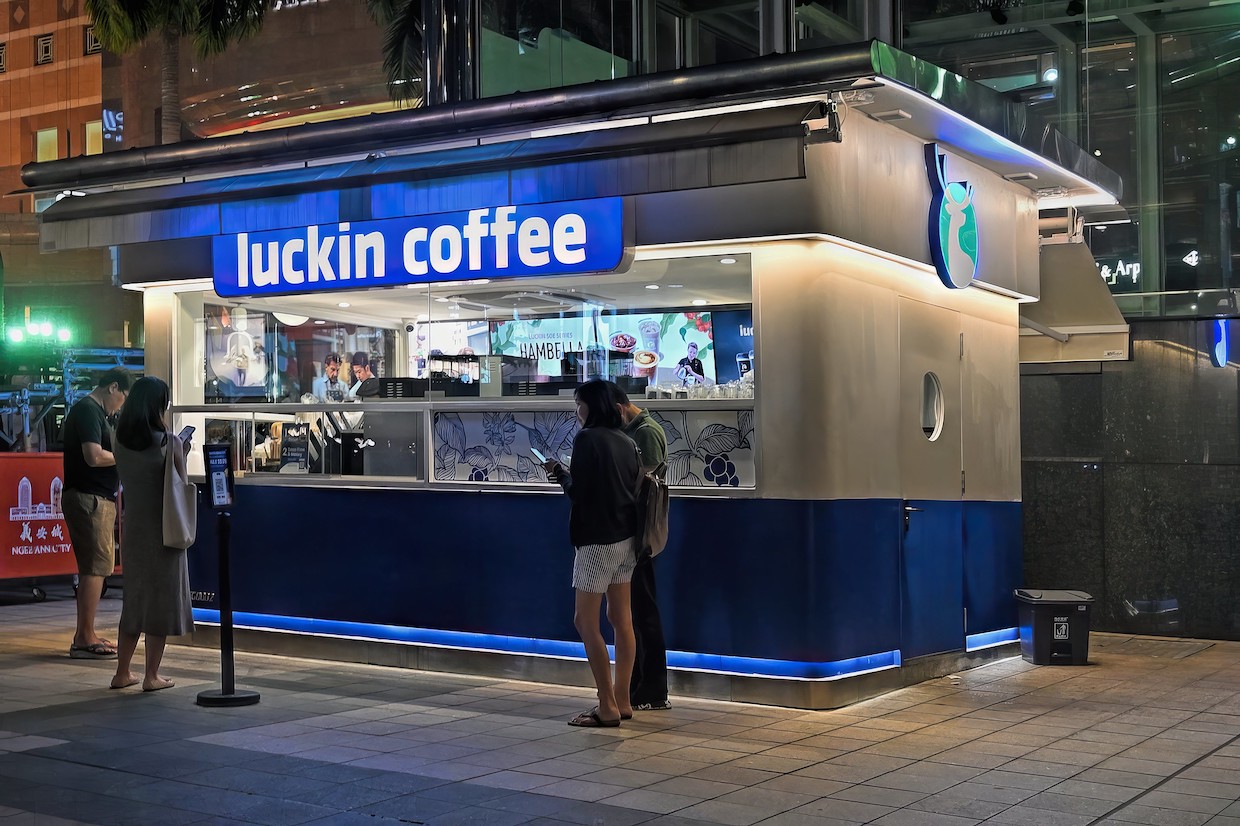
    Luckin Coffee reported an unprecedented revenue of $1.72 billion in the second quarter, representing a 47 percent year-on-year increase. This performance coincides with the expansion of the Chinese coffee chain’s global footprint to 26,206 outlets, including more than 2100 new store openings.

    Global Expansion and Growth in Numbers

    Luckin Coffee expanded its network by adding 2085 stores in mainland China and Hong Kong during the second quarter. Additionally, the company opened six new stores in Singapore, 16 in Malaysia, and two in the United States. Of the total number of stores, 16,968 are directly operated by Luckin Coffee, while 9,238 outlets are run in partnership with other entities.

    The company saw a notable surge in customer engagement, with monthly transaction numbers reaching an all-time high of 91.7 million customers during the quarter, marking a 31.6 percent increase compared to the corresponding period last year.

    Financial Performance and Business Prospects

    Revenue generated from directly operated stores shot up by 45.6 percent to $1.27 billion, propelled by a same-store sales growth of 13.4 percent. This indicates a notable improvement from the 8.1 percent growth recorded in the preceding quarter, and a significant rebound from a 20.9 percent decline experienced a year ago.

    Luckin Coffee’s operating profits at store level surged by 42.3 percent to reach $268 million. Revenue from partnership stores also saw a substantial increase, reaching $399.8 million, which translates to a 55 percent year-on-year increase.

    Jinyi Guo, co-founder and CEO of Luckin Coffee, attributed the robust financial performance to the company’s strategic focus on scalability. He emphasized that by capitalizing on the company’s strengths in areas such as operational efficiency, fulfillment, and supply chain, Luckin Coffee has managed to achieve double-digit same-store sales growth in its directly operated stores.

    As for the future, Guo reaffirms that the company remains resolute in its commitment to expanding its market share.

    Questions & Answers

    What was Luckin Coffee’s recorded revenue for the second quarter?
    The company recorded a revenue of $1.72 billion for the second quarter.

    How many new stores did Luckin Coffee open in the second quarter?
    The coffee chain opened more than 2100 new stores globally in the second quarter.

    What was the growth rate in Luckin Coffee’s same-store sales?
    The company reported a same-store sales growth of 13.4% during the quarter.

  • Kraft Heinz Reports $8 Billion Loss Amid Rising Costs And Impairment Charge: A Resilient Sales Performance Amid Turbulence

    Kraft Heinz Reports $8 Billion Loss Amid Rising Costs And Impairment Charge: A Resilient Sales Performance Amid Turbulence

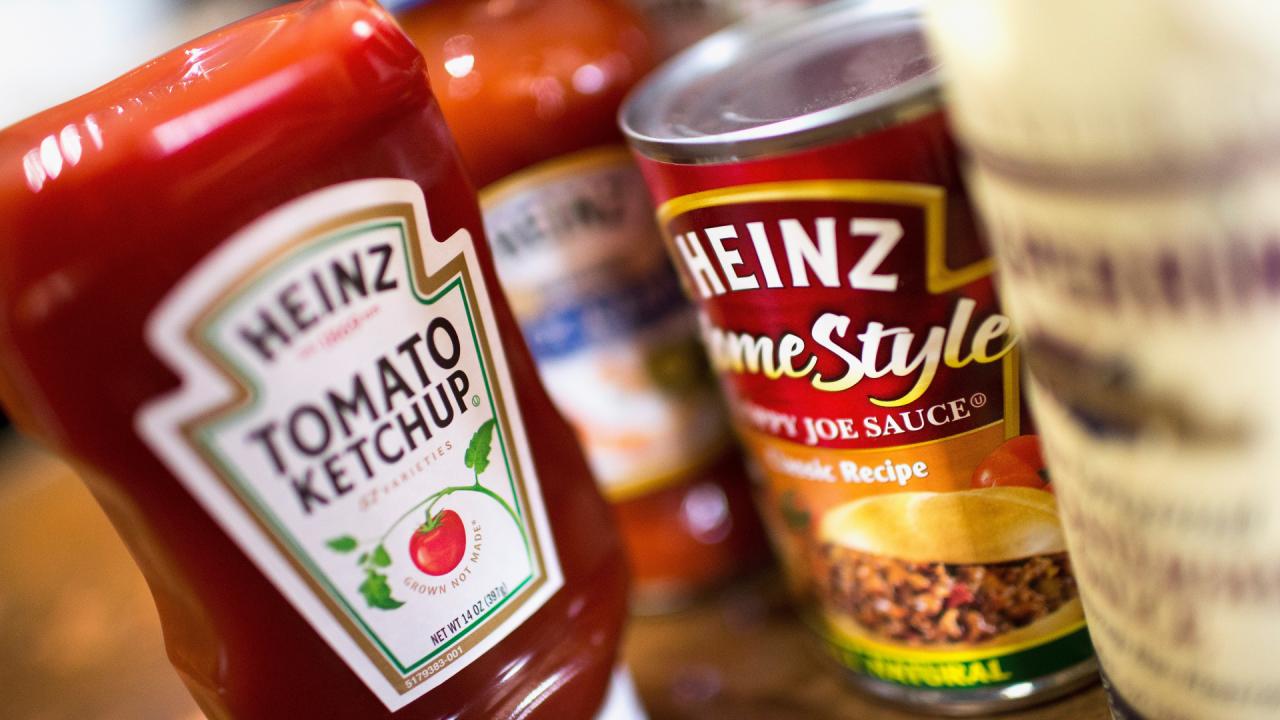
    In the second quarter of 2025, multinational food company Kraft Heinz reported a net loss of $8 billion (AUD$12 billion). This financial downturn was primarily due to a $9.3 billion impairment charge. However, despite significant market challenges, the company’s overall sales exhibited resilience.

    Sales Performance

    Kraft Heinz saw a slight decline in its net sales by 1.9%, dropping to $6.35 billion. Organic sales also fell by 2%, where increased pricing countered a 2.7% volume decrease across various product categories. These categories included cold cuts, coffee, lunchables, frozen snacks, and powdered beverages.

    Operating Loss and Adjusted Income

    Operating income sharply fell into a loss of $8 billion. Similarly, adjusted operating income experienced a 7.5% decrease, landing at $1.3 billion. Kraft Heinz attributed these decreases to rising commodity costs and unfavorable volume and mix. However, these pressures were somewhat alleviated by price increases, reductions in advertising expenditures, and beneficial effects from foreign exchange.

    The company pointed to the impairment charge as the main factor driving their losses. This was largely due to a consistent decrease in share price and market capitalization.

    Strategic Initiatives

    Despite these challenges, Kraft Heinz remains committed to its long-term strategic plans. These include targeted investments in their brands, innovative product development, and improvements in operational efficiency. These initiatives aim to counterbalance the softness in volume and cost inflation.

    Carlos Abrams-Rivera, CEO of Kraft Heinz, commented on the company’s Q2 results, stating, “Our second quarter top-line results reflect this dedication, improving from the first quarter. We are delivering value and driving improvement, underpinned by our Brand Growth System and our Go To Market model.”

    Earlier in the year, it was rumored that Kraft Heinz was considering a spinoff of parts of its grocery division, as it continues to adapt to changing consumer preferences and a general shift away from processed foods.

    Questions & Answers

    What were Kraft Heinz’s net losses in Q2 2025?
    Kraft Heinz reported a net loss of $8 billion (AUD $12 billion) in the second quarter of 2025.

    What factors contributed to the company’s financial downturn?
    The company’s financial downturn was primarily due to a $9.3 billion impairment charge. Other contributors were rising commodity costs and an unfavorable volume and mix.

    What strategic initiatives is Kraft Heinz focusing on to combat these challenges?
    Kraft Heinz is focusing on strategic initiatives like targeted brand investments, product innovation, and operational efficiencies to help counterbalance volume softness and cost inflation.

  • JD.com To Acquire German Retailer Ceconomy In €2.2 Billion Strategic Expansion Move

    JD.com To Acquire German Retailer Ceconomy In €2.2 Billion Strategic Expansion Move

    JD.com, one of China’s leading online retailers, is set to acquire German electronics retailer, Ceconomy. The acquisition deal is worth an estimated 2.2 billion euros (US$2.5 billion). This strategic move signals JD.com’s intentions to expand beyond its domestic market.

    The Details of the Acquisition

    Ceconomy operates under the renowned MediaMarkt and Saturn brands. The acquisition will grant JD.com, a competitor of international giants like Alibaba and Amazon, access to one of Europe’s most extensive online electronic goods platforms, as well as a network of approximately 1000 stores spanning several European nations. The two chains currently employ around 50,000 individuals.

    The deal, announced recently, prices Ceconomy at 4.60 euros per share. CEO Kai-Ulrich Deissner revealed that the deal is expected to be finalized in the first half of the upcoming year.

    According to Deissner, JD.com is the perfect partner at this opportune time. He expressed enthusiasm about the partnership, noting that it would provide them with unrivaled access to cutting-edge technologies, unparalleled retail expertise, and world-leading supply chains.

    Deissner also affirmed that both Ceconomy’s management board and supervisory board would recommend acceptance of the offer to its shareholders. Furthermore, the company’s Duesseldorf headquarters will continue to operate as usual.

    Implications of the Acquisition

    Sandy Xu, CEO of JD.com, has voiced her commitment to working with the team to bolster their capabilities, while also utilizing their advanced technology to expedite Ceconomy’s ongoing transformation.

    Xu added that their objective is to foster Ceconomy’s growth across Europe, thereby creating long-term value for their customers, employees, investors, and local communities.

    The Kellerhals family, Ceconomy’s largest single shareholder, owning just under 30 per cent of the shares, has accepted an offer for 3.81 per cent of its shares. The family intends to retain its investor status, maintaining approximately 25.35 per cent stake.

    Other shareholders, Haniel, Beisheim, BC Equities, and Freenet – who collectively hold about 27.9 per cent of the shares – intend to sell their shares to JD.com.

    Deissner assured that there would be no compulsory redundancies within three years of closing the transaction. He also expressed confidence in avoiding any significant issues from antitrust authorities.

    Impact on Ratings

    Acquiring Ceconomy could potentially fortify JD.com’s presence in Europe significantly. In the wake of the acquisition, JD.com stands to benefit from the more than 1000 stores operating under the MediaMarkt and Saturn brands, not to mention its healthy online presence, which contributes to 24 per cent of sales.

    According to Fitch Ratings, this acquisition could potentially enhance Ceconomy’s credit profile, given JD.com’s strong credit profile. As one of the world’s largest e-commerce platforms, JD.com’s $160 billion revenue from retail, technology, logistics, and healthcare sectors could be a game-changer.

    Questions & Answers

    What is the estimated value of the acquisition deal between JD.com and Ceconomy?
    The acquisition deal is valued at approximately 2.2 billion euros (US$2.5 billion).

    How will the acquisition of Ceconomy benefit JD.com?
    The acquisition will grant JD.com access to one of Europe’s largest online platforms for electronic goods and a network of nearly 1000 stores across several European countries.

    What are the implications of the acquisition deal for Ceconomy’s shareholders?
    The Kellerhals family will sell 3.81 per cent of its shares but intends to remain an investor. Other shareholders, including Haniel, Beisheim, BC Equities, and Freenet, intend to sell their shares to JD.com.

  • Decathlon Aims To Double Indian Procurement, Boosting Local Manufacturing

    Decathlon Aims To Double Indian Procurement, Boosting Local Manufacturing

    Decathlon, the renowned French sports goods company, has disclosed its ambitious plans to double its procurement of goods from India, aiming to reach a monetary value of $3 billion in the next five years. This strategic move will enhance India’s contribution to the company’s global sourcing to 15 per cent by 2030.

    Driving Expansion with High-Potential Categories

    The intended increase in sourcing from India is set to be propelled by categories of high potential, such as fitness equipment, footwear, and clothing. As of now, India accounts for 8 per cent of Decathlon’s global sourcing volumes.

    Decathlon boasts a long-standing sourcing relationship with India, spanning over 25 years. The company predicts that by 2030, locally sourced products will constitute 90 per cent of its sales in the Indian market, marking a significant rise from the current rate of over 70 per cent.

    Strong Support from Domestic Operations

    Decathlon’s operations within India are robust, supported by 113 manufacturing sites, 83 suppliers, and seven production offices. The company also showcases solo categories like yoga and cricket, which are designed and manufactured domestically.

    Frederic Merlevede, the head of Decathlon production, expressed confidence in the company’s strategic investment in India. He said, “Our long-term investment in India reflects the profound trust we have established with our partners.” Merlevede also stated their clear ambition to position India as one of Decathlon’s leading global manufacturing hubs as the company continues to grow.

    At present, Decathlon runs 132 retail stores across 55 cities in India.

    Questions & Answers

    What are Decathlon’s expansion plans in India?
    Decathlon plans to double its sourcing of goods from India, aiming for a monetary value of $3 billion over the next five years.

    Which categories are expected to drive this expansion?
    The expansion is expected to be driven by high-potential categories such as fitness equipment, footwear, and clothing.

    What is Decathlon’s future vision for its operations in India?
    Decathlon aims to increase the representation of domestic products in its sales to 90% by 2030. Furthermore, the company aims to make India one of its main global manufacturing hubs.

  • Australians Set to Splash $10.5 Billion in Year-End Sales Excitement!

    Australians Set to Splash $10.5 Billion in Year-End Sales Excitement!

    Australians are gearing up for a spending spree during this year’s mid-year and end-of-financial-year (EOFY) sales, with projected expenditures hitting a remarkable $10.5 billion. This represents a robust increase of $400 million, or 3.9%, compared to 2024, as reported by the Australian Retailers Association (ARA) and Roy Morgan.

    Shopping Frenzy Begins

    The annual sales event has kicked off, enticing shoppers with significant discounts across a variety of categories, including clothing, shoes, homewares, furniture, and electronics. ARA Chief Industry Affairs Officer Fleur Brown noted that consumers are particularly eager to save on major purchases and essential winter items, with many searching for work-related gadgets like laptops and phones to take advantage of tax deductions.

    Top Spending Categories Revealed

    Clothing, footwear, and accessories dominate the shopping landscape, accounting for 34% of all purchases, followed by household appliances at 19% and electronics at 12%. The ARA emphasizes that this year’s sales are particularly vital for retailers striving to recover from a dip in consumer spending.

    Shifting Shopping Habits

    This year, a notable shift is occurring as more shoppers opt for brick-and-mortar stores. Only 44% of consumers plan to shop online, a significant plunge of 11 percentage points from the previous year, suggesting that shoppers prefer the tactile experience of in-store deals.

    Increased Participation and Spending

    Approximately 6.1 million Australians (26%) are expected to join in the shopping festivities. Among those, 37% intend to spend more than last year, while 42% plan to maintain their spending levels, and 21% will cut back. The average shopper is anticipated to spend $1,714—up by $76 from 2024.

    Young Consumers Lead the Charge

    Young Australians under the age of 35 are emerging as the most enthusiastic spenders, with an average outlay of $2,065, contributing a whopping $4.3 billion to overall sales. This demographic also boasts the largest number of participants, with an estimated 2.1 million expected to shop.

    Men Outspending Women

    When it comes to spending, men are forecasted to lead the charge, averaging $2,044 compared to $1,430 for women. This translates into a total of $5.8 billion spent by men and $4.7 billion by women. Interestingly, a growing number of consumers are planning to splurge, with 36% aiming to spend between $1,000 and $4,999—up 15% from last year. Additionally, 11% are eyeing expenditures of $5,000 and above, marking a 5% increase, while 22% plan to spend between $500 and $999 (up 1%). Meanwhile, only 31% of shoppers intend to spend less than $500, reflecting a dramatic 21% drop from the previous year.

    Questions & Answers

    What is the total projected spending for EOFY sales this year?
    The total spending is expected to reach $10.5 billion, a 3.9% increase from last year.

    How many Australians are participating in the sales?
    Approximately 6.1 million Australians, or 26% of the population, are expected to shop during the sales.

    Which demographic is spending the most?
    Young Australians under 35 are the biggest spenders, with an average expenditure of $2,065.

  • Binance Launches Billion-Dollar Crypto Rescue Initiative

    Binance Launches Billion-Dollar Crypto Rescue Initiative

    Binance invites participants to support the crypto industry via a rescue initiative, to which it will initially commit $1 billion.

    Binance has established the Industry Recovery Initiative (IRI), which includes its own initial commitment of $1 billion, according to a blog post by the crypto giant.

    The IRI is not an investment fund, Binance said, adding that it intends to increase the amount to $2 billion soon if the need arises.

    The initiative is expected to last about six months with flexibility on the investment structure, be it token, fiat, equity, convertible instruments, debt, or credit lines. The committed capital must be set aside within public addresses to ensure transparency.

    Aside from Binance, there are other existing IRI participants, including Jump Crypto, Polygon Ventures, Aptos Labs, Animoca Brands, GSR, Kronos, and Brooker Group which have made an initial aggregate commitment of around $50 million. 150 applications from companies seeking to provide support have also been received.

    On the participation of traditional financial institutions, Binance said it was open to exploring other deal structures for those keen as such firms may be unable to send money to a public address.

    On the targets for capital deployment, IRI is aiming for companies with «innovation and long-term value creation, a delineated and viable business model, and a laser focus on risk management.

    Aside from funding support, we plan to provide founders and projects with comprehensive support – from formation, technical execution, fundraising, and more – so that they can emerge and grow stronger from the crypto winter, the post added.

    Meanwhile, the crypto winter persists following the collapse and subsequent revelations of the fallen exchange FTX. Binance had planned initially to acquire FTX but backed out one day after signing a non-binding agreement citing concerns from due diligence and news reports.