Tag: bitcoin

  • Saxo Launches Crypto FX Trading in Singapore

    Saxo Launches Crypto FX Trading in Singapore

    Saxo Markets customers in Singapore will be able to trade in major cryptocurrencies as FX spot pairs.

    The online trading and investment platform’s new cryptocurrency offering enables customers to trade bitcoin, ethereum and litecoin against EUR, USD, and JPY from a single margin account, Saxo announced in a statement on Wednesday.

    Clients can trade and hedge both long and short exposure in the three cryptocurrencies, which will be in the form of derivatives and not the actual coins.

    Pairing cryptocurrencies with FX makes it more appealing to investors who are more active in the market as it offers a trusted and secure way to trade cryptos, Saxo said.

    Trading via ETNs for example lets more investors access this product in a way that works for their portfolio and makes the most of its volatility. It’s also fundamentally less risky than using cryptocurrency wallets where access can, and has, been lost to dramatic effect, Adam Reynolds, Asia Pacific CEO, Saxo Markets, said in the announcement.

    According to Saxo, its existing range of over 30 different cryptocurrency trackers and ETNs, which so far this year have seen trading volumes exceeding the entire turnover for the whole of 2020 –  a year in which volumes surged 130 percent.
  • Elon Musk Says Tesla Will Stop Accepting BitCoin Because Of Environmental Impact

    Elon Musk Says Tesla Will Stop Accepting BitCoin Because Of Environmental Impact

    Elon Musk’s tweets can be devastating. They have the ability to reshape markets, because of his staunch following. Now, the Tesla supremo has tweeted that Tesla will stop accepting Bitcoin payments because of its environmental impact.  This also comes at a time when Musk himself is promoting cryptocurrencies like Dogecoin and has even set out a Twitter poll asking users if they are open to Tesla accepting the currency.

    The controversial move comes as Musk has been promoting Dogecoin, acting as a catalyst behind its rise, and also has announced a rideshare mission to the Moon via SpaceX funded by Dogecoin.

    There is further criticism of the move because most EVs are still sourcing their electricity from fossil fuels as most homes are powered by the grid. Tesla however has said that its supercharger network will go fully renewable in 2021.

    Cryptocurrencies like bitcoin are very power-intensive as crypto mining involves having racks and racks of GPUs and big data computing capabilities stacked together which consume a lot of power, which is more often than not sourced via a fossil-fuel-powered grid. Almost, the same logic applies to electric cars, critics claim, which makes this move even more controversial.

    The value of Dogecoin has skyrocketed since January 2021 ever since Musk started promoting the currency. Around about this time Musk became a proponent of Cryptocurrencies and opened up to the idea of Tesla accepting Bitcoin. Musk even had Tesla buy a tranche of Bitcoin and then sold it back, improving Tesla’s financial cash flow, showcasing a new form of liquidity.

  • Softbank’s Masayoshi Son Undecided About Bitcoin

    Softbank’s Masayoshi Son Undecided About Bitcoin

    Softbank founder Masayoshi Son spoke out about the adoption of Bitcoin, underlining that uncertainty remained for the top cryptocurrency.

    Softbank was the latest global firm to share its views on the popularity of Bitcoin and the potential adoption of the cryptocurrency.

    There’s a lot of discussion over if it’s a good thing or a bad thing, what’s the true value or is it in a bubble, said Masayoshi Son during Softbank’s recent earnings conference.

    Honestly speaking, I don’t know.

    Despite the uncertainty, Son noted that Bitcoin’s popularity has transformed it into a platform that can’t be ignored like diamonds or bonds.

    There’s no need to reject the cryptocurrency either, said. We are always having such internal discussions.

    Financial firms aside, numerous global tech firms are also increasingly exploring Bitcoin opportunities – particularly as a payment method – such as gaming console Xbox and electric vehicle company Tesla, though the latter recently suspended car purchases using the cryptocurrency.

  • Asian Gaming Giant Adds Bitcoin to Balance Sheet

    Asian Gaming Giant Adds Bitcoin to Balance Sheet

    Nexon has joined other publicly listed companies such as Microstrategy and Tesla in holding the cryptocurrency as a hedge against inflation.

    The South Korean-Japanese video game publisher purchased some 1,707 bitcoin for about $100 million, equivalent to less than 2 percent of the company’s total cash and cash equivalents on hand, it said in an announcement this week.

    Nexon owns major gaming franchises including Maple Story, Kart Rider and Dungeon & Fighter. It is listed in Tokyo and is part of the Nikkei 225.

    Our purchase of bitcoin reflects a disciplined strategy for protecting shareholder value and for maintaining the purchasing power of our cash assets, Owen Mahoney, president and CEO of Nexon, explained in the statement, saying the company needs to think seriously about the future purchasing power of our cash in a world of potential currency debasement.

    In the current economic environment, we believe bitcoin offers long-term stability and liquidity while maintaining the value of our cash for future investments, he added.

  • HSBC Adds Coinbase to Crypto Ban List

    HSBC Adds Coinbase to Crypto Ban List

    Despite the growing embrace of cryptocurrencies among institutions and retail investors, HSBC is sticking to its policy of avoiding virtual currencies and stocks correlated to them.

    Europe’s largest bank in Europe, with total assets of $2.715 trillion, is likely to avoid Coinbase’s newly listed COIN stock because of lingering worries about crypto’s role in money laundering and criminal activity.

    HSBC has no appetite for direct exposure to virtual currencies and limited appetite to facilitate products or securities that derive their value from virtual currencies. This is not a new policy, Ankit Patel, HSBC corporate media relations manager, told crypto news platform Coindesk.

    Last week, the bank confirmed that it stopped customers of its online trading platform InvestDirect from adding MicroStrategy stock to their portfolios, calling them a «virtual currency product.» The company holds about $5.5 billion in bitcoin, or about 80 percent of its $6.8 billion market capitalization.

    Coinbase debuted on Nasdaq last Wednesday in a direct listing, in what was seen as another key step towards cryptocurrencies becoming a mainstream medium of exchange.

    The listing of Coinbase’s means that even if average investors don’t want to buy or sell cryptocurrencies on their own, they can still can invest in the cryptocurrency economy by taking a stake in one of its biggest players. After a day of trading, the U.S.’ largest cryptocurrency exchange had a market capitalization of $86 billion.

    To stay competitive amid client demand for digital assets, financial sector giants have ramped out their offerings. These include BNY Mellon, which announced the introduction of crypto custodial services and Morgan Stanley, which will roll out a bitcoin offering to wealth management clients and is reportedly mulling exposure in Bitcoin through its investment arm, Counterpoint Global. Goldman Sachs has also said it would offer investments in bitcoin and other digital assets to its wealth clients.

    Outside of the U.S., notable global banks that have also launched crypto offerings include Standard Chartered and DBS.

  • Goldman Sachs Joins Crypto Wealth Wave

    Goldman Sachs Joins Crypto Wealth Wave

    Goldman Sachs is the latest to join the wave of global financial institutions seeking a share in the rapidly growing cryptocurrency market.

    Goldman Sachs plans to offer investments in bitcoin and other digital assets to its wealth clients, according to a report, starting from the second quarter.

    The planned offering could include physical bitcoin, derivatives and traditional investment vehicles.

    Earlier in March, the bank’s president and chief operating officer John Waldron had already signaled interest in launching its own crypto business.

    Client demand is rising, Waldron said, according to a report that said the bank’s crypto trading desk had reopened in the same month and began dealing bitcoin futures and non-deliverable forwards.

    We are regulated on what we can do. We continue to evaluate it and engage on it.

    A gradually increasing number of global banks are entering the crypto market, particularly with a focus on serving wealth management client demand.

    Morgan Stanley also launched its own crypto offering earlier last month via three funds.

    Outside of the U.S., DBS and Standard Chartered have also entered the crypto market, launching their offerings in December last year.

  • Fake iOS app steals one million dollars in Bitcoins taking a victim’s life savings

    Fake iOS app steals one million dollars in Bitcoins taking a victim’s life savings

    You have to feel bad for a man named Phillipe Christodoulou. Looking for a place to store Bitcoins he owned that were valued at $600,000 at the time, he installed an app called Trezor Wallet from the Apple App Store, when Christodoulou opened the app looking to check his balance, he was stunned to discover that his 17.1 Bitcoins (now worth over $1 million) was gone.

    As it turned out, Trezor, which manufactures hardware cryptocurrency wallets, does not offer an iOS or Android app and had been complaining about the fake apps listed in the App Store and Play Store to no avail. Back in December, the company disseminated a tweet warning Android users that own a physical Trezor device that “This app is a scam and has no relation to SatoshiLabs and Trezor. We’ve already reported it to the Google team. Always confirm any action on your device and never type seed words until your Trezor asks you to.” Google did remove the Android version of the app in December.

    Seed words or a seed phrase is a list of words needed to recover Bitcoin funds “on-chain.” Anyone who knows the words can take ownership of the user’s Bitcoins so Trezor recommends that they must not be typed into a website and that seed words need to be guarded as fiercely as one would protect cash or jewels.

    While the bad actors that created the fake iOS and Android versions of the (non-existent) Trezor app stole $1 million in Bitcoins from Christodoulou, the victim is more upset with Apple. Once a loyal Apple customer, Christodoulou now says that Apple “betrayed the trust that I had in them. Apple doesn’t deserve to get away with this.”

    Apple spokesperson Fred Sainz says that “Study after study has shown that the App Store is the most secure app marketplace in the world.” However, you won’t get Meghan DiMuzio, executive director of the Coalition for App Fairness, to agree with the Apple spokesperson. DiMuzio, contradicting Sainz’ statement, said, “Apple frequently pushes myths about user privacy and security as a shield against its anti-competitive App Store practices. The truth is, Apple’s security ‘standards’ are inconsistently applied across apps and only enforced when it benefits Apple.”

    The 17.1 Bitcoins that were stolen represented Christodoulou’s life savings and right now there is no indication that he will be able to get that money back.

  • GIC Bets on Digital Assets

    GIC Bets on Digital Assets

    The blue chip-focused Singapore sovereign wealth fund has invested in a crypto bank, in a signal that digital assets are here to stay.

    In an announcement on its blog last week, U.S.-based digital asset bank Anchorage said it raised $80 million in a Series C funding round led by GIC.

    Joining the sovereign wealth fund were U.S. venture capital firms Andreessen Horowitz, Blockchain Capital, and Lux, as well as Portuguese fund Indico.

    Anchorage said the new capital will allow it to «rapidly scale to meet the rising demand for participation in the digital asset space, particularly among corporations and traditional financial institutions.»

    It also said that it wants to be a crypto partner to neo banks, challenger banks, and traditional banks, and make institutional decentralized finance (DeFi) participation accessible.

    In 2018, GIC was among investors who raised $300 million for Coinbase, a digital currency exchange headquartered in San Francisco, California.

    The news came as a surprise as CEO Lim Chow Kiat previously said that GIC would avoid crypto-related investments as it goes against GIC’s investment mandate, which is «to preserve and enhance the international purchasing power of Singapore’s financial reserves.»

  • Vietnam cryptocurrency use second highest in the world

    Vietnam cryptocurrency use second highest in the world

    Vietnam has the second-highest rate of in terms of cryptocurrency use among 74 surveyed economies, driven by remittance payments, a new report says.

    The report on survey results released by Statista, a global provider of market and consumer data, says 21 percent of respondents in Vietnam said that they used or owned cryptocurrency in 2020, second after Nigeria (32 percent).

    The Philippines ranked third at 20 percent, followed by Turkey and Peru, both at 16 percent, said the survey which covered 1,000-4,000 respondents per country.

    The rest of the top 10 comprised Switzerland, China, the U.S., Germany and Japan.

    For Vietnam and the Philippines, remittance payments play a role in the widespread use of cryptocurrency,” the report said.

    The high cost of sending money across borders in conventional ways has caused many to turn to local cryptocurrency exchanges, catering to overseas workers and their families, it added.

    However, cryptocurrency has not been recognized as a legitimate means of payment in Vietnam. The State Bank of Vietnam has warned that owning, trading and using cryptocurrency was risky and not protected by laws.

    Earlier reports have noted that while the Vietnamese diaspora typically sent remittances to Vietnam to support their families, there has been a shift in recent years. Now, a significant portion of remittances is used as investments for doing business in the country.

    Around 580,000 Vietnamese citizens work overseas now, up from 500,000 in 2010, according to the Department of Overseas Labor under the Ministry of Labor, Invalids, and Social Affairs.

  • ApplePay will now allow users to make purchases using Bitcoin

    ApplePay will now allow users to make purchases using Bitcoin

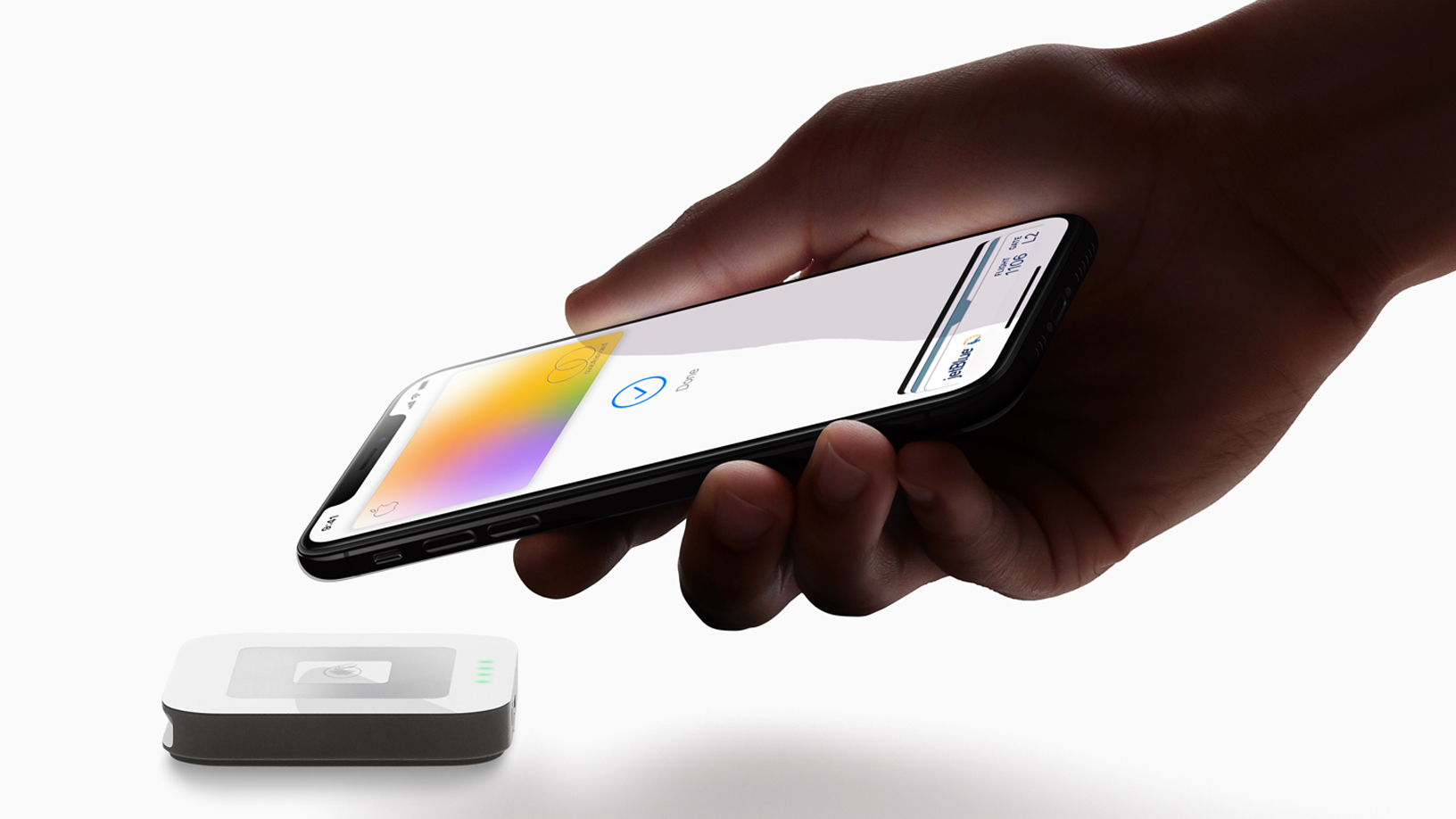
    Bitcoin is still the most famous cryptocurrency. And at Friday’s close, each Bitcoin was valued at close to $48,000, more than double the valuation of the digital currency about a year ago. Not only can you buy more with your Bitcoins, but you can also find it easier to spend thanks to the Apple Pay mobile payment service. The BitPay wallet app’s Prepaid Mastercard can be added to the Apple Wallet and Apple Pay can help Bitcoin owners spend the cryptocurrency online, through apps or in a store.

    The BitPay wallet app not only works with Bitcoin, but will also work with Ether, Bitcoin Cash and as well as the dollar-pegged stable coins USD Coin, Gemini Dollar, Paxos Standard and Binance USD. The stable coins are based on a 1:1 ratio with the U.S. Dollar. For every Gemini Dollar in circulation, there is a corresponding U.S. Dollar held by the State Street Bank and Trust Company.

    There are plans in the work to add support for the BitPay Wallet by the end of next month with other mobile payment services Google Pay and Samsung Pay. This will allow Android users to more easily spend Bitcoins and other cryptocurrencies including the aforementioned names that are pegged to the U.S. Dollar.

    To add your BitPaycard to Apple Wallet, you need to have the latest version of the BitPay app. The latter, which can help you securely store, spend, and manage Bitcoin, can be installed from the App Store and the Google Play Store. BitPay CEO Stephen Pair (both of him) said, “We have thousands of BitPay Wallet app customers using the BitPay Card. Adding Apple Pay and soon Google and Samsung Pay makes it easy and convenient to use the BitPay Card in more places.”

    Apple should do even more when it comes to digital currencies; should Apple add a cryptocurrency exchange it could generate over $40 billion. RBC analyst Mitch Steves believes that this would allow Apple’s shares to rise 25%. RBC noted that “Square takes in $1.6 billion a quarter through bitcoin-trading revenue from its roughly 30 million active users. Apple has an install base of about 1.5 billion people, signaling that it could make up to $40 billion a year from a Wallet-based crypto exchange.” The report adds that “if Apple went down this path, the USA would likely acquire the most crypto assets from a global perspective. If the USA owns the most crypto assets (be it Bitcoin or other assets), it would not make logical sense in our view to ban it. In addition, with Apple’s secure and world-class software, the USA would be able to have confidence in user information and balances if needed in the future.”

    Apple’s big move comes right after Tesla CEO Elon Musk showed interest in cryptocurrency Dogecoin. Tesla says that it soon will accept Bitcoins as payment toward the purchase of a Tesla vehicle. RBC’s Steves notes that the combination of Apple’s interest in Bitcoin and Apple’s popularity in the tech world can help the U.S. become the technological leader in cryptocurrencies for as long as the next 20 years.

    Thanks to the Blockchain technology, the method used to keep track of Bitcoin transactions, using the cryptocurrency is secure. Data on transactions is kept inside blocks and when a block is full, it is chained to the previous one. If someone wants to steal Bitcoin and hacks into the Blockchain to alter the information in one the blocks, it can’t be done without all members of the Blockchain spotting the changes. There are smartphones that can store and verify cryptocurrency transactions such as the HTC Exodus 1s.

  • Crypto Firm Nabs Ex-HSBC Banker as CEO

    Crypto Firm Nabs Ex-HSBC Banker as CEO

    A British banker is taking over the top job at Valour, a Swiss start-up that plans to expand a zero-fee bitcoin exchange-traded product across Europe.

    Zug-based Valour is naming Diana Biggs as its CEO, effective immediately, it said in a statement. She is the former chief of innovation at HSBC’s private banking unit and a cryptocurrency backer of the earliest hour.

    Biggs is the latest banker to leave traditional finance for digital assets, which is a booming industry in Switzerland thanks to friendly regulatory handling. Diana is the perfect candidate to lead the company through this next phase of growth and expansion, Valour founder Johan Wattenstrom said.

    Founded three years ago, Valour in December launched a fee-less digital asset product that trades on the Nordic exchange’s growth index, NGM. The start-up manages nearly $30 million and plans to roll out more exchange-traded notes at other European venues in the coming months.

    At HSBC, Biggs led fintech partnerships and championed open innovation. Prior to joining the British bank, she worked for digital currency platform Uphold, e-commerce startup Soko, and spent nearly five years as a consultant at Oliver Wyman.

  • India Proposes Crypto Ban and E-Rupee Plans

    India Proposes Crypto Ban and E-Rupee Plans

    Indian authorities plan to propose a new law to ban private cryptocurrencies and implement a framework for an official central bank digital currency.

    India will seek «to prohibit all private cryptocurrencies in India», according to a legislative agenda published by the lower house’s website on Friday last wee, with exceptions for certain purposes such as the promotion of the underlying technology and its uses.

    In addition, lawmakers will look to «create a facilitative framework for the creation of the official digital currency to be issued by the Reserve Bank of India (RBI).

    Not unlike other central banks, the RBI has been accelerating efforts to launch its own electronic money and tighten regulation against cryptocurrencies. It first issued an order in April 2018 to cut ties with all individuals or businesses dealing in digital currencies like Bitcoins within three months.

    But India’s Supreme Court subsequently overturned the ban by allowing banks to handle crypto transactions from exchanges and traders.

    The pushback reflects broader shifts in sentiments worldwide, particularly amongst banks that have been demonstrating increasing openness to cryptocurrencies.

  • Forgotten Passwords: $140 Billion Bitcoin Write-Off?

    Forgotten Passwords: $140 Billion Bitcoin Write-Off?

    Nearly $140 billion worth of Bitcoins is at risk of being permanently lost, according to online platform Chainalysis, due to forgotten passwords for decryption.

    3.7 million Bitcoins worth almost $140 billion could permanently vanish from the market, as of January 18 this year.

    Based on June 2020 figures, this represents around one-fifth of the total 18.6 million Bitcoins created in the market. Bitcoin’s infrastructure is designed to cap supply at 21 million.

    German-born San Francisco-based programmer Stefan Thomas first shined a light on the issue after he revealed that he failed to gain access to his crypto wallet to access over more than $200 million worth of Bitcoin.

    Thomas had already made eight successful attempts and he has two more remaining to save his sizeable Bitcoin holdings.

    I would just lay in bed and think about it. Then I would go to the computer with some new strategy, and it wouldn’t work, and I would be desperate again, he recalls. I got to a point where I said to myself, ‘Let it be in the past, just for your own mental health.

  • Physical Exchange Results in Bitcoin Robbery in Hong Kong

    Physical Exchange Results in Bitcoin Robbery in Hong Kong

    A 37-year old man in Hong Kong allegedly sought to sell bitcoin for cash but ended up being swindled during an in-person transaction in a vehicle and kicked out.

    The victim had originally scheduled to meet two individuals to trade 15 bitcoin at HK$235,000 each ($30,000), or HK$3 million in total, outside of a hotel in Hong Kong, according to a report citing police sources.

    The vehicle proceeded to move to another location while the bitcoin transfer was being made. Upon completion, another car showed up and three more individuals related to the original two fraudulent buyers robbed the victim’s cash, two mobile phones, and kicked him out.

    Local police claim that the six robbers were non-Chinese men aged around 30 and have yet to be captured.

  • Singapore Tightens Oversight of Crypto Exchanges

    Singapore Tightens Oversight of Crypto Exchanges

    MAS powers have been expanded to include regulatory measures on crypto service providers, even if they may not possess the money or cryptocurrency involved.

    The Monetary Authority of Singapore (MAS) is enhancing its regulatory framework and updating the Payment Services Act to keep pace with changes to international standards and to better mitigate the money laundering and terrorism financing related to digital payment tokens.

    Any entity that facilitates the transmission, exchange or storage of DPTs – also known as cryptocurrencies – will now have to be licensed, MAS said on Monday.

    The new legislation will help minimize the risk of DPT service providers being exploited by criminals to launder illicit proceeds or hide illicit assets, said Minister for Transport Ong Ye Kung, who is also a board member of MAS, during the second reading of the Payment Services (Amendment) Bill in Parliament on Monday.

    The amendments also give MAS powers to impose measures on DPT service providers to ensure better consumer protection and to maintain financial stability and safeguard the efficacy of monetary policy.

    We have seen recent development of new forms of DPTs which values are pegged to stable assets to gain users’ confidence. It is therefore important for MAS to be able to respond to market developments and address new risks in a timely manner, MAS said.

    The Payment Services Act, which was introduced in January 2020, provides comprehensive regulation for companies handling activities ranging from digital payments to the trading of tokens such as bitcoin and ethereum, and gives MAS formal supervisory powers for cybersecurity risks and controls on money laundering and terrorism financing.