Tag: bitcoin

  • Biggest AWS consumer from Singapore stole multiple identities for mining cryptocurrencies

    The Amazon Web Service cloud service had recently received one of its biggest consumers from Singapore, but it was quickly discovered after a small investigation that the user was impersonating several US-based personalities and thus using the computing power for his own benefit by mining several cryptocurrencies such as BTC, ETH, and LTC.

    Ho Jun Jia, also known as “Prefinity” and “Ethereum Vendor” was arrested in Singapore in September 2019 and is waiting for the United States court to decide if they want to extradite him from the country.

    This is very likely to happen as the US and Singapore have an extradition treaty. If the extradition does happen, Ho will have to face fines above the $5 million’s worth of computing power he consumed as well as some jail time for identity theft and fraud.

    Who did Ho impersonate?

    According to the investigation, Ho was impersonating an unnamed game developer in California, which was actually paying the bills on Ho’s illegal activity on the AWS. Furthermore, Ho had also undertaken the identity of a Texas-based individual and an Indian businessman.

    In total, Ho had consumed a staggering amount of $5 million’s worth of computing power, thus potentially generating far more in profits than anticipated.

    Investigators also say that Ho was using trading bots to then speculate with the cryptocurrencies he had generated through his illegal activities.

    It is easily understandable as according to this Bitcoin Trader review on InsideBitcoins, the larger the amount deposited on a Bitcoin trading robot, the higher the chance of not making too much of a scene, therefore helping Ho keep his identity a secret.

    It’s assumed that Ho made far more from speculations than he made with simply mining the cryptocurrencies, thus the unauthorized exchange of securities could also be added to his list of illegal activity.

    Why will Singapore approve the extradition?

    According to investigators, it is assumed that Ho was also hiding his identity in Singapore as well, therefore he was not subject to any type of income or capital gain tax that is active within the country.

    Therefore, it’s easy to say that even if Ho is not extradited he will have to face charges of tax evasion in Singapore, which, although garners a much lighter punishment, would still mean the disclosure of the fortune he accumulated as well as several years served in prison.

    However, considering that most of the damage was caused to US-based individuals as well as companies, Singapore is very unlikely to deny the extradition and allow US authorities to punish Ho.

    In the end, all victims will be compensated for the damage they received from Ho’s illegal activities and further security measures will be implemented on the AWS and Google Cloud platforms.
  • All 7-Eleven Philippines stores now sell Bitcoin

    All 7-Eleven Philippines stores now sell Bitcoin

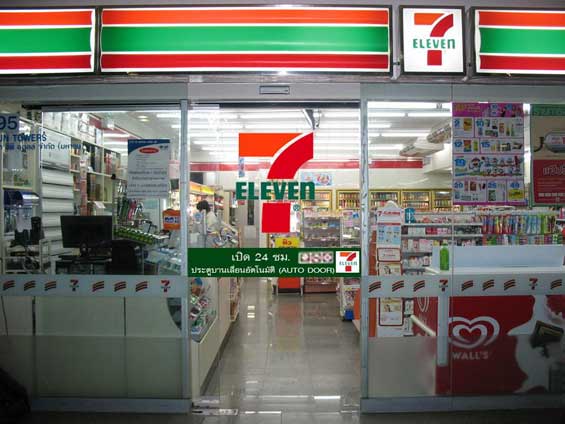
    Bitcoin purchasers can now buy the cryptocurrency in all 7-Eleven Philippines stores.

    The move has been introduced by Cryptocurrency investment app Abra in partnership with ECPay payments firm, making the coin available in more than 6000 locations in the territory. The purpose of the new strategy is to simplify access to Bitcoin investment.

    “Using new digital tools that open up financial access shouldn’t be hard,” said a spokesperson for the firm to Cointelegraph, “and they shouldn’t be complicated. Moving cash to crypto and other digital assets should be simple and fast. That’s why we are really excited to announce our new partnership.”

    Bitcoin purchase is being made available under the “Bills Payment” option at Cliqq ECPay kiosks in stores, or use the mobile app.

  • HTC Exodus is getting native support for Bitcoin Cash

    HTC Exodus is getting native support for Bitcoin Cash

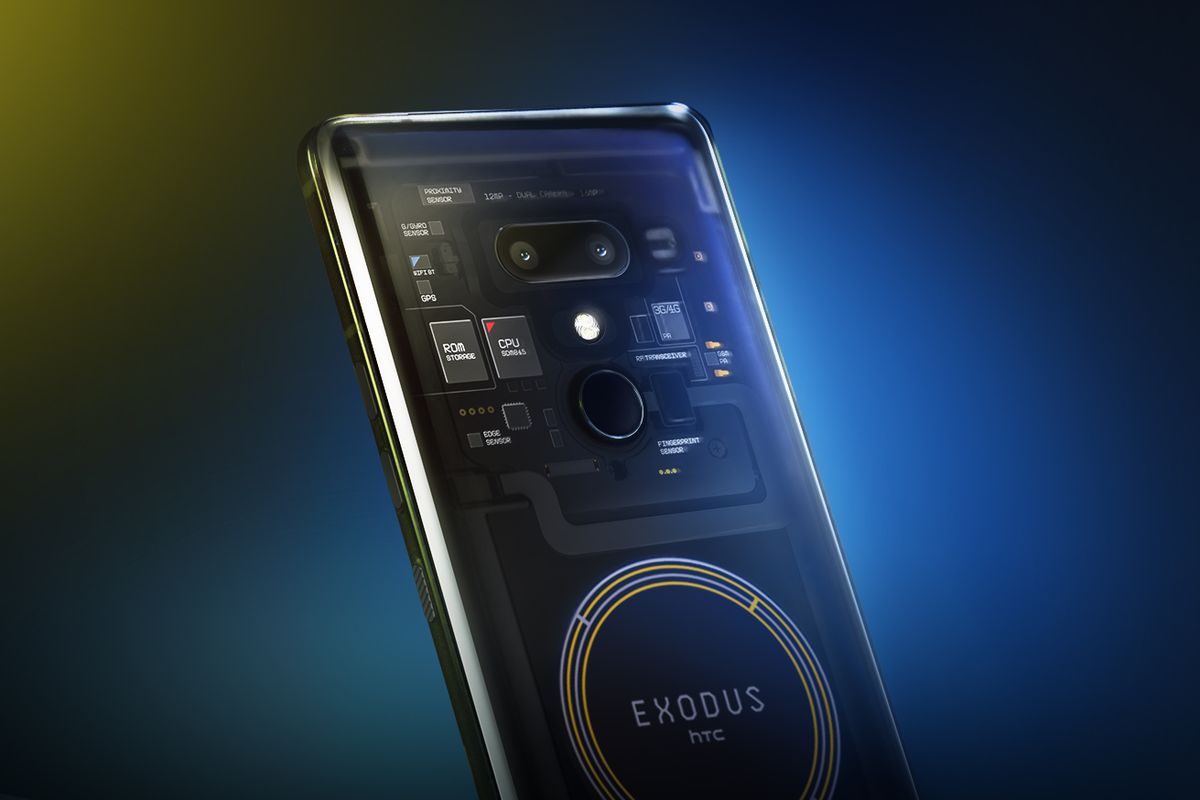
    HTC has just announced it has partnered with Bitcoin to offer Exodus owners native support for Bitcoin Cash. HTC’s blockchain smartphone is the first phone to provide Bitcoin Cash support without having to download a wallet from an app store.

    Those who already own an Exodus 1 smartphone will receive a software update that will give them access to a Bitcoin.com wallet app pre-loaded on their devices. In a statement, HTC’s chief decentralization officer Phil Chen says that this is the first step in a long journey that his company and Bitcoin.com plan to take together.

    HTC and Bitcoin.com have big plans for the future, as the companies want to offer special discounts when paying for phones in BCH, as well a selling the Exodus phones on store.bitcoin.com.

    Last but not least the partnership announced today will enable Bitcoin Cash to be used as peer-to-peer electronics cash for all HTC Exodus users around the world.

  • MAS Warns Against Lee Hsien Loong Bitcoin Scam

    MAS Warns Against Lee Hsien Loong Bitcoin Scam

    The Monetary Authority of Singapore warned the public about a website using fabricated comments from Prime Minister Lee Hsien Loong to solicit investments in bitcoin.

    The website not only used fabricated comments but also attempted to impersonate a news page from a local media organization, the Monetary Authority of Singapore (MAS) added.

    The information on the website is highly deceptive and misleading. The statements attributed to PM Lee are completely false, said MAS in a media statement last Friday. The site tries to get readers to provide credit card or bank account information, plus payments into a trading platform, which would automatically initiate trades on the client’s behalf.

    Members of the public are advised to exercise extreme caution and avoid providing any financial or personal information on the forms linked from the website, MAS added. Members of the public who suspect that an investment could be fraudulent or misused for other unlawful activities should report such cases to the police, the regulator said.

    Since last year, MAS has issued at least four consumer advisories on such fraudulent websites that use the names and photographs of ministers and other prominent people in Singapore to solicit bitcoin investments. The ministers included Emeritus Senior Minister Goh Chok Tong and Deputy Prime Minister Heng Swee Keat.

  • Argomall partners with CoinGate to adopt Bitcoin and cryptocurrency payments

    Argomall partners with CoinGate to adopt Bitcoin and cryptocurrency payments

    Online shopping website Argomall.com now takes payment in cryptocurrencies and is the first Filipino online retailer in Southeast Asia to accept Bitcoin and around 50 other cryptocurrencies as payment.

    In line with Argomall’s value proposition of personalized convenience, it has added cryptocurrencies, also called Altcoins, to its already wide list of payment options, which include cash on delivery (COD), credit/debit cards, online installment via Home Credit, online banking, over-the-counter payments in banks and non-bank institutions, G-cash and PayPal.

    This option became available on April 1 and is only available for straight payments.

    Argomall partnered with CoinGate to make this project possible. CoinGate is an online trading platform for Bitcoin, Ethereum, Litecoin, XRP and other coins like: Bitcoin Cash (BCH), Sirin Labs (SRN), Telcoin (TEL), Nano (NANO), TRON (TRX), Dai (DAI), Bitcoin SV (BSV), Zcash (ZEC), Ethereum Classic (ETC), Augur (REP), Dogecoin (DOGE), Golem (GNT), DigixDAO (DGD), Wings DAO (WINGS), iEx.ec (RLC), Decred (DCR), Stellar (XLM), Basic Attention Token (BAT), Aragon (ANT), Bancor Network Token (BNT), Civic (CVC), EOS (EOS), TenXPay (PAY), OmiseGo (OMG), Monaco (MCO), 0x Protocol Token (ZRX), Qtum Ignition (QTUM), Storj (STORJ), FunFair (FUN), Salt (SALT), Bitcoin Gold (BTG), DigiByte (DGB), district0x (DNT), Power Ledger (POWR), Populous (PPT), Bread (BRD), Noah (NOAH), Binance token (BNB), Polymath (POLY), Kyber Network (KNC), TrueUSD (TUSD), Mithril (MITH).

    In a report by Entrepreneur magazine: “Compared to its Southeast Asian neighbors, the Philippines has been relatively more open to using Bitcoin and other cryptocurrencies, according to a report in FT.com, the Financial Times newspaper’s online site.” It will be recalled that the Bangko Sentral ng Pilipinas (BSP) released a circular in February with regulations for businesses that want to sign up as a virtual currency exchange. It is the only central bank in five countries cited in the FT.com report to do this.

    Some 2.9 percent of Filipinos are adopting Bitcoin, according to a survey conducted by FT.com, second only to the 3.3 percent of Indonesians doing the same. Overall, Southeast Asia’s cryptocurrency adoption rate is 2.5 percent.

    According to a report written by Financial Times’ Confidential Research analysts Prinz Magtulis and Andi Haswidi: “Among the five ASEAN countries we survey, the Philippines has made the most regulatory progress. Since February, its central bank has required all exchanges to obtain a permit for trading cryptocurrencies and to register with the country’s Anti-Money Laundering Council. They are also subject to annual fees. We expect the rest of Asean-5 to follow, in response to concerns that Bitcoin is being used to fund terrorism and other crimes.”

    Prominent global companies that accept Bitcoin include Microsoft, British Airways, McDonald’s and Shopify.

    Established in November of 2015, Argomall grew out of a creative dream by the Filipino-owned conglomerate Transnational Diversified Group to deliver trustworthy and efficient solutions to the discerning Filipino tech shopper.

    “These solutions,” Argomall Chief Argonaut Karel Holub said, “now include the opportunity to pay in Bitcoin and around 50 more Altcoins, because it is part of our mission and vision at Argomall to make the discovery, selection and purchase of smartphones—or any other related gadget—in the Philippines easy, while providing the best service on the internet to our consumers.”

    “Enabling online shoppers in the Philippines to pay with Bitcoin and around 50 more Altcoins is our way of providing good service, as well as opening up another means by which to earn,” Holub said. “This, to us, is a win-win situation where everyone gets good benefits. After all, our vision is that anyone in the Philippines will be able to easily upgrade their smartphone from anywhere, anytime—and that includes giving our customers all the ease and convenience they need to do just that. We aim to make their new device shopping journey as easy and comfortable as possible.”

    CoinGate Marketing Manager Veronika Mishura said this partnership with Argomall is a large step for cryptocurrency adoption, adding that this is CoinGate’s first such integration in Southeast Asia. Moreover, Mishura said, using cryptocurrencies as payment for online purchases present a cheaper and faster alternative to traditional payment methods.

    “Crypto-adoption among retailers is definitely what we need to strive for,” Mishura said. “When more stores accept digital currencies, more users are prompted to buy all types of goods with cryptocurrency. This is exactly what crypto-industry needs for recognition that would lead to it becoming a standard payment method along with credit cards.”

    “Technologies like Lightning Network have already made it more convenient and profitable for businesses to accept cryptocurrency rather than fiat,” she added. “We are thrilled to have Argomall on board. Hopefully, Philippine crypto enthusiasts won’t stay aside, and will start using this new payment method!’

    While Argomall does not endorse the purchase of Bitcoin or any of the other 50 or so Altcoins, the company provides opportunities for those who do have these cryptocurrencies to pay with them at argomall.com in a safe way.

  • 4 Reasons Why Crypto Transactions Could Dominate the Payment Markets in the Future

    4 Reasons Why Crypto Transactions Could Dominate the Payment Markets in the Future

    Over time, the position of the payment markets in the global economy has been invariably shaped and defined by the traditional payment systems. However, as with all technologies, it is not without its pitfalls.
    While these payment systems are equipped to handle the level of transactions well enough, they still have several faults. Thus, in the bid to survive the rapid pace at which revolution is taking place globally, the payments market had to accept the innovative power wielded by cryptocurrencies.

    As a result, these traditional payment systems have to compete with cryptocurrencies for dominance. However, given the pace at which crypto adoption is going, experts believe that crypto transactions could dominate the payments market at some point in the future.
    Let’s see why.

    Crypto Transactions have Blockchain Technology as their Backbone

    With blockchain technology being the primary backbone of crypto transactions, the payments market get to experience innovations in various ways. One such way is decentralization. No one wants to wake up to find their accounts frozen for something they are not aware of. Centralized services do this to people — with central authorities in control, there is limited freedom for flexibility in transactions. PayPal, for instance, imposes daily transaction limits on users and sometimes suffers from delayed services due to many glitches.

    Blockchain technology, on the other hand, is glitch-free. Furthermore, there are no limits as users get to transfer as much money as they want to anyone they want. This, of course, is a recipe for a high influx of people into the payments market.

    Let’s Talk About Scalability

    No one wants to wait for several hours or days before getting their transactions confirmed. A slow system can be really frustrating. This is where crypto transactions stand out. Created as an electronic cash system, they are better equipped to deal with the high demand for services.

    Cyber Security

    The evolution of technology means that keeping one’s transactions and accounts protected from prying eyes is quite difficult. This is particularly true of traditional online transactions.
    With the immutable force of tamper-proof ledger system offered by blockchain, crypto transactions are safe from these threats. Blockchain technology works in such a way that transactions and data can only be added to it but cannot be altered afterward.
    Thus, with crypto transactions, chances of intercepting transfers or installing malicious software are curtailed. This is particularly the case with crypto transactions performed through cold wallets and decentralized exchanges.

    The Future is Going Cashless

    The world is increasingly adopting digital economy which means that soon fiat currencies could be ditched and replaced with different forms of electronic cash systems. The fact that cryptocurrencies were introduced to the world as digital money means they could one day be the way to go. Even though the possibility of crypto transactions being used with different businesses is limited at the moment, the future appears to be bright. In fact, cryptocurrencies like Ripple and Stellar are gradually making the cut in larger circles.
    IBM, for example, recently announced that it was adopting Stellar as its native currency. This is definitely a move in the right direction for all cryptocurrencies.

    Learn more about crypto transactions and related subjects by checking out the infographic originally published at Bitcoinfy.net.

  • Singapore’s Start-Up To Launch World’s First All-In-One Digital Currency App

    Singapore’s Start-Up To Launch World’s First All-In-One Digital Currency App

    A team of Singaporean startup will be launching the world’s first all-in-one digital finance mobile application to help general public come onboard to the world of digital currency or better known as cryptocurrency.

    Started off as a media portal AsiaTokenFund, the company has launched the app called ATF to integrate its media platform with a dynamic cryptocurrency “store & utilize” platform. The company realized that as more and more real-businesses are moving into blockchain and adopting cryptocurrency, there is a need to bring more people from the general public into the industry by adopting and utilizing cryptocurrency in everyday life. The main issue is that, at the present moment, it is very difficult or troublesome for a new-to-crypto user to come onboard as the processes are so segmented.

    “Right now if a new user wants to obtain a cryptocurrency, he/she have no idea what it is. He/she will have to read information about it somewhere. Next, he will need to download and set up a wallet and thereafter find a OTC or platform to buy his first cryptocurrency. Thereafter, he’ll have to find other platform to trade or download other app to make payments. It’s just too fragmented with too many processes. You can’t drive mass adoption this way” Said Ken N, Co-Founder & CEO of ATF.

    With ATF Platform / App , users will be able to read the latest news on what’s happening in the blockchain & cryptocurrency space , get the latest market analysis , find out what new currencies are out there to purchase and learn some basic information.

    Adding to that, users will also be assigned their own asset function which comes with a secured wallet to store and utilize their cryptocurrency. In the asset function, users can also purchase cryptocurrency using fiat via bank-transfer or credit / debit cards. Users can also sell their cryptocurrency with the same method.

    In Addition, users can transfer cryptocurrency to peers for free. With the added supported merchant function, users can now purchase items listed in the app by merchants and pay by cryptocurrency. What more, users can also use the ATF app to scan & pay directly at merchant physical shop using their digital currencies.

    “We’ve real companies embarking to accept digital currencies. Recently, we’ve seen news that Starbucks will soon start to accept bitcoin as payment in the US. We’ve also seen news on Facebook announcing its cryptocurrency. I foresee in the near future, more real businesses especially merchants will be able to accept cryptocurrency. There is a gap in the market to provide a one-stop-solution. I hope we are able to do just that” Said Ken N.

    The full function of the app can be summarized as follow:

    • News, Research Articles & Market Analysis.
    • Latest Project Fundraising, issuing new cryptocurrency for purchase.
    • Secured Wallet to store cryptocurrency.
    • OTC, fiat-to-crypto purchase or sell cryptocurrency.
    • Aggregated to Exchange for trading.
    • Transfer crypto peer-to-peer for free.
    • Purchase in-app merchant listed items.
    • Scan & Pay at merchant physical store using crypto.

    ATF currently have over 80,000 subscribers on their media channel www.atfnews.com and social media following of over 140,000 in facebook and other platforms. Headquartered in Singapore, ATF have international teams based in Shanghai, Vietnam, Thailand, Philippines and Germany.

    ATF Mobile App will be launched in both Google Play store and Apple store in first week of April 2019. The company is now set to raise its Series A equity funding to support its global expansion initiatives.

  • Touché and Eddits makes in-store cryptocurrency payments easier

    Touché and Eddits makes in-store cryptocurrency payments easier

    EDDITS and Touché have jointly developed a new solution that significantly simplifies in-store cryptocurrency transactions, allowing customers to make purchases and pay directly in Ether from their own Ethereum addresses in a fully decentralised way. Current in-store cryptocurrency purchases are cumbersome and costly due in part to the difficulties in accessing the buyers’ Private Key. Payment providers are required to manage their user wallets and users must send cryptocurrencies to their payment providers’ managed accounts to transact. The most common way to do so is to generate a QR Code on the merchant’s Point of Sale (POS) machine and scan it with a mobile phone that contains the user’s Private Key to generate payment.

    With the new solution, EDDITS and Touché have for the first time initiated cryptocurrency payment from a POS device that uses only the end-user wallet with a touch of two fingers. Touché’s industry leading biometric POS device authenticates the fingerprints.

    EDDITS, thanks to ERC725 and ERC735-based Smart Contract, enables a user to authorise the payment provider to initiate a payment from its identity to the merchant’s, provided that the proof of authorisation of the transaction is given.

    During the enrolment process, the user’s fingerprints are linked to its identity Smart Contract as claims issued by Touché. When a payment is requested, the user authenticates himself on the device using his fingerprints and authorise the transaction. The data are signed and sent to the payment provider’s Smart Contract. If the fingerprint proof matches the one linked to the user identity, a transaction is generated by the payment provider’s Smart Contract to move the ETH from the buyer identity to the merchant’s one.

    “This innovative payment solution will greatly simplify cryptocurrency transactions for payment providers, removing the need for them to manage user wallets,” said Sahba Saint-Claire, Chief Executive Officer and Co-Founder, Touché. “It will also enhance security for customers since each payment will require cryptographic proof generated on the Point of Sale device at the touch of two fingers.”

    “With EDDITS, we started by linking strong off chain identities to ERC725 Smart Contract in a trustless way in order to ease the KYC of blockchain address owners. Through this cooperation with Touché, we achieved a further step by providing an easy to use yet highly secure in-store payment solution based on the same foundation.” Said Fabrice CROISEAUX, CEO of InTech and creator of EDDITS. “ERC725/735 allows us to leverage the power of blockchain while staying compliant with current regulations.”

  • Bitcoin Cash Wallet Cointext Expands to Asia via Hong Kong

    Bitcoin Cash Wallet Cointext Expands to Asia via Hong Kong

    Hong Kong is the primary city in Asia to formally be associated by Cointext, an administration which empowers anybody to send cash to mobile numbers or Bitcoin Cash addresses without Internet, applications, or records. Notwithstanding inhabitants of the Chinese independent domain, Israelis and Palestinians likewise now approach the administration.

    Cointext, an administration which empowers digital money clients to execute transactions straightforwardly over mobile  SMS, has declared that it released bolster for its Bitcoin Cash (BCH) wallet to Hong Kong, and additionally Israel and the Palestinian regions. It is private and secure for casual use.

    “These are important regions for us to connect because they’re financial centers, and Cointext gives them a simple alternative to physical cash,” said founder and lead developer Vin Armani.

    Cointext clients get to their wallets by sending SMS directions like BALANCE, RECEIVE, and SEND to a local number. It never holds funds. Another wallet is in a split second set up the minute the beneficiary gets a message through the administration.  The system does not write data to disk and stores no information about phone numbers, keypairs, or transactions pushed through the system. There’s no database layer. All transactions are settled immediately on-chain. Citizens in the new nations get a Cointext wallet by messaging the word START to their separate numbers: 85257456744 for Hong Kong and 972526230418 for Israel.

    Propelled back in March of this year in the US, Canada, South Africa, Switzerland, Sweden, Netherlands, and the UK, Cointext is a full-highlighted wallet that doesn’t require applications, records, passwords, or even access to the Internet. The administration offers an entrance ramp to the digital money community for anybody with an SMS-empowered phone.  In order to be viable, the CoinText application requires a cryptocurrency that is committed to 0-confirmation speed and on-chain scaling to keep network fees low.

    Not long ago, it was revealed that Cointext has extended its support of six more European nations. On Oct. 1, the organization reported that individuals would now be able to utilize the application to send BCH over SMS in Portugal, Estonia, Germany, France, Austria, and Czech Republic. CoinText collects a fee of 10 Satoshi (.0000001 BCH) per byte to broadcast a SEND message through its API.  In US Dollars, the fee is about $.05 (five cents). This cost is fixed no matter how much perceived value of BCH is moved on the network. This fee may differ by region due to varying costs of SMS gateways.

    Both the Hong Kong and Israel discharges have the default information in English. However, Hebrew and Chinese dialects are in progress of development, the organization said. With this most recent extension to East Asia and in the Middle East, Cointext currently caters to over 25 nations and backings of 15 dialects.

  • Bitcoin mining makers plan Hong Kong IPOs

    Bitcoin mining makers plan Hong Kong IPOs

    Three of the world’s largest bitcoin mining equipment makers plan to raise billions of dollars with initial public offerings in Hong Kong, even as other companies report plunging demand for the chips needed to make bitcoin and a halving in the price of the cryptocurrency.

    Soaring cryptocurrency prices last year triggered a boom in demand for specialist mining chips and in developing “mines” – facilities with thousands of machines that create the coins by solving complex mathematical puzzles.

    Yet the U.S. chipmaker Nvidia said this month that second-quarter sales to crypto miners totaled just $18 million, compared with $100 million expected by analysts.

    Nvidia’s chief financial officer, Colette Kress, said she anticipated “no contribution” to revenues from cryptocurrency in coming months.

    That has raised concerns about the upcoming Hong Kong listings by three Chinese manufacturers of bitcoin mining equipment, Bitmain, Canaan and Ebang International Holdings.

    The companies all design high-end computer chips intended for mining cryptocurrencies, particularly bitcoin, and sell mining equipment containing the chips. In addition, Bitmain mines cryptocurrencies on its own account. Companies like Nvidia also sell specialty chips used for mining.

    “The marked decline in the price of bitcoin since the start of the year is likely to weigh on investors’ interest in these companies,” said Benjamin Quinlan, chief executive of financial services consultancy Quinlan & Associates.

    But, he added, “the fall in the price of bitcoin from its peaks has not been matched by an equivalent fall in the numbers of people mining it.”

    Bitcoin is currently trading at $6,699, down 64 percent from its December 2017 peak of $18,690. Daily mining revenue was 77 percent lower than in December, according to Blockchain.info, a data analytics and wallet provider.

    “As the bitcoin price decreases, so does the profitability of mining itself, which decreases demand for mining chips and miners,” said Wang Leilei, a consultant at financial services consultancy Kapronasia.

    It is not just the price of bitcoin that is causing worries.

    People close to the IPOs said regulatory scrutiny and a patchy performance by Hong Kong offerings this year were additional concerns.

    Julian Hosp, president of TenX, a Singapore-based blockchain firm, has also warned that if coins switch mining algorithms, then the machines designed to mine them would become useless.

    “I would be quite wary of investing in these miners,” Hosp said, referring to the equipment makers. “They are not long-term businesses and I think they’ve had their uptrend for now.”

    Canaan and Ebang filed plans in May and June respectively for floats in Hong Kong, while Bitmain is expected to file its plans next month for an IPO in which it aims to raise at least $3 billion, sources close to the deal said.

    Cryptocurrency trading is a global activity, but Chinese chipmakers have led the way in developing the most efficient means to mine the coins.

    Bitmain had three quarters of the market for the specialist chips last year, followed by Canaan on 14 percent, according to estimates by analysts at Bernstein.

    Ebang is aiming to raise up to $1 billion, according to sources, while Canaan is targeting at least $400 million – down from a figure of up to $2 billion touted earlier this year by people involved in the deal.

    While EBang is expected to face Hong Kong’s listing committee in September – a key approval needed for marketing the IPO – Canaan’s offering is taking longer.

    A source close to Bitmain’s IPO said the company was aware about the potential for close regulatory scrutiny.

  • Why Bitcoin Mining Is A Vital Aspect Of This Popular Cryptocurrency?

    Why Bitcoin Mining Is A Vital Aspect Of This Popular Cryptocurrency?

    Many people have heard about the term Bitcoin floating around, but fail to understand properly what it is. This article looks at what Bitcoin is, and dissects one of the most important processes associated with this cryptocurrency – Bitcoin mining.

    Bitcoin – A Brief Introduction

    Bitcoin is a form of digital currency, or a cryptocurrency. Bitcoin is unlike traditional currency as it has no physical tokens or coinage, and there is also no centralized control in the way that banks or the government dictate the exchange rates of dollars – although it is possible to exchange Bitcoin for physical currency and vice versa. Bitcoin uses blockchain technology where transaction data is stored on a public ledger visible to everyone. This helps improve security as Bitcoin transactions are encrypted as a further safety measure.

    Bitcoin was first developed and released in 2009, and since then the volume of Bitcoin circulating in the world has risen to huge levels. This is undoubtedly the most popular and widely known cryptocurrency available, and it is the digital currency that is most accepted as a form of payment in business.

    Bitcoin Mining – The Integral Cog Of This Cryptocurrency

    With traditional money, new currency such as banknotes and coins are simply produced by the government. This creation is regulated to avoid hyperinflation and the money is circulated into public use through various avenues.

    The creation of Bitcoin currency, however, is completely different and uses a process known as mining. Bitcoins are effectively created as a reward from the mining process. This mining process is based on what is known as the Bitcoin protocol. It states that a total of 21 million bitcoins will exist at some point in the future. Bitcoin mining effectively brings these potential bitcoins into existence and thus fills the quota.

    The actual mining process involves adding new transactional data to the Bitcoin blockchain ledger. In essence, the Bitcoin miners are enabling the bitcoin system to work by facilitating transactions. As a reward, they are granted Bitcoins. Whilst this may sound like an attractive and lucrative way to make some money and get involved in the Bitcoin phenomenon, there are several drawbacks to consider:

    – The mining process requires a powerful computer with large storage capacity

    – The mining process also uses a great deal of electricity

    – There are many other miners to compete against for the available Bitcoins

    – The mining rewards will slowly decrease as the number of Bitcoins in circulation increases

    As you can see, it is not just a simple case of setting a computer up and downloading the mining software! As Bitcoin starts to become more popular and talked about in the general public, the negative aspects of the mining process are also starting to rear their heads. More people are realizing about the huge power consumption required and the negative impact this is having on our environment.

    The consoling fact, however, is that eventually there will be no need for mining. Once all of the 21 million Bitcoins are mined, this operation will no longer have any value or requirement.

    Article and infographic created by the crypto specialists over at BTXchange.io.


  • Vietnam importing bitcoin diggers in large numbers

    Vietnam importing bitcoin diggers in large numbers

    It is illegal to use cryptocurrency in Vietnam, but that has not stopped the import of large numbers of bitcoin diggers.

    From the beginning of this year until June 10, 3,664 mining systems were shipped to Ho Chi Minh City, according to the municipal Customs Department.

    Of these, over 3,000 systems were purchased by four companies, with one of them, just eight months old, getting almost 2,300, the department said.

    A total of 6,400 cryptocurrency mining systems have been imported in the first four months of the year.

    The Ministry of Finance recently proposed that the government bans the import of these machines, saying that the rigs were being used to try and create new currencies and forms of payment that were difficult to regulate.

    It referred to an alleged fraud in April, when dozens of people descended on the headquarters of Vietnamese IT firm Modern Tech in Ho Chi Minh City demanding refunds from the company for the cryptocurrencies it claimed to represent.

    Investors said this company, which has only 9 staff members, scammed VND15 trillion ($650 million) from them in a cryptocurrency ponzi scheme.

    As legislators debated the legal framework of Bitcoin in a National Assembly session on June 6, deputy Prime Minister Vuong Dinh Hue called for more research on this new form of currency.

    “The Government is directing the Ministry of Justice and the State Bank of Vietnam to research the experience of other countries in handling Bitcoin so we can come up with an appropriate policy,” the deputy PM said.

    Vietnam imported over 9,300 cryptocurrency diggers last year, which were mostly distributed in Hanoi, Ho Chi Minh City and Da Nang.

  • Vietnamese government fines illegal Bitcoin trading site

    Vietnamese government fines illegal Bitcoin trading site

    The firm claimed to have a license to trade the cryptocurrency, but was hit by a $1,750 fine. Vietnam’s information ministry has fined a company that claimed to be the first website to be certified to exchange bitcoin in Vietnam for illegal social networking and setting up an illegal site.

    Bitcoin Vietnam, which is based in District 4, Ho Chi Minh City, received a VND40 million ($1,750) penalty from the Vietnam Radio, Television and Electronic Information Department under the Ministry of Information and Communications.

    Nguyen Tran Bao Phuong, the legal representative for Bitcoin Vietnam, said they were looking into the charges.

    The company is in a transition period, so its business registration code had been revoked before the decision was made, she said .

    “Bitcoin Vietnam is a cryptocurrency exchange. We do not yet have a license to offer intermediate services, but we are not operating illegally. The company is closely following any new regulations about Bitcoin, and is willing to comply with any new law,” Phuong said.

    The company opened in 2013 and is certified to buy and sell Bitcoin, according the company’s website.

    However, in a recent interview, a representative admitted that the company’s license is only for “financial advisory” purposes.

    Over the last four years, the company has launched a number of websites such as bitcoin.vn and vbtc.vn.

    The State Bank of Vietnam does not recognise virtual currencies as a legal form of payment, and distribution or use of digital currencies is not protected by law.

  • AirAsia Planning Cryptocurrency-Based Rewards Program

    AirAsia Planning Cryptocurrency-Based Rewards Program

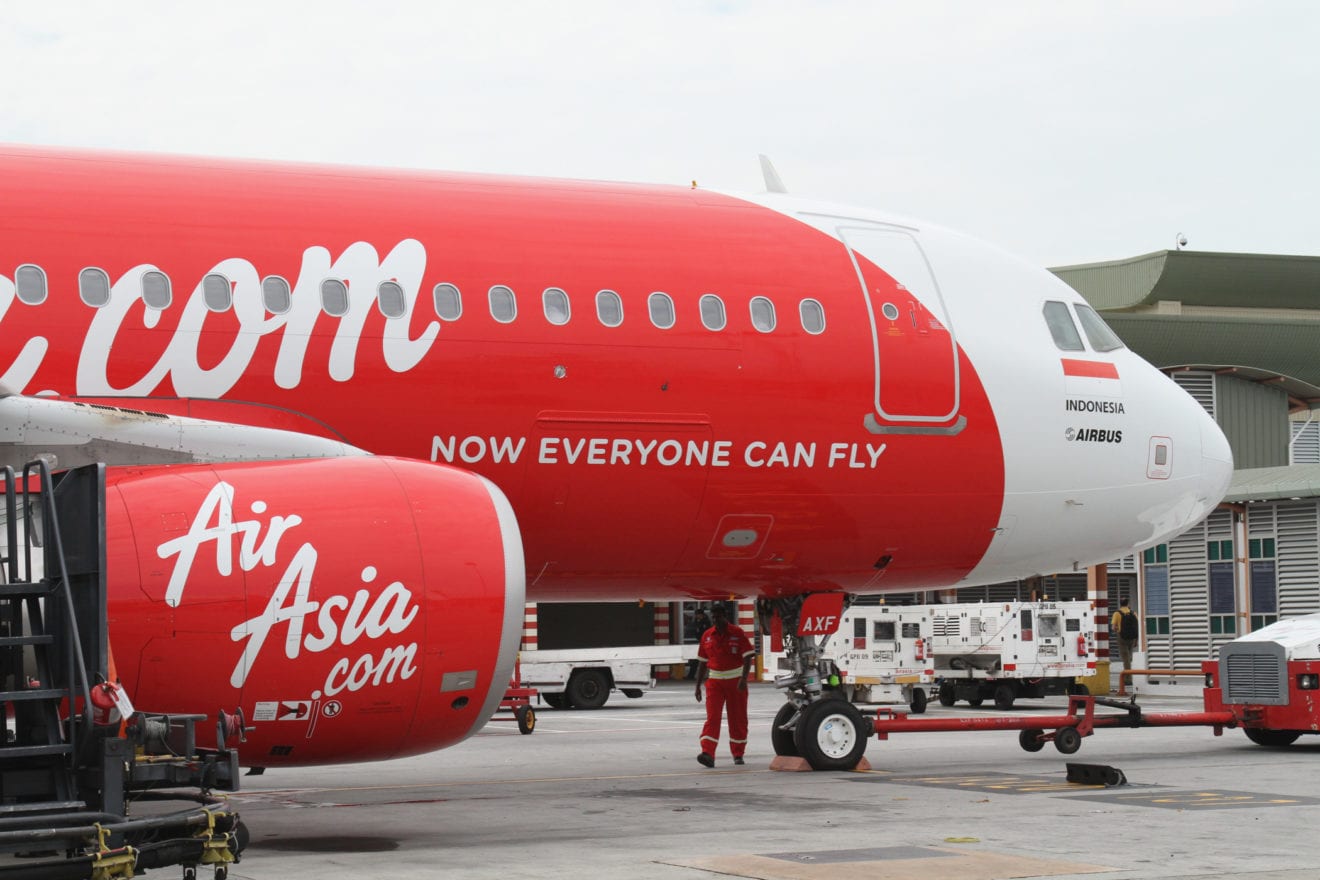
    Malaysian low-cost airline AirAsia is launching a cryptocurrency-based rewards program.

    AirAsia chief executive Tony Fernandes told that its frequent-flyer rewards program is being converted into a cryptocurrency platform called BigCoin. The move is part of a broader effort to improve the airline’s digital services and move the company toward a cashless system.

    In the Nikkei article published Thursday, Fernandes described a system in which customers could buy seats, in-flight meals, seat upgrades and other services using BigCoin, in addition to existing fiat currency options.

    Most notably, he told Nikkei Asian Review that he sees AirAsia launching an initial coin offering (ICO) at some point. While Fernandes did not provide a firm timeline, the article says the token could be offered within the next three to six months.

    No details have been released yet on whether AirAsia is developing its own blockchain or utilizing an existing platform.

    Other airlines have looking at blockchain as a possible rewards program model in recent months.

    Singapore Airlines announced last month that it was planning to launch a private blockchain for its own frequent-flyer program, thought it did not specifically state it would be developing its own cryptocurrency.

    However, Singapore Airlines did note it had successfully concluded a proof-of-concept trial with KPMG and Microsoft, and a fuller implementation of the system could see the airline working with merchants to enable customers to spend their miles at various stores or restaurants.

  • AirAsia plans to launch BigCoin, a crypto-based reward system

    AirAsia plans to launch BigCoin, a crypto-based reward system

    Tony Fernandes, the CEO of AirAsia has announced that the airline plans to convert its frequent-flyer rewards program into a crypto-based reward system known as BigCoin. Tony was speaking to us when he made the statement.

    The Malaysian low-cost airline is trying to move towards a cashless system and at the same time improve the airline’s digital services. In the publication made on Nikkei on Thursday, Tony describes the system as something that will allow customers to buy seats, buy in-flight meals, upgrade seats and other services by use of BigCoin. All these services will be in addition to existing fiat currency options.

    He also goes on to tell Nikkei Asian Review that he foresees a situation where the airline will launch an initial coin offering very soon. While he didn’t provide a concrete timeline when this will happen, the article suggests it might occur anywhere between three and six months from now.

    So far there have been no details released by the airline if it’s developing its own blockchain or if it’s utilizing an existing platform. The Asian carrier isn’t the only airline looking at the blockchain as a crypto-based reward system in recent months. Singapore Airlines on Feb. 5 announced they were planning to launch a digital wallet that was to be powered by the blockchain and it would serve the frequent-flyer KrisFlyer program.

    The airline said the program would enable members of the KrisFlyer program to spend their air miles at any retail members for any point of sale transactions. The company goes on to say the initiative comes after a successful trial of proof-of-concept that was done in collaboration with Microsoft and KPMG and they are currently signing up retail merchants based in Singapore to join the blockchain based service.