Retail News CRM

Tag: bitcoin

  • Korean Government Threatens to Shut Down All Bitcoin Exchanges

    Korean Government Threatens to Shut Down All Bitcoin Exchanges

    Bitcoin has tumbled after South Korea announced new rules for trading.

    In order to curb the widespread speculation growing amongst investors, the new regulations could include the prohibition of anonymous trading accounts operating within the country with authorities having the right to even shut down exchanges if needed.

    The uncertainty about regulating the cryptocurrency trading in South Korea has been looming for quite a long time and it seems the government has now finally decided on a crackdown.

    “Cryptocurrency speculation has been irrationally overheated in Korea”, the government said in the statement.

    All anonymous accounts now in use will be closed next month, it added.

    “The government had warned several times that virtual coins cannot play a role as actual currency and could result in high losses due to excessive volatility”, the government said in a statement.

    As part of what appears to be a series of updates created to improve oversight of industry practices, the government will also seek to bar banks from issuing new virtual accounts to cryptocurrency exchanges.

    The announcement came two weeks after Seoul banned its financial firms from dealing in virtual currencies, most notably bitcoin, as their prices soared, sparking concerns of a bubble largely fuelled by retail speculators.

    Bitcoin resumed its slide Thursday, dipping below $14,000 as the cryptocurrency’s dizzying drop from a record set 10 days ago intensified.

    Following this news, the Bitcoin price has plunged by more than 11% in the past 24 hours and is now trading at $14375.70, according to CoinMarketCap.

    The measures have been floated as part of efforts to stamp out market speculation in a country that is believed to make up a significant portion of global cryptocurrency trading.

    Currently, many cryptocurrency exchanges (including South Korean ones like Kucoin) allow trading with little more than your name and an email.

    The Youbit exchange became the first South Korean cryptocurrency exchange to close after the hacking attack that stole 17 percent of its assets.

    Bank of Japan governor Haruhiko Kuroda said last week that the price surge of the virtual currency was “abnormal”, while Singapore’s central bank advised investors to “act with extreme caution”.

  • Bitcoin drops as South Korea moves to regulate cryptocurrency trading

    Bitcoin drops as South Korea moves to regulate cryptocurrency trading

    Currently, many cryptocurrency exchanges (including South Korean ones like Kucoin) allow trading with little more than your name and an email.

    Bitcoin appeared to find a bottom on Friday, rebounding to $15 000 after moves by South Korea to curb speculation and protect retail customers took the cryptocurrency down more than 8% on Thursday.

    “The government had warned several times that virtual coins cannot play a role as actual currency and could result in high losses due to excessive volatility”, the country’s government said in a statement.

    Those new regulations would include prohibiting anonymous trading accounts and could give authorities the ability to shut down exchanges, Reuters said. Among other concerns, unmasking bitcoin traders would open up owners to taxation, a significant concern now that bitcoin has increased in value exponentially. The virtual currency plunged more than 10% to below $14,000 on Thursday morning in Asia, according to CoinDesk.com, and continued to fluctuate through the day.

    As part of what appears to be a series of updates created to improve oversight of industry practices, the government will also seek to bar banks from issuing new virtual accounts to cryptocurrency exchanges.

    Mati Greenspan, a Tel Aviv-based analyst at investment firm eToro, said it would be too early to gauge the impact of the rules, but they sounded “ominous”. Demand is so high that prices for the unit are around 20 per cent higher than in the United States, its biggest market.

    The country is also home to Bithumb, one of the world’s biggest bitcoin exchanges.

    In comparison, about 11% of Americans polled by student loan comparison website LendEdu in September said they either now own or have owned virtual currencies in the past, while 17.2% said they would invest in bitcoin in the future.

    South Korea may also stop local companies from providing settlement services for virtual currency transactions.

    In a case highlighting the risks of cryptocurrency, a Seoul virtual currency exchange declared itself bankrupt last week after being hacked for the second time this year.

    So far, China is the only country in the world to have totally banned bitcoin exchanges.

    Seoul-based Youbit said it was filing for bankruptcy after hackers stole almost a fifth of its clients’ holdings.

  • Cryptocurrency Exchanges Investigated By South Korean Fair Trade Commission

    Cryptocurrency Exchanges Investigated By South Korean Fair Trade Commission

    The South Korean Fair Trade Commission (FTC) is reportedly investigating 13 major cryptocurrency exchanges in the country for violations of consumer laws, such as electronic commerce laws and contract laws. The investigations came after the bankruptcy announcement by cryptocurrency exchange Youbit after a major hack.

    The FTC said it will look into whether they should remain under the online retail business category, or fall under different category to enforce stronger measures. It will also check whether there is any unfairness among the terms and conditions used by the business operators and take action in accordance with relevant laws and regulations.

    The investigations is a follow-up on the government’s wide-ranging measures to curb cryptocurrency speculation and crimes. According to the government, previous inspections on crypto exchanges revealed that most of the companies (10 companies) demonstrated administrative and technical security procedures such as the installation and operation of access control devices and encryption measures of personal information. Overall, the measures were found to be inadequate.

    Last week, the Ministry of Science and Technology announced that Bithumb, Korbit, Coinone, and Upbit, which are among the 13 being investigated, are required to receive 2018 Information Security Management System (ISMS) certification, a system that certifies that the information protection system of companies with annual revenue of more than 10 billion won and average daily visitor of over 1 million is appropriate. They have also been urged to strengthen the security of their exchanges.

    Small and medium-sized crypto exchanges that are not required to meet this standard will be subject to the Personal Information Management System, an “autonomous certification system that assesses the comprehensive management system of collecting, using and destroying personal information of companies.” For these exchanges, the Korea Communications Commission (KCC) will be responsible, strengthening the protection of personal information. The Commission will also strictly enforce punitive fines and penalties for exchanges that violate related laws.

    The government also warned that cryptocurrency is not a “legal tender whose value is guaranteed by the central bank” and therefore its prices could fluctuate by a great deal and result in enormous losses.

  • Sophisticated investors are staying away from Bitcoin

    Sophisticated investors are staying away from Bitcoin

    Malaysia’s pension fund managers are not putting money into bitcoin, despite the digital currency’s recent stratospheric rise.

    Armed Forces Fund Board or Lembaga Tabung Angkatan Tentera (LTAT) chief executive officer Tan Sri Lodin Wok Kamaruddin told NST Business that bitcoin is a highly speculative investment, where the value does not necessary reflect its fundamentals.

    “We don’t have any intention to invest in bitcoin at all. We would prefer to confine our investment within the country where we can, to some extent, control the risk and investment better,” he said in a telephone interview.

    He said the government statutory body would not take the risk in such kind of investment it has at its disposal.

    “Since Bank Negara Malaysia (BNM) deems it as illegal, we certainly would not want to have anything to do with it. I think it is something that the public should refrain from getting involved with their hard-earned money,” he added.

    Lodin said LTAT is currently managing about RM9 billion worth of armed forces retirement money.

    “We have got quite a fair distribution of our assets in different sectors, especially those which are in line with the government’s economic development programme such as infrastructure, property development, plantation and ship-building as well as retail operations like BH Petrol,” he said.

    Lodin said presently LTAT does not plan to invest abroad.

    “No doubt in some cases, investing abroad may be more attractive but at the same time the risk is higher such as currency and politics. At least, if it is within the country, we could mitigate these risks,” he said, adding that LTAT able to pay on the average of 11 per cent dividend annually to contributors.

    In a separate meeting with the Employees Provident Fund (EPF), its chief executive officer Datuk Shahril Ridza Ridzuan said cryptocurrencies such as bitcoin have no intrinsic value and donot provide any kind of actual asset yield. Therefore, it is very hard to invest in it.

    “Cryptocurrency is effectively buying something with the hope of selling it to someone else for a higher price,” he said.

    Shahril Ridza said the speculative element in the returns profile is too great for a fund like EPF, where it focuses on generating actual returns on assets.

    IQI Global chief economist Shan Saeed concurred, saying bitcoin has no sustainable value and none of the global central banks approved it.

    “Nobody has approved bitcoin as a mode of (payment) instrument. Although people are buying, the price is likely to crash. It is a fancy item with no fundamentals,” he said.

    Shan advised investors in Malaysia to stay away from Bitcoin, saying that the chances of losing money are fairly high.

    “Recently the United Kingdom regulators have warned investors to stay away from bitcoin. I’m not in favour of bitcoin because it is a virtual currency. It’s not even worth looking at,” he said.

    Shan said bitcoin is not secured without regulators’ approval, and it is a perfect example how the bubble could burst.

    “The incredible rise of bitcoin over the last few weeks has all the hallmarks of a major topping action when a speculative asset in the final euphoric stages of a big bubble formation makes some unsustainable huge price jumps,” he said.

    He said bitcoin should soon witness a final blow off with one last giant spike higher on huge volume followed by a major price reversal on the same day.

    The Retirement Fund Inc (KWAP) chief executive officer Datuk Wan Kamaruzaman Wan Ahmad recently said cryptocurrency is not the type of risk it can take.

    “We are not invested in cryptocurrency because we prefer to only take moderate risks. However, we do personally monitor the movement of the Bitcoin’s trends,” he said in a recent interview with BFM.

    He added that KWAP has always aimed for more stable investment, with slightly above a double-digit return to its shareholders.

    Last week, Bank Negara announced that Malaysia had recorded RM75 million transactions monthly from four digital currency exchanges in the country.

    Its deputy governor Abdul Rasheed Ghaffour said digital currency exchanges here providing the services were Luno, CoinHako, XBit Asia and PinkExchange.

    He said Bank Negara would meet cryptocurrency exchanges this week, noting that the global market capitalisation of digital currency stood at US$420 billion.

    He said while digital currencies were not legal tender in Malaysia, the central bank was not stopping their trading because “a ban would curb innovation and creativity.”

    In an AFP report quoting investment firm deVere Group chief executive officer Nigel Green, bitcoin started the year at US$1,000 per unit in January. By mid-December, it had shot to within striking distance of US$20,000, a dizzying climb that stoked fears of a bubble even in financial circles used to speculation and volatility.

    Bitcoin was created in 2009, since then, it has become the world’s decentralised cryptocurrency.

  • Saigon cafés, restaurants facing the heat for accepting Bitcoin payments

    Saigon cafés, restaurants facing the heat for accepting Bitcoin payments

    Authorities in Ho Chi Minh City will be working with the country’s central bank to “handle violations” at several restaurants and coffee shops in the city that have been accepting Bitcoin as payment, an official from the bank said on Tuesday.

    Nguyen Hoang Minh, deputy director of the State Bank of Vietnam’s Ho Chi Minh City branch, maintained that virtual currencies such as Bitcoin are illegal, and the issuance, provision and use of Bitcoin violates the rules.

    Several coffee shops and restaurants in the city have been accepting Bitcoin as payment so the municipal administration has agreed to cooperate with the central bank to deal with these violations, Minh told a meeting with the central bank’s deputy governor Dao Minh Tu.

    “We have also asked the city’s police department to work with us.”

    The heaviest punishment for using cryptocurrencies in Vietnam is a fine of VND200 million ($8,800).

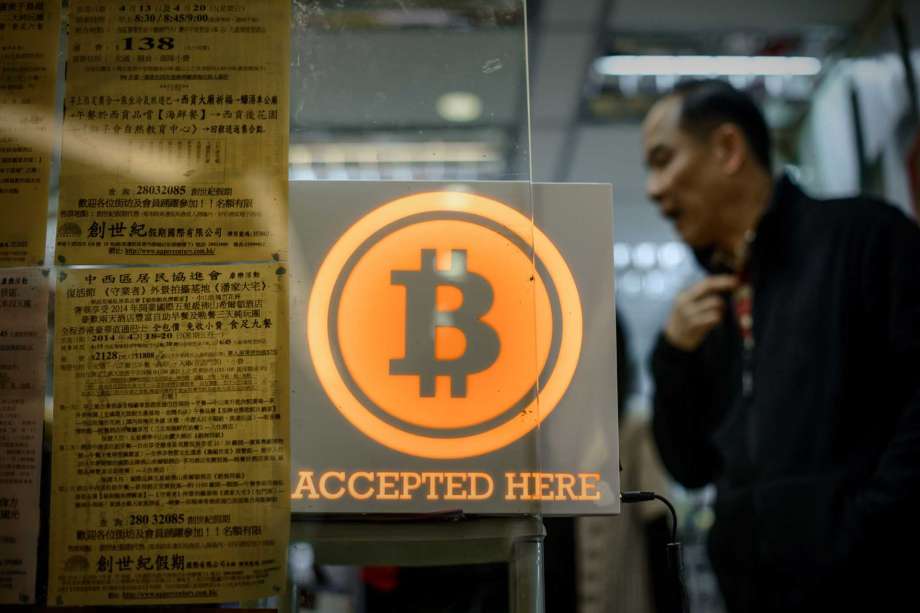
    However, we found a restaurant in District 1 that allows customers to pay for their drinks and pizzas using Bitcoin.

    A staff there said customers only need a Bitcoin code to pay for their meals, adding that this method is more beneficial for the restaurant because Bitcoin payments do not appear on tax declarations.

    Prices at the restaurant follow the current value of Bitcoin on the world market, which was $16,500 on Wednesday.

    The value of the cryptocurrency has been rising rapidly this year, reaching an all-time high of $19,783 on Sunday, an increase of 20 times compared to January.

    The heat that Bitcoin has created globally has been felt in Vietnam, and 1,478 pieces of hardware were imported into the country to “mine” for the currency in the first ten months of this year, according to official government data.

    As explained by Business Insider and Investopedia, the process of mining Bitcoins involves miners solving complex mathematical problems, and the reward is more Bitcoins generated and awarded to them.

    The participant who solves the puzzle first gets to place the next block on the block chain, a public ledger that records all Bitcoin transactions, eliminating the need for a third party to process payments, and claim the rewards.

    Miners verify transactions and prevent fraud, so more miners equals faster, more reliable and more secure transactions. According to current Bitcoin protocol, 21 million coins is the cap and no more will be mined after that number has been reached.

    Yet as currently regulated, the hardware imported into Vietnam for Bitcoin mining is not prohibited.

    In October, the central bank issued a statement saying that “from January 1, 2018, the act of issuing, supplying or using illegal means of payment may be subject to prosecution in accordance with the provisions of Article 206 of the Penal Code 2015.”

    The only payment methods allowed in the country are issued or controlled by the State Bank.

    The central bank has warned organizations and individuals in Vietnam not to invest in Bitcoins or conduct transactions in the currency, saying they would be taking a huge risk with no legal protection.

    “Bitcoin transactions are anonymous and can be used for money laundering, drug trafficking, tax evasion and illegal payments,” the bank said.

    Also in October, Vietnam’s top technology university FPT said it was looking at ways to let its students pay their tuition fees using Bitcoin.

  • Suspected North Korean cyber group seeks to woo bitcoin job seekers

    The surging price of cryptocurrencies in global markets is catching the eye not just of ordinary retail investors but a cybercrime gang with links to the North Korean government, according to cyber researchers tracing the group’s activities.

    The Lazarus cybercrime group is mounting an ongoing scheme to steal the online credentials of bitcoin industry insiders, a report published by researchers at U.S. cyber security firm Secureworks’s Counter Threat Unit (CTU) said on Friday.

    Cybersecurity firms including Secureworks suspect North Korea to be behind the Lazarus group, which they link to an $81 million cyber heist last year at the Bangladesh central bank and a 2014 attack on Sony’s Hollywood studio.

    “Given the current rise in bitcoin prices, CTU suspects that North Korea’s interest in cryptocurrency remains high and (it) is likely continuing its activities surrounding the cryptocurrency,” Secureworks said in a statement to Reuters.

    Prices for the volatile cryptocurrency surged past $10,000 late last month and have continued to race upward toward $20,000. A single bitcoin traded above $17,500 on Friday, up more than 7 percent on the day and more than 18 times in the year to date.

    Secureworks said that as recently as last month it had monitored a targeted email campaign aiming to trick victims into clicking on a compromised link for a job opening for a chief financial officer role at a London cryptocurrency company.

    Those who clicked on the hiring link were infected by malicious code from an attached document in the email that installed software to take remote control of a victim’s device, allowing hackers to download further malware or steal data.

    This malware shares technical links with former campaigns staged by the mysterious cybercrime group Lazarus, which Secureworks has labelled “Nickel Academy”. Secureworks did not say whether anyone who received the email actually clicked on the link.

    The so-called “spearphishing” attempt appears to have been delivered on October 25, but initial activity was observed by Secureworks researchers dating back to 2016. The researchers said in a statement they believe the efforts to steal credentials are still on-going.

    Recent intrusions into several bitcoin exchanges in South Korea have been tentatively attributed to North Korea, it said.

    Secureworks researchers have found evidence dating back to 2013 of North Korean interest in bitcoin, when multiple user names originating from computers using extremely rare North Korean internet addresses were found researching bitcoin.

    The same internet addresses were linked to previous North Korean cyber attacks.

    A spokeswoman for Secureworks said the company was releasing its preliminary findings now and a more complete report would be published later.

  • Japan firm says it will pay part of salaries in Bitcoin

    Japan firm says it will pay part of salaries in Bitcoin

    A Japanese company will start paying part of its employees’ salaries in Bitcoin, as it aims to get better understanding of the virtual currency, a spokeswoman said on Friday.

    GMO Internet, which operates a range of web-related businesses including finance, online advertising and internet infrastructure, will start paying up to 100,000 yen ($890) monthly by Bitcoin to its employees in Japan from February next year.

    “Employees can receive salaries by Bitcoin if they want to,” company spokeswoman Harumi Ishii said.

    “We hope to improve our own literacy of virtual currency by actually using it,” she said.

    The offer will be open to around 4,000 employees of the GMO group in Japan, she said.

    The company started a Bitcoin trading and exchange business in May.

    And next month, it will join the so-called “Bitcoin mining” business — gaining the right to receive new Bitcoins as a reward for helping keep the network secure by approving transactions.

    World Bitcoin prices have surged globally this year, soaring from less than $1,000 in January to $17,000 this week.

  • Bitcoin futures rocket past $18,000; Asian shares buoyant

    Bitcoin futures rocket past $18,000; Asian shares buoyant

    The craze for cryptocurrencies entered a new chapter on Monday as bitcoin futures rocketed by one-fifth of their value at a hotly anticipated launch, while Asian shares climbed amid optimism about global growth.

    The most-traded contract on the Chicago-based CBOE Global Markets exchange XBTc1 opened at $15,460 in New York on Sunday evening, before leaping to a high of $18,700 – a gain of 21 percent. They were last quoted at $18,100 a premium of more than$1,700 to the price on Gemini Exchange.

    The futures are cash-settled contracts based on the auction price of bitcoin in U.S. dollars on the Gemini Exchange, which is owned and operated by virtual currency entrepreneurs Cameron and Tyler Winklevoss.

    The cryptocurrency has boasted a gravity-defying 15-fold gain since the start of the year, attracting institutional interest and no small amount of question marks.

    The acting governor of the Reserve Bank of New Zealand on Sunday said bitcoin appeared to be a “classic case” of a bubble.

    “With a bubble you never know how far it is going to go before it comes around,” Grant Spencer told a local television program.

    Some market participants believe the fallout across other financial assets from a potential bursting of the bubble will be limited.

    “Bitcoin’s market capitalization is currently around $240 billion, which is much smaller, say, than the value of gold outstanding,” said Andrew Kenningham, economist at Capital Economics.

    “If the price of bitcoin fell to zero today, the paper losses would be equivalent to a 0.6 percent fall in U.S. equity prices. As most investors have bought bitcoin at much lower prices, the relevant losses would arguably be smaller.”

    Asian shares were buoyant with every single market but one in the black, following strong U.S payrolls data and better-than-expected Chinese trade figures on Friday.

    Spreadbetters pointed to a strong opening for European shares, while U.S. stock futures indicated a firm start for the S&P 500 which is seen up 0.1 percent ESc1.

    The MSCI’s broadest index of Asia-Pacific shares outside Japan .MIAPJ0000PUS added 0.5 percent to 552.38, well above a recent two-month trough of 542.27 points.

    Japan’s Nikkei .N225 climbed 0.6 percent while Chinese shares rallied, with the blue-chip CSI 300 index .CSI300 up 1.3 percent. Vietnam .VNI was the only Asian index in the red.

    Rate rises?

    Currency market investors were cautious ahead of a big week for policy meetings globally, with the Federal Reserve the only major central bank expected to raise interest rates. The Bank of England and the European Central Bank are likely to hold rates steady.

    The dollar steadied near a one-month top against the yen JPY=, after climbing 1.2 percent last week. The dollar index, which measures the greenback against a basket of currencies, eased 0.1 percent from close to a three-week high. .DXY

    Traders will keep their eyes peeled for the Fed’s future rate projections as U.S. wages growth and inflation crawl at a snail’s pace.

    Data out on Friday showed average hourly earnings in the United States nudged up 5 cents or 0.2 percent in November when economists had looked for a 0.3 percent gain.

    The weakness persisted despite stronger-than-expected non-farm payrolls, which rose by 228,000 in November.

    “We’ll be listening close for any signs of a dovish shift,” said Aerin Williams, New York-based forex strategist for Citi about the Dec. 12-13 Fed meeting.

    Elsewhere, oil prices slipped after the latest rise in the U.S rig count pointed to an increase in production there.

    U.S. crude CLc1 was down 15 cents at $57.21 a barrel and Brent crude LCOc1 inched 17 cents lower to $63.23, drifting away from a recent 2-1/2 year peak of $64.65.

  • Things you might not know about ballistic bitcoin

    Things you might not know about ballistic bitcoin

    Bitcoin rocketed to another record high close of $16,000 on the Luxembourg-based Bitstamp exchange on Thursday after gaining more than $4,000 in just 48 hours, stoking concerns that a rapidly swelling bubble could be set to burst.

    There were huge disparities between prices across different exchanges. On GDAX, one of the biggest, the price reached $19,500.

    Here are some facts that you might not know about the largest and best-known cryptocurrency.

    How many are there? Bitcoin’s supply is limited to 21 million – a number that is expected to be reached around the year 2140. So far, around 16.7 million bitcoins have been released into the system, with 12.5 new ones released roughly every 10 minutes via a process called “mining”, in which a global network of computers competes to solve complex algorithms in reward for the new bitcoins.

    Energy drain These mining computers require a vast amount of energy to run. As the price increases, more miners enter the market, driving up the energy consumption further. A recent estimate by tech news site Motherboard put the energy cost of a single bitcoin transaction at 215 kilowatt-hours, assuming that there are around 300,000 bitcoin transactions per day. That’s almost enough energy as the average American household consumes in a whole week.

    Bits of Bitcoin If you want to buy bitcoin, you do not need to buy a whole one. Bitcoin’s smallest unit is a Satoshi, named after the elusive creator of the cryptocurrency, Satoshi Nakamoto. One Satoshi is one hundred-millionth of a bitcoin, making it worth around $0.0002 at current exchange rates.

    Bitcoin billionaires Bitcoin has performed better than every central bank-issued currency in every year since 2011 except for 2014, when it performed worse than any traditional currency. So far in 2017, it is up more than 1,400 percent. If you had bought $1,000 of bitcoin at the start of 2013 and had never sold any of it, you would now be sitting on around $1.2 million. Many people consider bitcoin to be more of a speculative instrument than a currency, because of its volatility, high transaction fees, and the fact that relatively few merchants accept it.

    Exchange heists More than 980,000 bitcoins have been stolen from exchanges, either by hackers or insiders. That’s a total of more than $15 billion at current exchange rates. Few have been recovered.

    Mystery creator Despite many attempts to find the creator of bitcoin, and a number of claims, we still do not know who Satoshi Nakamoto is, or was. Australian computer scientist and entrepreneur Craig Wright convinced some prominent members of the bitcoin community that he was Nakamoto in May 2016, but he then refused to provide the evidence that most of the community said was necessary. It is not clear whether Satoshi Nakamoto, assumed to be a pseudonym, was a name used by a group of developers or by one individual. Nor is it clear that Nakamoto is still alive – the late computer scientist Hal Finney’s name is sometimes put forward. Developer Nick Szabo has denied claims that he is Nakamoto, as has tech entrepreneur Elon Musk more recently.

    Inflated Chinese trading Until earlier this year, it was thought that Chinese exchanges accounted for around 90 percent of trading volume. But it has become clear that some exchanges inflated their volumes through so-called wash trades, repeatedly trading nominal amounts of bitcoin back and forth between accounts. Since the Chinese authorities imposed transaction fees, Chinese trading volumes have fallen sharply, and now represent less than 20 percent, according to data from website Bitcoinity.

    “Market cap” The total value of all bitcoins released into the system so far has now reached as high as $283 billion. That makes its total value – sometimes dubbed its “market cap” – greater than that of Visa, and bigger than the market cap of BlackRock and Citigroup combined.

    Crypto-rivals Bitcoin is far from the only cryptocurrency. There are now well over 1,000 rivals, according to trade website Coinmarketcap.

    “Shorting” It is already possible to short bitcoin on a number of retail platforms and exchanges, via contracts for difference (CFDs), leveraged-up margin trading or by borrowing bitcoin from exchanges without leverage. But a number of big financial institutions – including CME Group, CBOE and Nasdaq – have recently announced that they will offer bitcoin futures, which will open up the possibility of shorting the cryptocurrency to the mainstream professional investment universe.

    Lost Bitcoins Many fewer than the 16.7 bitcoins that have been mined are actually in circulation and accessible, because of forgotten passwords, accidental losses, hoarding, owners forgetting about coins or even dying. It is impossible to know for sure how many bitcoins have been permanently lost, because those that have are still in the system, in dormant addresses. But according to a December 2013 research paper by the University of San Diego and George Mason University, 64 percent of the 12 million bitcoins that had by then been mined had never been spent. Bitcoin developer Sergio Lerner estimates that almost 1 million unspent bitcoins belong to the cryptocurrency’s mysterious creator.

    Rich list There are 5,638,155 bitcoins in the 1,000 biggest wallets – more than a third of all bitcoins in circulation. That makes the 1,000 biggest wallet-holders worth a collective $87 billion, at current rates.

    High fees The average fee paid to process bitcoin transactions has soared over the past year, outpacing even the staggering price increase of the cryptocurrency itself. Each bitcoin transaction now costs around $7.30 to process, up from around 30 cents at the start of the year, according to trade website BitInfoCharts.

    Forking off If you owned bitcoin prior to Aug. 1, 2017, you also own Bitcoin Cash – a clone of the original. That is because on that date bitcoin underwent a so-called “fork”, in which the underlying software code was split into two. One unit of Bitcoin Cash is now worth more than $1,300. That adds roughly another 135 percent to the returns from a bitcoin investment at the start of the year.
  • Why Has Bitcoin’s Price Gone Up So Fast ?

    Why Has Bitcoin’s Price Gone Up So Fast ?

    Bitcoin has been in a bull market like few the world has ever seen. At the beginning of the year, the price of a Bitcoin was below $1,000. It hit $5,000 in October, then doubled by late November. And on Thursday, less than two weeks later, the price of a single Bitcoin rose above $20,000 on some exchanges, according to Coinmarketcap.

    The latest price spike has been credited to signs that Wall Street companies plan on bringing their financial heft into the market.

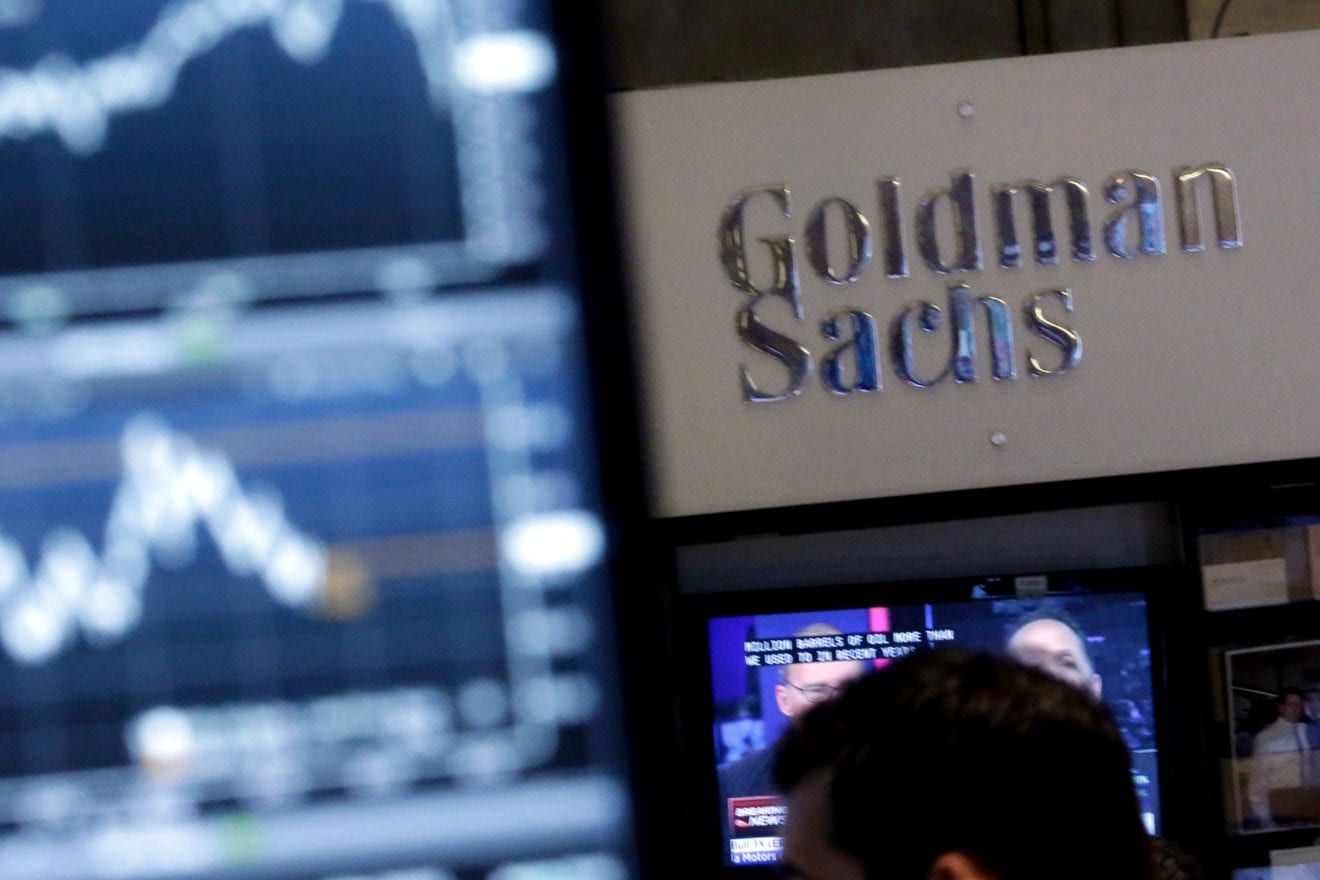
    At the current cost, the value of all Bitcoin in circulation is about $300 billion. To get a sense of how big that is, all the shares of Goldman Sachs are worth about $90 billion.

    The gains have been driven by several other factors — perhaps the most important being the irrational mentality that can take over in speculative bubbles.

    But most people buying Bitcoin are doing so in the belief that others will want it even more in the future. The gains, though, have many people, even Bitcoin believers, anticipating a big crash.

    Currently, the average price of one Bitcoin is about $15.435, according to Blockchain.info, a news and data site.

    Bitcoin used to be all about libertarians and black-market trade. Are those still driving the price?

    The fringe communities that drove Bitcoin in its early years are playing a much less important role in the current rally.

    Many investors have said the most important factor driving the current enthusiasm is the entry of hedge funds and other institutional investors.

    The path for large investors has been smoothed by the Chicago Mercantile Exchange and Chicago Board Options Exchange, which have been racing to roll out Bitcoin futures contracts. Most banks are already signed up with these exchanges and consequently can immediately begin trading the contracts. The options exchange has said it plans to start trading on Sunday.

    It is still unclear how the arrival of Bitcoin futures will influence the demand for the digital tokens.

    With a futures contract, banks can bet on the price of Bitcoin without holding the underlying Bitcoins. This is expected to bring many new players into the market who don’t want to deal with the complications of holding Bitcoins.

    But the futures contract will also allow investors to short Bitcoin, or bet on the price’s going down, which has been hard to do until now. Some analysts think this could put downward pressure on the price. Other market participants have worried that Bitcoin futures could spread the risks of Bitcoin into the rest of the financial system.

    People still use Bitcoin and other virtual currencies to make ransom payments and buy illegal goods online, including synthetic opioids. But that activity has been on the wane since the authorities shut down some of the largest online black markets this year.

    What role are smaller investors playing in the virtual currency markets?

    Individual investors have been just as active as large investors. Nowhere has the phenomenon of ordinary people buying virtual currencies been more visible than in South Korea, where several exchanges have storefronts to help new customers. This is all the more remarkable because just a year ago, Koreans showed almost no interest in these markets.

    Small Japanese investors have also been investing in Bitcoin. They have been encouraged by laws passed this year that essentially legalized Bitcoin and allowed Bitcoin exchanges to get regulatory licenses.

    Most small-time investors have gone to the San Francisco company Coinbase, which provides a Bitcoin brokerage service, similar to Charles Schwab, as well as an exchange for larger investors. Coinbase now has more account holders than Schwab, and it has struggled to keep up with the growth.

    China used to be the most active country for Bitcoin trading and mining, but the authorities there have cracked down this year.

    What are the dangers of getting into this market?

    Many of the largest exchanges, including in South Korea, are essentially unregulated. The lack of oversight means that no one is checking that the exchanges are properly securing their customers’ money or that large players are not able to manipulate the price. One of the largest exchanges in the world, Bitfinex, has been hacked numerous times and provides little transparency about where it is keeping its money.

    Even regulated exchanges, like Coinbase in the United States, have not been battle tested like larger financial institutions, and their operations have gone down at key moments.

    Once people buy Bitcoin or other virtual currencies, they are often targeted by hackers who have become experts at penetrating Bitcoin accounts.Bitcoin “wallets” are vulnerable to new kinds of attacks that are not a problem for ordinary financial accounts.

    Most important, in contrast to money in a bank account, when a Bitcoin is gone there is essentially no way to get it back and no insurance covering its loss.

    Are more people using Bitcoin to pay for things?

    When Bitcoin was released in 2009, it was described as a new kind of electronic cash.

    Recently, though, many programmers working on Bitcoin have said the system in its current form is not a particularly good way to pay for things.They argue that it is best designed to serve as a sort of scarce commodity, like digital gold, allowing people to keep their money outside the control of governments and companies.

    Many people who want to use virtual currencies for online payments are looking to Bitcoin competitors, like Bitcoin Cash and Monero.

    What role are the other virtual currencies playing in this frenzy?

    Earlier this year, bullish sentiment was focused on Ethereum, a virtual currency network that is more adaptable than Bitcoin. The price of Ether, the virtual currency on the Ethereum network, has continued to rise in recent months, but not as fast as Bitcoin.

    Many investors were also putting their money into custom virtual currencies released by entrepreneurs in so-called initial coin offerings. These new virtual currencies have generally been designed to serve as the internal payment mechanisms on new software the entrepreneurs are building.

    This fall, though, regulators have signaled that they are planning to crack down on coin offerings.

    Where did virtual currencies come from, and how do they work?

    The Bitcoin software was released in early 2009 by a mysterious creator who went by the name of Satoshi Nakamoto. The search is still on for the true identity of Satoshi.

    The software released by Satoshi set out the basic rules for Bitcoin and the computer network on which it lives. Unlike other forms of money, which are controlled by governments and financial institutions, Bitcoin operates on a decentralized network of computers that no one institution controls.

  • Bitcoin surges above $16,000 as concerns mount

    Bitcoin surges above $16,000 as concerns mount

    Bitcoin flirted with $17,000 on Thursday, triggering a warning the cryptocurrency was like a “train with no brakes” and prompting fresh concern about its looming launch on mainstream markets.

    Still under $14,000 in Asian trading hours, it smashed through $15,000 in European trading and got as high as $16,777 before pulling back, according to Bloomberg data. Near 2145 GMT, bitcoin stood at $16,070.

    The rally came just a day after the virtual currency, which has been used to buy everything from an ice cream to a pint of beer, hit the $12,000 mark for the first time. The eye-popping rise has seen the currency’s value soar more than 50 percent in just one week, and from just $752 in mid-January.

    Bitcoin — which came into being in 2009 as a bit of encrypted software — has no central bank backing it and no legal exchange rate.

    It has surged dramatically in the past month, driven by growing acceptance among traditional investors of an innovation once considered the preserve of computer nerds and financial experts, and sometimes more shady users.

    But some, including the U.S. Federal Reserve, have warned against dabbling in bitcoin as it could threaten financial stability, and fears of a bubble have increased as the price has soared.

    “Bitcoin now seems like a charging train with no brakes,” said Shane Chanel, from Sydney-based ASR Wealth Advisers. “There is an unfathomable amount of new participants piling into the cryptocurrency market.”

    But he warned: “Once the hype slows down, we will most certainly see some sort of correction.”

    Financial industry concerns 

    There also are mounting concerns about its introduction into the mainstream financial system after a U.S. regulator last week cleared the way for bitcoin futures to trade on major exchanges, a decision which analysts say has helped spur the recent rally.

    The Commodity Futures Trading Commission decision allows bitcoin derivatives to be offered on the Cboe Futures Exchange starting this weekend and on the world’s biggest futures venue, the Chicago Mercantile Exchange (CME), from December 18.

    But the Futures Industry Association, which groups some of the world’s biggest derivatives brokerages, criticized the CFTC’s move in a letter to the regulator, saying contracts are being rushed through without properly weighing the risks.

    “A more thorough and considered process would have allowed for a robust public discussion among clearing member firms, exchanges and clearing houses,” the association said.

    Bitcoin transactions happen when heavily encrypted codes are passed across a computer network.

    Goldman Sachs, an FIA member, plans to clear bitcoin futures contracts for some clients, meaning it will serve as intermediary to enable transactions, a spokeswoman said.

    “Given that this is a new product, as expected we are evaluating the specifications and risk attributes for the bitcoin futures contracts as part of our standard due diligence process,” she said.

    The NiceHash marketplace was meanwhile on Thursday investigating a security breach resulting in the theft of bitcoin.

    “Clearly, this is a matter of deep concern and we are working hard to rectify the matter in the coming days,” NiceHash said in a statement.

    “In addition to undertaking our own investigation, the incident has been reported to the relevant authorities and law enforcement and we are co-operating with them as a matter of urgency.”

    Bitcoin and other virtual currencies use blockchain, which records transactions that are updated in real time on an online ledger and maintained by a network of computers.

    In 2014 major Tokyo-based bitcoin exchange MtGox collapsed after admitting that 850,000 coins — worth around $480 million at the time — had disappeared from its vaults.

    Bitcoin’s use on the underground Silk Road website, where users could use it to buy drugs and guns, also raised suspicions about the virtual money.

  • Thinking about investing in Bitcoin?

    Thinking about investing in Bitcoin?

    Investors who bought Bitcoin just ahead of Thanksgiving certainly have something to be thankful for. Bitcoin prices breached $11,300 for the first time, representing a rise of over $3,100 in a week.

    It is a stunning rise for the cryptocurrency, which only just broke the psychologically important milestone of $10,000 hours earlier—despite financial heavyweights voicing their concerns about an asset with limited regulatory clarity.

    But several major governments, including the U.S., have signaled a willingness to regulate the cryptocurrency space rather than outright ban it. Meanwhile, institutional investors have also been jumping onto the bandwagon, with the Chicago Mercantile Exchange saying that due to client demand, it would launch Bitcoin futures by the end of 2017.

    The Wall Street Journal reported that both Nasdaq and Cantor Fitzgerald are looking to launch bitcoin derivatives. A futures market for Bitcoin would likely usher in more institutional investors, adding more liquidity — and potentially stability — to the cryptocurrency market.

    “Demand pressure is essentially driven by two things. Firstly, the increasing awareness by both the public and investors that cryptocurrencies are here to stay, and secondly, the increasing professionalization of cryptocurrency trading,” said Daniele Bianchi, an Assistant Professor in the Finance Group at the Warwick Business School, in an email.

    Bitcoin’s price has risen dramatically over the past year. While it took nearly four months to climb from $1,000 to a closing price of over $2,000, it soared to $10,000 from $9,000 in the course of about three days.

    Bitcoin Cash’s price has also risen to $1,611, about 2.5% in the past day and about $300 in the past week. The price of Ethereum has risen about 5% in the same period to $496.31.

    While Bitcoin bulls hail its rise as a sign of increasing acceptance, other investors are warning of an increasingly volatile bubble. Investing legend Jack Bogle, who founded the Vanguard Group, cautioned investors to steer clear of Bitcoin because it does not provide a steady stream of income in the way that bonds or dividends might. Instead, its price is dependent on sentiment.

    “Bitcoin has no underlying rate of return,” said Bogle at a Council on Foreign Relations event on Tuesday, as reported by Bloomberg. “You know bonds have an interest coupon, stocks have earnings and dividends, gold has nothing. There is nothing to support Bitcoin except the hope that you will sell it to someone for more than you paid for it.”

  • Indonesia Will Officially Ban Bitcoin and Other Cryptocurrencies

    Indonesia Will Officially Ban Bitcoin and Other Cryptocurrencies

    A lot of countries around the world are deliberating how they should treat Bitcoin and other cryptocurrencies. Taking action is a lot easier said than done, and such decisions need to be reached carefully. Over in Indonesia, it seems a complete ban on all cryptocurrencies is imminent. It is an unfortunate development, but it remains to be seen how effective such a ban can be.

    The past few years have been filled with adversity for any cryptocurrency trying to make a global impact. Whether it is Bitcoin or something else entirely, there is a lot of opposition from the financial sector and governments. Given the unregulated and uncontrollable nature of Bitcoin and other cryptocurrencies, it is evident there are a lot of risks associated with this new form of money. At the same time, there are a lot of new opportunities waiting to be explored by those brave enough to take the plunge.

    It doesn’t appear as if Indonesia will be among those countries giving cryptocurrencies a fighting chance. More specifically, the Bank of Indonesia plans to ban all Bitcoin-related activity in the country. It is unclear why the central bank decided to take this course of action, considering cryptocurrencies are not all that popular in the country. Many people will see this ban as reflecting the government’s fear of allowing consumers to control their own money at all times. Since no bank or government can effectively control Bitcoin, such opposition is not unexpected.

    While digital technology is of great interest to the Indonesian government, it sees cryptocurrencies in a completely different light. There is a high degree of uncertainty associated with this economic model, and investors need to be protected from financial harm. Bitcoin and altcoins represent a fundamental change in the financial sector which will have both advantages and drawbacks. Making an appropriate decision on this topic is not easy, yet introducing a full ban may not necessarily be the best course of action.

    The Indonesian Central Bank aims to preserve the sovereignty of the rupiah as legal tender in the country, which is something everyone will agree on and accept. However, Bitcoin can easily coexist with the rupiah without recognizing the former as official tender in Indonesia. Officially outlawing this new form of money will set an unfortunate precedent. The big question is whether or not such a measure will have success in the long run. People will find a way to access cryptocurrency with or without the approval of the government.

    One thing worth pointing out about this ban is that it will be as absolute as humanly possible. There will be no arbitrage opportunities, business controls, or unhealthy business practices on the part of anyone outside of the legal reach of the Indonesian government. This certainly sets the tone for cryptocurrency in the country, although it still remains an unfortunate decision. Indonesia is one of the places where Bitcoin could potentially do a lot of good if the government would just give it a chance. 

    Another question worth asking is whether or not existing Bitcoin holders in Indonesia will sell their currency or simply hold it. Converting it to the rupiah will become impossible soon, and there will be no way to spend it either. Rest assured there will be some entities that will come up with creative ways to circumvent this ban, assuming it gets implemented in the first place. For now, the country’s central bank has not stated when it will seek to impose this new directive, which creates further doubt and uncertainty.

  • Indonesia to Restrict Bitcoin Trading

    Indonesia to Restrict Bitcoin Trading

    The list of countries that are hawkish of Bitcoin or outright ban it has something in common: up and coming economies that have just emerged from decades with a large grey sector. Russia is a prominent example, where cryptocurrencies saw years of outright repression. Morocco is the most recent country to consider an outright ban. Ecuador and Bolivia have long-standing bans, as well as Bangladesh and Nepal. The reasons for the ban vary, but the biggest concerns are about money laundering.

    Macedonia and Kyrgyzstan have similar stories- long years of economic struggle, a large grey sector and skepticism of anything related to potential financial scams.

    But now, a new batch of countries is joining in attempts to curb the spread of Bitcoin. Indonesia, a nation with a conservative streak, plans to ban all cryptocurrency transactions. Local Indonesian media, cited by FinanceMagnates, has pointed to a possible blockage for providing money services to cryptocurrency users.

    The refusal to provide a bridge to cashing out is nothing new in Southeast Asian countries, where a booming cryptocurrency community of exchanges and projects clashes with local banks, who are reluctant to provide accounts and see cryptocurrencies as competitive.

    Agus Martowardojo, Governor of Bank Indonesia, said the sovereignty of the Indonesian Rupiah will not be undermined, and the regulator will curb ” arbitrage opportunities, unhealthy business practices and business controls”.

    “Level playing fields with formal financial institutions need to be maintained, we require all financial technology activists who move in the payment system to register with Bank Indonesia, report on activities, and conduct trials in the regulatory sandbox,” said Martowardojo.

    In effect, the language of the ban means Indonesians who own Bitcoin will not have access to exchanges any time soon. Such a move may do what has happened in the past to other countries with limits on legal exchanges- owners would resort to LocalBitcoins for even more speculative and risky trading.

    So far, very few countries have gone directly after the Bitcoin network, walling off nodes or banning local mining. And experience has shown that when it comes to Southeast Asia, neighboring countries keep offering options.

  • Bubble or brave new world? Bitcoin breaks USD 10000 barrier

    Bubble or brave new world? Bitcoin breaks USD 10000 barrier

    Bitcoin broke through the USD 10,000 barrier for the first time today as it continues a stratospheric rise that has delighted investors but sparked fears of a bubble.

    The virtual currency hit a high of USD 10,379 in Asia, according to Bloomberg News, more than 10 times higher than its value at the start of the year.

    The breakthrough is the latest in a spectacular run for the online money dubbed “digital gold” by its advocates, which began life in 2009 as a bit of encrypted software supposedly written by an unknown coder with a Japanese-sounding name.

    Bitcoin, which was valued at just a few US cents when it was launched, has no legal exchange rate, no central bank backing it and is traded on specialist platforms.

    But it quickly gained popularity as an alternative to traditional investments, while it has been used to pay for items from a pint in a London pub to a manicure.

    The virtual currency has attracted as much anger as praise, however, with the boss of JP Morgan Chase labelling it a fraud and governments, while China and South Korea have expressed concerns.

    It got a major boost last month when exchange giant CME Group announced it would launch a futures marketplace for Bitcoin, which has not been listed on a major bourse before.

    The announcement sparked a surge in its value — it has risen 45 percent in the past two weeks alone.

    But the spectacular rate of growth, which has seen it increase in value from a 2017 low of USD 752 in mid-January, has also triggered concerns, and critics note the currency has suffered wild swings in the past.

    “This is a bubble and there is a lot of froth. This is going to be the biggest bubble of our lifetimes,” warned hedge fund manager Mike Novogratz at a cryptocurrency conference yesterday in New York, according to Bloomberg News.

    Other commentators were more positive about Bitcoin, saying its surging popularity will attract cash from traditional investors, such as hedge funds and asset managers.

    “I think the momentum is still very much to the upside,” Kay Van-Petersen, macro and crypto strategist with Saxo Bank in Singapore, told AFP.

    He said it could still suffer pullbacks, but predicted it would be worth USD 50,000 to USD 100,000 in the next six to 18 months.

    Transactions happen when heavily encrypted codes are passed across a computer network.

    Bitcoin and other virtual currencies use blockchain, which records transactions that are updated in real time on an online ledger and which are maintained by a network of computers.

    Hundreds of other digital currencies have been created since its launch, but Bitcoin remains by far the most popular.

    Bitcoin has suffered controversies.

    In one of the most high-profile, major Tokyo-based Bitcoin exchange MtGox collapsed in 2014 after admitting that 850,000 coins — worth around USD 480 million at the time — had disappeared from its vaults.

    Bitcoin’s use on the underground Silk Road website, where users could use it to buy drugs and guns, was also presented as proof it was a bad thing.

    While analysts expect the currency to suffer falls, they expect it will prosper in the long term and see the CME launch as the next big test.

    “If it survives the CME, there is no reason why it won’t continue to rise higher,” Greg McKenna, from Australia-based AxiTrader.