Retail News CRM

Tag: boeing

  • China signs $37 billion deal to buy 300 Boeing planes

    China signs $37 billion deal to buy 300 Boeing planes

    China signed an agreement Thursday to buy 300 airplanes from U.S. aerospace giant Boeing valued over $37 billion, as part of a multi-billion dollar raft of deals announced during President Donald Trump’s visit to Beijing.

    The agreement for China Aviation Suppliers Holding Co (CASC) to buy the single-aisle and twin-aisle aircraft was among the more than $250 billion in agreements announced at a ceremony attended by Trump and Chinese leader Xi Jinping.

    A Boeing statement said the agreement includes “orders and commitments” to buy the aircraft, but it did not give a further breakdown.

    In September 2015, Boeing had already received an order from CASC for 300 aircraft valued at a record $38 billion at list prices.

    Boeing and European rival Airbus are competing heavily in China, the world’s second aircraft market, with the U.S. company forecasting that the Asian giant needs over 7,200 commercial aircraft in the next 20 years.

    China, meanwhile, has developed its own medium-haul C919 in a bid to challenge the Airbus-Boeing duopoly.

  • Lion Air welcomes Indonesia’s first Boeing 737 MAX-8

    Lion Air welcomes Indonesia’s first Boeing 737 MAX-8

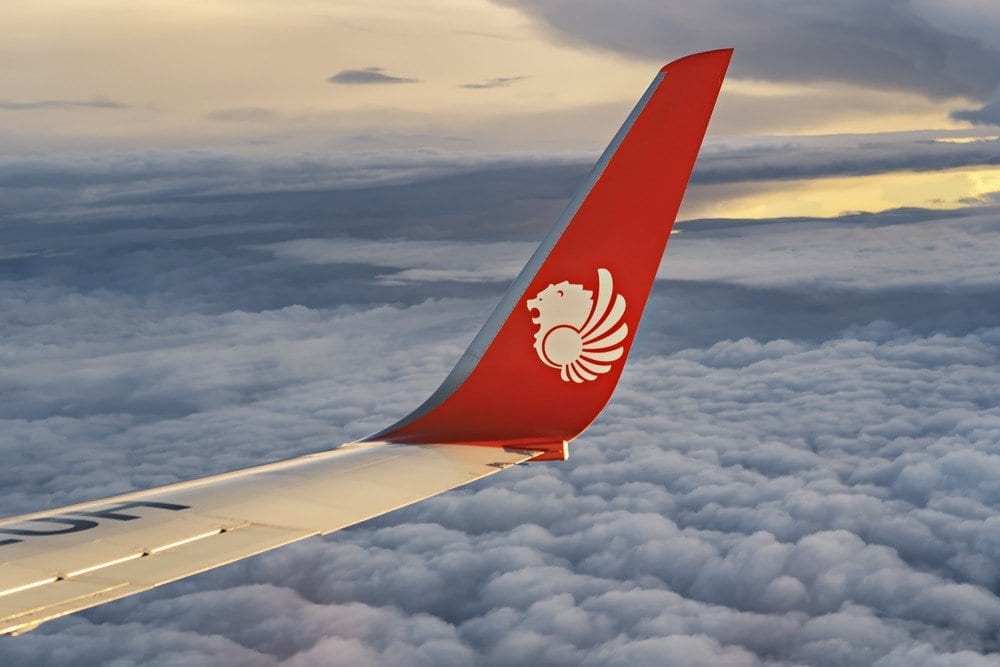
    Indonesia’s largest low-cost carrier Lion Air welcomed on Tuesday the arrival of the first of hundreds of Boeing 737 MAX-8 aircraft it ordered from the United States planemaker, paving the way for the company to move forward with its expansion plan.

    The aircraft will be the first of its kind operated by an Indonesian airline.

    Lion Air is part of the Lion Air Group, together with Wings Air, Batik Air, Lion Bizjet, Malaysia-based Malindo Air and Thailand-based Thai Lion Air.

    The aircraft delivery is the second this year for Lion Air Group as Malindo Air earlier welcomed a similar type of aircraft in May.

    “This new aircraft will help us develop our routes to other destinations and to offer affordable air fares,” Lion Air Group public relations manager Andy M. Saladin said in an official statement.

    Lion Air Group has ordered 218 Boeing 737 MAX-8, eight of which will be delivered this year.

    The Boeing 737 MAX-8 can fly for seven and a half hours without refueling and is the first Boeing aircraft to have a double winglet feature.

    Lion Air currently operates 113 aircraft to serve 630 flights to 44 domestic and international destinations.

  • Boeing, Vietjet Finalize Vietnam’s Largest Ever Commercial Airplane Purchase

    Boeing, Vietjet Finalize Vietnam’s Largest Ever Commercial Airplane Purchase

    Vietjet Aviation Joint Stock Company and Boeing [NYSE: BA] have finalized an order for 100 737 MAX 200 airplanes, the largest ever single commercial airplane purchase in Vietnam aviation. His Excellency Mr. Trần Đại Quang President of the Socialist Republic of Vietnam, and U.S. President Barack Obama witnessed the historic agreement, valued at approximately $11.3 billion at current list prices.

    The signing ceremony, conducted by Vietjet President and CEO Nguyễn Thị Phương Thảo and Boeing Commercial Airplanes President and CEO Ray Conner, took place at the Presidential Palace in Hanoi, at approximately 11:40 a.m. local time.

    “Boeing is proud to again play an integral role in advancing Vietnam’s aviation industry. We’re honored to be joined by President Trần Đại Quang and President Obama for this historic milestone and order of 100 737 MAX airplanes,” said Conner. “Incorporating the latest design and technology features, the highly efficient 737 MAX will provide Vietjet’s growing network with market-leading economics, a superior passenger experience and contribute significantly to their future success.” – Mr Ray Conner shared in the event.

    The 737 MAX incorporates the latest technology CFM International LEAP-1B engines, Advanced Technology winglets and other improvements to deliver the highest efficiency, reliability and passenger comfort in the single-aisle market. The new single-aisle airplane will deliver 20 percent lower fuel use than the first Next-Generation 737s.

    At the signing ceremony, The President & CEO of Vietjet Nguyen Thi Phuong Thao, shared: “Vietjet is efficiently operating a fleet of narrow body airplanes. Our investment in a fleet of B737 Max 200 will accommodate our strategy of growing Vietjet’s coming international route network including long haul flights. Through this Agreement, Vietjet will contribute increasing bilateral trade turnover between Vietnam and the United States, as well as contributes in the integration and development of the aviation industry in Vietnam.”

    The airplanes in this purchase will be delivered to Vietjet from 2019 until 2023 for supporting Vietjet to continuously extend the domestic network as well as international network in the region. This agreement helps Vietjet increase its fleet to more than 200 aircraft by the end of 2023 with the most modern and advanced technology in the world.

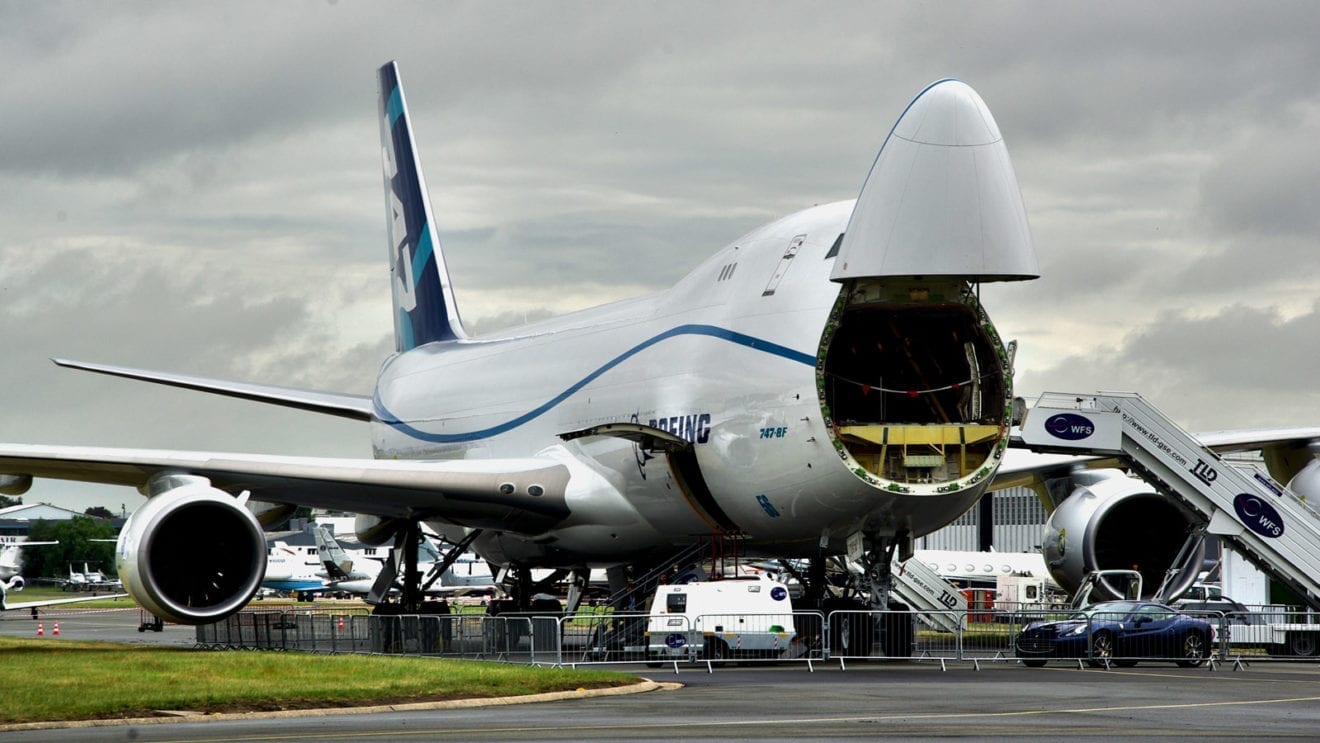
  • Boeing has announced the end of its programme to turn Boeing 747-400 into cargo planes

    Boeing has announced the end of its programme to turn Boeing 747-400 into cargo planes

    Boeing has announced the end of its programme to turn Boeing 747-400 passenger aircraft into cargo planes. In October, the plane manufacturer formally announced that management had decided to cancel the programme.

    To some industry executives, Boeing’s decision merely seals the inevitable. One executive from a freighter conversion specialist likened the 747 conversion scene to a graveyard.


    Faced with relentless downward pressure on yields owing to abundant capacity chasing too little cargo in nearly every market around the globe, airlines have been pushed to shrink their all-cargo capacity. Recent years have seen a steady exodus not only of 747-400BCFs but also newer 747-400 production freighters. Cathay Pacific retired its last two 747-400Fs this summer, leaving it with a freighter fleet composed entirely of 747-8 and 747-400ER freighters, plus a lone 747-400BCF.

    Low oil prices may have alleviated the pain of operating older 747 freighters and rendered them more attractive versus the high acquisition cost of 747-8Fs, but the need to maximize load factors through capacity reduction has hastened their exit.

    As converted – as well as production – 747-400 freighters are headed for the shadows, a large question mark looms over their successor, the 747-8. The passenger version of the type never gained much traction, and the freighter programme has been struggling. In April, Boeing announced that with effect from September it would throttle down production of the aircraft from 12 a year to just six – a single freighter every two months.

    In 2013, Boeing was still producing two 747-8Fs a month, but sluggish demand forced it to slow down its output. In the summer the manufacturer went one step further, signalling the possible end of the 747-8 altogether. In its filing to the US Securities and Exchange Commission towards the end of that month Boeing stated that without sufficient new orders and/or an inability to mitigate market, production or other risks, “it is reasonably possible that we could decide to end production of the 747.”

    The demise of the 747-8 would mark the end of an era that began in 1969, when the first 747-100 entered the market. It would leave a gap in the market, with no aircraft other than the Antonov 124 in a similar bracket in terms of payload capability. The next largest freighter in commercial service is the 777-200F, which can carry 105 tons, significantly less than the 140 tons that the 747-8 can lift.

    Arguably a bigger loss would be the disappearance of large freighters with nose-loading capabilities, but most operators have shrugged off that issue, pointing to the presence of 747-8 freighters for decades to come.

    In late October, UPS placed an order for 14 747-8 freighters, plus 14 options. This prompted speculation in some quarters about a longer run for the type. However, with only 109 747-8 passenger and freighter aircraft delivered to date, an order for 14, or even 28, planes still appears a long shot to justify an extended production run.

    Many Asian carriers like EVA Air or China Southern, which used to operate 747-400 cargo aircraft, have decided to renew their freighter fleets with 777Fs instead and are phasing out their 747 contingents both in the passenger and cargo sectors. Of the large all-cargo airlines that are using 747-8Fs, Cargolux recently announced a major review of its business, indicating that without significant change it may not survive as a cargo carrier, which hardly indicates an appetite for more large freighters with price tags north of the US$300 million mark. Nippon Cargo Airlines is not showing appetite for growth, and AirBridge should have more than enough 747-8s to find markets for.

    In its 20-year market forecast released at the Air Cargo Forum in Paris in October, Boeing predicted stronger growth in the narrowbody freighter segment, driven by e-commerce. “The growth of the standard-body share of the fleet will result in a decline in the large- and medium-widebody shares of the total fleet over the forecast period, from 31% and 33% to 28% and 31%, respectively,” it declared.


    Rival Airbus, which has no freighter larger than the A330-200F in the market, is even less sanguine on the outlook for large freighters. Its recently published long-term industry forecast projections that bellyhold capacity will boost its share of the global freight market from 52% in 2015 to 62% by 2035.
  • Garuda to Fly to the US in 2017

    Garuda to Fly to the US in 2017

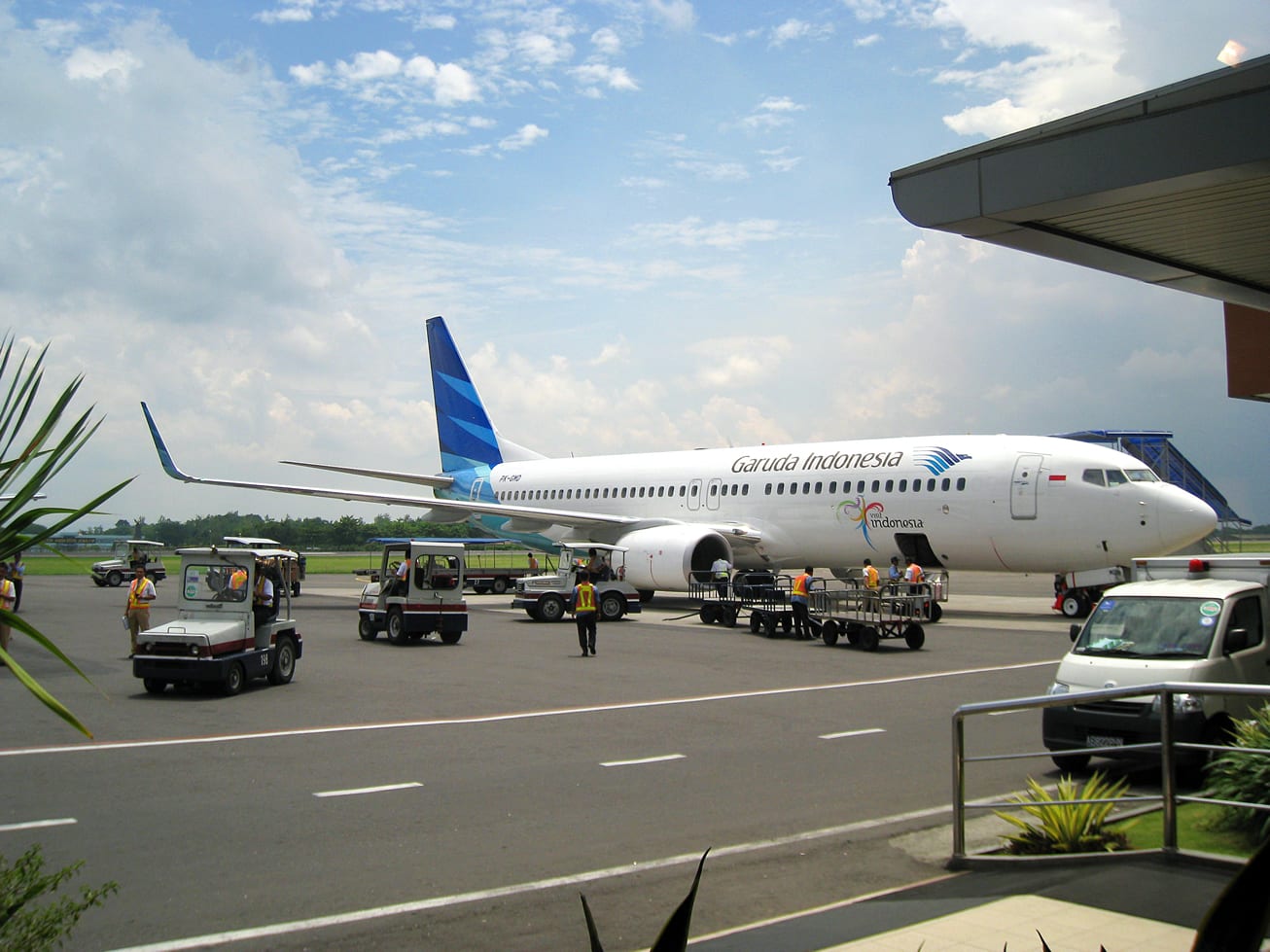
    National carrier Garuda Indonesia plans to serve flights to the United States starting next year.

    Vice President Corporate Communications Garuda Indonesia Benny S. Butarbutar said Garuda’s plan to fly to the United States is one of the measures to strengthen its business expansion.

    “The plan to fly to the United States is business expansion to strengthen the position of Garuda Indonesia as a global player in the aviation industry,” Benny said in a press release on Saturday (10/9).

    Benny said Indonesia’s flight market potentials to the United States is quite high, reaching 400 thousand passengers per year.

    Based on this potential, Garuda Indonesia targets a return flight to Los Angeles will go and New York, as the two cities with the highest market potentials.

    Benny added, in realizing the strategic plan, Garuda Indonesia has initiated various preparations, including a feasibility study of the potential market, profitable routie, and the type of fleet to be utilized optimally, and many others.

    Garuda Indonesia plans to use large-bodied Boeing 777-300ER fleet to fly to America.