Tag: Boosts

  • IndiaMart Boosts Spend on AI Solutions, Battling Bogus Listings and Ushering in Enhanced Content Checks

    IndiaMart Boosts Spend on AI Solutions, Battling Bogus Listings and Ushering in Enhanced Content Checks

    IndiaMart, a leading online marketplace in India, intends to significantly boost its investment in artificial intelligence (AI) technologies. The company has announced plans to double spending on AI tools every six months with an aim of mitigating false listings and enhancing content checks, according to a top executive.

    The e-commerce platform operates as a conduit connecting buyers and sellers across a diverse array of categories, including everything from phone accessories and garden equipment to pharmaceuticals and industrial machinery. Unlike many online marketplaces, IndiaMart does not generally oversee the transactions that take place between its users.

    AI to Reinforce Integrity

    To bolster the authenticity and integrity of its platform, IndiaMart has begun utilising AI technologies to detect potential fraudulent accounts through pattern analysis across seller profiles. In addition, the company has introduced real-time voice-to-text tools to expedite processing of buyer requests, tasks previously carried out by call centre staff. This information was shared by Amarinder S Dhaliwal, Chief Product Officer of IndiaMart.

    The issue of counterfeit listings has been a long-standing challenge for the company. In fact, IndiaMart was mentioned in the 2022 ‘Notorious Markets’ list released by the US Trade Representative, which highlighted the issue of counterfeit goods on the platform as a significant concern.

    To combat this, IndiaMart is focusing on the development of AI tools. The company is both creating some of these tools internally and also partnering with external AI firms to tackle the issue.

    Investing in AI

    IndiaMart has been judicious in its approach to AI investment, and has not disclosed its specific budget for this. For context, the company’s total expenses for technology and content in fiscal 2026 amounted to approximately 2.26 billion rupees (US$23.94 million).

    According to Dhaliwal, content on IndiaMart can be classified into two categories: supplier contamination, which refers to sellers with malicious intent infiltrating the platform, and harmful listings, such as drugs or firearms. He noted that AI tools have been instrumental in improving the filtering of such harmful content.

    As of now, IndiaMart facilitates roughly 600 buyer-supplier matches every minute and attracts around 90 million visitors each month. With a current roster of about 220,000 sellers and a buyer conversion rate of nearly 45 per cent, the company is aiming for an ambitious target of hosting 1 million sellers.

    Questions & Answers

    How is IndiaMart using AI to enhance its platform?
    IndiaMart is investing in AI to detect potential fraudulent accounts and accelerate the processing of buyer requests. It’s also using AI to filter out harmful content and counterfeit listings.

    What is the scale of IndiaMart’s operations?
    IndiaMart connects about 600 buyers and sellers every minute and attracts around 90 million visitors each month. It currently hosts approximately 220,000 sellers on its platform.

    What are the company’s future plans?
    IndiaMart intends to double its AI investment every six months to further improve its platform. The company is also aiming to eventually host 1 million sellers.


  • Apple’s Key Supplier Tata Boosts Security Measures Amid Dark Web Data Leak Investigation

    Apple’s Key Supplier Tata Boosts Security Measures Amid Dark Web Data Leak Investigation

    Tata Electronics, a primary supplier for tech giant Apple in India, has increased its internal security measures following a potential leak of confidential client files on the dark web, according to a source from Tata and two industry representatives.

    In response to the incident, Tata has engaged an international consultant to perform a forensic audit. The company has also reported the incident to the Indian government and its customer base. The source from Tata chose to remain anonymous due to the sensitive nature of the situation.

    The cybercrime group known as World Leaks claimed responsibility for uploading over 200,000 files onto the dark web. These files allegedly include design documents for components used by both Apple and Tesla, another of Tata’s clients. The authenticity of the data remains unverified.

    Tata acknowledged the occurrence of a “cybersecurity incident” but assured that its operations were not affected, without providing further details.

    In addition to Apple and Tesla, the leaked data is believed to include at least 16 files and folders from Taiwan Semiconductor Manufacturing Co (TSMC) and 23 from Qualcomm. Both companies supply parts for iPhones.

    Increased Security Measures

    Following the breach, Tata Electronics strengthened security protocols across all its facilities and offices. Remote access to sensitive internal tools, such as those used for placing purchase orders, was limited to a select group of employees. Prior to the incident, these tools were more accessible. The updated protocols apply across Tata Electronics and are not limited to specific factories.

    The investigation into the breach continues, with Apple’s security team reportedly collaborating closely with Tata. The security enhancements include stricter regulations for accessing Tata’s official network from outside the company’s premises.

    Implications for Tata and its Clients

    Tata Electronics, led by former Intel and Applied Materials executive Randhir Thakur, is a critical part of Apple’s strategy to expand iPhone production outside China. However, the breach poses a significant setback to Apple’s supply chain. Tata is also facing scrutiny over alleged farmland contamination near one of its iPhone parts plants in India.

    World Leaks claimed to have published more than 204,341 files containing Tata Electronics data, amounting to over 630.4 gigabytes. The exposed documents include purported “product reliability test” details of a TSMC component and mechanical specifications for a power management integrated circuit from Qualcomm.

    Despite the challenges, India is expected to manufacture 26% of the world’s iPhones by 2026, a significant increase from the 6% it produced four years ago, as reported by research firm Counterpoint.

    Questions & Answers

    How has Tata Electronics responded to the data breach?
    Tata Electronics has increased internal security measures, limited remote access to sensitive systems, and engaged an international consultant for a forensic audit.

    What does the leaked data purportedly contain?
    The data allegedly contains design documents from Apple and Tesla, and files from Taiwan Semiconductor Manufacturing Co and Qualcomm.

    What are the potential impacts of the breach on Tata and its clients?
    The breach could interrupt Apple’s supply chain and increase scrutiny on Tata, which is already facing allegations of farmland contamination in India.

  • Danone Boosts Australian Footprint with Profitable Made Group Takeover

    Danone Boosts Australian Footprint with Profitable Made Group Takeover

    Global food corporation Danone is extending its foothold in Australia by acquiring Made Group, the parent company of Cocobella and Rokeby. This transaction is an element of a two-part acquisition designed to increase Danone’s influence in the Asia Pacific region. In addition to this, Danone has also announced the full ownership of its fresh dairy joint venture with Saputo Dairy Australia by acquiring the remaining 49% stake.

    Made Group’s consistent performance with “appealing profit margins”, backed by its sales of $490.7 million in the last fiscal year, was a driving factor behind the acquisition. Made’s portfolio includes popular brands such as The Collective, Nutrient Water, and Impressed.

    Mutual Values and Profitable Growth

    According to Antoine de Saint-Affrique, CEO of Danone SA, Made Group has had a remarkable history of fast and profitable growth, thanks to its robust brand portfolio and health-focused nutritional products. He notes that both companies share a belief in promoting health through food and expressed excitement about welcoming Made into the Danone family.

    Made Group was sold by US-based TPG Capital in a transaction that earned TPG approximately $2 billion, a mere five years after it had purchased the beverage business.

    Shared Commitment to Health and Innovation

    Amanda Butler, CEO of Made, views this as an exciting new phase for the company. She acknowledged Danone’s shared commitment to health and enthusiasm for innovation, expressing optimism about future prospects. Butler anticipates that their joint efforts will unlock new infrastructure, capabilities, and research and development expertise, spurring growth across the region.

    Questions & Answers

    What companies has Danone recently acquired in Australia?
    Danone has recently acquired Made Group, the parent company of Cocobella and Rokeby.

    What motivated Danone’s acquisition of Made Group?
    Made Group’s consistent “attractive profit margins” and sales performance, coupled with its strong brand portfolio and focus on health-focused nutritional products, influenced Danone’s decision to acquire the company.

    What are the anticipated benefits of this acquisition for Made Group?
    Following the acquisition, Made Group expects to access new infrastructure, capabilities, and research and development expertise to accelerate growth in the region.

  • Fee-Free ATM Withdrawals in Malaysia: New Initiative Boosts Accessible Banking from July

    Fee-Free ATM Withdrawals in Malaysia: New Initiative Boosts Accessible Banking from July

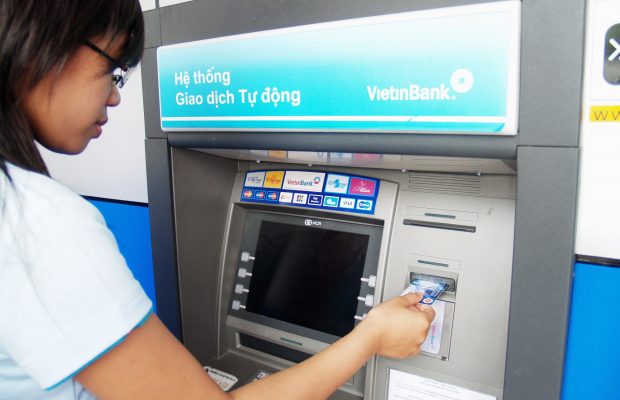
    Starting July 1st, Malaysians will have the ability to withdraw cash from any bank’s automated teller machines (ATMs) or smart recycler machines (SRMs) across the country without the usual RM1 (US$0.25) interbank fee. This new initiative will grant debit cardholders access to more than 14,000 ATMs and SRMs, regardless of the bank that issued their card. The announcement was made jointly by the Association of Banks in Malaysia, the Association of Islamic Banking and Financial Institutions Malaysia, and the Association of Development Finance Institutions of Malaysia.

    Making Financial Services Accessible

    The aforementioned associations have stated that this change, applicable to ATMs and SRMs run by Malaysian banks, was enacted in cooperation with Payments Network Malaysia (PayNet). The driving force behind this move is an ongoing effort to render financial services more attainable, all-inclusive, and affordable.

    It’s important to note that cash continues to play a crucial role as a necessary payment method for numerous Malaysians in their day-to-day lives. This elimination of the interbank fee is a reflection of the industry’s dedication to providing reliable, convenient, and cost-effective access to cash. Ultimately, it’s a measure aimed at alleviating the financial strain on consumers.

    Questions & Answers

    What is changing for debit cardholders in Malaysia?
    Starting July 1st, Malaysian debit cardholders will no longer be charged the usual interbank fee of RM1 (US$0.25) when withdrawing cash from any bank’s ATMs or SRMs nationwide.

    Who are the organizations behind this move?
    This change has been implemented jointly by the Association of Banks in Malaysia, the Association of Islamic Banking and Financial Institutions Malaysia, the Association of Development Finance Institutions of Malaysia, and Payments Network Malaysia (PayNet).

    Why has this fee waiver been introduced?
    The interbank fee waiver is a part of ongoing efforts to make financial services more accessible, inclusive, and affordable for all Malaysians, and to alleviate the financial burden on consumers.

  • Singapore Boosts Gold Market Role: Invites Foreign Central Banks for Secure Gold Storage Services

    Singapore Boosts Gold Market Role: Invites Foreign Central Banks for Secure Gold Storage Services

    Beginning in October, Singapore will permit foreign central banks and sovereign entities to store their gold reserves within its borders. This move is aimed at reinforcing Singapore’s standing as a regional hub for gold trading and storage. The city-state’s commercial vaulting capacity currently surpasses 2,000 tonnes. This capacity is utilized by a diverse array of market participants including bullion banks, institutional investors, and high-net-worth individuals, as expressed by Deputy Prime Minister Gan Kim Yong on a recent Monday forum.

    Strengthening the Gold Market

    In addition to providing secure storage, Singapore will cater to foreign central banks and sovereign entities desiring to actively manage their gold holdings. The Monetary Authority of Singapore plans to offer gold accounts to a select group of bullion banks based in Singapore. This initiative will enhance their capability to deliver gold-related services and liquidity to these entities.

    Deputy Prime Minister Yong believes that this move will enhance Singapore’s reputation as a safe and reliable jurisdiction where reserve assets can be securely held and actively managed. The city-state will also be able to connect these assets to wider market liquidity during Asian trading hours, further reinforcing its regional dominance.

    Gold Market Innovations

    Several innovative measures have also been announced to strengthen Singapore’s role in the global gold market. One significant measure includes the establishment of an over-the-counter gold clearing system by the Singapore Exchange by the end of 2026. Interbank trading is anticipated to grow from 2027 onwards.

    This revolutionary system aims to enhance trade processing, boost transparency, and support more efficient clearing and settlement. According to Yong, this will instill greater confidence in market participants to transact in Singapore. The new system will accommodate both large bars and kilobars, enabling standardized settlement during Asian trading hours.

    Large bars refer to 400-troy-ounce gold bars or approximately 12.4 kilograms, which are standard for institutional trading and settlement in London. Kilobars, on the other hand, are 1-kilogram bars that are popular in Asian markets and are accepted for delivery in Comex gold futures contracts in the U.S.

    DBS, Deutsche Bank, ICBC Standard Bank, JPMorgan, OCBC, and UOB have been reported as the six banks that will join as clearing members and contribute to the development of Singapore’s gold market.

    Questions & Answers

    What will Singapore allow from October?
    Starting from October, Singapore will allow foreign central banks and sovereign entities to store their gold reserves in the country.

    What benefits will the proposed gold clearing system bring to Singapore’s gold market?
    The proposed over-the-counter gold clearing system will streamline trade processing, enhance transparency, and support more efficient clearing and settlement, thereby bolstering market participant confidence to transact in Singapore.

    Which banks will be joining as clearing members to develop Singapore’s gold market?
    DBS, Deutsche Bank, ICBC Standard Bank, JPMorgan, OCBC, and UOB are set to join as clearing members to help develop Singapore’s gold market.

  • Mastercard Boosts Digital Banking in Asia with Merchant-Funded Offers Integration

    Mastercard Boosts Digital Banking in Asia with Merchant-Funded Offers Integration

    In response to the rapid digital transformation impacting consumer habits throughout the Asia-Pacific region, financial institutions are focusing on redefining their mobile applications to become integral components of daily transactions.

    Mastercard, a global leader in digital payments, predicts that this shift could drastically alter the function of banking applications in the region. The company recently divulged its intentions to broaden its Mastercard Offers Network throughout the Asia-Pacific, which will empower banks to deliver merchant-funded offers directly on their digital banking platforms.

    This strategic move corresponds with the Asia-Pacific’s solidification as the globe’s primary digital payments market. As reported by Mastercard, transaction volumes in this area hit nearly $16 trillion in 2025. Concurrently, consumers are becoming familiar with the convenience provided by all-in-one ‘super apps’ such as Grab and GoTo, which amalgamate payments, transportation, food delivery, and rewards into a unified ecosystem.

    Spanning the Divide Between Banks and Merchants

    The potential of this strategy extends beyond the banking sector. Merchants are grappling with escalating pressure to justify their marketing expenditure, despite numerous digital advertising channels struggling to verify if impressions and clicks result in actual sales.

    Mastercard contends that both banks and merchants possess assets sought after by the other party. Banks have access to large audiences of reliable, authenticated users, whereas merchants contribute enticing offers and marketing budgets. According to Mastercard, the missing element is an infrastructure layer with the capability to connect both parties on a large scale.

    The Mastercard Offers Network intends to supply this infrastructure. Via this platform, merchant-funded offers can be featured directly within banking apps and connected to real card transactions, permitting merchants to assess campaign effectiveness based on confirmed purchases instead of substitute metrics.

    Taking Advantage of Cross-Border Commerce

    The platform’s primary appeal is its focus on both domestic and cross-border commerce, which is notably relevant in the Asia-Pacific region, where regional travel has seen a substantial resurgence in recent years.

    Mastercard approximates that about 70 percent of travel expenditure in the region currently stems from travellers within the Asia-Pacific, with more than 331 million international visitors reported in 2025. By incorporating cross-border offers into their apps, banks can maintain relevance to customers whether they’re shopping domestically or abroad.

    Merchants benefit from this model by gaining access to consumers at the point of purchase, while banks obtain an additional tool for engagement that surpasses traditional banking services.

    The expansion of the Mastercard Offers Network comes as digital banking adoption continues to gain momentum throughout mature and emerging markets in Asia. Consumer expectations are also evolving, with users increasingly anticipating personalized experiences and rewards integrated into their digital journeys.

    Mastercard’s approach mirrors a wider industry trend: transforming banking apps from transactional tools into commerce ecosystems. Instead of solely competing on payments and account services, banks are progressively aiming to become platforms where consumers discover offers, make purchases, and interact with merchants.

    The Mastercard Offers Network is already up and running in markets such as the United States, Canada, Australia, Poland, and Hong Kong. As the platform extends throughout the Asia-Pacific, it could provide banks with a novel method for bolstering customer loyalty, while offering merchants a more quantifiable and targeted marketing channel.

    Whether banking apps will ultimately be able to compete with the region’s prevalent super apps is yet to be determined. However, it is evident that the competition for consumer engagement is progressing far beyond traditional financial services.

    Questions & Answers

    What is the purpose of the Mastercard Offers Network?
    The network aims to provide an infrastructure that allows merchant-funded offers to be displayed directly within banking apps, linking them to actual card transactions.

    How does the integration of cross-border offers into banking apps benefit financial institutions and their customers?
    Financial institutions can remain relevant to customers whether they’re shopping domestically or abroad, while consumers gain more personalized experiences and rewards.

    What trend is Mastercard’s strategy reflecting in the broader industry?
    Mastercard’s strategy reflects the transformation of banking apps from transaction tools into commerce ecosystems. Banks are increasingly seeking to become platforms where consumers discover offers, make purchases, and interact with merchants.

  • Chagees Expansion Spree Boosts Revenue but Dents Profits: Inside the Chinese Tea Giants Strategy

    Chagees Expansion Spree Boosts Revenue but Dents Profits: Inside the Chinese Tea Giants Strategy

    Chagee, the acclaimed Chinese tea chain, has experienced yet another boost in revenues, despite the ongoing expansion of its stores seeming to take a toll on its profit margins.

    Currently, Chagee owns a staggering 7531 teahouses, located primarily in Greater China, but also expanding internationally. Ending its first fiscal quarter of the year on a high note, Chagee reported revenues of RMB3.54 billion (US$514.1 million), indicating a rise from RMB3.39 billion during the same quarter in the previous year. Nonetheless, despite the hike in revenues, the company faced a 33.9 per cent dip in profits during the same period.

    Teahouse Business Dynamics

    Franchise-owned teahouses form the core of Chagee’s business model, contributing to a significant 77.4 per cent of the total revenue, while the remaining revenue comes from teahouses directly owned by the company.

    Although the Greater China region constitutes a whopping 95 per cent of Chagee’s business operations, by the end of the quarter, Chagee had marked its presence in seven additional countries. The most recent expansions saw Chagee breaking into markets in the United States, Vietnam, and the Philippines.

    Chagee’s Vision for the Future

    Founder and CEO of Chagee, Zhang Junjie, shared his view for the company’s future with investors. He expressed his commitment to focus on operational details, emphasizing that these granular aspects hold significant value to their consumers. He noted that the company’s ability to weather various business cycles is directly tied to genuine consumer recognition, and this forms the cornerstone of their objective for the current year – to perfect every single consumer touchpoint.

    Zhang Junjie expressed his confidence that Chagee is entering a phase of mature, steady, and sustainable growth. He ended his remarks by stating his assurance in every step the company is undertaking towards the future.

    Questions & Answers

    What is the revenue of Chagee for the first fiscal quarter of the year?
    Chagee reported revenues of RMB3.54 billion (US$514.1 million) for the first fiscal quarter of the year.

    What percentage of Chagee’s total revenue comes from franchised teahouses?
    Franchise-owned teahouses contribute to 77.4 per cent of Chagee’s total revenue.

    What is the major goal of Chagee for the current year?
    Chagee’s major goal for the current year is to perfect every single consumer touchpoint, according to founder and CEO Zhang Junjie.

  • Air China Cargo Boosts A350F Freighter Fleet to 10 with New Purchase Agreement

    Air China Cargo Boosts A350F Freighter Fleet to 10 with New Purchase Agreement

    Air China Cargo Co., Ltd. has cemented a deal with Airbus to procure an additional four A350F freighters. This agreement expands the company’s total order for this aircraft model to 10 units, supplementing the six A350F freighters previously ordered in November 2025.

    A Strategic Move

    The recent acquisition emphasizes the company’s strategy to optimize its fleet composition and enhance transportation capacity. Wang Hongyan, Air China Cargo’s Vice President, shared that the decision will enable them to align more effectively with international air cargo market demands, providing a robust groundwork for the company’s long-term consistent growth.

    Airbus’ EVP Sales of the Commercial Aircraft business, Benoît de Saint-Exupéry, lauded Air China Cargo’s move to augment its A350F freighter order. According to him, this decision signifies the company’s unwavering confidence in Airbus products and solidifies the A350F’s leading stature as the next-generation freighter.

    Air China Cargo initiated the integration of Airbus freighters into its fleet at the close of 2023. It currently manages a fleet of eight Airbus A330-200P2F aircraft. The forthcoming inclusion of the A350F freighter will supplement the A330-200P2F freighters, maximizing their benefits on long-haul and medium-to-long-haul routes.

    The Sophistication of the A350F

    The A350F, designed to be the most advanced cargo aircraft globally, caters to the evolving needs of the international air freight market. Its range capability extends up to 8,700 kilometers with a payload capacity of up to 111 tonnes, allowing operators to utilize it on international long-haul routes. Over 70% of the A350F comprises advanced materials, making it 46 tons lighter than competitive aircraft.

    The A350F features the latest Rolls-Royce Trent XWB-97 engines, promising up to a 20% reduction in fuel consumption and carbon emissions compared to previous generation aircraft with similar payload-range capabilities. As the only freighter that fully adheres to ICAO’s 2027 CO₂ emission standards, the A350F is capable of operating with up to 50% Sustainable Aviation Fuel (SAF) upon entry-to-service, aiming for 100% capability by 2030.

    As of the end of April 2026, the A350F garnered 101 orders from 14 customers.

    Questions & Answers

    How many total A350F freighters has Air China Cargo ordered?
    Air China Cargo has ordered a total of 10 A350F freighters from Airbus.

    What is the range and payload capacity of the A350F?
    The A350F has a range capacity of up to 8,700 kilometers and can carry a payload of up to 111 tonnes.

    What is the unique feature of the A350F in regard to emission standards?
    The A350F is the only freighter that fully meets the ICAO’s 2027 CO₂ emission standards. It can operate with up to 50% sustainable aviation fuel upon entry-to-service, with an aim to achieve 100% capability by 2030.

  • VIPshop Cash-In: Lunar New Year Boosts Quarterly Profits Amid Strong Apparel Sales

    VIPshop Cash-In: Lunar New Year Boosts Quarterly Profits Amid Strong Apparel Sales

    Chinese retail giant, VIPshop, has recently announced an increase in their first-quarter profits, a result of robust clothing sales and enhanced margins during the Lunar New Year shopping period.

    The firm revealed a total net revenue of RMB26.6 billion (US$3.9 billion) for the quarter which concluded on March 31, marking an increase of 1.2 per cent compared to the previous year.

    In addition to this, the number of active customers saw a moderate rise to 41.7 million, and total orders experienced a growth of 3.2 per cent, equating to 172.6 million.

    Key Factors Behind The Growth

    Eric Shen, the Chairman and CEO, attributed the company’s successful quarter to robust clothing sales and escalated expenditure by high-value customers throughout the Lunar New Year shopping period. He stated that their SVIP client base saw commendable growth in both numbers and contribution, showcasing their continued attractiveness to high-value consumers.

    Shen stated, “In conjunction with these outcomes, we have made consistent progress in our product range, customer engagement, and AI integration. All these factors are aiding us in further capitalizing on our off-price retail model for expansion. We remain committed to the brand-discount space and are confident in our capacity to ensure sustainable, profitable growth in the long term.”

    Mark Wang, the CFO, further elaborated that consumer expenditure was primarily concentrated within the first two months of the quarter. This was due to the earlier occurrence of the Lunar New Year holiday. This, combined with a more robust product mix and disciplined cost management, led to an improvement in profitability.

    Projected Future Revenue

    Looking forward, VIPshop anticipates their second-quarter revenue to fall between RMB24.5 billion (US$3.6 billion) and RMB25.8 billion (US$3.79 billion). This represents a prospective year-over-year decrease of approximately 5 per cent to 0 per cent.

    Questions & Answers

    What was the key factor contributing to VIPShop’s increased first-quarter profits?
    High apparel sales and improved margins during the Lunar New Year shopping season were significant contributors to the increased profits.

    How has the SVIP customer base been significant to VIPShop’s success?
    The SVIP customer base has demonstrated solid growth in both numbers and contributions, indicating the brand’s sustained appeal to high-value consumers.

    What are VIPShop’s expectations for the second-quarter revenues?
    VIPShop anticipates their second-quarter revenue to be between RMB24.5 billion (US$3.6 billion) and RMB25.8 billion (US$3.79 billion), indicating a potential year-over-year decrease of approximately 5 per cent to 0 per cent.

  • Alaia Boosts Southeast Asia Presence with First Luxury Boutique in Bangkok

    Alaia Boosts Southeast Asia Presence with First Luxury Boutique in Bangkok

    Thai shoppers can now enjoy the elegant and sculptural designs of Alaia, as the brand has expanded its Southeast Asian presence by opening its inaugural boutique in Bangkok.

    The luxury retail venue, Central Embassy, is host to the new store. The boutique carries a robust product line consisting of ready-to-wear clothing, handbags, footwear, and accessories. These items reflect Alaia’s commitment to craftsmanship, style, and meticulous attention to detail.

    Architectural Design Enhances Shopping Experience

    The award-winning architecture firm, Halleroed, was tasked with designing the store’s interior, which showcases a minimalist aesthetic that enhances the shopping experience. The firm masterfully incorporated sculptural interiors and curved forms, with a color scheme marked by a neutral palette. The aesthetic choices are punctuated by the use of marble, stainless steel, and leather finishes throughout the store.

    The goal of this design strategy was to create a retail environment that stands as a testament to Alaia’s design philosophy and Parisian heritage. According to the brand, this immersive retail experience is meant to echo the maison’s design ethos, inviting shoppers into a space that feels as meticulously crafted as the products themselves.

    Alaia was first established in 1964 by Azzedine Alaia, a Tunisian couturier who made Paris his home. Since its inception, the brand has experienced a significant uptick in its global retail expansion, particularly throughout Asia. The brand was purchased by Richemont in 2007, marking another milestone in its growth trajectory.

    Questions & Answers

    What products does Alaia’s new boutique in Bangkok offer?
    The newly opened Alaia boutique in Bangkok offers a wide range of products, including ready-to-wear clothing, handbags, footwear, and accessories.

    Who designed the store’s interior and what style elements were used?
    The boutique’s interior was designed by the architecture firm Halleroed. The design highlights a minimalist aesthetic featuring sculptural interiors, curved forms, and a neutral color palette. Marble, stainless steel, and leather finishes were used to accent the space.

    What was the aim of the store’s design according to the brand?
    Alaia states that the purpose of the store’s design was to create an immersive retail environment that reflects the brand’s design philosophy and its Parisian heritage.

  • OCBC Boosts Hong Kong Wealth Management Team by 30% Amid Rising Demand

    OCBC Boosts Hong Kong Wealth Management Team by 30% Amid Rising Demand

    The Oversea-Chinese Banking Corporation (OCBC) has announced plans to bolster its wealth-management staff in Hong Kong by 30% this year. This move is a strategic reaction to an increasing demand from its clientele for investment and financing services.

    Singapore’s second-largest financial institution aims to recruit an additional 30 to 50 relationship managers to its Hong Kong division, according to Josephine Lee, OCBC’s head of Hong Kong consumer financial services. The bank projects a significant increase in its wealth sector income, anticipating a five-fold jump since 2023. Furthermore, Lee disclosed the bank’s strategy to launch a novel array of services this year specifically aimed at clients with at least $1 million.

    OCBC’s wealth services portfolio has been a significant factor in boosting the bank’s profitability. The bank has surpassed projected profits for the first quarter, largely due to increasing fees related to wealth services. Furthermore, the demand for wealth accounts within Hong Kong has shown a marked increase from clients both within and outside the jurisdiction, primarily attracted by offerings such as financing. “We must enhance our pool of relationship managers to optimally serve our client base,” says Lee.

    The Greater China region, which includes Hong Kong, has been a significant income generator for OCBC, contributing 23% to the bank’s operating profit in the first quarter. This makes it the second-largest contributor, following Singapore, and shows a slight increase compared to the same period last year.

    Questions & Answers

    What is the anticipated increase in OCBC’s wealth-management staff in Hong Kong?
    The bank plans to increase its wealth-management staff in Hong Kong by 30% this year, which translates to an addition of 30 to 50 relationship managers.

    How significant has the wealth services portfolio been to OCBC’s profitability?
    The wealth services portfolio has played a major role in boosting the bank’s profitability, with the first quarter earnings surpassing estimates mainly due to increased fees related to these services.

    What proportion of OCBC’s operating profit was contributed by the Greater China region in the first quarter?
    The Greater China region, including Hong Kong, contributed 23% to the bank’s operating profit in the first quarter, making it the second-largest contributor after Singapore.

  • Commerzbank to Slash 3000 Jobs by 2030, Boosts Profit Forecast Amid Restructuring Plan

    Commerzbank to Slash 3000 Jobs by 2030, Boosts Profit Forecast Amid Restructuring Plan

    In an effort to reassure shareholders of its sustainability as a standalone entity, Commerzbank has unveiled a strategic plan that includes significant job reductions and lofty profit goals. The blueprint, which was shared last Friday, anticipates a layoff of approximately 3,000 additional full-time employees throughout the corporation by the year 2030. This is an extension to the cost-cutting measures previously revealed.

    Refocusing on Future-Oriented Sectors

    Simultaneously, the bank is intending to generate employment opportunities within emerging and forward-looking sectors. As of late 2025, Commerzbank’s global full-time workforce was just shy of 40,000.

    In a previous announcement made in February 2025, Commerzbank had outlined its intention to eliminate 3,900 full-time roles by the conclusion of 2027, with the majority of these cutbacks occurring in Germany. During that announcement, the bank also expressed its intent to increase staffing levels at its Polish branch, mBank, as well as at its Asian locations.

    Boost in Profit during First Quarter

    Commerzbank also released its earnings for the first quarter. The operating profit for the initial three months of 2026 escalated to approximately 1.36 billion euro, while the net profit climbed to 913 million euro. Both of these figures saw a growth of roughly 10 percent compared to the corresponding period in the previous year.

    Commerzbank, as part of its updated strategy, now anticipates higher profits for 2026 than initially projected. The bank is aiming for a net profit of at least 3.4 billion euro, an increase of 200 million euro from the previously stated goal. The bank’s ambitious profit targets for subsequent years are 4.6 billion euro by 2028, and 5.9 billion euro by 2030.

    In 2025, the bank’s profit reached 2.6 billion euro, narrowly missing the record high of 2024, when the bank earned nearly 2.7 billion euro, despite the substantial costs associated with the ongoing restructuring program.

    This updated strategy and the raised profit targets can be interpreted as a reaction to criticisms levelled by Andrea Orcel, CEO of UniCredit, who recently described Commerzbank’s operating performance over the past few years as being beneath par.

    Questions & Answers

    How many job reductions does Commerzbank’s new strategic plan anticipate?
    The plan anticipates a layoff of approximately 3,000 additional full-time employees by 2030, apart from the previously announced cutbacks.

    What are Commerzbank’s profit targets as per the updated strategy?
    The bank is aiming for a net profit of at least 3.4 billion euro in 2026, 4.6 billion euro by 2028, and 5.9 billion euro by 2030.

    How has Commerzbank responded to criticisms regarding its recent performance?
    Commerzbank has responded with an updated strategy, which includes significant job reductions and lofty profit goals, to reassure shareholders of its sustainability as a standalone entity.

  • Miniso Boosts Southeast Asian Presence With Landmark Flagship Stores in Singapore and Vietnam

    Miniso Boosts Southeast Asian Presence With Landmark Flagship Stores in Singapore and Vietnam

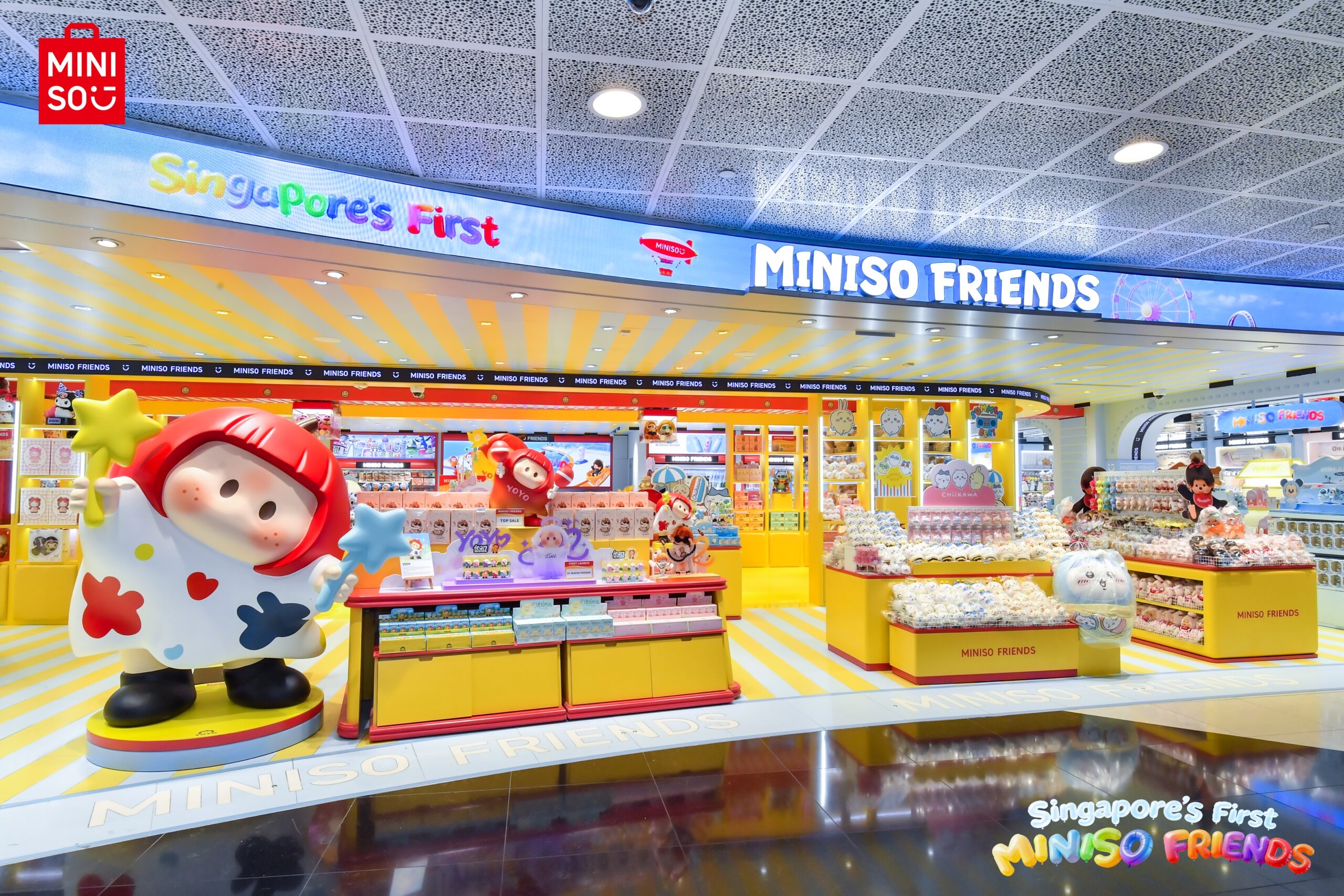
    Miniso, a major retailer in Asia, is intensifying its expansion efforts in Southeast Asia as it introduces its “Miniso Friends” concept in Singapore and Vietnam. This development forms part of a more extensive strategic shift towards experiential and intellectual property (IP)-centered retail.

    Experiential Retail: A Strategic Shift

    The Miniso Friends stores, according to the company, are larger and situated in prominent commercial districts. They are intended to act as city-level landmarks differing from conventional lifestyle outlets. This move signifies the brand’s effort to replace the traditional retail environment with an experiential, IP-focused one.

    Miniso in Vietnam

    In Vietnam, the new Miniso Friends store is located in the Van Hanh Mall in Ho Chi Minh City. This opening aligns with Miniso’s 10th anniversary in the Vietnamese market. The store dedicates 70% of its stock to IP-related merchandise. The product selection includes items from the YoYo Fly with the Wind Series, the Sanrio SEA-exclusive Leopard collections, and the Chiikawa Sakura Season. In addition, the store also introduced Star Wars and Luo Xiaohei collaboration merchandises to the market.

    Miniso in Singapore

    In Singapore, Miniso has acquired a 450 square meter space in VivoCity, the nation’s biggest shopping mall. The store stocks over 3,200 stock keeping units (SKUs). Emphasizing local products, it offers Singapore-exclusive Disney Mickey items featuring the iconic Merlion design.

    These recent expansions come after a period of rapid regional growth earlier in the fiscal year 2026, highlighted by the introduction of the Miniso Friends model in Malaysia.

    Miniso’s Broader Growth

    By the end of 2025, Miniso had already established 26 Miniso Land locations in China, representing another aspect of its transition to IP-centric retailing.

    Questions & Answers

    What is the Miniso Friends concept?
    Miniso Friends is a part of Miniso’s strategic pivot towards an experiential and IP-centric retail concept. These stores are larger and located in prominent commercial areas, functioning as city landmarks.

    What kind of products does the new Miniso store in Vietnam offer?
    The new Miniso store in Vietnam offers a variety of IP-related products. This includes items from the YoYo Fly with the Wind Series, Sanrio SEA-exclusive Leopard collections, and the Chiikawa Sakura Season. It also marks the market debut of Star Wars and Luo Xiaohei collaboration lines.

    How does Miniso cater to the local market in Singapore?
    In Singapore, Miniso emphasizes localized products. It offers Singapore-exclusive Disney Mickey items featuring the iconic Merlion design.

  • Misto Holdings Boosts Q4 Sales Amid US Business Restructuring: Fila & Acushnet Show Strong Performances

    Misto Holdings Boosts Q4 Sales Amid US Business Restructuring: Fila & Acushnet Show Strong Performances

    In the fourth quarter, Misto Holdings, the parent company of Fila, Titleist and FootJoy, announced an increase in sales growth following a restructuring of its U.S. operations. The firm, based in South Korea, saw a 6.3% year-on-year boost in revenue during this period, reaching KRW915.2 billion (US$612 million). This follows a 3.7% uplift in sales reported in the third quarter.

    Company executives attribute this growth to a combination of factors, despite the prevailing macroeconomic uncertainty. These include a focus on profitability-driven operations, the positive outcomes of restructuring, and robust performance from Acushnet.

    Segment Performance

    Revenue from the Misto segment, which includes Fila and other lifestyle brands, fell by 9.6%. This decrease was primarily due to restructuring and inventory clearance in the U.S. market. However, operating profit improved significantly, reaching KRW74.7 billion, marking a notable recovery from the previous year.

    The Greater China market has emerged as a new area of growth for the company, driven by the expansion of prominent K-fashion brands. In South Korea, demand for Fila’s footwear franchise models remained stable.

    The Acushnet segment reported a sales growth of 10.9%, bolstered by strong sales of golf equipment, such as Titleist T-Series irons and SM10 wedges. Additionally, higher average selling prices for FootJoy golf shoes contributed to this growth.

    Yearly Overview

    For the entirety of FY25, the company’s consolidated revenue grew by 4.7% to reach KRW4.47 trillion. Operating profit surged by 31.6% to KRW 474.8 billion.

    Ho Yeon (Aaron) Lee, CFO of Misto Holdings, reflected on the past year, saying it was a significant period that saw the company reinforce its identity as a global brand portfolio company following a corporate name change.

    He noted that the expansion of the Greater China business, improved profitability in the Misto segment, and solid growth in Acushnet have all contributed to the stability of the company’s earnings.

    Questions & Answers

    What factors led to the growth of Misto Holdings in the fourth quarter?
    The growth was attributed to profitability-focused operations, the restructuring of the U.S. operations, and strong performance from Acushnet.

    How has the Misto segment performed amidst the company’s restructuring?
    Despite a decrease in revenue by 9.6% due to restructuring and inventory clearance, the Misto segment saw an improvement in operating profit, marking a significant turnaround.

    What contributed to the sales growth of the Acushnet segment?
    Increased sales of golf equipment, particularly Titleist T-Series irons and SM10 wedges, along with higher average selling prices for FootJoy golf shoes, supported the 10.9% growth in the Acushnet segment.

  • Amazon Boosts Indian Market Presence: Cuts Reseller Referral Fees to Propel Small Business Growth

    Amazon Boosts Indian Market Presence: Cuts Reseller Referral Fees to Propel Small Business Growth

    In a bid to strengthen its foothold in India’s highly competitive e-commerce sector, Amazon recently announced that it will cease to charge sellers referral fees for products priced under 1,000 rupees, or US$10.98. This decision, revealed by the company on Monday, is part of an ongoing initiative to attract a broader range of merchants to its online marketplace.

    Enhancing the ‘Zero-Referral Fee’ Policy

    Amazon is building upon its ‘zero-referral fee’ policy that was introduced last year. Initially, this policy was applicable only to about 12 million products that were priced below 300 rupees. However, the implementation of this policy led to a remarkable 50% increase in the number of new sellers joining Amazon’s platform in India.

    A referral fee is essentially a commission that sellers have to pay to Amazon for each product sold through its platform. The newly extended policy, which came into effect on March 16, now applies to more than 125 million products.

    Along with this, Amazon has also announced a reduction in certain shipping charges, making it even more cost-effective for sellers to use their platform.

    Amit Nanda, the director of Selling Partner Services for Amazon India, stated that this move was aimed at “making selling on Amazon more lucrative and simpler, particularly for small businesses and entrepreneurs in tier-2 and tier-3 cities.”

    Amazon’s Crucial Market: India

    India has become an increasingly important market for Amazon due to its expanding base of internet users, which has significantly fueled e-commerce growth in the world’s most populous country.

    However, the e-commerce giant faces stiff competition not just from Walmart-backed Flipkart and the retail division of Mukesh Ambani’s Reliance Industries, but also from quick-commerce platforms such as Eternal’s Blinkit and Swiggy’s Instamart, which have been rapidly gaining market share.

    Amazon revealed plans in December to invest more than $35 billion in India by 2030. The investment will not only be used to expand its AI infrastructure, but also to enhance retail logistics and boost small-business growth.

    Questions & Answers

    What does Amazon’s new decision entail?
    Amazon has decided to stop charging sellers in India referral fees for products priced under 1,000 rupees. It has also reduced certain shipping charges.

    What is the goal behind Amazon’s decision?
    This decision is aimed at attracting more merchants to Amazon’s online marketplace in India, making the platform more lucrative and simpler, especially for small businesses and entrepreneurs in tier-2 and tier-3 cities.

    How does Amazon plan on investing in India’s e-commerce sector?
    Amazon has revealed plans to invest more than $35 billion in India by 2030. The funds will be used to expand its AI infrastructure, improve retail logistics, and boost the growth of small businesses.