Retail News CRM

Tag: cable

  • LS Cable & System Spearheads Submarine Power Grid Expansion in Malaysia: Aims for Dominance in Booming Asia-Pacific Subsea Cable Market

    LS Cable & System Spearheads Submarine Power Grid Expansion in Malaysia: Aims for Dominance in Booming Asia-Pacific Subsea Cable Market

    The initiative’s main objective is to guarantee a reliable power supply by enlarging a 132kV-grade underwater power grid between the Malaysian peninsula and Langkawi Island, a well-known tourist hotspot.

    LS Cable & System prevailed over several international corporations to secure this second Langkawi venture, following an earlier project. The firm emphasized its capacity to manage intricate turn-key projects, supervising everything from design and material provision to installation and construction. This was over and above the basic cable supply, thus demonstrating its superior engineering proficiency.

    It is predicted that the worldwide underwater cable market will increase to KRW 34 trillion by 2030. The Asia-Pacific region, renowned for its abundant islands, is likely to be at the forefront of this surge with KRW 20 trillion. At present, Southeast Asia is diligently working on large-scale underwater power grid projects in an effort to set up the ASEAN Power Grid (APG). The primary goal of the APG is to interconnect national power infrastructures.

    LS Cable & System is poised to use this project as a stepping stone to boost its international order references and quicken its growth in the local market. The company plans to join forces with LS Marine Solution and other associates on large national projects. One example of such a project is the West Coast energy highway, for which a bidding notice is expected to be released in the first half of this year.

    LS Cable & System stated, “We are establishing credibility in the global market, built upon previous project implementation experience and our technical prowess. We are determined to strengthen our leadership in the underwater cable market by successfully executing domestic and international backbone network construction projects, leveraging our proven turn-key competencies.”

    Questions & Answers

    What is the primary goal of the project?
    The project’s main goal is to ensure a reliable power supply by expanding a 132kV-grade underwater power grid between the Malaysian peninsula and Langkawi Island.

    What is LS Cable & System’s role in the project?
    LS Cable & System is responsible for managing complex turn-key projects, including design, material supply, laying, and construction.

    What future plans does LS Cable & System have?
    LS Cable & System plans to use this project to enhance its international order references and accelerate its expansion into the domestic market. It also intends to collaborate with LS Marine Solution and other partners on large-scale national projects.

  • Revolutionizing Connectivity in Southern Philippines: Globe’s Groundbreaking Mindanao Submarine Cable Project Begins 2026

    Revolutionizing Connectivity in Southern Philippines: Globe’s Groundbreaking Mindanao Submarine Cable Project Begins 2026

    Globe Telecom has announced plans to implement a new submarine cable system in Mindanao, set to begin in early 2026. This advancement highlights the ongoing commitment to strengthen network resilience and extend capacity in Southeast Asia’s archipelagic markets.

    Project Details

    The forthcoming project involves the installation of a 48-core, 175-kilometer submarine cable that will link Zamboanga to Isabela City in Basilan, with an extension to Sulu. According to Globe, the infrastructure will bolster both broadband and mobile services by incorporating submarine and inland cable systems, landing stations, fronthaul facilities, and core and access network nodes.

    Survey activities for the submarine cable are slated to commence in early 2026, with full construction anticipated by mid-2027. The operational hub in Isabela City is set to function as a regional aggregation point for high-capacity internet traffic. This will enhance redundancy and service stability in parts of Mindanao and the broader southern Philippines region.

    This innovative initiative aligns with the Philippine government’s National Broadband Plan. It reflects the concerted regional effort to extend digital infrastructure to remote and underserved communities, a persistent challenge for many ASEAN countries with dispersed island geographies.

    More than Infrastructure

    Carl Cruz, President and Chief Executive Officer of Globe Telecom, emphasized the significance of the project beyond its physical infrastructure. He stated, “This is more than infrastructure; it is a bridge to opportunity.” Cruz added that the average monthly data consumption has skyrocketed beyond 30 gigabytes per user, necessitating sustained investment in fiber and broadband networks to support digital services, small businesses, and economic participation.

    The Mindanao submarine cable is part of Globe’s broader network modernization program, which has already transitioned more than 600 towns across 70 provinces to full-fiber infrastructure. This shift from legacy copper networks has enhanced service reliability and reduced energy usage, aligning with regional operators’ sustainability goals.

    Impact on Communities

    Jowin Marquez, Senior Director and Territory Lead for Globe’s Network Technical Group, highlighted the transformative potential of reliable connectivity. He noted that it empowers communities with access to education, bolsters local businesses, and fosters greater participation in the digital economy.

    In the past three years, Globe has invested PHP 228 billion in capital expenditures and PHP 236 billion in operating expenses to fortify and future-proof its network. Its GFiber Prepaid service – a reloadable, no-contract broadband offering – experienced a 53% growth in early 2025. It currently serves approximately 400,000 households nationwide, contributing to Globe’s total broadband subscriber base of 1.83 million.

    Questions & Answers

    What is the purpose of Globe Telecom’s new submarine cable system?
    The new submarine cable system aims to strengthen network resilience and expand capacity in archipelagic markets, particularly in Mindanao, Philippines.

    What does the project entail?
    The project involves the deployment of a 48-core, 175-kilometer submarine cable connecting Zamboanga to Isabela City in Basilan, with an extension to Sulu. It will enhance both broadband and mobile services.

    How does this initiative align with broader efforts in the region?
    The project is consistent with the Philippine government’s National Broadband Plan and mirrors a wider regional effort to extend digital infrastructure to geographically isolated and underserved communities.

  • Google Cloud Boosts Asia Pacific Connectivity with TalayLink Subsea Cable and New Hubs in Australia and Thailand

    Google Cloud Boosts Asia Pacific Connectivity with TalayLink Subsea Cable and New Hubs in Australia and Thailand

    Google Cloud has unveiled TalayLink, an innovative subsea cable system that connects Australia and Thailand. This system represents a significant move towards bolstering digital infrastructure and network resilience throughout the Asia Pacific region.

    Strengthening Regional Network Resilience

    TalayLink is as an extension of the interlink cable previously introduced under the Australia Connect initiative last year. The cable system is designed to follow a diverse route through the Indian Ocean, positioned west of the heavily trafficked Sunda Strait. This strategic routing will not only provide Thailand with a new, resilient international gateway but will also enhance the integration of Google’s global network.

    Bikash Koley, Vice President of Google Global Infrastructure at Google Cloud, explains that TalayLink is named after the Thai word for sea or ocean, ‘talay’. The new subsea cable path will establish a more diverse linkage to Thailand through the Indian Ocean, west of the Sunda Strait. This route will contribute to further integrating future data centers and cloud regions in Thailand into Google’s global network.

    Future-Proof Connectivity Hubs

    Google has also declared plans to establish new connectivity hubs in Mandurah, Western Australia, and South Thailand, in its recent announcement. These hubs aim to secure future regional connectivity and support advanced digital and AI services by facilitating cable switching, content caching, and colocation capabilities. The Mandurah hub will diversify Western Australia’s landing points beyond Perth, while the South Thailand hub will take advantage of existing infrastructure in an essential subsea crossroads.

    Pratthana Leelapanang, Chief Executive Officer of AIS, commends the strategic partnership with Google in supporting the connectivity hub in Southern Thailand. The collaboration of Google’s diverse submarine cable path and AIS’s high-reliability colocation capabilities will enhance the region’s digital infrastructure and support the country’s AI strategy.

    Preeyaporn Tangpaosak, President of ALT Telecom, also expressed enthusiasm about the International Gateway Company (IGC), a subsidiary of ALT Telecom PLC, being a crucial Google partner in landing a new submarine cable in Thailand. This new piece of digital infrastructure is pivotal in accelerating Thailand’s ambitious digital economy development strategy.

    National Importance of Deployments

    The significance of these implementations for the nation’s long-term competitiveness is underscored by Thailand’s Board of Investment (BOI). Narit Therdsteerasukdi, Secretary General of the Thailand Board of Investment (BOI), highlights the role of the TalayLink cable as a key piece of digital infrastructure. It enhances Thailand’s connectivity and resilience and, in conjunction with Google’s upcoming Google Cloud region and data center in Thailand, will significantly expand regional network and computing capacity. These forward-looking investments position Thailand as a critical digital gateway for next-generation cloud and AI innovation in Southeast Asia.

    Upon completion, the TalayLink and new connectivity hubs will boost network resilience across Australia, Africa, and Southeast Asia. Coupled with previously announced hubs in the Maldives and Christmas Island, the new system will enhance onward connectivity across the Indian Ocean and the Middle East.

    Questions & Answers

    What is the TalayLink subsea cable system?
    TalayLink is an innovative subsea cable system developed by Google Cloud that connects Australia and Thailand, strengthening digital infrastructure and network resilience in the Asia Pacific region.

    How will the new connectivity hubs in Mandurah and South Thailand function?
    These hubs aim to enhance regional connectivity and support advanced digital and AI services. They will facilitate functions such as cable switching, content caching, and colocation capabilities.

    What is the significance of the TalayLink cable to Thailand?
    The TalayLink cable serves as a pivotal piece of digital infrastructure, enhancing Thailand’s connectivity and resilience. It will significantly expand regional network and computing capacity while positioning Thailand as a critical digital gateway for next-generation cloud and AI innovation in Southeast Asia.

  • Undersea Superhighways: The Future of Digital Connectivity in Asia

    Undersea Superhighways: The Future of Digital Connectivity in Asia

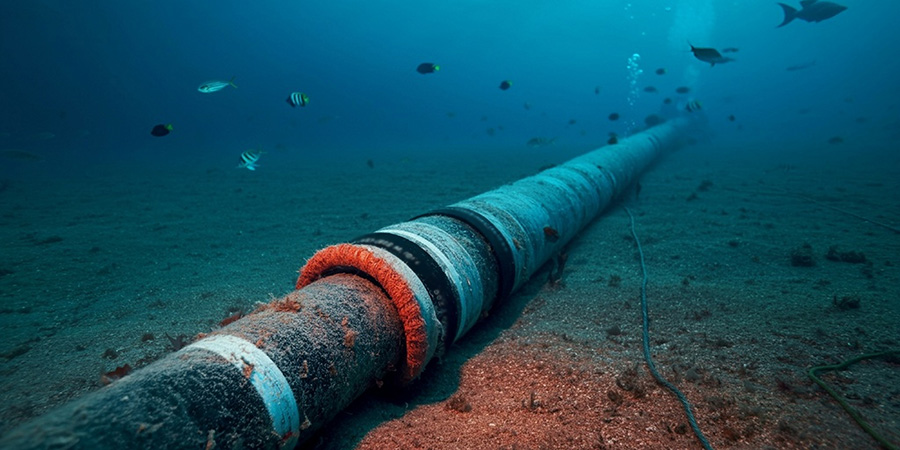
    The majority of today’s internet traffic is transmitted via undersea fiber-optic cables, rather than through satellites or overland networks. The National Bureau of Asian Research reports that over 97% of transoceanic telecommunications—including financial, voice, and internet data—are facilitated by these underwater cable systems. This is especially true in Asia, where many countries are separated by bodies of water, making these cables crucial for digital connectivity.

    The Evolution of Submarine Cables

    Undersea cables have come a long way from their origins as colonial-era telegraph lines. They have developed into high-capacity systems capable of transmitting terabits of data per second. Modern technologies, such as optical amplification and dense wavelength division multiplexing (DWDM), allow these cables to stretch thousands of kilometers across oceans.

    Asia’s Digital “Bridges”

    These undersea cables, often referred to as digital “bridges,” are now jointly funded and operated by consortia of telecom firms, governments, and major tech companies. In managing these cables, these entities must balance commercial interests, abide by various regulations, and mitigate geopolitical risks.

    Asia’s most significant subsea cables include the Asia-Africa-Europe 1 (AAE-1), Asia-America Gateway (AAG), Asia Pacific Gateway (APG), Asia Submarine-Cable Express (ASE), South-East Asia-Japan Cable 2 (SJC2), SEA-ME-WE 6, and the PEACE Cable. These cables link various Asian countries with each other and the rest of the world, providing high-capacity connectivity across continents.

    The Importance of Undersea Cables in Asia

    Undersea cables are particularly crucial in Asia. Island nations, such as the Philippines and Indonesia, depend on these cables to connect to continental networks. Conversely, landlocked or peninsular states like Laos and Myanmar rely on terrestrial links that connect to undersea systems.

    The expansion of undersea cable capacity and routes promotes digital inclusion, reduces latency, and improves connectivity for remote and rural communities. Research indicates that doubling the capacity of these cables can decrease internet prices in a country by 30-50%, enabling wider online access.

    Fostering Connectivity and Cultural Exchange

    Submarine cables serve as the backbone of Asia’s digital regionalism. They facilitate the exchange of culture and knowledge across borders, enabling various professionals and creators to connect, learn, and collaborate with ease.

    Moreover, these undersea cables highlight Asia’s growing digital interdependence. No country can thrive alone; data, trade, and communication freely cross borders, uniting societies. Much like physical bridges, submarine cables connect Asia beneath the ocean, enabling the free flow of ideas and opportunities.

    Challenges and Considerations

    While undersea cables significantly enhance connectivity, they also come with their own set of challenges. If landing stations are monopolized or interconnection is gated, it may lead to the exclusion of certain actors such as small businesses or rural communities. Additionally, like physical bridges, submarine cables are vulnerable to sabotage, which could lead to significant disruptions in connectivity. Therefore, it is crucial to establish protective measures and governance to manage these risks.

    Questions & Answers

    What is the role of submarine cables in digital connectivity?
    Submarine cables facilitate the majority of transoceanic telecommunications, including financial transactions, voice calls, and internet data. They play a crucial role in connecting different countries and enabling the exchange of information across continents.

    How do submarine cables impact internet accessibility and costs?
    Expanding undersea cable capacity can significantly reduce internet prices in a country, thereby enabling wider online access. However, monopolization can undermine these benefits.

    What are the potential risks associated with submarine cables?
    Potential risks include monopolization of landing stations, sabotage of cables, and the possibility of cables being used as political tools in disputed sea regions. Therefore, protective measures and governance are vital to manage these risks.

  • Why Subsea Cables Are Essential to the Future of the Digital Economy

    Why Subsea Cables Are Essential to the Future of the Digital Economy

    “In this digital age, data has become the world’s most valuable resource, and subsea cables are the arteries through which it flows,” said Najib Khan, Chief Business Services Officer at Ooredoo Group. This vivid characterization underscores the escalating significance of subsea connectivity in today’s fast-paced, data-dependent world.

    In a revealing interview with Telecom Review, Khan articulated the shift of subsea cables from obscure utilities to critical assets for national security and economic growth. He elaborated on how Ooredoo’s substantial investments are reconfiguring the Gulf’s digital landscape and its ambitions to establish the Middle East as a prominent global digital hub.

    Why Are Subsea Cables More Essential Than Ever?

    Subsea cables, which already carry over 95% of the world’s internet traffic, are no longer the unsung heroes of the digital economy; their importance is soaring alongside an unprecedented surge in data generation. Whether it’s artificial intelligence, cloud computing, fintech, or the Internet of Things, the deluge of traffic is pushing subsea systems to the forefront.

    Simultaneously, governments and businesses are racing towards digital transformation, necessitating low-latency, resilient, and secure connections linking data centers, hyperscalers, and end-users. Hyperscalers alone now represent over 60% of global investments in subsea infrastructure, highlighting the strategic shift towards these underwater lines not just as conduits of connectivity, but as vital components of innovation and sovereignty.

    Tackling Geopolitical Challenges with Ooredoo’s Fibre in the Gulf

    The world’s digital fabric currently leans heavily on the Red Sea-Suez route, with about 95% of Europe-Asia data traffic routed through Egypt. This dependency exposes vulnerabilities, as disruptions can ripple through global operations.

    Enter Ooredoo’s Fibre in the Gulf (FIG) system, designed to revolutionize this landscape. Working with Alcatel Submarine Networks, Ooredoo is building a comprehensive, high-capacity subsea network that will interconnect all seven Gulf Cooperation Council (GCC) countries—including Qatar, Oman, the UAE, Bahrain, Saudi Arabia, Kuwait, and Iraq. When realized, FIG will boast an astonishing capacity of 720 terabits per second across 24 fiber pairs—far surpassing the capabilities of existing and planned Gulf cables.

    Positioned to deliver low-latency and secure service, FIG promises to unlock new digital avenues for hyperscalers, businesses, and governments, while enhancing the region’s access to European markets.

    The Symbiotic Relationship Between Subsea Cables and Data Centers

    It’s difficult to envision one without the other; subsea cables act as the highways for digital traffic, while data centers serve as its repository and processing unit. For businesses and hyperscalers, proximity to landing stations is crucial, as it impacts efficiency and competitiveness.

    With this understanding, Ooredoo is strategically investing not only in the FIG subsea system but also in expanding its AI-ready data center capabilities. Together, these elements create a cohesive ecosystem where connectivity, cloud solutions, and edge computing converge, ultimately providing clients with seamless, low-latency services essential for driving innovations—and perhaps even the next viral video.

    Ooredoo’s Strategy to Become the Partner of Choice

    Ooredoo’s strategy centers on two pillars: trust and scale. The company’s extensive regional presence aligns perfectly with the needs of global players, allowing Ooredoo to leverage key partnerships that infuse the latest technology into local operations.

    This dual focus empowers Ooredoo to ensure that advanced technological capabilities not only meet international standards but also conform to local regulations, solidifying its position as a trusted partner in the industry.

    The Middle East’s Digital Renaissance

    Strategically located at the confluence of Asia, Europe, and Africa, the Middle East now stands before a unique opportunity—to transform from a technology consumer to a regional hub of innovation.

    The FIG project lies at the center of this vision. Paired with emerging data center infrastructures and cloud ecosystems, it lays the groundwork for economic diversification. The region’s increasing reliance on artificial intelligence and the processing of large data sets necessitates such robust infrastructural enhancements.

    While these cables may be hidden beneath the ocean waves, their impact is unmistakable—fostering job creation, economic diversification, and digital empowerment.

    Looking Ahead: The Future of Subsea Connectivity

    The trajectory for subsea connectivity is clear: the demand for data and digital infrastructure will only intensify. Future subsea systems are expected to accommodate unimaginable data loads while incorporating intelligence and sustainability at their core.

    However, the true essence lies not merely in the technology but in what it enables—whether it’s a start-up in Doha reaching a global audience, a hospital sharing medical expertise across borders, or an energy firm harnessing AI to anticipate operational failures. At Ooredoo, the goal is not only to ensure the Middle East is connected to this exciting future but actively shapes it. With innovative digital infrastructure, the region has the potential to turn connectivity into empowerment.

    Questions & Answers

    Why are subsea cables becoming critical now?
    With a growing demand for data from AI, cloud technology, and more, these cables are now seen as essential to national security and economic growth.

    What advantage does Ooredoo’s Fibre in the Gulf offer?
    It creates a robust interconnection among GCC countries with a high-capacity system, enhancing digital access and reducing vulnerabilities associated with existing routes.

    How does Ooredoo ensure it meets both global standards and local needs?
    By forging partnerships that integrate advanced technology while maintaining compliance with regional regulations, Ooredoo establishes itself as a dependable local partner for global players.
  • Tata Communications Boosts Asia’s Connectivity with Launch of TGN-IA2 Subsea Cable

    Tata Communications Boosts Asia’s Connectivity with Launch of TGN-IA2 Subsea Cable

    Tata Communications has taken a giant leap in enhancing its global network with the successful integration of the TGN-IA2 submarine cable system, marking a significant boost in capacity and performance along crucial Intra-Asia routes.

    Bridging Asia with Enhanced Connectivity

    On Tuesday, Tata Communications unveiled the TGN-IA2 subsea cable system, promising to elevate connectivity for businesses across Asia. This new cable creates vital links between Singapore, Hong Kong, and Japan, complementing the existing TGN-IA system with increased interconnections to other global regions.

    A Robust Addition to Subsea Infrastructure

    Constructed by the Asia Direct Cable (ADC) consortium, TGN-IA2 enriches Tata Communications’ subsea portfolio by offering high-capacity, low-latency connectivity. This integration is poised to benefit sectors like finance, e-commerce, and logistics that rely on instantaneous and secure data transfers between Asia and international markets.

    Agility at Its Core

    Importantly, Tata Communications retains full ownership and control over TGN-IA2’s capacity upgrades, which distinguishes it from many consortium-built cable systems. This autonomy ensures that businesses, hyperscalers, and service providers can enjoy agile, scalable services tailored to meet the surging demand for digital infrastructure in Asia and beyond.

    Future-Proofing Connectivity

    Genius Wong, Executive Vice President and Chief Technology Officer at Tata Communications, expressed enthusiasm about this enhancement: “This latest improvement will further solidify Tata Communications’ status as a global leader in smart, secure, and scalable connectivity, along with cross-border innovation.”

    Building Resilience and Efficiency

    The new system bolsters network resilience by adding vital redundancy to Tata Communications’ existing subsea infrastructure. With TGN-IA2 in place, latency for data-hungry applications such as high-definition streaming, real-time collaboration, and inter-data center connectivity is expected to decrease significantly.

    Harnessing Hyper-Connectivity for the Future

    TGN-IA2 serves as an essential complement to the original TGN-IA cable, linking Asia to major global hubs, including the U.S., EMEA, and India. It’s also crafted to support forward-thinking applications like AI workloads, enabling cloud providers, multinational corporations, and digital businesses to efficiently scale in an increasingly hyper-connected world.

    Wong concluded, “Whether you’re a cloud provider entering Asia, a multinational corporation searching for low-latency links across continents, or a digital business looking to expand globally, TGN-IA2 lays the groundwork for your future.”

    And let’s be honest—who knew that the future of connectivity could be swimming beneath the sea?

    Questions & Answers

    What are the main benefits of the TGN-IA2 cable system?
    The TGN-IA2 submarine cable system enhances high-capacity, low-latency connectivity, crucial for sectors like finance and e-commerce, ensuring secure, real-time data transfer between Asia and the rest of the world.

    How does TGN-IA2 differentiate itself from other cable systems?
    Tata Communications retains full ownership and control over TGN-IA2, allowing for flexible capacity upgrades and agile services that cater to the growing needs of businesses and service providers.

    In which areas will TGN-IA2 have the most impact?
    The TGN-IA2 system is expected to have a significant impact on data-intensive applications such as high-definition streaming, real-time collaboration, and inter-data center connectivity, enhancing overall network resilience.

  • China Telecom Launches Asia Direct Cable Capacity Ahead of Schedule

    China Telecom Launches Asia Direct Cable Capacity Ahead of Schedule

    This milestone was achieved two months earlier than planned, following the completion of the ADC wet segment last November. In the past eight years, no new submarine cables have been operationalized in the Asia Pacific. This has led to a shortage of resources and created challenges in the market.

    The launch of the ADC’s capacity has been eagerly anticipated by the industry. China Telecom Global Limited, acting as the Co-chair of the ADC consortium, has worked closely with all consortium members and suppliers to overcome unexpected challenges and bring the ADC’s capacity into service ahead of schedule. This has helped to ease the strain on submarine cable resources.

    The availability of capacity will support the growth of artificial intelligence (AI), cloud computing, and big data, as well as facilitate digital transformation across various industries. Looking forward, China Telecom plans to expand its presence into international markets and enhance its global network resources to further contribute to the advancement of the global digital economy.

  • European Union wants Apple’s Lightning port gone

    European Union wants Apple’s Lightning port gone

    EU lawmakers might be in favor of diversity, but not when it comes to smartphone chargers. Today, these lawmakers called for the creation of one standard charger for all mobile devices. By an overwhelming vote of 582-40, members of the European Parliament passed a resolution that asks the European Commission (the body that drafts laws for the EU) to make sure that buyers of mobile devices no longer are under the obligation to purchase a new charger every time they buy a new device. The resolution calls for the EC to adopt new rules by this coming July.
    The idea is to reduce the amount of electronic waste that the EU is dealing with. During 2016, the last year that data was made available, such waste generated in the EU added up to 12.3 million tonnes or 36.6 pounds for each person living in the EU. The resolution noted that requiring a standard charger for mobile devices could reduce the amount of electronic waste and it also asked the Commission to pass a rulemaking sure that wireless chargers could be used to power up different mobile devices.

    The EC has actually been fighting for a standard mobile charger for over 10 years. in 2009, Apple, Samsung, Huawei, and Nokia signed a “voluntary memorandum of understanding” calling for these phone manufacturers to use standard chargers for phones that were coming to the marketplace in 2011. But it is obvious to the EC after nearly 10 years that the voluntary approach has not worked and that legislation is going to be needed in order to force the phone manufacturers to take action.

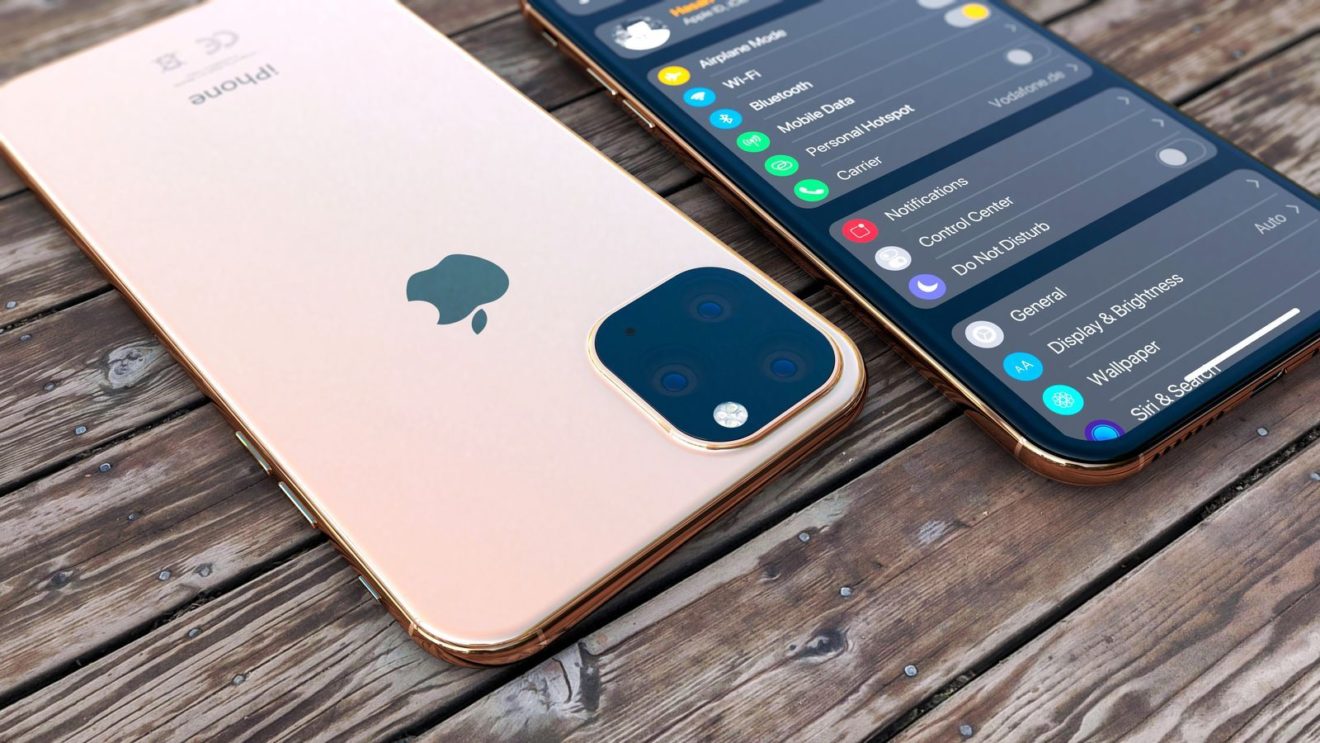
    The company that is on the line with this proposal is Apple. That is because most Android phones have a USB-C port which is the closest thing to a common charging platform that the mobile industry has today. However, Apple has its proprietary Lightning port which has been in use since 2012 when it replaced the 30-pin dock connector. Apple did switch to USB Type-C for the 2018 iPad Pro models and for the last couple of years there have been rumors about the same thing happening to the iPhone. Many iPhone users have been hoping that Apple switches to Type-C; that could make it easier for them to find accessories for their iPhones and at a lower price, too.
    While Apple might end up not having a choice in Europe, it is hard to see the company voluntarily switching to a standard system because of the profits involved. Having a proprietary charging system means that people will have to come to Apple for an original replacement. The company already took a little hit when it introduced the 2019 iPhones by including an 18W fast charger in the box with the iPhone 11 Pro and iPhone 11 Pro Max. While the iPhone 8 iPhone 8 Plus, iPhone XS, iPhone XS Max, and iPhone XR all support fast charging, owners of those models have to shell out $29 for an 18W charger.
    Last month, reliable TF International analyst Ming-Chi Kuo looked deeply into his crystal ball and said that the highest-end 2021 iPhone might not have a Lightning port or a USB-C port. Kuo is talking about the iPhone 13 Pro Max featuring a “completely wireless experience.” If indeed Apple is looking at offering a port-free phone, it could decide that it isn’t worth it to make a switch away from the Lightning port for a short period of time.
    However, there is still the EU to consider. Apple said last week that the mobile industry is already moving toward the use of Type-C as a standard, but also said that forcing a standard on the industry would hurt consumers in Europe. And Apple also points out that making a quick move to a standard charging platform would create plenty of electrical waste, exactly what the EU is trying to avoid in the first place.
  • Airtel and Telecom Egypt partner on global submarine cable systems

    The partnership grants Airtel the right to use fiber pairs of MENA Cable from Egypt to India with access to Saudi Arabia and Oman, and other fiber pairs from Egypt towards Italy. It also extends beyond MENA Cable, where Airtel will get the right to use a fiber pair from Egypt to France on TE North along with capacities on SMW5 and AAE1 cable systems.

    With this, Airtel will be able to further diversify its global network to serve the massive growth in demand for data services, particularly in emerging markets across South Asia, Africa and Middle East, while also benefitting from the favorable economics of Telecom Egypt’s existing wide cable systems network.

    Commenting on the partnership, Ajay Chitkara, Director and CEO, Airtel Business, said, “The partnership with Telecom Egypt underlines our commitment to provide world-class service experience to our customers. The partnership including MENA Cable and TE’s network will be a good addition to our global network portfolio and will provide us with a high quality and diversified new route to Western Europe and the rest of the world. With the explosion of data usage in emerging markets, including India and Africa, this asset will provide us a scalable and diverse high capacity highway to serve our customers. In particular, it will provide impetus to India’s emergence as a major regional internet hub serving customers across SAARC region, with seamless global connectivity.”

    Ahmed El Beheiry, Chief Executive Officer of Telecom Egypt, added“Telecom Egypt’s global network was built over the years through investments in consortiums as well as private international submarine cable systems. Our reach and position as an international hub with tens of Tbps lit capacity, makes us the partner of choice for Euro-Asian and Euro-African transit traffic. Telecom Egypt signed the agreement with OTMT to acquire MENA Cable with the aim of capitalizing on the growing traffic from India and Saudi Arabia to Europe and to obtain a new gateway to Europe through Italy. We are pleased to be able to sign the MoU with Airtel as well as to be able to bundle MENA’s assets with existing assets of the TE network. We aim to come back to the market with more details on the MoU and its financial impact once the deal is closed.”

    Egypt’s distinctive geographic location on the Red and Mediterranean seas has enabled Telecom Egypt to connect more than 11 cable systems from the East and 13 from the West linked with the Red-Med Corridor consisting of 7 diversified routes across Egypt. Telecom Egypt’s global network was built over the years through investments in international submarine cable systems, namely: TE North, ALETAR, SEA-ME-WE-3, SEA-ME-WE-4, SEA-ME-WE-5, IMEWE, EIG, and AAE-1.

    Airtel’s global network portfolio includes ownership of i2i submarine cable system connecting Chennai to Singapore, consortium ownership of SMW4 submarine cable system connecting Chennai and Mumbai to Singapore and Europe, and new cable system investments like Asia America Gateway (AAG), India Middle East & Western Europe (IMEWE), Unity, EIG (Europe India Gateway) and East Africa Submarine System (EASSy). It also has terrestrial express connectivity to neighboring countries including Nepal, Pakistan, Bhutan, Bangladesh and China.

  • Huawei to sell subsea cable business

    Huawei to sell subsea cable business

    Huawei is reportedly planning to sell its subsea cable business according to a buyer’s filing.

    Made on 31 May 2019 to the Shanghai Stock Exchange, the filing showed that Hengtong Optic-Electric Co, an optical telecoms network vendor, had signed a letter of intent with Huawei Technologies to buy its 51% stake in Huawei Marine Systems.

    Through no price was given, the deal is set to be financed through a combination of cash and shares.

    The news comes weeks after President Trump issued an executive order on “information and communications technology and services supply chain” which gives him and the rest of the US government unprecedented power to ban any business dealing. The order bans Huawei from buying technology from any US company without a license from the US government.

    A few days after the order was issued, the US government then relaxed its embargo on Huawei until 18 August. The Department of Commerce (DoC) issued a temporary general license which sets out limited exclusions to the order giving operators time to get their plans in order.

    “The temporary general license grants operators time to make other arrangements and the Department space to determine the appropriate long term measures for Americans and foreign telecommunications providers that currently rely on Huawei equipment for critical services,” said Secretary of Commerce Wilbur Ross. “In short, this license will allow operations to continue for existing Huawei mobile phone users and rural broadband networks.”

    It has been rumored that the sale of Huawei Marine is happening because the company is now facing stronger scrutiny, which may affect its ability to win new business.

    Speaking to the FT, Fergus Hanson, head of the International Cyber Policy Centre at the Australian Strategic Policy Institute, said, “It’s becoming a more difficult environment when trying to negotiate deals to build cables because [Huawei] is so much in the spotlight.”

  • Construction begins on PEACE cable

    Construction begins on PEACE cable

    Huawei Marine Networks and the 12,000 kilometer PEACE Cable system have hit a new milestone. The project has now entered into the cable and material manufacturing stage, staying on schedule for an RFS date in the first quarter of 2020.

    PEACE stands for Pakistan & East Africa Connecting Europe, which tells you pretty succinctly the route they will be taking. With one end in Pakistan and the other in southern France, it will come ashore in Djibouti and Egypt along the way with an extension south to Somalia, Kenya, and the Sechelles.

    Further plans suggest extending that branch further down to South Africa.  The landing parties on either end will be Pakistan’s Cybernet and Djibouti Telecom, and the agreements for destinations in between are expected to follow in the next few weeks.

    The build promises the lowest latency route between Europe and China, although the materials I have don’t say exactly how they plan to do that – a terrestrial leg through Pakistan and western China perhaps?

    When complete, the PEACE cable promises 16Tbps per fiber pair. An earlier announcement suggested 5 fiber pairs for a total of 60Tbps, though I don’t know if plans have evolved since then.

  • NEC completes construction of SACS cable

    NEC completes construction of SACS cable

    Japanese vendor NEC has announced it has completed the construction of the first subsea cable crossing the south Atlantic ocean for Angola Cables.

    The South Atlantic Cable System (SACS) has been deployed and is now ready for commercial service. The cable system spans between Angola with Brazil, connecting the African continent to Latin America directly for the first time.

    The system uses a four fiber pair configuration to deliver an initial design capacity of 40Tbps. In Angola, it will land at the existing Sangano cable landing station, while in Brazil it will land in a newly constructed data center constructed for SACS and another cable system connecting Brazil with the US.

    SACS was partly funded through a loan provided by the Japan Bank for International Cooperation to Angola state-owned development bank the Banco de Desenvolvimento de Angola.

    “NEC is honored to have been selected as a partner for SACS, the world’s first optical submarine cable system crossing the South Atlantic, directly connecting two Portuguese speaking nations of Angola and Brazil,” NEC GM for submarine networks Toru Kawauchi said in a statement issued on Monday.

    “Yesterday, all communication between the two continents had to go up north and cross the North Atlantic. From today, this new cable will bring information at the speed of light, improving the connectivity between the two nations and two continents.”

  • GCX to upgrade HAWK cable

    GCX to upgrade HAWK cable

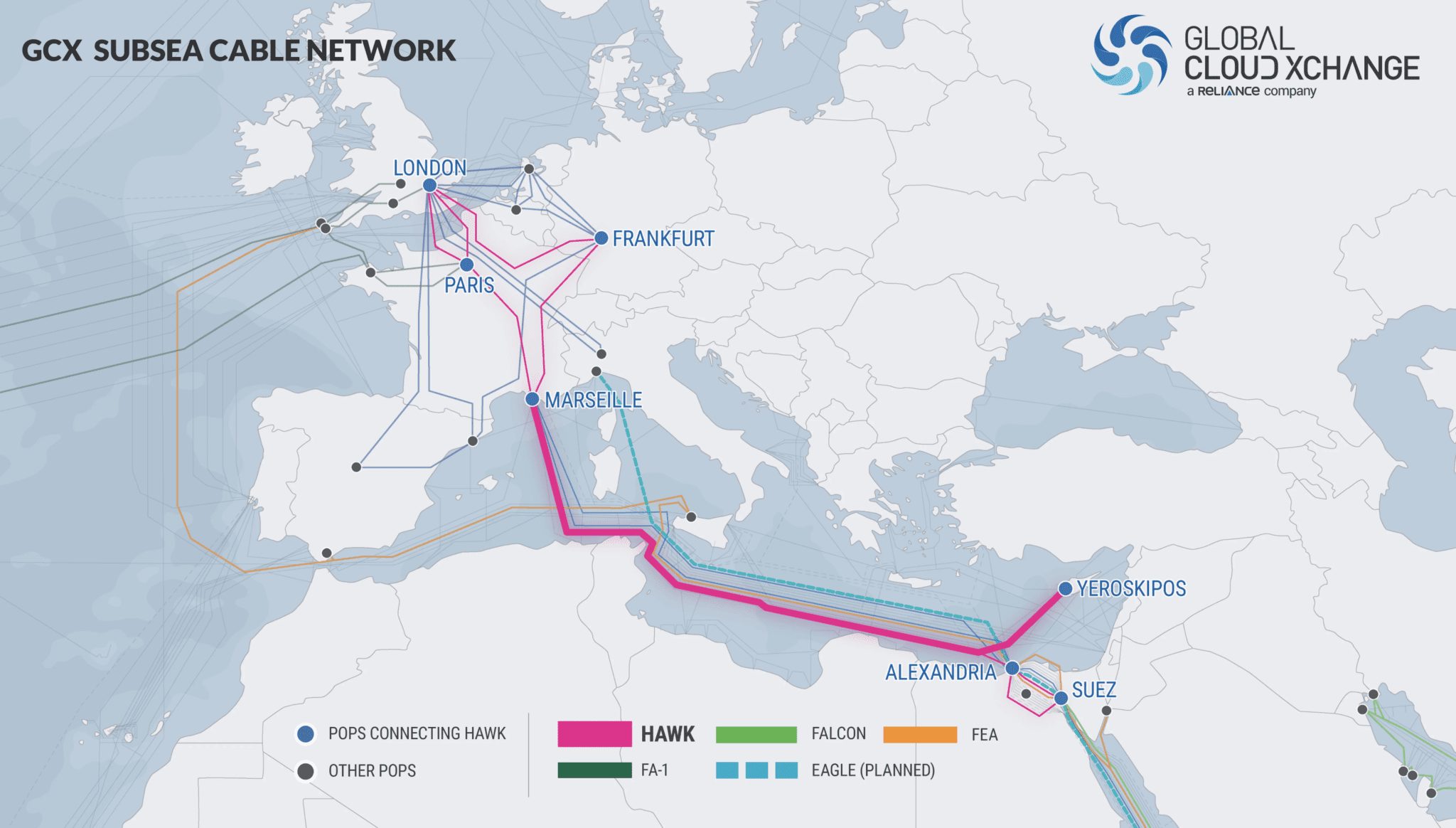
    Reliance Communications’ Global Cloud Xchange (GCX) has announced plans to upgrade a branch of the HAWK subsea cable to meet growing demand for bandwidth between Europe and emerging Asia and the Middle East.

    The company will work with Cyprus’ incumbent operator PrimeTel to upgrade the HAWK branch into Cyprus to 100Gbps.

    The HAWK cable system links Marseille and Paris in France, London in the UK, Frankfurt in Germany, Yeroskipos in Cyprus, and Alexandria in Egypt, and connects to GCX’ global subsea and European backhaul network.

    The cable is integrated with PrimeTel’s Cyprus gateway and hub, which was activated in 2011 to enable ultra-high bandwidth services across the Emerging Markets corridor.

    “With the recent upgrade, we have now broadened our reach into PrimeTel’s Cyprus Hub in Yeroskipos, providing enhanced coverage to meet the growing demand for high-performance, low-latency connectivity across the emerging markets in the Middle East and Asia,” GCX COO Wilfred Kwan said.

    “The network enhancement has already started to attract interest across key growth markets and we are pleased that the first 100Gbps wavelength connection for a major carrier is already in the process of being activated.”

  • Hawaiki Cable deployment nearly complete

    Hawaiki Cable deployment nearly complete

    The Hawaiki cable is nearly complete, according to the company and TE Subcom. Each of the cable landings is complete, the final splice has been made, and final testing will begin shortly. That puts them on track to officially bring the cable online next month.

    The 15,000km Hawaiki cable Cable System will connect Oregon with Australia and New Zealand, making stops in American Samoa and Hawaii along the way. There are also stubbed branch units for New Caledonia, Fiji, and Tonga for the future.

    The system’s theoretical capacity is 43Tbps, which will add significantly to that which is available on the direct route down under. It has taken many years and iterations by those involved to make it happen.


  • Construction begins on Japan-Guam-Australia cable

    Construction begins on Japan-Guam-Australia cable

    A consortium led by RTI Connectivity has commenced construction of a new subsea cable linking Japan, Australia and the US territory of Guam.

    The Japan-Guam-Australia Cable System (JGA) is being built by a consortium consisting of RTI Connectivity, Australia’s Academic and Research Network (AARNet) and Google. It is being supplied by Alcatel Submarine Networks and NEC.

    The 9,500km subsea cable system will have a design capacity of over 36Tbps. It is expected to be ready for service in the fourth quarter of next year.

    At Guam, the JGA will interconnect to the SEA-US cable, which is operated by a consortium that includes RTI Connectivity, as well as the upcoming HK-G Hong Kong-Guam.

    The JGA will contribute to the expansion of communications networks from Japan and Australia to Asia and the US and expand onboard connectivity options in Guam.

    The cable is being built in two sections also linking in Guam, with JGA South being funded by AARNet, Google and RTI Connectivity, while JGA North will be wholly-owned by RTI Connectivity.

    “Hyperscale cloud providers and enterprise companies are fuelling exponential data-growth between Asia, Australia, and the United States. These customers require alternative paths, enhanced quality of service, and cost-effective bandwidth solutions,” RTI Connectivity CEO Russ Matulich said.

    “By adding JGA to our existing cable investments, RTI is well positioned to serve these massive data-growth needs. JGA’s unique design will also improve latency between Tokyo-Sydney, while greatly reducing provisioning timeframes.”