Tag: Camera

  • Honda Motor Recalls 1.2 Million US Vehicles For Rearview Camera Issue

    Honda Motor Recalls 1.2 Million US Vehicles For Rearview Camera Issue

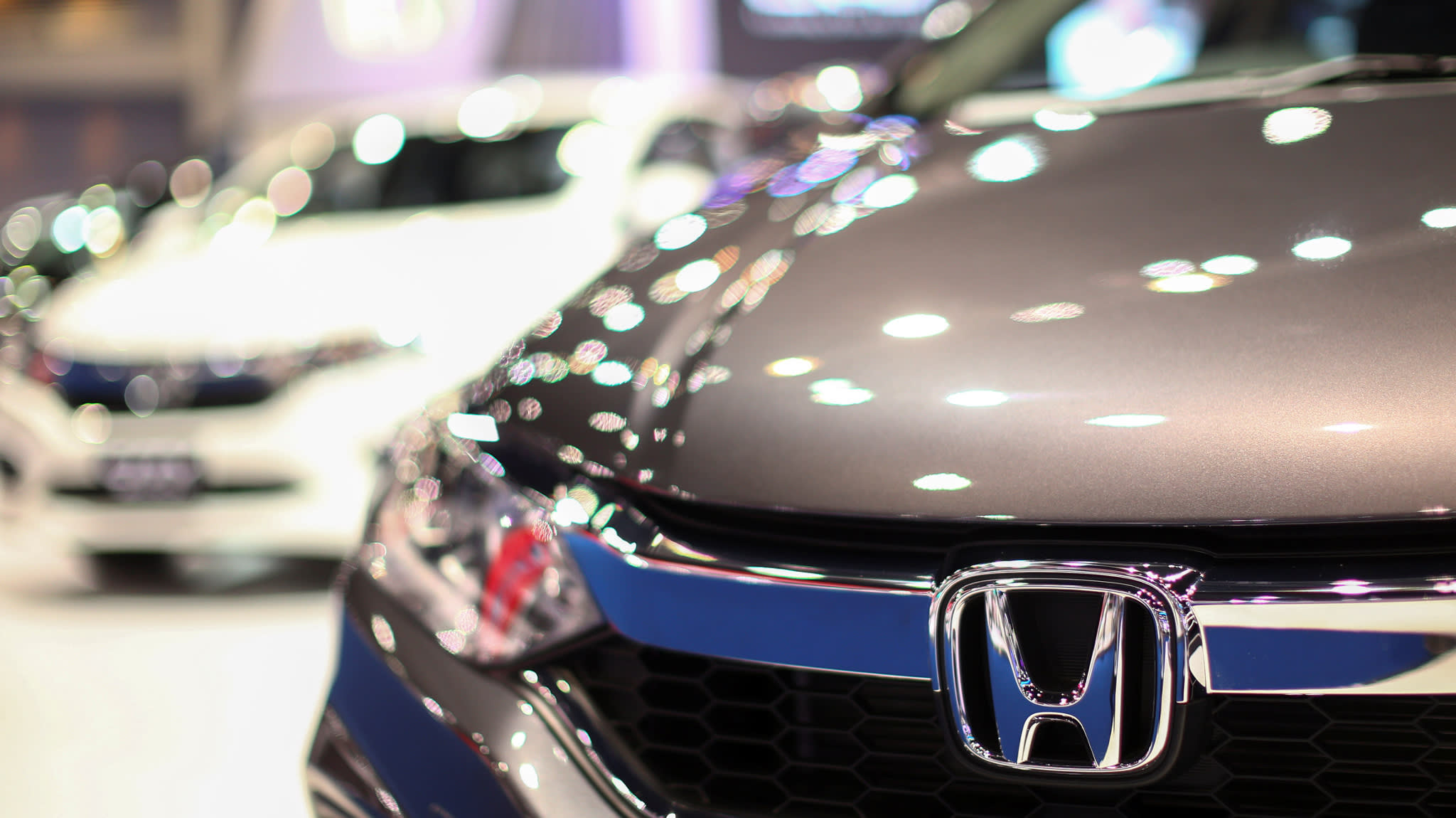
    Honda Motor has initiated a recall of approximately 1.2 million vehicles in the United States after a potential problem was identified with the rearview camera image, as confirmed by the National Highway Traffic Safety Administration (NHTSA) on Friday.

    The recall affects specific models including the 2018-2023 Odyssey, 2019-2022 Pilot, and 2019-2023 Passport. The issue stems from a faulty communication coaxial cable connector, which may result in the absence of the rearview camera image on the display.

    To address this concern, Honda has previously extended the warranty for affected vehicles in 2021. The automaker revealed that it has received a significant number of warranty claims, totalling 273,870, associated with this matter from May 2017 to June of this year. Fortunately, there have been no reported injuries or fatalities connected to this recall.

    Authorized dealers will resolve the issue by installing an enhanced cable harness between the existing display audio and vehicle terminal connections. Additionally, a straightening cover will be placed over the vehicle cable connector to establish a proper connection with the audio display unit.

  • Samsung introduces the Galaxy S23 Ultra’s 200MP camera sensor

    Samsung introduces the Galaxy S23 Ultra’s 200MP camera sensor

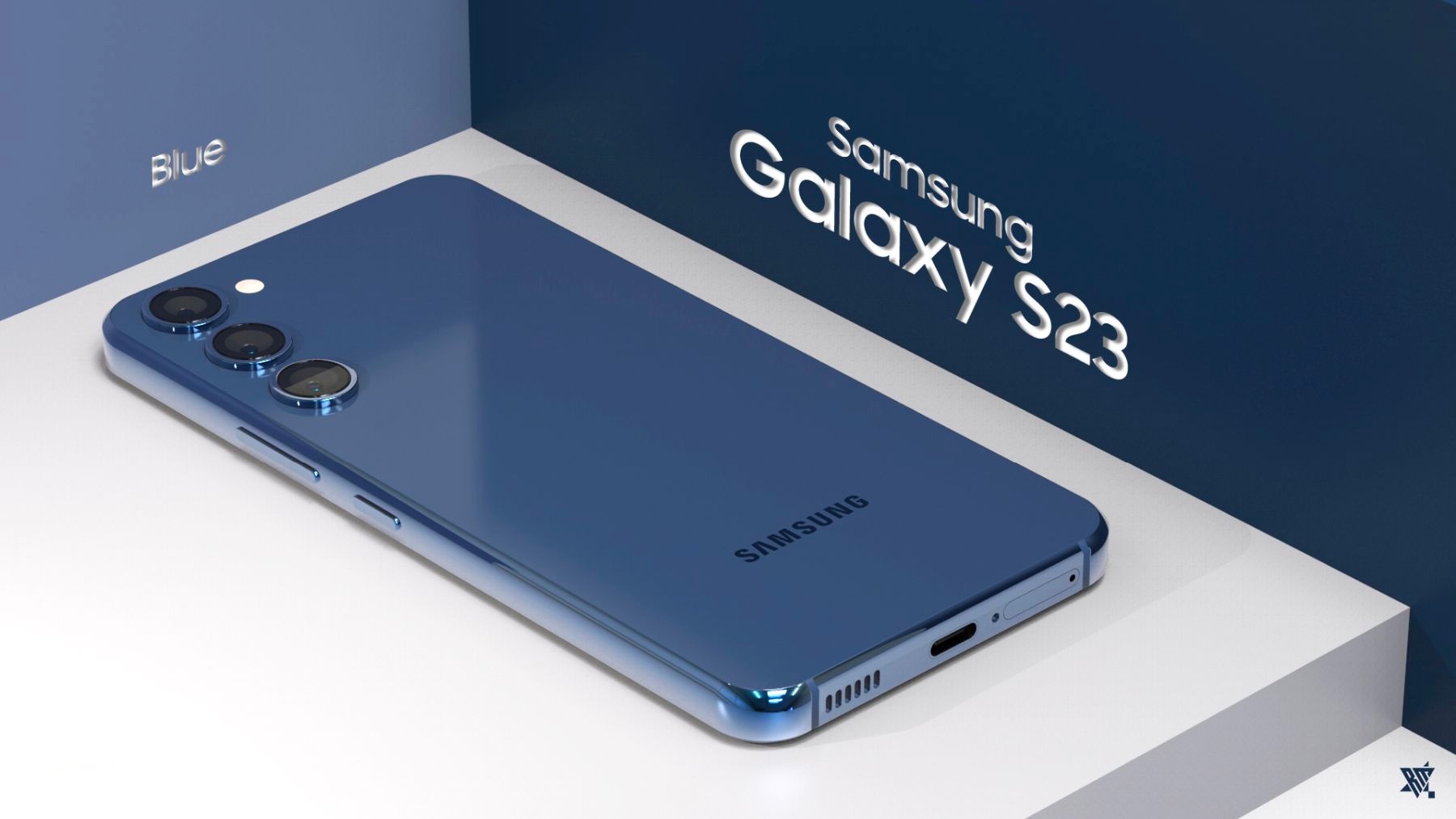
    On Tuesday Samsung introduced its third 200MP camera sensor, the ISOCELL HP2. The sensor features 200 million 0.6-micrometer (μm) pixels using a 1/1.3-inch optical format. This is a sensor size that is deployed in 108MP main smartphone cameras allowing users of high-end smartphones to have a high-resolution camera without having to deal with large camera bumps. The HP2 has already entered mass production
    The sensor uses advanced pixel-binning technology called Tetra2pixel. This allows the sensor to change pixel sizes depending on the environment’s light. Under low-light conditions, the sensor captures 50MP images at 1.2μm (4:1 pixel binning) or 12.5MP images at 2.4μm (16:1 pixel binning).
    For video, Samsung adds, “For fuller 8K video, approximately at 33MP, the HP2 switches to 1.2μm 50MP mode to minimize cropping and capture more of the scene. Filming 8K at 30 frames-per-second (fps), a wide field of view along with bigger pixel size can produce sharp cinematic videos.”
    Samsung’s new Dual Vertical Transfer Gate (D-VTG) technology will enhance color reproduction and reduce overexposure. As a result, you’ll see fewer washed-out photographs snapped under bright lighting conditions.
    Focusing in low-light environments will be vastly improved thanks to the HP2’s Super QPD feature which uses all of the sensor’s 200 million pixels as focusing agents. The result is faster and more accurate auto-focusing even in an environment without much light. Samsung explains, “The ample amount of focusing agents are grouped by four adjacent pixels to recognize horizontal and vertical pattern changes.”
  • Sony says smartphone cameras will soon produce better images than DSLR cameras

    Sony says smartphone cameras will soon produce better images than DSLR cameras

    When it comes time for you to capture an important event by snapping a photograph of it or recording it on video, do you tend to use the camera array on your smartphone or do you turn to a dedicated SLR camera to handle these tasks? Smartphone photography has come such a long way that these days most consumers are willing to trust their handsets to deliver outstanding family photos.
    One executive who has a great vantage point showing him the future of smartphone photography is the President and CEO of Sony Semiconductor Solutions (SSS), Terushi Shimizu. The executive runs the team that is the leading supplier of image sensors for smartphones and as a result, Shimizu has a unique look at what is happening in the industry. Shimizu says that “still images (from smartphones) will exceed the image quality of single-lens reflex (SLR) cameras within the next few years.”

    An SLR camera uses a combination of mirrors and prisms so that the image seen through the viewfinder is the same image that will be captured by the photographer. DSLR cameras are Digital Single Lens Reflex cameras that use image sensors rather than film. Sony’s Shimizu made his comment during an industry conference and a slide from that event shows that Sony expects that the quality of smartphone camera images will start to exceed those of interchangeable lens cameras (ILC) in the calendar year 2024.

    That is the same as saying that images from smartphone cameras will start to surpass those achieved by DSLR and mirrorless cameras in as soon as two years. One of the reasons for the improvement will be an increase in the size of image sensors to over one inch in size allowing them to capture more data.. Sony also has created a new structure that saturates each pixel with twice as much light to create more dynamic range while reducing noise on pictures snapped in low-light.
  • U.S. Safety Agency Discussing Tesla Camera Replacements

    U.S. Safety Agency Discussing Tesla Camera Replacements

    The U.S. National Highway Traffic Safety Administration (NHTSA) said Thursday it is discussing with Tesla its decision to replace cameras in some U.S. vehicles. CNBC reported on Monday Tesla was replacing front fender cameras in several hundred Model S, X, and 3 vehicles due to faulty circuit boards inside but had not issued a recall. NHTSA said it is “monitoring all data sources” including consumer complaints, and also urged “the public to let NHTSA know if they think their vehicle may have a safety defect that isn’t part of a current recall.”

    U.S. law “prohibits manufacturers from selling vehicles with design defects posing unreasonable risks to safety,” the agency said, adding it has “robust enforcement tools to protect the public, to investigate potential safety issues, and act when we find evidence of non-compliance or an unreasonable risk to safety.”

    Consumer groups said the regulator needs to look into whether Tesla should have recalled the defective parts.

    A malfunction of front fender cameras would likely create a safety risk, says David Friedman, a former acting administration at NHTSA and now Vice President at Consumer Reports.

    “Reports of a service campaign repair to malfunctioning front-end cameras that are critical to Tesla’s driver assistance suite is important enough to the safety of the vehicle to merit exploration by NHTSA,” said Jason K. Levine, executive director at Center for Auto Safety.

    “The reality is that the auto industry has a long history of choosing to conduct service campaigns instead of recalls, but it is too early to say whether that’s the case here.”

    A malfunction of front fender cameras, safety systems used for blind-spot monitoring, would likely create a safety risk, said David Friedman, a former acting administration at NHTSA and now Vice President at Consumer Reports.

    “If people are losing reliable access to blind spot images, or the effectiveness of autopilot or automatic emergency braking is being hampered, the malfunction would seem to pose an unreasonable risk,” he said.

    Tesla was not immediately available for comment.

  • Mounting An iPhone On Your Motorcycle Could Lead To Camera Damage

    Mounting An iPhone On Your Motorcycle Could Lead To Camera Damage

    Tech giant Apple has issued a new warning for iPhone users particularly those who ride motorcycles. The company has shared a support document that suggests that mounting your iPhone on the motorcycle could lead to potential damage to the device. The damage would extend to the camera, which could result in the camera module being broken. The iPhone’s optical image stabilization (OIS) could be damaged as a result of the prolonged vibrations, bringing a drop in the camera quality.

    In its statement, Apple said, “Exposing your iPhone to high amplitude vibrations within certain frequency ranges, specifically those generated by high-power motorcycle engines, can degrade the performance of the camera system.” The manufacturer further added that long-term direct exposure to high-amplitude vibrations within certain frequency ranges may degrade the performance of these systems and lead to reduced image quality for photos and videos. It is recommended to avoid exposing your iPhone to extended high-amplitude vibrations.”

    The issue though isn’t just with Apple but most modern smartphones equipped with OIS and another tech to help you take better shots and iron out movement, vibrations, and other effects. The issue is specific to high-powered motorcycles that are heavy on vibrations, which travel from the engine to the handlebar.

    Essentially, the Apple iPhone’s camera module comprises a sensor that helps compensate for your hand movements to help you get a more stable shot. The sensor moves using little springs correcting the little undulations. On a modern-day iPhone 12 Pro, the camera module can move up to 5,000 times per second. When the iPhone is exposed to the vibrations for a prolonged period, the springs connected to the sensor break. That’s when the phone won’t be able to focus correctly and will give you random blurriness in the pictures instead. This will also extend to the video that will record without clarity.

    A simple way to counter this issue is to use a high-quality phone case that gives the phone enough protection from vibrations. However, it does not completely protect your iPhone camera from damage.

  • Sony Xperia 5 III coming to Europe in September and it won’t be cheap

    Sony Xperia 5 III coming to Europe in September and it won’t be cheap

    Sony announced that it will bring the Xperia 1 III in the United States in late September, but didn’t mention anything about the Xperia 5 III, the former’s cheaper brother. That could mean a few different things like maybe Sony isn’t sure when it will be able to bring it to the US, or perhaps it has no intention to sell it in North America.

    Either way, we at least have an idea about how much the Xperia 5 III will cost in the US. The company’s European branch revealed that the Xperia 1 III and Xperia 5 III will be launched in Europe for €1.300 and €1000, respectively.

    Considering the Japanese company has already opened Xperia 1 III pre-orders in the US and the phone is priced at $1,300, it’s safe to assume that the Xperia 5 III will sell for $1,000 in case Sony decides to bring it to the States.

    Just like the Xperia 1 III, the Xperia 5 III will be shipped in Europe from September. This one will be available in Black and Green, but additional colors may be introduced after the phone’s market launch.

    The Xperia III 5 is a top-tier smartphone powered by a Qualcomm Snapdragon 888 5G processor, paired with either 8GB RAM and 128GB storage, or 8GB RAM and 256GB storage. Also, the smartphone boasts a stunning 6.1-inch OLED FHD+ display featuring Corning Gorilla Glass 6 coating.

    However, one of the phone’s main selling points is the triple camera setup (12MP+12MP+12MP). Along with the Xperia 1 III, the Xperia 5 III is the world’s first smartphone with a variable telephoto lens paired with a dual PD sensor. Not to mention that the camera features Zeiss optics and a brand new AI super-resolution zoom technology.

    As far as the battery goes, Sony claims the 4,500 mAh battery can charge up to 50% of capacity in 30 minutes with the 30W charger that comes with the phone.

  • Vivo files a patent application for a detachable flying smartphone camera

    Vivo files a patent application for a detachable flying smartphone camera

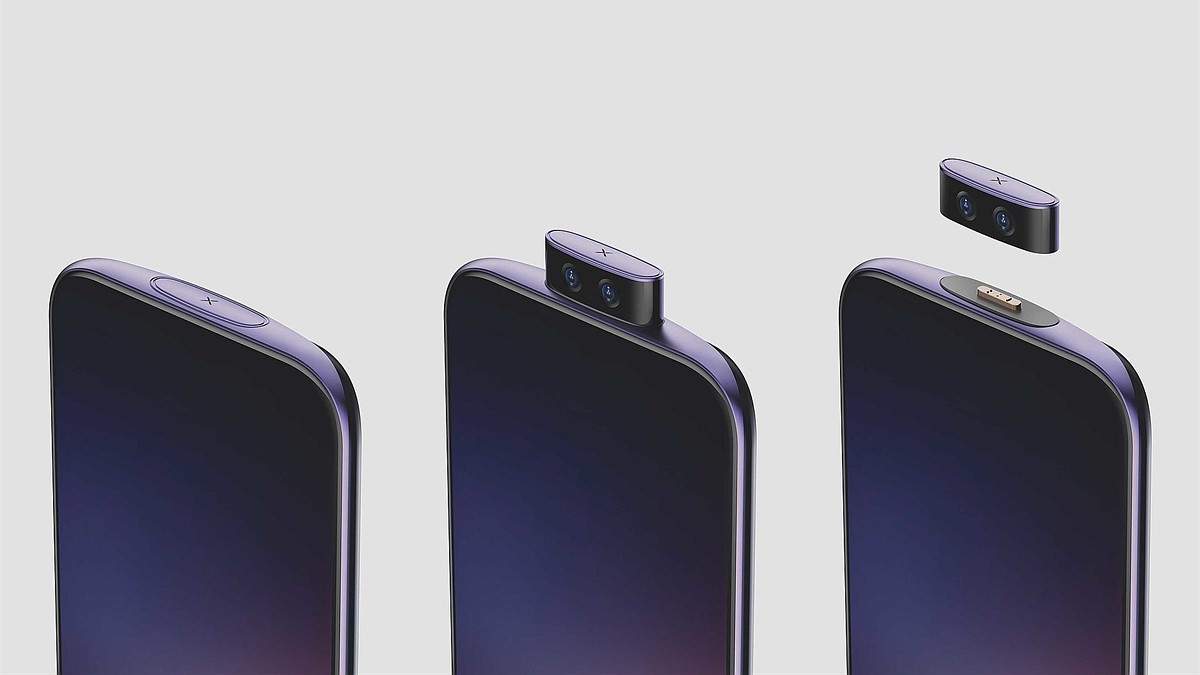
    Vivo has filed a patent for a flying smartphone camera. You read that right, the camera disconnects from the phone and takes to the air to provide the user with unusual photo opportunities to take snapshots and video from. The camera module features four propellers, two dual cameras, three infrared proximity sensors and an extra battery.
    While in flight, the proximity sensors are used to prevent the flying camera module from crashing into other items that have escaped gravity by calculating the distance from a possible hazard to prevent mid-air collisions. Once in the air, the “flight camera” will be able to change positions and we expect to see one camera at the front of the module with another at the top.
    The patent application was filed with the World Intellectual Property Organization (WIPO) and while camera drones are not new, Vivo is the first manufacturer to have a flying camera drone fit into the body of a smartphone. But there is a caveat. To make the camera module fit inside a phone, it has to be made smaller and lighter which means that it can be blown off track because of the wind which can also make images appear shaky.
    The vast majority of smartphone innovations have been coming from Chinese-based smartphone brands. But keep in mind that just because Vivo seeks to patent a flying camera for a smartphone, that doesn’t mean that such a product is coming soon.
  • Samsung introduces ISOCELL 2.0 for new killer cameras

    Samsung introduces ISOCELL 2.0 for new killer cameras

    Samsung just released a Youtube video announcing its implementation of a new ISOCELL 2.0 technology on upcoming phones sporting its 0.7-micron-pixel camera sensors. These will allow the cameras to continue performing excellently despite the challenges brought by decreasing pixel sizes. Samsung claims this new technology will further enhance the wall structure between cells, resulting in added light sensitivity of up to 12 percent compared to the current ISOCELL Plus technology.

    In order to enhance both light sensitivity and color fidelity in upcoming Samsung models, ISOCELL Plus technology “isolates each pixel with a physical barrier to reduce light crosstalk between pixels”—which is what happens when some of the light that is supposed to hit a specific photodiode leaks to neighboring photodiodes, causing noise in the final image.

    Although ISOCELL Plus enables higher-color-fidelity image production, the metallic grid between color filters absorbs some of the incoming light, resuting in some optical loss. ISOCELL Plus first improved on this issue by replacing the metallic grid between color filters with a new material. However, in this next phase of innovation in ISOCELL 2.0, the lower portion of the barrier is being upgraded with even more reflective material.

    Samsung boasts that these upgrades “minimize optical loss and significantly improve light sensitivity for more vivid pictures with reduced noise. With enhanced light sensitivity, ISOCELL 2.0 empowers even smaller pixels to absorb more light. As a result, image sensors can pack in more pixels to produce finer details without compromising vivid color reproduction.”

    We are already aware of the possibility of future cameras sporting several-hundred-megapixel sensors, with both Samsung’s flagship S21 Ultra and S20 Ultra boasting 108MP—way ahead of Apple’s iPhone 12 Pro in terms of sheer megapixel count. Only Xiaomi and a single Motorola model currently offer similar cameras on the smartphone market. For the coming future, ISOCELL’s 2.0 innovation could offer a whole new horizon of image-capturing possibilities in varying light conditions. Although smartphones with their compact technology will never truly be able to rival professional DSLR cameras, Samsung has already come a long way in providing the most bang for your buck in the phone photography department.

  • Bkav exports security cameras to US

    Bkav exports security cameras to US

    Cybersecurity firm Bkav has exported its first batch of security cameras to the U.S., furthering its ambition to become a top-five camera manufacturer worldwide.

    Its AI View security cameras will be installed at the headquarters of technology giant Qualcomm Incorporated in California, Bkav said in a statement.

    “From here, we have the foundation to further develop in this market, aiming at becoming a Top 5 camera manufacturer in the world,” said Tommy Le, Bkav Vice President of Business Development in the U.S.

    The Bkav cameras are capable of recognizing faces, doing headcounts, measuring social distancing, determining whether someone is wearing a face mask or not, finding a parking spot, detecting fires, and unauthorized intrusions.

    The company says its cameras are priced around 20 percent lower than similar products of famous European manufacturers.

    Bkav is currently working on a series of camera projects in India, Mexico, Malaysia, and Vietnam.

    Another batch of AI View cameras are set to be installed in a large park in the U.S. by the end of the year, the company said.

  • The Nokia 8.2 could land later this year with a pop-out camera system

    The Nokia 8.2 could land later this year with a pop-out camera system

    It’s been almost eight months since HMD Global first introduced the Nokia 8.1 to the world and that means a successor shouldn’t be too far away. According to MySmartPrice, the company is actively developing the smartphone right now and, if everything goes to plan, it could introduce some rather drastic changes.

    After fully embracing the notch on last year’s model, HMD Global reportedly has plans to ditch the controversial design feature in favor of one that’s slightly less intrusive. Specifically, the Nokia 8.2 will apparently represent the company’s first smartphone with a pop-out camera system. This will house a new 32-megapixel selfie camera and ultimately remove the need for any kind of notch or cut-out on the display, thus creating an all-screen design.
    In regards to the smartphone’s internal characteristics, today’s report points towards the presence of 8GB of RAM and 256GB of storage as standard. The Nokia 8.2’s processor wasn’t mentioned but previous leaks suggest a Snapdragon 700 series chip could make the cut alongside support for next-generation wireless networks in an attempt to produce a cheaper 5G device.
    Accompanying all of this will reportedly be stock Android 10 Q straight out of the box as part of the Android One program. The final version of this software is on track for release in mid-August which suggests HMD Global’s next Nokia-branded smartphone probably won’t arrive until September at the very earliest.
  • Hyundai Mobis Builds Camera System To Replace Vehicle Side Mirrors

    Hyundai Mobis Builds Camera System To Replace Vehicle Side Mirrors

    South Korea’s largest auto parts maker Hyundai Mobis on Sunday said it has developed a camera monitoring system that will replace side-view mirrors in next-generation vehicles. With the advanced sensor technology, Hyundai Mobis has joined a couple of global future mobility developers and it aims to export the technology to carmakers, Yonhap news agency reported.

    Three high-performance camera sensors inside the vehicle will not only increase driving safety by significantly reducing blind spots, and but also improve fuel efficiency as side-view mirrors will be hidden inside the car, Hyundai Mobis said in a statement.

    “The paradigm shift to the future car is demanding both functional and design upgrades of all core components, which have been taken for granted until today,” Vice President Gregory Baratoff in charge of autonomous vehicle development at Hyundai Mobis said in the statement.

    The company will not only develop element technologies, like sensors and solutions based on them, but also the core parts portfolio that it has already secured in accordance with the future car era, he said.

  • Hidden code reveals that Xiaomi could be first to use this sensor on a phone

    Hidden code reveals that Xiaomi could be first to use this sensor on a phone

    Remember when you walked around, feeling like the King of the neighborhood because your Samsung Behold had a 5MP camera on back? While a bigger megapixel count doesn’t necessarily translate to better pictures, today we have phones like the OnePlus 7 Pro carrying around a 48MP primary sensor. And if XDA is right, Xiaomi will be the first to release a phone with a 64MP camera sensor on the back.

    Strings of code that XDA discovered on the latest version of the MIUI 10 Camera app make references to a 64MP “ultra-pixel” mode. They also allude to a 64MP Dual Camera. Right now, Samsung has the only 64MP sensor announced. That would be the ISOCELL Bright GW1 sensor with a small pixel size of 0.8μm. Samsung unveiled the sensor last month noting that under bright lighting conditions it can produce 64MP photos. When lighting conditions are not as favorable, the sensor merges four pixels into one to create a better quality 16MP image. The GW1 sensor will record video in 1080p (FHD) at 480fps allowing it to support “smooth cinematic slow-motion videos.” Samsung’s sensor also supports real-time high dynamic range (HDR) of up to 100-decibels (dB). That compares to the 60 decibels found on many handsets and the human eye’s 120 decibels.

    The code discovered by XDA dovetails with a leak from tipster Ice Universe who posted on Weibo a few days ago about a “mysterious” Redmi model (made by Xiaomi) that will be the first to use Sammy’s 64MP sensor. While the upcoming Galaxy Note 10 series will not feature it, we could see the 64MP GW1 sensor also employed on the upcoming Galaxy A70 mid-range handset.

  • Google Maps speed camera alerts and speed limit indicators rolling out

    Google Maps speed camera alerts and speed limit indicators rolling out

    One of the important features that differentiate Waze from other navigation apps like Google Maps is the possibility to see in-depth traffic information and get alerts about speed cameras and speed limits indications.

    Surprisingly, the feature didn’t make it to Google Maps yet, even after the search giant acquired Waze. Well, the anomaly is about to be completely dissipated as Google Maps users in a bunch of countries report they are now getting speed camera alerts and can now see speed limit indicators.

    Speed camera alerts should now be available for many users in the following countries: Australia, Brazil, Bulgaria, Canada, Czech Republic, Finland, Greece, Hungary, India, Indonesia, Israel, Italy, Mexico, the Netherlands, Portugal, Romania, Russia, Saudi Arabia, Slovakia, Slovenia, South Africa, Spain, Sweden, the UK, and the US.

    Furthermore, another new Google Maps feature, the option to see speed limits while driving, is now live in Denmark, Poland, the UK, and US. However, we expect these features to roll out to all Google Maps users worldwide, it’s just that this appears to be a released gradually, so we’ll just have to wait until Google enables it for more people.

  • Asus ZenFone 6 first update brings important camera improvements

    Asus ZenFone 6 first update brings important camera improvements

    The ZenFone 6 hasn’t even been released in the United States and Asus is already pushing out a major update that brings important camera enhancements. If you plan on getting one when Asus will launch the ZenFone 6 in the US in July, here is what to expect from the first ZenFone 6 update.

    If you didn’t know, Asus ZenFone 6 packs a so-called motorized flip camera, which allows users to take both selfies or regular photos. It basically acts as both rear and front cameras to ensure that you take the best pictures in every scenario.

    Well, it looks like the ZenFone 6’s camera needs some adjustments, so Asus has decided to address that in the first update, which focuses exactly on this aspect. First and foremost, the camera Super Night Mode and HDR+ Enhanced mode received considerable improvements on image processing speed and image quality.

    Furthermore, the update should add volume key functions, which will allow users to control the flip camera rotation. Basically, you can set the volume key as shutter, zoom, or flip camera in the Asus Camera app settings manually.

    The smart key can now be used as a shutter to take pictures in Camera mode, and the camera rotation stability has been improved as well. Also, the default wallpaper and ringtone have been updated too, while the translation strings in Settings have been optimized.

    According to Asus, its server pushes out the update in batches, which means that it will take some days before everyone will receive the notice. However, you can manually check for it by heading to System settings in the Settings / System.

  • Huawei’s first phone with a pop-out camera is Out

    Huawei’s first phone with a pop-out camera is Out

    Over the past year or so Huawei has welcomed the notch with open arms. Nowadays, though, most companies are looking for ways to remove it and, as it turns out, Huawei is no different

    Called the Huawei P Smart Z, the company’s latest smartphone represents both it’s newest offering in the budget segment and its first attempt at an all-screen device that includes no notch or cutout.

    Targeting fans of massive displays, the P Smart Z arrives equipped with a huge 6.6-inch LCD display that boasts a 19.5:9 aspect ratio and a Full-HD+ (2340 x 1080p) resolution. As you’d expect, the huge panel is paired with uniform bezels, the only exception being the chin which is slightly thicker. Also present is a pop-out camera, thus marking the first time Huawei has used such a feature.

    Hidden inside the mechanical module is a 16-megapixel selfie camera that offers an f/2.0 aperture. This is paired over on the rear with a vertically-aligned dual-camera setup. Speaking of which, this includes a 16-megapixel f/1.8 camera paired with a dedicated 2-megapixel depth sensor. Also present is an LED flash.

    While on the topic of the rear, it’s worth pointing out that the Huawei P Smart Z follows in the footsteps of Google’s Pixel devices by adopting a dual-tone rear. But rather than using different materials or textures, Huawei has simply opted for slightly different colors.

    Regarding the internal characteristics of this smartphone, the P Smart Z is equipped with a modified version of the Kirin 710 dubbed the Kirin 710F alongside a respectable 4GB of RAM and 64GB of internal storage. Also present is Android 9 Pie straight out of the box along with the EMUI 9.0 overlay and a large 4,000mAh battery.

    The Huawei P Smart Z can be purchased right now in Italy or Spain for €279. Presumably, sales will eventually expand to other internal markets, but these details are yet to be confirmed.