Tag: Camera

  • Samsung Galaxy Note 10 Supports 50W Charging

    Samsung Galaxy Note 10 Supports 50W Charging

    Samsung recently released two phones that support 25W fast charging, but you may have missed that because they are not available worldwide. Those are the 5G version of the Galaxy S10 and the Galaxy A70. More Samsung phones may get super-fast charging in the future, starting with this year’s Galaxy Note 10.

    We’ve already heard rumors that the Galaxy Note 10 is likely to great battery life, and it seems like Samsung is also planning to introduce 25W fast charging alongside the increased battery capacity. It’s too early to tell whether the base Note 10 will get super-fast charging, or whether it will be reserved for the “Pro” version only, but prolific leaker Ice Universe claims that the charge speed may actually exceed 25W. We may be talking about 50W, which is the current bar set by the competition.

    OnePlus’s DASH Charge works at 30W, while Oppo’s SuperVOOC charge can hit around 50W, and both have been tested with great results. Similarly, Xiaomi has an insane 100W prototype charging solution that’s said to be able to fully juice up a 4000mAh battery in just 17 minutes. Over the last three years, Samsung has understandably been a bit more careful in regards to battery capacity and charging speeds, as the memory of the ill-fated Galaxy Note 7 still lingers in the public mind.

    The Samsung Galaxy Note 10 and Galaxy Note 10 Pro are likely to launch in mid-August, and if recent rumors are to be believed, they won’t disappoint. The more expensive Pro variant is said to feature the same hexa-camera setup as the Galaxy 10 5G. That includes four cameras on the back (12MP primary with OIS + 12MP telephoto with 2x optical zoom + 16MP ultra-wide angle+ depth sensor) and two selfie snappers in front. The base Galaxy Note 10 will reportedly have a penta-camera setup that includes everything on the Note 10 Pro, except for the depth sensor. The U.S. version of all Note 10 units will be powered by the Snapdragon 855 Mobile Platform, equipped with at least 8GB of memory.
  • Motorola’s preparing an insane looking quadruple-camera phone

    Motorola’s preparing an insane looking quadruple-camera phone

    Just two days after the design of Motorola’s first ever triple-camera smartphone was revealed, tipster Steve Hemmerstoffer is back with yet another Motorola-branded device. This time, though, it sports a whopping four rear cameras and presents a very unique design.

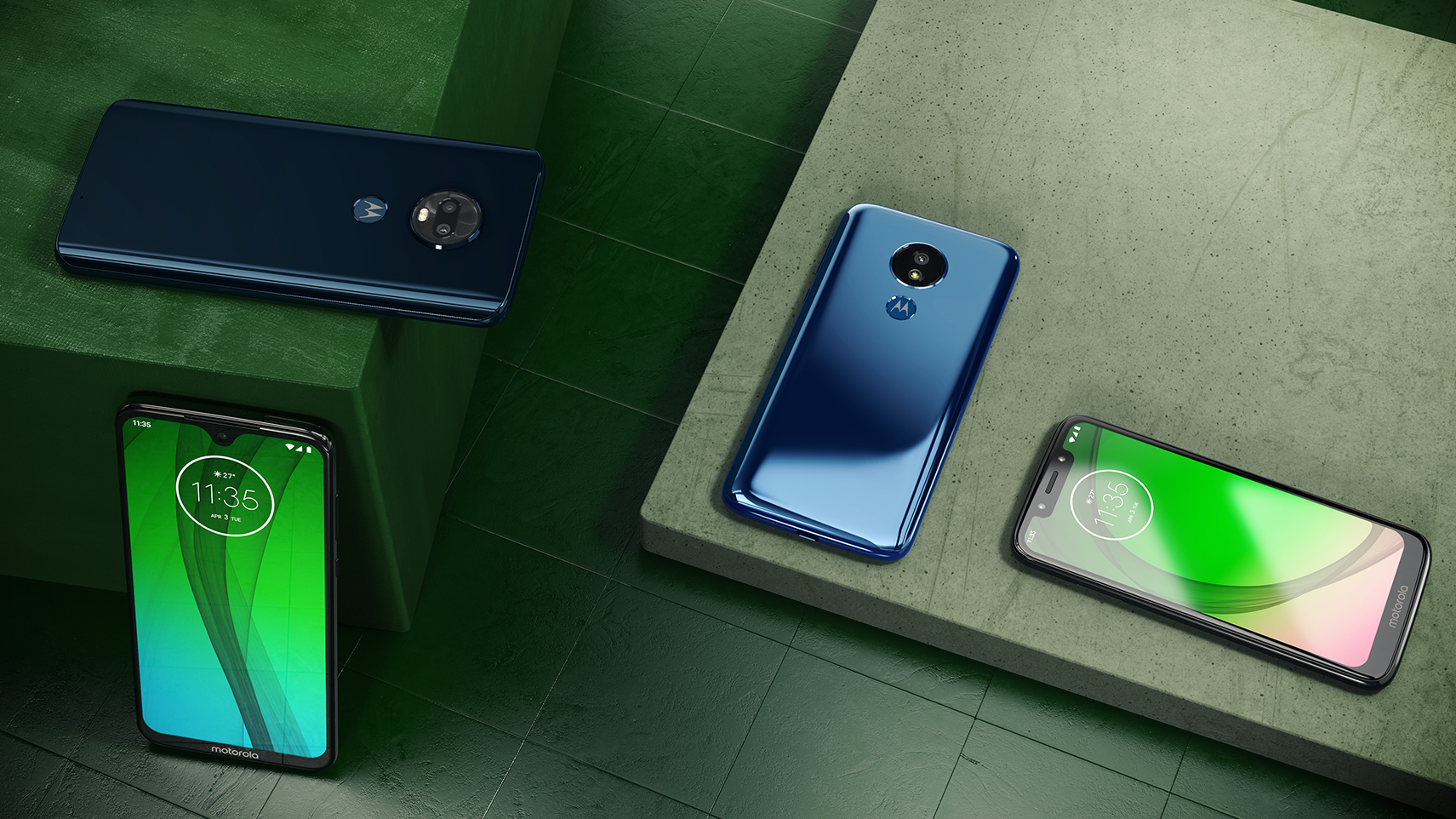
    Over the past couple of years, Motorola has developed two clear design languages – Moto smartphones boast circle-shaped camera modules on the rear while One-branded devices feature vertical camera setups in the corner. But this yet-to-be-named model doesn’t fit in anywhere.

    Rather than adopting Motorola’s usual camera setups, the smartphone boasts an array of sensors which are arranged into a square – some could argue that the device resembles Huawei’s Mate 20 Pro because of this. These cameras sit directly above a large Motorola logo and, together, are contained within a large rectangular bump.

    This huge camera module sits in the center of the phone’s rear panel, which itself may be carved out of brushed aluminum rather than glass. The cameras are accompanied by a dual-LED flash and ‘48MP’ branding which suggests the primary sensor will sport a 48-megapixel resolution, like the one expected on the Motorola One Vision.

    Details about the remaining cameras remain unclear at the moment, but Motorola could potentially fit the phone with a wide-angle camera and a telephoto alternative. The remaining fourth camera could then be one of three: a depth sensor, a monochrome sensor, or a Time-of-Flight sensor.

    Yes, there’s a headphone jack too

    Like the Motorola One Vision and One Vision Plus which have already leaked, this Motorola device sports a large 6.2-inch display. There are, however, some very important changes.

    At first glance, the most noticeable difference is the lack of a cutout in the top-left corner. On the One Vision devices, Motorola uses this to house the selfie camera but on this particular smartphone, the Lenovo-owned brand has reverted back to the trusty U-shaped notch. This is paired with thin side bezels, a slightly thicker one above the display, and a larger chin below which is home to the Motorola branding. Also present is an in-display fingerprint scanner.

    Another key difference that may not be as noticeable in the renders is the different aspect ratio. The upcoming Motorola One devices sport extra-tall 21:9 displays, but this smartphone appears to boast a much more traditional 19:9 panel. This results in a device which is slightly wider but much shorter.

    Elsewhere, users can expect a USB Type-C port and a 3.5mm headphone jack along the bottom. Up top sits a SIM card tray and a speaker, while along the right side of the frame is a volume rocker and a power button. The left side of the phone is bare.

    This could be an iPhone XR & Galaxy S10e competitor

    This unknown Motorola smartphone will presumably be announced sometime later this quarter alongside the brand’s other devices – it’s currently working on the two One Vision devices mentioned above in addition to the Moto Z4 and Moto Z4 Play.

    The internal specifications of this device currently remain a mystery, but the 48-megapixel resolution of the rear camera does give us an indication of how the phone will be positioned. After all, this sensor has become popular among mid-range devices lately and is even expected to make its way into the OnePlus 7.

    This factor, combined with everything else the smartphone has to offer suggests it could be positioned as a Galaxy S10e and iPhone XR competitor, or perhaps just below these models at a cost of around $600 to $650. A premium model designed to compete with the Galaxy S10+ and iPhone XS Max does seem unlikely, though, considering Motorola exited that segment last year.

  • Oppo request patent on new slider design

    Oppo request patent on new slider design

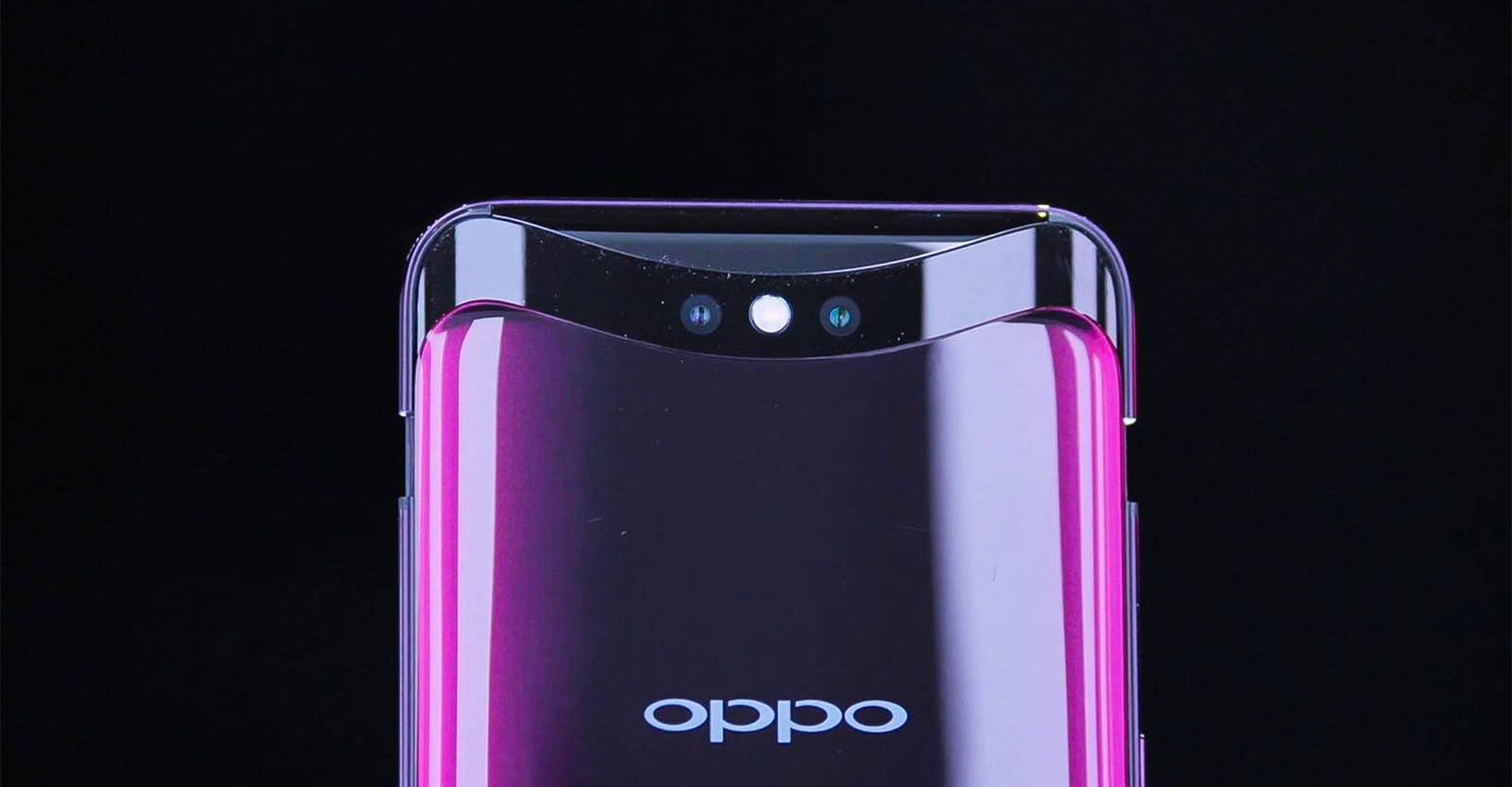
    The European Union Intellectual Property Office (EUIPO) has published a patent awarded to Chinese phone manufacturer Oppo. The company’s Oppo Find X was the first smartphone to feature a slider design; the slider hides the front-facing camera and dual rear cameras until needed. Now, Oppo’s new slider design includes dual cameras that are mounted on the back of the phone, never hidden from view. Meanwhile, the slider holds a pair of front-facing selfie cameras.

    Just the other day, we showed you a case render for a phone called the Oppo Reno, which will be unveiled on April 10th. To give the phone a high screen-to-body-ratio without relying on a notch (which is really the reason for all of the sliders, punch-holes, pop-up cameras and side panels we’re seeing on new handsets these days), the Oppo Reno uses a wedge that mechanically rises from the top of the device.

    The illustrations that accompany the patent show a phone using the newly patented slider, but also don’t show a fingerprint scanner. This could be related to the fact that the patent has nothing to do with that feature, or it could indicate that Oppo plans on equipping a phone using the patented new slider design, with an in-display fingerprint scanner.

    The patent was initially filed in January, was registered and published today. It expires on January 30, 2024.

  • Update to the Google Camera app adds a new popular feature

    Update to the Google Camera app adds a new popular feature

    The update to version 6.2 of the Google Camera app comes with Dark mode and a few other changes, and it is rolling out to Pixel handsets via the Google Play Store. According to Android Police, the settings on the updated camera app will go into Dark mode when the Battery Saver is enabled. The report says that this works consistently with the Android Q beta installed, but not so much with Android 9 Pie.

    Since the camera app already uses a black background, why add this feature? Well, if you’re in a dark room or out at night and need to go into the Google Camera app’s settings, you’ll instantly be blinded by the white background used for that page. Why did Google have Dark mode enabled when the Battery Saver is turned on? Because if you have a phone with an AMOLED screen, a black background means fewer pixels need to be activated, which means that the phone will consume less battery power.

    Another change can be seen when moving between the camera, video, portrait, and panorama settings in the app. Previously, when a user switched between camera and video, for example, he would see a black transition screen with the icon of the selected setting in the middle. With version 6.2, when switching between settings, the screen no longer turns black and instead shows what your camera is looking at. There is also a zoom in and out effect while the selected setting’s icon remains in the middle of the screen. And there is one last change. When the flash is turned on for the front-facing selfie camera, the flash icon will appear on the display

    Remember, you need to have version 6.2 of the Google Camera app and a Pixel handset to enjoy all of these new goodies.

  • Galaxy A9 has a camera ready for every occasion

    Galaxy A9 has a camera ready for every occasion

    Samsung Electronics started domestic sales of its mid-range Galaxy A9 smartphone today – the company’s first model to be equipped with four rear cameras. The Galaxy A9 was first revealed in October in Kuala Lumpur, Malaysia, and has already started sales in China, India and several countries across Southeast Asia and Europe. In Korea, the device will cost 599,500 won ($530), nearly half the price of Samsung’s most recent premium phone release, the Galaxy Note9.

    Overseas, the A9 comes with either six or eight gigabytes of RAM, but in Korea only the six-gigabyte option will be available. The device comes with 128 gigabytes of data storage, which is expandable to 512 gigabytes with a microSD card. There are three color options – black, blue and baby pink.

    Its most notable feature is its five cameras – one on the front and four on the back – which are the reason it is known as a “quad camera” smartphone. The front camera can take photos up to 24 megapixels and comes with a function to blur out the background when taking a selfie.

    Until a few years ago, Samsung was one of the top manufacturers of smartphones along with Apple. Recently, its global performance has dwindled as demand for up-scale premium phones have retreated. Another big threat is the advance of Chinese manufacturers like Huawei that upped their game in technology and released a wide range of mid-priced smartphones. Budget phones are especially important in that they cater to the massive Chinese and Indian markets, explaining why global smartphone makers are getting so competitive in the price sector. The main rear camera can also take photos up to 24 megapixels with a very low aperture of F1.7, which means the camera will perform better in darker environments. The other three cameras have slightly different functions.

    A 10-megapixel telephoto camera offers a 2X optical zoom lens, while an eight-megapixel ultra-wide camera can capture a up to 120 degrees. The final camera, a five-megapixel depth camera, is used to blur out the background of an image.

    Despite being a budget model, the A9 is equipped with smart camera functions normally found in top-of-the-range models. The “intelligent camera” function can optimize an image’s brightness and contrast after automatically recognizing the object or scene. It also alerts the user if the image is shaky or somebody blinks.

    Samsung said in a statement that it anticipates the five cameras to make the A9 “an optimal model for generations of ‘visual communication’ who mainly communicate with photos and videos.”

    The inclusion of quad cameras on a budget model reflects Samsung’s shifting smartphone strategy that Koh Dong-jin, CEO and head of the IT giant’s mobile business, stressed earlier this year – to apply state-of-the-art functions to mid-priced models.

    “In the past, I brought the new technology and differentiation to the flagship model and then moved to the mid-end. But I have changed my strategy from this year to bring technology and differentiation points starting from the mid-end,” Koh said to CNBC in an interview in October.

    The A9 isn’t the first affordable Samsung phone with high-end features. On Dec. 10, it unveiled the Galaxy A8s, a smartphone in the mid-price range and the first to have a so-called hole display. Its screen covers the phone’s entire front, except for a small hole in the display’s corner for the front camera. The unpacking event, which was Samsung’s first in China, also sent a signal that Samsung is determined to win back market share in the country.

    “You might think this is an ordinary unpacking event, but it’s more of an occasion to send an ambitious message to you all – Samsung Electronics will embark on a full-fledged competition with Chinese manufacturers,” said Kwon Gye-hyun, the company’s vice president for its China business, during the event.

  • Samsung launches Galaxy A9 with rear quad camera

    Samsung launches Galaxy A9 with rear quad camera

    Samsung Electronics on Thursday unveiled the world’s first smartphone with four rear cameras, packed with new features to capture moments more effectively.  The Galaxy A9 debuted at a launch event held in Kuala Lumpur, Malaysia, highlighting the first rear quad camera built for a world driven by visual communication.

    “Building on our legacy in smartphone camera development, we’re introducing next-generation technology across our entire Galaxy portfolio to give more consumers the opportunity to experience cutting-edge innovation,” said Samsung smartphone chief Koh Dong-jin. “We’re excited to deliver on this promise and debut world-leading smartphone camera technology with the Galaxy A9.”

    The Galaxy A9 with a 6.3-inch AMOLED display is packed with Samsung’s best camera innovations, Koh added.

    The rear quad camera, with four lenses on the back of the smartphone, allows users to get close, with a 2x optical zoom feature for detailed close-up shots even from far away.

    The 24-megapixel main lens captures clearer and brighter images in both bright and low-light conditions, while the ultrawide lens and the scene optimizer allow users to shoot scenes more like a professional.

    In addition, the camera’s AI Scene Recognition feature allows users to identify subjects and adjust settings accordingly for the best photo, in an instant.

    The Galaxy A9 comes with a 3,800-milliampere-hour battery, allowing an all-day performance. The new phone also provides 128 gigabytes of storage and up to 512 gigabytes of expandable memory for storing high-quality images and visual content.

    It will be released globally starting in November, in unique colors: Caviar Black, Lemonade Blue and Bubblegum Pink.

    The A9 also boasts a sleek and ergonomic design that fits in one hand with a curved back made of 3D glass for a luxurious comfortable feel, the company said.

    Smartphones with five cameras are becoming a major trend in the market.

    LG Electronics unveiled the V40 ThinQ smartphone with three cameras on the rear and two on the front on Thursday.

  • Hover Camera Passport Comes to Apple Retail Stores, With In-Store Demos Available

    Hover Camera Passport Comes to Apple Retail Stores, With In-Store Demos Available

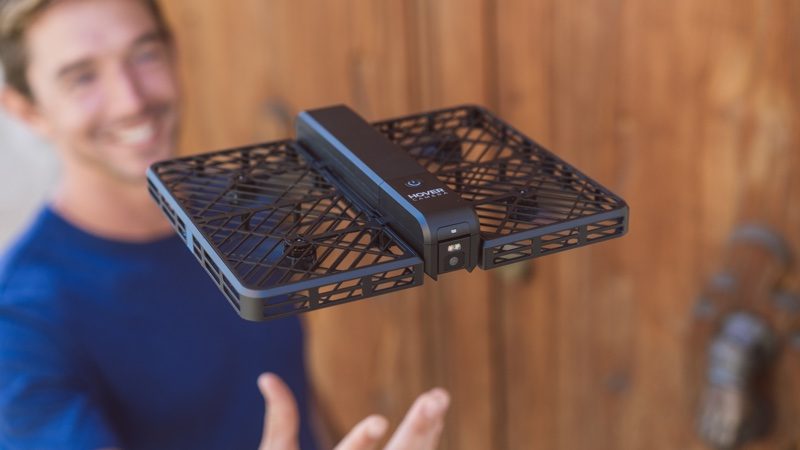
    Hover Camera Passport, a lightweight, personal drone-style camera from Zero Zero Robotics, is available on Apple’s website and in Apple retail stores in the United States, Canada, China, Hong Kong, and the UK starting today.

    The Hover Camera Passport can be thought of as a sort of next-generation autonomous selfie stick that’s able to follow you around and capture a hands-free photo whenever you wish.


    It’s made from a lightweight (242 grams), foldable carbon fiber material so it packs down small and can go anywhere, and it’s equipped with face tracking and body tracking so it knows who to follow. The drone travels up to 17 miles per hour and can hover for 10 minutes at up to 65 feet away, so it’s able to track a user that’s running, walking, biking, or engaging in other similar physical activities.

    There’s a 13-megapixel camera built in, which can also capture 4K video. Since it’s a flying camera, it can capture 360 degrees of panoramic video, and it’s designed to be flown right out of the box, so even people unfamiliar with drones can pick it up and fly it.


    The Hover Camera Passport is controlled through the Hover Camera iOS app, which provides features like a real-time video feed, quick social sharing, multiple flight modes including spin and orbit, auto follow, and picture-taking features.

    New features are being added to the Hover Camera Passport for its Apple Store launch, including compatibility with iMovie and Final Cut Pro X, a more user-friendly interface, and automated media editing to create small, moving clips that can be shared with family and friends.

    Zero Zero Robotics is offering a $499 Apple-exclusive bundle at Apple Stores, which consists of a Passport flying camera, two batteries, a charger, an adapter, and an easy-carry bag. Apple retail stores will be hosting in-store demos of the Hover Camera Passport so customers can try it out. 42 retail stores will begin demos today, and other stores will start demonstrations in May.