Retail News CRM

Tag: Carousell

  • Carousell seals partnership with Xend, elevates the PH buying and selling experience

    Carousell seals partnership with Xend, elevates the PH buying and selling experience

    In a strategic bid to accelerate Philippine social commerce growth in a thriving ecosystem, Carousell, one of the world’s largest and fastest growing classifieds marketplaces, has recently launched its major team-up with Xend, the country’s top e-commerce logistics firm.

    Jamie Lee, Carousell’s Senior Manager for Growth Markets pointed out that the partnership deal allows the platform – now with 158 million listings across 7 markets – to enrich the experience of its Philippine-based users and better engage them through a strong logistics partner of choice.

    “We are excited to work with Xend to make buying and selling more convenient. Shipping has been one of the most requested features from our users in the Philippines and Xend provides a unique, cost-friendly logistics solution for our users. With this strategic partnership, we hope to create more value for our community and deepen our presence in the Philippines,” Lee explained.

    Xend Founder & CEO Bjorn Pardo meanwhile said that they are thrilled to forge this partnership as it allows both players to step-up their game in the e-commerce space at scale.

    “The Philippine e-commerce landscape has fundamentally evolved. Sellers and shoppers are now more discerning and adoptive of coherent, frictionless experiences. This collaboration enables us to consolidate the mobile commerce segment and mobilize each others’ resources towards more customer-centric solutions,” said Pardo.

    The deal will jointly offer preferential privileges to Carousell users who use Xend to have their sold items delivered, as well as mount co-branded promotions in each others’ channels, both online and offline.

    With over 9.5 million listings on the Philippines marketplace, fashion and beauty remain as the most popular categories among its users in the Philippines. Xend, on its part, has already breached the 25 million mark for deliveries locally and abroad, and is known for its close to 500,000 user-base, Asia Pacific’s first Facebook Messenger booking bot, and a 6,000-strong integrated land and sea logistics network with PhilTranco, FastCat, Jam Liner, Ceres, and Quick Reliable.

    “It’s all about unlocking localized synergies and generating incremental value. As a next-tier innovation, Xend and Carousell will be collaborating to offer district-oriented meet-up points that leverages the Xend Group’s “pick-up and drop-off” (PUDO) hubs of 350 Neighborhood Partner outlets and possibly the stores too of 7-Eleven, one of our formidable strategic partners,” said JT Solis, Xend’s Vice President for Partnerships & Business Development, who led the negotiation and structuring of the deal.

  • Carousell raises 85$ Million in funding

    Carousell raises 85$ Million in funding

    Singapore classifieds marketplace Carousell has raised US$85 million in series-C funding. The round was co-led by Rakuten Ventures and EDBI, with participation from existing investors 500 Startups, Golden Gate Ventures and Sequoia India, as well as new investor DBS.

    A pioneer of mobile classifieds in 2012, Carousell will use the capital injection to accelerate its product innovation to reimagine classifieds. A key component will be investment into talent and deep technology capabilities.

    “In the past six years, we’ve gathered a lot more data, feedback and learnings about the problems and friction people face when buying and selling online. We are laser-focused on solving these problems with technology and catering to local cultural norms and behaviours in Southeast Asia while ultimately serving our core mission of inspiring everyone in the world to start selling,” says co-founder/CEO Siu Rui Quek.

    “The investment will enable us to continue building up our teams with top-tier talent to accelerate our development of highly anticipated features, and more AI and machine learning capabilities.”

    In the two years following its last round of funding, Carousell’s seven-country marketplace has quadrupled in volume globally, featuring more than 144 million listings and 50 million items sold. Carousell began to realise its AI vision last year with the launch of predictive features like Smart Listings, personalised browsing and chatting.

    In the past year, Carousell has also expanded its marketplace offerings in Singapore with high-value categories such as cars, property, jobs, services and finance. In conjunction with the investment, DBS and Carousell will be collaborating to offer financial products and payment services on Carousell’s platforms.

  • Startup pushes mobile, social selling concept in Southeast Asia

    Startup pushes mobile, social selling concept in Southeast Asia

    Singapore-based mobile classifieds marketplace Carousell recently announced that it has acquired Duriana, a Malaysian-based mobile-first, fashion and lifestyle marketplace in Southeast Asia.

    It was the company’s third acquisition in less than six months, which is expected to boost its ambition to become a leading global mobile classifieds marketplace.

    Basically, Carousell offers a mobile marketplace for vendors to sell stuff – mostly used or ‘preloved’ items – using only an iPhone or an Android phone. It offers fast onboarding – its claim is 30 seconds to list an item for sale – and one can share the link on Facebook, Twitter, and Instagram.

    This aspect of social selling is bundled with a trusted user feedback that makes it easy for vendors to engage with customers. As simple as the concept sounds, it is fast catching on. ‘Snap to sell’ and ‘chat to buy’ resonates with a young and digital-savvy target market.

    Siu Rui Quek, CEO & Co-founder of Carousell, told in an email interview that the basis of the idea was that selling should be as simple as taking a photo, and buying as easy as chatting.

    “We felt that this was important, as we noticed more people like us using the smartphone as the main device to access the internet,” he said. “We aim to be more than just a transactional platform because we believe that buying and selling preloved goods is a more responsible way to consumption and that every interaction on our marketplace can help to inspire others to become more thoughtful consumers,” he said.

    The marketplace also has a feature called “Carousell Groups” which allows users of similar interests and hobbies to connect and make friends. “We have a vibrant community of Lego fans, Disney fans, sneakerheads, photography enthusiasts and many others,” he added.

    Launched in 2012 in Singapore, Carousell has since spread to 19 cities around the wold, including recent launches in Hong Kong, the Philippines, and Australia. It is backed by leading international Venture Capitalists Sequoia India, Rakuten Ventures, 500 Startups, Golden Gate Ventures, and QuestVC.

    Since its launch in Malaysia in 2014 and the Philippines in 2016, the classifieds marketplace has been growing rapidly in both countries. Carousell claims almost two million items sold in the fourth quarter of 2016, almost doubling within a quarter.

    Duriana, on the other hand, was founded in 2013 and has raised funding from investors like Alps Ventures and BEENOS.

    “It’s been an exciting three years with Duriana, and we’re proud to have brought the company to this stage,” said Saeed Gouda, Co-founder and CEO of Duriana. “We’re confident that Duriana users will enjoy buying, selling and connecting as part of the vibrant Carousell community.”

    The acquisition of Duriana is part of Carousell’s international expansion strategy, according to Quek.

    “Mobile classifieds operate best with a large community of buyers and sellers on one platform,” he said. “In Southeast Asia, where more people are experiencing the internet for the first time through their smartphones, we have the opportunity to reimagine the way they buy and sell online. There are over 600 million people, but almost 400 million are not connected to the internet yet. That’s a lot of potential. We’re reaching out to a generation of internet users who leapfrogged the desktop internet, creating an environment where we can take a mobile-first approach to solving unique local problems.”

    From startup to global player

    “If you’ve ever bought or sold something on a forum or classifieds website, you’ll remember how difficult and frustrating it could be to list an item or find something you wanted these sites on those forums. You often needed a pretty good idea of how the forums or online stores worked, as they were built for different purposes and not as a marketplace,” Rui explained.

    Thus, in March 2012, Quek and co-founders Marcus Tan and Lucas Ngoo participated in a Startup Startup Weekend Singapore and built the first Carousell prototype in 54 hours to solve this problem. They demonstrated the prototype and won the competition.

    “The basis of the idea was that selling should be as simple as taking a photo, and buying as easy as chatting. We felt that this was important, as we noticed more people like us using the smartphone as the main device to access the internet,” he said.

    The trio started working on Carousell full-time, and the first version was launched in the Singapore iTunes App Store in August 2012.

    Today, Carousell expects mobile commerce to be a significant contributor to the exponential growth in the region, as the web and mobile infrastructure improve, and as smartphones become more affordable and accessible.

    Retail e-commerce is poised to reach $4 trillion by 2020  globally, according to a report from eMarketer. APAC is expected to take a sizeable chunk of that pie in 2020 with US$2.7trillion, and Southeast Asia is poised to become one of the world’s fastest-growing regions for e-commerce revenues, exceeding $25 billion by 2020.

    “Across this region, governments are also making a greater push for companies and entrepreneurs to adopt new technology to keep up with consumer trends and demands. For example in Malaysia, the government has announced that 2017 will be the “Year of the Internet Economy”. The digital economy is already contributing 16% to the country’s GDP, and this figure will only go up,” he added.

    Global push

    By acquiring Duriana, which is a mobile-first, peer-to-peer, fashion and lifestyle marketplace in the region, the company expects to bring its users 600,000 users in Malaysia and the Philippines onto the Carousell platform.

    “We saw that Duriana users had similar demographics and interests in buying and selling fashion items, gadgets, and electronics as well as home furnishing,” Quek shared.

    With the speed with which it has expanded in the region in the last five years, the company also sees a global opportunity.

    “The problem we are solving is a global one, and we have a once in a lifetime opportunity to be the world’s largest classifieds marketplace because of the mobile phenomenon,” Quek said. “By 2020, more than six billion people around the world are expected to own mobile phones.”

  • Carousell snaps up Malaysian mobile ad startup

    Carousell snaps up Malaysian mobile ad startup

    eCommerce company Carousell has bought Duriana, the Malaysian mobile classifieds startup, to become the top mobile classifieds player in the market.

    The deal adds significant critical mass to Carousell in Philippines, where Duriana has built a credible presence, and cements Carousell’s position as the largest and fastest growing mobile classifieds marketplace in Asia-Pacific.

    Duriana is Carousell’s third acquisition in less than six months as it aims to become the world’s number one mobile classifieds marketplace. Since its launch in August 2012, Carousell has expanded to 19 major cities in seven countries, including recent launches in Hong Kong, the Philippines and Australia. This deal will add over 600,000 Duriana users to the Carousell platform, boosting its global classifieds marketplace which currently has over 57 million listings and over 23 million items sold as of the fourth quarter of 2016.

    Since Carousell’s launch in Malaysia in December 2014 and in the Philippines in October 2016, the classifieds marketplace has been growing rapidly with almost 2 million items sold in Malaysia during the last quarter, almost double the previous quarter. In the Philippines, Carousell has also enjoyed strong growth with over 80 per cent quarter-on-quarter growth in transactions.

    “A classifieds marketplace offers its users the most value when there’s a large and vibrant community of buyers and sellers on the platform,” said Quek Siu Rui, co-founder and CEO of Carousell. “We saw that Duriana users had similar demographics and interests in buying and selling fashion items, gadgets and electronics as well as home furnishing. By bringing Duriana users onto the Carousell platform, we’re helping more people buy and sell their pre-loved items quickly and easily.”

    Duriana users will join the Carousell marketplace, where they can continue buying and selling online as part of a larger global community.

    “It’s been an exciting three years with Duriana, and we’re proud to have brought the company to this stage. After this exit, we’re looking forward to pursuing a new adventure.” said Saeed Gouda, co-founder and CEO of Duriana. “Carousell is shaking up the mobile classifieds space, and we’re confident that Duriana users will enjoy buying, selling and connecting as part of the vibrant Carousell community. “

  • Report predicts $25b in eCommerce revenues

    Report predicts $25b in eCommerce revenues

    Southeast Asia eCommerce revenues are projected to exceed US$25 billion by 2020, according to new research by growth partnership company Frost & Sullivan.

    Despite acquisitions, market exits and many online retailers struggling to achieve profitability, the market earned $11 billion last year, says the report, from its Telecommunications and Digital Services program, Analysis of the Southeast Asian E-commerce Market. The study examines market trends and opportunities in six key Southeast Asian markets – Indonesia, Malaysia, the Philippines, Singapore, Thailand and Vietnam.

    Key findings include continuing rapid growth as the industry evolves.

    Total revenues from business-to-consumer (B2C) eCommerce in the six markets will increase at a compound annual growth rate of 17.7 per cent.

    Malaysia and Thailand were the largest eCommerce markets in the region last year, generating revenues of $2.3 billion and $2.1 billion respectively. But by 2020, both these markets are expected to be eclipsed by such emerging economies as Indonesia and Vietnam.

    “Despite being relatively young, the eCommerce market in Southeast Asia is developing quickly, thanks to an astounding rate of digital adoption,” says Frost & Sullivan Asia-Pacific lead consultant for eCommerce and digital transformation, Cris Duy Tran.

    “However, companies pursuing an Amazon-style B2C mass-market business model are struggling to turn a profit, and there have been several mergers and acquisitions and market exits,” he says.

    “With fewer players in the market, eCommerce players are beginning to compete beyond price points and logistics, and are moving into new areas such as Online-to-Offline (O2O) eCommerce and loyalty programs.”

    Although the mass-marketing approach has not worked so far in Southeast Asia, he says there are many exciting opportunities in specialized eCommerce and peer-to-peer (P2P) eCommerce. Services such as Carousell, Shopee and Tokopedia are aggressively pursuing a “mobile first” strategy, and Frost & Sullivan expects to see more sector-specific services in areas such as travel, food delivery and luxury goods.

    Challenges

    While the opportunities for growth are immense, says the report, the eCommerce market in Southeast Asia is not without challenges.

    Several key factors that inhibit growth have been identified, including low credit-card ownership – less than 7 per cent of the population in all Southeast Asian markets except for Malaysia and Singapore. In some countries, more than half of the population does not have a bank account, making payment the biggest challenge for eCommerce companies.

    Logistics is another issue hampering eCommerce growth, especially in areas with complex geographies such as Indonesia and the Philippines. However, recent investments by regional logistics players such as aCommerce and SingPost have strengthened eCommerce logistics infrastructure in these markets.

    China’s rapid expansion in eCommerce is providing further impetus for online retail growth in Southeast Asia, says the report.

    “The eCommerce revenue in China represented 12.1 per cent of all retail sales last year, surpassing the US, Europe and Japan,” says Tran. “Given the massive adoption of eCommerce in China, Southeast Asia is set to follow a similar upward trajectory, even though eCommerce now represents less than 2.5 per cent of all retail sales.”

    With more mergers and acquisitions likely during the forecast period, more exciting market developments can be expected in the near future, says Tran.

  • Carousell raises $35m for expansion

    Carousell raises $35m for expansion

    Singapore-based online marketplace Carousell has raised US$35 million in a funding round led by Rakuten Ventures.

    Other investors in the Series B funding round included Golden Gate Ventures, Sequoia India and 500 Startups.

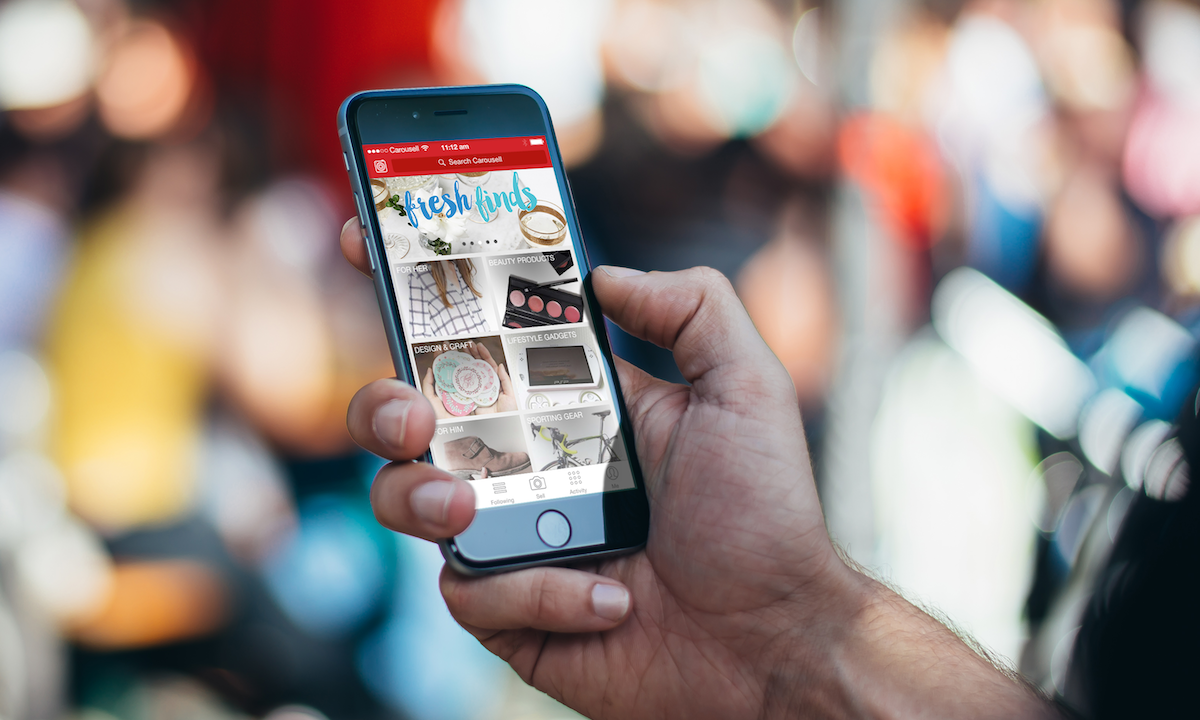
    Founded in 2012, the Carousell app lets people buy and sell a variety of items including beauty products, fashion, lifestyle gadgets, furniture and home appliances. Sellers upload photos of items they wish to sell while buyers use the chat function to buy.

    Carousell will use the new funds to speed its growth into new markets, strengthen its product and engineering capabilities and build a “world-class” team, says co-founder/CEO Quek Siu Rui. The company has just hired former AirBNB Southeast Asia MD Chai Jia Jih to oversee its international expansion.

    So far Carousell has raised about $41.8 million, and is available in 13 major Asian cities including Jakarta, Kuala Lumpur, Singapore, Taipei and, most recently, Hong Kong.

    Its marketplace had more than 35 million listings globally as of the second quarter this year, with Quek claiming it has gathers 70 listings a minute.

    To stand out from its competition, Carousell puts emphasis on speed. Quek says it takes as little as 30 seconds to post a listing on the marketplace, and users can communicate within the app, eliminating the need for messaging apps or emails.

  • Rakuten quits Thailand

    Rakuten quits Thailand

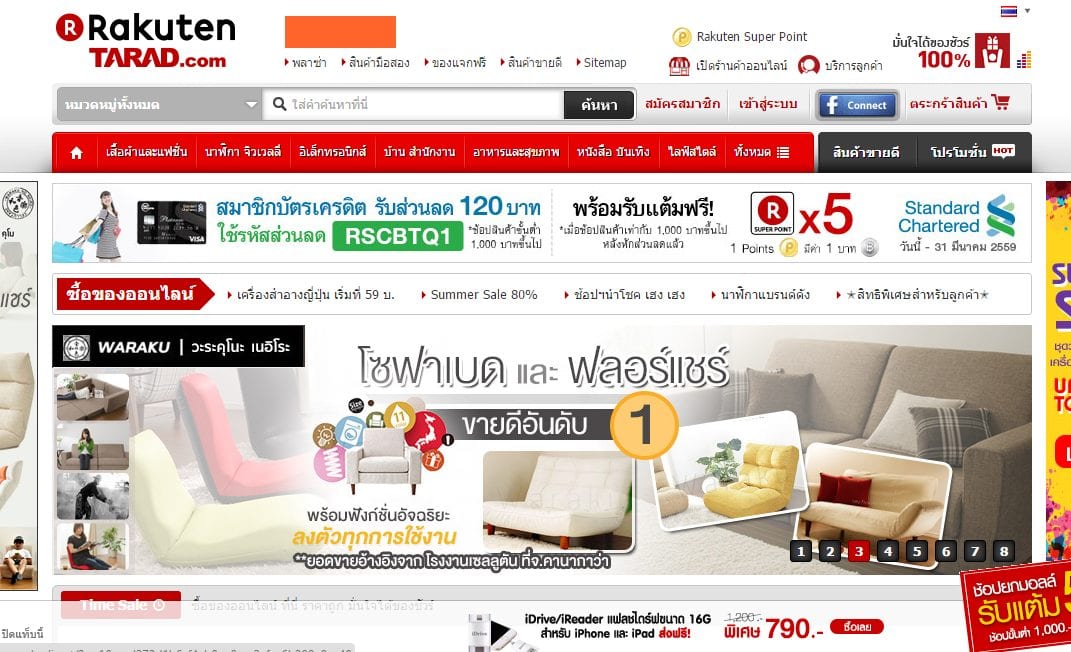
    Japanese eCommerce giant Rakuten is negotiating to sell its stake in Thailand’s largest eCommerce company Tarad.com to an undisclosed Thai company.

    Rakuten Tarad.com founder and MD Pawoot Pongvitayapanu has told the Bangkok Post the deal is expected to be sealed within a few days. Rakuten has a 67 per cent stake in Tarad.com since acquiring it in 2009 for US$35 million, and Pongvitayapanu holds the balance.
    Rakuten’s move follows a strategic overhaul of its business in Southeast Asia, Deal Street Asiareports. It had previously focused on business-to-business and business-to-consumer models, but now plans a shift to consumer-to-consumer (C2C) by launching a mobile app, Rakuma.
    Shopee, which already has a foothold in Thailand, is one of the main competitors for C2C apps in the region, along with Carousell.
    Tarad.com had an accumulated loss of 117 million baht ($3.2 million) in 2013, rising from losses of 35 million baht in 2010 and 5.6 million baht in 2009. Pongvitayapanu says business will continue business as usual as it prepares to implement a strategic shift following the new shareholding structure.
    Rakuten earlier announced it is shutting down its eCommerce marketplaces in Indonesia, Malaysia and Singapore from March 1, laying off about 150 employees. It plans to focus on eCommerce in Japan, where it is a market leader. It will also keep a presence in east Asia, Taiwan and the US.