Tag: Carrier

  • Vietjet eyes 15 pct stake sale

    Vietjet eyes 15 pct stake sale

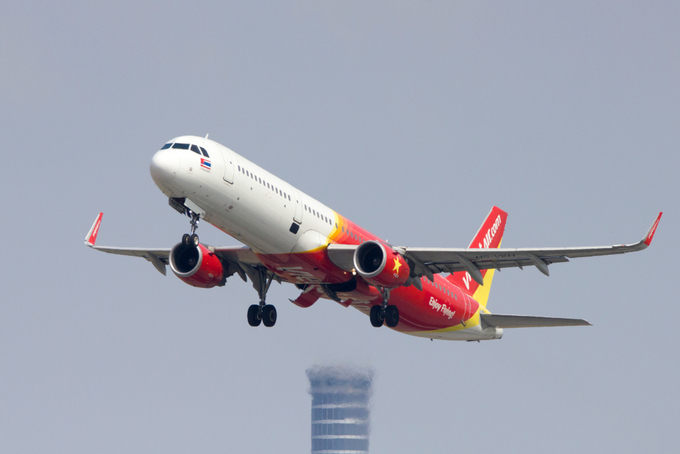
    Budget carrier Vietjet Air plans to sell a 15 percent stake in a private placement.

    It plans to sell 81 million shares at the average price of at least the last 10 sessions on the stock market but has not disclosed the timing or buyer’s identity.

    As of Tuesday, the average figure was VND115,700 ($5.02), putting the value of the deal at over VND9.3 trillion ($403 million). There will be a lock-up period of one to three years when the shares cannot be sold.

    Vietjet also plans to issue $300 million worth of international bonds on the Singapore Exchange this year.

    So far this year it has raised a total of VND2 trillion via bonds.

    In the first quarter it reported a post-tax profit of VND123 billion against a loss of VND989 billion in the same period last year.

  • Vietjet eyes 10-fold jump in profits amid return to post-pandemic normalcy

    Vietjet eyes 10-fold jump in profits amid return to post-pandemic normalcy

    Budget airline Vietjet targets profits of VND1 trillion (US$43.14 million) this year, 10 times the 2021 figure, as it seeks to recover from a two-year slump caused by Covid-19.

    It eyes a 2.5-fold rise in revenues to VND32.72 trillion. At the company’s annual general meeting on Saturday, shareholders expressed concern over the rising oil prices, but the management was optimistic.

    To Viet Thang, deputy CEO, revealed that when oil prices reach $100 per barrel, operation costs increase by 50 percent.

    CEO Nguyen Thi Phuong Thao said the airline has flown when oil prices were above $100 and still made profits.

    “We are always ready to buy fuel at low price and store them to optimize costs.”

    She also said a surcharge is levied when fuel prices surge and this eases the burden on the company.

    Vietjet plans to return to its pre-pandemic schedule domestically and resume 70 percent of international flights.

    Shareholders approved a plan to issue up to 54 million new shares, or 10 percent of the company’s free float.

    Vietjet recently placed a $35-billion order for 200 Boeing 737 aircraft and engine maintenance services.

  • Vietnam Airline sells stake in Cambodian carrier

    Vietnam Airline sells stake in Cambodian carrier

    Vietnam Airlines has sold a 35 percent stake in Cambodia Angkor Air for US$35 million.

    It had bought a 49 percent stake in the Cambodian carrier in 2009 and promised to help it expand.

    But in 2020 it had expressed its intention to sell of its stake due to Covid-19. It is now set to divest the remaining 14 percent in by the end of this year.

    Vietnam Airlines’ accumulated losses climbed to VND21.98 trillion ($955.6 million) last year, roughly the same as its charter capital.

  • Vietravel invests $25.8 mln in its carrier

    Vietravel invests $25.8 mln in its carrier

    Tourism company Vietravel has decided to invest an additional VND593.5 billion ($25.8 million) in Vietravel Airlines this year.

    The additional capital lifts its total investment in the new carrier to nearly VND1.3 trillion.

    Based at the Phu Bai International Airport in the central province of Thua Thien Hue, Vietravel Airlines was licensed in April 2020 with a charter capital of VND700 billion.

    Early this year, it began operating flights on several domestic routes with three aircraft and is not expected to break even for at least a few years.

    The company’s operations have been hit by the Covid-19 pandemic over the past two years. It resumed business on Oct. 18.

    It has reported losses of VND90 billion in 2020, twice the profits it earned in 2019, but is targeting pre-tax profits of VND10 billion this year.

  • Vietnam Airlines direct flight to US takes off next week

    Vietnam Airlines direct flight to US takes off next week

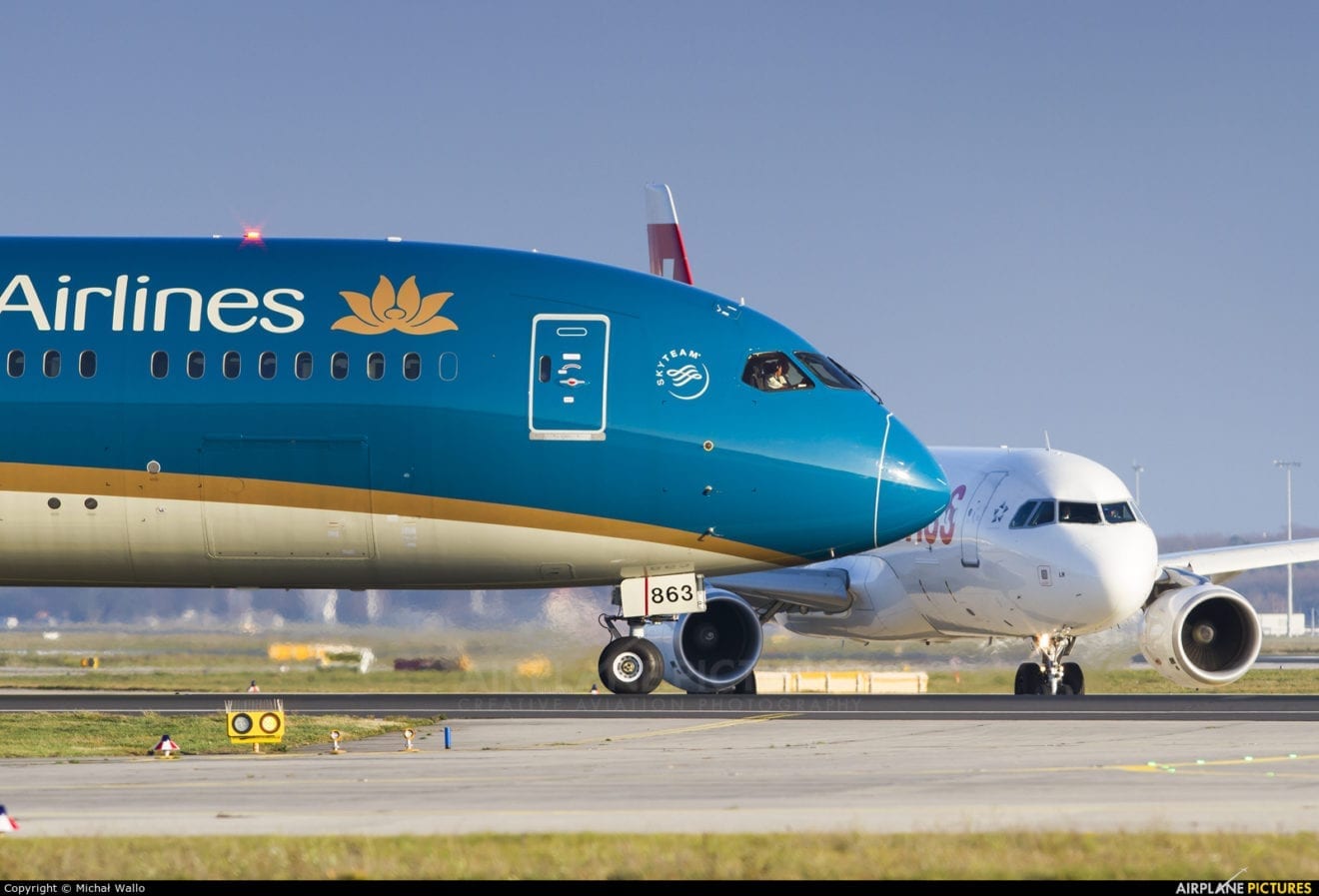
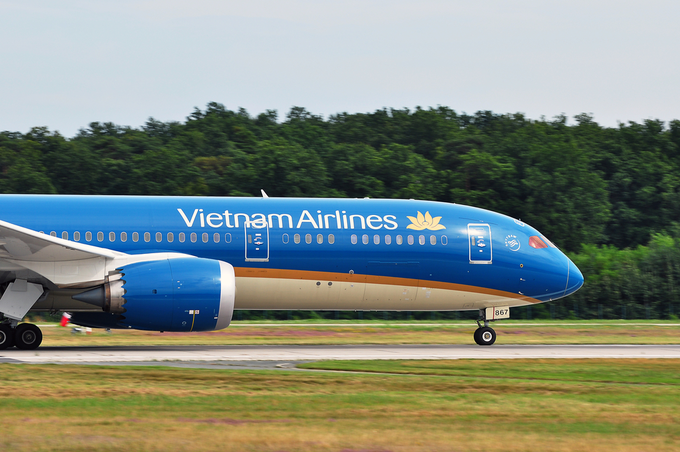
    National flag carrier Vietnam Airlines will operate its first regular direct flight to the U.S. on November 28, achieving a dream conceived nearly two decades ago.

    The flight will depart from HCMC in the evening and arrive at San Francisco 13 hours and 50 minutes later, CEO Le Hong Ha said at a press briefing Tuesday.

    The return flight will leave San Francisco on the evening of November 29 (U.S. time) and arrive in HCMC on December 1, 16 hours and 40 minutes later.

    The wide-body aircraft Boeing 787-9 Dreamliner will be used for direct flights.

    Initially, there will be two flights a week and this can be increased to seven when the pandemic situation is under control, Ha said.

    Vietnam Airlines thus becomes the first Vietnamese carrier to operate a regular flight route to the U.S.

    In 2003, the airline had been directed by the Ministry of Transport to begin direct services to the U.S. by 2005. However, concerns over profitability had kept the carrier from implementing the plan until now.

    The national flag carrier is also studying the possibility of other direct routes to the U.S., including flights between Hanoi and HCMC to Los Angeles or Houston.

    The U.S. has one of the most stringent aviation standards in the world. There are around 20 airlines operating routes between Vietnam and the U.S.

    “We needed to prepare hundreds of kilograms worth of paperwork to meet the U.S. requirements,” Ha said.

  • The future of direct carrier billing and carrier-OTT partnerships

    The future of direct carrier billing and carrier-OTT partnerships

    Increased smartphone penetration and a rise in demand for over-the-top (OTT) content have driven the growth of the global direct carrier billing (DCB) market. Valued at US$29.8 billion in 2019, the global DCB market is estimated to reach US$70 billion by 2025, fuelled by a surge in video and audio streaming, as well as consumers’ preference for seamless, secure, and accessible payment modes.

    Linked directly to consumers’ mobile phone bills, consumers can enjoy fuss-free transactions in the absence of a bank account or credit card with DCB. This is in contrast with credit card payments that require consumers to input their credit card number and name. In comparison, a simpler checkout process results in lower abandonment rates and higher conversion rates for merchants. This payment method is also more secure as personal information is not being shared.On top of offering convenience, DCB presents unprecedented opportunities for carriers to tap into Asia-Pacific’s (APAC) unbanked population – totaling more than 1 billion. In Southeast Asia, where financial inclusion is particularly low, about 75% of the population does not have access to formal banking services.

    A flurry of lockdowns and stay-at-home measures have resulted in the rise in video and audio streaming in the past year. According to The Trade Desk, 180 million consumers stream 8 billion hours of over-the-top (OTT) content per month in Southeast Asia, making its OTT market one of the fastest-growing in APAC.

    By 2025, Media Partners Asia predicts that video-on-demand subscriptions will reach 417 million in the APAC region, up from 269 million in 2019. Of which, China will account for 65% of the total subscriptions.

    This trend in increased streaming is expected to persist in a post-pandemic environment driven by more affordable subscriptions, quicker download speeds and a growing DCB market, which in turn spurs more partnerships between carriers and OTT providers.

    Carriers have an advantage in delivering content with a billing mechanism already in place. This gives consumers an added incentive to subscribe to services by OTT providers such as Netflix, Disney+ and Spotify, bundled into carrier subscriptions so that consumers can have all their content needs met by a single source in a single bill. According to Ovum, carrier billing is also the most popular method of revenue sharing in such partnerships.

    For carriers, it means providing added value and better brand positioning in a competitive landscape. For OTT media providers, it means higher conversion rates. The result is win-win as both parties achieve the benefits of increased user acquisition, retention and essentially, revenue.

    Apart from OTT giants like Netflix, Disney+ and Amazon Prime, APAC has a diverse market that includes regional and even local OTT providers. In South Korea, for instance, home-grown Wavve is the leading OTT media provider. This is followed by Netflix. When LG UPlus entered into an exclusive deal with Netflix in 2018, its subscriptions for its IPTV grew by 20%. More recently, it was reported that LG UPlus is now exploring a partnership with Disney+, which has amassed more than 100 million global subscribers just 16 months after its launch. SK Telecom, on the other hand, is reportedly signing a partnership with Apple TV+.

    In India, one of the fastest-growing markets for OTT content in the world estimated to reach US$5 billion by 2023, partnerships are highly coveted to court a burgeoning smartphone population. Worldwide Mobile Data Pricing also noted that India has the cheapest average cost of mobile data in the world, at Rs 6.7 (US$0.09) per gigabyte. According to Ovum, about 56% of Indian consumers are already paying for more than one online video service, with the pay-per-use model being more well-received as compared to monthly subscriptions. To attract more consumers, OTT providers are turning to subscription video on demand or advertising video on demand. Amazon’s miniTV is one such provider that offers its content free.

    Moving forward, the onus is on carriers and OTT providers to better curate content suited for the respective markets and attract consumers consumption. This is on top of overcoming challenges such as integrating seamless back-end systems and ensuring that streamed content is high quality without comprising on profit margins.

  • Domestic aviation on the road to recovery

    Domestic aviation on the road to recovery

    Vietnam’s aviation industry is gradually recovering with passenger numbers heading toward pre-pandemic levels after a months-long slump. Noi Bai International Airport in Hanoi handled 29,000 passengers daily during the weekend, nearly triple the daily average of August when there was a Covid-19 resurgence.

    To Tu Ha, deputy director of the airport, said there has been a weekly increase of 15 percent since the beginning of September. “As Vietnam is doing well in controlling the pandemic, we expect domestic travel growth to be maintained for the rest of the year as traveling abroad is mostly limited.”

    International flights have been halted since March. Vietnam Airlines currently operates 200 flights a day, with the number of passengers rising from 17,500 in August to nearly 40,000 now.

    It resumed services on six domestic routes this month and increased the frequency of eight others. It plans to resume flying on six more routes next month, including popular travel destinations Da Lat in the Central Highlands and Nha Trang and Da Nang in the central region.

    “The growth in a number of passengers will help us pare trillions of dong in losses from our earlier forecast,” a spokesperson said. The airline had forecast a loss of VND13 trillion ($560 million). Bamboo Airways is also recovering with the number of passengers doubling this month to 12,000-15,000.

    “We expect strong growth in the routes between Hanoi and Ho Chi Minh City and Con Dao Island,” a spokesperson said. Budget airline Vietjet said passenger numbers have risen by 30 percent since last month though still less than in September last year.

    A spokesperson for Vietjet said: “As the aviation market recovers, losses are being reduced. But airlines continue to face difficulties and we still need government support with taxes and fees.”

    Vietnamese carriers are also expecting a revenue boost from the resumption of flights to seven destinations including Japan, South Korea, China, and Thailand, a proposal the government has approved.

    But Dinh Viet Thang, head of the Civil Aviation Authority of Vietnam, said Tuesday that flights to these destinations have not resumed due to the need for Vietnam and these countries to first reach agreement over-testing, immigration, and quarantine protocols.

    Another challenge is that both Vietnamese and foreign carriers are having trouble identifying businesspeople and “experts,” the only categories of non-diplomatic passengers allowed to enter Vietnam, he added.

    The CAAV wants the Ministry of Public Security and Ministry of Foreign Affairs to take this into consideration when issuing visas so that airlines could sell tickets to the right passengers.

    Vietnamese airlines carried 24.2 million passengers in the first eight months, down 35.1 percent year-on-year, according to the General Statistics Office.
  • Two more AirAsia carriers suspend operations from April

    Two more AirAsia carriers suspend operations from April

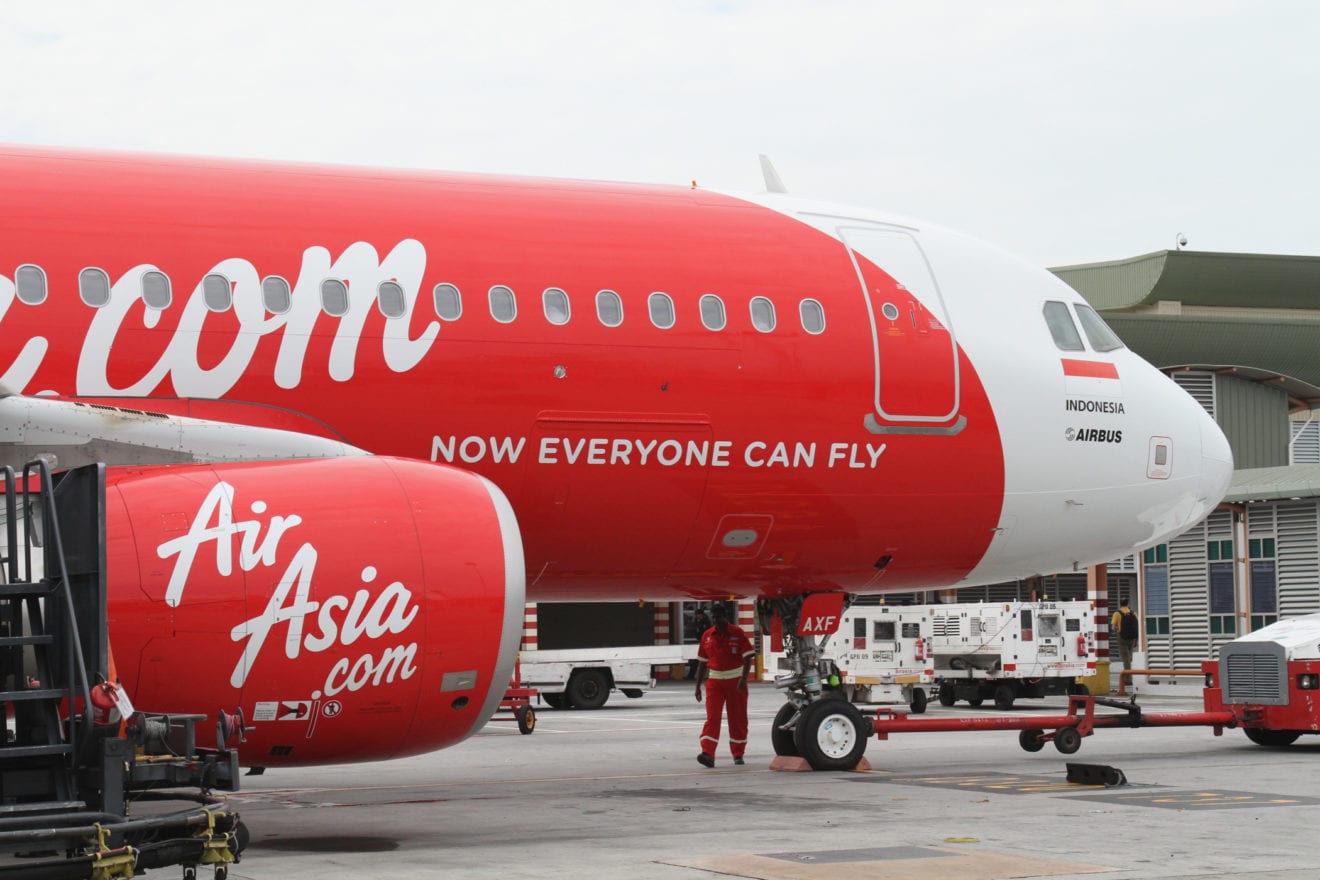
    Indonesia AirAsia and Thai AirAsia are the latest among the AirAsia Group carriers to suspend operations, leaving just AirAsia Japan in service.

    Indonesia AirAsia will suspend domestic flights until 21 April and international flights until 17 May. Thai AirAsia will halt all domestic services during the month of April, having suspended international flights since 22 March. Indonesia AirAsia’s grounding will not have a significant impact on Indonesia, as Lion Air dominates the market.

    The grounding of Thai AirAsia will have a more significant impact on Thailand, as the airline accounts for 19% of Thailand’s total capacity in February.

    Thai AirAsia’s parent Asia Aviation says the airline is implementing cost reduction measures. This includes voluntary pay cuts for management and senior employees, halting non-essential employee travel, and imposing a hiring freeze.

    Asia Aviation expects a reduction in Thai AirAsia’s variable expenses, which makes up around 70% of its total cost. General administrative expenses could also be reduced through a work-from-home scheme for employees.

    To cope with the suspension, the company is building up its liquidity levels. At the end of 2019, its cash on hand and current investments were collectively valued at Bt3.98 billion ($122 million).

    It says: ”Thai AirAsia also has unutilized revolving credit facilities with banks and has the ability to mobilize the liquidity further by way of the credit facility backed by the remaining no-encumbrance owned aircraft and/or other approaches in the future.”

    It discloses that a transaction announced in January, for the sale-and-leaseback of nine aircraft and the outright sale of one, has been completed in March, with net proceeds totaling Bt3.6 billion.

    Moving forward, Thai AirAsia will not take delivery of any aircraft this year and will study the number of aircraft it needs. The parent company adds that any significant capital expenditures will either be suspended or delayed.

  • China Telecom chief moves to China Mobile

    China Telecom chief moves to China Mobile

    China Telecom announced that Yang Jie (pictured) has resigned from his role as chairman of parent company China Telecom Corporation, and has been re-designated as chairman of China Mobile Communications Group.

    Yang has also resigned from his positions as executive director, chairman and CEO of Hong Kong-listed China Telecom Limited, due to the change in work arrangement, according to a company announcement released last week [pdf].

    He replaces Shang Bing, who is stepping down as chairman of China Mobile upon reaching retirement age.

    Shang, a former vice minister of the telecom watchdog, the Ministry of Industry and Information Technology (MIIT), was appointed the chairman of China Mobile in September 2015 when the Beijing government reshuffled the heads of the country’s three state-owned telecom carriers.

    In a statement, China Mobile acknowledged Shang’s outstanding contributions to the company with “the highest regard and deepest gratitude”.

    The changes take effect on March 4, 2019.

    Yang was chairman and CEO of China Telecom since May 2016 and previously served as the company’s president and COO. China Telecom hasn’t yet made any announcement on Yang’s replacement at the company.

  • SK Telecom to launch data analyzer with Microsoft

    SK Telecom to launch data analyzer with Microsoft

    Korea’s No. 1 mobile carrier SK Telecom said Wednesday it will collaborate with U.S. software giant Microsoft for big data solutions to expand its presence in the global market. SK Telecom said it signed a development and global business cooperation agreement with Microsoft in Silicon Valley to step up development and global marketing in big data analysis.

    Under the partnership, SKT will launch its real-time big data analyzer, Metatron, on Microsoft’s public cloud platform Azure.

    Metatron provides quick and easy data analysis, which also includes data collection, storage and visualization processes. Azure is the world’s second-largest public cloud provider, used in 140 nations across the globe.

    The two companies agreed to launch the big-data-based asset performance-management service for the commercial market in July.

    “The partnership is expected to set the ground for Metatron’s footprint in the global market,” Choi Yong-jin, SKT’s data labs director, said in a release.

    Already well-established in its domestic market, SK Telecom has focused on leveraging its mobile network technology expertise and increasing revenue in content, software and security.

    During MWC Barcelona, set to open next Monday, the company plans to demonstrate its 5G technology, including quantum-safe cryptography solutions and mobile edge computing.

    Quantum-safe technology encrypts transmitted data using special quantum keys, which prevents interception or theft.

    Edge-computing systems process data locally, in nearby data centers or on devices, which eases the strain on networks and improves data reply times.

  • Vietnam wants to excel in IT, telecom

    Vietnam wants to excel in IT, telecom

    Vietnam, which is in a lowly 108th place in the International Telecommunication Union’s ICT Development Index, wants to improve its status. Speaking at a Ministry of Information and Communications (MoIC) conference Tuesday, Prime Minister Nguyen Xuan Phuc emphasized the need for the country to improve its ranking in ICT, one of country’s strengths alongside agriculture and service.

    MoIC Minister Nguyen Manh Hung said the country must use the International Telecommunication Union’s rankings as a guideline and strive to improve to no lower than 50th latest by 2022.

    He stressed that to take the lead in the digital revolution, the country needs to popularize smartphones by licensing 4G and testing 5G technologies to increase capacity, data usage per user and the quality of the mobile network.

    “Vietnam must be on the same line with the world in new technologies. We will not be eight and 10 years behind like we were with 3G and 4G.”

    According to the minister, Vietnam’s development in telecommunications must remain sustainable by shifting resources to explore new markets once the phone market saturates instead of continuing to compete unhealthily on old markets.

    “Mobile money,” which the ministry is trialing now, allows users to transfer money and make purchases through their telecom accounts, and would help bring e-payment to everyone in the country and stimulate economic growth, he said.

    Digital transformation, e-governance and smart cities would be the big stories of 2019, he said.

    “National digital transformation, digital economy and digital society would be the overarching story for decades to come. We need to develop strategies and projects in 2019 to clarify what must be done for each field in the digital economy and the Fourth Industrial Revolution.”

    Speaking about cyber security and safety, he said the Internet, on which the country’s prosperity depends, is itself an unsafe environment.

    “In 2019 there will be no incidents of government agencies’ websites being hacked and having information stolen. Vietnam must become ASEAN’s center for cybersecurity.”

    Vietnam has an opportunity to become one of the world’s major manufacturers of electronic and telecom equipment, he said.

    Globally there are only four major telecom infrastructure and equipment manufacturers — Ericsson, Nokia, Huawei and ZTE – and while China’s Huawei and ZTE enjoy a market share of 60 percent, they are encountering difficulties with the U.S., he pointed out.

    “Vietnam is currently capable of manufacturing 70 percent of telecom equipment [used globally]. With effort, we could become the fourth nation in the world capable of manufacturing and exporting all types of telecom equipment. This must be achieved by 2019-2020.”

    “Vietnamese network operators must use Vietnamese-made equipment if the price and quality are similar.”

    The ministry has set a target of  20-30 percent of operators’ revenues coming from digital content this year instead of the current 6-8 percent, saying the digital content industry is capable of expanding by three or four times to achieve revenues of $3-4 billion.

    “The key to the digital content industry’s growth is that policies must promote it,” said the minister.

  • No More Free Checked Baggage on Lion Air Indonesia

    No More Free Checked Baggage on Lion Air Indonesia

    Flying cheap will soon also mean flying light for many Indonesians after the country’s largest airline, Lion Air, and its subsidiary, Wings Air, decided to start charging for checked baggage on all their domestic flights from today. The airlines, which together served around half of the archipelago’s air travelers last year, will only allow one piece of cabin baggage, such as a suitcase of no larger than 40 x 30 x 20 centimeters, weighing less than 7 kilograms, and one personal item, such as reading material, a handbag, or laptop bag.

    “Both Lion Air and Wings Air, which will enforce the new regulation until further notice, will no longer accept free checked baggage of up to 20 kilograms and 10 kg, respectively,” Lion Air Group spokesman Danang Mandala Prihantoro said in a statement on Friday.

    Checked baggage exceeding 7 kg will be subject to an excess baggage fee based on the rate for the day. Carriers will further no longer allow passengers to bring several items tied together with rope or string into the cabin as these will also be subject to additional fees.

    Passengers will be able to purchase prepaid baggage vouchers through tour and travel agencies, the airlines’ websites, or at their ticket sales offices.

    The carriers have advised passengers to prepay for baggage when they buy their tickets, or alternatively, pay for it up to six hours before departure.

    Power banks with capacities of more than 160 watt-hours (Wh), or 32,000 milliamp-hours (mAh), will no longer be allowed on aircraft, while those with capacities of between 100 and 160 Wh will require special permission by airline staff.

    Passengers will still be permitted to take power banks with a maximum capacity of 100 Wh into the cabin after notifying the ground crew. However, these may no longer be used onboard.

    Passengers who have purchased Lion Air and Wings Air tickets before Jan. 8 would still able to enjoy the respective 20 kg and 10 kg free baggage allowances.

  • AirAsia to freeze launches for next 3 years barring Vietnam

    AirAsia to freeze launches for next 3 years barring Vietnam

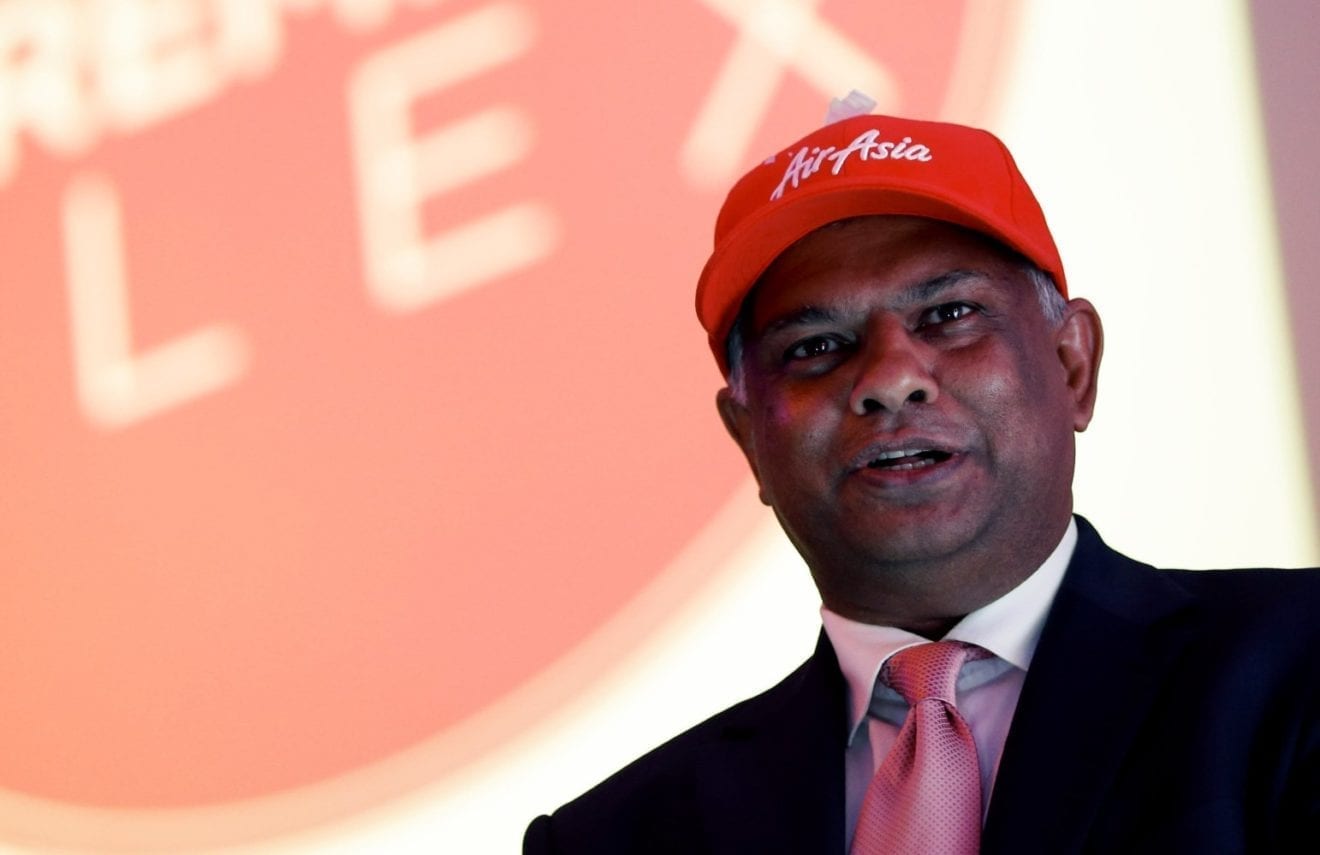
    Malaysian discount carrier AirAsia Group won’t open any new airline in the next three years and will focus on current operations after its proposed Vietnam launch, Group CEO Tony Fernandes said Wednesday. “After Vietnam, we will focus on what we have,” Fernandes said in a twitter post. “Focus this year is to make Indonesia and Philippines very profitable.” Fernandes said he is confident of India and Japan operations turning profitable in 2021, noting that the company’s strong franchise in Southeast Asian markets such as Indonesia, Malaysia, Thailand, Philippines and Vietnam will help fuel growth.

    According to September data, AirAsia operated 127 planes flying to over 130 destinations. The Southeast Asia’s largest budget carrier by fleet has also placed orders for 100 Airbus A330neo wide-body jets for long-haul flights. The company most recently signed a pact “reaffirming” its intention to set up a low-cost carrier in Vietnam with its local partner Tran Trong Kien in his capacity as CEO of Thien Minh Travel Joint Stock Company and General Director of Hai Au Aviation Joint Stock Company.

    Analysts doubt certainty of Indonesian and Philippines operations turning profitable this year as intense competition in both the markets amid highly-volatile fuel prices will continue to weigh on AirAsia’s operations. While Indonesia AirAsia could be slightly profitable in 2019 thanks to robust demand, the company’s Philippines unit will likely remain in the red, said Nomura analyst Ahmad Maghfur Usman. Fallout from a recent crash of Lion Air flight could help drive traffic to AirAsia Indonesia, he said. It is possible for AirAsia’s Indian operations to turn in a profit as early as next year although its business in Japan could remain in the red until the end of

    2020, he said. Global airlines have grappled with fickle input costs in 2018 as crude oil swung between a gain of nearly 30% and loss of 23% before ending the year at $66.73 a barrel. Jet fuel price averaged $86.8 per barrel for 2018, according to the International Air Transport Association.

    Every one dollar increase in crude oil prices could potentially lower AirAsia’s profit by as much as 47.5 million ringgit, according to Nomura’s Ahmad’s estimates.

    Fuel cost will largely determine whether Indonesia and Philippines operations would be profitable for AirAsia, said TA Securities research analyst Tan Kam Meng. Among the risks facing AirAsia is a rebound in crude oil prices to $70 a barrel, he flagged. Still, Malaysia remains key for AirAsia, said Tan. “Although profitability of Thailand, Philippines and Indonesia is a concern, it would not change valuation of the company significantly,” Tan said. Shares of AirAsia, which have added 6.94% over the past year, are currently trading 0.34% lower at 2.96 ringgit apiece.

  • Samsung Heavy lands $189 million LNG carrier deal

    Samsung Heavy lands $189 million LNG carrier deal

    Samsung Heavy Industries said Monday that it has clinched a deal worth 210 billion won ($189 million) to build a liquefied natural gas (LNG) carrier. The contract, with a European shipper, calls for Samsung Heavy to deliver the vessel by March 2021, the company said in a regulatory filing.

    With the latest contract, Samsung Heavy has clinched deals valued at a combined $6.3 billion so far this year to build 49 ships, including 18 LNG carriers and 13 container vessels.

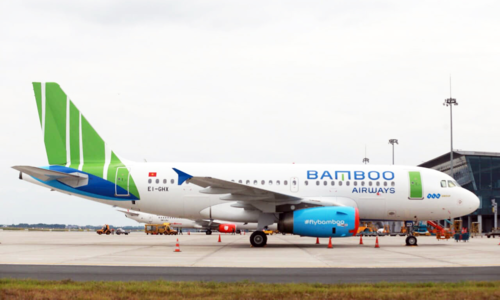
  • Bamboo Airways postpones maiden flight again

    Bamboo Airways postpones maiden flight again

    Vietnam’s newest airline Bamboo Airways will not operate its maiden flight Thursday as scheduled, the second time it has been delayed. Its CEO Dang Tat Thanh said Bamboo Airways could not take off since it is going through “the most difficult examination ever.” “Bamboo Airways is currently going through the final stage of a tight examination by authorities before taking off,” he said, adding that the first flight would now be in mid-January. The airline aimed to launch the first flight on December 29, after failing to launch services in October as previously planned.

    The carrier, owned by conglomerate FLC, received a license last November but is still awaiting an aircraft operator certificate (AOC).

    It was established in May last year with a charter capital of VND700 billion ($30 million), which it increased two months later to VND1.3 trillion ($55.68 million).

    It has signed deals to buy 24 Airbus A320neo and 20 Boeing B787-9 Dreamliner aircraft worth a total of $8.6 billion. Earlier this month it took delivery of the first aircraft, an Airbus A319 leased from an Irish company.

    The airline plans to operate on 100 routes, connecting major cities and travel destinations in Vietnam with the rest of the world.

    FLC chairman Trinh Van Quyet said earlier that the first routes could be between Hanoi and Ho Chi Minh City and from the two cities to Quy Nhon.

    Vietnam has four other carriers still in operation: Vietnam Airlines, Vietjet Air, Jetstar Pacific, and VASCO.