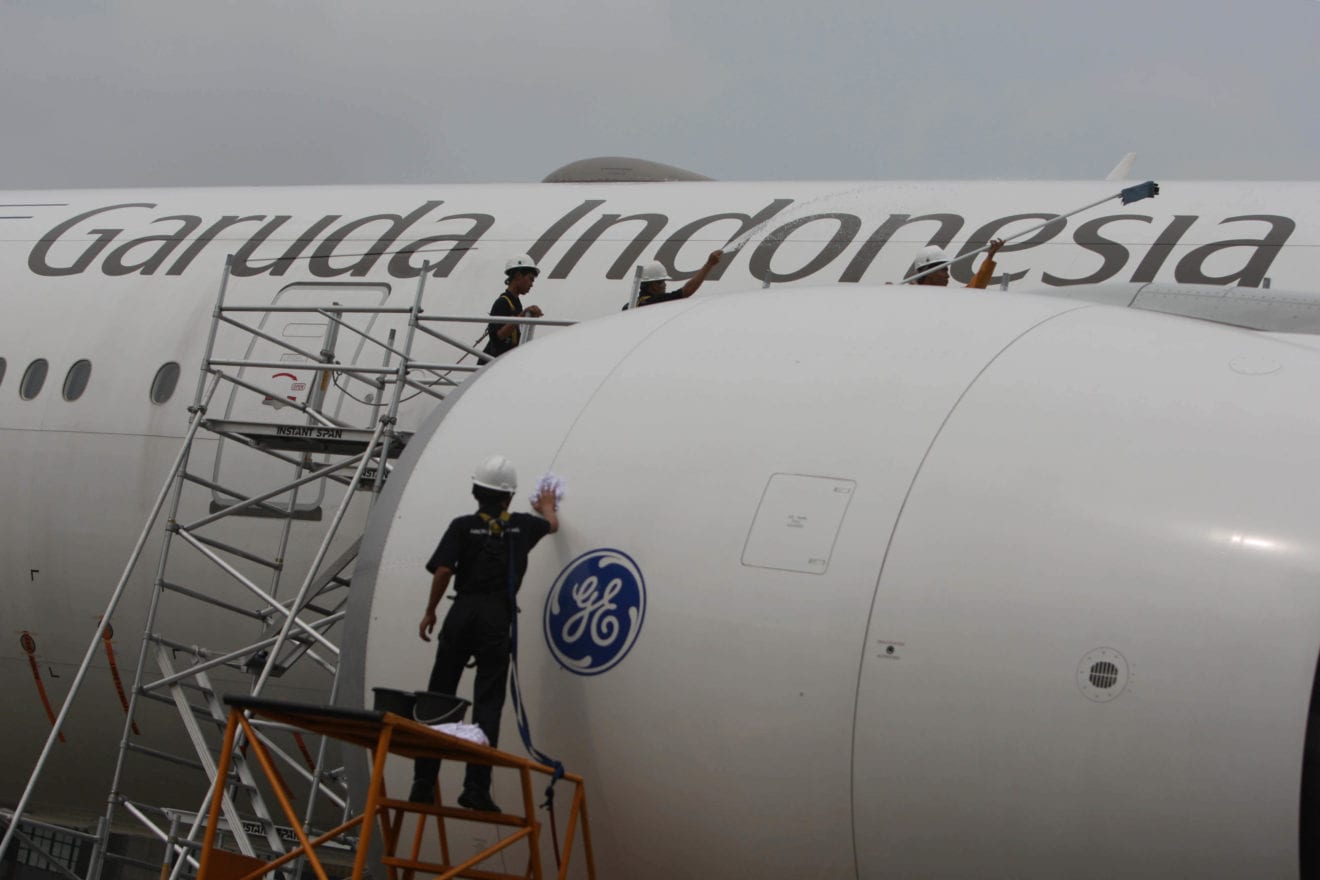
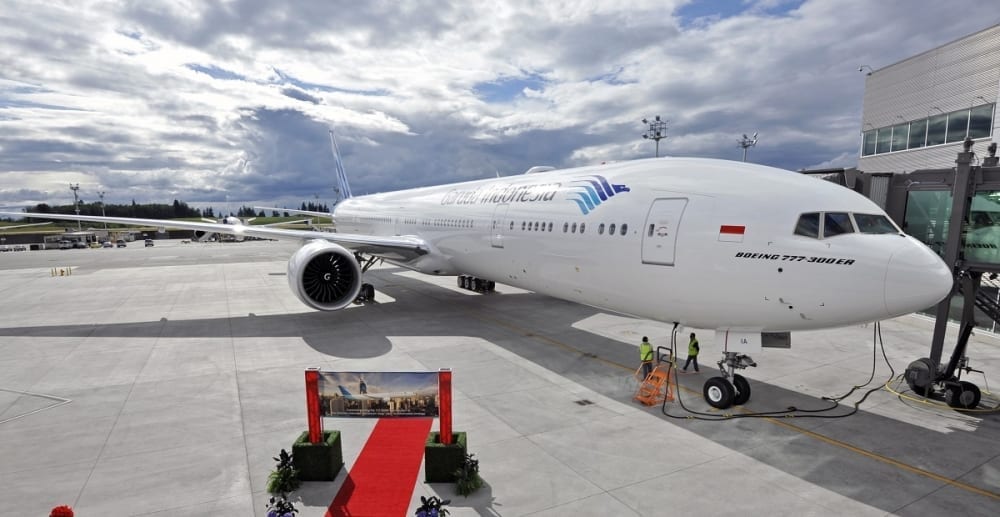
National flag carrier Garuda Indonesia expects to end 2018 in profit and is targeting a net profit of Rp 1 trillion ($69 million) for 2019, its chief executive said on Friday. Garuda saved $96 million by working with lessors to restructure the financing of its planes until November 2019, chief executive Ari Askhara told reporters.
“Our net profit for 2018 is positive, even though it might be a small amount,” he said, attributing the result to cost-cutting, renegotiation of aircraft leases and new partnerships.
The result would be a marked improvement for the airline, which reported a $116.86 million net loss for the first six months of 2018. Ari declared in September that Garuda had abandoned hopes of making a profit this year, after struggling with fuel costs and a rising rupiah versus the US dollar.
The new partnerships include Garuda taking operational control of rival Sriwijaya Group in November, gaining a majority share of the fast-growing domestic aviation market.
That partnership could be escalated to a 51 percent share ownership of Sriwijaya, depending upon discussion with Garuda advisors and the Ministry of State-Owned Enterprises, Ari told a media briefing. Garuda’s profit had yet to see a positive boost from Sriwijaya, he said.
“Garuda might also see a partnership with [Malaysia’s] AirAsia … through [Garuda unit] Citilink but it’s very early,” he said.
AirAsia president director Dendy Kurniawan confirmed in a statement that early talks with Garuda were underway, with “various forms of cooperation to support the industry being discussed,” but noted no final decision has been reached.
Garuda has been battling for market share against local market leader Lion Air, which in October suffered a crash of a Boeing 737 MAX jet, killing all 189 people on board.
Ari said Garuda had 30 million passengers in 2018 and would expand its fleet to include a new Airbus SE 330neo in September 2019 and a 737 MAX jet at the end of 2020.
New profitable routes domestically and internationally are planned for 2019, he said.
Ari also said an intended private placement of shares from subsidiary Garuda Maintenance Facility AeroAsia to longtime partner Air France Industries KLM Engineering & Maintenance had been canceled.
He said that he considered the current share price of GMF AeroAsia too low and wanted to increase the company’s valuation first.
Ari said GMF Aeroasia would partner with Dunlop and China Construction Indonesia to build a tire plant in 2019, with the first stage seeing a $300 million investment from the companies involved.
The plant would be for the domestic market and supply 50 percent of its output to Garuda, 48 percent to Lion Air and 2 percent to AirAsia Group.
Domestic air traffic more than tripled in Indonesia over the past decade as rising prosperity and lower fares made flying affordable for more people.
With 129 million passengers in 2017, the Southeast Asian country is the world’s 10th-largest aviation market and is projected to continue growing.
The arrest of Huawei’s Chief Financial Officer Meng Wanzhou in Canada has triggered alarms in the Korean telecommunications industry, especially after LG U+ moved onto a fifth-generation (5G) network this month that uses Huawei network devices.
The Chinese telecommunications giant has maintained a sizeable influence since it first entered the Korean market in 2002. While it was originally focused on the cable infrastructure business, Huawei moved on to offering wireless telecommunications devices in 2007 as local telecommunications companies introduced third-generation wide-band code-division multiple access services.
In 2013, Huawei received orders for fourth-generation 4G long-term evolution (LTE) wireless base stations from LG U+ for services in Seoul, Incheon, and areas in Gyeonggi and Gangwon.
The 5G equipment market in Korea is estimated to be worth 10 trillion won ($8.89 billion).
While Huawei is a leading supplier to the telecommunication industry, concerns about the security of its devices has held the company back. Only LG U+ decided to use Huawei equipment for 5G. Huawei has claimed that it had no such security problems in the 170 countries that it operates in and would follow inspection requests by the Korean government.
LG U+ signed a deal with Huawei to introduce around 30,000 base stations in the Seoul, Incheon, and the Gyeonggi and Gangwon regions by next March. The deal is reportedly worth around 300 billion won, not including maintenance fees.
The decision by Korea’s smallest telecommunications company made business sense as it used Huawei equipment for its 4G network.
Huawei’s equipment, however, will not be installed in areas occupied by United States Forces Korea (USFK) such as in Pyeongtaek, Dongducheon, Yongin in Gyeonggi. The U.S. government has requested that Huawei equipment not be used out of concerns about a Chinese cyberattack. USFK has been suspicious about Huawei equipment. When LG U+ chose Huawei equipment for its 4G network, around 10,000 USFK soldiers switched carriers.
The current situation has left LG U+ in a difficult position. Its deal with Huawei is already inked, and the 5G service works in sync with the existing 4G system, so it is impossible for the company to simply not use Huawei equipment.
The recent banning of Huawei equipment by Britain, Australia, Canada, New Zealand and Japan, along with growing worries in Korea, places more pressure on the telecommunications unit.
A senior LG U+ official expressed frustration at the current situation and the Korean government’s inaction.
“Our government is just trying to not upset either China or the United States,” said the official. “Shouldn’t the government come forward and clear things up?”
Meanwhile, the government maintains its stance that the selection of telecommunications equipment is an issue for companies to decide.
“Inspecting security is the responsibility of the business operator. It is not appropriate for the government to take part in an area that a company should make a decision on,” said Park Jun-guk, an official at the Cyber Security Industry Bureau in the Ministry of Science and ICT.
“[We] will, however, strengthen security inspections in the form of a technology advisory conference.”
While 5G has stirred controversy, Huawei has an even stronger presence in the country with its cable and optical transmission equipment businesses. In the cable business, all three telecommunications companies, SK Telecom, KT and LG U+, are customers of Huawei.
Huawei has also won orders from Koscom, a state-run financial IT solution company, and from electric utility Kepco.
Last month, the Chinese company won an order with KT to connect the sales network of the National Agricultural Cooperative Federation and the National Livestock Cooperatives Federation worth around 120 billion won.
According to market researcher IHS Markit, Huawei is the biggest global telecommunications equipment maker, with a market share of 22 percent. While Samsung Electronics holds a strong position in the Korean market, a 45 percent market share, it commands a paltry 4 percent share of the global market.
A new Vietnam-based airline set up by Malaysian budget carrier AirAsia and a local company is expected to fly by next August. Tran Trong Kien, CEO of Hanoi-based resort ooperator Thien Minh Group, AirAsia’s partner, said that applications for aviation licenses would be made next February and likely obtained in six months.
Vietnam will become the newest market for AirAsia, the largest low-cost carrier in Southeast Asia, which has affiliates in India, Indonesia, Malaysia, the Philippines, and Thailand.
Kien said Prime Minister Nguyen Xuan Phuc had expressed support for the airline, which has yet to be named.
The airline plans to deploy five or six Airbus SE A320 and A321 aircraft on domestic and regional routes, and expand the fleet to 30 within three years, he added.
Last week Thien Minh Group signed a memorandum of understanding with AirAsia for setting up the new airline with a capital of VND1 trillion ($44 million).
AirAsia will hold a 30 percent stake in it, and Thien Minh, 70 percent.
The new airline would be a direct competitor to Vietnam’s budget carriers Vietjet Aviation and Jetstar Pacific, according to industry insiders.
Vietnam Airlines is currently the biggest airline in terms of passengers carried.
Bamboo Airways, owned by private corporation FLC, last month received a license and expects to make its maiden flight on December 29. It is allowed to operate 10 aircraft on domestic and international routes.
There are five carriers in Vietnam: Vietnam Airlines, Vietjet Air, Bamboo Airways, Jetstar Pacific and VASCO. Vietnam Airlines owns VASCO and has a 70 percent stake in Jetstar Pacific.
Vietnam received 14.12 million foreigners in the first 11 months of the year, up 21.3 per cent year-on-year, according to the General Statistics Office. Eighty percent of foreign tourists arrive by air.
Vietnam’s aviation market has averaged 17.4 percentage growth in the past decade, far higher than the 7.9 percent rate for the Asia-Pacific, according to the International Air Transport Association.
AirAsia almost struck a deal with Vietjet, but in 2010 the deal collapsed.
Revenue growth for carriers will be of critical importance in 2018, according to Craig Wigginton, global telecommunications sector leader for Deloitte.
“Revenue yield on data services (revenue per bit consumed) continues to decline as consumers use more and more data, with static or declining monthly bills. Hence it is critical to identify rapid investment opportunities across the telecom portfolio—including 5G, IoT, and cross-industry partnerships (such as mHealth and mPayments), as well as a host of other growth opportunities,” Wigginton said.
One avenue that many operators are pursuing with interest is enterprise cloud. Given that enterprises are a demanding lot, operators are ramping up on infrastructure to support demand for cloud services.
The Technology Business Research (TBR) 4Q17 Carrier Cloud Benchmark revealed a 15.7% year-to-year growth in 4Q17 is largely due to strategic acquisitions and alliances, investments in new data centers, and portfolio expansion in growth segments such as SaaS and hybrid cloud.
Cloud revenue growth is being limited, however, due to pricing pressures and growing demand for solutions from webscale cloud providers such as Amazon Web Services (AWS). Carriers are cognizant of these trends and are becoming more focused on supporting hybrid and multi-cloud environments by launching new orchestration platforms.
“All benchmarked companies sustained year-to-year Cloud as a Service revenue growth in 4Q17 as significant opportunity remains for carriers to target businesses seeking greater cost savings, scalability and efficiency by migrating traditional infrastructure and applications to the cloud,” said Steve Vachon, an analyst in TBR’s Telecom Practice.
“Though cloud revenue growth is being limited by pricing pressures from webscale providers, carriers are relying on the value proposition and convenience offered by the bundling of their cloud solutions with other network offerings, such as SD-WAN, security and mobility services, to attract customers.”
Operators are revamping their go-to-market strategies to counter disruption from webscale providers such as AWS, Google and Microsoft. Competition will intensify over the next several years as webscales seek to play a larger role within the European and Asian cloud markets by investing in additional data centers in those regions.
Amid demand for solutions from webscales in the cloud market, most carriers are offering access to these companies to complement their existing cloud portfolios and to support hybrid and multi-cloud environments. Carriers are also integrating webscale cloud platforms to enhance adjacent portfolio segments such as Internet of Things and unified communications.
AirAsia, the low-cost carrier headed by Malaysian tycoon Tony Fernandes, plans to start a Vietnamese carrier in a local partnership, as cheap fares and rising incomes fuel a travel surge in the South-east Asian nation.
The region’s largest budget airline will partner Gumin, Hai Au Aviation Joint Stock and businessman Tran Trong Kien for the venture, which is expected to start flying early next year, AirAsia said.
Gumin will own about 70 per cent of the new venture, with AirAsia holding the rest.
Vietnam is the latest country to woo Mr Fernandes, who is seeking to build a pan-Asian budget airline, as the 28 per cent growth in passenger traffic was triple the pace in other South-east Asian nations. The fifth-biggest market in the region has seen domestic traffic double since 2013, and the middle-class will comprise close to a quarter of its population by 2010, AirAsia said.
AirAsia has over the years established affiliates in Indonesia, Thailand, India and Japan, and is betting on a low-cost, long-haul model for global travel via its AirAsia X unit. It has ordered hundreds of planes from Airbus, and is selling a plane- leasing unit to raise more cash.
Vietnam will continue to see a double-digit gain in passenger numbers in the next decade, said ACB Securities in December.
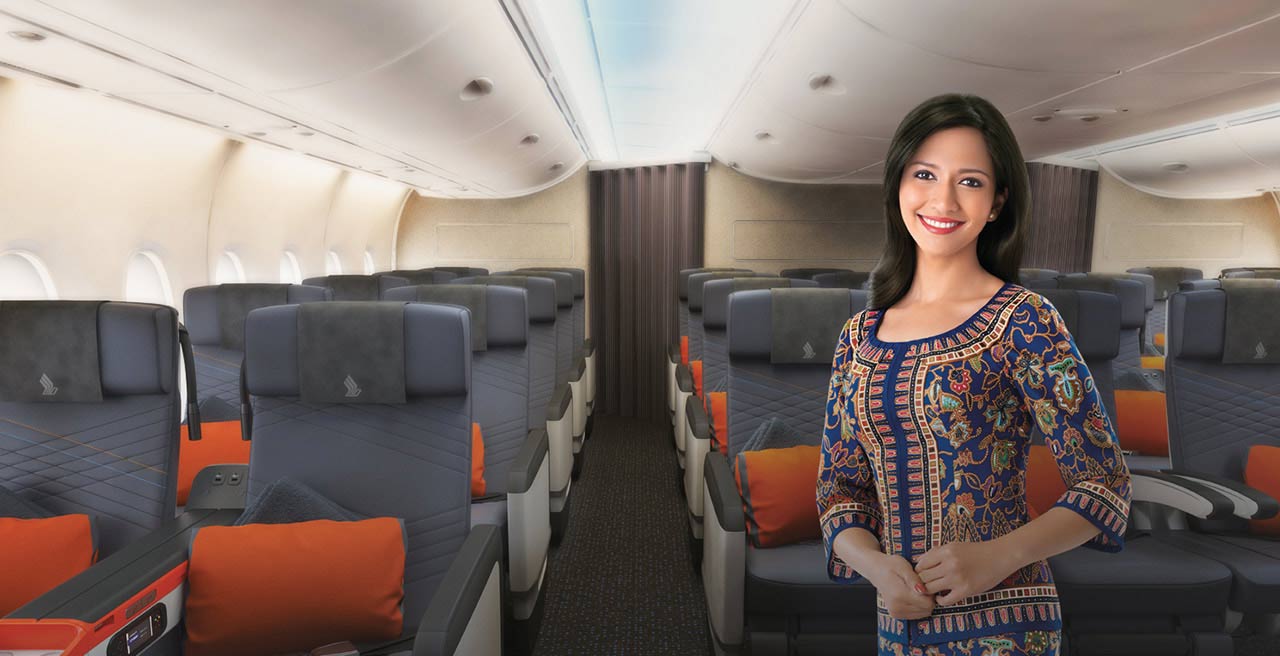
When you think of Singapore Airlines, visions appear of cushy premium cabins, bespoke leather seats, and free-flowing Champagne poured by the carrier’s throwback “Singapore girls” flight attendants.
It’s all that, yes. But the luxury carrier is working hard to diversify with budget airlines under its corporate banner. It owns low-cost carrier Scoot; 49 percent of Vistara, a joint venture in India with Tata Sons Ltd.; and NokScoot, a low-cost Thai airline Singapore owns in a joint venture with Nok Airlines. This collection of airlines—plus a new “ultra long range” Airbus A350 variant scheduled to arrive in 2018—enables Singapore to explore a range of expansion plans, many of which are currently focused on North America.
It’s no coincidence that the region continues to be the runaway success story of airline profitability. It will provide roughly two-thirds of the industry’s projected $29 billion net income next year, according to estimates released Dec. 8 by the International Air Transport Association.
Singapore’s portfolio of carriers offers “a lot more nimbleness and flexibility in addressing the needs of the markets,” Chief Executive Officer Goh Choon Phong said during an interview Dec. 6 in New York.
Squeezed on all sides
Last month, Singapore reported a 70 percent drop in net income and warned that 2017 could be challenging as well. The airline has struggled amid the expansion of low-cost carriers in its home region, and moves by a trio of Middle East-based full-service airlines to encroach on its core franchise of premium business travelers.
“It’s not going to be business as usual,” said Goh, an M.I.T.-trained engineer in computer science who chose an airline career over academia. “These are structural changes; these are changes that are not going to go away.”
Into this environment, the CEO has prescribed a diversification of revenue, a renewed focus on cabin comforts for big spenders, and new markets.
A chief pillar of the company’s expansion rests on further long-haul expansion, driven by firm orders for 67 new Airbus A350s and 30 of Boeing Co.’s largest 787 variant, the -10. The newest 787 is scheduled to enter commercial service in 2018. Of its A350s, Singapore will take seven from Airbus in an “ultra long range” configuration, which includes software changes and modest modifications to the landing gear. Other A350-900s can be altered to the ULR version, which is able to fly 8,700 nautical miles.
“We have called it a game changer for us and there’s a reason for that,” Goh said, alluding to the growth opportunities the A350 affords.
With these new, more fuel-efficient planes, Singapore executives have been keen to resume the nonstop flights from the city state to New York and Los Angeles, which operated for nine years before ending in 2013 because of the route’s extreme fuel costs. The airline is also considering the potential for new U.S. destinations, having for years studied traffic flows in places like Boston, Chicago, and Miami, Goh said. Many weren’t feasible, given the mix of large seat counts and the range limits of its existing aircraft. But the new, more fuel-miserly A350 may well change the math for such an expansion. (In March, for example, Singapore is swapping the 777 it flies to Houston with an A350.)
“The U.S. is an important market for us,” Goh said, but technological limitations required a stop between American cities and Singapore. No more.
Gateway to India and Southeast Asia
The airline is envisioning a day when the new fleet allows its hub at Singapore’s Changi Airport to become a connection for U.S. and Canadian corporate travelers bound for places such as India, Malaysia, Indonesia, and Thailand. It sees a precedent in the operations Emirates Airlines and Qatar Airways Ltd. have built at their hubs in the Persian Gulf, particularly for traffic to and from India.
Yet beyond the moneyed travelers who want frills on long flights, Singapore’s Scoot budget airline is also keen to expand. In June, Scoot will commence its longest flight to date, to Athens, a city where Singapore has ended service with its flagship. Scoot is increasing its all-787 fleet to 20 over the next few years, and is likely to look to markets where premium-cabin traffic is insufficient for flights by the flagship Singapore brand, Goh said.
“Scoot might also look to some kind of operation to the U.S,” Goh said. “At some point in time they will look at the U.S. to see if it makes sense.”
On the premium side of their house, Singapore executives have been cagey about the cabin configuration for the A350-ULRs to be deployed on the new U.S. nonstops to Los Angeles and New York. The latter will reclaim its title as the world’s longest route, at 19 hours or more, depending on winds. The airline plans a two-class service, but has declined to reveal the cabin mix or how many seats the planes will carry. They will have fewer than the 253 seats now on the three-cabin aircraft Singapore currently flies, with a stop in Asia, en route to Singapore, Goh said.
“The beauty of it is that this aircraft is not too big,” he said. “We can size it to best fit the traffic number that makes sense.”
Beyond the U.S., Singapore has identified India as a top priority in terms of greater market access. Within a decade, the nation is projected to become the No. 3 international travel market after China and America. Singapore’s Vistara venture will benefit from the Indian government’s recently altered “5-20” regulation that required local carriers to fly at least 20 aircraft for five years before they could offer international service. The change abolished the five-year flight period, and should help Vistara expand internationally sooner. It now has 13 Airbus A320s, with plans to reach 20 by 2018.
Some day, if it makes sense for Vistara, Goh says, the airline may acquire long-haul aircraft and set out for Europe and North America with nonstop routes. That’s a proposition that Emirates, Qatar, and Etihad can’t offer. “Logically speaking,” Goh says, “you can imagine Vistara should have a lot of potential for growth.”
Cambodian mobile operator Cellcard and mobile payments company Fortumo have teamed up to offer direct carrier billing for digital content.
Cellcard’s 4 million subscribers will be able to pay for digital content via their monthly mobile bill.
The alliance is aimed at providing payment options for the Cambodian market, which has a credit card penetration of less than 5% but a smartphone penetration of around 40%.
Fortumo’s direct carrier billing platform is used by smartphone app stores Google Play and Windows Phone Store, digital media companies including Sony, Hooq and Gaana as well as game developers such as EA Mobile nad Gameloft.
The company’s alliance with Cellcard comes in the wake of recently-announced partnerships with Reliance Communications in India, Zong in Pakistan and Viettel in Vietnam covering payments over Google Play.
Across APAC, Forumo’s direct carrier billing platform is now available to 1.5 billion customers in 16 countries.
Indonesian airlines have been cleared to begin flying to the US, after a safety review by regulators.
The US Federal Aviation Administration (FAA) said Indonesia had been upgraded to “Category 1” – the top-tier air-safety rating – after nearly a decade.
Indonesia’s fast-growing aviation market suffered several high-profile accidents and was downgraded in 2007.
The European Union also recently lifted a ban on three Indonesian airlines.
After a safety review in March, Indonesia now complies with International Civil Aviation Organization (ICAO) safety standards, the FAA said in a statement.
“With the International Aviation Safety Assessment (IASA) Category 1 rating, Indonesian air carriers…can establish service to the United States and carry the code of US carriers,” the FAA said.
The South-east Asian nation has had 13 fatal plane crashes in the past decade, according to Flightglobal data, higher than the global average.
Indosat Ooredoo has partnered with mobile payments platform provider Fortumo to launch direct carrier billing in Indonesia.
The partnership is expected to enable the Indonesian mobile operator’s 69.8 million subscribers make online payments by charging purchases to their mobile account, without the need to use a credit card.
“This strategic collaboration with Fortumo will bring more benefits to Indosat Ooredoo customers and allow transactions at a wider network of merchants,” said Prashant Gokarn, chief of new business and innovation at Indosat Ooredoo. “We look forward to continuing to provide innovation that brings more value to our customers as part of our goal to become a leading digital telco.”
Fortumo’s direct carrier billing platform is used by leading app stores (Google Play, Windows Phone Store), digital media companies (Sony, HOOQ, Gaana) and gaming companies (EA Mobile, Gameloft, Kinguin, Rovio).
To enable global carrier billing for these merchants, Fortumo has partnered with more than 350 mobile operators across the world.
“Connecting with Fortumo gives mobile operators immediate access to additional revenue from all the segments of the digital industry,” said Siddharth Sahi, VP of business development and carrier relations at Fortumo.
The two companies cite data which show that there are over 65 million smartphone owners in Indonesia, but less than 5 million people have access to credit cards.
They said this meant that a majority of the digital population cannot make online payments. As a consequence, digital merchants lose out on revenue from a majority of the population. Carrier billing resolves this problem by allowing any mobile phone owner (both prepaid and postpaid) to make payments through Fortumo.
PCCW Global has entered into a long-term collaboration agreement with Keppel Data Centres Holding to co-develop and market an international carrier exchange in Hong Kong.
PCCW Global is the international division of major operator HKT, and Keppel Data Centres is a joint venture between Keppel Telecommunications & Transportation (Keppel T&T) and Keppel Land. These companies are themselves subsidiaries of Singapore-listed Keppel Corporation.
The exchange will be fitted to Tier III specifications to ensure uptime of up to 99.982%. Construction is expected to be complete in the fourth quarter.
The new facility will offer connectivity-related managed services to facilitate interconnects. It will be located in the same building as the Hong Kong point of presence for the 100Gbps Asia-Africa-Europe 1 subsea cable, which is also expected to be ready for service in Q4.
The building will also be connected to PCCW Global’s backhaul network to link the international carrier exchange to numerous subsea cable landing stations. This will allow the exchange to be used as a gateway to mainland China.
“We are happy to partner with PCCW Global for our first investment into the Hong Kong colocation market, which benefits from the city’s status as a key telecommunications and financial hub, as well as its connectivity to other hubs in Singapore, Amsterdam, London, and Sydney,” Keppel T&T CEO Thomas Pang said.
“The expansion of Keppel’s data center footprint to Hong Kong is another step towards creating a data center value ecosystem that goes beyond colocation to providing value-added services and connectivity for our valued clients.”