Retail News CRM

Tag: Cartier

  • Gucci fine jewelry new style revealed

    Gucci fine jewelry new style revealed

    These are flush times for Gucci, the 96-year-old house that in recent years has become fashion’s all-conquering luxury brand. And amid booming sales, Alessandro Michele, Gucci’s creative director since 2015, has introduced the brand’s first high-end fine jewelry line, a series of extravagant styles that present the designer’s florid evocations of flea market finds as gem-encrusted treasures.

    Talking of the nostalgic inspiration behind many of his creations, Mr. Michele said, “I’ve dressed a number of women in things that were gathering dust in vintage archives — they no longer existed.”

    “That includes jewelry as well,” he added. “It’s beautiful to bring them back to life and give them importance once again.”

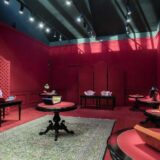
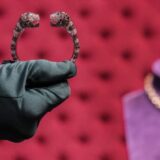
    At the Gucci Hub, a former aeronautical factory here where the brand opened its headquarters last year, the jewelry showroom reflects Mr. Michele’s opulent touch: red velvet-covered walls, red velvet room dividers, red velvet-topped tooled wood tables around a densely floral Oriental rug, and bright-toned velvet coffers lined in silk to showcase the designer’s well-established motifs rendered as precious jewels.

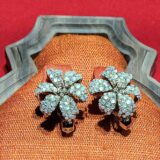
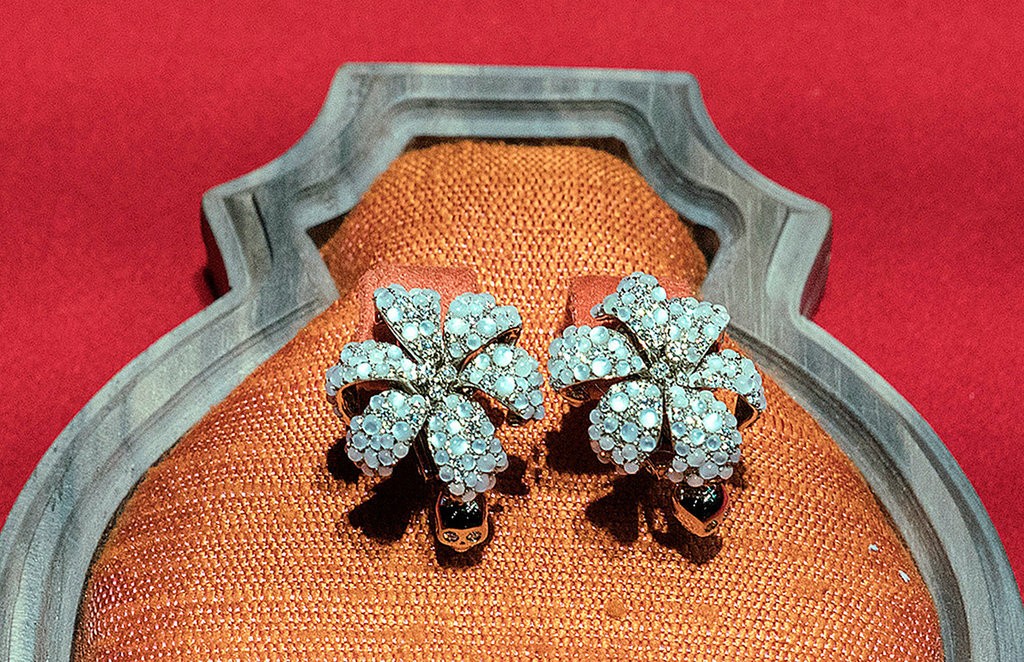
    Tigers, snakes, lions and foxes form necklaces, bracelets and rings, mirroring earlier versions that Mr. Michele created for both the costume and the mid-market fine jewelry lines at Gucci. But the new higher-end collection — which has no specific name — is more elaborate, its 25 design styles accented with a range of gemstones.

    The new line appears to expand the reach of Mr. Michele’s remarkably successful universe for his most ardent and wealthy collectors. It’s Gucci style for Cartier spenders — at a time when Gucci has pledged to go fur-free, eliminating what had been the brand’s biggest-ticket items.

    Mr. Michele, who calls himself “a passionate student of antique jewelry,” has resurrected animalier styles, like those of the midcentury American jewelry designer David Webb, and for this new collection he has employed some vintage techniques like the intricate hand engraving used to create the animals’ faces, skipping the rhodium plating now common on white gold so it retains a yellowish cast, and the use of old-fashioned raised settings for the tiny diamonds spangled across the fishtail of a ring.

    “When you see the way I combine things with each other, you perceive everything together as a new language,” he said, referring to his fashion aesthetic that mashes up the animal motifs with Chinese silks and Mexican embroideries, Renaissance gowns, Victoriana, disco drama, high ’80s glam, shades of Elton John and Dapper Dan, and more. “There’s a complete fusion of ideas. This ‘disruption’ that everyone’s talking about is found in the dialogue between these elements.”

    From the new collection, Marco Bizzarri, the chief executive of Gucci, wears a woven gold bracelet with black diamonds that is embossed with the phrase “Blind for Love” in capital letters across the top.

    Mr. Michele himself has a gold ring with a fox’s head, a large brown diamond set between its ears.

    Though the pieces look like styles that, in their antique forms, were made for women, in the Gucci context, anyone can wear them.

    “Clothes, like jewelry, don’t have very revolutionary roots, meaning that what’s revolutionary is the way you wear a piece of jewelry,” the designer said.

    So far the collection, with prices that mostly range from 15,000 euros to 70,000 euros (US$17,900 to US$83,500), has been offered only to favorite clients through private sales in Japan, China and the United States and private appointments that began in July.

    Gucci refers to the pieces, which are not high jewelry (typically starting in the $100,000 range and going into the millions), as “medium-high,” or as “unique pieces” when it repeats designs using different gems.

    However, the brand says it is considering a move into the bigger stones and larger price tags of true high jewelry for its next collection.

    Gucci is not the first fashion house to enter the upper echelons of jewelry.

    Chanel, Dior and Louis Vuitton have all made it big business, as the high jewelry market has flourished through and beyond the economic downturn of the last decade.

    And the brand’s fortunes have been growing at a clip that has shocked industry watchers.
    Kering, its parent group, reported that Gucci’s revenue soared 42 percent to €1.5 billion in the three months to the end of September. And its biggest boost has been coming from millennials, who, Kering says, account for at least half of its 2017 sales thus far.

    “The new generation is going to want a more modern jeweler,” said Maurizio Pisanu, the house’s director of jewelry merchandising. “So it’s up to the brand that realizes that first, and Gucci already had the right intuition two years ago — to break the rules.”

    Gucci has hired its first staff gemologist to search for stones worldwide and maintains a jewelry workshop with about 30 goldsmiths and stone-setters near Milan.

    All of the brand’s existing fine jewelry and now most of its high-end fine jewelry pieces are made there, with some help from an external atelier in Valenza, a center of Italian jewelry fabrication about 60 miles to the south.

    According to the brand, sales of the initial pieces have been brisk (although it won’t provide specifics).

    So if the collection does expand, Mr. Michele’s antique-tinged, everything-is-precious aesthetic might disrupt the higher stratospheres of the jewelry sector in the way that he has already reset Gucci and the fashion desires of a vast public.

    The collection has arrived at a moment when the codes of high jewelry are in flux — important stones are becoming more difficult to find, and a new generation of customers is more interested in showing off wearable (and possibly recognizably branded) design than owning the special occasion gem-encrusted parures of the past.

    Mr. Pisanu said design-driven jewelry customers “benefit a brand like Gucci, where jewelry isn’t our core business but we have the ability to make high-quality jewelry like the other brands — and with a different aesthetic that’s much more innovative than what a classic brand would ever dare to make.”
  • Yoox Net-A-Porter acquisition boosts Richemont sales

    Yoox Net-A-Porter acquisition boosts Richemont sales

    Richemont sales in Asia Pacific surged 20 per cent in the first half of this year with the region the group’s single-largest market, accounting for 37 per cent of total sales.

    The increase was fuelled by the inclusion of the Yoox Net-A-Porter (YNAP) business into the Swiss-headquartered multibrand luxury retailers figures for the first time. Excluding YNAP and Uk online retailer Watchfinder, sales rose 14 per cent, driven by a net 20 new store openings and “high single-digit growth” in Mainland China and double-digit growth in Hong Kong, Macau and Korea.

    “Both the retail and wholesale channels saw double-digit growth, with strong performances in jewellery and watch sales,” the company said in a statement.

    In Japan, a 14 per cent growth in sales was driven by higher domestic and tourist spending, which benefited from a comparatively weaker yen. Excluding online distributors, sales in the region increased by 8 per cent, led by a double-digit growth in watch sales and the net opening of five directly operated boutiques. Japan represents 8 per cent of overall sales.

    Group-wide global sales rose by 21 per cent at actual exchange rates to €6.808 billion and by 24 per cent at constant exchange rates. Online retail sales, now reported separately following the e-commerce acquisitions, amounted to 14 per cent of group sales.

    Excluding YNAP and Watchfinder, sales rose by 6 per cent at actual exchange rates and by 8 per cent at constant exchange rates.

    Operating profit of €1.130 billion was down €36 million due to acquisition and disposal-related charges of €159 million, the company said. Excluding the impact of first-time consolidation of YNAP and Watchfinder, operating margin improved to 21.1 per cent. Profit for the period rose to €2.253 million primarily due to a post-tax non-cash gain of €1.378 billion on the revaluation of YNAP shares held prior to buy-out.

    Chairman Johann Rupert said offline Richemont sales growth was primarily driven by strong performance of the jewellery maisons and double-digit increases in the maisons’ directly operated boutiques and online stores.

    “Robust retail sales in jewellery and watches more than offset a 2 per cent decline in wholesale sales, which was mainly due to the specialist watchmakers’ ongoing prudent inventory management and upgrade of the wholesale distribution network,” said Rupert.

    “In our jewellery maisons, watch sales grew strongly in Cartier’s stores, benefiting from the successful Panthere and relaunched Santos collections. Jewellery pieces continued to outperform, notably with the iconic Cartier Love and Van Cleef & Arpels Alhambra collections.”

    He said while growth was muted for specialist watchmakers, retail was strong and there was good momentum at Vacheron Constantin, Roger Dubuis and JaegerLeCoultre.

  • Louis Vuitton dominates fake products seized in Korea

    Louis Vuitton dominates fake products seized in Korea

    South Korea’s Customs service has released an intellectual property infringement report detailing the most-seized counterfeit goods over the past four years.

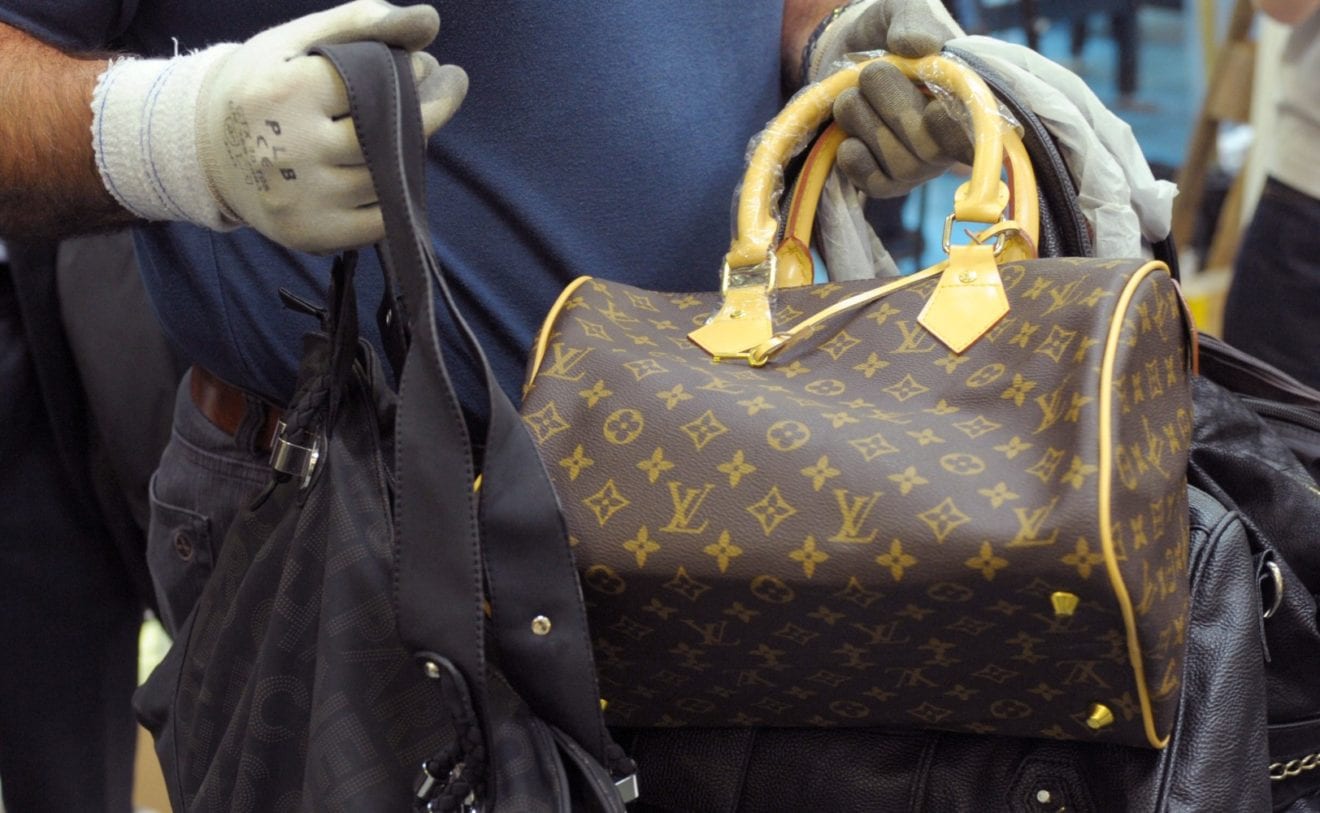
    According to the report, South Korean officials seized more fake Louis Vuitton products than any other between June 2014 and June this year, a trend that accelerated over the period.

    Agents seized KRW183.1 billion (US$224 million) worth of LV-trademarked counterfeit goods, mostly originating from China. Almost a quarter of those goods were seized within the last six months alone.

    Democratic Party lawmaker Kang Byung-won, who commissioned and released the report, said: “Making and distributing fake goods is a criminal act that violates intellectual property rights, and it is required to toughen crackdown on such illegalities.”

    Other frequently counterfeited brands include Rolex watches, Cartier jewelry, Chanel garments and accessories, and Gucci products.

  • Cartier pop up opened Tokyo convenience store

    Cartier pop up opened Tokyo convenience store

    A Cartier pop up is set to be hosted in a Tokyo convenience store.

    In a stark contrast of venue for the distinguished luxury heritage brand, the store-in-store will exhibit the brand’s latest jewellery collection Juste en Clou, designed to resemble the iron nail, elevating the unremarkable object to a premium status.

    The convenience store on Jingu-mae will be open from September 21–30, operating from 12–8 pm daily.

    The line is currently already featuring in a gallery setting in Roppongi Hills, which will also run through to September 30.

  • Shanghai crowned most expensive city for luxury jewellery in Asia

    Shanghai crowned most expensive city for luxury jewellery in Asia

    The Cartier Love Bracelet has been a benchmark to compare luxury jewellery prices across Asia. Made of 18K white gold with 204 diamonds, the bracelet’s price varies from one Asian cities to the other.

    The Julius Baer Wealth Report Asia revealed Shanghai to be once again the most expensive city to purchase the Cartier Love Bracelet, at USD 48,143.

    High import tariffs on luxury jewellery were the main driver behind the exorbitant price. Conversely, Kuala Lumpur is the most price competitive at USD 41,818.

    On average, prices in the region were flat year-on-year, although certain cities witnessed significant fluctuations.

    Hong Kong saw the most significant price gain, whereas Mumbai experienced the biggest decline.

    What is the justification behind the price tag of a luxury jewellery piece? A prestigious brand, the intricacy of the craftsmanship as well as the quality of the precious stones all enhance its desirability.

    In auction markets, rarity and provenance stand out. Globally, Hong Kong is one of the top three jewellery auction hubs for Sotheby’s, driven by solid demand from Chinese HNWIs. Many mainland Chinese continue to invest in rare pieces such as top-of-the-line
    diamonds, coloured gemstones and jadeite as part of portfolio diversification.

    Noting the discerning taste of buyers across the region, Sotheby’s Deputy Chairman, Asia, and Chairman of International Jewellery, Mr Quek Chin Yeow says: “Asian buyers have always been focused on quality. They would rather have a 10-carat D-flawless diamond instead of a 20-carat F-VVS one. They go for quality instead of size.”

    Cindy Tang, Managing Director Senior Adviser at Bank Julius Baer, comments: “From our conversations with clients, high net worth individuals allocate part of their wealth to jewellery assets such as high-end diamonds.”

    Nevertheless, caveat emptor applies. Returns from collectables may be hard to realise, while the market for precious stones is difficult to predict.

    In conclusion, Asian buyers have proven to be a dominant force in the global high-end jewellery auction market. Remarkable auction results in recent years are testament to the buoyancy of the Asian market.

    Luxury jewellery will clearly not be losing its lustre in the region.

  • Asia helps boost Richemont sales

    Asia helps boost Richemont sales

    Double-digit growth in Mainland China, Hong Kong, Korea and Macau have helped boost sales for Swiss luxury goods group Richemont.

    Results for the year to the end of March show Richmont sales grew by 3 per cent at actual rates and by 8 per cent at constant rates to €10.9 billion (US$12.8 billion).

    Richemont’s brands include A. Lange & Sohne, Baume & Mercier, Cartier, Chloe, Dunhill, IWC Schaffhausen, Lancel, Jaeger-LeCoultre, Montblanc, Officine Panerai, Piaget, Purdey, Roger Dubuis and Vacheron Constantin.

    Excluding the impact of exceptional inventory buy-backs, sales grew by 7 per cent at constant rates, with a strong retail performance reflecting solid jewellery and watch sales.

    An improved macroeconomic environment, steady progress on Richemont’s transformation agenda and a mixed currency environment marked the year, says the company.

    Sales were driven by high single-digit growth in retail and double-digit growth in Asia Pacific, with particular strength in the main markets of China, Hong Kong, Korea and Macau.

    Strong overall retail performance reflected solid jewellery and watch sales, says chairman Johann Rupert.

    Asia Pacific sales were strong, with the region accounting for 40 per cent of group sales.

    Japan had a 6 per cent rise in sales, thanks to more tourism purchases.

    Also beneficial were softer comparative figures and the full-year contribution from the reopened Cartier and the new Piaget and Van Cleef & Arpels flagship stores, all in Ginza.

  • Macau the cornerstone for Cartier

    Macau the cornerstone for Cartier

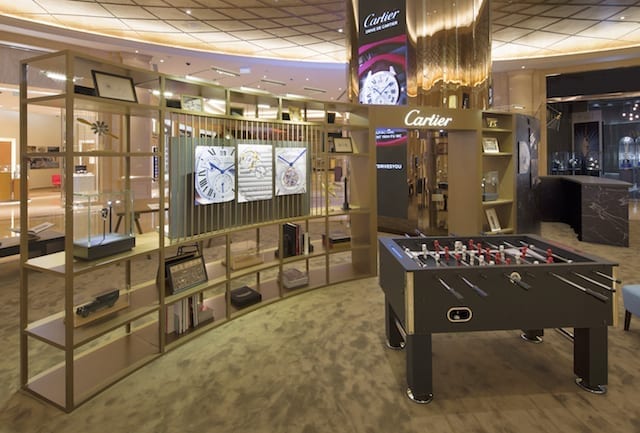
    Cartier jewellery company and luxury travel retailer DFS Group are jointly hosting an exhibition at T Galleria by DFS, Macau, Shoppes at Four Seasons to showcase Santos de Cartier timepieces.

    Running until the end of next month, the exhibition involves lighting effects and contrasting textures, with an emphasis on lacquered black and brushed metal. It has two spaces, with the Santos de Cartier watches in one while the other has a data hub with LED lighting and digital screens.

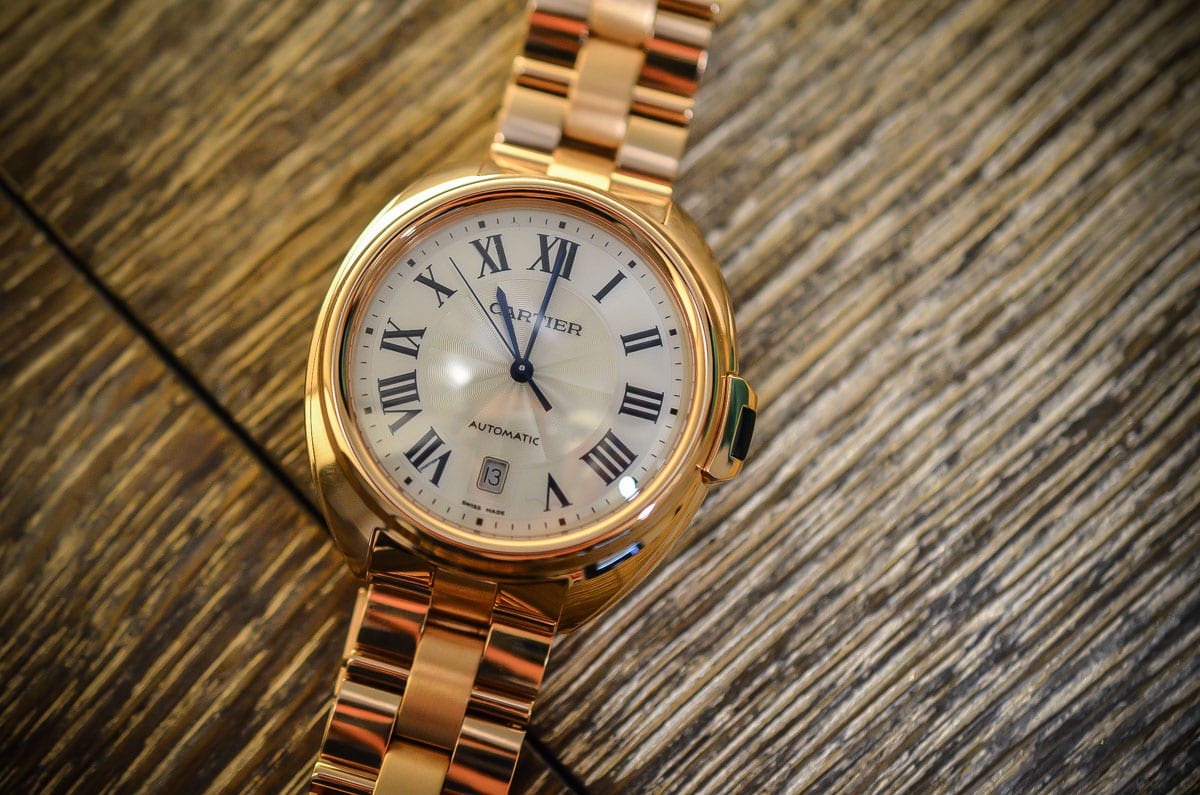
    Santos de Cartier revolutionised watchmaking when launched in 1904. It came four years after master jeweller Louis Cartier met aviation pioneer Alberto Santos-Dumont, who spoke about the difficulty of checking the time on his pocket watch while flying. Cartier invented the first purpose-designed wristwatch for his friend.

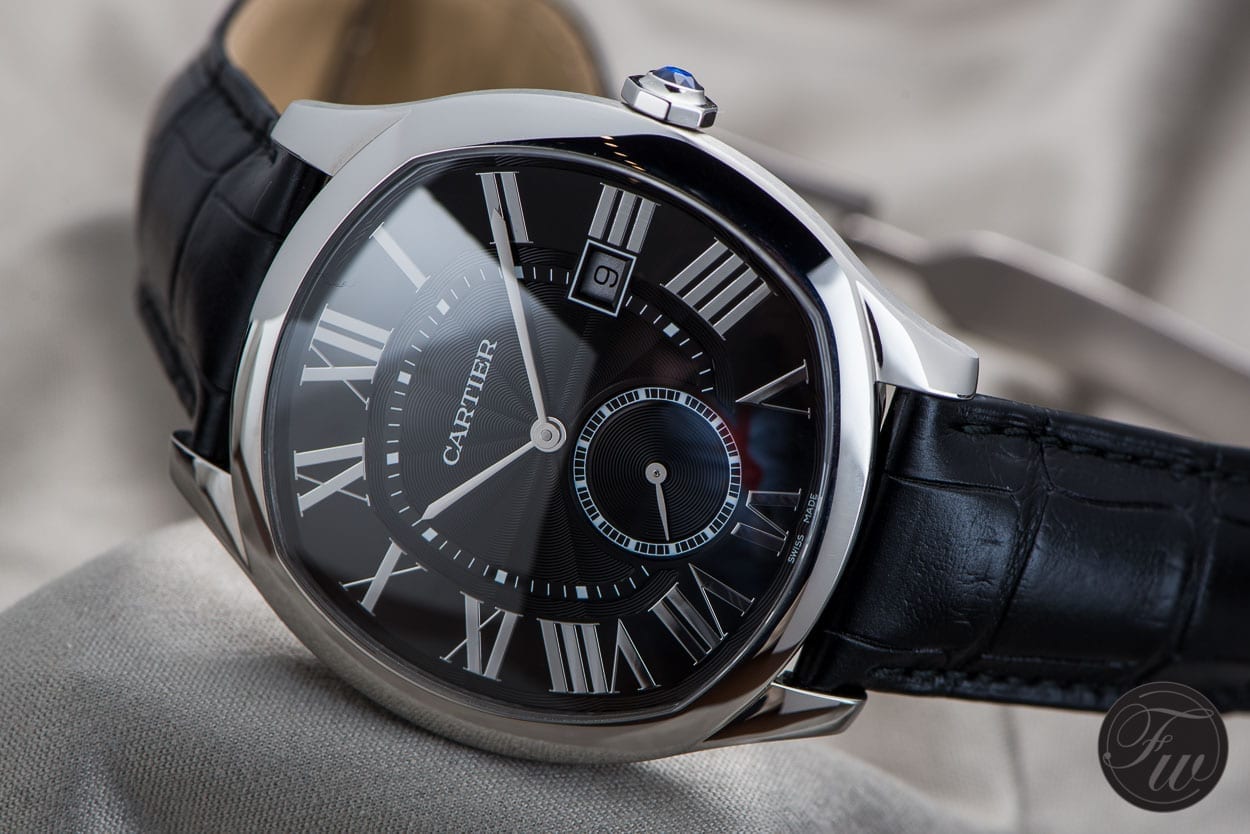
    A feature of the watches today is the strap, with steel, gold, calfskin or alligator skin options. All versions are interchangeable thanks to the Cartier QuickSwitch system, an invisible mechanism that blends into the structure of the case making it easy for the wearer to activate. Another feature is the SmartLink self-fitting technology, which enables the length of the metal bracelet to be adjusted to the nearest link without the use of a tool.

  • Nike is world’s most valuable apparel brand, says Brand Finance Top 50

    Nike is world’s most valuable apparel brand, says Brand Finance Top 50

    Despite losing popularity with American teenagers and a drop in brand value of 41 per cent, Nike is still way out in front in the Brand Finance Top 50 list of the most valuable apparel brands in the world.

    In the list, just been release by the independent brand valuation and strategy consultancy, Nike’s main competitor Adidas was fourth behind H&M and Zara with an increase in brand value of 41 per cent.

    In the realm of luxury brands, Hermes overtook Louis Vuitton, jumping two spots from 7th to 5th from last year. Luxury brands including Cartier, Gucci, Hermes and LV had strong growth in value as more consumers in emerging markets buy into the market.

    Japan’s Uniqlo was the only Asian brand in the top 10, with Hong Kong jeweller Chow Tai Fook and China’s Anta Sports taking up the 13th and 33rd spots respectively.

    These are the top 50 most-valuable apparel brands in the world this year:

      1. Nike (brand value, US$2.8 billion)
      2. H&M ($1.8 billion)
      3. Zara ($1.7 billion)
      4. Adidas ($1.4 billion)
      5. Hermes ($11.3 billion)
      6. Louis Vuitton ($10.4 billion)
      7. Cartier ($9.8 billion)
      8. Gucci ($8.5 billion
      9. Uniqlo ($8 billion)
      10. Rolex ($6.3 billion)
      11. Coach ($6.1 billion); 12. Victoria’s Secret ($6.1 billion); 13. Chow Tai Fook ($5 billion); 14. Tiffany & Co ($4.6 billion); 15. Burberry ($4.5 billion);16. Christian Dior ($4 billion); 17. Polo Ralph Lauren ($4 billion); 18. Prada ($3.8 billion); 19. Under Armour ($3.7 billion); 20. Armani ($3.5 billion)
      12. Puma ($3.3 billion); 22. Ray-Ban ($3.2 billion); 23. Omega ($3.1 billion); 24. The North Face ($3.1 billion); 25. Pandora ($3 billion); 26. Michael Kors ($2.7 billion); 27. Tommy Hilfiger ($2.6 billion); 28. Anta ($2.6 billion); 29. Old Navy ($2.3 billion); 30. Bulgari ($2.2 billion)
      13. Bershka ($2.2 billion); 32. Calvin Klein ($2.2 billion); 33. Levi’s ($2.2 billion); 34. Primark/Penneys ($2.1 billion); 35. Moncler ($2 billion); 36. Boss ($2 billion) 37. Gap ($2 billion); 38. Ferragamo ($1.9 billion); 39. Saint Laurent ($1.8 billion); 40. Bottega Veneta ($1.8 billion)
      14. Valentino ($1.8 billion); 42. Skechers ($1.6 billion); 43. Swatch ($1.6 billion); 44. Tag Heuer ($1.5 billion); 45. Timberland ($1.4 billion); 46. Massimo Dutti ($1.3 billion); 47. Reebok ($1.3 billion); 48. Woolworths ($1.2 billion); 49. Stradivarius ($1.2 billion); 50. Pull and Bear ($1.2 billion).
  • When Tiffany gasps chasing in modern luxury retail

    When Tiffany gasps chasing in modern luxury retail

    At this time of year, New York City’s Fifth Avenue is a sparkling sea of holiday lights. There’s Cartier with its illuminated Panther; Harry Winston with its diamond-shaped orbs; and then there’s Tiffany, which seems to have decked its store with lights that Las Vegas discarded in the 1970s. It is a small point, but it is one that underscores the fact that parts of the Tiffany business remain firmly out of step with the modern world of luxury retail.

    Yet there is progress: only parts of the group are behind the curve. A year or so ago, the whole organisation appeared to be struggling to keep up, but a raft of initiatives have since helped to pull elements of the proposition into the 21st century.

    This work shows up in the latest numbers which continue along an improved trajectory. Total sales are up by a respectable 3 per cent, and while comparable sales remain in decline, it is encouraging to see this is no longer because of weakness in the North American market. On the bottom line, net income rose by 5.4 per cent.

    What has Tiffany done to engineer this improvement?

    The product has to be the starting point, with the greater emphasis on fashion and designer collections generating interest among younger consumer segments. The urban Tiffany HardWear range has performed particularly well, while Elsa Peretti’s assortment of pieces has added a gentler contemporary edge to the offer.

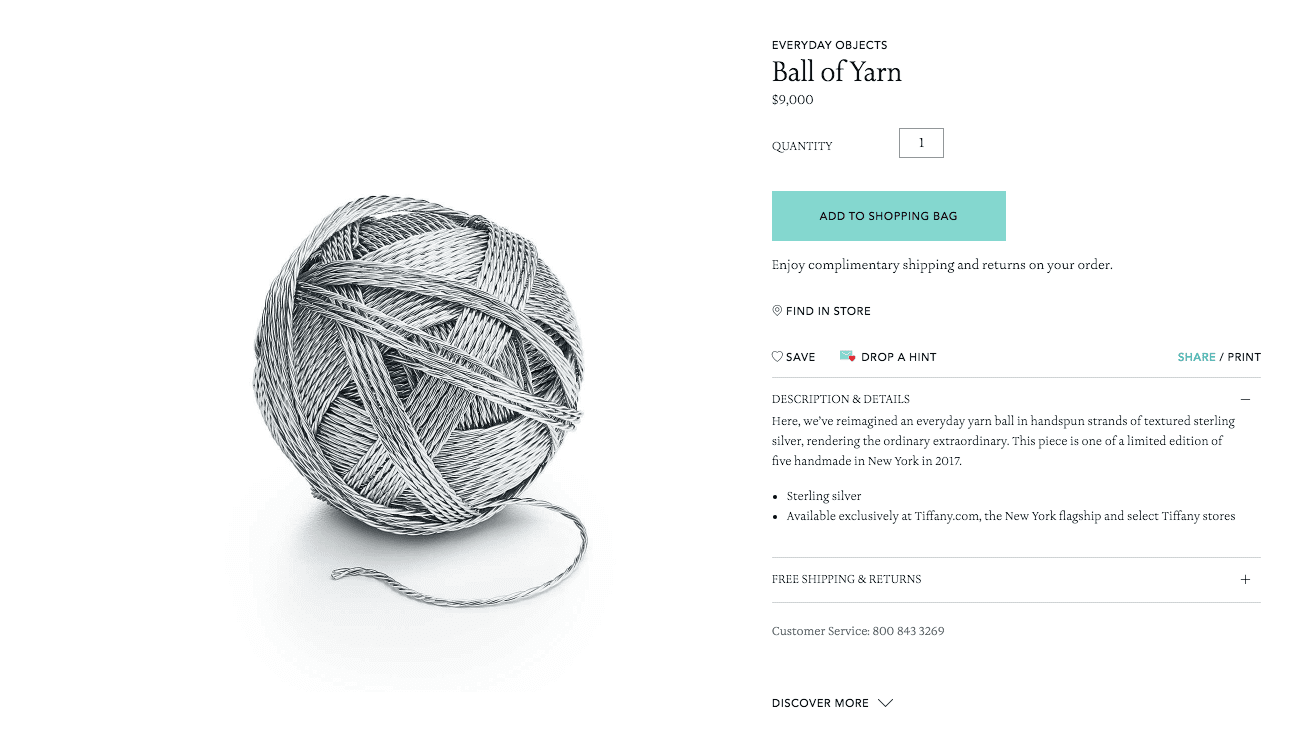
    Tiffany has recently followed up this success with the whimsical Everyday Objects collection of decorative accents. It is unlikely that the $9000 sterling silver ball of yarn nor the $1000 silver tin can will be to everyone’s taste or budget, although they generated some favorable publicity for the brand.

    Behind these headline items, more accessible pieces like the bone china ‘paper’ cups at $95 are likely to attract more interest. The point is that Tiffany is trying something new and is grabbing the attention of shoppers.

    As well as using its products to showcase the brand, Tiffany has also upped its game in general marketing and advertising. These have been more in vogue than past campaigns, and the use of celebrities like Janelle Monáe, Zoë Kravitz, & St. Vincent (Annie Clarke) is helping consumers to see the brand in a new, more modern light.

    Moving online

    One interesting consequence of this gentle repositioning is that many of the younger shoppers Tiffany is starting to attract are going online rather than into stores. This has resulted in some robust e-commerce numbers. It is to Tiffany’s credit that it has responded by improving the website experience and by increasing the amount of content across its platforms.

    This outperformance of online is likely to continue, which presents a dilemma to Tiffany. Many of its stores are in desperate need of refurbishment and ideally, need to be brought up to the same standard as the new Union Square shop in San Francisco. This is an expensive undertaking and one that the group may struggle to justify if more sales are migrating online.

    The new Blue Box Cafe in the New York flagship is a smart way of pulling people into the store, but this initiative can’t be easily replicated across the estate. Moreover, it is a shame to draw people into a shop that still feels dated and fusty.

    Despite all the progress, further change, especially in stores, is essential. For as much as Tiffany has made strides, it has not yet regained that full youthful vigour that so many of its peers exhibit. The gaudy, old-fashioned lights on its New York store underscore that there is much more thinking, and much more work, to do in the reinvention of this heritage brand.

  • Richemont’s half-year is good in APAC

    Richemont’s half-year is good in APAC

    Asia Pacific sales accounted for 39 per cent of group sales for Swiss luxury-goods holding company Richemont for its half-year to September 30.

    Sales in Asia Pacific rose by by 25 per cent, with double-digit growth in most markets led by Mainland China, Hong Kong, Korea and Macau. While all product categories saw growth, the unaudited figures show jewellery and watch sales were particularly strong year on year, with watches benefiting as no inventory buy-backs were needed as in the previous year.

    For Japan, the 7 per cent rise in sales was driven by higher domestic and tourist spending, which benefited from a weaker yen. Jewellery and watches led sales growth, partly supported by the reopening of the Cartier flagship store in September last year and new flagships for Piaget (November) and Van Cleef & Arpels (April), all in Ginza.

    Overall, group sales rose by 10 per cent at actual exchange rates to €5.6 billion (US$6.5 billion) and by 12 per cent  at constant exchange rates. Excluding the previous year’s inventory buy-backs, sales increased by 8 per cent at constant exchange rates.

    Operating profit expanded by 46 per cent to €1.1 billion, with profit for the period up 80 per cent to €974 million.

    Gross profit increased by 13 per cent, representing 65.4 per cent of sales. The 190-point margin increase was mainly because of the non-recurrence of inventory buy-backs and improved manufacturing capacity absorption, says Richemont.

    Profit grew by 80 per cent to €974 million, mainly reflecting the higher operating profit and a €181 million reversal in net finance income.

  • Kering Eyewear, Cartier launch collection

    Kering Eyewear, Cartier launch collection

    Jewellery retailer Cartier has teamed with Kering Eyewear for its latest eyewear collection.

    Presented at the Silmo International Optics and Eyewear Exhibition in Paris, it marks the official start of the companies’ licensing agreement.

    Described as “timeless”, the collection has three main components, Santos de Cartier, C de Cartier and Panthere de Cartier, and introduces new shapes that aim to “redefine the art of eyewear”.

    Effective from January 2, the licensing partnership will see the two luxury groups co-operate to to create a platform for product development, manufacturing and worldwide distribution of Cartier Eyewear.

    Under the terms of the agreement, Cartier owner Richemont has acquired a minority stake in Kering Eyewear, which has also integrated the Manufacture Cartier Lunettes entity in France.

    In June, a lawsuit was filed against Kering, accusing it of false advertising, unfair competition and fraud for claiming its China-produced eyewear had been made in Italy. Kering has denied all charges.

  • Cartier parent fined for violating drug kingpin sanction

    Cartier parent fined for violating drug kingpin sanction

    Cartier owner Richemont North America has been fined for shipping jewellery to a Hong Kong company blocked by the Treasury Department’s Office of Foreign Assets Control (OFAC).

    Based in New York City, Richemont has agreed to pay US$334,800 to settle its “potential civil liability” for four apparent violations of the Foreign Narcotics Kingpin Sanctions Regulations, says the OFAC.

    Richemont exported four shipments of jewellery to Shuen Wai Holding in Hong Kong in 2010 and 2011.

    OFAC had put Shuen Wai on its SDN List (List of Specially Designated Nationals and Blocked Persons) on November 13, 2008. Kingpin Act designations are tagged on the SDN List, reports the FCPA Blog.

    “On four separate occasions, an individual purchased jewellery from one of Richemont’s Cartier boutiques in California or Nevada, providing Shuen Wai’s name and mailing address to Richemont as the ship-to party,” says the OFAC.

    “Although the information and documentation provided to Richemont contained the same name, address and country location for Shuen Wai as they appear on the SDN List, Richemont did not identify any sanctions-related issues with the transaction before shipping the goods,” OFAC says.

    Businesses in the US are prohibited from doing business with people or companies designated under the Kingpin Act. The law targets “significant foreign narcotics traffickers” as identified by the President.

    OFAC says Richemont did not voluntarily self-disclose the apparent violations, nor did it “exercise a minimal degree of caution or care with respect to the conduct that led to the apparent violations”.

    Nevertheless, says the OFAC, the offences were “a non-egregious case”, and Richemont had had a clean record with the office for the previous five years. It co-operated with the OFAC investigation and took remedial action to correct deficiencies that gave rise to the apparent violations.

    OFAC discounted the penalty down from $620,000.

  • Cartier launches Pavilion KL store

    Cartier launches Pavilion KL store

    Fine jewellery retailer Cartier has unveiled its newest store in Kuala Lumpur.

    Located at the Pavilion KL, the French maison’s two-storey duplex boutique is set on Level 2 and Level 3.

    Designed to emulate the Cartier flagship, the Bukit Bintang entrance features a 3-storey LED display that lights like liquid gold.

    Inside, the High Jewellery Salon serves as exclusive addition to the store, a jewellery-first for the high-end brand with the KL store being the first in South East Asia to offer this luxurious shopping experience.

    Meanwhile, a carpeted marble staircase leads connects the top to the lower floor, which houses the latest collections and the Accessories Salon, as well as the debut Cartier Client Service Counter in Malaysia.

    The boutique also offers big spenders to opt for a VIP salon to shop in privacy.

    Cartier is slowly becoming more active in Asia’s retail landscape. In January, Cartier unveiled its first pop-up boutique at the Macau Four Seasons T Galleria by DFS.

    In December last year, the Paris-based brand announced the opening of its flagship in Ginza in Japan. The 10,764-square-foot retail location first opened in 2003 and was refurbished in 2007.

  • Closing shop on China’s e-commerce platforms

    Closing shop on China’s e-commerce platforms

    The closures of a number of retail and luxury brand giants on China’s e-commerce platforms indicate that retail competition is no less fierce online than offline.

    It is old news that the Chinese market is highly competitive and unlike any other market in the world. What may sell on the high street in London is not guaranteed to sell in China. The rainbow-lensed promises of e-commerce seem to be an easy way to access China’s 770.4 million working population, 0.2 per cent or over 1.5 million of which have an average income of US$500,000.

    Political concerns and falling sales: Lotte

    In 2015, Lotte Group Retail opened a Tmall store, hoping to widen its reach in China, where over 60 per cent of its overseas stores are located. The large South Korean multinational conglomerate has had a presence in China for over 20 years, with 115 supermarkets and five shopping malls.

    But on January 12 this year, Lotte closed its Tmall store – along with three brick-and-mortar stores in Beijing – after rising political tension between China and South Korea. In December, Lotte’s China headquarters admitted that the company was facing investigations for tax, fire control and safety issues. However, the closure of its Tmall store seems to have stemmed also from the fact that China is Lotte’s only international market where growth is stymying. Sales fell during the last three months of 2016, year-on-year.

    While Lotte remains in the market through its physical shopping malls and supermarkets, and on the JD.com website, the company has not announced whether it will be reopening its Tmall store at any future date.

    Heavy local competition: Asos

    Asos, the UK’s largest online fashion retailer, entered China in 2013 with high expectations. The company announced it was investing RMB 100 million (US$14.5 million) towards the market, importing British styles and developing a sales force. Its business model relied exclusively on e-commerce, with its own website, as well as a Tmall store.

    However, Asos failed to attract enough customers and was running a loss of GBP 4 million (US$5 million) by April of 2016, when it announced that it was shutting down its China operations.

    Asos faced a number of problems in the Chinese market, from operations to marketing. When it first started, the company encountered issues with shipping though China Post, with customers paying import taxes on clothes. Eventually, Asos obtained a local warehouse, but then it encountered complex clothing trade regulations in China, particularly in regards to correct labelling. As a result, Asos had to spend additional funds on restitching to comply with local code, contributing to higher than expected start-up costs.

    Effective marketing was also a major issue for Asos, with the company failing to distinguish itself from local, more affordable brands. While it may be a major player in the US and Europe, Asos was relatively unknown to Chinese millennials, its target consumer base.

    Tmall concerns for luxury brands: Coach

    Coach was one of the first US luxury handbag brands to launch a Tmall store, creating a pop-up store from December 2011 to January 2012, and then an official one in 2015. However, citing a shifting operational strategy, Coach announced that it was leaving the platform just one year later in September 2016.

    China is a critical market for luxury goods, as sales in the US and Europe steadily decline. Many brands see e-commerce as a way to directly access customers and receive greater exposure, which is why many have moved onto online platforms en masse. Despite this, online platforms have always been a concern for luxury brands, who fear appearing too mass market. Moreover, Alibaba has been criticised by brands for not doing enough to remove fake goods, despite a counterfeit removal program. In 2016, Gucci and Michael Kors quit the anti-counterfeit coalition as protest against the program’s inefficacy.

    Coach still remains in the Chinese market through its WeChat account, an avenue that is growing in popularity amongst luxury brands. Cartier, Longchamp, and Montblanc all have WeChat shops with WePay functions. Some companies believe that WeChat offers a more personalised shopping experience, as well as greater control over its brand.

    For many luxury brands, online platforms are more for marketing and building brand image, rather than sales. However, official Tmall flagship stores do not receive priority listing on searches. In fact, according to a 2016 study by L2, only 12 per cent of first page Tmall search results were through the official Coach shop. The only luxury brands that controlled more than 80 per cent of first page search results were Ports 1961, Burberry, Tommy Hilfiger, Calvin Klein, and Tumi.

    Key Takeaways

    E-commerce is a high-growth sector, with online retail sales totaling US$581.61 billion in 2015, and it is estimated to grow 20 per cent annually by 2020. China is now the biggest online retail market in the world, and Chinese consumers make up almost half of all online sales globally.

    Companies looking to take advantage of China’s market size and sell to Chinese consumers often mistakenly believe that e-commerce offers a shortcut to success. While a misconception, this idea is understandable. There are fewer licensing requirements to operate through e-commerce, and customs clearance is faster.

    However, as has been demonstrated through high-profile store closures in 2016, e-commerce requires extensive pre-entry knowledge of current regulations, a realistic logistics plan, and a local marketing strategy. Those who enter the market blindly do so at the risk of expensive learning curves and wasted efforts.

    • This article was first published on dezshira.com.  Since its establishment in 1992, Dezan Shira & Associates has been guiding foreign clients through Asia’s complex regulatory environment and assisting them with all aspects of legal, accounting, tax, internal control, HR, payroll, and audit matters. For inquiries, email [email protected].
  • Innisfree to launch in Indonesia

    Innisfree to launch in Indonesia

    Beauty products brand Innisfree is launching in Indonesia with brand curator Time International.

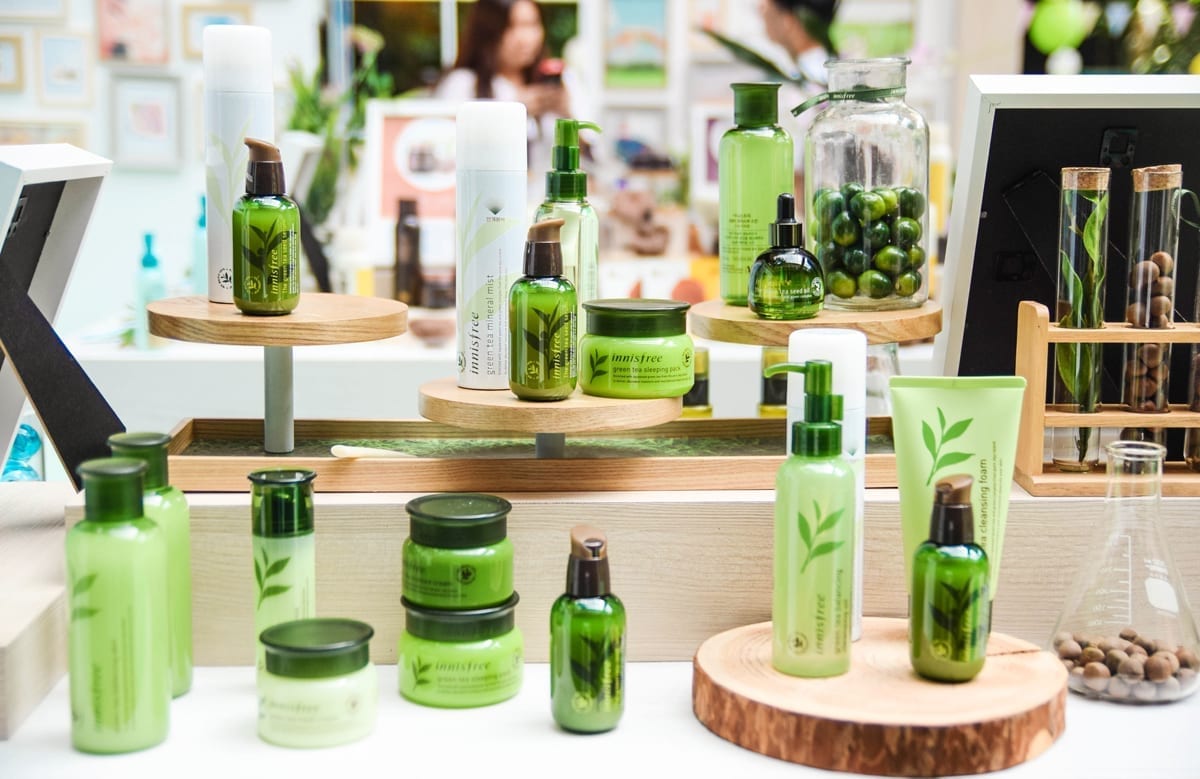
    Part of Korean global beauty company AmorePacific Group, Innisfree offers products made with natural ingredients from Jeju, a volcanic island off the southern coast of the Korean Peninsula.

    Innisfree’s first store will open at Central Park Mall Jakarta on March 24, following its introduction in such markets as China, Hong Kong, India, Malaysia, Singapore, Taiwan, Thailand and Vietnam.

    As well as skincare, Innisfree will offer colour cosmetics in Indonesia, says international business VP Chul Kim.

    Innisfree was launched by AmorePacific Group in 2000, joining its brands Laneige and Sulwhasoo.

    Founded in the 1960s, Time International manages multi-brand retail stores as well as mono-brand boutiques for such brands as Cartier, Chanel, Chopard, Diesel, Fendi, Fossil, Project X, Rolex, Sweet Monster and Tag Heuer.