Retail News CRM

Tag: Cartier

  • Luxury Cartier pop-up opens in Macau

    Luxury Cartier pop-up opens in Macau

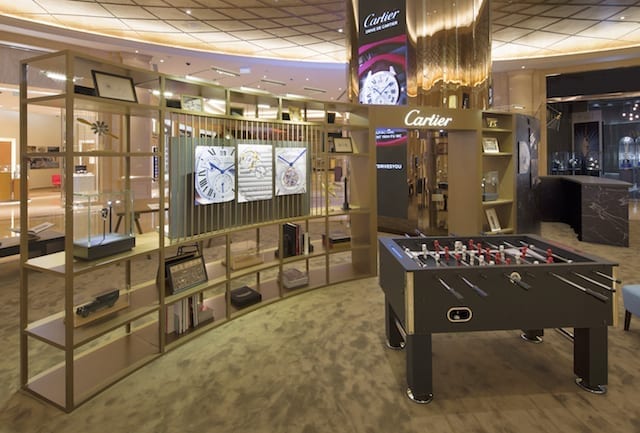
    Cartier has unveiled its first-ever lifestyle pop-up store with experiential display to exhibit the Drive de Cartier Watch Collection.

    The pop-up, located in the Macau Four Seasons T-Galleria by DFS, opened this month and will remain until the end of February.

    cartier-macau-1

    “Visitors will immerse in the cultivated and contemporary universe that is inhabited by gentlemen who wear Drive de Cartier watches,” said a Cartier spokesman.

    cartier-macau-2

    Cartier will transform the Shoppes at Four Seasons exhibition area into an “animated open home,” a retail display concept designed to reveal different aspects of the Drive de Cartier lifestyle. Each space will provide an interactive experience, combining the latest digital technology with specialist workshops conducted by a host of prestigious partner companies, creating the perfect space for Cartier’s guests to enjoy a vibrant experience blending dolce vita and celebration.

    Two distinct areas will be set up. A Library Lounge will display a miscellany of objects and collectibles such as books, music, one-of-a-kind figurines and the latest techie gadgets, alongside the new Drive de Cartier collection. It will also provide gaming platforms (including a new version of the classic Pacman) and a design bar area.

    cartier-macau-7

    In the second area, the Atelier, guests will discover holograms and design sketches of the Drive de Cartier collection, and the inspirations behind the watches, drawing their attention to the balanced aesthetic of the distinctive cushion-shaped case, and the refined detailing of the precision Manufacture movements.

    cartier-macau-4

    cartier-macau-5

    Guests will be invited to take part in workshops on craft beer and wine tasting, calligraphy and artisan leather stamping.

    cartier-macau-8

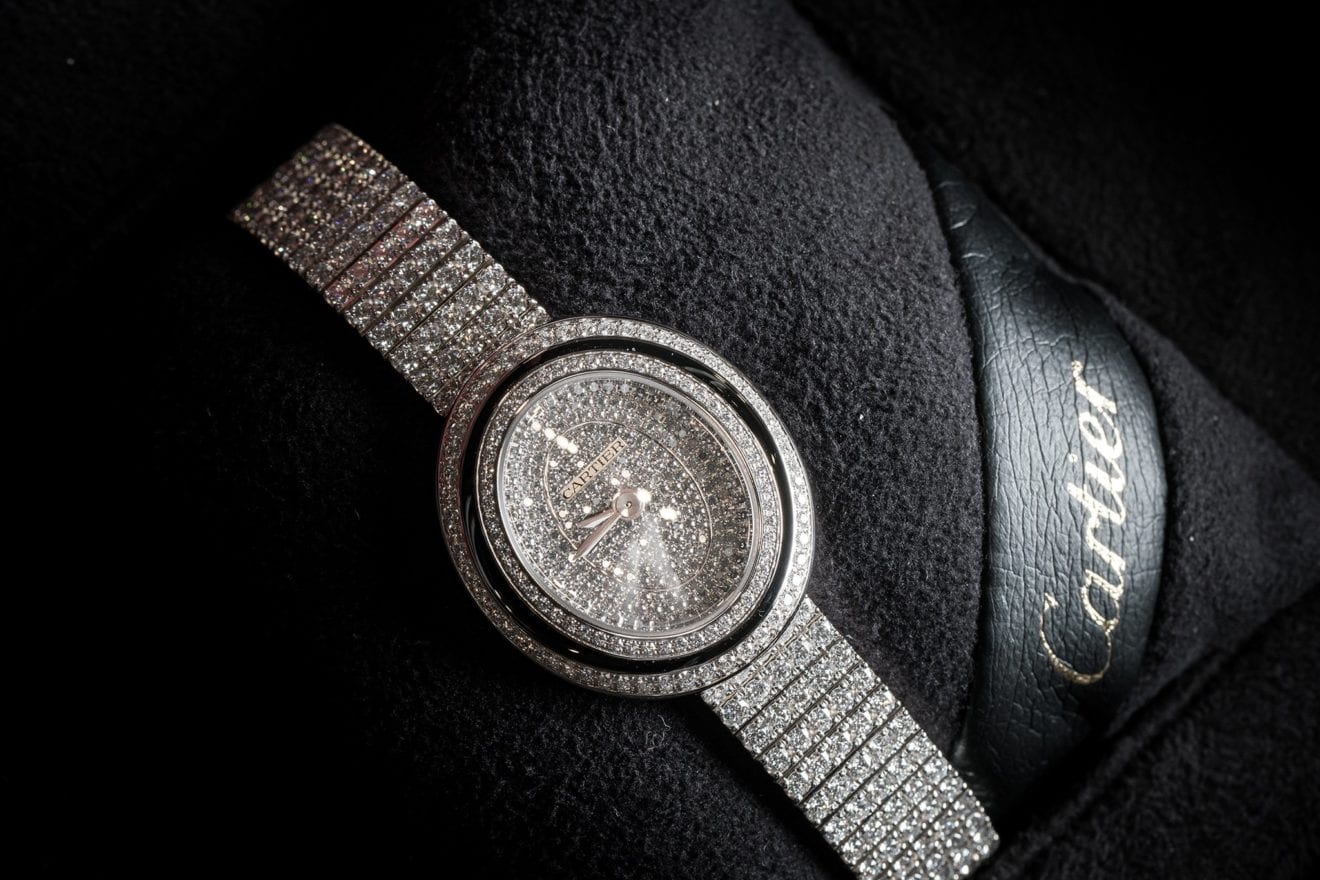
    The full Drive de Cartier collection will be showcased during the two months of the animation, but a particular highlight will be the horological wonder that is the Drive de Cartier Flying Tourbillon. This prestigious timepiece is fitted with the manufacture calibre 9452 MC mechanical movement with manual winding. Certified Poinccon de Geneeve, the Flying Tourbillon is a testimony to Cartier’s excellence in fine watchmaking.

  • How to grow for Luxury brands

    How to grow for Luxury brands

    Luxury brands need to use new technologies and offer experiences for their customers, the second Luxury Society keynote event in Shanghai has been told.

    UCO Cosmetics CEO Arthur Zhang told the event that the early-stage eCommerce model of simply providing a platform for selling products online is dead.

    He said key technologies being experimented and improved upon in China include augmented reality, virtual reality and live-streaming.

    “The millennial generation in China, which already numbers about 300 million people, seeks experiences and emotional connection – they are not just bystanders,” DLG China partner/MD Pablo Mauron told the audience of more than 150 luxury-industry brand executives. “As a result, live-streaming has become a medium for them to express themselves.”

    He told how brands such as Maybelline, Montblanc and Swarovski are taking advantage of these new opportunities.

    Underlining the key message of the event that eCommerce is changing, CEO Thibault Villet of luxury fashion eCommerce platform Mei.com told how a live-streamed show in collaboration with TMall resulted in 65 per cent of the products featured quickly selling out.

    Meaningful data

    Social customer-relationship management (CRM) makes highly targeted messaging and engagement possible, the event was told by Four Seasons Hotels Asia Pacific director of marketing communications John Hamilton. He said the luxury hotel chain has been gaining meaningful data about its customers, which in turn has driven growth. In the past year, through trial-and-error and optimisation, the group has defined a CRM-led content strategy on WeChat.

    Celebrity and key-opinion-leader partnerships can make a big impact in China, said East Entertainment commercial director Qing Dai, who spoke of her experience of partnering luxury brands with appropriate celebrities. One of Easy Entertainment’s most successful was in linking up Cartier with singer/actor Lu Han.

    Baidu GM for East China Wan (Grace) Zhang said Cartier was the most-searched luxury watch brand among the generation born between 1990 and 2000, linked to Cartier’s collaboration with Lu Han.

    Other speakers at the event included Four Seasons Hotel Pudong (Shanghai) GM Arthur Ho, writer Casey Hall of Women’s Wear Daily, Digital Luxury Group founder/CEO David Sadigh and MD for China Pablo Mauron, Baidu senior project manager Di Fu and Sephora China digital manager Vanessa Qian.

    Attendees included representatives of Alexandre de Paris, Baume & Mercier, Bottega Veneta, Bulgari, Cartier, Chanel, Chaumet, Conde Nast, De Beers, Dior, Hublot, Loewe, LVMH, Marc Jacobs, Massimo Dutti, Michael Kors, Montblanc, Nars, Net-a-Porter, Nike, Sephora, Shiseido, Swarovski, TAG Heuer, Tiffany & Co and Vacheron Constantin.

    Luxury Society, published by Digital Luxury Group, is an online destination for luxury-brand executives covering digital and technology matters and with more than 40,000 members across 150 countries.

  • Multi-brand boutique Project X launches

    Multi-brand boutique Project X launches

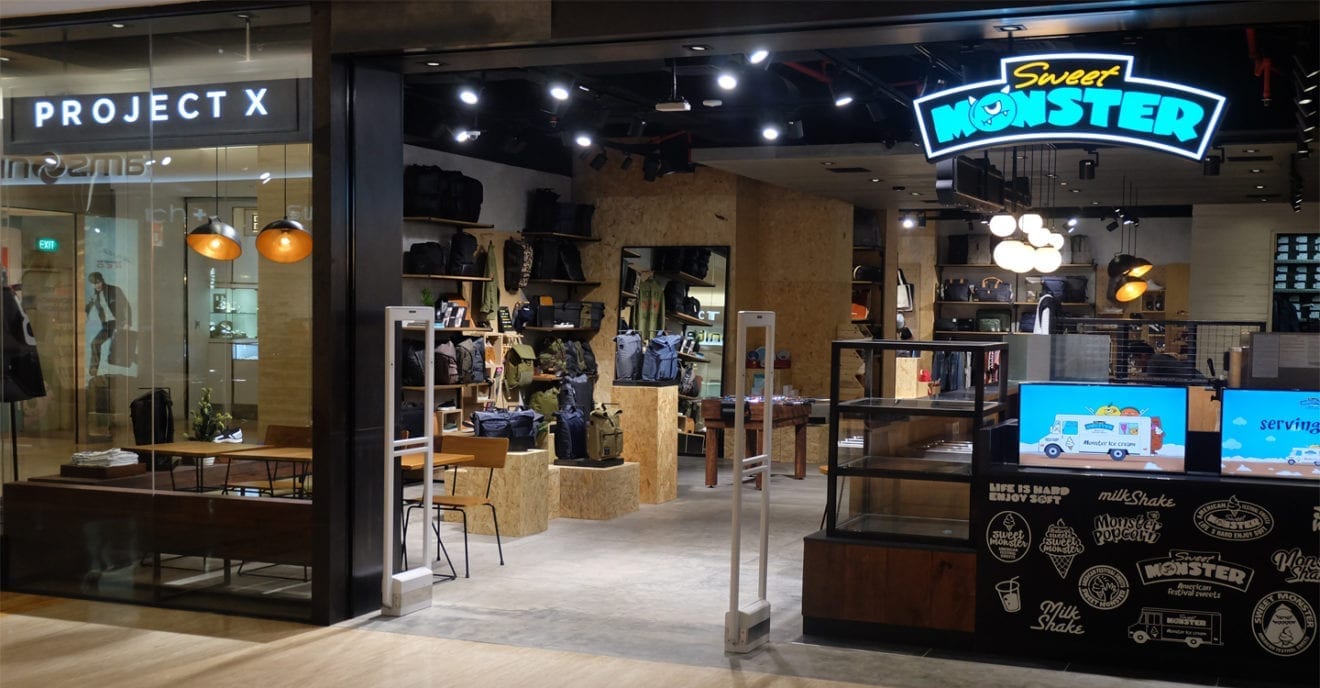
    Project X, a multi-brand boutique that caters to young creative minds, has launched at Plaza Indonesia in Jakarta.

    From Time International, Project X offers a new take on men’s and unisex casual fashion and lifestyle. Its curated retail concept introduces 22 international brands and includes innovative designs in apparel, bags, shoes and accessories such as sunglasses and watches.

    project-x


    From Australia, Japan, South Korea and the US, the products are displayed in fun and creative surroundings, including a dessert stall, Sweet Monster, which features popcorn soft ice cream.

    The store has a palette of white and grey with wooden accents.

    “People like to shop and discover edgy pieces, and they like to hang out. It is a lifestyle,” says Time International president director/CEO Irwan Danny Mussry. “We see an opportunity here.”

    A second Project X is planned for Pondok Indah Mall 2.

    Featured brands at the boutique are Andersson Bell (South Korea), Beyond Closet (South Korea), Blankof (South Korea), BLC & BLC Gray (South Korea), Buddy Happy (Japan), Kapten & Son (Australia), Kiruna (Japan), Lapiz+ (South Korea), Luccica (South Korea), Mascolanza (South Korea), Miel Homme (South Korea), Monofold (South Korea), National Publicity (South Korea), PKG (Canada), Rawrow (South Korea), Riokairyu (South Korea), Salad Bowls (South Korea), Supercomma B (South Korea), Thank You Studios (South Korea), Thread Etiquette (US) and Ul: Kin (South Korea), United by Blue (US).

    Founded in the 1960s, Time International manages and runs both multi-brand retail stores – including @Time, InTime, The Time Place and Urban Icon – as well as mono-brand boutiques for such brands as Cartier, Chanel, Chopard, Diesel, Fendi, Fossil, Liebeskind, Poney, Rolex, Tag Heuer and Tory Burch.

  • Paris label BA&SH eyes Asia expansion

    Paris label BA&SH eyes Asia expansion

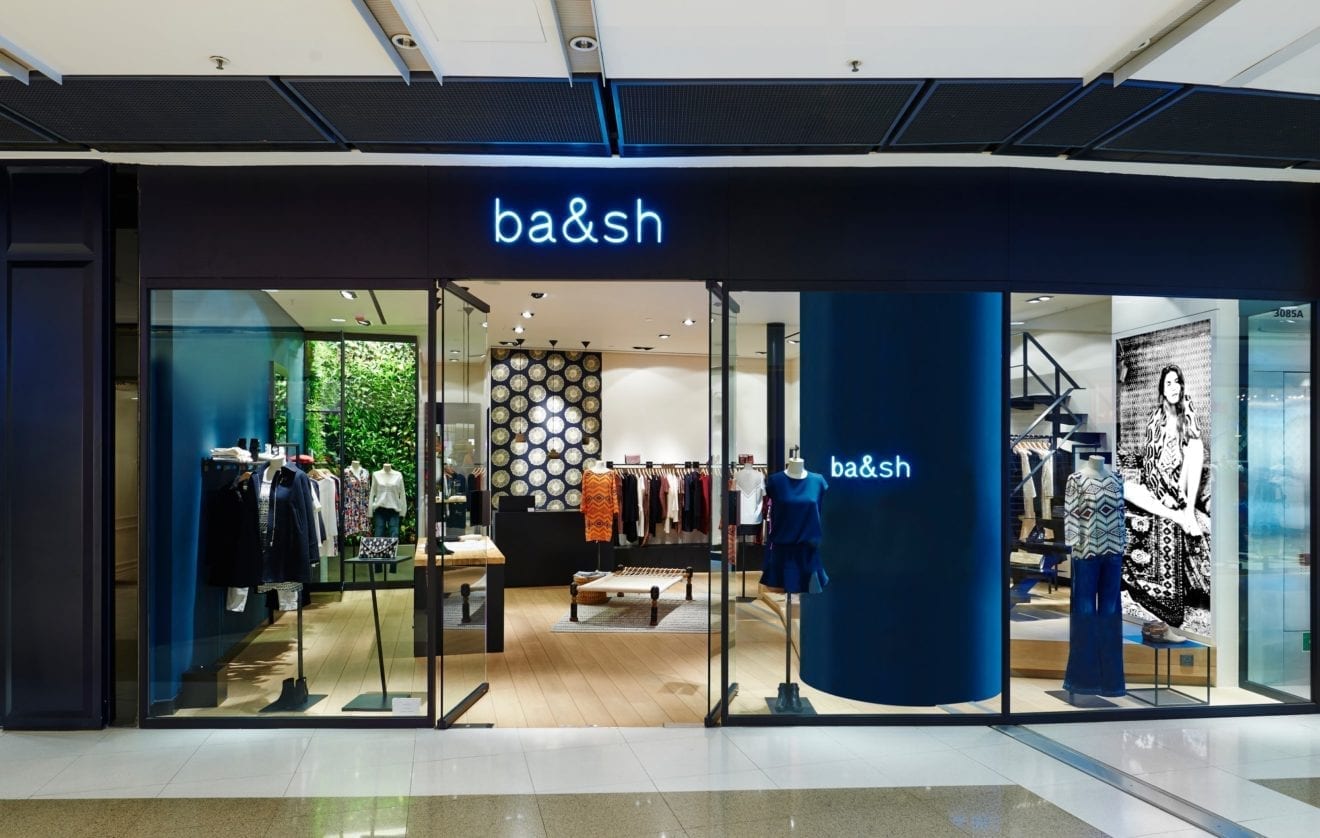
    Parisian fashion house BA&SH has partnered with Hong Kong retail and brand management company ImagineX Group to strengthen its presence in Asia.

    BA&SH has hopes of accelerating its expansion in Hong Kong, Macau, Singapore, Taiwan and China. The label opened its first Asian store at Hong Kong’s IFC Mall in September 2014 and with ImagineX now plans 30 more openings in the region, including a second Hong Kong outlet early next year.

    “Hong Kong customers have taken to our style and our collections,” say designers Barbara Boccara and Sharon Krief. “We are very happy to share our vision of fashion and femininity.”

    Associate general directors Dan Arrouas and Pierre-Arnaud Grenade say the new partnership marks an important and supplementary stage in the company’s development strategy following its establishment in the Middle East and the US.

    They say the ImagineX Group’s expertise in fashion retail and marketing will help BA&SH expand rapidly and contribute to its globalisation.

    ImagineX Group president Alice Wong says the label’s Parisian flair, combined with its unique positioning and price point, make it appealing to Asian customers.

    Childhood friends, Boccara and Krief established BA&SH in 2003 to offer contemporary fashion in the affordable luxury sector. With 91 stores last year, the brand aims to reach 130 stores this year.

    Founded in 1992, ImagineX Group introduced luxury brands such as Cartier, Gucci, Prada and Salvatore Ferragamo to China more than 20 years ago. It represents more than 18 international brands including DKNY, Marc Jacobs and Paul Smith. The portfolio also includes such lifestyle and beauty brands as Apivita, Aveda and Natura Bisse.

  • Richemont expects weaker half-year earnings after restructuring costs

    Richemont expects weaker half-year earnings after restructuring costs

    Luxury goods maker Richemont said on Wednesday that it expected operating profit in the six months to September to decline by 45% from a year ago.

    The Luxembourg-and JSE-listed group said in a statement that the decline reflected the effect of one-off restructuring charges of about €65m, and the additional effect of inventory buybacks.

    “We are of the view that the current negative environment as a whole is unlikely to reverse in the short term. However, we remain convinced of the long-term prospects for luxury goods globally and in particular for watches and jewellery,” it said.

    Sales in the five months to August dropped 13% at constant exchange rates and 14% at actual rates.

    Richemont said sales in the UK had shown growth since the weakening of pound against most currencies at the end of June following the EU referendum.

    Elsewhere in Europe, sales were down, particularly in France, due to a significantly lower level of tourist activity.

    There was positive momentum in both jewellery and accessories in the Americas, but an overall decline in sales due to a weaker performance in watches.

    In the Asia-Pacific region, growth in mainland China and Korea was more than offset by the continuing weakness of the Hong Kong and Macau markets.

    Retail declined overall, primarily due to Europe and Japan. All other regions’ sales declines were low single digits, supported by jewellery and accessories. The marked decrease in wholesale sales reflected the continuing negative trend and the watch inventory buybacks.

    Richemont’s other businesses reported sales growth, thanks to positive performances at Montblanc, Chloé, Azzedine Alaïa and Peter Millar.

  • DFS Group Cambodia gala opening

    DFS Group Cambodia gala opening

    Luxury travel retailer DFS Group Cambodia has marked the opening of its first store, T Galleria by DFS, Angkor, with a gala event for more than 300 guests.

    DFS T-Galleria Angkor Cambodia

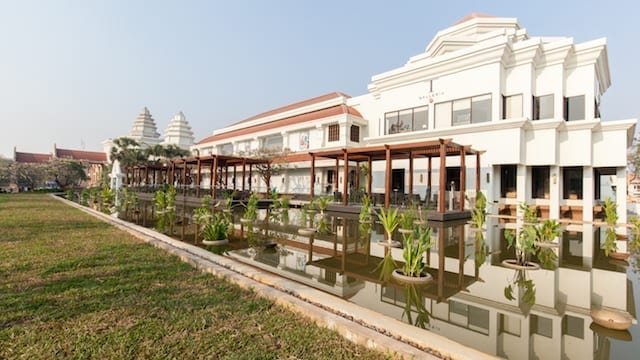
    In the resort town and provincial capital of Siem Reap, near the ancient temple of Angkor Wat, T Galleria by DFS, Angkor is the largest duty-free luxury department store in Cambodia. It offers travelers an integrated retail, hospitality and leisure experience with 170 brands across 86,000 sqft (7989 sqm).

    The opening celebration began with a ribbon-cutting ceremony, after which traditional Cambodian Apsara hostesses led guests through the two-storey store for traditional cultural performances and demonstrations by Cambodian craftsmen.

    DFS T-Galleria Angkor Cambodia 3

    From DFS Group were chairman/CEO Philippe Schaus and co-founder Robert Miller, while special guests included Cambodia’s Senior Minister of Economy and Finance Aun Pornmoniroth and Minister of Tourism Thong Khon.

    DFS Cambodia

    The store features a curated collection of Cambodian artisanal products designed and produced by more than 30 Cambodian artist workshops. At the event, Angkor Artwork, a Siem Reap design studio, demonstrated the art of lacquer work, while Golden Silk, one of the last fully integrated silk producers in the world, wove silk spun from Cambodian silk worms.

    DFS T-Galleria Angkor Cambodia 2

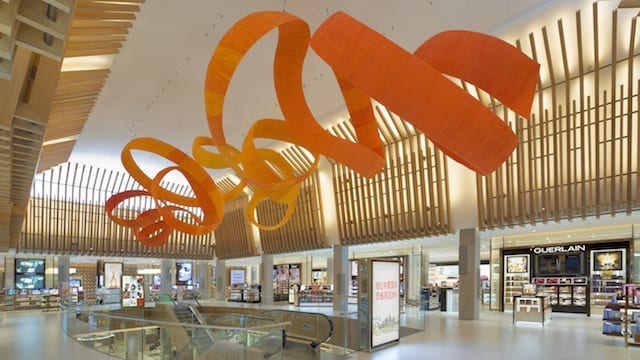
    Traditional Khmer motifs and carvings feature throughout the store, including a nearly 20m art installation suspended above the vaulted atrium.

    DFS T-Galleria Angkor Cambodia 1

    T Galleria by DFS Angkor also ranges more than 130 international brands including watches and jewellery from Bulgari, Cartier and Tiffany & Co and fashion from Bottega Veneta, Burberry, Fendi, Gucci and Saint Laurent. There are also more than 30 beauty and fragrance brands such as Cle de Peau Beaute, Dior, Estee Lauder and Giorgio Armani.

    DFS T-Galleria Angkor Cambodia 5

    The gala event also marked the official opening of the onsite restaurant, the first Crystal Jade outlet in Cambodia, serving traditional Chinese cuisine in a setting overlooking the gardens and reflecting pools outside.

    DFS T-Galleria Angkor Cambodia 6

    DFS T-Galleria Angkor Cambodia 8

    The event also provided a platform to officially announce the company’s sponsorship of several non-profit organisations focussed on helping underserved populations in Cambodia. Schaus presented a donation to Kuma Cambodia, which aims to reduce poverty through providing education, healthcare and nutrition to vulnerable youngsters, English and computer courses for teenagers, and workshops and guidance for parents and guardians.

  • Richemont Asia stores set for cull

    Richemont Asia stores set for cull

    Feeling the pinch from a tough trading environment, luxury goods retailer Richemont has announced restructuring measures, including the closure of stores.

    Richemont Asia sales have declined despite a 26 per cent increase in sales in Mainland China.

    Global sales fell 18 per cent in April, and the company reported a 23 per cent drop in full-year profit.

    Richemont says it is cutting costs in its watch sector and plans to consolidate its global retail presence, particularly in Mainland China, while investing further in jewellery.

    Richemont owns brands including Baume & Mercier, Cartier, Chloe, Dunhill, IWC Schaffhausen, Jaeger-LeCoultre, Lancel, Montblanc, Piaget, Roger Dubuis, Shanghai Tang, Vacheron Constantin and Van Cleef & Arpels.

    “In the near term, we are doubtful that any meaningful improvement in the trading environment is to be expected,” said chairman Johann Rupert, revealing plans for Richemont store closures across its brands.

    Richemont’s operating profit in the year ended March was $2.06 billion, down from $2.67 billion because of the cost of restructuring measures initiated to counter the Asia Pacific downturn. Full-year revenue edged up 6 per cent to $11.08 billion, helped by favourable exchange rates.

    “Our concerns over geopolitical risks and the impact on the behaviour of our clients proved justified,” said the company.

    “Trading conditions in Hong Kong and Macau remained difficult. Only mainland China showed good growth.”

    Richemont’s final quarter was hit by slower tourist spending in Europe after terrorist attacks, while its Hong Kong business continued to bear the brunt of a strong currency which, combined with a slowdown in Chinese growth, deterred mainland tourists.

  • Luxury brands Gucci & Zegna shutting shop as Chinese buyers turn thrifty

    Luxury brands Gucci & Zegna shutting shop as Chinese buyers turn thrifty

    It’s already happened to middle-of-the-road stores across high streets and main streets. Now the world’s biggest luxury stores are starting to shutter outlets. The culprit is the Chinese consumer, who is starting to rein in spending at home and abroad. The effect will be no less severe: expect more closures to come.

    Over the past decade, Chinese consumer demand and new store openings together turbo-charged luxury sales. New store space accounted for 55% of global luxury revenue growth over the past eight years, according to analysts at Mainfirst.

    As for Chinese nationals, they powered about two-thirds of luxury market’s growth over the past decade, according to Exane BNP Paribas.

    Now both of these forces are running out of steam. Given the slump in Hong Kong and the slowdown in China, stores there are the main focus of attention.

    MIXED BAG

    Gucci and Zegna were among luxury brands to cut their store footprint in the first quarter.

    Hugo Boss has already announced plans to close 20 of the 131 stores it directly owns on the mainland. It’s reviewing as many as another 20 of its least-profitable 430 stores globally.

    The company is in talks with its landlords, so not all of these outlets will close but it expects to announce a sizeable number of exits later this year.

    Prada won’t say where its selective store cuts might fall, but as it expanded aggressively in Asia, it’s a good bet that some will be there.

    And last week, Richemont, maker of Cartier jewelry and Jaeger-LeCoultre watches, said it was also reviewing its retail network in Hong Kong and Macau.This could include closures, moving to cheaper premises or lease renegotiations. Indeed, seeking rent reductions is an alternative to outright closure. Bloomberg Intelligence’s Patrick Wong ays rent reductions of as much as 50% says rent reductions of as much as 50% are possible in some locations in Hong Kong. But demand remains strong for space in premium malls, limiting the scope for discounts.

    In mainland China, tenants have the most bargaining power in new malls, particularly in second-tier cities , hit by a slump in demand and plentiful new supply, Wong notes.

    While the most attention might be on China, globally, brands are focusing on making their existing stores work harder. Rather than planning large scale openings, existing outlets are being refurbished.

    The luxury groups are right to halt their dizzying expansion, and start to cut back. As they do, there could be opportunities for more niche upmarket brands to expand. Kering’s Saint Laurent, LVMH’s Givenchy Fendi and Celine, and Swatch’s Harry Winston could all open stores at more attractive rents.

    Pandora, the affordable luxury chain, is one retailer that is still growing its store base, including in China. And here’s another trend that mirrors what is happening on high streets and main streets. As mid-market brands retrench, discount players move in. Pandora is hardly the same as Primark (its jewelry can cost 60 ($87) rather than 6 at its less upscale cousin). But the Danish jeweller offers cheaper, more accessible luxury.

    That’s still a winning formula in China, whether it is LVMH’s cosmetics and fragrance brands -or Pandora’s charms.

  • TimeVallee Watch Boutique goes duty free

    TimeVallee Watch Boutique goes duty free

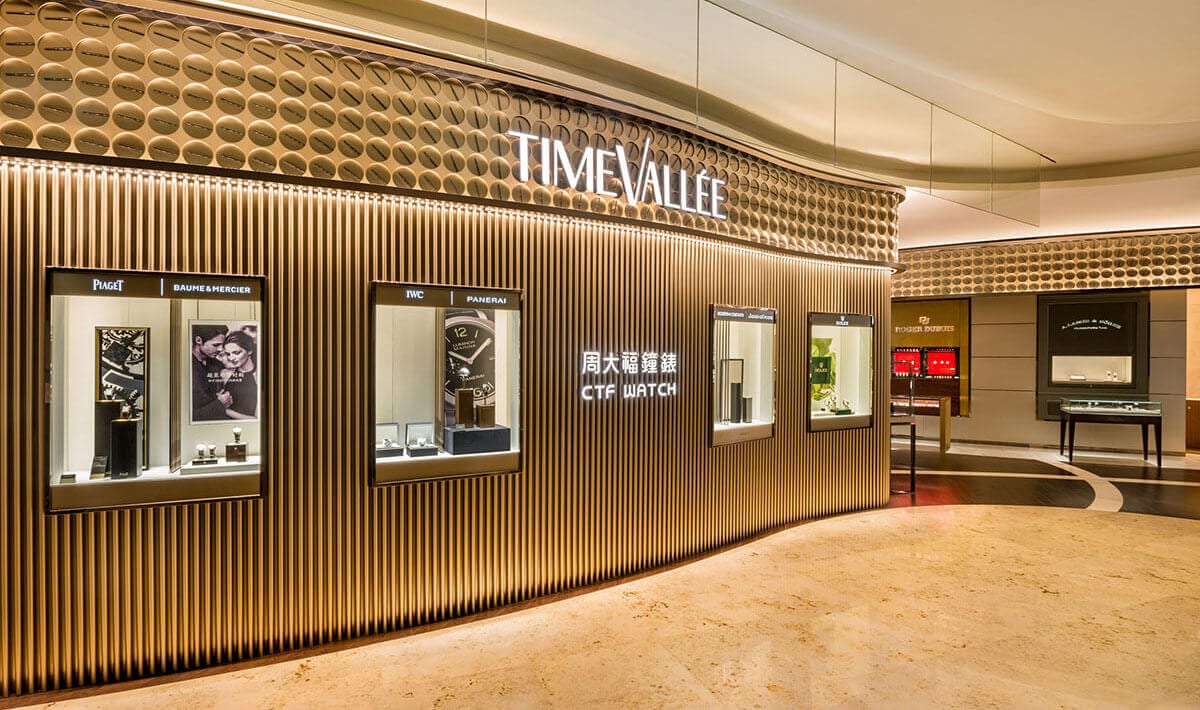
    In a first for the market, a TimeVallee Watch Boutique has opened inside Japan Duty Free Ginza on the eighth floor of Mitsukoshi Ginza Store in Tokyo.

    It is based on the concept of offering multiple international luxury-watch brands, and is the first such boutique within a Japanese duty-free shop.
    With its gold-toned interior, the store features a hands-on area where the latest technology enables shoppers to learn more about the history, traditions and technologies of the brands on display.

    TimeVallee1

    Japan Duty Free Ginza opened in January as Japan’s first airport-style duty-free shop in a city center outside Okinawa. It offers all products exempt from consumption tax, customs duties, and alcohol and tobacco duties.

    TimeVallee Watch Boutique features seven brands – Cartier, IWC, Jaeger-Lecoultre, Piaget, Roger Dubuis, Vacheron Constantin and Zenith.
    Japan Duty Free Ginza is run by Japan Duty Free Fa-So-La Isetan Mitsukoshi, established in 2014 and financed by Isetan Mitsukoshi Holdings, Japan Airport Terminal and NAA Retailing Corporation.

  • Tight market hits Watches & Wonders

    Tight market hits Watches & Wonders

    With sales slipping in the industry’s largest market, the annual Watches & Wonders exhibition in Hong Kong may be cut back to every two years.

    High-end watchmakers are looking at a shift in strategy in Hong Kong in the face of the most severe downturn the industry has faced since the 2008-09 financial crisis, reports Reuters.

    Branching out from the two biggest trade shows in Switzerland, the Salon International de la Haute Horlogerie (SIHH) in Geneva and Baselworld, Watches & Wonders was launched in 2013 by theFondation de la Haute Horlogerie, which is now talking with exhibitors about the show’s future format, according to Richard Mille, CEO of independent watchmaker Richard Mille.

    Watches & Wonders mainly showcases Richemont-owned brands like Cartier, Montblanc and Vacheron Constantin, as well as some independents, reports Bloomberg.

    “Some brands have been fighting to get out, completely out, to stop Watches & Wonders,” Mille said at this week’s SIHH in Geneva, the industry’s first event of the year.

    “Some of the brands want to do it every two years, some say every year. It’s a negotiation.”

    A decision will be made after this week’s show, according to foundation chairwoman Fabienne Lupo.

    The event also competes with the annual Hong Kong Watch & Clock Fair, which had nearly 800 exhibitors last year.

    China’s crackdown on extravagant spending plus currency fluctuations have hit the demand for expensive timepieces in Hong Kong, with Swiss watch exports to the island city plunging 23 per cent in the first 11 months of 2015, and facing the first annual decline since 2009. TAG Heuer closed one of its Hong Kong stores in August.

    Mille, whose watches sell from about 70,000 Swiss francs ($70,000) upward, says the objective of exhibiting in Watches & Wonders is to make contact with clients who are unable to attend the boutique shows. “It’s not cheap, but it’s worthwhile.”

    Meanwhile, high-end watchmakers are considering expanding their range of more affordable products. Executives at the Geneva event say the industry is having to adapt to a market with fewer Chinese, Middle Eastern and Russian buyers than a year ago, an outcome of record low oil prices and signs of economic weakness in China.

    Cartier, Richemont’s leading brand and main source of profit, is presenting more models than ever at more accessible prices at this week’s SIHH. Among them is Cartier’s new Drive model, a steel-cased men’s watch priced at a little more than 5000 euros ($5430). Previously, Cartier would offer only new models in gold and leather, with prices starting at more than 10,000 euros.

    Sister brand Piaget, generally starting no lower than 10,000 euros, has re-launched a women’s line starting at about 7000 euros, while Richemont stablemate Montblanc has introduced a wide range of lower-priced models.

    Montblanc CEO Jerome Lambert says that whatever happens, his company will stay active in Hong Kong with major exhibitions.

    “There is a different price awareness among customers now… and less price elasticity,” Piaget chief executive Philippe Leopold-Metzger told Reuters at the fair. “Times are difficult.”

    Several watchmakers have cut staff numbers in recent months, including Kering‘s newly acquired Ulysse Nardin and privately owned Parimigiani and Christophe Claret. Piaget closed a boutique in Shanghai last month, and Parmigiani plants to cut back its global outlets to about 250 from around 300 by the end of the year.

    Van Cleef & Arpels, one of the fastest-growing brands within the Richemont group, has also seen a slowdown in Hong Kong, Macao and the US. It is looking at new growth opportunities in such markets as Australia, Canada and Thailand, where it has just opened a store.

  • Asia weighs on Richemont

    Asia weighs on Richemont

    Luxury goods retailer Richemont has reported its first drop in Christmas retail sales in seven years, citing a downturn in Asia and fallout from the Paris terror attacks.

    And worse may be in store in the fourth quarter for the Geneva-based owner of luxury brands including Montblanc, Cartier, IWC Schaffhausen, Net-a-Porter and Alfred Dunhill – especially in the watches category.

    According to data from the Swiss watch industry, stock shipments to Hong Kong, Richemont’s single largest market, are down 28 per cent.

    The company said demand for luxury watches and fashion was significantly down in Hong Kong and Macau in the three months to December 31. Sales in the territories fell by 9 per cent, but that rate was less than the 15 per cent decline for the first nine months of the year, suggesting the decline was levelling out.

    In contrast, Richemont said sales growth in Mainland China “continued to improve”.

    In Europe, sales fell 3 per cent in the quarter after Europeans were spooked by the Paris terror attacks in November, reducing the ranks of tourists to the French capital. That followed “very strong sales growth” in the first half of the financial year, which ends next March 31.

    Richemont’s global sales rose 3 per cent to 2.93 billion euros (US$3.2 billion), but on a constant currency basis fell 4 per cent, one per cent further than analysts were forecasting.

  • Asia curbs Richemont sales

    Asia curbs Richemont sales

    Richemont – Swiss parent of luxury brands like Cartier, Dunhill and Montblanc – is blaming a Hong Kong sales slump for a tough half year ahead.

    Reporting its half year figures on Friday, the company said it expected a “challenging second half” which led to an immediate nine per cent fall in its share price.

    Hong Kong accounts for about 16 per cent of Richemont’s global sales and the Mainland a further eight per cent. Asia, excluding Japan, accounted for 34 per cent of the group’s total revenue.

    “The significant sales decline in Hong Kong and Macau during the period was partly offset by positive developments elsewhere. In particular, Mainland China resumed growth with strong retail sales, largely offsetting challenging wholesale sales,” the company said in its trading statement.

    Japan reported strong momentum, both from local and tourist demand, helped by the favourable exchange rate movements.

    Richemont said its global sales through its company-owned stores – which account for just over half its turnover – rose 13 per cent in the first half year at constant currencies. However, wholesale sales fell six per cent. Combined sales increased by 15 per cent at actual exchange rates or by just three per cent at constant exchange rates.

    Shipments of Swiss watches to Hong Kong fell 20.5 per cent in the first nine months of this year, due to falling demand. And Richemont, with such a large part of its global operations in the territory, is very exposed to such a drop.

    The company’s CGO Gary Saage said its margins had fallen in the first half to September – and in October demand had slowed even further. However there was a small upturn in the mainland last month

    “It’s been a long time coming. Mainland China in total grew one per cent and, clearly, within that our own retail grew significantly,” he told analysts in a briefing.

    “Wholesale is still extremely challenging and we don’t know when that will get better, but we take comfort in that our retail networks in both watches and jewellery are performing.

    “Headline numbers in watches will take time to recover,” Saage said.

    Gross profit increased by 13 per cent and accounted for 65 per cent of sales. The 100 basis points margin decrease versus the prior period largely reflected the impact of the Swiss franc’s appreciation and lower capacity utilisation, partly offset by the positive effects of other exchange rates and the growing proportion of retail sales, the company reported.

    Richemont also owns the Baume & Mercier, IWC International Watch, Jaeger-LeCoultre, Piaget, Roger Dubuis and Vacheron Constantin.

  • Burberry Seoul flagship opens

    Burberry Seoul flagship opens

    British luxury fashion brand Burberry has opened its first Korean flagship store in Cheongdam-dong, Seoul where the flagship stores of foreign brands are gathered in one place.

    The 13 story Burberry Seoul flagship store comprises 13 storeys, two underground and 11 above. The exterior of the store is inspired by gabardine, the plaid textile used to make the brand’s iconic trench coats.

    The construction of the Seoul flagship store was overseen by Christopher Bailey, the CEO and chief creative officer of Burberry.

    Burberry Seoul inside

    With Burberry opening its first flagship store in Korea, interest is building over foreign brands and their flagship stores located in the Cheongdam area. In the early 2000s, flagship stores were simply thought of as ‘large scale stores’. However, flagship stores have since become more important, as they are currently thought of as symbols that represent the influence and image of a brand.

    In addition, the elevated status of Korea in the Asian market is another reason foreign brands are devoting themselves to building flagship stores in the Cheongdam area.

    Dior opened the largest flagship store in Cheongdam in June, and other brands including Chanel and Cartier will also open new stores or move to the Cheongdam area.

    “Not only the Korean market, but also the Korean consumers who buy products from a brand are considered important [to these brands],” explained an industry spokesman in Seoul.

    “Flagship stores will play a large role in the Korean market, letting the heritage of a brand be known.”

  • Asia remit for new Tiffany exec

    Asia remit for new Tiffany exec

    Tiffany & Co has appointed Philippe Galtié to the position of senior VP – international.

    Galtie, who is currently with super luxury brand Cartier, will direct all of the sales channels for Greater China, Asia-Pacific, Japan and EMEA.

    He takes up the new post on August 17.

    Frédéric Cumenal, Tiffany & Co CEO, said, Galtie brings to Tiffany & Co a seasoned understanding of the global retail landscape.

    “This knowledge will have a significant impact on the oversight and management of our store design and strategic planning teams.”

    Galtié, 54, began his career with a range of general management and global marketing roles at Moët-Hennessy, Mars Inc, Eridania Beghin Say and the Nestlé Group. For the past 15 years he has worked at Cartier, where he served as country head or other senior positions throughout Japan, Greater China and the Asia Pacific regions. Most recently, Galtié held the role of Cartier’s international retail director.

    Tiffany is the internationally-renowned jeweler founded in New York in 1837. Through its subsidiaries, Tiffany & Co. manufactures products and operates Tiffany & Co retail stores worldwide, and also engages in direct selling through Internet, catalog and business gift operations.