Tag: challenges

  • Addressing Security Challenges: The Upsurge of AI in Business Operations

    Addressing Security Challenges: The Upsurge of AI in Business Operations

    The global marketplace is undergoing a seismic shift as companies rapidly embrace artificial intelligence. A recent McKinsey report reveals that 78% of organizations are already utilizing AI, and a staggering 92% plan to ramp up their investments in this transformative technology over the next three years. Gartner even predicts that by 2029, AI agents will take charge of a whopping 80% of customer interactions.

    However, riding the AI wave isn’t all sunshine and rainbows. The reality is that only 1% of firms can be classified as AI-mature. Alarmingly, a significant 70% of businesses falter during AI deployment, and about 85% of projects fail to meet expectations. Rather than being the panacea many hoped for, AI has entangled companies in a web of challenges, including breaches of sensitive data, mishandled operations, and sophisticated security attacks—each leading to reputational damage and financial hits that could sink a ship.

    Addressing the Challenges of AI Adoption

    These pressing challenges raise an essential question: How can businesses successfully and safely integrate AI into their operations? In today’s fast-paced tech environment, speed alone isn’t enough. The new gold standards are robust security, data privacy, and user protection.

    In a proactive move, OplaCRM—a growing SaaS company specializing in AI-driven CRM and B2B sales solutions—has forged a partnership with VinCSS, a prominent regional cybersecurity firm. This collaboration aims to establish a standard for cybersecurity across OplaCRM’s AI offerings.

    Innovating with Security in Focus

    As part of this partnership, OplaCRM will subject its products to rigorous penetration testing by VinCSS before they hit the market. This will enable swift identification and resolution of any security vulnerabilities lurking beneath the surface. Additionally, VinCSS will help incorporate password-free authentication, utilizing FIDO2-compliant passkeys to boost user experience while fortifying defenses against emerging threats tied to traditional credential systems.

    Through this alliance, OplaCRM doesn’t just bolster its own security measures; it also enhances the safety of its customers and end users. This synergistic approach is a win-win, proving that collaboration can yield significant benefits.

    Educating for a Secure Future

    The two companies are committed to engaging the wider business community through educational events focused on the secure adoption of AI. These sessions arm participants with practical insights to navigate risks, stay informed on industry trends, and develop secure roadmaps for AI deployment. In an era where AI is becoming part and parcel of business strategy, VinCSS and OplaCRM make it clear: cybersecurity is no longer optional—it’s imperative.

    Their collaborative efforts stand as a model of how technological innovation and robust security can go hand in hand, empowering businesses to tap into the full potential of AI while safeguarding their operations and customers.

    What would happen if an AI program gave an unexpected answer during a critical moment? Well, it might be a good time to double-check those security measures!

    Questions & Answers

    What percentage of companies are currently using AI?
    According to McKinsey, 78% of organizations utilize AI, with 92% planning to invest further in the next three years.

    What are the main challenges companies face when deploying AI?
    Major challenges include AI-induced data breaches, incorrect AI actions, and overall deployment failures, with 70% of companies facing struggles in this area.

    How does the partnership between OplaCRM and VinCSS enhance AI security?
    Their collaboration involves penetration testing of OplaCRM products, integration of password-free authentication, and a shared commitment to educating businesses on secure AI adoption.

  • Navigating the Retail Landscape in Southeast Asia: Key Challenges for 2025

    Navigating the Retail Landscape in Southeast Asia: Key Challenges for 2025

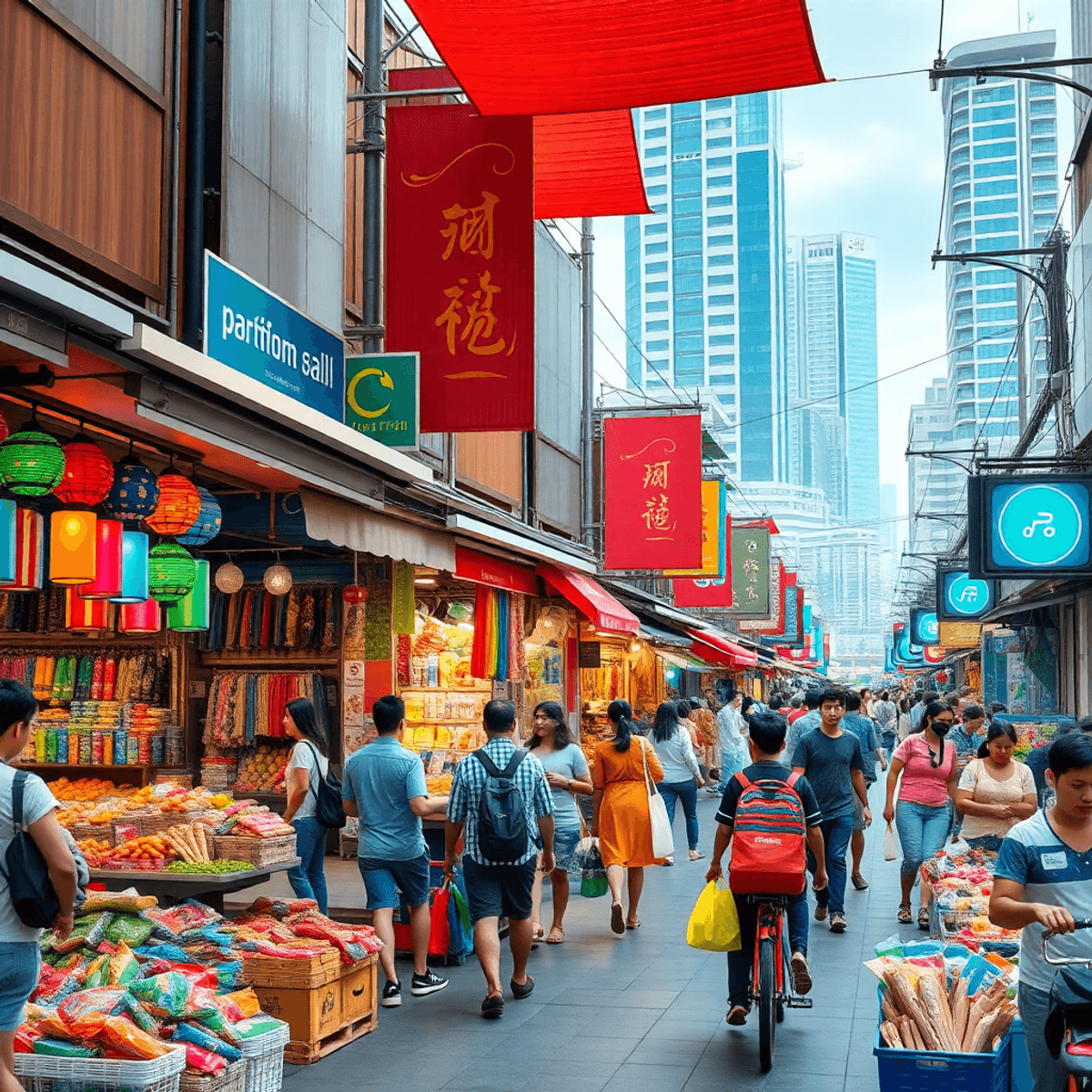
    Southeast Asia’s retail scene in 2025 is a booming hub of growth and potential, fueled by a young, tech-savvy population of over 600 million consumers. The region’s retail market has evolved into a vibrant ecosystem where traditional shopping meets digital innovation.

    The numbers tell a compelling story:

    • Modern grocery retail growth: 6-7% annual increase
    • Rising middle class: 350 million by 2025
    • Digital economy value: Projected to reach $300 billion

    Southeast Asia has become an important retail center, attracting both global brands and local entrepreneurs. The region’s diverse features – from bustling traditional markets in Jakarta to upscale shopping centers in Singapore – offer a wide range of retail experiences.

    However, this promising landscape also comes with its own challenges:

    • Market Fragmentation: Each country has its own unique consumer behaviors
    • Digital Transformation: Rapid shift towards omnichannel retail
    • Economic Pressures: Inflation and changing consumer spending patterns
    • Infrastructure Gaps: Varying levels of development across regions

    For retailers aiming for success in Southeast Asia’s 2025 market, understanding these dynamics is crucial. The combination of traditional retail practices with emerging technologies, along with changing consumer preferences, presents both opportunities and obstacles that require strategic navigation.

    Economic and Consumer Factors Impacting Retail Growth in Southeast Asia

    The retail landscape in Southeast Asia is facing significant challenges due to ongoing economic issues, particularly inflation, which is influencing how consumers behave. Recent data indicates that inflation rates are hovering between 3.5% to 6% in major Southeast Asian markets, directly affecting the volume of retail sales.

    Key Inflation Effects on Retail:

    • Reduced discretionary spending
    • Shift towards essential goods
    • Increased price sensitivity
    • Trading down to cheaper alternatives

    The expected trend of decreasing inflation in 2025 brings some hope for retailers. Economic forecasts suggest that inflation rates will drop to 2-3% across the region, potentially releasing pent-up consumer demand. This easing could lead to increased spending in previously affected categories such as electronics, fashion, and dining.

    Consumer confidence remains fragile due to ongoing financial pressures. A recent Nielsen survey reveals that 65% of Southeast Asian consumers are actively looking for ways to save money. This change in behavior has created distinct market dynamics:

    Impact on Retail Segments:

    • Discount retailers are seeing a 15-20% growth in their customer base
    • Fast-food chains are experiencing an 8-12% decline in average transaction value
    • Private label products are gaining a 25% market share
    • Budget-friendly retail formats are expanding their presence

    The current economic situation has altered how people make purchases, with 72% of consumers prioritizing value over brand loyalty. Retailers who adapt their pricing strategies and product offerings to align with these changing preferences are better positioned to capture market share.

    Navigating Market Structure and Competitive Landscape Challenges

    Southeast Asia’s retail landscape presents a unique contrast between traditional and modern retail formats. Traditional trade channels – wet markets, mom-and-pop stores, and street vendors – account for 70-80% of grocery spending across the region. These establishments maintain their dominance through personalized service, convenient locations, and cultural familiarity.

    Modern retail formats have gained significant momentum, growing at 15-20% annually in key markets like Indonesia, Vietnam, and the Philippines. Key drivers include:

    • Rising middle-class populations
    • Increasing urbanization
    • Growing preference for organized shopping experiences
    • Enhanced product variety and quality assurance

    Digital ecosystem players have intensified market competition. Companies like Grab, GoTo, and Sea Limited leverage their extensive user bases to expand into retail services. These tech giants offer:

    • Integrated shopping experiences
    • Sophisticated loyalty programs
    • Advanced data analytics capabilities
    • Seamless payment solutions

    The retail sector’s focus has shifted from aggressive expansion to sustainable profitability. This transition brings operational challenges:

    • Supply chain optimization across multiple channels
    • Last-mile delivery efficiency
    • Inventory management across online and offline platforms
    • Integration of legacy systems with new digital infrastructure

    Physical retailers face mounting pressure to develop omnichannel capabilities. Success requires balancing traditional retail strengths with digital innovation while maintaining operational efficiency in an increasingly complex market environment.

    Overcoming Operational and Technological Hurdles for Retail Success

    Digital transformation is crucial for Southeast Asian retailers in 2025. With the help of advanced data analytics, retailers can:

    • Create highly personalized marketing campaigns
    • Predict inventory needs accurately
    • Optimize pricing strategies on the spot

    Key Digital Transformation Priorities:

    Retailers should focus on the following areas for their digital transformation efforts:

    1. Implementing AI-powered demand forecasting systems
    2. Integrating cloud-based inventory management solutions
    3. Deploying smart POS systems with built-in analytics
    4. Developing customer data platforms for personalized experiences

    The automation of value chains brings great opportunities for improving operations. Leading retailers are putting their money into:

    • Robotic process automation for warehouse operations
    • Smart shelving systems with electronic price tags
    • Automated replenishment systems
    • AI-powered quality control mechanisms

    Strategic partnerships are essential for creating flexible supply chains throughout Southeast Asia. Successful retailers are doing the following:

    1. Working together with local logistics providers for last-mile delivery
    2. Joining forces with tech startups to find innovative solutions
    3. Building connections with multiple suppliers to ensure resilience
    4. Establishing data-sharing networks with key stakeholders

    Implementing these technological solutions requires a significant investment in infrastructure and talent development. Retailers need to find a balance between the costs of implementation and the long-term benefits of improved operational efficiency and enhanced customer experience.

    Emerging Tech Solutions in SEA Retail:

    Here are some emerging technologies that have the potential to revolutionize the retail industry in Southeast Asia:

    • Blockchain for supply chain transparency
    • IoT devices for real-time inventory tracking
    • Machine learning for predictive maintenance
    • Edge computing for faster data processing

    Addressing Regulatory Environment and Property Development Issues in Southeast Asian Retail Markets

    Southeast Asian retail markets have a complicated set of rules that are different in each country. For example, in Vietnam, foreign retailers must go through strict requirements called Economic Needs Testing (ENT) before they can open stores. Malaysia has specific policies for Bumiputera ownership, while Indonesia requires certain retail operations to have local partnerships.

    Key Regulatory Challenges:

    • Different licensing requirements per country
    • Foreign ownership restrictions
    • Local content requirements
    • Varying tax structures
    • Complex import regulations

    Property development for retail spaces is facing increasing pressures in 2025:

    Rising Costs and Space Constraints:

    • Construction material costs up 15-20% due to inflation
    • Prime retail space rental increases in major cities
    • Limited land availability in urban centers
    • Strict zoning regulations

    Infrastructure gaps create additional hurdles for retail development. Bangkok’s traffic congestion impacts delivery times, while Manila’s port congestion affects supply chain efficiency. Jakarta’s flooding risks require extensive mitigation measures in retail property development.

    Local partnerships emerge as a vital strategy to navigate these challenges. Retailers like Aeon and Central Group demonstrate success through joint ventures with local property developers, enabling better understanding of regulatory nuances and access to prime locations.

    The regulatory landscape pushes retailers toward innovative solutions. Mixed-use developments gain popularity, combining retail spaces with residential and office components to maximize land use efficiency. Smart building technologies help optimize space utilization and reduce operational costs amid rising inflation.

    Meeting Evolving Consumer Expectations: Strategies for Retailers in 2025

    Southeast Asian consumers in 2025 have sophisticated preferences, pushing retailers to adapt their strategies. Market research indicates a 70% increase in demand for fresh, organic produce and sustainable products across major urban centers like Singapore, Jakarta, and Bangkok.

    Key consumer trends shaping retail strategies:

    Health-conscious purchasing

    • Premium fresh produce sections
    • Organic food departments
    • Plant-based alternatives
    • Wellness product ranges

    Sustainability focus

    • Eco-friendly packaging
    • Locally sourced products
    • Transparent supply chains
    • Carbon footprint labeling

    Private-label offerings emerge as a critical strategy for retailers to meet these evolving preferences while managing inflation pressures. Leading retailers in Thailand and Malaysia have expanded their private-label ranges by 40%, introducing premium sustainable product lines at competitive price points.

    Successful retailers implement:

    1. Clear product origin labeling
    2. Digital tracking systems for supply chain transparency
    3. Partnerships with local organic farmers
    4. Sustainability certification programs
    5. Personalized healthy lifestyle recommendations

    Vietnamese retail chain VinMart exemplifies this adaptation, launching a “Green Living” private label that combines affordable pricing with sustainable packaging, capturing a 15% market share in their fresh produce category within six months.

    Exploring Emerging Opportunities in Southeast Asian Retail Markets

    Southeast Asian retailers can tap into significant growth potential through strategic technological integration and innovative revenue streams. The digital transformation of retail presents lucrative opportunities for businesses ready to embrace change.

    Building Integrated Tech Ecosystems

    • Smart retail solutions powered by AI and IoT
    • Unified commerce platforms connecting online and offline channels
    • Mobile-first payment solutions catering to the region’s digital natives
    • Data analytics platforms for real-time inventory management
    • Virtual try-on experiences using AR technology

    Retail Media Networks: A New Revenue Frontier

    • Digital advertising spaces within retail apps and websites
    • Targeted promotional campaigns using first-party customer data
    • Brand partnerships through in-store digital displays
    • Personalized shopping recommendations based on purchase history
    • Location-based marketing initiatives

    The rise of super apps in Southeast Asia creates opportunities for retailers to integrate their services into existing digital ecosystems. Companies like Grab and Gojek demonstrate the potential of combining retail, delivery, and financial services into unified platforms.

    Local retailers can differentiate themselves by developing proprietary tech solutions tailored to regional preferences. Examples include:

    • QR code payment integration
    • Voice commerce in local languages
    • Social commerce features
    • Live shopping capabilities
    • Cross-border e-commerce solutions

    These technological advancements position Southeast Asian retailers to capture market share while building sustainable competitive advantages in an increasingly digital retail landscape.

    Conclusion

    The retail landscape in Southeast Asia presents a complex mix of challenges and opportunities for 2025. Success depends on retailers’ ability to find a delicate balance between aggressive growth strategies and sustainable operational practices.

    Key success factors for retailers include:

    • Maintaining operational efficiency while navigating diverse regulatory frameworks
    • Building robust technological infrastructure for seamless customer experiences
    • Implementing sustainable practices that resonate with conscious consumers
    • Creating agile business models adaptable to market shifts

    The future belongs to retailers who can harmonize these elements while staying true to local market nuances. Those who master this balancing act will emerge as leaders in Southeast Asia’s promising retail sector, turning challenges into stepping stones for sustainable growth and market leadership.

  • Starbucks China sales grow – with a but

    Starbucks China sales grow – with a but

    Net revenues for Starbucks China and Asia-Pacific region soared 45 per cent in the first quarter to US$1.2 billion. While a change of ownership in the East China business at the end of the first quarter of the previous year boosted the figure, the company says the opening of a net 1010 stores during the 12 months – a 13 per cent increase in the network – and a 3 per cent increase in same-store sales also played a part.

    First-quarter Starbucks China operating income rose 13 per cent to US$225.1 million, from $196.8 million. But the company’s operating margin declined 530 basis points to 18 per cent, primarily due to the impact of the East China ownership change.

    CEO Kevin Johnson said the company delivered solid operating results in the first quarter, demonstrating continued momentum in the business, as it drives a growth-at-scale agenda “with focus and discipline”.

    “Comprehensive efforts to streamline our business have allowed us to focus on three key strategic initiatives that position Starbucks for long-term success: accelerating growth in our targeted markets of the US and China, expanding the global reach of the Starbucks brand through our Global Coffee Alliance with Nestle, and increasing shareholder returns.

    “Combined with our efforts to build and amplify the Starbucks brand, we expect these initiatives will position the company to drive predictable, sustainable growth and shareholder returns for years to come,” concluded Johnson.

    In the 13-week first quarter, which ended December 30, global comparable-store sales increased 4 per cent, driven by a 3 per cent increase in the average sale. Americas and US comparable-store sales increased 4 per cent, with transaction numbers flat.

    China-Asia-Pacific comparable-store sales increased 3 per cent, including 1 per cent transaction growth, with China comparable-store sales up 1 per cent, but the number of transactions down 2 per cent.

  • Luk Fook sales soar despite challenges ahead

    Luk Fook sales soar despite challenges ahead

    Thanks to positive Hong Kong market sentiment and lower gold prices, Luk Fook Holdings has reported a 25.1 per cent boost in sales in the September half year. The company says sales totalled HK$7.859 billion (US$1 billion) compared with $6.283 billion in the same period last year. Profit attributable to shareholders soared 27.9 per cent to $665.4 million.

    Sales in the Hong Kong market, the company’s key source of revenue, rose 31.2 per cent as mainland Chinese visitor numbers continued to grow and retail sentiment improved.

    Sales in Macau rose 19.9 per cent.

    However the company has warned that the US-China trade war and the depreciation of the Renminbi are starting to impact on sales in the second half.

    “Same-store sales growth in the Hong Kong and Macau markets … started to see a decline since the second half of October and recorded a single-digit drop for the period from October to [the] first three weeks of November,” the company said. “In Mainland China there was a double-digit drop.

    “Therefore, the group remains prudent about its business development in the second half of the financial year. Nevertheless, with the anticipated considerable growth of the middle-class population in Mainland China, the group remains optimistic about the mid- to long-term business prospects.”

    Luk Fook said that during the coming year, it will focus on enriching its product offer, expanding its footprint in Mainland China and adopting market-oriented strategies to penetrate into the mass market, covering the middle-class, wedding couples as well as kids.

    “The group’s target for net shop addition in Mainland China for this financial year will maintain at not less than 120 shops. The group is also committed to further developing its e-commerce business and strengthening cooperation with e-commerce platforms in Mainland China.”

    Targeting younger shoppers

    In light of the enormous spending potential of young consumers on online sales platforms, the company plans to step up its efforts to promote the sales of affordable-luxury jewellery products to expand its footprint in the young consumer market.

    “By understanding customers’ spending habits, the group will adopt holistic approach to penetrate into the markets for the middle-class, wedding couples and kids. It will also continue to attract customers and encourage local consumption by visual merchandising enhancement, cross-selling boosting and VIP promotional activities, so as to improve sales and profits. Given the importance of social media in product promotion, the group will continue to showcase and promote its products on mobile applications and social media platforms such as Facebook and WeChat.”

    During the first half of the financial year, Luk Fook added a net 94 stores to its ever-growing network, including 90 in Mainland China, where is closed six self-operated stores and opened 96 licensed stores. Two company-owned stores opened in Hong Kong, one in Macau, and one in Malaysia, with a new licensed shop opening in the Philippines, However, one licensed store closed in South Korea.

    The group now boasts a global network of 1725 Lukfook shops spanning Hong Kong, Macau, Mainland China, Singapore, Malaysia, Cambodia, the Philippines and the US.

  • 5 unique challenges all ecommerce firms face in Indonesia

    5 unique challenges all ecommerce firms face in Indonesia

    People talk a lot about Indonesia’s burgeoning ecommerce market, and how Jakarta may very well be on the cusp of an online retail revolution. Over the past 12 months, we’ve seen more activity in the sector than ever before, with new firms emerging and big-league investment coming in simultaneously.

    Naturally, these are all positive signs that point toward a maturing market in the region; hopefully one that can push Indonesian ecommerce into the mainstream conversation in Asia. It would be great to see online shopping reach five percent or more of the nation’s overall retail sector, but for now we can only speculate on the future.

    indonesia-streets-1

    Like any market, Indonesia has its own set of challenges, caveats, and peccadillos that all ecommerce founders are forced to cope with. In the past, we’ve cited the archipelago’s hellish logistics landscape, weak payments infrastructure, and a fragmented market as some of those limitations. However, there is a second layer of challenges that all estores will face in the gauntlet that is Indonesia.

    This is a set of generally accepted idiosyncrasies that newbie e-tailers — and especially foreigner founders — will run into on a daily basis in Jakarta, so take notes. In no particular order, here are five cultural challenges all ecommerce firms, new or seasoned, will face in Indonesia.

    Price-sensitive shoppers

    Indonesia-ecommerce

    It’s true, Indonesia has one of the most attractive emerging middle-classes in the world. By 2030, an estimated 90 million people will have joined the consuming class. That said, Indonesians are, to put it mildly, true suckers for sales and discounts. Locals have a strong proclivity toward finding the best prices at all costs.

    This is no secret to anyone who lives in Jakarta, as it’s extremely common to see hundreds (sometimes thousands) of locals waiting in line at the mall just for a 50 percent off sale to happen at Bershka or the Samsung store. Nevermind the time, energy, and fuel spent to get to the store across town or the fact that folks may not have felt compelled to buy anything in the first place, had there not been a sale.

    Boston Consulting Group says Indonesian shoppers actively seek out promotions and hunt for deals. At the lower half of the income pyramid, this is a function of family dynamics. Men typically give their wives a monthly budget for the family. The more money these women can save on groceries, the more they have to splurge on small indulgences for themselves. However, the bargain-hunting drive spans the wealth spectrum — more than 60 percent of the overall population says they enjoy searching for discounts and promotions, and more than 70 percent of the country’s affluent population says they enjoy doing so.

    This might seem like more of a blessing than a curse at first glance, as demand can be easily created so long as merchants temporarily lower their prices. But in the end, competition often becomes a race to the bottom and profit margins suffer if you don’t plan your discounts as if you were going into brain surgery. Anyone thinking about opening an estore in Indonesia needs to firmly understand the lowest price they can offer while still being able to turn a profit. If it’s not in the same ballpark as the nation’s big competitors, both online and offline, new web firms will need to rethink their strategies.

    Risk aversion

    New ecommerce names in Indonesia, even ones as big as JD for example, are going to have to work twice as hard as their more established counterparts when it comes to acquiring and retaining users. According to a recent McKinsey study, Indonesian consumers have some specific shopping behaviors. They are risk-averse and brand-loyal. 63 percent of Indonesian consumers only buy products from brands they already know. This positions them as late adopters because they need to be encouraged by friends and family before they choose to adopt new products.

    Bank Mandiri cites this challenge as a short-term hurdle in the grand scheme of things, however, as purchasing behavior will likely change when Indonesia’s internet infrastructure improves, and more people come online for the first time. However, for smaller ecommerce sites without a bankroll and several years of runway, they’ll need to find new and creative ways to get local shoppers to trust their brand, and do so fast.

    Deep-pocketed competitors

    Lazada-indonesia-home

    Rocket Internet’s Lazada Indonesia, Lippo Group’s MatahariMall, SoftBank and Sequoia-backed marketplace Tokopedia, and now JD.id — the Indonesian arm of the Chinese ecommerce giant — are all firms with copious spending power. All are up and running in Indonesia, and those who are intimate with Indonesia’s ecommerce landscape understand how unwise it is to challenge these guys head-on.

    Lazada Indonesia is perhaps the biggest force to be reckoned with, as overall spending on Lazada Group’s Southeast Asia portals jumped from US$89 million in 2013 to US$350 million in 2014. Indonesia’s shoppers made up over 30 percent of that, says CEO Max Bittner. To date, the firm has pulled in US$686 million in funding on public record. Tokopedia grabbed US$100 million last year, and MatahariMall also claims to be earning hundreds of millions. JD is a publicly traded company that’s raised around US$2.6 billion to date.

    If you want your fledgling ecommerce venture to work out, you’re going to need to find multiple ways to differentiate yourself from these firms or face certain death. Homework and competitive analysis is a must.

    An increasingly frothy market

    There are many figures that paint a positive picture of Indonesia’s ecommerce scene. The most referenced one is a 250 million population with a recent annual GDP increase between 5 and 6 percent, primarily driven by people buying things. In reality, Indonesia’s ecommerce market is still in its infancy, yet an increased level of attention and hype is drawing entrepreneurs who think the market and investment scene are already primed.

    Zalora Indonesia was able to succeed in its early days because of Rocket Internet’s vast resources and a long period of trial and error. Today, seemingly strong competitors like Paraplou Group are closing their doors in Jakarta, citing reasons of market immaturity, uncertain financial conditions, and a hard time getting funded as the primary reasons for closure.

    With firms like MatahariMall making bombastic funding claims and many early-stage VCs adopting the spray-and-pray investment method (without disclosing round sizes), all the news coming from Indonesia makes the archipelago seem like a perfect lilly pad for incoming ecommerce companies.

    Lyall Taylor, associate director at global financial services firm Macquarie Group in Jakarta believes there is a lot of hype about future ecommerce growth in Indonesia. He recently broke down typical causes of market hype for Tech in Asia.

    “Usually what happens is that rapid growth in an industry […] results in profits to early investors,” said Taylor. “These profits get increased media attention and eventually attract more and more people to enter the fray, driving prices higher still […] investors are extrapolating growth well into the future and assuming a high likelihood of success for many tech ventures, even when high levels of future growth and profitability may not be assured.”

    A preference toward brick-and-mortar

    Plaza_indonesia

    Shopping is undisputedly a religion in the archipelago. When friends get together on a Friday night, the question is not “Should we go to the mall?” Instead, it’s “Which mall should we go to?” Local business portal Indonesia-Investments says it’s astonishing how many new malls have opened during the last decade or are currently being developed in Jakarta. Most new malls are part of large real estate projects that also include apartment complexes, office towers, hotels, and sometimes even hospitals.

    The mall is usually the epicenter of everything on a Jakarta superblock, connecting all other buildings. For Indonesians, from the middle-class up to the elite, these malls are places to hang out, relax, and eat because the environment is enjoyable: pleasant temperatures, no pollution, and clean spaces. Most Jakarta malls contain one or more floors with several restaurants, which are inevitably popular among young adults. Malls are also common places to have business meetings. Live music is a regular occurrence.

    Jakarta alone has nearly 200 shopping malls and counting, despite the government trying to curb mall growth in recent years.

    The reason this is important for incoming foreign ecommerce founders, or anyone considering starting an estore in Indonesia for that matter, is that ecommerce is not going to replace brick-and-mortar shopping in the archipelago anytime soon. In fact, startups will need to work much harder to provide incentives for shoppers to transact online rather than simply taking the elevator downstairs and buying offline.