Tag: Charging

  • Vietnam needs $14B to develop EV charging stations

    Vietnam needs $14B to develop EV charging stations

    Vietnam will need nearly US$14 billion to develop a network of charging stations to develop a green transport system, said insiders.

    This is expected to reduce greenhouse gas emissions, and create great tremendous opportunities for the electric vehicles (EV) market.The transition to EVs is a huge effort toward Vietnam’s net zero goal and environmental protection, and it will also boost the national economy, especially in reducing oil import costs and creating millions of jobs.

    According to a report from the World Bank, for EVs to become mainstream, especially among first-time car buyers, the charging station system plays a key role. It is estimated that Vietnam needs $2.2 billion by 2030 to build a network of public charging stations, and this figure will increase to $13.9 billion by 2040, and $32.6 billion by 2050 to meet most of the population’s EV demand.

    With the rapid development of EV technology and the trend towards green transportation, the demand for this type of vehicles is expected to increase strongly in the near future. It is predicted that more than 2.8 million EVs will be consumed from 2024 to 2035, and another 3 million in the 2036 – 2050 period if the development of the charging station network is accelerated.

    Major manufacturers such as VinFast have pioneered in this field, not only investing themselves but also implementing the franchise model that enables businesses and people to participate in developing the charging network. This model helps promote not only the use of EVs but also the sustainability of the EV industry in Vietnam.

    Public-private partnership models are also evaluated as a key for luring investment in charging stations. Electricity companies, fuel distributors, and specialized charging service providers can also contribute to the scheme.

    Insiders said to further promote the scheme, the Vietnamese Government needs to have favorable and clear policies that facilitate the engagement of the private sector. This can be achieved through financial and non-financial incentives and the formation of a clear roadmap for EV adoption with strict technical standards for charging infrastructure.

    International studies have shown that subsidies for developing charging infrastructure are 5-6 times more effective than subsidies for purchasing EVs. This demonstrates that if the Government focuses on building charging stations, Vietnam can accelerate the transition to EVs while reducing the dependence on fossil fuel energy sources.

    Assoc. Prof. Dr. Dam Hoang Phuc from Hanoi University of Science and Technology said a clear mechanism will attract investors, thereby driving the development of Vietnam’s charging station network.

    Meanwhile, Nguyen Thi Phuong Hien, Deputy Director of the Institute of Transport Strategy and Development, said strong policies on energy transition are now available, but there is still a shortage of support policies for charging infrastructure development. Given this, investing in charging stations is an essential step for the Government to effectively boost the transition to EVs and green transport.

  • Mercedes-Benz Partners With Tesla To Integrate NACS Charging Ports Into Its Lineup

    Mercedes-Benz Partners With Tesla To Integrate NACS Charging Ports Into Its Lineup

    Mercedes-Benz is the latest manufacturer to partner with Tesla to integrate NACS (North American Charging Standard) charging ports across its lineup of electric vehicles. This will provide electric vehicles from the brand with access to Tesla’s supercharger network. The German company will manufacture its vehicles in North America with NACS ports starting from 2025 onwards. The automaker also said that it will offer an adapter that enables cars with CCS configuration to charge on the NACS network from 2024 onwards.

    NACS is a connector system developed by Tesla. The manufacturer recently opened its use for all brands following which the likes of Ford, GM, Volvo, and Rivian partnered with the Elon Musk-led company to incorporate it into their own electric vehicles. Tesla’s supercharger network also has the advantage of being the largest one in North America and having a proven track record of reliability from glitches. Mercedes-Benz is the first German OEM to partner with the American brand.

    Mercedes Benz also plans to establish its own charging network of almost 400 Charging Hubs, including more than 2,500 high-power chargers in North America by the end of the decade. The first Mercedes-Benz charging hubs in North America will be opened by the end of 2023 and be equipped with both CCS1 and NACS plugs.

    Globally, the manufacturer plans to establish more than 2,000 Charging Hubs in countries like North America, Europe, China and other core markets by the end of the decade. This will include 10,000 charging ports that can be expanded depending on market need. The brand also stated that when open, these ports will be accessible to all EVs regardless of which brand.

  • Quarter chicken, free chips and EV charging

    Quarter chicken, free chips and EV charging

    The sometimes maligned but nevertheless delicious red-headed stepchild of Australian fast-food chains, Red Rooster, has partnered with Evie Networks to roll out EV charging at its stores across the country.

    Red Rooster and Evie Networks on Monday celebrated the installation of the first two fast charger at the recently refurbished Red Rooster in Vermont, in Melbourne’s eastern suburbs, the first of many slated to be rolled out across the fast-food chain’s network.

    “Gone are the days where we drive to fuel stations; instead, drivers can charge while they grab some chicken and chips,” said Chris Mills, Evie Networks CEO.

    The general consensus on Plugshare is that the location is a good one for a quick top up, and the temptation of free chips has not been lost on EV drivers. To claim your free chips, just show the Evie app screen at the counter.

    The announcement follows a similar partnership unveiled in late-2021 between Evie Networks and another Australia fast-food chain, Hungry Jacks.

  • China Expects To Meet Charging Demand Of 20 Million-Plus EVs By End Of 2025

    China Expects To Meet Charging Demand Of 20 Million-Plus EVs By End Of 2025

    China expects to meet charging demand for more than 20 million electric vehicles by the end of 2025, the National Development and Reform Commission said in a document on Friday.

  • Apple may enable iPhones and iPads to charge accessories through their screens

    Apple may enable iPhones and iPads to charge accessories through their screens

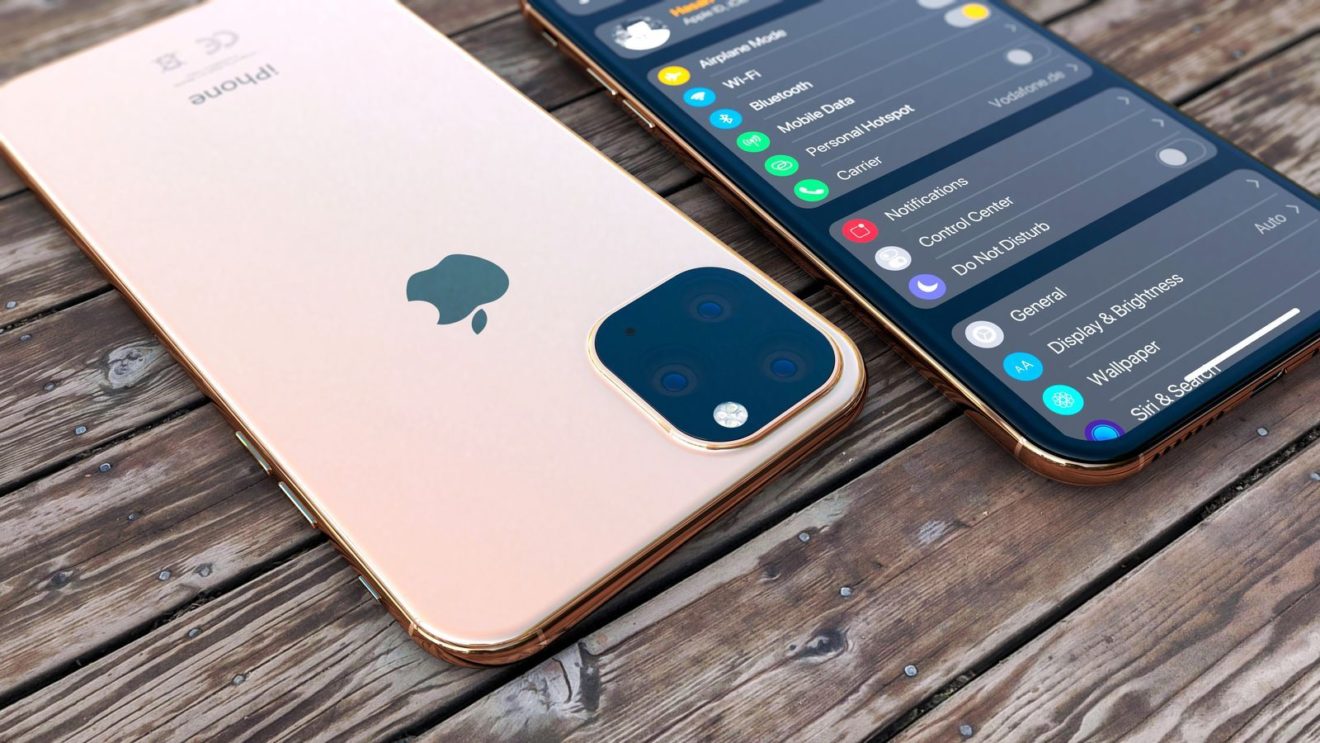
    A new Apple patent, published by the US Patent & Trademark Office, may enable iPhones to charge accessories through their screen glass.

    According to the patent drawings, wireless charging may be functional on one section of the screen while the other stays usable. However, it is unknown whether the charging area of the screen would display anything while the accessories are being charged. The applicable accessories must also support wireless charging in order to charge through the wireless charging screen.

    The “Through-Display Wireless Charging” patent may only support accessory charging. So, if Apple incorporates this patent into its iPhones and iPads, they may be able to charge such as earphones, smartwatches, or styluses, for example through their screens, rather than other smart devices.

    The wireless charging screen may be especially useful when using the Apple Pencil. When a user finishes working with the Apple Pencil, they may simply place the pencil on the screen of their iPhone or iPad to begin charging it.

    Currently, you can charge your second-generation Apple Pencil wirelessly, but in order to do that, you need to attach it to the right side of your iPad.

  • Australia To Speed Up Rollout Of Electric Car Charging Stations

    Australia To Speed Up Rollout Of Electric Car Charging Stations

    The Australian government on Tuesday pledged A$178 million ($132 million) to ramp up the rollout of hydrogen refuelling and charging stations for electric vehicles but did not offer EV rebates or set targets to phase out petrol cars. Prime Minister Scott Morrison said the beefed up Future Fuels Fund provides “an Australian way” to lower transport emissions, reiterating a slogan he introduced recently to describe the country’s middle ground on climate change policy. “We will not be forcing Australians out of the car they want to drive or penalizing those who can least afford it through bans or taxes,” Morrison said in a statement. “Instead, the strategy will work to drive down the cost of low and zero-emission vehicles.”

    The additional investment, which adds to an existing A$72 million commitment and will be spent by the end of June 2025, will also aid purchases of electric cars and buses for government and business fleets. Industry groups and green activists, however, said rebates and tax breaks were necessary to encourage the purchase of cleaner cars in a country where transport is the third-largest source of carbon emissions. “The federal government purports to support choice for Australian motorists, but in fact its strategy stifles choice by making it very challenging for Australia to attract a wide selection of battery electric vehicles to the market,” Clean Energy Council Chief Executive Kane Thornton said.

    The federal funding is only slightly more than a separate commitment by New South Wales, the country’s most populous state, to spend A$171 million on EV chargers over the next four years. Victoria, the second-most populous state, is planning to spend A$29 million on charging infrastructure in regional areas and replacing government cars by 2023. The federal government said its plan should lower carbon emissions by more than 8 million tonnes by 2035, based on its own projection that battery-electric and plug-in hybrid electric vehicles will make up 30% of annual new car and light truck sales by 2030.

    Morrison in 2019 slammed a proposal by the opposition Labor Party to target half of all new car sales to be electric by 2030, saying the policy would “end the weekend” for Australians who want to tow their trailers and boats to go camping. However, a recent survey by The Australia Institute thinktank found 64% of Australians favored requiring all new car sales in the country to be zero-emission vehicles by 2035 and 71% supported government subsidies for electric cars. Battery electric and plug-in hybrid vehicle sales in Australia hit a record 8,688 in the first half of 2021, but made up just 1.6% of total light-vehicle sales. In Norway, the global leader in EV uptake, battery electric vehicle sales made up nearly 80% of new car sales in September.

    The Future Fuels Fund will focus on extending coverage of fast-charging stations to regional areas, investing with private firms in 1,000 public charging stations, and in charging infrastructure at businesses and households. Australia has about 3,000 public chargers installed across the country, according to the Electric Vehicle Council. By comparison, California alone has over 73,000 public and shared chargers. The Electric Vehicle Council said the national plan should have at least included fuel efficiency standards.

    “If Australia continues to be one of the only developed nations without fuel efficiency standards then we will continue to be a dumping ground for the world’s dirtiest vehicles,” council Chief Executive Behyad Jafari said in a statement. The transport infrastructure funding was announced just weeks after Morrison adopted a net-zero carbon emissions target by 2050 in the face of international criticism that the major coal and gas producer was not doing enough to address climate change.

  • Ez4EV Launches EzUrja Mobile Charging Stations

    Ez4EV Launches EzUrja Mobile Charging Stations

    Ez4EV Private Limited, a battery storage & charger development company is all set to launch its innovative mobile charging solution EzUrja for electric vehicles to mitigate the range anxiety of EV owners and to instantly up the missing infrastructure for EV charging points in the country. These mobile charging stations follows an innovative EV ‘Charging-on-Demand’ approach and is managed as an Internet of Things (IoT) device, allowing for remote condition monitoring and organization of operations. Ez4EV plans to deploy multiple EzUrja’s servicing EVs in cities and highways of the country more so as a product for smaller towns by creating better EV connectivity.

    Satinder Singh, CEO, Ez4EV said, “EV development prerequisite is the charging point availabilities. In our country where customer delight is on a door-step delivery basis, we complement the same by providing India’s first Charging-on-Demand to ease the ride of an EV owner”.

    The fully charged EzUrja Mobile guarantees a seamless energy supply for the entire range of slow or fast chargers supporting two-wheelers to commercial vehicles to premium EVs. More importantly, it ensures stabilized flow of energy with zero variables or surges 24×7 on call.

    At the core the Lithium-Ion Manganese Phosphate battery provides the element to make a robust business case, which was not possible with other comparative battery chemistries. Ez4EV is introducing an innovative battery technology from C4V/iM3 New York, for initiating localization of ‘Battery Energy Storage Systems based on their success cases in USA’. Lighter weight, green chemistry characteristics and longer cycles makes the C4V cells as the most ideal battery fulfilling the clean India mandate.

  • Oppo will be the next brand to copy Apple’s MagSafe charger

    Oppo will be the next brand to copy Apple’s MagSafe charger

    Demonstrated at the Smart China Expo 2021, Oppo’s magnetic wireless charging system is called MagVOOC and consists of two adapters, one of which supports 20W speeds while the other supports 40W charging.

    The 40W charger resembles a typical wireless charging stand. If you don’t have a compatible MagVOOC smartphone from Oppo, it’ll work over the Qi charging standard at speeds of up to 15W.

    The smaller 20W charger, on the other hand, looks a lot like Apple’s MagSafe charger. Like the bigger charger, it supports Qi charging too, though this time speeds are limited to 10W.

    In addition to those products, Oppo showcased a dedicated 20W MagVOOC Power Bank that includes a 4,500mAh battery. Again, it includes Qi charging support with the aim of being compatible with wireless earphones and smartwatches.

    It’s unclear when Oppo will release its newly announced MagVOOC products to the public, but if the brand is already willing to demonstrate them in full, a launch shouldn’t be too far off.

  • Porsche Setting Up Battery JV With Customcells For An EV Future

    Porsche Setting Up Battery JV With Customcells For An EV Future

    Porsche has made waves around the world with its Taycan and Taycan Cross Turismo EVs which have been dubbed as the most driver-centric EVs in the world, more so than even Tesla’s groundbreaking vehicles. To further an electrified future, like all things Volkswagen group, it is forming a joint venture with Customcells that will create high-performance batteries that will significantly reduce charge times.

    Like Porsche, Customcells is also a German company hailing from the Southern German region specializing in lithium-ion batteries aiming to create packs that have higher energy density than what Porsche is already using in cars like the Taycan.

    More importantly, it is part of a broadened push towards enhancing the battery supply chain in Europe which is currently dominated by Asia. The Volkswagen group has been making huge investments in this space as the EU has stricter emissions norms which means European manufacturers have to go green faster than automakers around the world.

    One of the keys to achieving better battery efficacy is enhancing the energy density which in turn results in less raw material being used. It will also cut battery production costs and help make electric cars more affordable.

    As a part of the JV, Porsche doesn’t disclose its investment but does say it is a number upwards of 10 million Euros and it holds an 80 percent stake in the venture. The production facility in the equation will have an aim to deliver 100 kWh of capacity which could service about 1000 cars per year. This is a tie-in from what Porsche chief executive officer Oliver Blume said in April which was indicative of the legendary German sports cars marquee ramping up its e-mobility plans for a German factory in Tuebingen for battery production. It so happens this JV with Customcells is based in Tuebingen.

    Porsche parent, Volkswagen has even broader plans of building 6 battery cell plants across Europe and expand its infrastructure for the charging of electric vehicles.

  • Jaguar I-Pace India Launch Rescheduled, Dealer Network Gets Charging Stations Ahead Of Launch

    Jaguar I-Pace India Launch Rescheduled, Dealer Network Gets Charging Stations Ahead Of Launch

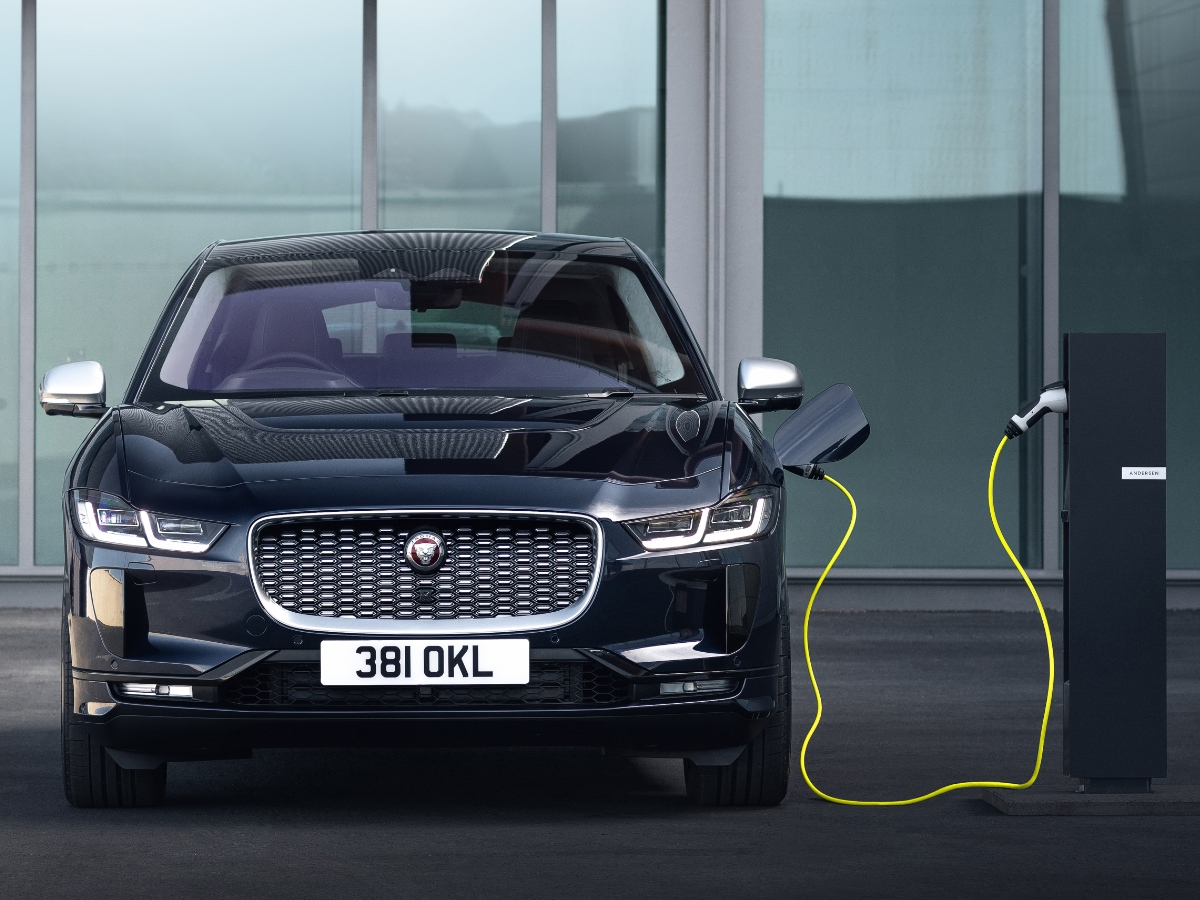
    The Jaguar I-Pace was originally scheduled for launch on March 9. However, the company has now announced that the wait will be a tad longer by a few weeks with the launch rescheduled to March 23, 2021. The I-Pace will be India’s second luxury electric offering after the Mercedes-Benz EQC and is likely to be priced around ₹ 1 crore (ex-showroom) mark. On the bright side, Jaguar Land Rover India also announced that 22 of its dealerships across 19 cities are ready with charging stations to support the brand’s first electric offering.

    JLR India says the retailer charging infrastructure extensively covers the metro cities and key urban hubs across the country. In addition, the dealer staff has been trained by the automaker on EVs, which enable them to answer all queries and concerns of the customer.

    Rohit Suri, President & Managing Director, Jaguar Land Rover India said, “Electric Vehicles will not just be a new mobility solution, but owning one will also be a new ownership experience. We recognise this and have worked relentlessly with our Retailers to ensure that owning an EV is truly a hassle-free experience for our customers.”

    At present, about 35 EV chargers have been installed at JLR dealerships pan India and the company is in the process of installing more. In addition, the Jaguar I-Pace can be charged Tata Power’s EZ Charge Network with over 200 charging points across the country located at malls, residential complexes and highways. In addition, Jaguar India will set-up a 7.4 kW AC wall-mounted charger for customers using a domestic charging cable.

    The Jaguar I-Pace marks a new era for the automaker, which plans to go all-electric by 2025. The model will be powered by twin electric motors developing 394 bhp and 696 Nm of peak torque. The range stands at 480 km on a single charge from the 90 kWh lithium-ion battery. 0-100 kmph comes up in 4.8 seconds. The electric offering will be available in three variants – S, SE, and HSE.

  • Qualcomm unveils Quick Charge 5: batteries go from 0 to 50% in just five minutes

    Qualcomm unveils Quick Charge 5: batteries go from 0 to 50% in just five minutes

    Waiting too long for the battery powering your phone to charge? Qualcomm introduced Quick Charge 5. The technology will allow users to charge the batteries that power their phones from 0% to 50% in only five minutes. So let’s imagine that you need your phone for work. But you spent all night on Peacock streaming Law and Order episodes and now your battery is as alive as the clientele inside the nursing home down the street. In just five minutes you can have your battery at 50% which should keep you up and running while discussing a new contract with your biggest client. Wait an extra ten minutes (for a total of 15 minutes) and your handset will be fully charged. Quick Charge 5 supports charging at 100W and faster.

    Qualcomm says that its new fast-charging system “delivers unprecedented mobile phone charging speed and efficiency improvements compared to previous versions while enabling new battery technology, accessories, and safety features. The world’s first commercially viable fast charging platform to support more than 100W charging power in a smartphone, Quick Charge 5 is engineered to allow users to charge devices from 0 to 50 percent battery power in just five minutes – representing the fastest mobile phone charging capabilities available.” You might recall that last year Xiaomi introduced its 100W “Mi Charge Turbo” that will fully charge a 4000mAh battery in 17 minutes. Xiaomi’s quick charging technology is compatible with Qualcomm’s Quick Charge as are systems offered by Motorola (TurboPower), Samsung (Adaptive Fast Charging), ASUS (BoostMaster) and Vivo (Dual-Engine Fast Charging).

    Quick Charge 5 will also feature Qualcomm Battery Saver and the new Qualcomm Smart Identification of Adapter Capabilities technology. Both will increase the life cycle of a battery and make it more efficient. Qualcomm has come a long way since Quick Charge 1. Early in 2013, we pointed out that the technology was improving charging speeds by up to 40% on phones like the Droid DNA, the Lumia 920, and the Nexus 4. These phones would normally have taken over four hours to fully charge and Quick Charge 1 reduced that to under three hours. The new version of Quick Charge charges up to four times faster than the previous generation of the technology.

    Of course, charging times have been greatly reduced since then and Quick Charge 5 carries 10 times the power delivery carried in Quick Charge 1. It also is 70% more efficient than Quick Charge 4. Helping to drive the latest iteration of Quick Charge are the latest and next-generation management power management integrated circuits (PMIC), the Qualcomm SMB1396 and the Qualcomm SMB1398. Quick Charge, says Qualcomm, is available on more than 1,200 mobile devices, accessories, and controllers.

    Right now, Quick Charge 5 is being tested by Qualcomm customers and should start to appear on devices running the Snapdragon 865 and Snapdragon 865+ Mobile Platforms during the current quarter which runs through September. It also will work on future premium and high-end Snapdragon chipsets. Ev Roach, VP Product Management, Qualcomm Technologies, Inc. states,”Quick Charge 5, our fastest and most versatile charging solution, will enable consumers to enjoy their devices for longer periods of time, without worrying about the time required to recharge. We are proud to expand our technology portfolio and make accessible 100W+ charging a commercial reality. We work closely with manufacturers to create industry-leading devices that meet consumers’ demand for more immersive and accessible mobile experiences.”

    Battery life is improving as smartphone batteries get larger and larger. But that is only half of the story. Large capacity batteries are great and certain phones can go as long as three days on a single charge. But without a fast-charging system, they can take a long time to replenish the power inside the component. And that is where Qualcomm’s Quick Charge comes in, helping to improve a phone user’s overall experience.

  • European Union wants Apple’s Lightning port gone

    European Union wants Apple’s Lightning port gone

    EU lawmakers might be in favor of diversity, but not when it comes to smartphone chargers. Today, these lawmakers called for the creation of one standard charger for all mobile devices. By an overwhelming vote of 582-40, members of the European Parliament passed a resolution that asks the European Commission (the body that drafts laws for the EU) to make sure that buyers of mobile devices no longer are under the obligation to purchase a new charger every time they buy a new device. The resolution calls for the EC to adopt new rules by this coming July.
    The idea is to reduce the amount of electronic waste that the EU is dealing with. During 2016, the last year that data was made available, such waste generated in the EU added up to 12.3 million tonnes or 36.6 pounds for each person living in the EU. The resolution noted that requiring a standard charger for mobile devices could reduce the amount of electronic waste and it also asked the Commission to pass a rulemaking sure that wireless chargers could be used to power up different mobile devices.

    The EC has actually been fighting for a standard mobile charger for over 10 years. in 2009, Apple, Samsung, Huawei, and Nokia signed a “voluntary memorandum of understanding” calling for these phone manufacturers to use standard chargers for phones that were coming to the marketplace in 2011. But it is obvious to the EC after nearly 10 years that the voluntary approach has not worked and that legislation is going to be needed in order to force the phone manufacturers to take action.

    The company that is on the line with this proposal is Apple. That is because most Android phones have a USB-C port which is the closest thing to a common charging platform that the mobile industry has today. However, Apple has its proprietary Lightning port which has been in use since 2012 when it replaced the 30-pin dock connector. Apple did switch to USB Type-C for the 2018 iPad Pro models and for the last couple of years there have been rumors about the same thing happening to the iPhone. Many iPhone users have been hoping that Apple switches to Type-C; that could make it easier for them to find accessories for their iPhones and at a lower price, too.
    While Apple might end up not having a choice in Europe, it is hard to see the company voluntarily switching to a standard system because of the profits involved. Having a proprietary charging system means that people will have to come to Apple for an original replacement. The company already took a little hit when it introduced the 2019 iPhones by including an 18W fast charger in the box with the iPhone 11 Pro and iPhone 11 Pro Max. While the iPhone 8 iPhone 8 Plus, iPhone XS, iPhone XS Max, and iPhone XR all support fast charging, owners of those models have to shell out $29 for an 18W charger.
    Last month, reliable TF International analyst Ming-Chi Kuo looked deeply into his crystal ball and said that the highest-end 2021 iPhone might not have a Lightning port or a USB-C port. Kuo is talking about the iPhone 13 Pro Max featuring a “completely wireless experience.” If indeed Apple is looking at offering a port-free phone, it could decide that it isn’t worth it to make a switch away from the Lightning port for a short period of time.
    However, there is still the EU to consider. Apple said last week that the mobile industry is already moving toward the use of Type-C as a standard, but also said that forcing a standard on the industry would hurt consumers in Europe. And Apple also points out that making a quick move to a standard charging platform would create plenty of electrical waste, exactly what the EU is trying to avoid in the first place.
  • Hyundai Motor Joins European Electric Car Charging Venture Ionity

    Hyundai Motor Joins European Electric Car Charging Venture Ionity

    Ionity, the European electric vehicle charging joint venture of Volkswagen, BMW, Daimler and Ford, said on Monday that South Korea’s Hyundai Motor had joined as a shareholder.

    Ionity aims to install 400 high-speed charging stations across Europe by the end of next year in a bid to combat concerns about the range of electric vehicles, which is still considered a key factor limiting demand.

    So far, the venture has installed 140 stations in 14 European countries, while a further 50 are under construction.

    “The participation of new investors in Ionity is a clear signal of trust indicating that the work of our young company is already bearing fruit,” Chief Executive Michael Hajesch said in a statement.

    The announcement comes days before the Frankfurt Auto Show IAA, where sustainable driving and electric cars will take centre stage. Volkswagen will display its ID 3 electric vehicle, Porsche its Taycan electric sports car, and Mercedes-Benz its fully electric van.

    Carmakers are pouring much of their cash into developing electric vehicles, while energy providers hesitate to take on responsibility for the rollout, as long as electric car sales remain too low to provide a profitable customer base.

    Reporting by Christoph Steitz; Editing by Edmund Blair

  • Slow Charging Could Be The Long-Term Solution To Sustainable EV Charging Infrastructure

    Slow Charging Could Be The Long-Term Solution To Sustainable EV Charging Infrastructure

    Automakers around the world are pushing hard for new networks that can charge electric cars fast. In Europe, some power companies and grid operators are testing whether it might be smarter and cheaper to move into the slow lane.

    A 15-month study of electric car charging behaviour in Germany has concluded that consumers can be persuaded to accept slow, overnight recharging that could help avoid brownouts from surges in electricity demand or costly upgrades to power grids.

    The prospect of millions of EVs hitting the roads as governments gradually ban new diesel and gasoline cars is seen as a major challenge for power companies, especially in Germany which is switching from nuclear and coal to less predictable sources of energy such as wind and solar.

    The small study in the wealthy Stuttgart suburb of Ostfildern-Ruit though has helped alleviate the concerns of some grid operators that too many electric vehicles (EVs) charging at peak times could cause network crashes.

    The engineers at Netze BW, the local grid operator behind the trial, found that all the households involved came around to leaving their electric cars plugged in overnight and only half ever charged simultaneously.

    “Since the experience with the project we have become a lot more relaxed. We can imagine that, in future, half of the inhabitants of such a street own electric vehicles,” said Netze BW engineer Selma Lossau, project manager for the study.

    Still, with limited EV battery ranges for now, slow, overnight charging doesn’t get around the problem of how to persuade drivers to ditch petrol cars altogether.

    Without a network of fast-charging stations offering quick refuelling, drivers may be wary of using EVs for long trips – which is why some automakers want lots of fast-charging stations to encourage the widespread adoption of electric cars. Slower, or delayed, charging has already gained traction in Norway, Europe’s leading EV market, where nearly 50% of new car sales are zero-emission vehicles.

    A study by energy regulator NVE showed that Norway faces a bill of 11 billion crowns ($1.2 billion) over the next 20 years for low- and high-voltage grids, substations and high-voltage transformers – unless it can persuade car owners to charge outside peak afternoon hours.

    The investment cost to the country of 5.3 million people could drop to just over 4 billion crowns if cars are charged in the evening, and may fall close to zero if batteries are only plugged in at night, NVE said.

    NVE is now working a tariff proposal which will penalise peak-hours charging. Tibber, a Norwegian power company, already offers cheaper electricity for EV charging if you let it decide when your car is charged while firms such as ZAPTEC offer ways to adjust charging to the available grid capacity.

    Some of the 10 households participating in the Stuttgart trial said they initially wanted to keep topping up their cars for fear of running out of juice, but soon adapted to leaving the power company to handle it as it saw fit overnight.

    “At the start, I did not want to take any risks and charged frequently in order to feel secure. Over time, I changed my outlook,” said Norbert Simianer, a retired head teacher who drove a Renault Zoe during the trial. “I grew used to the car and became more at ease in handling the loading process.”

    Simianer and his neighbours were given electric cars and 22 kilowatt (kW) wall-boxes for their garages, alongside two charging points in the street, all free of charge.

    In return, they gave up their normal cars and allowed Netze BW, which is a subsidiary of German utility EnBW (EBKG.DE), to monitor and carry out a deferred and down-scaled charging process during a seven-and-a-half-hour period overnight.

    Netze BW tried various options, either slotting cars in at the maximum 22 kW charging flow one after another, or lengthening the charging time for individual cars by adjusting the power flow, or combining both methods, Lossau said.

    The participants, who used apps to check the status of their car batteries, grew accustomed to the lack of instant charging capability because their vehicles could always handle their everyday commutes of up to 50 km (31 miles).

    EnBW said nine of the 10 households in the trial on Ostfildern-Ruit’s Belchenstrasse had opted to keep the wall-boxes and most were exploring leasing electric car.

    Lossau said monitoring 10 households did not in itself provide the “empirical mass to draw conclusions for the load profile of all of Germany”.

    She also said there would need to be better two-way communication between EVs, the grid and consumers for the system to function efficiently on a large scale.

    “There will have to be more exchange of information between e-cars and the grid to update the loading status in real-time, because otherwise, there can be the wrong impression about the speed of loading,” she said.

    Utility companies developing so-called vehicle-to-grid (V2G) services, however, are struggling to persuade some automakers to use technology that allows two-way flows of information, and power, between batteries and grids.

    Carmakers such as Volkswagen , Daimler and Ford, for example, are prioritising one-directional fast-charging instead to overcome consumer resistance to EVs.

    Japan’s Nissan (7201.T) has been leading the way among carmakers exploring V2G though Germany’s BMW has now decided to develop it too, saying cooperation between cars and grids will be key to making e-mobility ready for mass markets.

    “It is about making sure there is enough supply for the electric cars and that the lights do not go out elsewhere,” a BMW spokesman said. “The cars don’t just load when it’s best for the market, but they can also supply power back to the grid to help even out demand spikes.”

    “There has to be more progress on the data exchanges, however. It is not yet the standard,” he said.

    Nevertheless, the Ostfildern-Ruit trial has raised hopes that power grids might be able to cope with an influx of electric cars, especially if the consumers play ball.

    Even if drivers resist overnight charging, suppliers of software and equipment to power grids, such as Germany’s Siemens, are also looking at safer and more efficient ways to manage how and when power is used to charge cars.The German city of Hamburg, for example, started a three-year pilot project this month with Siemens to pre-emptively identify overloads on transformers and along cables, and manage EV charging points accordingly.

    “Loading processes offer so much flexibility that the overload on the networks can be reduced by deferring loading times or reducing the load that is supplied,” said Thomas Werner, expert at Siemens Digital Grid.

    “This happens through the digitisation of hardware and software and with communication technology,” he said.

    Using software to help protect ageing power networks from predictable surges could also avoid costly hardware upgrades to parts of the 1.7 million km of distribution grids in Germany.

    With few than 100,000 electric-only cars in Germany at the moment, there is little threat of blackouts from over-demand. But the Transport Ministry in Berlin envisages up to 10 million electric cars on the roads by 2030.

    The number of charging points across the country also only stands at 21,000. That’s up 50% over the last year but still barely a fraction of future needs.

    Next up for Netze BW is a trickier test.

    Managing the power for 10 households with electric cars in a suburban street of 22 homes is one thing, now the power company is launching a study of car charging behaviour in an apartment block with 80 flats, where quarrels over access are likely.

    It is also looking at a study in rural areas, where the longer cables required present challenges in maintaining stable voltages for charging.

    But that’s still only part of the story. Lossau said power companies would have to work more closely with carmakers to fill knowledge gaps and exchange information.

    “It can only work if we get more data from each other.”
  • EESL Partners With Apollo Hospitals To Install Public Charging Stations

    EESL Partners With Apollo Hospitals To Install Public Charging Stations

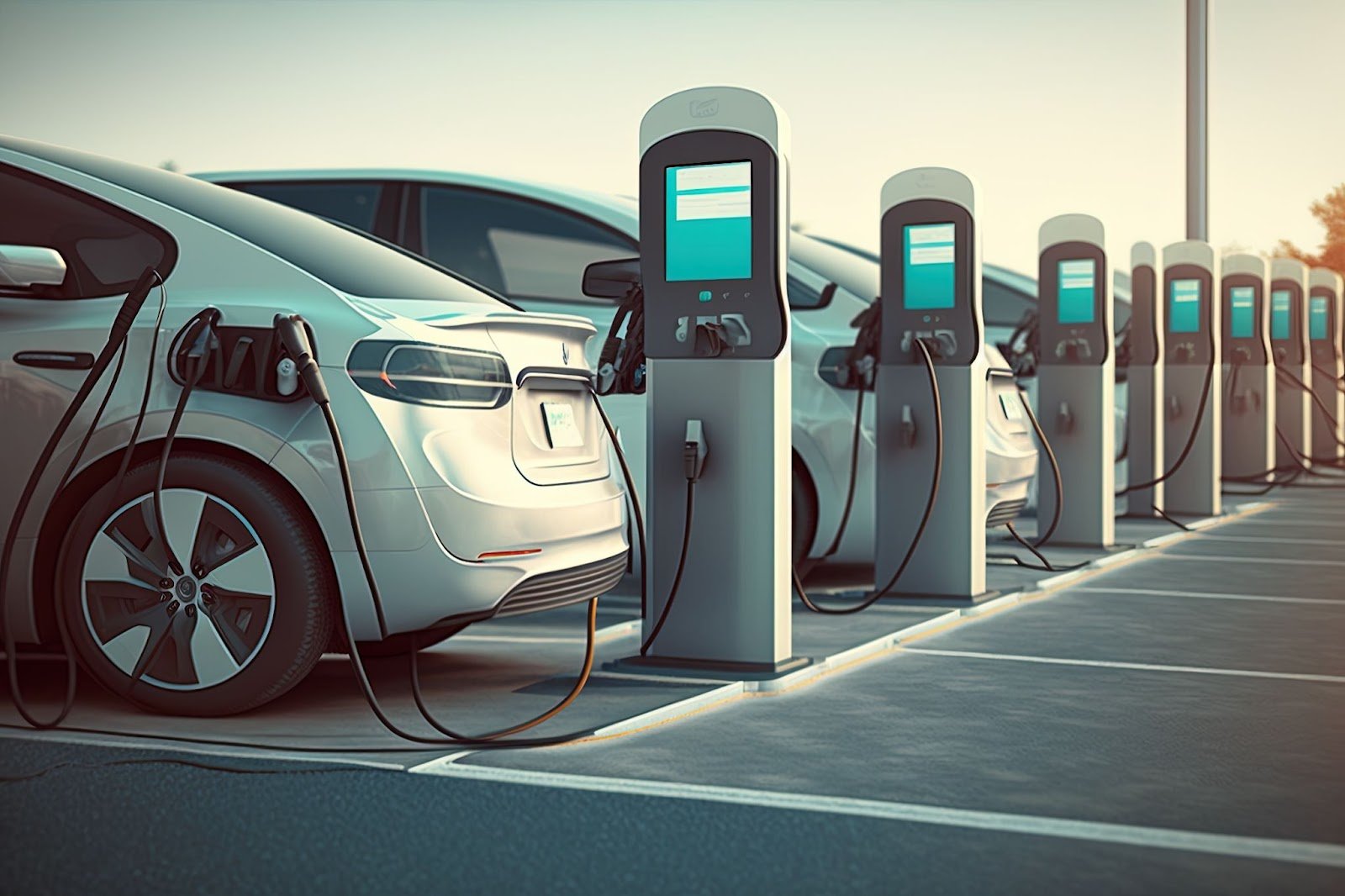
    Energy Efficiency Services Limited (EESL), a joint venture of PSUs under the Ministry of Power has announced its first partnership with the private sector. The world’s largest public energy services company (ESCO) has signed a 10-year Memorandum of Understanding (MoU) with Apollo Hospitals to install public charging stations across its hospitals in India. The aim is to boost e-mobility across the country and the tie-up will help set-up the charging infrastructure for electric vehicles. Under the MoU, EESL will make the entire upfront investment on specified services and deploy the manpower required for the operation and maintenance of the public charging infrastructure. Meanwhile, Apollo Hospitals will provide the requisite space and power connections for the charging network to EESL.

    Commenting on the announcement, Venkatesh Dwivedi, Director – Projects, EESL said, “Developing a strong supporting infrastructure is vital to build consumer confidence in electric vehicles. Our MoU with Apollo Hospitals reinforces the role of the private sector in achieving the goal of National Electric Mobility Programme. Electric mobility is vital to reducing airborne emissions and enhancing air quality, a cause the healthcare sector can resonate with. We look forward to more such multi-sectoral partnerships to accelerate the adoption of EVs across the country.”

    The move is part of the government’s National Electric Mobility Programme. EESL has commissioned 300 AC and 170 DC chargers across India and has established 55 public operational charging points in Delhi-NCR. The company has also partnered with Urban Local bodies in Hyderabad, Noida, Ahmedabad, Jaipur, Chennai, among other locations, to further penetrate the charging infrastructure.

    EESL procures the electric vehicles and chargers in bulk, which allows the company to source them at significantly discounted rates, lower than the actual market value. This allows the company to carry out operations at competitive project costs, which it says has helped the firm establish a sustainable business model that is affordable for the end consumer.

    With the government aggressive towards the adoption of electric vehicles in India, the charging infrastructure that remains nascent at present has always been a concern. Initiatives like these though will certainly help create enough charging locations to support electric mobility that is just gaining traction in the country.