Retail News CRM

Tag: Charging

  • Tesla Reintroduces Unlimited Free Supercharging On Model S And Model X

    Tesla Reintroduces Unlimited Free Supercharging On Model S And Model X

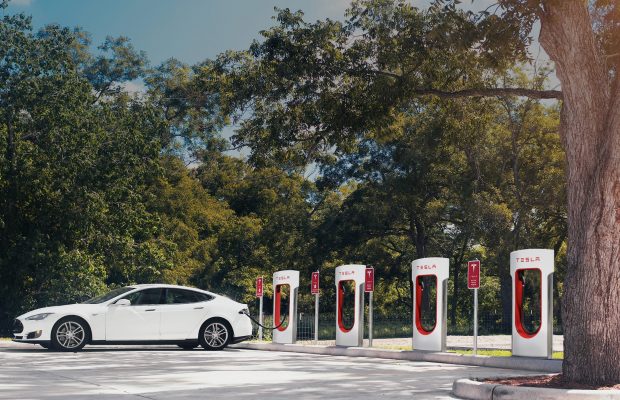
    Superchargers have had an important role in making Teslas popular simply because they help customers deal with the issue of range anxiety which is the biggest problem an electric car owner has to face. A Tesla Model S powered by a 85 kWh battery pack takes 20 minutes for a 50 percent charge, 40 minutes for 80 percent charge and 75 minutes for 100 percent charge using a supercharger. The duration for a similar spec Model X stands at par as well. There was a time when Tesla used to give this service for free to Model S customers when the company was quite new in the business, however, customers were soon charged to avail the service.

    The California based carmaker in a tweet has confirmed reintroducing the unlimited free charging scheme on the Model S and Model X. At present, Tesla owners in the US need to pay $ 0.28 (28 cents) per kWh or $ 0.13 (13 cents) to $ 0.26 (26 cents) per minute for using a supercharger. This means a full charge on a Tesla Model S through a supercharger would cost $ 19.5 which is over ₹ 1300 in Indian currency. The free charging service is available to Model S and Model X owners only while Model 3 owners will need to pay for the service.

    The offer will help Tesla to sustain sales of both models alongside the Model 3 which is much more affordable. The Model S and Model X were also given an under the skin (mechanical) upgrade to boost its drive range and both models are now compatible with Tesla’s V2 superchargers which have a power range of 200 kWh.

  • Ather Energy Begins Setting Up Fast Charging Infrastructure In Chennai

    Ather Energy Begins Setting Up Fast Charging Infrastructure In Chennai

    Ather Energy has started setting up the company’s fast charging network, Ather Grid in Chennai. In all, between 50-55 Ather Grid points will be set up in Chennai and running by the end of the year. The fast charging network can be used by all electric two-wheelers and four-wheelers and Ather is offering this facility free of charge till the end of 2019. Chennai has 7 active fast charging Ather Points installed and is the second city in India to have Ather’s charging network after Bengaluru.

    “Ather Grid has seen steady adoption in Bengaluru and we believe that accessible charging infrastructure is critical before launching our products in any market we enter. We have already signed up with multiple partners and will add 50 charging points by the end of the year. Chennai was a natural choice for our expansion as the auto hub of the country and as the birthplace of Ather in IIT Madras. We are working on setting-up the charging network and our experience centre – Ather Space – in time for the launch of the Ather 450 in the coming weeks,” said Ravneet Phokela, Chief Business Officer.

    With the installation of the charging network, Ather Energy officially makes its foray into Chennai. The city will also have its own experience centre – Ather Space – and pre-orders for the Ather electric scooters for Chennai will open in June. The charging network is supported by the Ather Grid app which allows all EV owners to locate and check the availability of the nearest charging stations in real time. Currently, the Ather Grid network spans across 31 charging points across 24 locations in Bengaluru and 7 locations in Chennai. The company plans to expand the network and set up charging points in 30 cities by 2023.

    Ather Energy was founded in 2013 by IIT Madras alumni Tarun Mehta and Swapnil Jain, and last year the company launched its two smart-connected electric scooters, the Ather 340 and the Ather 450. Ather Energy is backed by founders of Flipkart, Tiger Global and Hero MotoCorp. The company currently operates in Bengaluru and will be officially launching operations in Chennai in June 2019, followed by other major cities across the country.

  • Samsung Galaxy Note 10 Supports 50W Charging

    Samsung Galaxy Note 10 Supports 50W Charging

    Samsung recently released two phones that support 25W fast charging, but you may have missed that because they are not available worldwide. Those are the 5G version of the Galaxy S10 and the Galaxy A70. More Samsung phones may get super-fast charging in the future, starting with this year’s Galaxy Note 10.

    We’ve already heard rumors that the Galaxy Note 10 is likely to great battery life, and it seems like Samsung is also planning to introduce 25W fast charging alongside the increased battery capacity. It’s too early to tell whether the base Note 10 will get super-fast charging, or whether it will be reserved for the “Pro” version only, but prolific leaker Ice Universe claims that the charge speed may actually exceed 25W. We may be talking about 50W, which is the current bar set by the competition.

    OnePlus’s DASH Charge works at 30W, while Oppo’s SuperVOOC charge can hit around 50W, and both have been tested with great results. Similarly, Xiaomi has an insane 100W prototype charging solution that’s said to be able to fully juice up a 4000mAh battery in just 17 minutes. Over the last three years, Samsung has understandably been a bit more careful in regards to battery capacity and charging speeds, as the memory of the ill-fated Galaxy Note 7 still lingers in the public mind.

    The Samsung Galaxy Note 10 and Galaxy Note 10 Pro are likely to launch in mid-August, and if recent rumors are to be believed, they won’t disappoint. The more expensive Pro variant is said to feature the same hexa-camera setup as the Galaxy 10 5G. That includes four cameras on the back (12MP primary with OIS + 12MP telephoto with 2x optical zoom + 16MP ultra-wide angle+ depth sensor) and two selfie snappers in front. The base Galaxy Note 10 will reportedly have a penta-camera setup that includes everything on the Note 10 Pro, except for the depth sensor. The U.S. version of all Note 10 units will be powered by the Snapdragon 855 Mobile Platform, equipped with at least 8GB of memory.

  • Google Maps adds real-time info for EV charging stations

    Google Maps adds real-time info for EV charging stations

    There are so many reasons to love Google Maps right now, some of which have very little to do with the core functionality of the world’s most popular web mapping service or the numerous handy navigation features borrowed from Waze over the past few months.

    One extremely convenient thing you’ve been able to do since last fall with Google Maps is easily find electric vehicle (EV) charging stations around the world, and now the feature is further improved to save you some hassle and avoid wasting your time. In addition to just showing you nearby charging stations and helping you reach them by taking the fastest route, the wildly successful app can also provide real-time information on the availability of actual charging ports.

    No more waiting in line for “anywhere between minutes to hours”… unless, of course, you don’t mind taking your chance or don’t have much of a choice of EV charging stations in your area. But if you do, Google Maps will display exactly how many ports are actually available at any given time in stations from Chargemaster, EVgo, and SemaConnect networks. Keep in mind that the expanded functionality is only supported in the US and UK at the moment, with Chargepoint slated to join the aforementioned list of partners “soon.”

    As you can imagine, it’s incredibly easy to locate the closest electric vehicle charging station. You simply enter “ev charging” or “ev charging stations” in the app’s search box, which will bring up a list of relevant places from where you can access the number of available ports, their types and charging speeds, as well as other driver-provided info about a specific station, like photos, ratings, reviews, and questions.

    Don’t forget to update Google Maps on your Android handset or iPhone to the latest version published to Google’s Play Store or Apple’s App Store. The new feature should already be live for users of both mobile operating systems.

  • Oslo Becomes The First City In The World To Get Wireless Charging Systems For EVs

    Oslo Becomes The First City In The World To Get Wireless Charging Systems For EVs

    Norway’s capital Oslo will become the first city in the world to install wireless charging systems for electric taxis, hoping to make recharging quick and efficient enough to speed the takeup of non-polluting cabs. The project will use induction technology, with charging plates installed in the road at taxi ranks linking to receivers installed in the vehicle, Finnish utility Fortum said.

    From 2023 onward all taxis in Oslo will have to be zero emission and Norway wants all new cars to be zero emission by 2025. Among other nations, Britain and France have similar goals for 2040. Fortum, which is working with U.S. firm Momentum Dynamics and the City of Oslo on the scheme, said the greatest hurdle for electrification of taxis had so far been the infrastructure, as it is too time consuming for cabbies to find a charger, plug in, then wait for the car to charge.

    Induction is more energy efficient and enables charging the taxis while they are in the slowly moving queues at taxi ranks. “Time equals money when taxi drivers are working,” said Ole Gudbrann Hempel, head of Fortum’s public charging network in Norway.Norway has the world’s highest rate of electric car ownership, partly thanks to long-term perks such as free or discounted road tolls, parking and charging points. Last year, almost one in three new cars sold was electric.

    The government also exempts electric vehicles from taxes on traditional vehicles that are very high in a country which does not have its own fossil fuel car industry to lobby against them. With just five million people, Norway bought 46,143 new battery electric cars in 2018, making it the biggest market in Europe, ahead of Germany with 36,216 and France on 31,095, according to the European Automobile Manufacturers’ Association.

  • New AirPower image found on Apple’s website

    New AirPower image found on Apple’s website

    It’s been over one year and a half since Apple first announced AirPower, the infamous wireless charging pad which still hasn’t been released, despite the promise of a launch during 2018. Reports and rumors about the status of AirPower have been floating around for months, with many now speculating that Apple will announce it sometime this week. Rather unsurprisingly, Apple has made no official statement on the matter, but now a new finding on the company’s website suggests AirPower could be just around the corner.

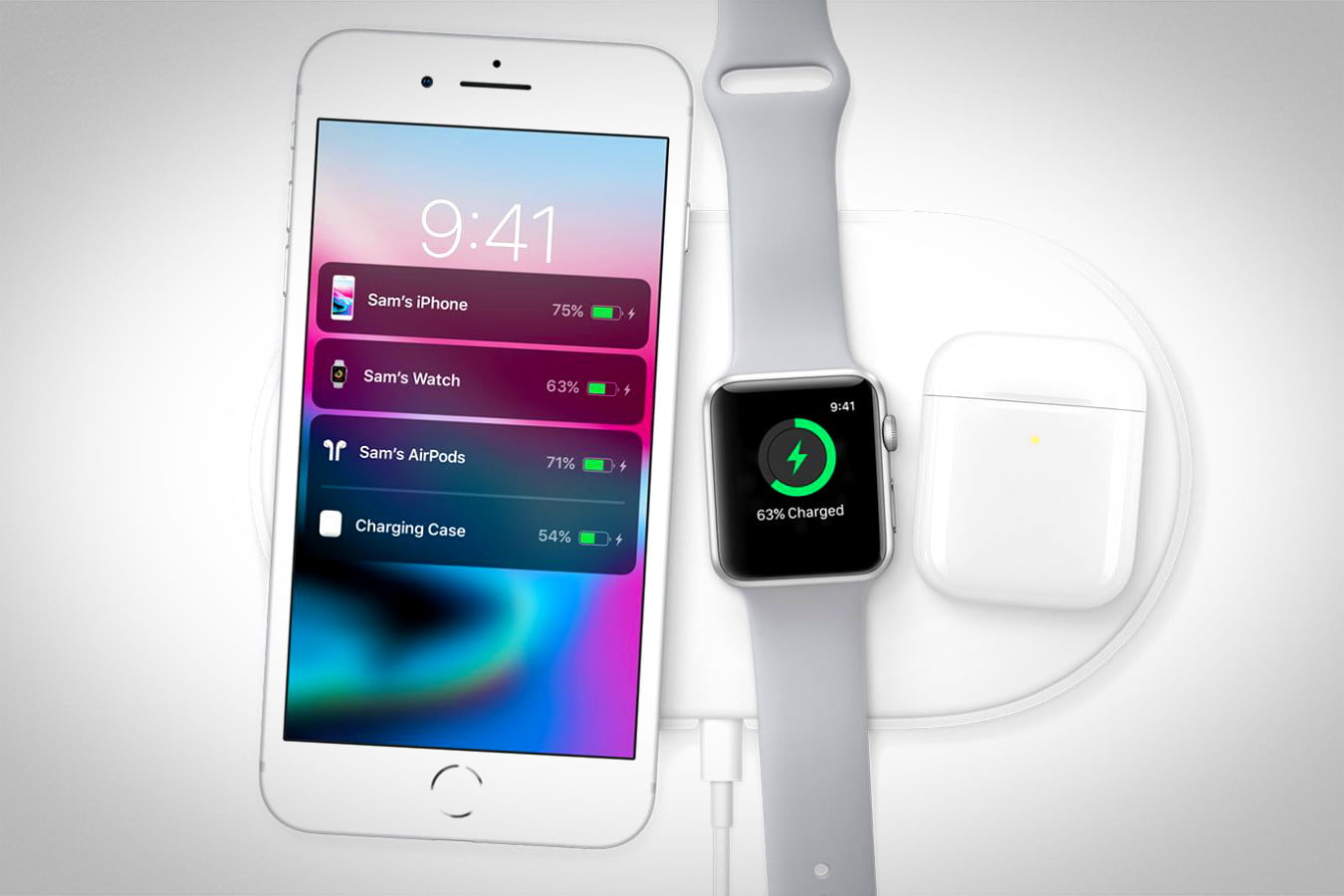
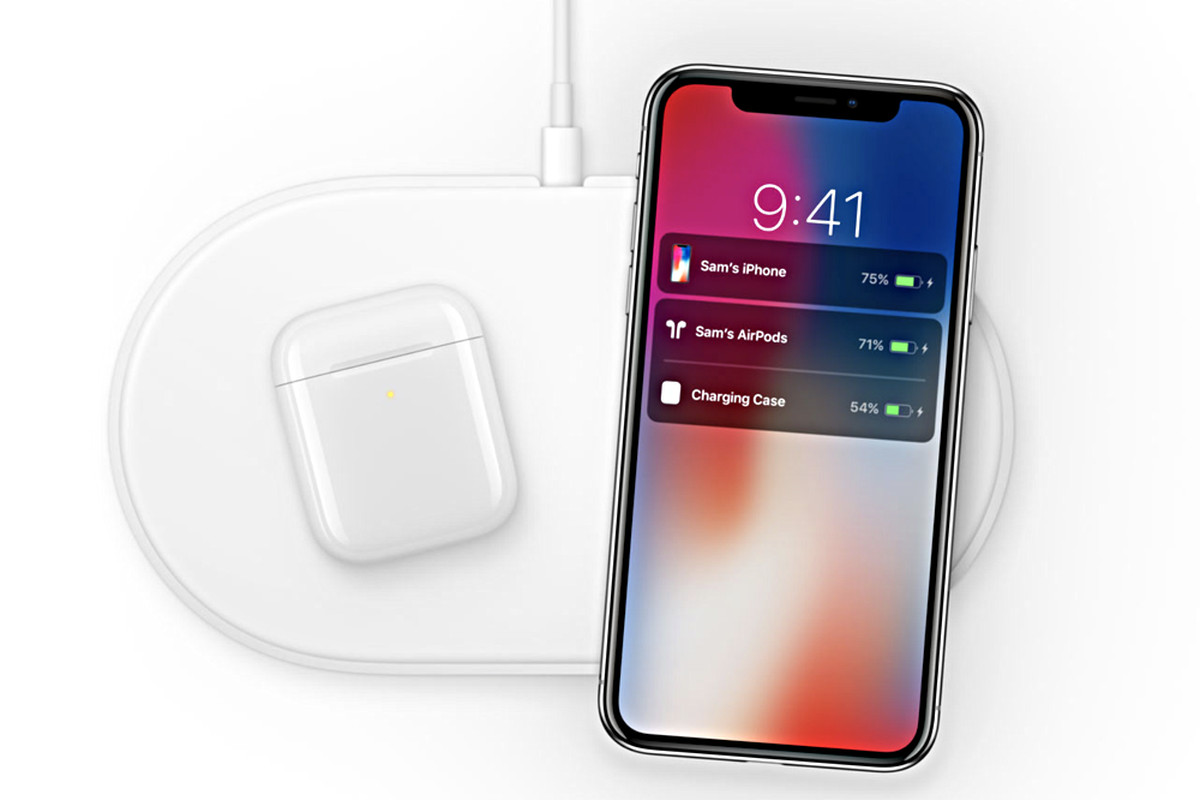
    The new AirPower image on Apple’s website

    Yesterday, when Apple updated the AirPods page on its website following the announcement of an improved pair, the company proceeded to remove all references to AirPower – it even removed the old marketing image showing AirPower charging an iPhone X and a pair of AirPods.  A replacement image is yet to be added to the page, but as it turns out, there is actually a new, never-before-seen official AirPower image hidden within the source code of Apple’s Australian website.

    Overall, the new press image is pretty similar to the original. This time around, though, Apple has replaced the iPhone X with a newer iPhone XS. Another tiny detail which has changed is the device owner’s name – it was previously Sam but is now David. Presumably, this new AirPower image will be used once the charging pad is officially introduced. The expectation was that it’d debut today, but Apple appears to have paused its announcements for the time.

    When will Apple actually release AirPower?

    At this rate, it’s unclear when Apple will announce its highly-anticipated wireless charger. There do, however, appear to be three options. The first option, and one which could be considered wishful thinking, is an announcement tomorrow. Apple successfully created hype earlier this week with iPad, iMac, and AirPods announcements on Monday, Tuesday, and Wednesday respectively. Then, earlier today a number of iPad Air and iPad Mini reviews dropped, hogging the limelight for the day. In order to complete the week, Apple could schedule an AirPower unveiling for tomorrow, guaranteeing itself another day in the headlines

    The second option is an announcement at Monday’s event. This is certainly possible but does seem pretty unlikely at this point. The focus of next week’s press event is Apple’s upcoming subscription services, and by announcing its newest hardware products this week, the company has successfully removed any potential distractions from the big day. But AirPower, rather naturally, would prove to be a pretty big one.

    The last option is an announcement later this year. When exactly remains a bit of a mystery, but the company could either launch it at WWDC or at its iPhone event in September, or choose to release it quietly on any given day.

    What key features will AirPower offer?

    In terms of what AirPower actually has to offer – aside from its integration within Apple’s ecosystem – the charging mat should offer the ability to wirelessly charge up to three devices simultaneously.

    This means that keen Apple users out there looking to purchase the charging pad will be able to charge their iPhone 8 (or newer) alongside an Apple Watch Series 3 (or newer) and a pair of AirPods – as long as the new wireless charging case has been purchased.

    As for pricing, no official details have been provided yet. However, rumors do point towards a retail price in the region of $150, although this is pure speculation at the moment and the final price could be either higher or lower.

  • Apple to announce AirPower and AirPods wireless charging case

    Apple to announce AirPower and AirPods wireless charging case

    According to Max Weinbach, Apple’s seventh-generation iPod Touch will make its international debut sometime tomorrow. Once again, specifics about the product weren’t provided but this announcement info does coincide with a previous rumor from earlier today. After the iPod’s announcement, Apple could proceed with the unveiling of two other products. Weinbach’s sources acknowledged that they haven’t worked on AirPower or the AirPods wireless charging case directly.

    However, they did confirm the possibility of these products launching later on this week. If Apple’s strategy so far is anything to go by, the AirPower charging mat will probably be announced on Thursday. This will presumably be followed in Friday by the debut of the AirPods wireless charging case. But if Apple wishes to cut the week short, it could announce both products simultaneously.

    As a further indication of Apple’s plans to launch AirPower soon, recent changes to the iOS 12.2 beta have resulted in “significant” modifications to the wireless charging code. More specifically, the operating system now includes the code “responsible for identifying that two devices are charging on the same mat,” something AirPower will support.

    Apple’s AirPods 2 might still be months away

    As you may have noticed, there has been no mention of AirPods 2. Unfortunately, this is because the sources believe Apple’s next-gen wearable won’t launch until September alongside the iPhone 11 series. Rumor has it that AirPods 2 will look fairly identical to the originals. But in the hope of improving grip and reducing slipperiness, Apple is believed to be preparing a new frosted glass-like coating. This same coating may be present on the 2019 iPhone series.

    The new AirPods should introduce always-on Siri – which will give users the option of activating Siri with the words ‘Hey, Siri’ – and some kind of water resistance. The updated accessory may also feature some health-related features such as a built-in heart rate monitor. Also expected from AirPods 2 is Apple’s W2 Bluetooth connectivity chip.

    This halves power consumption with respect to the W1 chip and should result in big battery life improvements. Better overall sound quality is likely too.

    What does Apple have left for its March 25 event?

    After what could potentially be an entire week dedicated to hardware, next Monday Apple is holding the “It’s show time” press event. And, as revealed by Weinbach’s sources, there will be no hardware announcements. Instead, the company will focus entirely on its new services. The main star next week is expected to be Apple’s highly-anticipated news-aggregating subscription service.

    For a rumored price of $10 per month, consumers will gain access to a range of premium new content provided by a wide range of suppliers. Reportedly, this new service will be available to iPhone, iPad, and Mac users through the existing Apple News app.

  • Kia Partners With Amazon To Sell Charging Stations For Electric Vehicles

    Kia Partners With Amazon To Sell Charging Stations For Electric Vehicles

    Kia Motors America (KMA) in partnership with Amazon Home Services has announced a new program for its plug-in vehicle customers. The program will see Amazon sell and install electric vehicle charging stations at the customers house or office. The tie-up makes Kia, the second automaker after Tesla in America to offer the service online with the electric charging network. The manufacturer says the process of purchasing and installing a charging station will be as easy as buying other products on Amazon.

    Speaking about the new initiative, KMA – Car Planning and Telematics, Executive Director, Orth Hedrick said, “Home-charging can’t get any easier than this. Being able to order a Level 2 charger and installation through Amazon further demystifies and simplifies the experience for new Kia EV and PHEV owners. It’s just another example of how we’re constantly striving to provide the very best vehicles and customer experience.”

    Kia Motors has been actively working on improving its charging infrastructure in the US as it adds more electric cars to its portfolio. The company currently retails the Soul EV, Niro EV1, Niro PHEV and Optima PHEV, among other models in the country. Customers will find recommended Level 2 or 240-volt charging units selected by Kia on Amazon, along with information about home charging installation and customer reviews. The site also gives customers the cost for the installation and will schedule a licensed electrician for the same, if needed. The charging stations are backed by Amazon’s Happiness Guarantee plan. Kia’s vehicles in the US are offered with a 10 year/160,000 km warranty cover and roadside assistance.

    Kia and Amazon have set up a new ‘Charge my Kia’ portal for the sale of the electric charging stations. While buyers can purchase the Bosch 40-amp station that is available in partnership with the manufacturer, there are other charging stations available as well from companies like Chargepoint and Juicebox.

  • The Different Advantages And Disadvantages Of Cell Phone Charging For Retail

    The Different Advantages And Disadvantages Of Cell Phone Charging For Retail

    Living in a digital society, wireless phone charging has become a commonplace daily activity.  Technology is becoming more advanced in the 21st century and it is creating an ecosystem of various wireless charging gadgets that are not just for smartphones.  Nowadays, wireless phone charging can be done not only at home but also at public companies.  While the advantages of wireless phone charging are quite obvious, there is a negative side to this feature.  If you are planning to switch to wireless charging, it may be useful to read this article on its benefits and drawbacks.

    Before heading further into this discussion, you should have some idea of how wireless chargers operate.  Through an elimination of cables and connectors, the wireless charging has various benefits over wired chargers.  In this fast-changing digital society, it is obvious that people need “smart chargers” to charge the “smart phones”.

    What Are The Different Benefits Of Phone Charging?

    1. Convenience

    The first benefit to using wireless charging devices is that you will not need to deal with cables or cords.  By removing the need for cords, it becomes far simpler to place the phone at a charging station.  Furthermore, you will not have to concern yourself with where you left the cable or the need for different types of chargers.  Wireless chargers are also able to charge different phones simultaneously. Cell Phone Charging Stations with Lockers are also safe, providing you with peace of mind.

    1. Integration

    One of the greatest advantages to using wireless chargers is that it can integrate with almost all mobile phones regardless of the size or shape of the phone’s charging socket.  It should also be mentioned that other devices beyond a smartphone can be charged using the wireless charging option.

    1. Multiple Device Charging

    Nowadays, it is common for several smartphones to be within the same room.  In many cases, the smartphones will have the same or similar chargers; however, there are still differences when it comes to Android and Apple cell phones.  By using a wireless charging pad, you will be able to charge numerous types of smartphones at the same time.  It is also possible for you to charge other devices using the wireless charging pad including laptops and tablets.  This is beneficial because you will reduce the number of cables required and other international power adapters used at the workplace or at home.

    What Are The Disadvantages Of Wireless Phone Charging?

    Despite the different benefits of wireless charging, everyone knows that this concept is not perfect and there are several drawbacks.  To make an informed decision regarding this item, it is important that you know these drawbacks.

    1. Performance

    Unlike traditional device chargers, wireless chargers are not fully integrated for all devices.  This is because it lacks efficiency and the charging process is much slower than traditional charging options.  Furthermore, wireless chargers generate heat that is higher than traditional options which can be highly detrimental.  Click here to read tips on how to boost a smartphone’s battery life.

    1. Mobility

    While the signals transmitted between a phone charger and the mobile phone are wireless, it is still necessary to plug the wireless charging station into a wall socket.  This means that the charging station is not portable.  In addition, you will need to keep the device (mobile phone, tablet, or laptop) on the charging pad at all times for it to be charged.  If the device is moved from the pad, it is no longer being charged.  This can cause difficulties to operate the phone when it is being charged.

    1. Compatibility

    Despite the fact that charging stations can be used for different gadgets, people have experienced issues when charging different devices at once.  Reports claim that there are compatibility problems with smartphones not being charged or drawing power from the wireless power station.


  • China to build more charging points for electric vehicles

    China to build more charging points for electric vehicles

    China plans to build 800,000 charging points, including 100,000 public ones, for electric vehicles this year to meet increasing demand, the National Energy Administration (NEA) said Thursday.

    A total of 100,000 public charging points have been installed nationwide in 2016, bringing the total number of public charging points in China to 150,000, according to the NEA.

    A total of 14,000 kilometers of highway has also been equipped with inter-city fast-charging stations, with an average spacing of 48.6 kilometers.

    Electric vehicles consumed more than 1.2 billion kilowatt-hours of electricity in China last year, saving about 400,000 tons of fuel, according to the NEA.

    In Beijing and Shanghai, a charging facility can now always be found within a radius of less than 5 km, while other major cities such as Guangzhou and Shenzhen are working toward this goal.

    “For the new year, China will work to solve the payment and information-related problems for charging facility operators and implement a unified national standard for charging ports of electric vehicles,” said the NEA.

    According to China’s 13th Five-Year Plan (2016-2020), the country will build a nationwide charging-station network that will fulfill the power demands of 5 million electric vehicles by 2020.

  • Charging-device producer Anker aims to tap Indonesian market

    Charging-device producer Anker aims to tap Indonesian market

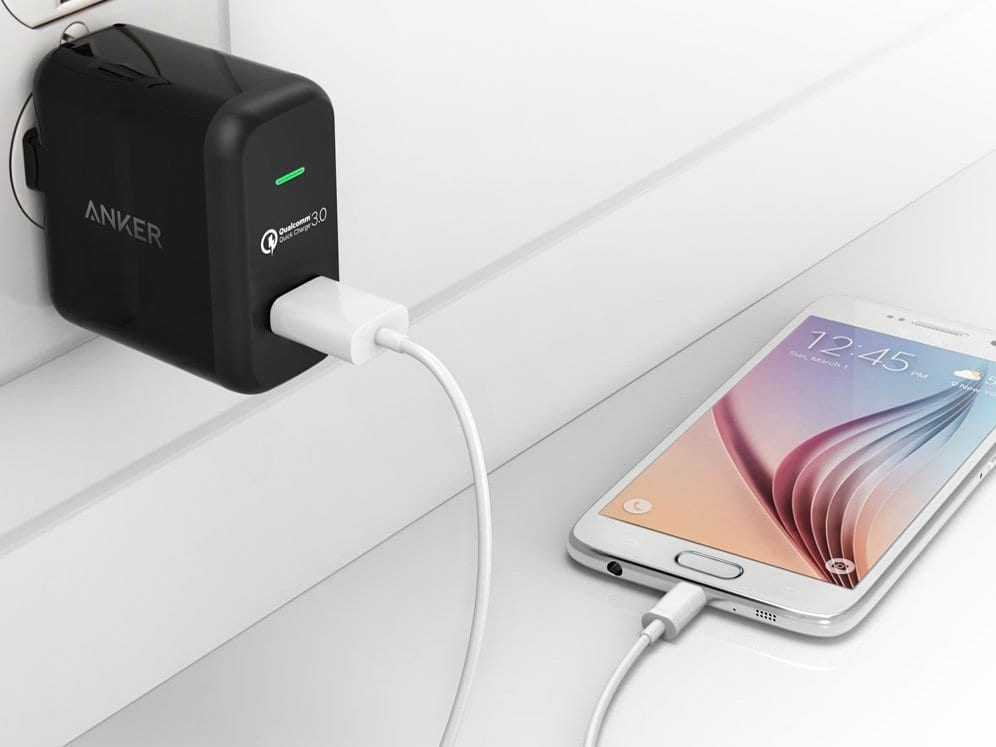
    Anker, a company based in Seattle, the US, and which specializes in USB charging products, has opened an official store in Jakarta, its first in Southeast Asia, in the hope of reaping benefits from the Indonesian market, the largest economy in the region.

    Anker’s regional sales head for Asia Pacific Romeo Luo told that the company had sold more than 300 million products globally this year and hoped to expand its leverage in Indonesia, particularly “with those people who are concerned about quality and safety, not just price.”

    “We are sure that our products can guarantee safety for smartphone users in Indonesia, particularly for high-end brands,” he said in Jakarta on Thursday.

    He said that opening the official store in Indonesia, home to around 250 million people, would be the first step by the brand before penetrating further into other countries in Southeast Asia.

    “I know the speed of the mobile phone sales growth here. The quantity is huge and most of those users will need power banks when stuck in traffic,” he said.

    He said he was confident that the brand could gain popularity in Indonesia, mainly as a result of the lack of similar competitors that exclusively specialized in power-charging products and consumer trends toward accessing social media, which is power consuming.

    Romeo added that by the end of 2017, the firm established in 2011 by former employees of search engine giant Google, expected to open 50 new outlets spread across major cities in Indonesia.

  • Apple explores charging stations for electric vehicles

    Apple explores charging stations for electric vehicles

    Apple is investigating how to charge electric cars, talking to charging station companies and hiring engineers with expertise in the area, according to people familiar with the matter and a review of LinkedIn profiles.

    For more than a year, Silicon Valley has been buzzing about Apple’s plan to build an electric car. Now the company appears to be laying the groundwork for the infrastructure and related software crucial to powering such a product.
    The moves show Apple responding to a key shortcoming of electric vehicles: “filling up” the batteries. A shortage of public charging stations, and the hours wasted in charging a car, could be an opportunity for Apple, whose simple designs have transformed consumer electronics.

    Apple, which has never publicly acknowledged a car project, declined to comment for this story. Neither the LinkedIn profiles nor sources said specifically that Apple was building charging stations for electric cars.
    But automotive sources last year told Reuters that Apple was studying a self-driving electric vehicle (EV), as the Silicon Valley icon looks for new sources of revenue amid a maturing market for its iPhone.

    Apple is now asking charging station companies about their underlying technology, one person with knowledge of the matter said. The talks, which have not been reported, do not concern charging for electric cars of Apple employees, a service the company already provides. They indicate that Apple is focused on a car, the person added.

    Charging firms are treading carefully, the person added, wary of sharing too much with a company they view as a potential rival.
    It is unclear whether Apple would want its own proprietary technology, such as Tesla Motors’ Supercharger network, or would design a system compatible with offerings from other market players.

    Several charging station suppliers contacted by Reuters declined to comment about any dealings with Apple, which typically requires potential partners to sign non-disclosure agreements.

    Arun Banskota, president of NRG Energy electric vehicle charging business, EVgo, did not respond directly to questions about Apple, but said repeatedly that his company was “in discussions with every manufacturer of today and every potential manufacturer of tomorrow.”

    Apple has hired at least four electric vehicle charging specialists, including former BMW employee Rónán Ó Braonáin, who worked on integrating charging infrastructure into home energy systems as well as communication between EVs, BMW and utilities, according to a LinkedIn review.

    As recently as January Apple hired Nan Liu, an engineer who researched a form of wireless charging for electric vehicles, for instance. Quartz earlier this month reported that Apple had hired former Google charging expert Kurt Adelberger.
    Electric vehicle charging stations are manufactured, installed and operated under varying business models. Players in the space include Car Charging Group and privately held ChargePoint, SemaConnect and ClipperCreek, infrastructure companies such as Black & Veatch and AECOM as well as General Electric, Siemens and Delta Electronics.
    The three largest utilities in California also have plans to install charging stations.

    CHARGER SHORTFALL

    The electric car industry has faced a chicken-and-egg paradox with the installation of charging stations. Property owners have been reluctant to install the stations before EVs hit the road en masse, and drivers are wary of buying EVs until charging stations are widely available.

    Apple’s home state of California by 2020 will need about 13 to 25 times the roughly 8,000 work and public chargers it currently has, to support a projected 1 million zero-emission vehicles on the road, according to an estimate by the National Renewable Energy Laboratory.

    Tesla recently goosed electric vehicle demand, unveiling its more affordable Model 3 sedan, generating hundreds of thousands of reservations from potential buyers and leading many experts to calculate the number of EVs will soon outstrip the charging station supply.

    Tesla has led the way with a proprietary network for customers, who also can use public chargers. Tesla’s more than 600 “Supercharger” stations juice up a car in about 30 minutes, more than twice as fast as the standard “fast charger,” called Level 2.
    One global engineering and construction firm already has reached out to Apple to offer its services, a person at the firm said.
    “It would be natural to assume if Apple is going to have a full battery electric vehicle that creates a seamless consumer experience the way Apple does, the charging infrastructure and its availability would be of paramount importance,” the source said.
  • Leading Tier 1 Operator in Malaysia deploys Elitecore’s Crestel Online Charging Platform

    Leading Tier 1 Operator in Malaysia deploys Elitecore’s Crestel Online Charging Platform

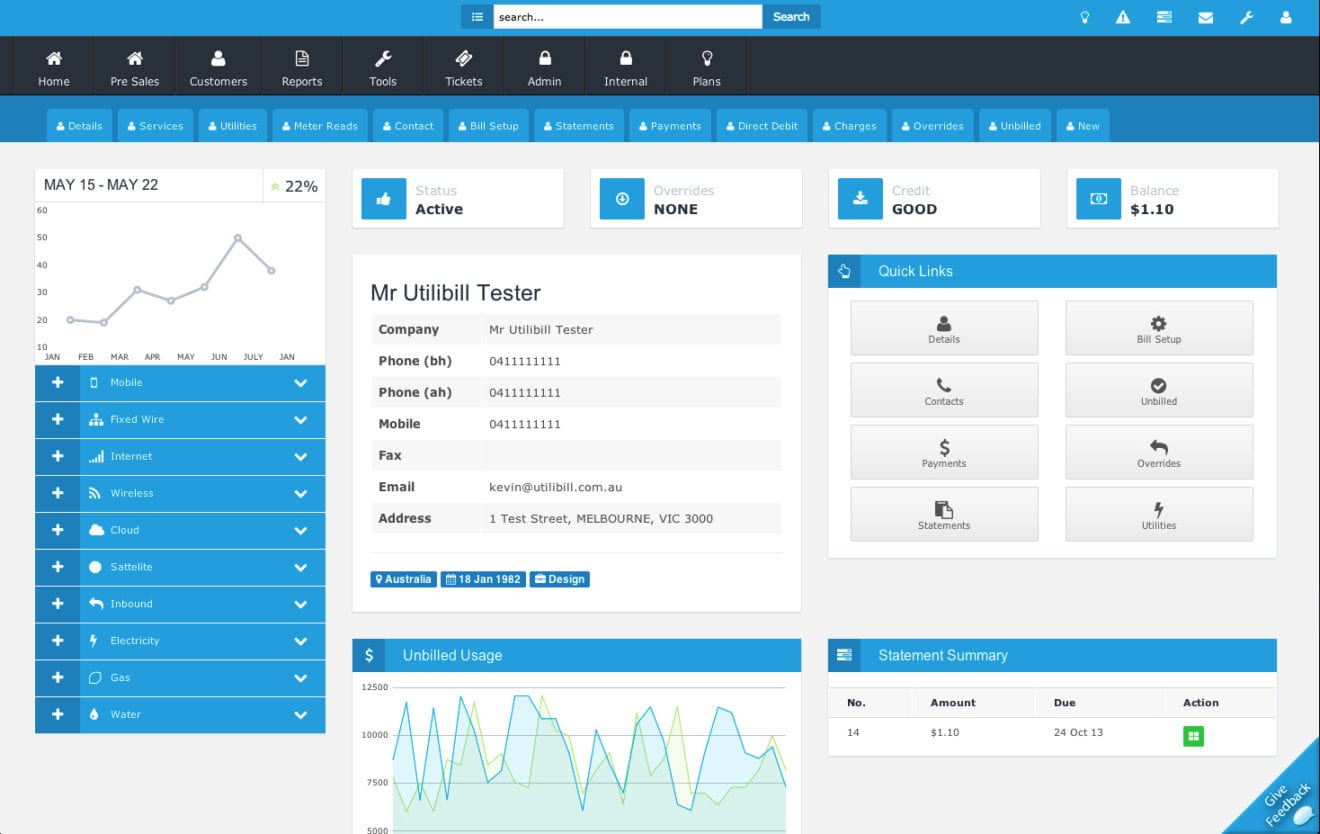
    Elitecore Technologies, a global provider of BSS and Packet Core solutios, announces that a leading Tier 1 Operator in Malaysia has deployed Elitecore’s 3GPP compliant Online Charging System (OCS) for their voice and data services; the solution enables its subscribers to keep track of their account, services and usage in real time. It supports dynamic notifications to customers prior to reaching their credit thresholds and also supports admin action in real time on threshold breach. The solution enables real-time charging of VOIP calls over SIP interface for post-paid subscribers on FTTX network.

    Elitecore’s real time OCS is a modular solution integrated with operator’s existing CRM and Billing systems, without having to go through a transformation of its existing billing system to support next generation services. The entire project was completed in just 3 months. The platform supports features such as single touch Point of Credit Governance for customer, Self Care service interaction in real time with accurate and timely information related to their usage, time/volume based rating, differential rating, advice of charges, shared balances, policy based discounting etc.

    Dhaval Vora, VP, Product Management, Elitecore says, “With our Real Time charging Solution, the operator is well prepared to support the growing demand for data services and benefit from enhanced real-time capabilities for its Data, Voice & Internet Services. Better real-time processing and instant notification of credit balance status enhances user experience and eliminates bill shock scenario.”

    The solution helps operators to add subscriber value through personalized offering, ensures optimum network utilization & greatly increases service usage and ARPU. Moreover, the solution is future ready which can support multiple networks on the same platform.