Tag: Chocolate

  • India is among the world’s fastest growing chocolate markets

    India is among the world’s fastest growing chocolate markets

    While the global chocolate confectionery market posts slow growth, new research from global market intelligence agency Mintel reveals that India is defying the odds. Indeed, India is now one of the world’s fastest growing chocolate confectionery markets.

    Sales of chocolate confectionery in retail markets grew by 13% between 2015 and 2016 in India, followed by Poland which saw sales growth of 2%. In comparison to the rest of the world, Poland and India were the only two markets to see sales of chocolate grow in 2016, with sales in the United States (US), United Kingdom (UK), Germany and France flat over this period, while sales fell in Russia (-2%), Brazil (-6%), and China (-6%).

    Data from Mintel also reveals India’s chocolate confectionery market has had a strong CAGR (compound annual growth rate) of 19.9%, in retail market value, between 2011 and 2015, and is expected to grow at a CAGR of 20.6% from 2016 to 2020.

    When it comes to chocolate confectionery consumption (volume sales), it seems India is a nation of chocolate lovers, as Mintel research reveals that India consumed 228 thousand tonnes worth of chocolate in 2016. Other markets that have consumed in excess of 200,000 tonnes of chocolate last year include France (251 thousand tonnes), Brazil (236 thousand tonnes), and China (202 thousand tonnes). Meanwhile, Australia and Indonesia consumed 95 thousand tonnes and 94 thousand tonnes worth of chocolate in 2016 (respectively). The US and the UK, on the other hand, consumed 1.3 million tonnes and 555 thousand tonnes of chocolate (respectively).

    Marcia Mogelonsky, Director of Insight, Mintel Food and Drink, said: “Chocolate confectionery had an uneven year in 2016. Volume sales in developed markets remained flat, while the picture was a bit brighter in emerging markets, like India, where sales generally fared better.”

    Indeed, according to a consumer study by Mintel, 42% of Indian consumers have eaten sweet or sugary snacks (other than biscuits) like chocolates and cakes in the past three months, rising to 53% of consumers aged 18 to 24. On the benefits of chocolates, Mintel research reveals over two in five Indian consumers (44%) find sweet or sugary snacks like chocolates and cakes to be healthy, while over one in three (35%) Indians believe these snacks provide them with energy.

    Meanwhile, as many as one in two (49%) Indian consumers associate sweet or sugary snacks like chocolates with convenience. Data from Mintel also reveals 43% of Indians consume sweet or sugary snacks like chocolate and cake between lunch and dinner, with over half (53%) of Indian consumers reporting that they tend to snack in between meals because they get hungry.

    “Our research shows that seasonal chocolate tops all chocolate new product development, a testament to the popularity of seasonal treats among consumers across the globe. This reflects the fact that these products are typically bought to help celebrate holidays or special occasions. With this in mind, seasonal chocolate is somewhat immune to recessionary pressures as these products are bought on an occasional basis.”

    Proving chocolate lovers have a heart, interest in ethical products remains relatively strong, with 17% of new products claiming some sort of “ethical-human” positioning, which could include fair trade, Rainforest Alliance, or some other independent “bean-to-bar” certification. Although still a small part of the category, accounting for less than 6% of global new product introductions in 2016, launches of chocolate confectionery with an organic claim increased 6% between 2014 and 2016.

    Finally, Mintel research shows that consumer demand is likely to be the major impetus for more conversion to organic offerings. In India, as many as 19% of Indian consumers would like to see a wider variety of natural snacks that have no additives or preservatives, for instance.

  • Nisshin Oillio to Begin Chocolate Production in Indonesia

    Nisshin Oillio to Begin Chocolate Production in Indonesia

    Indonesia’s growing middle class and its fondness for Western food has prompted Japanese food company Nisshin Oillio Group to start producing chocolate in the country.

    Daito Cacao, a unit of Nisshin Oillio, embarked on a joint venture in February with Salim Ivomas Pratama, a cacao plantation unit of Indonesian conglomerate Salim Group. Daito Cacao will put 51% of the $32 million total investment.

    The joint company will build a plant on a roughly 20,000-sq.-meter plot in Purwakarta, about 65km from Jakarta. Construction is set to begin as early as this autumn. The plant will start operating by 2019 with an initial annual output of 4,000 to 5,000 tons, which the company hopes to raise to 10,000 tons in the future.

    Daito Cacao hopes to leverage its strengths — which include heat-resistant chocolate production technology — to boost sales in tropical Southeast Asia.

    According to British market research company Euromonitor International, Indonesia’s chocolate consumption reached about 70,000 tons in 2015. This is expected to increase to 83,000 tons by 2020 — much faster growth than in Japan, Europe or the U.S.

    Many in this former Dutch colony make chocolate at home. With a growing population of 250 million and a burgeoning middle class, demand is expected to increase even further.

    Daito Cacao will dip into Nisshin Oillio Group’s supply chain in Southeast Asia for ingredients. Sugar and dairy products will come from T&C Manufacturing, Daito Cacao’s Singapore unit, and fats from Intercontinental Specialty Fats, Nisshin Oillio’s Malaysian unit.

    Initially, the finished chocolate will be sold to food producers owned by Salim Group. “We want to export our products to Thailand, the Philippines and other Southeast Asian countries,” said Daito Cacao President Shigeyuki Takeuchi.

    That said, Indonesia’s small retailers are mainly food stalls and movable kiosks that are not sufficiently refrigerated. To further expand the chocolate market, improving refrigerated delivery systems will be necessary.

  • Barry Callebaut Expands Cocoa Nurseries Program in Indonesia

    Barry Callebaut Expands Cocoa Nurseries Program in Indonesia

    One of Barry Callebaut’s primary goals in Forever Chocolate is to lift more than 500,000 farmers out of poverty. To get there, we can improve farm productivity and increase the yield of high-quality cocoa. Doing this will enable farmers to sell their cocoa at higher prices and gain access to a better quality of life.

    But how can farmers grow more high-quality cocoa on the same amount of land? With better trees. Barry Callebaut aims to deliver 500,000 seedlings from its cocoa nurseries to farmers in Indonesia in 2017 and is in the midst of trialing a range of interventions to produce the best trees.

    Richard Fahey, Barry Callebaut’s Vice President for Cocoa in Asia says: “Indonesia has been struggling to increase cocoa production because of ageing cocoa trees. Most of them were planted in the 1980s, are vulnerable to diseases and are well past their peak production years. Cocoa trees are strong, and will produce pods for a long time. However, the high-productive years of a cocoa tree are finite, and usually after 25 years, the trees are less productive. Indonesia desperately needs new trees in order to get back to a productivity level of around 1 mt of beans per hectare.”

    “Most Indonesian farmers are willing to invest in their farms, and they understand that new trees will be more productive.  But they simply have not had access to good planting materials and therefore prefer to stick with their old trees rather than risk planting new trees that may or may not be effective. High-quality nurseries are therefore are essential to provide the supply of seedlings the farmers need and give them the confidence that the seedlings they purchase will turn into high-yielding, disease resistant trees,” he notes.

    Indonesia-based Sustainability Manager Ani Setiyoningrum says: “The purpose of cocoa nurseries is to provide a conducive environment in which young cocoa plants can grow a good number of leaves and fully develop its root system to a certain stage that will give cocoa plants a better chance of survival at the cocoa farm. These nurseries will require shade, water and protection from wind, and whenever necessary, protection from stray animals.”

    But there are already cocoa nurseries in Indonesia, but as Fahey notes, plantations in Indonesia typically have 400-600 cocoa trees growing per hectare. “Let’s do the math. If we are to estimate that there is 500,000 hectare of cocoa farms in Indonesia, we are basically looking at replacing at least 200 million trees. This nationwide replanting initiative is massive and would take a lot of effort not just from Barry Callebaut but across various organizations.”

    Setiyoningrum says: “These are community-run nurseries that we help to kick-start by providing them with a start-up investment and best-practice models. These nurseries are also a form of income for these nurseries owners, some of whom are cocoa farmers themselves. Our field experts work closely with these nurseries owners to teach them to produce high quality seedlings with a high survival rate. They are given proper planting material, high-quality seeds, and the right potting mix, and are guided to develop good nursery management skills and standard operating procedures. These nursery owners then work as a professional service provider for other farmers which is becoming an avenue for additional income. The project model we are testing with around 50 nurseries across Sulawesi is suitable for nurseries producing at a large scale. Our intention is that the nurseries we start-up will eventually become totally self-sufficient businesses in their own right.”

    Also in Indonesia, the company is piloting a new way of setting-up these nurseries and distributing these seedlings to the farmers. “The challenge is how we can escalate the seedling propagation program while also try to reduce the production cost of each seedling. We have learned a lot from our colleagues in Brazil and we are borrowing some of their best practices, including using elevated tables and space efficient planting tubes. While setting up these improved nurseries and distribution networks, we continue to support farmers to establish nurseries in their own communities because it helps to increase the overall supply of new trees,” Fahey concludes.

  • Delfi to exit venture with Meiji in Indonesia

    Delfi to exit venture with Meiji in Indonesia

    Singapore-based confectioner Delfi today announced plans to pull out of PT Ceres Meiji Indotama (CMI) – a confectionery manufacturing joint venture in Indonesia with Japanese pharma-to-food group Meiji Holdings.

    Delfi said the proposed sale of its 50% stake in CMI for US$8.3m will allow Delfi to “re-deploy financial and human resources to focus on growing our business, both in Indonesia and our regional markets”.

    Following completion of the sale, which is subject to various regulatory approvals, Delfi said CMI will cease to be an associated company and the joint venture agreement with Meiji will be terminated.

    Delfi said its involvement in CMI, a confectionery manufacturer and retailer, “has spanned more than 15 years and over that period, it played an instrumental role in developing the business of CMI and the Meiji brand in Indonesia”.

    However, following “an extensive review” Delfi said it believed CMI “is best suited to continue growing under the stewardship of Meiji”. The proposal to terminate the joint venture is the result of a “mutual and amicable agreement”, Delfi said.

    The proceeds of the sale “will further strengthen the financial position of the company and allow it to focus its resources on existing investments”, Delfi said. “Despite the sale… the relationship between Delfi and Meiji remains strong and Delfi’s subsidiary in Indonesia, PT Nirwana Lestari, will continue to distribute CMI’s products.”

  • Russian chocolate, beer and baby food companies aim to conquer Asia

    Russian chocolate, beer and baby food companies aim to conquer Asia

    Every time Chinese President Xi Jinping visits Russia, he asks for some Russian ice cream. As a result of this craving, Russian President Vladimir Putin presented a whole box of ice cream to his Chinese counterpart at the G20 summit.

    Chinese tourists share their leader’s love for Russian ice cream so much that there are rumors that China is planning to build its own Russian ice cream factory. Consumers from across Asia are increasingly buying Russian food products thanks to a recent growth in exports from Russia.

    Chocolate

    Alyonka, Babaevsky and Rossyia chocolate bars, which are popular among tourists, are now being exported to Asia.

    “Alyonka is the most popular brand of chocolate that is being sold in China, but Babaevsky and Vdohnovenie chocolate bars are also becoming popular,” says Denis Usalev, marketing manager of Uniconf, which owns all three brands, and is the largest confectionery holding in Eastern Europe.

    He adds that sales of Alyonka grew six-fold year-over-year in China in 2015 and the company expects to see even more growth in 2016. Chinese consumers can buy Russian chocolate through ecommerce platforms as well as in local shops.

    Russian companies are also looking beyond China, and are obtaining Halal certification to compete in Muslim countries in Asia.

    Waffles and biscuits

    The Russian confectionary industry is developing new products specifically for the Asian market to cater to local tastes.

    “Korovka waffles with milk and chocolate fillings is our main driver of sales in China,” says Usalev. “Also around 50 per cent of Alenka biscuits are exported to China.”

    The Jubilee sugar cookies brand was launched in early 1913 and gradually became very popular in Russia. In 2007, Mondelēz International Inc acquired the brand and renamed it to belVita Breakfast. In 2015 belVita Breakfast biscuits were introduced in China and Indonesia . The company has become a global breakfast icon, with sales growing at about 20 per cent annually over the last few years.

    Healthy snack bars

    The organic food market segment has been growing rapidly for years. In 2015, Take a Bite was launched in Hong Kong, China and Singapore. The Russian company relied almost exclusively on retail sales in local super markets, but today buyers can purchase Take a Bite from the TMALL online store.

    Another Russian healthy food brand ECO botanica, which is owned by Uniconf, is also looking to tap into the Asian market.

    “Sales in China grew tenfold in the first nine months of this years,” says Usalev. Next month we will launch the ECO Botanica store on the Alibaba platform.”

    Baby food 

    The leader in the baby food market in Russia, Frutonyanya has also entered the Chinese food market.  “We’ve already received two 40-feet containers of Frutonyanya products and are now waiting for the third one,” says Artem Zhdanov, co-founder and marketing director of UChina, which is helping the Russian baby food company enter the Chinese market.

    “The first consignment went to our Chinese partners, distributers, trade platforms and a food exhibition to enhance brand recognition and to promote the brand name.”

    The company has more than 200 products including fruit drinks, jellies, desserts, fruit puree, milk and milkshakes. It will launch a separate line for pregnant women and breastfeeding mothers.

    Beer

    Baltika, a favorite of former U.S. Ambassador to Russia Michael McFaul, became the first Russian beer to be exported to Asia. It is now available in Vietnam and Malaysia.

    The Russian beer brewer, Ochakovo established licensed production in Japan in 2016. Since July 2016, the company has been supplying three types of canned beer. Ochakovo has also launched beer exports to China.

  • Godiva to Open the First Shop in Bangkok

    Godiva to Open the First Shop in Bangkok

    Months after popular ice-cream brand Ben&Jerry opened their first shop in Bangkok, looks like we will be able to continue to binge on new, sweet treats at Godiva.

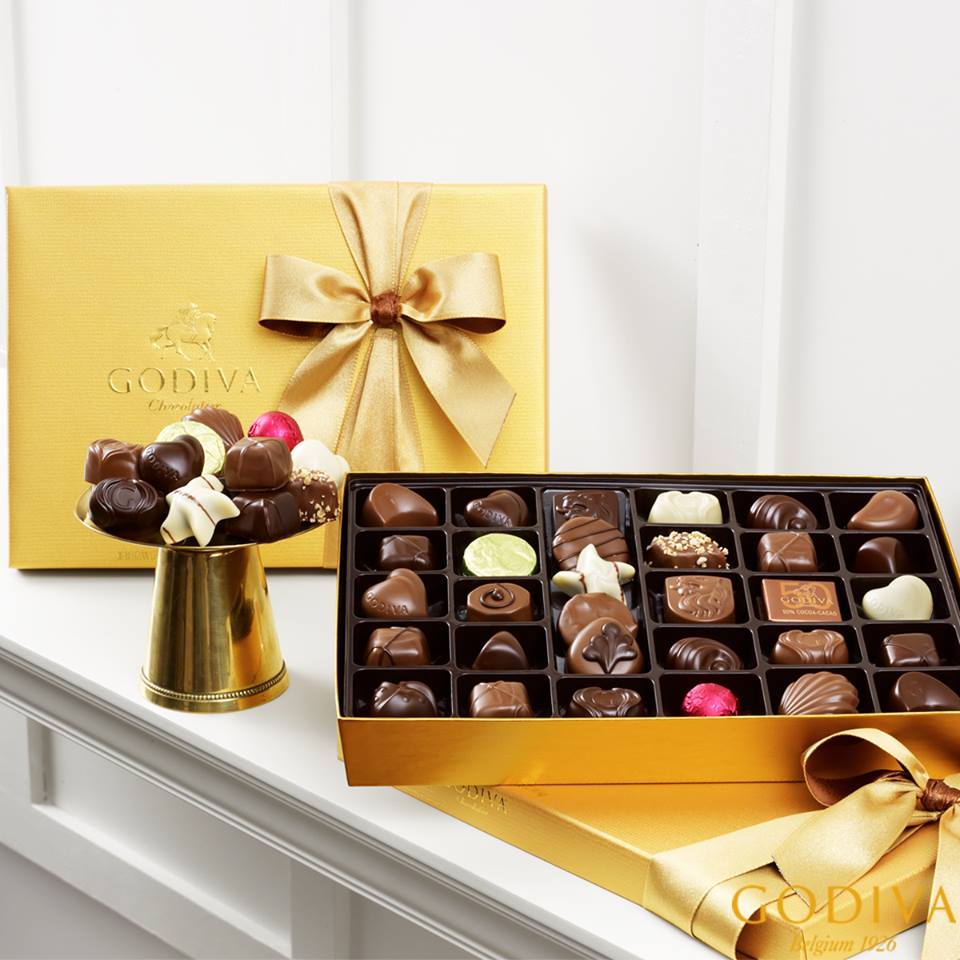
    Godiva, the Belgian luxury chocolate store, announced it will launch its first shop in Bangkok at Groove, in CentralWorld.

    Selling an assortment of premium chocolates, biscuits and frappé drinks. Let’s hope they stock their famous chocolate-covered strawberries as well. Godiva has long been one of the premium edible souvenirs that Thai people buy for each other when traveling abroad.

    The opening date has not yet been confirmed.

  • Barry Callebaut Opens First Chocolate Factory in Indonesia

    Barry Callebaut Opens First Chocolate Factory in Indonesia

    Swiss chocolate producer Barry Callebaut has expanded its operations in Indonesia with the grand opening of its first chocolate factory in the country.

    Through a long-term outsourcing agreement with GarudaFood Group, one of the largest food and beverage companies in Indonesia, Barry Callebaut built its three-story, 43,000-sq.-ft. factory on the premises of GarudaFood’s biscuit plant in Gresik. Barry Callebaut will also supply GarudaFood with 10,000 tons of chocolate per year.

    Antoine de Saint-Affrique, Barry Callebaut’s ceo, said the new factory, which will employ 50 people, is a “cornerstone” in its strategy to strengthen its position in Asian Pacific markets.

    “It also enables us to grow our already significant presence in Indonesia — an important emerging market with about 260 million people that offers above-average growth opportunities,” he says. “We are truly excited that our strong relationship with GarudaFood and this new factory will provide GarudaFood with the means to differentiate themselves in an increasingly competitive market.”

    GarudaFood CEO Hardianto Atmadja said the partnership will give GarudaFood the opportunity to put emphasis on biscuit production, including its Gery brand.

    “The chocolate production lines at the Barry Callebaut factory allow us to focus our manufacturing facilities in Indonesia on biscuits and strengthen the factory as a key competence center for our biscuits products in Indonesia,” he says. “This move will help us to further develop our successful biscuit brands.”

    Barry Callebaut also operates chocolate grinding facilities in Bandung and Makassar, Indonesia, employing more than 500 people. The company also has chocolate factories in China, India, Japan, Singapore and Malaysia.

  • Global chocolatiers dwarfed in Indonesia as local champions dictate taste

    Global chocolatiers dwarfed in Indonesia as local champions dictate taste

    Multinational chocolatiers have spent almost 20 years trying to crack Indonesia’s booming confectionary market, only to build a share that pales in comparison with other emerging economies as long-established local producers fend off foreign incursions.

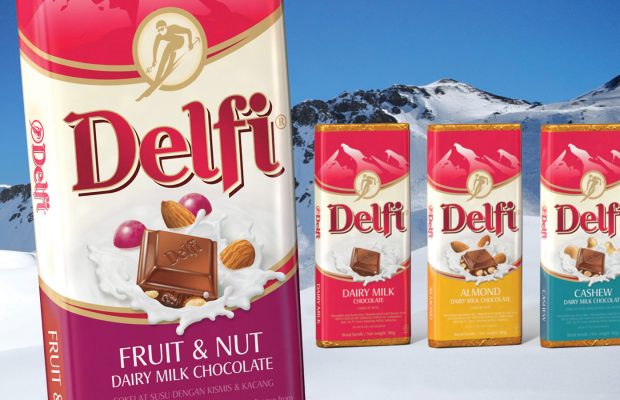
    Nestle, Cadbury’s owner Mondelez International, Mars Inc and Ferrero SpA together hold just one-tenth of a $1 billion market led by homegrown darlings Delfi and PT Mayora Indah. In neighboring Malaysia, the foursome commands almost 60 percent.

    “The market leader is very strong because it was the first to set the taste for chocolate in Indonesia,” Nestle Indonesia confectionary business manager Rully Gumilar told Reuters.

    “It’s like David fighting Goliath,” he said. “It’s very big and has huge power, while we are small even though we are a multinational.”

    Such struggle against a local incumbent is not uncommon among global consumer firms in the world’s fourth most-populous country – a tropical archipelago with complex distribution channels, run-down infrastructure and a retail sector dominated by family stores that lack air conditioning to keep goods cool.

    But the rewards are potentially huge considering consumption accounts for more than half of a steadily expanding economy, while an increasingly affluent middle class promises ample room for growth.

    The chocolate confectionary market is likely to jump 42 percent to 19.5 trillion rupiah ($1.49 billion) in the next three years, data from researcher Mintel showed. That compared with 11.7 percent in the United States where, as in other developed markets, growth has slowed over the past five years.

    LOCAL COCOA

    Nestle entered Indonesia in 1971 and in the 1990s embarked on a major push in chocolate products, expanding to three brands. Mars and Mondelez began selling chocolate in the early 2000s and, with Ferrero, the four’s market share reached 10 percent last year – 1.4 percentage point more than a year prior.

    But Delfi set the benchmark taste in the 1950s with its SilverQueen chocolate bars and Ceres chocolate sprinkles, which still feature in the firm’s broad line-up. Last year, its market share by sales volume reached 52.7 percent from 48.2 percent.

    Such local offerings often cost less to make and so are priced lower. For instance, they tend to contain a greater proportion of cocoa powder, which can be two to three times cheaper than cocoa butter, said Ahmad Zaky Amiruddin, secretary general of the Indonesian Cocoa Industry Association.

    Mayora said buying cocoa beans and making chocolate locally also keep prices competitive. In contrast, production at foreign rivals may be part of a more complex, multi-market strategy. Nestle, for instance, imports from its regional halal factory in Malaysia, which sources ingredients from countries including the Ivory Coast.

    Indonesians are “very price sensitive”, preferring to buy the cheapest of similar products, Amiruddin said.

  • Lindt Aims to Surpass Godiva’s Chocolate Retail Network by 2020

    Lindt Aims to Surpass Godiva’s Chocolate Retail Network by 2020

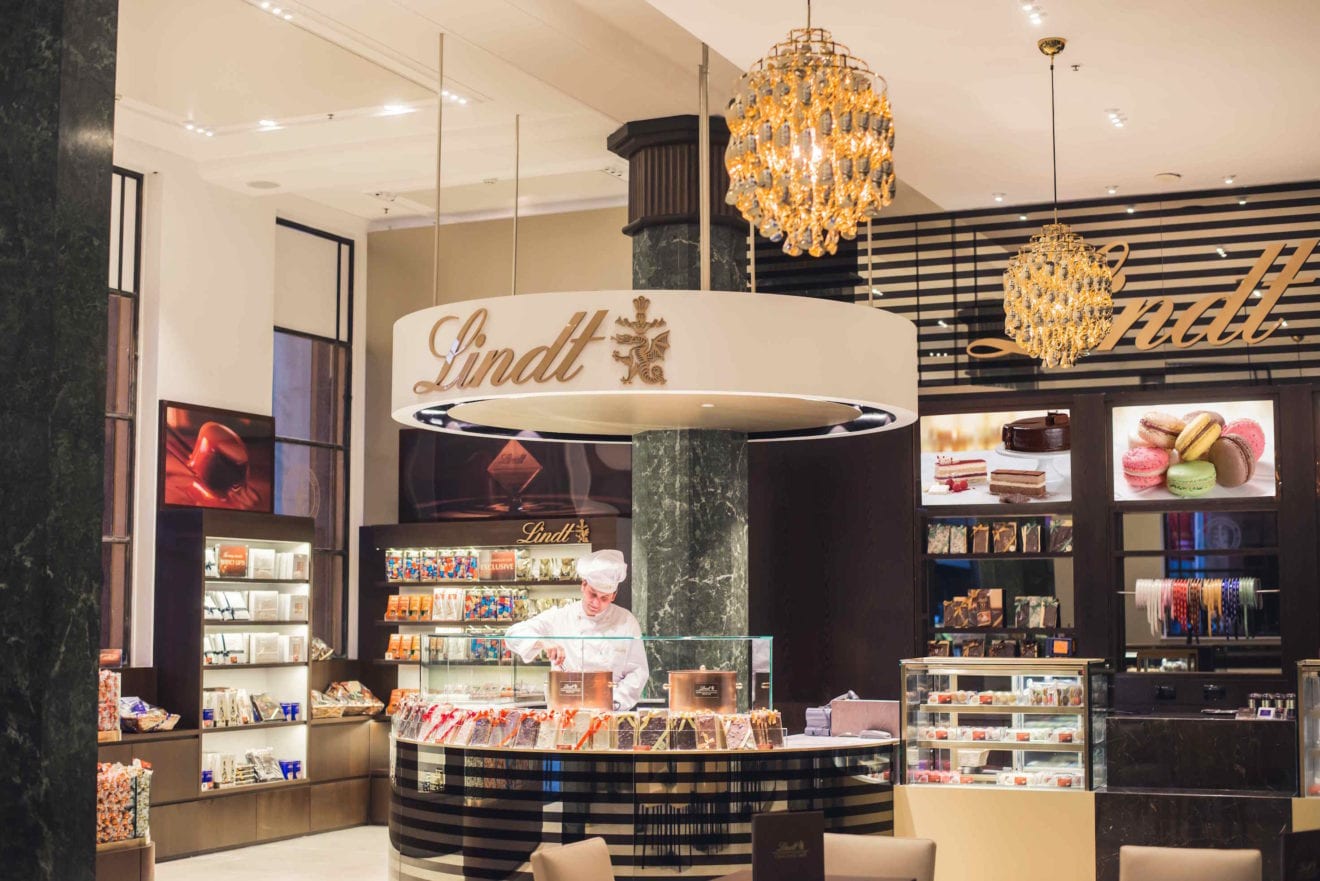
    Lindt & Spruengli AG wants to overtake Godiva and become the world’s largest premium chocolate retailer by 2020.

    In pursuit of the goal, Lindt plans to open 20 to 30 shops each year, the Kilchberg, Switzerland-based maker of Lindor balls said in a statement Tuesday as it reported full-year profit growth in line with analysts’ estimates and raised its dividend 10 percent.

    Lindt, which has more than 300 shops, will need to accelerate its expansion plan to beat its larger rival, which runs more than 450 boutiques. The candy maker said it will use its store network to communicate with consumers, seeking prime locations and offering some products they can’t find elsewhere. Lindt added 50 stores last year, including 16 in Brazil, and retail sales rose more than 20 percent, faster than the company’s total sales growth.

    “If we continue with this pace, we’ll get there,” Chief Executive Officer Ernst Tanner said in an interview, adding that Lindt wants a “worldwide presence” while Godiva is “very strong” in certain markets such as North America and Japan.

    First-half organic sales growth will be slightly below the long-term target of 6 percent to 8 percent because of tougher comparisons to the previous year’s first half, Tanner said. Growth will be stronger in the second part of the year, he added. Lindt is not planning big price increases this year, and growth will be driven more by volume, he said.

    The stock fell 1.2 percent to 68,600 francs as of 12:46 p.m. in Zurich.

    Lindt will open its first shop in Moscow this year and add more stores in Brazil, France and the U.K., he also said.

    Earnings before interest and tax rose 9.4 percent to 518.8 million francs ($522 million). Analysts expected 519.6 million francs, according to the average estimate. Sales rose 7.1 percent on an organic basis.

    Lindt became the third-largest chocolate maker in the U.S. when it bought Russell Stover for 1.5 billion francs in 2014. North American sales rose 7.9 percent last year, slowing from 14 percent growth in 2014 as Russell Stover eliminated unprofitable products.

  • Biggest M&M store in travel retail opens at Hong Kong International Airport

    Biggest M&M store in travel retail opens at Hong Kong International Airport

    International Travel Retail in partnership with DFS Group today opened the largest M&M’S outlet in travel retail at Hong Kong International Airport.

    The 35sqm store is located in Terminal 1 and, according to DFS, is designed to offer “chocolate lovers a unique, entertaining and fun travel experience, driving travellers into the store”.

    Biggest M&M's store in travel retail opens at Hong Kong International Airport
    With interactive retail theatre and a focus on fun, it reveals that the M&M’S shop-in-shop is personalised and unique to Hong Kong.

    It states: “The atmosphere of this vibrant city is brought to life inside the store with a replica of one of Hong Kong’s iconic dragon boats on display, along with localized artwork incorporating the brand’s world famous Red and Yellow characters.”
    Dragon boat
    Additionally, the offer will include items that meet the consumer demand for destination merchandise with “Hong Kong Travel Collection” packs of Snickers, Mars and Twix along with a Hong Kong themed M&M’Sbox featuring the iconic dragon boat.

    While the key focus of the store is on M&M’S,  products from core brands Snickers, Mars, Celebrations and Twix are also offered based on the company’s ‘Laws of Growth’ belief in ensuring that consumers are offered best-selling SKUs at all times.

    Commenting on the opening, Mars International Travel Retail’s regional sales director, Christophe Bouye, says: “By offering passengers outstanding retail experiences that first and foremost will make them smile, we are confident it will increase shopper engagement and encourage conversion.

    “Through placing consumers in a smiling frame of mind, we believe that this will not only benefit the confectionery category, but all sectors of the travel retail offer here in Hong Kong.”

    The new outlet is located close to Gate N28 on the central concourse.

  • Barry Callebaut inks first chocolate outsourcing agreement in Southeast Asia

    Barry Callebaut inks first chocolate outsourcing agreement in Southeast Asia

    Barry Callebaut and Indonesian food and beverage company GarudaFood Group have reached agreement on a long-term supply agreement under which Barry Callebaut will supply 10,000 tonnes of compound chocolate per year to GarudaFood’s biscuit facility in Gresik in the Province of East Java.

    Under terms of the agreement, which will begin the middle of next year, Barry Callebaut said it plans to increase the capacity “significantly” over the next three years and will take over some of the manufacturing equipment from GarudaFood and set up its operations in a new building on the premises of the GarudaFood biscuit plant in Gresik.

    The agreement also includes the cooperation between Barry Callebaut and GarudaFood in innovation. The two companies plan to bring together their R.&D. activities to develop new products that will support GarudaFood’s further growth in the Indonesian market.

    “I am truly excited about this partnership,” said Hardianto Atmadja, chief executive officer of GarudaFood. “I believe it will provide and delight our consumers with the best chocolate and products that meet global quality standards.”

    Founded in 1990, GarudaFood belongs to the Tudung Group, an investment holding company in Indonesia. GarudaFood manufactures and markets snacks, biscuits, confectionery products, dairy and beverages and employs about 18,000 people. The company also owns and operates an extensive distribution network throughout Indonesia covering 21 regions, 153 depots, 154 distribution partners and 360,000 outlets. GarudaFood operates 14 plants across Indonesia and India.

    “It is an honor for us that we were able to win GarudaFood as our first long-term outsourcing partner in Southeast Asia,” said Juergen Steinemann, c.e.o. of the Barry Callebaut Group. “This partnership marks our entry with chocolate and compound production in Indonesia, the world’s fourth largest country with a population of 250 million and impressive growth rates. Partnering with the GarudaFood Group not only allows us to team up with a leader in one of the most vibrant economies in Asia Pacific but also to gain a strategic foothold in an emerging market that offers further significant growth potential.”

  • La Cure Gourmande lands in Asia

    La Cure Gourmande lands in Asia

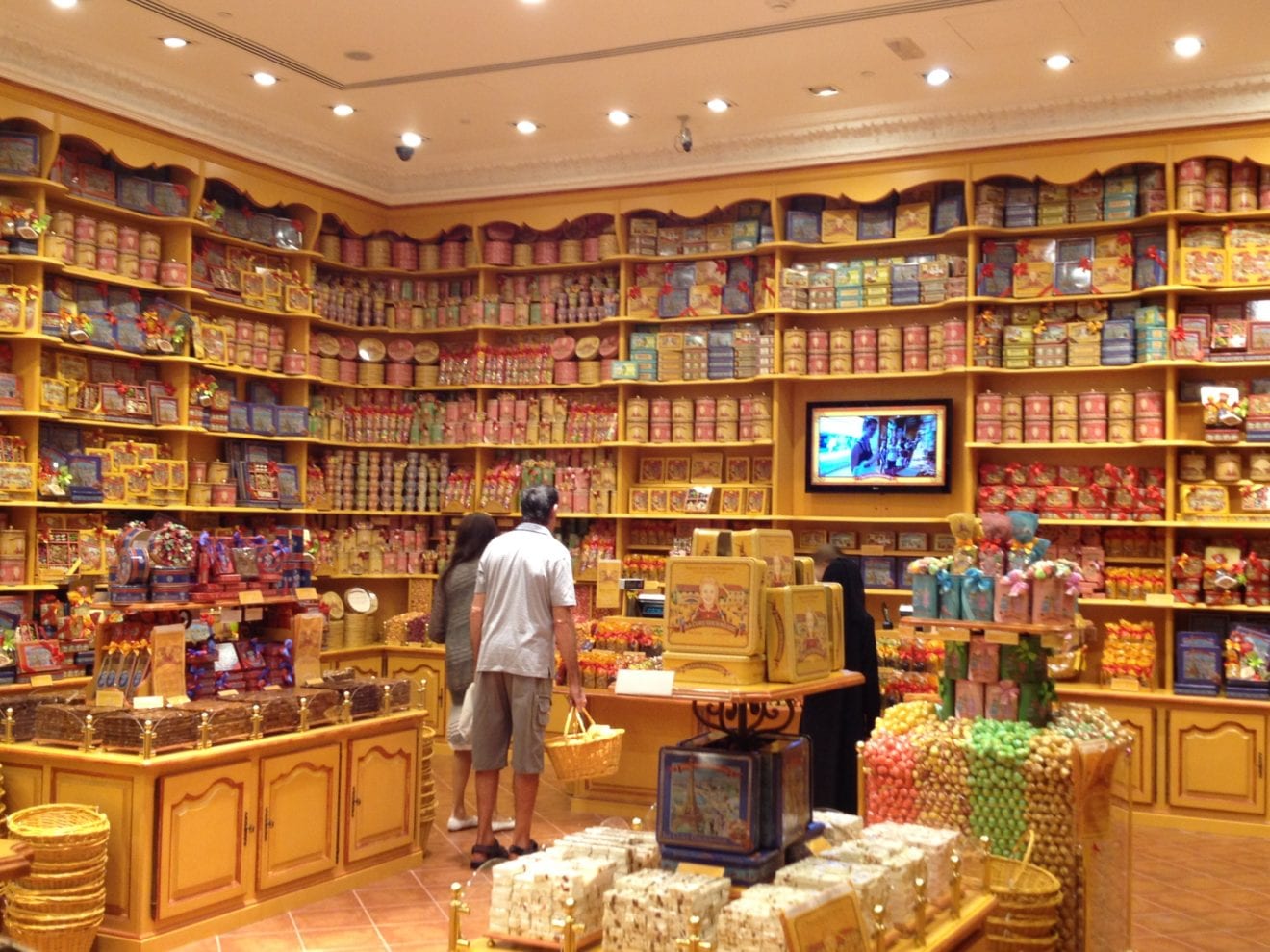
    French confectionery brand La Cure Gourmande has chosen Korea for its Asian market debut.

    The sweets specialist has opened its first outlet in the continent inside the Lotte Department Store Sogong-dong downtown Seoul.

    The 36 sqm bright yellow coloured store offers more than 30 kinds of candies, cookies, caramels and chocolates, all imported from France. The Korea Herald reports that on its first day of trading, it grossed the highest sales in the department store’s food section.

    Customers are encouraged to taste and inspect the candies, with store staff named “Sunshine” offering samples.

    “We want people to feel nostalgic when they enter the store, bring back their memories of going to an old candy store and sticking their noses into the cookies and caramels,” said Edouard Hennebert, the company’s founder.

    La Cure Gourmande plans two more stores-in-stores inside department stores in southern Seoul and Gyeonggi Province and says it will offer up to 150 kinds of product by the end of the year.

    The French company’s debut in Korea is the result of Lotte staff seeking unique brands to create a point of difference from rival department stores Shinsegae and Hyundai.

    “Lotte Department Store was searching for dessert brands that could cement their market status as a high-end and luxury retail channel, just like what Louis Vuitton and Chanel used to three decades ago,” said Stephane Lo, CEO of La Cure Gourmande Korea.