
Tag: client

  • Client data exposed in Gucci, Balenciaga and McQueen cyberattack

    Client data exposed in Gucci, Balenciaga and McQueen cyberattack

    Luxury brands Gucci, Balenciaga, and Alexander McQueen have fallen victim to a cyber attack, leading to the potential theft of millions of customer’s private details. The assault targeted Kering, the French corporation that owns these prestigious labels.

    Kering recognized and confirmed the breach but did not publicly name the brands impacted. In a statement made in June, they reported that “an unauthorized third party momentarily gained access to our systems and accessed limited customer data from some of our Houses”.

    This incident is not an isolated event but seems to be part of a broader trend impacting luxury brands and retailers throughout the year. Other brands that suffered similar breaches include Cartier, owned by Richemont, and labels under LVMH. In July, a data leak affecting approximately 419,000 customers at LVMH’s Louis Vuitton was being investigated by Hong Kong’s privacy watchdog.

    The stolen customer data reportedly includes names, email addresses, phone numbers, addresses, and the total amounts spent at the brands’ stores. Notably, Kering has reassured that no financial information, such as credit card or bank account numbers, was stolen during the attack.

    The hackers, referring to themselves as “Shiny Hunters,” allege to have data associated with 7.4 million unique email addresses.

    In response to the breach, Kering stated that its brands promptly reported the incident to the relevant authorities and notified customers in accordance with local regulations. However, Kering did not provide a response when questioned about the countries impacted by the cyber attack.

    Questions & Answers

    What brands were affected by the cyber attack?
    The affected brands include luxury labels Gucci, Balenciaga, and Alexander McQueen, all owned by French parent company Kering.

    What kind of customer information was stolen during the breach?
    Reportedly, the stolen client data includes names, email addresses, phone numbers, addresses and the total amounts spent at the brands’ stores. However, no financial information like credit card or bank account numbers were compromised.

    How did Kering respond to the cyber attack?
    Kering reported that its brands immediately disclosed the breach to relevant authorities and notified customers as per local regulations. However, they did not comment on the specific countries affected by the attack.

  • Chatbots are backfiring, ‘pushing away customers’

    Chatbots are backfiring, ‘pushing away customers’

    Chatbots in customer support can backfire and result in the loss of business, according to a new Brunel Business School study.

    The research, published in Services Industry Journal, investigates factors that make chatbot interaction a negative experience for customers, which can cause them to abandon a purchase or even a brand altogether, blaming the company rather than themselves for any communication failure.

    “For firms, chatbots promise improvements in customer service while enabling big cost savings,” said Brunel Business School professor Dr. Ana Canhoto. “The negative experiences identified in our study mean firms end up with unhappy customers, may lose customers or face a PR crisis which makes it hard to attract new ones.”

    Unpleasant chatbot interactions are caused by inauthenticity, explains the study, when customers feel tricked into conversing with a non-human; excessive questions or repeated answers on the part of the bot; failure to exhibit appropriate empathetic responses causing upset; and failure to deal with complex queries due to a limited operational scope.

    If customers conclude the chatbot cannot resolve their inquiry, they will grow frustrated and ask to speak with a human – and if this cannot be arranged, they are likely to cut off the chat and abandon the firm, as well as potentially taking to social media to express their dissatisfaction, the study concludes.

    “When customer interactions with AI chatbots are negative, it can have serious negative ramifications on service providers, as customers can opt for more costly customer support channels, such as a phone channel,” said Canhoto.

    “In such cases, investment in AI technology intended to result in cost savings might backfire and result in a heavier load on other support channels. Or customers may terminate the service, switch to a competitor, or complain on social media.”

    Dr. Canhoto advises businesses to use these insights to fine-tune both their bots and customer expectations of them to avoid negative experiences.
    According to the Services Industry Journal, chatbots are involved in two out of three customer interactions.

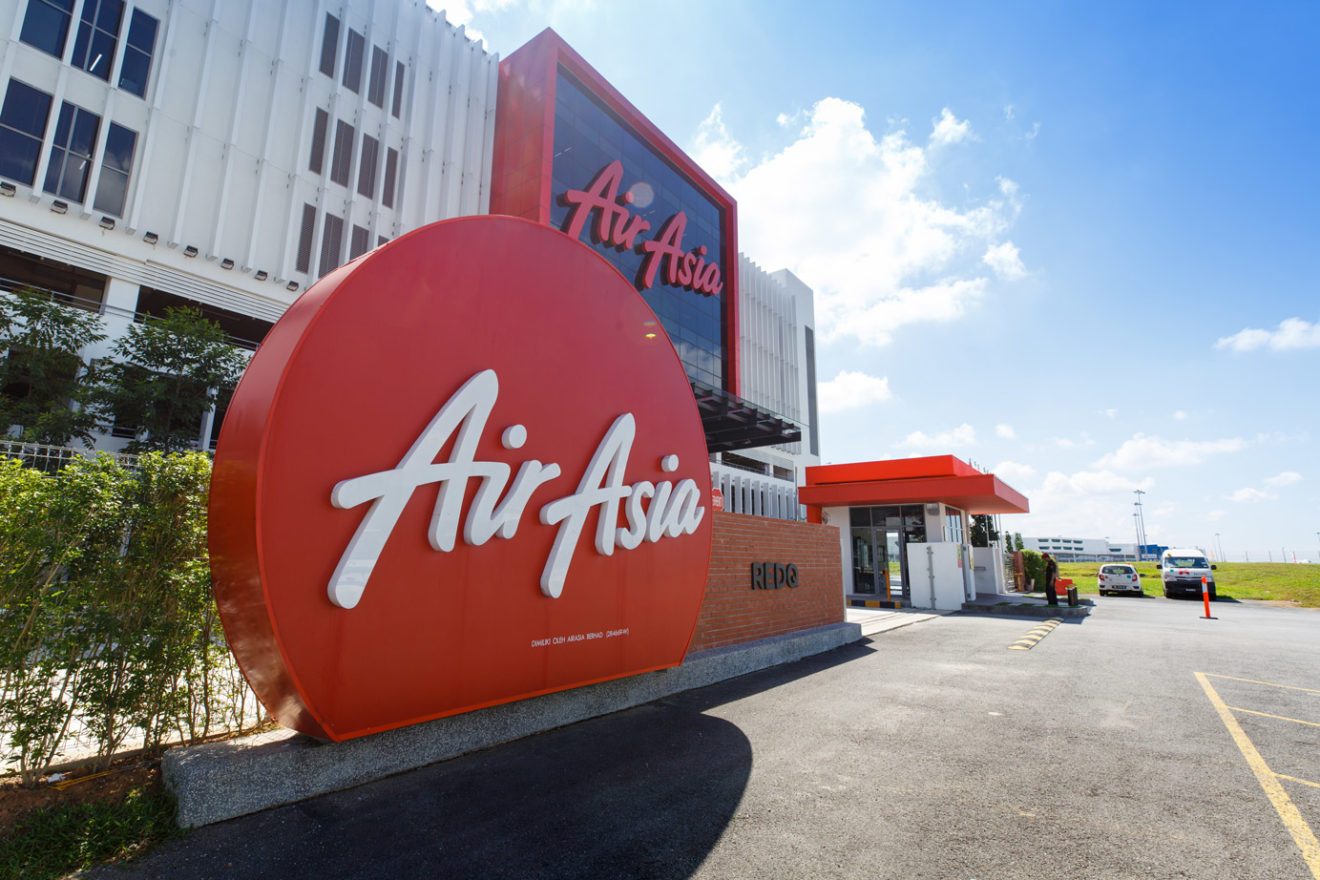
  • AirAsia Wants Tools to Engage Customers Moving to Messaging Apps

    AirAsia Wants Tools to Engage Customers Moving to Messaging Apps

    Consumers now want to talk to businesses and find resolutions the way they talk to their friends and family, and this is pushing a big transition towards messaging channels, according to Adam Geneave, chief customer happiness officer for the low-cost Asian airline.

    The carrier added support for Tencent’s WeChat in China earlier this year and was seeing significant adoption for the platform, Geneave said in an interview. In fact, the messaging tool since had grown to become AirAsia’s biggest communication channel in the Chinese market, he noted.

    The airline’s engagement with customers through such channels played a key role in its business strategy as they enabled consumer queries to be addressed quickly, he said, and urged technology and other solutions providers to integrate messaging tools into their products.

    According to Geneave, AirAsia currently provides WeChat support via a plugin developed by Salesforce.com, which suite of products had been rolled out over the past year as part of the airline’s overhaul of its customer service infrastructure. These included Salesforce Sales Cloud, Marketing Cloud with Social Studio, Service Cloud, and Community Cloud.

    The deployment enabled AirAsia service agents across eight markets to access a unified view of customer cases from all communication channels, encompassing online, email, live chat, phone, and airport communications.

    With the transition into messaging evolving so rapidly, though, it has been difficult for the airliner and its technology partners to keep pace, Geneave said. For instance, support for Facebook’s WhatsApp still was lacking, he noted.

    “We have been very vocal in wanting such support, including for Line and KakaoTalk,” he said, noting that WhatsApp processed 65 billion messages a day worldwide and there were 1 billion active WeChat users. “The way people are interacting is changing.” He attributed AirAsia’s plans to close all its call centers this year in part as a response to this trend.

    The airline is estimated to fly 100 million passengers this year and 20 million of its service cases each year are facilitated on Salesforce platforms, which currently support more than 22,000 AirAsia employees in nine languages.

    The data that runs through these systems also allow the airline to deliver personalized experiences and facilitate better decision-making.

    Geneave explained that the different datasets were collated onto a single platform and managed at AirAsia’s command center. This was manned by duty managers who would track Salesforce dashboards to identify patterns that could affect its business and monitor tweets as well as other social media messages coming through on Social Studio.

    This provided valuable learnings about its customers and, with these insights, enabled his team to work on projects and improve processes and systems to further enhance customers’ engagement with AirAsia, he said.

    The ability to study the data and identify emerging trends also meant his team could be aware of service outages even before the IT team was alerted of it, he noted, adding that his team also tracked other relevant developments such as airports and other airlines that might and might not compete directly with AirAsia.

    The airline in January also introduced its artificial intelligence-powered (AI) chatbot, named AVA, which could handle eight languages including Bahasa Indonesia, Vietnamese, and Simplified Chinese.

    Geneave said the chatbot had been performing well and handled a significant chunk of queries coming through on its live chat. AVA also was deployed on the airline’s Facebook Messenger platform.

    Apart from operating on a strong knowledge base, he said the chatbot also continued to learn from conversations it had with customers. His team also trained it on a daily basis, he added.

    AVA’s deployment was critical to enable the airline to be more agile in the way it managed its customers, he said, noting that the chatbot could take on a significant volume and allow queries to be handled more quickly.

    Geneave also pointed to the emergence of AI and machine learning technologies as a crucial development as these would further enable AirAsia agents to react more quickly and identify trends that otherwise would have taken hours to analyse.

    Beyond customer services, too, it would give airlines the ability to save fuel – for example, by improving the way it scheduled crew rosters and managed its resources, he said.

  • McDonald’s China Teams up loyalty program with Ele.me app

    McDonald’s China Teams up loyalty program with Ele.me app

    McDonald’s customers in China can now earn loyalty points when they order a Big Mac or Filet-o-Fish through Ele.me, Alibaba Group’s on-demand delivery platform.

    Ele.me users can activate a McDonald’s membership card with just one click on the app to earn loyalty points for purchases and receive vouchers worth up to RMB 88.5 (US$12.80). The fast-food giant attracted nearly 20,000 new members on its first day of launching the service on May 20, while single-day orders increased about 20 per cent week-on-week, McDonald’s China said.

    McDonald’s China is one of the first restaurant chains to pilot the new Ele.me service, one of the app’s latest tools to help the food-and-beverage sector seamlessly connect their online and offline operations.

    “McDonald’s is an important strategic partner for us, and we are thrilled to fully integrate their loyalty program with our platform. We look forward to continuing to work together to improve the delivery experience for consumers and provide even more services, benefits and perks,” said Hu Xiaoyu, VP of Ele.me.

    There are more than 3100 McDonald’s restaurants in Mainland China, more than 2000 of which also have a virtual presence on Ele.me. McDonald’s China launched its membership program last year, rewarding members for purchases made in-store or via its app and mini-program. It now counts more than 75 million members.

    “Integrating our loyalty program with Ele.me helps us provide more customers with a complete set of membership services and benefits, which ultimately enhances the delivery experience,” said Emily Pang, head of brand extension at McDonald’s China.

    Also among the first batch of global restaurant chains to bring their membership program to Ele.me are Burger King, Dairy Queen and Papa Johns, all of which reported higher sales in the 30 days that followed their launch. Burger King was the first to opt in last November, and has since attracted 2 million new members, with members contributing to nearly 40 percent of its gross merchandise volume on Ele.me.

    Ele.me plans to roll out even more features, such as birthday perks and member-only sales campaigns, to “bring more value to every purchase,” Hu said.

  • Two thirds of the company wrong in measuring customer loyalty

    Two thirds of the company wrong in measuring customer loyalty

    A commissioned study conducted by Forrester Consulting on behalf of Collinson, a global leader in loyalty and benefits, reveals that the majority of organisations do not understand what is driving customer loyalty, and are therefore putting customer relationships and profitability at risk.

    Surveying decision-makers in organisations with revenue exceeding US$300 million, respondents graded their programmes based on a series of measures and also shared their key goals and challenges. The study surveyed and compared the results for a multitude of countries and regions in Asia Pacific (APAC), including Hong Kong, mainland China, Singapore, Indonesia, Japan, Korea and Australia.

    The research found that two thirds (65 per cent) of those surveyed markets in APAC do not understand why their customers are loyal to their organisations. Almost 7 out of 10 (67 per cent) reported that they do not have a proper framework in place to measure loyalty in the context of overall business performance. Remarkably, the research also found a misalignment between the loyalty objectives and the measurement criteria used to determine the effectiveness of their loyalty success.

    Three reasons why organisations may be struggling with customer loyalty

    1. Loyalty strategy without clearly defined business objectives and appropriate metrics

    Loyalty success is led by a holistic loyalty strategy with clear defined goals and measurement framework which needs to be embedded consistently across an organisation.

    Less than half (49%) of the APAC respondents have clearly defined business goals and objectives to define their loyalty proposition, where Hong Kong and Japan have the highest percentage (55%) compared with 39% of respondents in Singapore. Only 40% have cohesive customer loyalty strategy that spans multiple functions and is a top strategic initiative with C-level support.

    From the research, we found there is a clear discrepancy between what people are trying to achieve through their loyalty programmes and the KPIs in places to measure the performance in relation to their objectives.

    The key loyalty objectives and performance metrics shared by our respondents for their customer loyalty programme in APAC are misaligned as shown below:

    Key loyalty objectives The metrics for measurement
    1 Acquiring new customers (53%) Customer satisfaction (62%)
    2 Retaining existing customer (47%) Customer engagement (59%)
    3 Enriching customer relationships (46%) Customer retention rate (57%)
    4 Improving the customer experience (37%) Loyalty programme enrolments (57%)
    5 Increase customer advocacy (35%) Sales & revenue (57%)

    Without appropriate metrics, it could be difficult to know which areas need improvement and understand the impact of customer loyalty on overall business performance.

    1. Without a single customer view to harness data potential

    To appeal to the modern, choice-rich consumers, it is important to engage them at an individual level which means collecting all appropriate data across the customer journey.

    The research found that three-fifths (60%) of respondents in APAC do not have centralised business rules to incorporate all sources of customer data into a single customer view. Less than a half (48%) collect a wide enough range of customer data to run deep analyses, where only 26% of them automate advanced data analytics to optimise their customer strategy, and 35% would use predictive modelling to identify the right existing dynamic content based on customer behaviour.

    Predictive modelling enables brands to make better decisions and run more effective programmes where China has the highest percentage (47%) compared with the rest of respondents in Asia Pacific to harness the value of data for providing personalized offers for each member. It is vital to recognise each customer preference and behaviour to provide a personalised experience that stands out from the competition. This can only be done when brands continuously collect the right information about their customers and using it effectively, to understand what makes them tick.

    1. Competitive differentiation

    Loyalty programmes with reward, point and VIP schemes have been pervasive for years. These tactics are still frequently employed, but the effectiveness is uncertain when they are deployed without a sound loyalty strategy. From the research, we found that brands continue to see competitive differentiation as being vital, with two thirds (66%) of loyalty practitioners in APAC reporting that is a critical or high priority.

    72% in Asia Pacific, 78% in Hong Kong, Indonesia and Korea respondents planned to increase funding for developing new loyalty programme benefits and rewards.  Embracing partnerships with like-minded brands, who can offer unique experiences and access to their customer base, will enhance and strengthen the member’s engagement. It enables partner brands to expand their knowledge of the customer through an integrated cross analysis of buyer behaviour and preferences for personalized, curated communications to increases sales leveraged through the partnership.

    Mary English, Executive Vice President, APAC of Collinson, says, “A clearly defined loyalty strategy provides the foundation to design a proposition for continuous engagement with your customers in a relevant and meaningful way. Data is the fuel for ongoing loyalty to a brand with heavy weighting on a well-structured single customer view to capture, measure, gain insights, and personalise the dialogue with their customers.  Organisations need to put loyalty back on track by becoming better aligned in terms of their objectives, what they measure, and how to differentiate their programmes. There is really no ‘one size fits all’ approach and each organisation must identify their brand’s unique, valuable assets in formulating a strategy that is regularly reviewed and updated to the changing behaviours of their customers.”

    “Creating formalised processes and employing dedicated resources can be a valuable investment and demonstrate your company’s commitment to loyalty. It is logical for companies to consider ‘connected loyalty’ as a goal of their strategy. Customers who feel connected to the organisation become fans, not just purchasers of their products and services. The latter may simply be shopping out of habit or convenience, whereas fans will go out of their way for the brands they love.”