Retail News CRM

Tag: clothes

  • H&M back to profit again, China sales hit by boycott

    H&M back to profit again, China sales hit by boycott

    Fashion retailer H&M’s global sales growth slowed in the second half of June and the Swedish company took a sales hit in China after its concerns over alleged human rights abuses in Xinjiang led to a social media-inspired boycott by shoppers.`
    The world’s second-largest fashion retailer aon Thursday reported a stronger-than-expected profit for its March-May quarter, after a loss in the same quarter last year.

    In China, sales were down 23% in local currencies when H&M was wiped off Tmall and domestic phone makers app stores in March after the retailer expressed concerns about the alleged Xinjiang human rights abuses.

    “With regards to China the situation remains complex. Beyond that we refer to what we have said before,” Chief Executive Helena Helmersson said, as H&M quantified for the first time the impact of the China boycott, which started on social media.

    H&M in late March said in a statement it was dedicated to regaining the trust of customers and partners China and that its commitment to the country remained strong.

    Helmersson said H&M was closely following the situation in Bangladesh – another main supplier – after a spike in coronavirus cases prompted the country to enforce a strict lockdown, although garment factories remain open.

    Group sales for June 1-28 were up a quarter year-on-year but 4% lower than in pre-pandemic 2019 as growth slowed from mid-June, highlighting a patchy recovery from the pandemic.

    Helmersson, speaking to analysts and reporters, attributed the easing in the second half of June to a combination of factors, including tough year-ago and 2019 comparisons, cold weather last week in some European markets, and how coronavirus restrictions were being eased.

    “We see signals of a strong recovery also in June, and that customers appreciate our collections,” she said.

    Analysts said the figures implied sales were down 9% on 2019 in the latter two weeks of June, and noted that rival Primark has also said trading was currently very volatile from week to week.

    “Recent weeks of trading highlight a mixed demand rebuild,” said Jefferies analyst James Grzinic.

    Quarterly pretax profit was 3.59 billion crowns ($419 million) against a year-earlier loss of 6.48 billion.

    “As more and more people are vaccinated and restrictions are eased, the world is gradually opening up and customers can once again visit our stores,” Helmersson said. “Online sales have continued to develop very well even as the stores have opened.”

    H&M said 95 of its 5,000 stores globally remained temporarily closed, against 1,300 at the start of March.

    Chief Financial Officer Adam Karlsson said the company was not unaffected by rising freight rates due to a global shipping backlog but it expected to mitigate them.

    H&M said prospects of paying a dividend for 2020 in the autumn were now very good after it failed to propose one at its annual general meeting in May.

  • Bauhaus ekes profit out of store closures, refocuses on profitability

    Bauhaus ekes profit out of store closures, refocuses on profitability

    Fashion group Bauhaus saw turnover fall 58.1 percent to $47.9 million during the year to 31 March 2021, pushing gross profit down 55 percent to $31 million.

    The group was able to deliver a net profit result of $12.8 million – a vast improvement on last year’s $18 million loss – though this was primarily attributable to government subsidies and the cash gained in selling off over half of its retail stores.

    “The novel coronavirus outbreak in 2020 has severely hit not only local retail sectors but also depressed many economic activities worldwide,” the business wrote in an update to its investors.

    “The same-store-sales growth rate fell to about -40 percent for the year under review. In addition, to confront with ongoing challenges brought on by Covid-19, the group made essential strategic moves to refocus resources on its familiar markets.”

    In December, Bauhaus said it would close all stores in all markets outside of Hong Kong and Macau by the end of March 2021 in order to focus on profitability. This has led the brand’s store count of 102 in 2020 to plummet to 49 in 2021.

    During FY21, its Hong Kong and Macau segment saw sales fall 45.6 percent, compared to its other regions which fell by 89 percent. Hong Kong and Macau accounted for approximately 92 percent of the group’s total turnover.

    Given that the threat of Covid-19 still resonates in many parts of the world, the business expects strong headwinds for the year ahead, and is anticipating a “prolonged path to thorough recovery”.

    “The group will maintain a manageable scale of operations at a reasonable profitability level and does not intend to aggressively do fast and quantitative expansion in the near future until seeing strong signs of sustainable economic activity,” the business said.

    Instead, Bauhaus will focus on making its now-lean business profitable.

  • Hollister teams with social media stars to launch new brand Social Tourist

    Hollister teams with social media stars to launch new brand Social Tourist

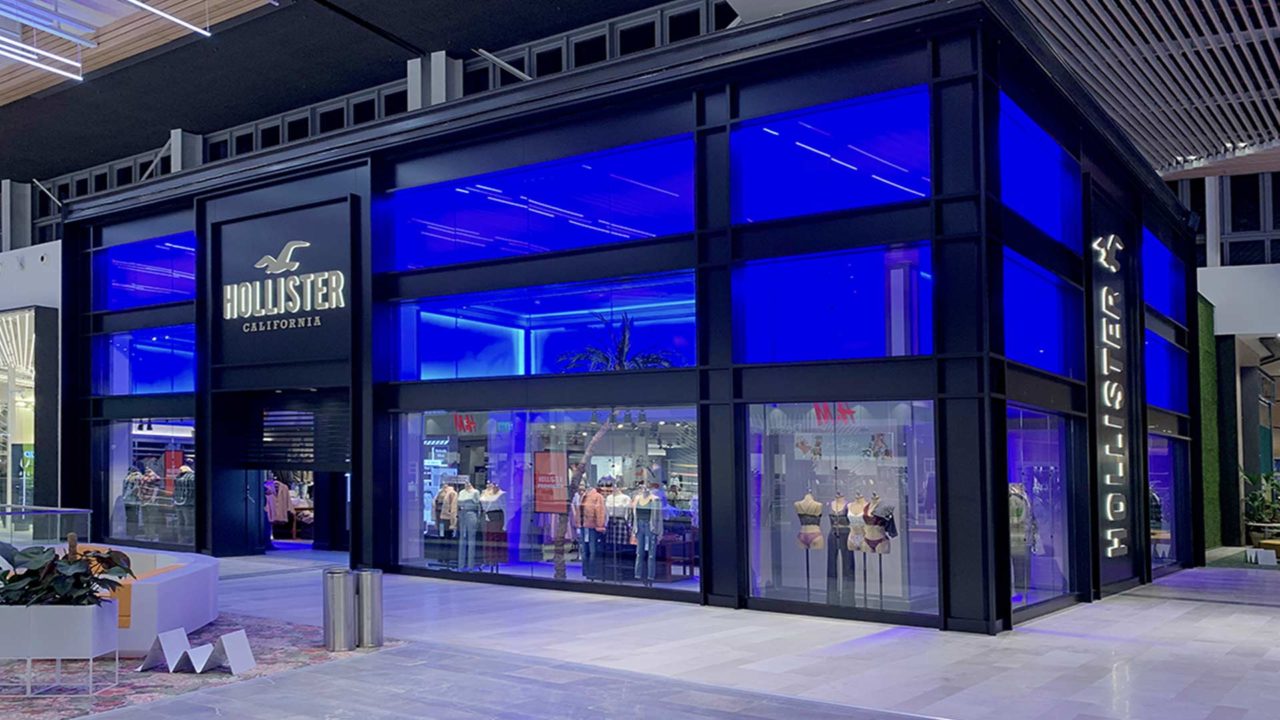
    Hollister Co., a division of Abercrombie and Fitch is building upon its successful relationship with leading social media personalities Charli and Dixie D’Amelio to launch Social Tourist, a new trend-forward apparel brand within the Abercrombie & Fitch Co. portfolio. For its initial May 20 launch, Social Tourist will be available exclusively in Hollister stores and online.

    The launch of Social Tourist marks the beginning of an exclusive, multi-year apparel agreement between Abercrombie & Fitch Co. and the D’Amelio sisters. The new brand has been imagined and inspired by Charli and Dixie’s experiences at the epicenter of social media, and also reflects Gen Z’s unique lens of living in a digitally native environment. Hollister has leveraged its pool of talent, resources, and global reach, as well as its connection to the global teen customer, to authentically bring Charli and Dixie’s vision to life.

    Working together with Hollister, Charli and Dixie have been involved in every aspect of Social Tourist, including product selection, design, branding, positioning and marketing. The family has a strong background in the apparel industry with their father, Marc D’Amelio, having over 30 years of experience in sales and design. Marc will serve as a consultant for Social Tourist.

    Social Tourist will have four distinct apparel lines: gender-inclusive items, trend pieces such as dresses and skirts, everyday essentials featuring premium basics, and swim. Each collection will include limited-edition items, with new products dropping approximately every month.

    “We’ve always loved fashion, and it’s been amazing to be so involved in this process. We feel like Social Tourist really represents both of us and explores how our generation is balancing who they are on social media with real life,” said Dixie D’Amelio. “The first product drop is all about introducing the brand to our fans, and the second drop in June reflects our individual personalities – designs that reflect Dixie’s personality are a bit edgier, with dark color palettes and patterns, where my vibe is shown through super feminine and cute styles. We can’t wait to put our vision out into the world!” added Charli D’Amelio.

    “Charli and Dixie are the quintessential example of what it’s like to grow up in the digital world, and we’ve always believed they authentically represent our teen customers’ mindset both online and in real life. We’re thrilled to unlock new opportunities for all of us beyond our co-created products, which strongly resonated with our global customers. Given the high demand, we knew we could take our relationship further,” said Kristin Scott, Global Brand President at Abercrombie & Fitch Co. “Creating a new brand virtually was no small feat, but the excitement and energy of the D’Amelio family, combined with the talent and experience of the Hollister family, has allowed us to push boundaries and make this a reality.”

    In working with Hollister since 2020, the social media stars have served as “Chief Jeanealogists,” where they tested and approved every aspect of Hollister’s denim; launched the #MoreHappyDenimDance TikTok challenge, which garnered over 5.4 billion views worldwide; and dropped a series of limited-edition, co-created collections. The sisters currently have a combined 250 million followers across their social media handles and in November 2020, Charli became the first TikTok user to surpass 100 million followers on the platform.

    Abercrombie & Fitch Co. is represented by Philip Daniels of Ginsburg Daniels Kallis and Bruce Paige of Vorys, Sater, Seymour and Pease. The D’Amelios are represented by UTA and Gary Stiffelman, Robert Kahan, and Kevin Yorn.

    Safe Harbor Statement under the Private Securities Litigation Reform Act of 1995

    A&F cautions that any forward-looking statements (as such term is defined in the Private Securities Litigation Reform Act of 1995) contained herein or made by management or spokespeople of A&F involve risks and uncertainties and are subject to change based on various important factors, many of which may be beyond the Company’s control. Words such as “estimate,” “project,” “plan,” “believe,” “expect,” “anticipate,” “intend,” and similar expressions may identify forward-looking statements. Except as may be required by applicable law, we assume no obligation to publicly update or revise our forward-looking statements.

    Risks and uncertainties related to the duration and impact of the COVID-19 pandemic on the Company and the factors disclosed in “ITEM 1A. RISK FACTORS” of A&F’s Annual Report on Form 10-K for the fiscal year ended January 30, 2021, in some cases have affected, and in the future could affect, the company’s financial performance and could cause actual results for fiscal 2021 and beyond to differ materially from those expressed or implied in any of the forward-looking statements included in this press release or otherwise made by management.

  • Fashion giant H&M’s sales recover in March as stores reopen after lockdowns

    Fashion giant H&M’s sales recover in March as stores reopen after lockdowns

    Sales at fashion group H&M fell slightly less than expected in the three months through February and rose in the first half of March as pandemic restrictions were eased in some markets, allowing hundreds of stores to reopen.

    The world’s second-biggest apparel retailer said on Monday net sales fell 27% from a year earlier, or 21% when measured in local currencies, to 40.1 billion crowns ($4.72 billion).

    Analysts had on average forecast a 30% decline in net sales for the period – the Swedish group’s fiscal first-quarter – according to Refinitiv SmartEstimate.

    “Sales development was significantly affected by the COVID-19 situation, with extensive restrictions and at most over 1,800 stores temporarily closed,” H&M said in a statement.

    “Since the beginning of February, a number of markets have gradually allowed stores to reopen and at the end of the quarter around 1,300 stores remained temporarily closed,” it said, adding that online sales had continued to develop very well.

    RBC analyst Richard Chamberlain, who has a “sector perform” rating on H&M’s shares, said the figures implied that online sales had provided a stronger-than-expected boost in February.

    H&M said sales in the March 1–13 period were up 10% in local currencies as many countries, including single-biggest market Germany, began allowing some stores to reopen. However, about 900 of H&M’s approximately 5,000 stores remained closed due to pandemic lockdowns as of March 13.

    Chamberlain said most stores should be open by mid-April bar new lockdowns in Europe, H&M’s main market.

    “As such, we see the potential for a strong sales recovery in the remainder of the year, with potential for gross margin to surprise on the upside, due to the weaker U.S. dollar,” he said.

    Market leader Inditex, the owner of Zara, last week forecast a return to healthy sales as soon as lockdown are lifted, as it reported a 70% fall in profit for its fiscal year through January. It predicted all its shops would be open by mid-April.

    H&M, whose full December-February earnings report is due on March 31, is bracing for a loss in the quarter after the pandemic slashed 2020 profits by 88%.

    Shares in H&M were up 3% in early trading, taking a year-to-date rise to 32%

  • Fashion giant H&M pauses placing new orders in Myanmar

    Fashion giant H&M pauses placing new orders in Myanmar

    Sweden’s H&M, the world’s second-biggest fashion retailer, said on Monday it was shocked by the use of deadly force against protesters in Myanmar and that it had paused placing orders in the country.

    Police and military have killed more than 50 people to quell daily demonstrations and strikes against a Feb. 1 military coup, according to the United Nations last week.

    H&M has around 45 direct suppliers in Myanmar, it said on its website, and has sourced in the country for seven years.

    “Although we refrain from taking any immediate action regarding our long-term presence in the country, we have at this point paused placing new orders with our suppliers,” Serkan Tanka, Country Manager Myanmar, said in an email.

    “This is due to practical difficulties and an unpredictable situation limiting our ability to operate in the country, including challenges related to manufacturing and infrastructure, raw material imports, and transport of finished goods.”

    Two protesters were killed by gunshot wounds to the head in Myanmar on Monday, witnesses said, while shops, factories and banks were closed in the main city Yangon as part of the uprising against the country’s military rulers.

    Tanka said H&M was extremely concerned about the situation in the country and that it was in dialogue with UN agencies, diplomatic representatives, human rights experts, trade unions, and other multinational companies.

    “These consultations will guide us in any future decision in relation to how we as a company can best contribute to positive developments in accordance with the will of the people in Myanmar,” he said.

    Myanmar’s garment industry is smaller than that of neighboring countries Bangladesh, China and Thailand. However, its around 600 factories are significant employers, providing jobs for around 450,000 workers in 2020, according to the Myanmar Garment Manufacturers Association.

  • Kering invests in resale platform Vestiaire Collective

    Kering invests in resale platform Vestiaire Collective

    French luxury group Kering has taken a 5 percent stake in Vestiaire Collective, a leading platform for second-hand clothes and handbags, betting that the booming resale market will help it woo younger and more environmentally conscious shoppers.

    The purchase is part of a 178 million euro (US$215 million) financing round announced on Monday which valued Vestiaire Collective at more than US$1 billion, the companies said.

    U.S. investment firm Tiger Global Management also invested in the platform, while existing shareholders including Vogue publisher Conde Nast and French private equity firm Eurazeo put more money in.

    The pre-owned fashion market has enjoyed rapid growth over the last three years, with a further acceleration during the coronavirus pandemic, thanks to younger shoppers’ heightened focus on sustainability and also homebound consumers looking for good deals on second-hand clothes.

    “There is a real shift happening that is going to shape the future of the fashion industry, and as a leader, in the sector, we want to shape that trend,” Kering’s digital chief Gregory Boutte told reporters.

    The proportion of secondhand pieces in closets is predicted to grow from 21% in 2021 to 27% in 2023, with the value of the sector estimated to be worth over $60 billion by 2025, the companies said in a statement. Paris-based Vestiaire Collective said its transaction volume doubled in 2020.

    Luxury groups have traditionally been wary of secondhand sellers, which weaken their control over the distribution and pricing of their brands and, according to critics, can help spread counterfeit goods. But that is changing, and Kering’s star brand Gucci last year announced a partnership with U.S.-based resale platform The RealReal.

  • Apparel retailers cut orders while Asian factories fight to survive

    Apparel retailers cut orders while Asian factories fight to survive

    Clothes retailers in Europe and America sit on excess inventory and cut back on spring orders. Sourcing agents face late payments. Garment factories in Bangladesh are on the rack.

    The global apparel industry, reeling from a punishing 2020, is seeing its hopes of recovery punctured by a new wave of COVID-19 lockdowns and patchy national vaccine rollouts.

    Some major retailers are still nursing last year’s clothes, which would have been sold off in clearance sales in normal times. British chain Primark, for example, said it was housing around 150 million pounds ($205 million) worth of 2020 spring/summer stock and 200 million pounds from autumn/winter.

    In an indication of the scale of the backlog, consultancy McKinsey says the value of unsold clothing worldwide, in stores and warehouses, ranges from 140-160 billion euros ($168-192 billion) – more than double normal levels.

    Britain’s Marks & Spencer and Germany’s Hugo Boss  said they had placed smaller orders than usual for this year’s spring collection.

    Retailers are keeping volumes small and lead times tight, according to Ron Frasch, former president at Saks Fifth Avenue who is now operating partner at private equity firm Castanea Partners, which works with a number of apparel brands.

    “Most of the brands now are pretty tight on shipping and the factors are very tight. I think everyone was very conservative with their purchasing,” he said. “I know many have been slow-paying. That is for sure.”

    Indeed, Hong Kong-based sourcing agent Li & Fung, which manages more than 10,000 factories in 50 countries for retailers including global players, said that some retailers had requested later payment terms, but declined to provide specifics.

    The pain is consequently flowing to  major garment manufacturing centres like Bangladesh, whose economies rely on textile exports. Factories are struggling to stay open.

    Fifty factories surveyed by the Bangladesh Garment Manufacturers and Exporters  Association said they had received 30% fewer orders than usual this season, as pre-Christmas lockdowns in much of Europe followed by another clampdown in January hit their businesses hard.

    “Orders usually arrive three months in advance. But there are no orders for March,” said Dhaka-based factory owner Shahidullah Azim, whose clients include North American and European retailers.

    “We are operating at 25% of capacity. I have some orders to run the factory till February. After that, I don’t know what future holds for us. It’s difficult to say how we will survive.”

    Miran Ali, who represents the Star Network, an alliance of manufacturers in six Asian countries, and himself owns four factories in Bangladesh, faces similar problems.

    “At this point in time, I should have been entirely full until March at least, and looking at a healthy quantity for autumn/winter coming in already. Across the board, that is coming slow,” he told Reuters from the capital Dhaka.

    “Brands are buying less from fewer people.”

    Asif Ashraf, another factory owner in Dhaka who makes clothes for global retailers, said it was tough to adjust. “We’ve produced the fabric and we’re ready to stitch the garments, but then they say the order is on hold.”

    With store closures threatening to carry into summer, some retailers are attempting to sell off as much of their excess stock as possible before placing new orders, textile recycling firm Parker Lane Group told Reuters.

    CEO Raffy Kassardjian said his business went from processing an average of 1.5 million items of excess apparel per month to over 4 million in January, its busiest month ever.

    Last year was dire for the clothing industry, which saw sales slide by about 17% versus 2019, according to Euromonitor. And the future is uncertain.

    Estimates for 2021 range from pessimistic forecasts of a 15% sales drop from McKinsey, to an 11% recovery from Euromonitor.

    So are there bright spots? Well, a lockdown pyjama boom is offering some minor relief.

    “If you want to know what the Great British public is doing – it’s wearing pyjamas again,” Marks & Spencer CEO Steve Rowe said last month, while Hugo Boss alluded to the same phenomenon, saying it had “streamlined our range of classic business clothing and expanded the range of casual wear”.

    But that’s cold comfort for some factory owners.

    “Demand for pyjamas is at a life-time high,” Ali in Dhaka acknowledged. “But not everyone can make pyjamas!”

  • H&M’s full year profit slides despite positive growth in online sales

    H&M’s full year profit slides despite positive growth in online sales

    Hennes & Mauritz released stronger-than-expected fourth-quarter results on Friday but flagged ongoing challenges in trading conditions, with more than 1,000 stores temporarily closed.

    “The ongoing restrictions along with the many temporary store closures will have a substantial negative impact on the first quarter,” said chief executive officer Helena Helmersson, speaking on a phone call with analysts to discuss the company’s full-year performance.

    The company said 36 percent of its sprawling retail network is temporarily closed, or 1,800 stores. Sales in the Dec. 1 to Jan. 27 period were down 23 percent in local currencies compared with the same period last year.

    The company posted a profit of 2.48 billion Swedish kronor, or $300 million, in the fourth quarter, from Sept. 1 to Nov. 30, and executives touted a strong financial position at the end of the year.

    “With strong, profitable online growth and good cost control we succeeded in ending the year in profit and with a strong financial position,” Helmersson said.

    Analysts said fourth-quarter results were better than expected thanks to lower operational expenditure than forecast but noted the sales update was weaker than expected.

    “Recent trading is in line with our fairly cautious estimate,” said Richard Chamberlain of RBC, noting the outlook was “tough.”

  • Uniqlo Singapore set to open ‘Hub of the East’ store

    Uniqlo Singapore set to open ‘Hub of the East’ store

    UNIQLO today announces that it will open UNIQLO Orchard Central, its first Global Flagship Store for Southeast Asia and Singapore, on Friday, 2 September 2016. Under the concept of “U+S and The World”, the new store will showcase the brand’s full assortment of LifeWear – innovative, high-quality clothing that is universal in design and comfort, and made for anyone, anywhere – and will offer Singaporeans an exciting space to share their culture with the world. UNIQLO Orchard Central will be located in Orchard Central mall, along Orchard Road.

    “UNIQLO Orchard Central will be a unique store for the region, providing a new shopping experience for customers. With its vibrant creative scene, Singapore is the ideal location for us to showcase our LifeWear concept through the eyes of the local community. We hope that through our work with highly dedicated Singaporean individuals and groups, we will be able to turn this space into a platform where creative ideas can be expressed and shared with others,“ said Taku Morikawa, UNIQLO Southeast Asia CEO.

    UNIQLO Orchard Central spans three levels and covers 2,700 square meters in sales floor space. Fans of the brand can expect a new shopping experience, thanks to the combination of the in-store design, full product line-up and visually stunning displays. Even the elegant dark wood floors that evoke the mood of Singapore and Southeast Asia are intended to help create the proper setting for the largest product line-up anywhere in the region.

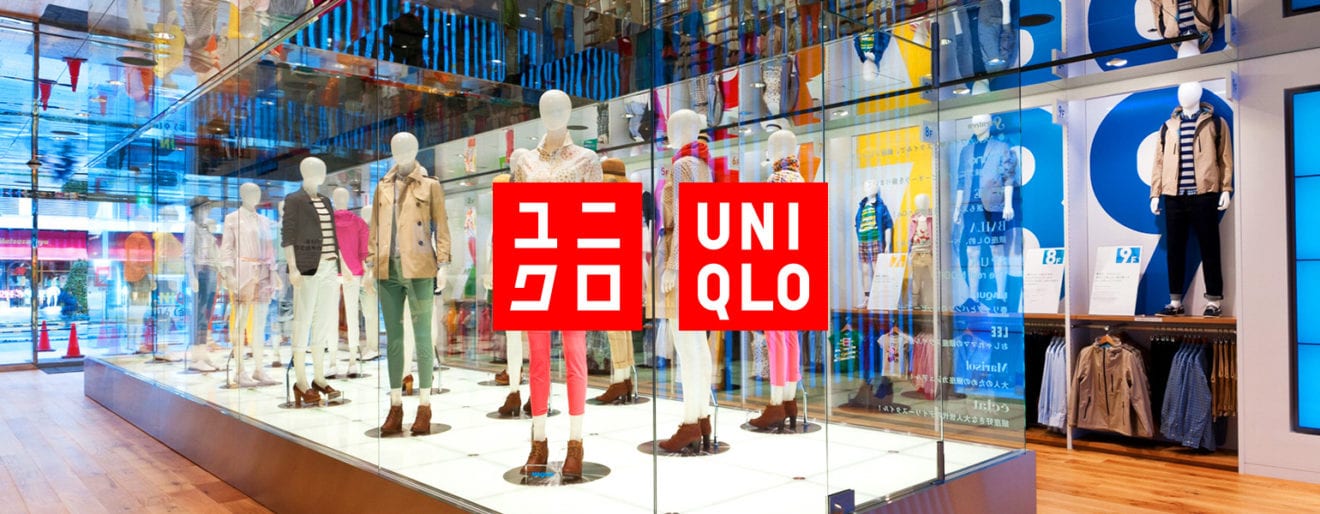
    Iconic rotating mannequins will be an integral part of UNIQLO Orchard Central, as well as close to 300 digital displays, the largest number anywhere in the UNIQLO world, and a total of 350 in-store mannequins, the latter matching the UNIQLO Ginza Global Flagship Store in Tokyo.

    “Singapore’s strategic location in Southeast Asia makes it the choice destination for UNIQLO’s first Global Flagship Store in the region. The opening of this new store marks a milestone in our highly successful eight-year joint venture collaboration.

    The Global Flagship Store will have exciting outreach programmes to engage the community. We look forward to serving our customers in this landmark store, and to inspire many creative talents to express themselves in this distinctive space with artistic works and concepts that are authentically Singaporean,” said Mrs Helen Khoo, Executive Director, Wing Tai Retail.

    A dedicated UT (UNIQLO T-shirt) corner on Level 1 will showcase exclusive UT designs drawn from the most popular collaborations such as Olympia Le-Tan and Bruno Munari. “i am OTHER”, the collection designed together with musician and style icon Pharrell Williams will also find a home on the shelves of UNIQLO Orchard Central. The new Disney Collection City Logo UTs includes a unique Singapore design featuring Mickey Mouse with the iconic Merlion, will be launched on the opening day of UNIQLO Orchard Central.

    The new store concept for UNIQLO Orchard Central, “U+S and The World” is taken from the words UNIQLO + Singapore and the company’s intention to serve as a bridge between Singapore and the World. The store is envisioned as the definitive place where UNIQLO will share the creativity, style and culture of a new Singapore with the rest of the world.

    Later this month, UNIQLO will launch “Your Stage Now Live”, the opening campaign of UNIQLO Orchard Central, by turning the hoarding around the store’s construction site into an urban canvas designed collectively by the local community. In addition, the campaign will also invite everyone to express themselves and showcase their culture to the world through a special “Your Stage Now Live” site.

    The opening of the store on 2 September will serve to kick-off a long-term collaboration with members of the local community through a broad array of programs centred on the store’s specially designed creative space, a launch pad for creativity and self-expression. Elements such as original in-store music, video content on the digital displays and curated spaces within the shop floor, as well as exclusive canvas tote bags and shopping bags, will all be co-created with the local community.

    “We warmly welcome UNIQLO’s global flagship store to Orchard Central, with its new shopping experience, innovative visual merchandising and special collections. UNIQLO will anchor Orchard Central’s appeal as a vibrant lifestyle and social hub for design conscious shoppers looking for quality affordable merchandise and a unique experience. Our mall enhancement works are also nearing completion and along with the opening of UNIQLO Orchard Central, our shoppers can look forward to a new retail experience as well as improved visibility and accessibility,’ said Ms Mavis Seow, Chief Operating Officer, Retail Business Group, Far East Organization.

  • Giordano International warns for a profit decrease

    Giordano International warns for a profit decrease

    Giordano International (0709) warned that it expects to record an annual net loss of between HK$110 million and HK$130 million in 2020, as compared with a profit of HK$230 million in 2019.

    As stated in the interim results announcement last year, a net loss of HK$175 million was recorded for the six months ended June 30, 2020. However, the group expects to record a net profit of between HK$45 million and HK$65 million in the second half of the year due to the positive trend in retail sales and improvement in consumer sentiment.

    The forecast net profit has not taken into account further potential asset impairment charges.

    As of end-December, 2020, the group’s merchandise inventory was worth about HK$435 million, below that of 2019 by about HK$113 million.

  • Moncler aqcuiring Stone Island

    Moncler aqcuiring Stone Island

    Italian designer clothing brand Stone Island has just been snapped up by Italian winter wear’s favorite Moncler SpA (BIT: MONC). While some retailers are winding up operations and slipping into administration, others are seeing an opportunity to expand. Designer goods are selling surprisingly well this year, and many analysts think 2021 will see a massive recovery in the sector.

    Last month we discussed how exclusive streetwear brand Supreme was acquired in a $2 billion deal by VF Corporation (NYSE: VFC). Now it’s the turn of Stone Island, which is being acquired by Luxury Italian group Moncler for $1.39 billion.

    Family-owned Stone Island was founded in 1982 by Massimo Osti. In the prior years, he’d created an unusual fabric that went onto become an integral part of Stone Island’s popularity. The Tella Stella fabric is a tarpaulin like weight, heavily stonewashed, and dyed in a variety of colors. In 1983 Carlo Rivetti, the current CEO and owner of Stone Island, bought his 50% stake in the company. In the ensuing years, the brand enjoyed increasing popularity. Inspired by both the military and traditional workwear, the pair created innovative new jacket designs with unusual features. For instance, a color-changing jacket that responds to temperature through its liquid crystal coating and a reflective jacket coated in a thin layer of glass.

    The brand’s popularity spiked in the nineties as English football hooligans embraced it. The founder left the company in 1994. In 2009 the brand began collaborating with others such as Adidas and then Supreme in 2014. The Supreme collab caught the eye of rapper Drake, who loved it and became a major fan and unofficial ambassador of the brand. This transitioned it away from the hardman image of football thugs to the trendy streetwear image popularised by sports brands. And Drake’s fan base was a boon to Stone Island, increasing its popularity stateside.

    Stone Islands’ growth has surged in recent years. In 2018, Stone Island’s revenue was approaching €200 million from around €56 million in 2012. It sold a 30% stake to Singapore’s sovereign wealth fund in 2017.

    CEO and owner Carlo Rivetti still owns just over 50% of Stone Island, and his family owners own an additional 19.9%. Skiwear-turned-fashion-brand Moncler is buying it from them in cash. It is buying the other 30% from Temasek, which also has a small stake in Moncler. All parties are being offered the same terms, but Temasek also has the option of taking newly issued Moncler shares for up to 50% of the cash consideration.

    Chairman and CEO of Moncler, Remo Ruffini said: “We are coming together at a challenging moment both for Italy and the world, when everything seems uncertain and unpredictable but I believe it is precisely in these moments that we need new energy and new inspiration to build our tomorrow,”

    What the Moncler and VF Corp. deals signify is the arrival of streetwear in a world of its own. No longer simply cheap and cheerful clothes for skaters, tradesmen or football fans. These brands cover all manner of outdoor pursuits, but in a trendy, designer way that makes even the laziest youngsters look cool. The streetwear market has an estimated value of $50 billion and is expected to enjoy double-digit sales growth by 2024.

    VF Corp now owns Supreme, along with The North Face, Dickies and Vans, but this isn’t stopping Supreme taking part in its exclusive collaborations with other popular brands. These surprise drops are what keeps it in demand. Customers love it, and they’re often oversubscribed in next to no time. Supreme just joined forces with Stone Island last month, when they dropped another sell-out collection. They’ve been partnering on occasion since 2014, and their limited-edition outerwear remains as popular as ever.

    This latest collab features both Supreme’s logo and Stone Island’s compass. Pieces include hand-painted shearling jackets, which have become one of Stone Island’s signature edits, as well as wind-resistant crinkle down jackets in camouflage print. There are also corduroy jackets, hoodies and some of Supreme’s quirky accessories, such as a glow-in-the-dark balaclava and swimming goggle inspired sunglasses.

    Dual branding opens up potential buyers to a much wider audience. It also gives a unique spin to a garment, but keeps it exclusive and therefore highly profitable. Despite the economic uncertainty facing the world, designer streetwear is on the up, with social media the perfect place to showcase and drop their latest offerings. Emerging markets are bringing youth and wealth, hungry to add the coolest fashion garb to their image streams. Both Stone Island and Supreme look to be headed for several years of continued growth ahead.

  • The History of Whoo to open luxury Korean beauty flagship store in Canada

    The History of Whoo to open luxury Korean beauty flagship store in Canada

    LG Household & Health Care proudly announces the opening of a first-of-its-kind, The history of Whoo luxury concept store in Canada. The history of Whoo is a best-selling, record-breaking, prestigious Korean skincare brand known worldwide and recognized for its impeccable quality, use of precious ingredients, and unique formulas once reserved for royalty and members of the Royal Court. Each precious formulation is preserved in distinctly luxurious packaging including flacons and vials inspired by the Korean cultural heritage.

    Customers at the new flagship Canadian store can expect the same level of luxury and attention to detail that The history of Whoo has become synonymous with. Upon entering the space, customers are welcomed as guests and invited to experience a truly immersive shopping experience; from elegant gold-plated fixtures to Gani marble floors, mirrored ceilings, and a dramatic custom-crafted chandelier, all culminating into an elegant showcase designed to envelop the senses in luxury and reflect the royal heritage of the brand.

    The new Canadian store will open its doors at 10:00 a.m. on November 20th at Cadillac Fairview Richmond Centre, British Columbia. The first 75 customers will receive a complimentary limited-edition cosmetic case filled with deluxe samples valued at over $100, with the purchase of $8 or more, while supplies last. To ensure a clean, safe, and comfortable environment, Cadillac Fairview Richmond Centre has put all necessary safety and social distancing measures into place.

    Inside the store, highly trained beauty consultants specialized in Korean skincare will offer shoppers personalized one-on-one consultations with customized recommendations from a selection of luxury brands, including:

    The history of Whoo – Launched in 2003, the most luxurious skincare brand from LG Household & Healthcare, Whoo harmoniously balances modern-day technology with Ancient Eastern medicinal principals to deliver the most prestigious traditions to the Empresses of today. The Chinese character “后” (Whoo) translates into Empress.

    For the first time, a brand has uncovered the beauty secrets of the Royal Court, incorporating their rare and delicate nutritious ingredients from Gongjindan – a traditional herbal recipe. Each ingredient originating from the finest sources around the world, carefully blended and perfectly balanced to achieve harmonious, healthy, and youthful-looking skin.

    Its flagship product – Bichup Self-Generating Anti-Aging Essence is an all-in-one secret recipe that increases skin moisturization and improves the appearance of wrinkles for smoother and more radiant skin. According to a Kantar Worldpanel Beauty Evaluation, this globally renowned product has been the best-selling anti-aging essence in South Korea for nine consecutive years1. Each year, the serum is released with intricately designed limited-edition packaging inspired by the Royal cultural heritage, making it one of the most highly anticipated and most valued qualities about Whoo.

    Su:m37 – a traditional Korean luxury brand that utilizes cutting edge fermentation technology to achieve highly functional skincare products. Known for its best-selling “Secret Essence,” created using Cyto-FermTM technology, a three-stage fermentation process, to create a natural and fermented water achieved by aging and fermenting a variety of 80 plants for an entire year. The antioxidant-rich, renewed Secret Essence improves skin elasticity and barrier function to enhance the skin’s own natural strength and resistance.

    O HUI – a luxury cosmetic brand based on the concept of skin science to harmonize the skin and address its condition through the use of cutting-edge biotechnology and natural botanicals. Its iconic Prime Advancer Ampoule Serum contains the brand’s proprietary Skin Core Enhancing technology to help protect the skin’s barrier and improve its resilience to environmental stressors such as pollution and seasonal changes.

  • Fast Retailing bullish about recovery as Asian expansion pays off

    Fast Retailing bullish about recovery as Asian expansion pays off

    Uniqlo father or mother Fast Retailing might have reported a 12-per-cent drop in gross sales in its full-year outcomes, however, that decline was far lower than predicted as not too long ago as July as a result of the Greater China and Japanese markets recovered at a sooner rate than anticipated.

    The firm reported full-year revenue of US$1.426 billion, down 42 percent, on gross sales of $19.185 billion worldwide.

    Same-store annual gross sales throughout Uniqlo shops declined by 6.8 percent in Japan, whereas fourth-quarter gross sales in Greater China have been up 20 percent yr on yr.

    In South Korea, the place the corporate has been impacted by a broad boycott of Japanese manufacturers by native customers for the final yr or so, gross sales fell sharply and Fast Retailing recorded a loss, regardless of closing its poorest-performing shops.

    Elsewhere, gross sales and revenue have been down throughout most of Southeast Asia and in Australia and India, however, Singapore, Malaysia, Thailand, and Australia recovered favorably within the fourth quarter. Losses have been reported in each North America and Europe.

    Sales by the GU model rose 3 percent for the yr, however working revenue was down by 22.5 percent.

    Looking ahead

    Given the quick recovery to this point for the reason that peak of the Covid-19 pandemic in Asia-Pacific, Fast Retailing is now projecting a 9.5-per-cent enhance in total income for the 2021 fiscal yr and revenue attributable to shareholders of $1.58 billion, which might characterize a rise of 82.6 percent on the yr simply ended.

    Revenue is predicted to say no within the first half as a result of persevering with the effect of Covid-19, “but we forecast large revenue and profit gains in the second half assuming the virus is brought under control,” the corporate stated in its outcomes announcement. “All business segments are forecast to generate full-year revenue and profit gains.”

    Quick revenue

    During the final monetary yr, Fast Retailing has continued its expansion into new markets, opening the primary Uniqlo in Milan in September final yr, the primary in New Delhi a month later, and making its Vietnam debut in Ho Chi Minh City in December.

    “While all those markets were impacted by Covid-19, Uniqlo Italy managed to post a full-year profit, and the Vietnam operation, which was only launched in December, turned a profit in the second half.”

  • H&M to close 250 stores globally as customers move online

    H&M to close 250 stores globally as customers move online

    The world’s second-biggest fashion retailer, Sweden’s H&M, says it plans to cut 250 of its stores globally. The closures will come next year after the firm said the Covid-19 pandemic had moved more shoppers online. Although it said sales had continued to recover in September, they were still 5% lower than the same month in 2019.

    The firm has 5,000 stores worldwide, but it is not yet clear how many closures will be in the UK.

    It said it was “too early for us to give any details on this, the numbers will differ from national market to market”.

    H&M has the contractual right to renegotiate or end leases on about a quarter of its stores every year. The retailer said that it planned a “net decrease of around 250 stores” next year.

    While its pre-tax profits fell to 2.37bn Swedish krona (£210m) for the nine months to 31 August, this was better than analysts had expected.

    However, it said 166 of its stores worldwide remained closed, and a large number still had local restrictions and limited opening hours

    Analyst Richard Lim of Retail Economics said: “What we have seen generally over the past few months of the pandemic has been a step-change in the number of sales going online.

    “That has affected all parts of the industry, but particularly clothing and footwear.”

    He also said that in terms of consumers physically visiting stores to do shopping, there had been a move from High Streets and shopping centers towards retail parks.

    “People can go in their cars instead of using public transport, and they are also able to buy in bigger bulk at retail parks,” Mr Lim said.

    H&M said it would now accelerate its plans to increase digital investment to cope with growing online demand.

    The Stockholm-based firm said it had taken “rapid and decisive action” to manage the impact of the coronavirus, including changes to purchasing, investments, rents, staffing and financing.

    Chief executive Helena Helmersson added: “Although the challenges are far from over, we believe that the worst is behind us and we are well placed to come out of the crisis stronger.”

    Sofie Willmott, from analytics firm GlobalData, pointed out that H&M’s sales in September “fell just 5% demonstrating the relevance of its product offer as shoppers start to feel more confident returning to stores”.

    But she said the firm “must enhance its online proposition given the importance of digital channels, to succeed in a very tough market”.

    In addition, Ms Willmot said H&M should consider “more significant changes” with regards to shop closures, or it will “continue to be hindered by its excessive store estate”.

  • Uniqlo launches initiative to recycle its products

    Uniqlo launches initiative to recycle its products

    Japanese apparel business Uniqlo has launched a recycling initiative aimed at reducing the footprint of its products being improperly disposed of.

    Called Re.Uniqlo, the program enables the business to recycle old clothes into new clothes, redistributing old clothes to people in need, and, in Japan only, recycling old clothes into fuel and materials.

    Goods to be recycled can be taken into Uniqlo stores and deposited within Re.Uniqlo boxes. All Uniqlo items are accepted, but the business asks that customers wash clothing beforehand and ensure there are no personal belongings included.

    “We collect second-hand Uniqlo clothes in stores for reuse and deliver them to people in need worldwide in the form of emergency clothing aid for refugee camps and disaster areas together with the United Nations Refugee Agency, NGOs and NPO,” Uniqlo said on its Re.Uniqulo website.

    “And recently, we have been actively recycling clothes into clothes, starting with our own products.”

    The business’s first recycled product, a down jacket, will be on sale later this month.