Retail News CRM

Tag: Coal

  • China and India Surge Ahead in Global Coal Production Growth, Shaping the Energy Landscape

    China and India Surge Ahead in Global Coal Production Growth, Shaping the Energy Landscape

    The coal mining landscape is gearing up for a significant shift as developers in 30 countries, particularly China and India, prepare to expand their production capacity despite an impending decline at newly operating mines in 2024. This ambitious initiative comes at a time when the need for clean energy solutions is at an all-time high, creating a complex tension between economic growth and environmental concern.

    According to a report from Global Energy Monitor (GEM), the global coal industry is bracing for the rollout of more than 850 new mines, expansions, and recommissioned projects. Alongside these developments, there are also 35 mine extension projects being reviewed. A striking statistic reveals that nearly 90% of this proposed capacity is concentrated in only a handful of countries, with China leading the pack at a staggering 1,350 million tonnes per annum (Mtpa), primarily in its northern and northwestern regions. India follows with plans for 329 Mtpa, almost half of which is attributed to state-owned Coal India.

    Environmental Implications

    While the projected capacity could revitalize coal production, it raises significant environmental concerns. GEM warns that a total of 2,270 Mtpa of coal mine capacity is currently in development, which poses serious risks of escalating methane emissions. This issue is particularly pressing as methane is a greenhouse gas with over 80 times the warming potential of carbon dioxide over a span of 20 years. The organization estimates that if all proposed projects come to fruition, approximately 15.7 million tonnes of methane could be released annually, eclipsing Japan’s total annual greenhouse gas emissions, putting further strain on global climate commitments.

    “The canary is literally and figuratively in the coal mine,” states Dorothy Mei, project manager for the Global Coal Mine Tracker at Global Energy Monitor. “Without drastically scaling back plans for new mine capacity, the world could see a massive rise in potent methane emissions that would make it all but impossible to reach the goals of the Paris Agreement.” As the dialogue around climate change intensifies, these developments compel stakeholders to reevaluate the balance between economic ambitions and sustainability. After all, while coal production may be heating up, the planet is on a different kind of warming trend.

    Questions & Answers

    What countries are leading in coal production capacity expansion?
    China and India are at the forefront, with China proposing 1,350 million tonnes per annum and India planning for 329 million tonnes per annum.

    What environmental risks are associated with the expansion of coal mines?
    The expansion poses significant risks of increased methane emissions, which can have a warming potential over 80 times that of carbon dioxide, significantly impacting climate goals.

    How many new coal mining projects are under consideration worldwide?
    More than 850 new mines, expansions, and recommissioned projects are set to be rolled out across 30 countries, alongside 35 additional mine extension projects currently under review.
  • Global Coal Demand Expected to Remain Steady Through 2025-2026, Analysis Reveals

    Global Coal Demand Expected to Remain Steady Through 2025-2026, Analysis Reveals

    China’s coal demand is anticipated to experience a modest decline this year, a turn of events that reflects broader trends in the global energy landscape. The International Energy Agency (IEA) projects that overall global coal consumption will remain stable, continuing on a plateau throughout 2024 and 2025, despite some short-term market fluctuations seen in the first half of 2025.

    Global Coal Demand Holds Steady

    “We expect the world’s coal consumption to remain broadly flat this year and next, as previously forecasted,” stated Keisuke Sadamori, the IEA Director of Energy Markets and Security. However, he cautioned that fluctuations related to weather and the unpredictable economic and geopolitical landscape could still arise.

    The IEA’s recent Coal Mid-Year Update revealed that global coal demand surged to an unprecedented high in 2024, climbing by 1.5% to reach 8.8 billion tonnes. This spike was largely fueled by increased usage in major coal-hungry nations like China, India, and Indonesia, effectively outweighing declines in advanced economies throughout Europe, North America, and Northeast Asia.

    Shifts in Energy Consumption Patterns

    Yet, the narrative took a twist in the first half of 2025, as demand in China and India softened, attributed to a slowdown in electricity consumption and a robust surge in power generation from renewable sources. On the other side of the globe, coal consumption in the United States saw an approximately 10% increase, driven by rising electricity demand and escalated natural gas prices prompting greater reliance on coal for power generation. Meanwhile, the European Union’s coal demand remained steady, balancing declines in industrial usage with heightened electricity generation needs.

    What Lies Ahead for Coal Production

    While the report acknowledges these transient shifts in demand, it underscores that the fundamental factors influencing global coal consumption are largely unchanged. The IEA forecasts a slight uptick in coal demand for 2025, followed by a subtle decrease in 2026, nudging demand just below 2024 levels. Specifically for China, coal demand is expected to dip slightly by less than 1% this year, maintaining the power sector as the primary driver for coal use both domestically and internationally.

    Looking forward, global coal production is set to reach a new peak in 2025, propelled by ongoing growth in output from China and India. However, by 2026, production is likely to decline as soaring stock levels and plummeting prices begin to impact supply. It appears that as renewables take the stage, coal may find itself igniting a slow fade.

    Questions & Answers

    What is the projected trend for China’s coal demand this year?
    Coal demand in China is expected to decline slightly by less than 1% this year, influenced by weaker electricity consumption and stronger growth in renewable energy sources.

    How did global coal demand perform in 2024?
    Global coal demand reached an all-time high in 2024, increasing by 1.5% to a total of 8.8 billion tonnes, largely due to rising consumption in major markets like China, India, and Indonesia.

    What are the expectations for coal production globally in the coming years?
    Global coal production is anticipated to hit a new record in 2025, propelled by ongoing increases in China and India, but is expected to decline by 2026 due to high stock levels and decreasing prices impacting supply.

  • Vietnam to import coal from Laos

    Vietnam to import coal from Laos

    Vietnam has signed a deal with Laos to import around 20 million tons of coal a year for the next five years.

    The memorandum of understanding was signed for the purpose Thursday by the Vietnamese Ministry of Industry and Trade and the Lao Ministry of Energy and Mines.

    Laos has been an important supplier of coal and other minerals to Vietnam in recent years.

    Vietnam imported 1.8 million tons of ores and minerals for US$78.2 million from that country last year, and 900,000 tons worth $31.6 million in the first half of this year.

    The two also have many cooperation projects in energy such as building hydropower plants and connecting grids while Laos exports electricity to Vietnam.

    Vietnam has 220 kV lines linking Laos, and is set to import at least 3,000 MW of electricity by 2025 and 5,000 MW by 2030.

  • Vietnam lacks a million tons of coal for power production

    Vietnam lacks a million tons of coal for power production

    Thermal power plants in northern Vietnam are short of over one million tons of coal for power production for this and next month, which could intensify electricity shortage in the region.

    Vietnam’s main coal suppliers Vinacomin and Dong Bac Corp were obliged to provide 4.39 million tons to utility firm Vietnam Electricity (EVN) for power production in June and July, but so far they are 1.64 million tons short.

    Since a unit of EVN has been able to purchase 600,000 tons from other sources, the amount of coal needed for EVN to operate its thermal power plants is 600,000 tons this month and 400,000 next.

    This amount is even more necessary since hydropower plants in the north are at record low water levels, which means thermal power plants will need to run at full capacity, EVN CEO Tran Dinh Nhat said at a meeting on June 12.

    The Ministry of Industry and Trade has recently said that five major hydropower plants in the north were shut down this month, creating a shortage of 5,000 megawatts of power for northern Vietnam.

    Water levels will likely remain low in the next 10 days, according to weather forecasts.

    Load shedding has been frequent in different northern areas in the last several weeks, disrupting daily life and manufacturing.

  • Vietnam to import coal from Australia amid power shortage fears

    Vietnam to import coal from Australia amid power shortage fears

    Vietnam wants to import around five million tonnes of coal from Australia amid a domestic shortage that has forced power plants to cut production.

    Apprising Australian ambassador Robyn Mudie about this on Friday Minister of Industry and Trade Nguyen Hong Dien sought his help to link up Vietnamese companies with their Austrian counterparts so that they could start buying the coal this month.

    Australia is one of the world’s biggest coal exporters. The trade ministry is also looking for sources in South Africa. National utility Vietnam Electricity (EVN) said this week that several thermal power plants in the northern and central regions are cutting down production to 60-70 percent due to a coal shortage.

    It also warned of the risk of power shortages from this month. But the trade ministry has said there will be no power shortages this year. It is mobilizing around 3,700 megawatts from other coal- and gas-fired plants and renewable and hydropower sources.

    EVN said that by 2025 another 5,500 megawatts of renewables are needed to ward off power shortages. It has also called for incentives for rooftop solar. The company is seeking the government’s permission to build wind power plants in the north. Most plants now are in the central and southern regions.

    Coal-fired plants accounted for 43.6 percent of total power generation in February, according to EVN. Vietnam promised to achieve net-zero emissions by 2050 at the U.N. Climate Change Conference in the U.K. last November.

  • Leading miner fears coal shortage may affect power plants

    Leading miner fears coal shortage may affect power plants

    Vietnam’s biggest coal miner Vinacomin is struggling to provide enough coal to thermal power plants due to shortage of workers and surging costs.

    The state-owned company provided 6.3 million tons of coal to power plants from the beginning of the year to March 14, 31 percent short of what it promised.

    One of the reasons is that half of its miners contracted Covid-19 in the first two months, and some mines saw only 20 percent of workers showing up at the end of last month.

    Another reason is import value so far has met only 7 percent of that planned for the first three months, which has led to the company’s delivery of coal mixed between foreign and domestic sources falling 69 percent short of target.

    The delay of the national utility Vietnam Electricity (EVN) in approving price tags for mixed coal also made Vinacomin miss opportunities to import more coal.

    Now that EVN has approved the price tags, the miner has struggled to import due to surging prices globally amid the Russia-Ukraine crisis.

    Vinacomin also said that many thermal plants tend to buy coal from other sources when their prices are low, and only buy from it in surging amounts when its competitors raise prices, which make the miner struggle to fulfill its commitments.

    It requested the Ministry of Industry and Trade to order thermal plants to purchase according to contracts.

    The company also proposed that the government increase coal prices, as dwindling resources has made mining more costly, while coal prices for power plants have remained unchanged for the past two years, dragging the company’s profit down.

    Vinacomin estimates that it would lose VND1.39 trillion ($60.76 million) in coal mining this year.

    Coal-fired plants accounted for 43.6 percent of total power generation in February, according to EVN.

  • DBS Targets Zero Thermal Coal Exposure

    DBS Targets Zero Thermal Coal Exposure

    As part of its efforts to support the transition to a low-carbon future, the bank has set a target of 2039 to cut its thermal coal exposure to zero.

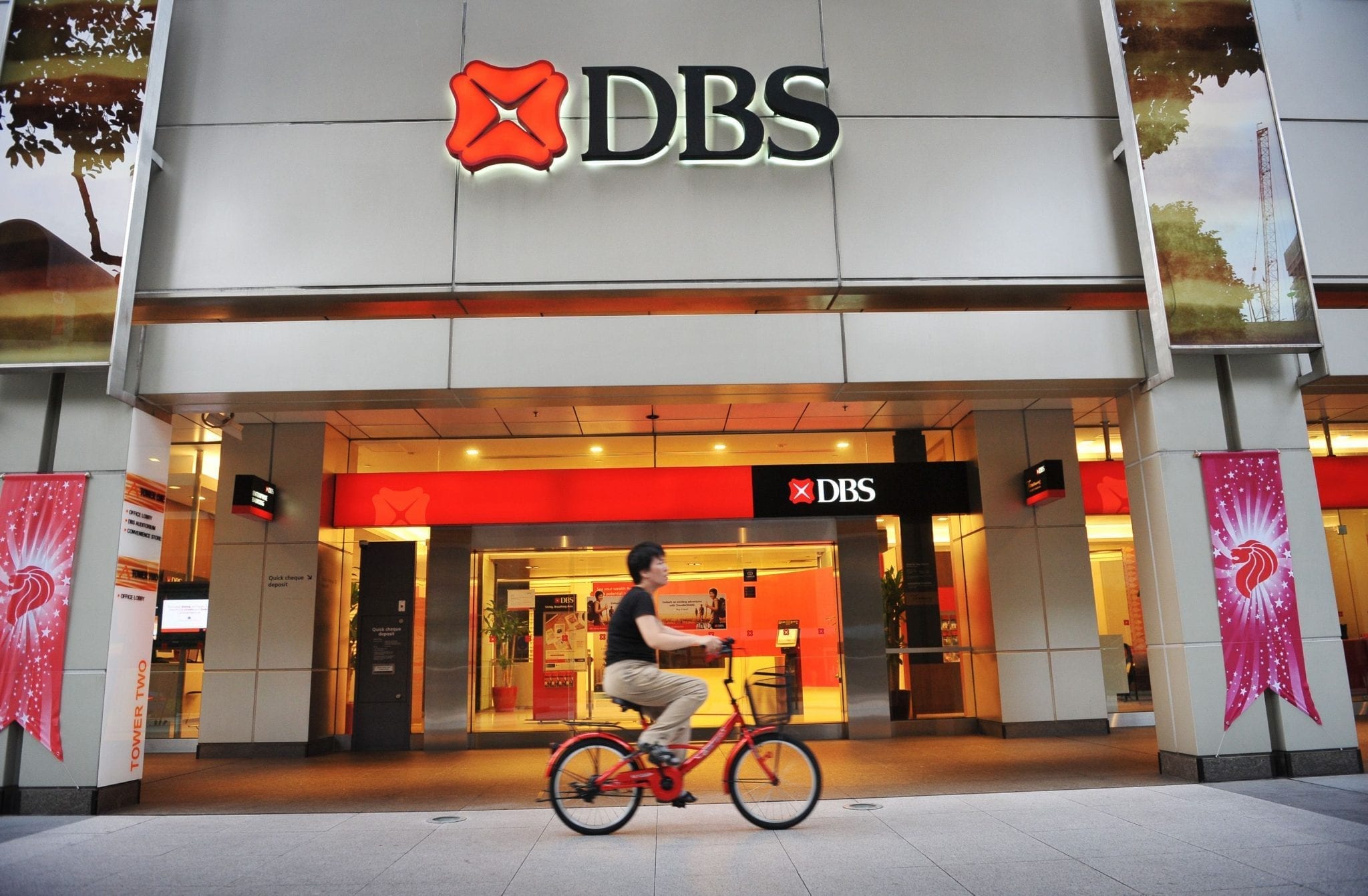
    DBS, Southeast Asia’s largest bank, has announced plans to reach its goal of zero thermal coal exposure by 2039, and will focus instead on the development of renewables, according to a statement on Friday.

    The bank will stop onboarding new customers that derive more than 25 percent of their revenue from thermal coal with immediate effect, and stop financing customers that derive more than half their revenue from thermal coal from January 2026. These thresholds will also be lowered over time, DBS said.

    DBS will use its sustainable and transition finance framework to help sectors reliant on thermal coal to transition.

    Every year counts in the journey towards a low-carbon future and we recognize the increasing need for transition financing to help industries gradually navigate away from brown to green, Tan Su Shan, DBS group head of institutional banking, said.

    Tan said the bank hopes to help energy players in the region scale the reach and supply of renewable energy in the near future.

    In 2020, DBS grew its exposure to renewable energy projects to S$4.2 billion ($3.15 billion), up from S$2.85 billion the year before.

  • Coal imports rise to record levels

    Coal imports rise to record levels

    Vietnam’s coal imports surged to a record high in the first half of the year, showing its rising reliance on coal-fired power plants.

    They rose 53.8 percent year-on-year to 31.57 million tons, according to Vietnam Customs. The imports, mostly from Australia, Indonesia, and Russia, exceeded local production by 25 percent.

    Vietnam turned from a net coal exporter to an importer five years ago as the number of its coal-fired power plants rose to meet the surging power demand from one of the world’s fastest-growing large economies. Its GDP growth last year was 7 percent.

    Though the government has been seeking to reduce the reliance on coal and encourages the construction of solar and wind power plants, coal plants accounted for 36.1 percent of the electricity generated last year, according to the Vietnam Energy Association.

    The Ministry of Industry and Trade has warned of shortages between 2021 and 2025 after the construction of new plants fell behind schedule.

    In a plan it is drafting, the ministry has ruled out building coal-fired power plants after 2030, when it will prioritize renewables and liquefied natural gas.

  • Vietnam urged to stop building new coal-fired power plants

    Vietnam urged to stop building new coal-fired power plants

    A halt to investment in new coal-fired power plants is required to check the trend of increasing coal consumption, a report warns.

    The report, released on Monday by the Ministry of Industry and Trade in collaboration with Denmark’s Energy Agency, said the country needs early action to reduce future coal demand, which could include taxation on the use of coal or limits on new coal-based power generation.

    Vietnam’s coal imports could triple between now and 2030 as demand for power rises in lockstep with a rapidly growing economy, Jakob Stenby Lundsager, an adviser in Vietnam to the Danish Energy Partnership, said at the release of the Vietnam Energy Outlook Report 2019.

    The figure would rise eight times by 2050, meaning three-fourths of Vietnam’s energy needs would depend on imports, he said.

    Renewable energy could account for 10 percent of total supply by 2030 and 20 percent by 2050, but the country needs to invest in expanding its grid and transmission to absorb the new supply, he said.

    The report noted liquefied natural gas could be used instead of coal in the power sector through at a higher cost, but it would cause less pollution.

    Vietnam became a net importer of coal in 2015 and imports have been rising to meet electricity needs.

    Imports cost $2.27 billion last year, up 71.6 percent year-on-year, with coal bought mostly from Indonesia, Australia and Russia, according to the trade ministry.

    Since power shortages are expected from 2021, the country might need to import 3.6 billion kilowatt-hours of power in 2021 and 9 billion kWh in 2023 from Laos and China to meet demand, the ministry had said in July.

    The World Bank has estimated that Vietnam needs $150 billion for energy sector development by 2030, with electricity demand growing by 8 percent a year in the next decade.

  • Vietnam eyes green power, not to sacrifice environment for growth

    Vietnam eyes green power, not to sacrifice environment for growth

    The government Thursday reaffirmed Vietnam’s desire for a greener energy mix amid the risk of a power deficiency. Environment-friendly coal- and gas-fueled and renewable power plants would make up the mix. While Vietnam faces “obvious risks of an energy shortage in the coming years … it will not sacrifice the environment for economic growth,” Deputy Prime Minister Trinh Dinh Dung said in a meeting with the state-run Vietnam Electricity (EVN), the country’s largest power producer and monopoly distributor.

    Coal-fired power is vital to energy security, but “it must be clean,” he noted. Dung asked EVN to pioneer the use of modern technologies to reduce the environmental footprint of new coal-fired plants and handle the cinder and ash at existing plants.

    The country faces difficulty in increasing power generation since it has decided to put nuclear power on hold, many coal-fired plants are behind schedule and renewables could not be developed on a large scale due to “high costs” and transmission limitations.

    “Hydro power currently meets 40 percent of the country’s demand, but additional supply is almost impossible.

    “Our hydro power plant reservoirs, especially in the central region, are facing a serious water shortage, supply of coal for power development is erratic and gas supply is waning while power station projects for new supplies are being implemented slowly,” the deputy prime minister said.

    Dung said “EVN must also focus on investing in transmission systems to bolster the development of renewables.”

    The inadequate transmission system is now a bottleneck slowing down wind and power projects though a dramatically rising number of investors have shown interest in such projects following the recent increase in feed-in-tariffs (FITs).

    Dung also instructed the Ministry of Industry and Trade to hasten studies for the country’s investment in coal transshipment ports and regasification terminals to support development of gas-fuelled power, and quickly complete negotiations to buy power from overseas.

    He also asked EVN and other investors to speed up the delayed construction of major projects like Nhon Trach 3-4, O Mon 3-4, Tan Phuoc, Long Phuc 2-3, Quang Trach, and Quynh Lap.

    Vietnamese firms lack the resources for major projects while foreign loans are difficult to get due to government guarantee-related issues.

    The regional imbalance in power supply and demand is also a challenge. While the southern region accounts for more than half the demand (the north nearly 40 percent and the central region nearly 10 percent), power is being generated mainly in the north and central region (about 60 percent).

    To make it worse, the installation of transmission lines, both the main grid and branches, has been slow and failed to keep up with the pace of power generation, while negotiations to buy electricity from other countries have been going at a snail’s pace.

    The installed power capacity is around 48,000 MW. Under the revised Power Development Plan VII, a total of 60,000 MW is expected to be generated by 2020, with coal-fired plants accounting for 42.7 percent followed by hydropower (30.1 percent), gas-fired plants (14.9 percent), and renewables (9.9 percent).

    By 2030, the capacity will jump to 129,500 MW, with the ratios of coal and gas-fired power remaining almost unchanged, but renewables doubling to 21 percent.

  • Vietnam must avoid power cuts next year: PM

    Vietnam must avoid power cuts next year: PM

    Prime Minister Vietnam Nguyen Xuan Phuc has ordered agencies to ensure that the country won’t suffer power shortages in 2019. The Prime Minister has communicated this to relevant agencies several times, Mai Tien Dung, Minister and Chairman of the Government Office, said at the government’s regular press conference on Monday.

    The communiqués have instructed the agencies to ensure that there’s no electricity shortage for both industrial and domestic uses, emphasizing they would be held responsible for failures, Dung said.

    The PM has also tasked relevant agencies with definitively resolving the ongoing issue of coal shortage for thermal power plants, which Vietnam Electricity (EVN) has warned could lead to power cuts early next year.

    The national power utility said in a recent report to Deputy Prime Minister Trinh Dinh Dung that the country will need over 54 million tons of coal for electricity production next year, of which 43.4 million tons will come from domestic production and 10.68 million tons will be imported.

    But the country’s only two suppliers, Vietnam National Coal-Mineral Industries Corporation (Vinacomin) and the North-Eastern Company (NECO) under the Ministry of Defense, will only be able to produce 37.21 million tons of coal next year, 6.19 million tons lower than estimated demand, EVN said.

    Speaking at the press conference, Deputy Minister of Industry and Trade Do Thang Hai said a total of four different electricity supply plans have been drafted, all of which designed to ensure there would be no power shortages next year.

    However, in certain cases, Vietnam would still need to produce 2-7 billion kWh of electricity from expensive oil-powered generators.

    “If we want to have enough electricity then we must increase the production of electricity by oil, which would be more expensive,” he said, asking consumers to make plans to save electricity.

    Regarding the issue of coal shortage, Hai asserted that Vinacomin and NECO have both supplied enough coal for thermal power plants as committed.

    “The two major coal suppliers have tried their best. If coal from domestic sources is not enough to supply [thermal power plants] then we will import more,” he said.

    The deputy minister also said a scenario for regulating electricity prices next year would be reported to the government later this month.

    “The electricity price for next year is being carefully considered and the scenario is being built in accordance with regulations, including factoring in the effect on inflation,” he said.

    Vietnam currently relies largely on hydropower and thermal power plants for its electricity needs. However, its hydropower potential is almost fully exploited and its oil and gas reserves are running low.

    Thermal energy is expected to account for over 48 percent of the country’s power production next year.

    Vietnam, one of Asia’s fastest-growing economies, has been struggling to develop its energy industry, and its heavy reliance on non renewable sources could prove problematic in the future, experts say.

    World Bank country director for Vietnam Ousmane Dione said at a recent forum that Vietnam will need to raise up $150 billion by 2030 to develop its energy sector; that electricity demand in the country will grow by about 8 percent a year for the next decade.

  • Indonesia Gov’t Undecided on New Coal Policy

    Indonesia Gov’t Undecided on New Coal Policy

    Indonesia President Joko “Jokowi” Widodo will decide on Tuesday (31/07) whether the government’s policy on coal for domestic use should be revised, considering both the need for price stability and for reducing the current external deficit.

    The government in March set a ceiling price for 25 percent of its coal production bound for state utility company Perusahaan Listrik Negara at $70 a metric ton, in order to keep electricity prices stable ahead of the 2019 elections.

    The quota and price cap mean miners miss out export revenues amid the commodity’s rising global price, to the tune of $5 billion a year, a substantial amount that could reduce Indonesia’s current account deficits, Coordinating Maritime Affairs Minister Luhut Pandjaitan said on Monday (30/07).

    The government may charge a coal sales tax to coal companies at between $2 and $3 per ton to subsidize PLN. A new agency could be established to manage the process.

    The government may also revise the 25 percent quota to allow coal with energy levels above 4,500 kilocalories per kilogram (kcal/kg) or below 4,000 kcal/kg to be exported, because PLN needs it between 4,000 and 4,500 only, said Rosan Roeslani, chairman of Indonesia’s Chambers of Commerce and Industry (Kadin), who was present in a discussion with top government officials on Monday.

    All revisions will still need to be discussed with the coal and power industry, and their impact on state revenue would need to be calculated, Luhut said.

    “Even if this happens it will probably be next year at the earliest,” he said.

    Indonesia is the world’s top exporter of thermal coal, and its economy has benefited from rising demand for the dirty fuel — which hit $104.65 a ton in July — the highest since May 2012.

    Expert and consumer groups are against the government’s proposal.

    “Abandoning the domestic coal price will be a blunder policy, which will not increase foreign exchange from coal exports to reduce the balance of payment deficit, but only increases the income of coal businesses as well as the cost of production for PLN,” Fahmy Radhi, an energy analyst at Gadjah Mada University, said in a statement on Sunday.

    PLN would bear $3.68 billion in additional costs to buy coal at the current market price, Fahmy said. Even with the sales tax on coal companies, which is estimated to bring $1.28 billion, PLN would still be left with an additional expense of $2.40 billion.

    PLN has been under financial pressure for the past few years, trying to meet the government’s plan for 35,000 megawatts of additional power capacity.

    In September, Finance Minister Sri Mulyani Indrawati sent an official letter to Energy and Mineral Resources Minister Ignasius Jonan and State Enterprises Minister Rini Soemarno, warning of PLN’s poor financial performance.

    The company suffered losses of Rp 6.49 trillion in the first half of this year. In the same period last year it recorded a net income of Rp 510 billion.

    “If the rule is really implemented, then it means the government favors more the interests of a handful of people [coal businessmen] rather than the interests of a larger community — electricity consumers,” Tulus Abadi, managing director at the Indonesian Consumer Protection Foundation (YLKI), said in a statement.

  • Indonesia to Postpone Coal, Palm Oil Insurance Rules by Six Months

    Indonesia to Postpone Coal, Palm Oil Insurance Rules by Six Months

    The Ministry of Trade has decided to postpone for six months the application of rules saying coal and crude palm oil export shipments should use Indonesian insurers, the country’s leading coal industry association said.

    The decision would be the second time that application of the rules, issued in October and due to come into effect on Aug. 1, have been postponed.

    The rules were part of trade regulations intended to boost the role of the archipelago’s shipping industry and save foreign currency. Elements of the regulations were postponed in April to 2020 with little clarification from the trade ministry.

    The decision to postpone the insurance rules was announced by the ministry at a brief meeting with industry representatives on Thursday (26/07), Indonesian Coal Mining Association (ICMA) executive director Hendra Sinadia said.

    “Everybody is very anxious,” Hendra said, referring to coal buyers and exporters confused about how they could put the rules into practice for shipments sold on a free-on-board (FOB) basis, on which the vast majority of Indonesia’s coal exports are sent.

    Under FOB terms insurance is the responsibility of the buyer, Hendra noted.

    Trade Minister Enggartiasto Lukita is expected to formally announce the decision on his return from a visit to the United States, Hendra added. Enggartiasto is due to return to Jakarta on July 28, according to the trade ministry, though its representatives did not immediately respond to questions on the matter.

    Ido Hotna Hutabarat, chief executive of coal miner Bumi Resources unit Arutmin Indonesia, said the rules were unworkable.

    “This cannot be carried out for FOB sales because we don’t have rights to control the buyer,” he said, adding that FOB shipping terms were preferable as they were lower risk.

    Indonesian Palm Oil Association (Gapki) executive director Mukti Sardjono said on Wednesday Gapki would discuss how to implement the rules with the Trade Ministry. “We hope the implementation of this regulation won’t be a disincentive for exports,” he said.

    Dody Dalimunthe, executive director of the Association of General Insurance Companies of Indonesia (AAUI), said there were 73 Indonesian insurance companies that can cover coal and CPO shipping. “And many companies already use this insurance,” he said.

    Earlier, ICMA chairman Pandu Sjahrir said diplomats from several countries including Japan had asked the trade ministry for a transition period for the insurance rules to come into effect. The Japanese embassy did not respond to a written request for comment.

  • Coal buyers spooked by Indonesia’s new shipping rules

    Coal buyers spooked by Indonesia’s new shipping rules

    Buyers of Indonesian coal are holding back orders of the fuel after the government issued new shipping rules for coal and crude palm oil that would restrict exports to Indonesian vessels, an industry association said today.

    Jakarta issued rules in October requiring coal and palm oil exporters to use Indonesian-flagged vessels and Indonesian insurance companies, to boost the role of the archipelago’s shipping industry in its export market.

    However, guidelines on implementing the rules and possible exemptions have not been released, raising concerns among shippers in Indonesia, the world’s top thermal coal exporter and palm oil producer.

    The regulation will take effect at the end of April.

    “There was some information, several potential buyers from abroad put on hold making any new contracts,” Hendra Sinadia, executive director of the Indonesia Coal Mining Association said.

    Describing the new rules as “dangerous”, Sinadia said they could affect export volumes and state revenues if shipping contracts had to be renegotiated to shift to so-called cost,
    insurance and freight (CIF) contracts from free-on-board (FOB) contracts.

    Under CIF contracts, the seller is responsible for the shipping arrangements and must buy insurance to protect the cargo against losses during the voyage. Under FOB contracts, the buyer procures the vessel and is responsible for all shipping costs.

    The industry is worried that time is running out to make adjustments before the rules come into effect, Sinadia said, noting that it would be difficult to do so without the
    guidelines.

    Indonesia Palm Oil Association secretary-general Togar Sitanggang said in an interview on Jan 24 that there were several problems with the new rules, noting there were not enough Indonesian-flagged food-grade tankers, and that Indonesian insurers may lack capacity.

    “If we’re selling CPO (crude palm oil), free-on-board at Belawan port, does this mean our buyer has to use Indonesian vessel? That is ridiculous.”

    The palm oil industry is awaiting guidance on when foreign vessels can be used if local vessels are unavailable, he said. “There should be no obstacles, but if we must do this and that, it could hold up exports.”

    The new rules could add to freight costs, Sitanggang said, if shipping companies were unable to find cargo for their return trips to Asia. “If their ships are empty, of course they’ll ask for a higher price from us.”

    According to Oke Nurwan, director-general of foreign trade at the Ministry of Trade, while most domestic shipping uses Indonesian-flagged vessels very little is exported on Indonesian ships.

    “It can’t be like that any more,” Nurwan said on Jan 25, adding that the government wanted the domestic shipping sector to compete more with multinationals.

    “If (the government) didn’t intervene there would be no trigger, so we made it mandatory,” he added.

  • Global coal price hike could cost Vietnam $1.27 billion per year

    Global coal price hike could cost Vietnam $1.27 billion per year

    The global price of coal has doubled since the beginning of 2016 and could result in Vietnam spending an additional $1.27 billion per year on the fuel by 2021, new analysis has revealed.

    The current market price of thermal coal has risen to $100 per ton, twice the amount recorded earlier last year, according to research from the Australia-based Institute for Energy Economics and Financial Analysis (IEEFA).

    Last year, Vietnam imported a net volume of 12 million tons of coal, a staggering increase of 131 percent against 2015, and the country’s net coal imports will stand at 35 million tons per year by 2021, according to the International Energy Agency (IEA).

    At current market prices, that would cost Vietnam $3.5 billion per year.

    Compared with projections made last year, which said Vietnam would have to spend $2.8 billion at a predicted price of $80 per ton, the country will end up spending an extra $1.27 billion every year on importing foreign coal by 2021, the IEEFA calculated.

    According to the institute, rising coal imports create commodity price and currency risks for Vietnamese electricity consumers that have a negative impact on the current account deficit.

    “The doubling of the coal price from $50 in January 2016 to almost $100 today is largely as a result of a Chinese policy aimed at an orderly coal market transition by maintaining a degree of profitability for domestic Chinese coal miners, while the central government forges ahead with an accelerating transition to clean energy. China is set to install 50 gigawatts of solar in 2017 alone, a global record for a single country in a single year,” it said.

    “The fluctuating market of 2017 illustrates the extent to which coal is a major threat to the health of the Vietnamese budget,” said Tim Buckley, director of Energy Finance Studies at the IEEFA.

    “For countries experiencing significant sustained economic growth, it also further validates the imperative to diversify Vietnam’s electricity sector generation base to incorporate more alternative sources of domestic supply, namely renewable energy infrastructure, which continues to see cost reductions of more than 10 percent every year,” he was quoted as saying in a statement released on Wednesday by the IEEFA.

    In Vietnam, which has switched from a coal exporter to a coal importer over the years due to overexploitation, the development of green-power projects has only just started and investors are still struggling due to low buying prices.

    The Ministry of Industry and Trade in September asked the government to raise the buying price for wind power in an effort to help investors cover high input costs.

    Tran Vinh Thong, an official from Thuan Binh Wind Power Joint Stock Company that operates a wind power plant in south-central Vietnam, told VnExpress in September that “the biggest problem about investing in wind farms is the low buying prices and the time it takes to recover the investment”.

    The ministry suggested that the price should be lifted to 8.7 cents per kilowatt-hour (kWh) for wind energy projects on land and 9.95 cents per kWh for offshore plants.

    Since 2011, the buying price for wind energy has stood at 7.8 cents for all land-based projects in Vietnam, with 6.8 cents paid by State-run power monopoly Vietnam Electricity (EVN) and the rest coming from the country’s Environment Protection Fund.

    For the country’s only offshore plant in the southern province of Bac Lieu, the current price is 9.8 cents per kWh.

    The total wind power capacity in Vietnam is predicted to reach 206MW this year, 456MW next year and 800MW in 2020.

    The country is trying to generate enough energy to sustain national growth and to connect the millions of people who still do not have access to power, while gradually shifting towards clean and low-carbon energy.

    Last year, the government revised down its output target for coal-fired power plants to 53.2 percent of the country’s total power generation by 2030 from the 56.4 percent previously projected.

    Vietnam is aiming to produce 10.7 percent of its total electricity through renewable energy by 2030, mainly through solar and wind energy, up from 6 percent as previously planned.

    Nguyen Anh Tuan, a senior energy official at the industry and trade ministry, told VnExpress in June that the government had raised the buying price for solar power from 7.8 cents to 9.35 cents per kWh, offered investors tax incentives and cut land use fees in an effort to reach this goal.

    He said investors in wind power projects will likely have the same incentives in the near future.