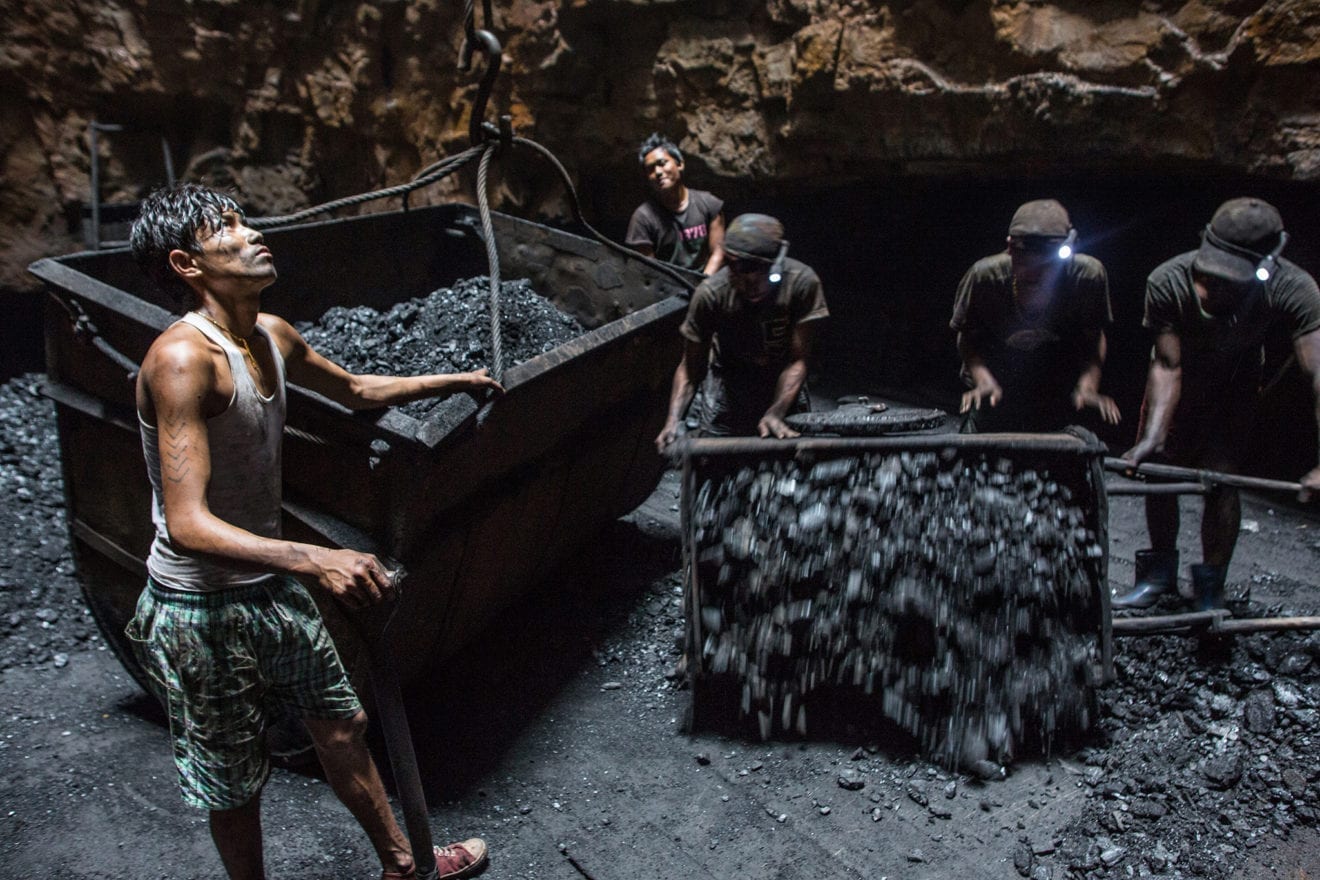
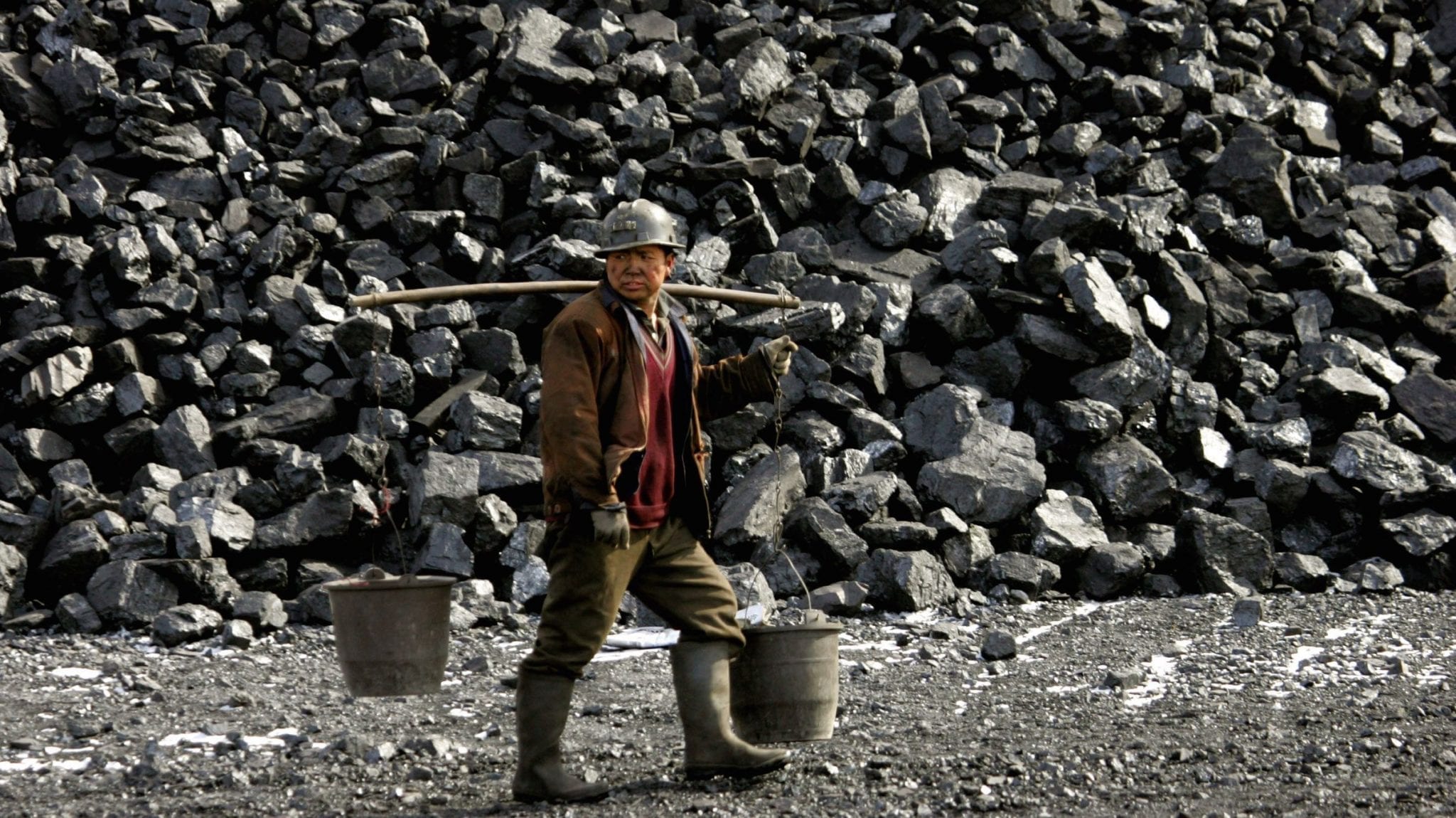
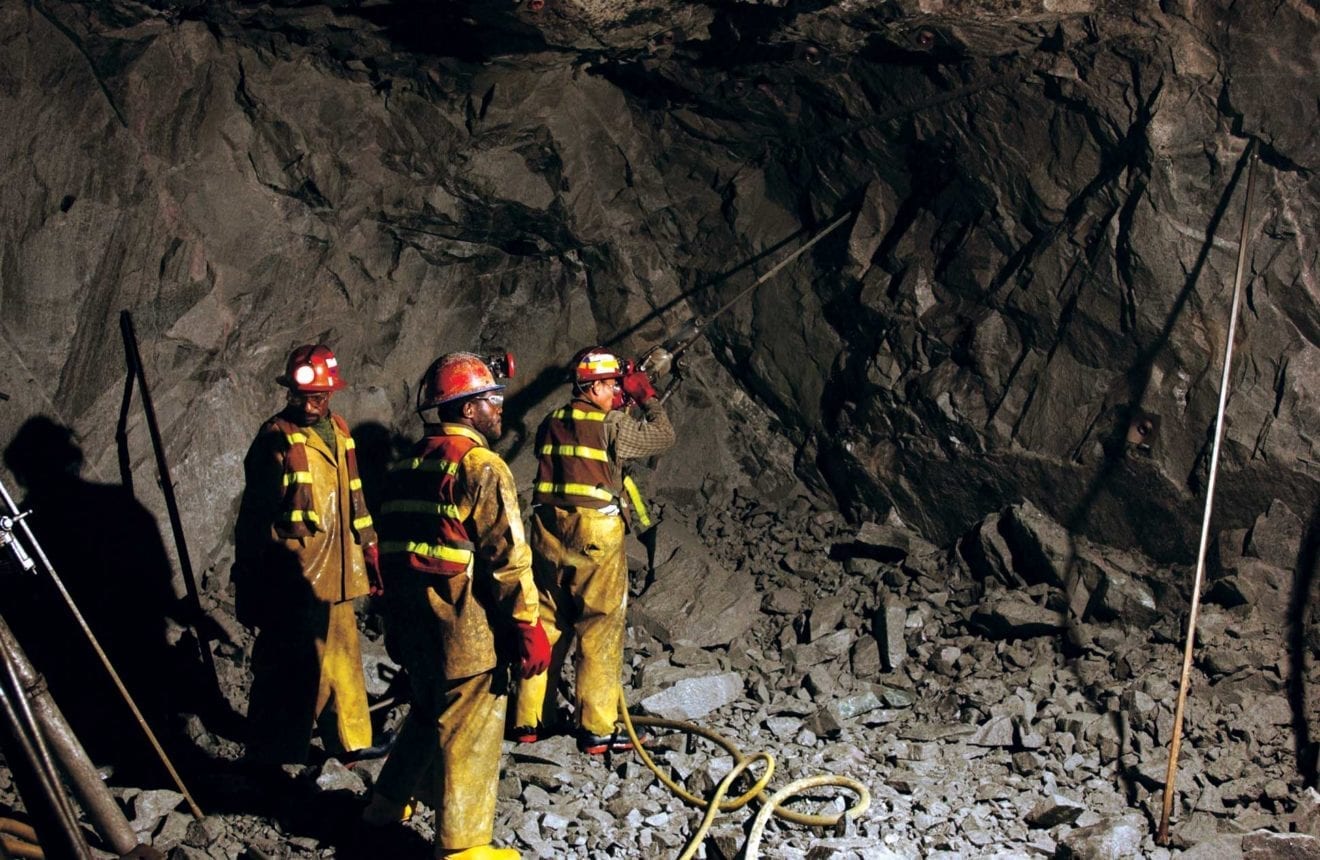
Though Indonesia has one of the world’s fastest-growing economies, its electrical grid is faltering, with blackouts common and many factories and homes relying on expensive diesel-powered generators as backup. In 2011, Indonesian coal mining magnate Samin Tan and his company, Borneo Lumbung Energi & Metal, stepped into this energy void. Tan hoped to acquire the rights to a potentially rich coal mine in Borneo, one of the more heavily forested of the islands comprising the 3,000-mile-long tropical archipelago. But he needed $1 billion to do it. That deal’s unraveling reveals how years of effort by environmentalists and regulators may in the end have proved less effective at limiting greenhouse gas emissions in Southeast Asia than was a pistol-packing attorney, with enormous potential ramifications for how the fourth-most-populous nation on Earth develops its energy sector—and for the global climate.
Tan’s company found itself in trouble when the price of coal crashed last year, driven by falling demand from China, where manufacturing has cooled and the government has ordered cuts to imports to protect its mining industry. One of Indonesia’s most important markets for its abundant coal was flagging. In April, the British bank Standard Chartered, the largest investor in a group that loaned Tan $1 billion to finance the mine, suddenly worried Tan wouldn’t be able to sell the coal and called in the paper. Tan refused to repay the bank.
Coal projects in Indonesia have been able to race ahead not only because the country needs the energy but because investors outside the country have been happy to provide the funding and often receive help from their home governments’ export credit agencies. “National export agencies can support export of technologies,” said Jan Vandermosten, sustainable finance policy officer at World Wildlife Fund’s European Policy Office in Brussels. For example, Indonesian coal mining companies lacking the capital or a key technology to build a coal-fired electrical plant often strike deals with partners overseas, whose home governments help finance the investment, assisting companies in their country to get lucrative deals over foreign rivals. “It’s not about mining coal. It’s about companies that go to developing countries and construct coal plants, importing technology like boilers or other equipment,” said Vandermosten.
In January, a $3.4 billion coal power project financed in large part by Japan’s public export credit agency, the Japan Bank for International Cooperation, moved forward in Central Java, a large province on Indonesia’s most populous island, where it will provide electricity for nearly 13 million people. JBIC is providing $2 billion, or nearly 60 percent of the project’s capital, and it will be operated by a partnership of Japanese and Indonesian energy companies. The 1,900-megawatt installation is slated to come online in 2020, when it will be the largest coal-fired plant in the country of 250 million people. Elsewhere in Asia, new coal plants in Bangladesh and India have been made possible with American and European financing and expertise.
Coal’s share of Indonesia’s electrical portfolio has been climbing over the last decade, from 36 percent in 2007 to 41 percent in 2015, according to Kurnya Roesad and Frank Jotzo, climate researchers at Australian National University. In September, they reported that 55 percent of Indonesia’s new electricity will be from coal by 2025, if the expansion of the grid continues at its current pace—despite the government’s pledge to get 23 percent of all electricity from renewable sources by then. But the financing behind complex, expensive coal projects is proving a weak spot in the country’s energy plans.
In January 2017, a new agreement among Organisation for Economic Co-operation and Development member countries will curtail many coal projects’ ability to receive necessary financing from overseas. Negotiated before last year’s Paris climate talks, the deal could restrict as much as three-quarters of the world’s coal energy pipeline, though early estimates are untested. Indonesian miners may be able to avoid the agreement’s most stringent restrictions, said Vandermosten, who was involved in its conception, by opting for cleaner coal technologies. But they would nevertheless crowd out funding for renewable technologies.
Where financing can’t be publicly backed, that will drive Indonesian miners and their foreign partners to private financing like the deal with Standard Chartered.
Which is where a flamboyant attorney named Hotman Paris Hutapea comes in. Hutapea became famous during a high-profile drug smuggling trial a decade ago for sporting a hairstyle reminiscent of mid-1980s Van Halen, keeping a white-handled pistol in a holster in his suit, and flaunting romantic relationships with local celebrities.
Tan hired him to fight Standard Chartered’s insistence that it be paid. The trial quickly became a test case for a string of other coal projects in Indonesia, including the Japanese-backed project. If digging up coal to fire power-generating plants using 19th-century technology was to be Indonesia’s energy policy of the future, the industry would need to show—even more than that it had the coal—that it could finance the multibillion-dollar infrastructure projects needed to dig it up and turn it into electricity.
Reports vary, but the British bank’s liability on just the single loan is usually estimated to fall between $630 million and $750 million. That’s a large enough amount that a problem with just this one client could kneecap a major London institution’s stock price and send the rest of the coal market tumbling. The overall package of loans to Tan was the largest debt extended to a single person in all of Asia that year.
Other large multinationals not in the habit of throwing away millions had been minority partners in the deal, and if the Indonesian court invalidated the terms of the loan—blocking Standard Chartered’s attempt to collect from a company Tan said was not bankrupt—they too would lose between tens and hundreds of millions. Among the investors was Caterpillar, the Peoria, Illinois–based manufacturer of bulldozers and other heavy equipment used in the mining industry, which was in for just over $100 million.
The trial would take place in Jakarta, and a better place for a show trial about a coal mine may not exist. The capital of a nation of coral reefs and dense rainforest, Jakarta is home to 20 million residents surrounded by toxicity. It’s hard to take a walk along Jalan M.H. Thamrin, the heart of the business district, without the risk of stepping into an open sewer. “The combination of untreated domestic sewage, solid waste disposal, and industrial effluents has led to a major public health crisis” along Jakarta’s main river, the soupy Ciliwung, the Asian Development Bank found in 2012. (ADB helps arrange funding for many public works projects, such as water treatment plants, in Indonesia and elsewhere. Little evidence exists for any improvement in water quality or sanitation since the ADB’s report.) Air pollution—mainly from vehicle exhaust—is so bad that in May, U.S. Ambassador Robert Blake proudly announced that two air quality meters had been installed in a complex housing American diplomatic staff, whose worries about the city’s pollution had converted it into a hardship posting. Sixty percent of people in Jakarta had seen their health harmed significantly by the smeary air, said Blake, citing results of a 2013 joint Indonesian-American study. If a lawyer ever wished to argue against a coal mine by bringing the judge to the courthouse steps to sniff the air, Jakarta was the place.
As the trial got under way in March, Hutapea was preparing to argue that a bank enabling a coal mine should not be allowed to collect on a $1 billion loan. It wasn’t his first time arguing in court that an Indonesian company working in an environmentally shady industry shouldn’t have to pay back a foreign partner: In 2001, he represented local companies in a $14 billion case brought by American creditors against Indonesian logging company Asia Paper & Pulp, which owned plantations in Borneo. Hutapea argued that the contracts establishing the loans had been invalid. He won.
His argument in the Standard Chartered case: There had never been a loan to Borneo Lumbung in the first place, the $1 billion that changed hands notwithstanding.
The Standard Chartered–led consortium had lent Tan the money so he could buy a stake in a rival mining company called Bumi Resources (“bumi” means “Earth” in Indonesian). Tan used mines owned by his company as collateral. But Hutapea argued that Indonesia’s coal is a state asset, even if mined privately. So Tan needed the Indonesian government’s approval to use his own coal mines as collateral for the loan—and he hadn’t requested that. Standard Chartered hadn’t either. The loan, Hutapea maintained, was therefore invalid. There was nothing to collect.
In April, the court ruled in Tan’s favor. As with the Asian Pulp & Paper case 15 years earlier, Hutapea had saved a company led by an Indonesian oligarch hated by local environmentalists. “You screw my country’s laws, my country’s laws will screw you,” he told a finance industry newsletter.
Yet Hutapea became the environmentalists’ most unlikely ally, because the victory fouled the entire Indonesian coal economy as badly as the air above Jakarta.
The world of energy finance, predictably, went nuts. “Any creditor on the hook to Indonesia’s coal mining industry will not be sleeping easily these days,” wrote International Financing Review, a trade publication. Like most commentators, IFR seemed unclear why Indonesia wanted to continue digging coal mines in the first place. Despite plans to expand the country’s coal portfolio, wrote credit analyst Jonathan Rogers, “the fact is that Indonesia’s coal sector is a sunset industry that is likely to shrink substantially in size in the face of collapsing demand from China, its biggest client.”
China was shifting to wind and solar power, another reason it was buying less Indonesian coal.
Hutapea’s victory has been closely watched beyond Jakarta and London. In Tokyo, where $3.4 billion was riding on the Central Java coal-powered electrical plant, JBIC issued a statement saying it intended to stick with the project and had faith its loan would be repaid even if the plant went bankrupt. The announcement had the effect, presumably unintended, of telling the world that the Japanese interest was worried. By persuading an Indonesian court to approve what appeared to be an Indonesian company’s swindle of $1 billion from Standard Chartered’s consortium, Hutapea sent a chill across every banking office from New York to Tokyo with a bet on a coal mine in Indonesia, one of the places still aggressively courting those bets.
Will that money dry up? So far, it hasn’t. But if Indonesia keeps investing in coal, it may not be the environmentalists fighting hardest against it. It’ll be the bankers. It’s hard to breathe most days in Jakarta. But lose your shirt in London, and you’ll end up twice as sick.