Tag: Commerce

  • Thriving Live Commerce: TikTok Boosts Thai Durian Sales by Tenfold

    Thriving Live Commerce: TikTok Boosts Thai Durian Sales by Tenfold

    In a collaborative effort, TikTok and Thailand’s Department of Internal Trade have drastically elevated durian sales on TikTok Shop, underscoring live commerce as a significant conduit for Thai agricultural commodities. The initiative led to a tenfold surge in durian sales, facilitated by more than 89,000 live durian broadcasts on the platform in the past quarter. Remarkably, a new live session was initiated approximately every 90 seconds, lasting an average of 118 minutes.

    During the apex of the durian harvest season, the gross merchandise value for the fruit surged by a factor of 10.6 in comparison to the average weekly sales recorded prior to the campaign. A key contributor to the success of this venture has been TikTok’s creator ecosystem. Over 1.8 million creators generate content that correlates with products available on TikTok Shop.

    Engaging Farmers and Influencers

    Content creators aren’t the only ones to credit for the success of this fruitful venture; farmers and local influencers have also climbed aboard the bandwagon. By actively promoting their produce through live streams, they’ve facilitated consumer discovery of agricultural products. The campaign has effectively doubled the number of fruit purchasers on TikTok Shop, year on year. Furthermore, total fruit orders have seen an impressive 134% increase in the first half of 2026.

    Notably, almost half of the consumers who bought durian via the platform returned for another purchase within the same season. This indicates a trend of stronger repeat-buying behavior among online shoppers.

    Looking Beyond Durian

    Yanee Srimanee, the Deputy Director-General of the Department of Internal Trade, anticipates that Thailand will produce approximately 2.07 million metric tons of durian this year. The majority (70%) of this yield is slated for export, with the remaining being distributed in the domestic market.

    The department aims to bolster domestic consumption and sees the collaboration between public and private sectors as a key strategy in connecting farmers with consumers. TikTok Shop has been a crucial tool in enhancing digital skills and creating new avenues for agricultural products to reach online markets.

    Chanida Klyphun, TikTok’s Director of Public Policy for Southeast Asia, characterized the departmental partnership as a crucial step towards broadening Thai farmers’ entry into the digital economy. This includes skill development and the adoption of live commerce as a sales strategy.

    As the eastern Thailand durian season wraps up, TikTok and the department have plans to continue supporting durian sales from the southern region of the country. The collaboration also aims to expand the program to other agricultural products and farming communities and to leverage content, creators, and e-commerce to widen market opportunities.

    Questions & Answers

    What has been the impact of the TikTok and Department of Internal Trade initiative on durian sales?
    The collaboration led to a tenfold increase in durian sales on TikTok Shop, with over 89,000 live durian broadcasts in the past quarter.

    What strategies were key to the success of the campaign?
    The success of the initiative can be attributed to the active participation of content creators, farmers, and influencers, and a strong emphasis on live commerce.

    What are the future plans of this collaboration?
    The partnership plans to continue supporting durian sales in the southern region of Thailand and aims to expand the program to other agricultural commodities and farming communities.
  • Alipay Ventures Further into AI Commerce: Introduces Worlds First AI Wallet and Token Pay

    Alipay Ventures Further into AI Commerce: Introduces Worlds First AI Wallet and Token Pay

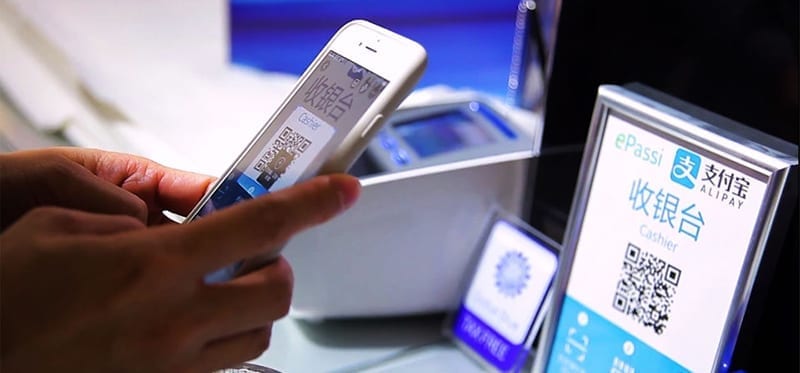
    Chinese fintech titan, Alipay, is ramping up its endeavors in AI-driven commerce with the introduction of an innovative AI payment infrastructure devised to bolster the burgeoning “agentic economy”.

    As per a press release issued on Monday, Alipay unveiled the world’s inaugural “AI Wallet” along with a novel service dubbed “Token Pay”, both targeted at AI firms and developers. This announcement was made at the Alipay AI Payment Ecosystem Conference held in Hangzhou.

    AI Agents in the Commercial World

    The crux of this initiative is Alipay’s AI payment ecosystem, where users can execute transactions via AI agents using voice commands and automated processes.

    Cyril Han, CEO of Ant Group, said, “Even though the quintessence of commerce remains intact in the AI era, AI agents are revolutionizing every aspect.” Han added that based on 22 years of technological prowess and commercial knowledge, Alipay is creating the next wave of AI payment services to boost the growth of the agentic commerce ecosystem.

    The firm disclosed that its AI-native payment products have already surpassed 100 million users since their February 2026 launch. As per Alipay, the system has processed approximately 300 million transactions so far, making it the first commercially scaled AI-native global payment infrastructure.

    Introduction of the “AI Wallet”

    The AI Wallet, a crucial part of this expansion, has been recently introduced and is now accessible via the Alipay app.

    The product is engineered to provide users more supervision and command over transactions executed by AI agents. This includes the ability to monitor tasks prior to and during payment and to analyze spending behavior after the transaction.

    In an effort to augment trust in autonomous AI transactions, Alipay also launched China’s maiden “Agentic Commerce Trust Protocol”, aimed to establish a standardized framework between AI systems and service platforms.

    Simultaneously, the firm introduced an intelligent security system designed to safeguard AI-driven transactions.

    “Token Pay” Designed for AI Companies

    Along with the AI Wallet, Alipay launched “Token Pay”, which the firm describes as the first integrated payment solution specifically tailored for AI model firms.

    The platform enables AI enterprises to handle subscription payments, token top-ups, and associated transactions on a global scale via a single infrastructure.

    Weiqi Hu, Vice President of MiniMax, said, “Payments are instrumental in facilitating massive growth in the AI sector. Together with Alipay, we aim to strengthen collaboration across multiple domains to accelerate the growth of AI commerce.”

    Payments Integration within AI

    Industry experts anticipate payments to become an inherent feature within AI applications rather than a separate step in digital commerce.

    “AI is redefining every facet of commerce,” said Lin Zhu, General Manager of Alipay’s AI payment business at Ant Group. Zhu added that payments are transitioning from a final step to a capability embedded from the outset. According to Zhu, only with trusted transactions, seamless payments, and secure controls, can agentic commerce genuinely proliferate.

    Extensive Expansion Across Industries

    Alipay’s AI payment infrastructure is already being widely used across a plethora of sectors and devices in China, such as AI-powered services embedded in retail apps including Luckin Coffee, smart glasses by Rokid, Alibaba’s Qwen AI ecosystem, OpenClaw-style AI agents, smart vehicle cockpits, AI development platforms like Coze and Qoder, and “One Person Companies”.

    Alipay announced additional investment in developer support programs, including token incentives and waiving payment-processing fees for individual AI developers.

    Through the latest rollout, Alipay is striving to establish itself not merely as a payment provider, but increasingly as the financial infrastructure supporting the next generation of AI-driven digital commerce.

    Questions & Answers

    What is the AI Wallet introduced by Alipay?
    The AI Wallet is a product designed to give users more control over transactions carried out by AI agents. Users can monitor tasks before and during payment execution and analyze spending behavior afterward.

    What is the purpose of Alipay’s “Token Pay”?
    Token Pay is an integrated payment solution created specifically for AI model companies. It allows AI firms to manage subscription payments, token top-ups, and related transactions globally through a single infrastructure.

    What is Alipay’s strategy with the introduction of the new AI payment infrastructure?
    Alipay’s strategy is to position itself not only as a payment provider, but increasingly as the financial infrastructure underpinning the next generation of AI-driven digital commerce.

  • Revolutionizing Global Commerce: Ant Group’s Vision for AI-Driven Financial Tools for SMEs

    Revolutionizing Global Commerce: Ant Group’s Vision for AI-Driven Financial Tools for SMEs

    Eric Jing, Chairman of Ant Group, recently presented his vision for propelling small-to-medium-sized enterprises (SMEs) into the next level of productivity at the Singapore FinTech Festival. He posited that artificial intelligence (AI)-driven financial tools and tokenised transactions would fundamentally transform how SMEs function and compete on a global scale.

    AI-Driven Transformation for SMEs

    Jing highlighted Ant Group’s dedication to equipping SMEs with AI-driven payment and operational tools. He believes the tools will position companies to reap the rewards of an upcoming global productivity boom. Jing expressed his belief that frontier technology can significantly foster inclusion and support SMEs.

    Singapore: A Global Hub for Growth

    Ant International, which became autonomous in 2024, has its headquarters in Singapore. It collaborates with over 1,400 institutional partners and its global payment and digitalisation network caters to 150 million businesses. The network also links QR-based wallets reaching more than 1.8 billion consumer accounts worldwide.

    Expectations for AI-Driven Finance

    Jing forecasts an increase in personalised AI financial advisors for consumers and an accelerated shift toward agentic commerce for businesses. He predicts the latter will be driven by autonomous systems capable of managing comprehensive payment and operational tasks. Jing believes that AI agents could be instrumental in helping SMEs that struggle with the complexities of the global trade environment.

    AI Tools Enhancing Efficiency for SMEs

    Antom, the merchant services division of Ant International, is already leveraging AI with Antom Copilot. This tool streamlines payment integration, onboarding, risk settings, and chargeback management. According to Ant International, Copilot reduces integration time by over 90%, improves winning rates for chargebacks by three percentage points, and cuts resolution time by 46%.

    Antom also recently launched EPOS360, an integrated application that combines POS systems, payments, banking, lending, and growth support into one platform. This tool is designed to help micro, small, and medium enterprises (MSMEs) expand more efficiently. Jing depicted these AI agents as virtual Chief Operating Officers (COOs) and Chief Financial Officers (CFOs) that serve as planners and implementers for SMEs.

    Emergence of Multi-Agent Systems

    Jing stressed that autonomous multi-agent systems capable of executing complex transactions are not just theoretical but are already becoming a reality. He maintained that these systems will form the backbone of the next phase of global digital commerce, especially for SMEs operating internationally.

    Jing underscored the importance of tokenisation of money as a key facilitator of real-time global transactions, especially for companies engaged in international trade. He also emphasised the importance of policy guidance from regulators.

    Trials in Tokenised Money

    In the context of Project Guardian, Ant International has taken part in pilot programmes involving tokenised money and cross-border transactions. These trials have illustrated how blockchain-based payments can provide real-time transparency and credibility to SMEs operating globally.

    Through the Monetary Authority of Singapore’s (MAS) PathFin.ai initiative, Ant International is also sharing its expertise on AI implementation. Jing highlighted the company’s Falcon Time-Series Transformer, an 8.5-billion-parameter model for FX and liquidity forecasting, which has contributed to significant improvement in cash-flow prediction accuracy and reduced hedging costs for businesses.

    Questions & Answers

    What is Ant Group’s vision for SMEs?
    Ant Group aims to equip SMEs with AI-driven financial tools and other operational aids to boost their productivity and global competitiveness.

    How is Ant International leveraging AI for SMEs?
    Ant International uses AI through tools like Antom Copilot and EPOS360 to streamline payment integration, onboarding, risk settings, and chargeback management, making these processes more efficient for SMEs.

    What are the benefits of tokenised money for SMEs?
    Tokenised money can facilitate real-time global transactions, providing transparency and credibility for SMEs that operate internationally. Through blockchain-based payments, SMEs can gain a competitive edge in the global market.

  • Reliance Retail Expands Jiomart’s Reach With 600 New Dark Stores Across India

    Reliance Retail Expands Jiomart’s Reach With 600 New Dark Stores Across India

    Reliance Retail has expanded its network in India by opening over 600 dark stores. These new outlets are in support of the company’s rapidly growing quick commerce service called JioMart, which boasts a delivery promise of under 30 minutes.

    What are Dark Stores?

    Dark stores, as the name suggests, are not traditional retail outlets. They are small, localized fulfillment centers that are used to handle online orders, either for delivery or pickup. They have been redesigned from conventional retail spaces to facilitate speedier order processing. The primary distinguishing feature is that they do not cater to walk-in customers.

    Reliance Retail strategically selected the locations for its new facilities in both urban and suburban areas. This strategic placement is intended to improve speed and efficiency in serving the company’s expanding online clientele.

    JioMart’s Unique Service Models

    JioMart app provides its users with three distinct service models. First is the quick delivery model that promises delivery within 30 minutes. Second is the scheduled delivery model that offers a wider variety of products. The third model is subscription-based, providing early morning doorstep delivery of daily essentials.

    The JioMart app faces competition from other quick commerce platforms in India such as Blinkit, Swiggy Instamart, and BigBasket.

    Reliance Retail’s Competitive Advantage

    Dinesh Taluja, Reliance Retail’s CFO, stated that the company’s extensive scale and physical presence give it a competitive edge over others in the industry.

    “We operate through a network of over 2000 stores, covering more than 4000 postal codes. This gives us a much broader reach than any other quick commerce player,” he explained.

    Questions & Answers

    What is a dark store?

    A dark store is a small, localized fulfillment center that processes online orders for either delivery or pickup. Unlike traditional retail outlets, dark stores do not serve walk-in customers.

    What are the service models offered by JioMart?

    JioMart offers three service models: quick delivery within 30 minutes, scheduled delivery with a broader range of products, and a subscription-based model for early morning doorstep delivery of everyday essentials.

    What gives Reliance Retail a competitive edge in the quick commerce industry?

    According to Reliance Retail’s CFO, Dinesh Taluja, the company’s extensive scale and physical presence give it an advantage over other players in the quick commerce space. They have a network of over 2000 stores covering more than 4000 postal codes, offering a wider reach than other competitors.

  • Tiktok Poised To Revolutionize Japanese Market With Integrated E-commerce Feature

    Tiktok Poised To Revolutionize Japanese Market With Integrated E-commerce Feature

    TikTok, the globally popular social media platform, is poised to debut its integrated e-commerce feature, TikTok Shop, in Japan. This is a significant move into a market where live commerce is relatively unexplored but ripe with potential. The initiative is aimed at capitalizing on the platform’s high levels of user engagement to facilitate direct purchases within the application.

    A recent update to TikTok’s privacy policy in Japan that included references to “shopping features” has stirred conjectures that the official launch might occur this month.

    TikTok Shop offers an in-app shopping experience where users can purchase items during live streams or via short videos. It comes with built-in payment and checkout features, thus eliminating the need for customers to be redirected to external websites. TikTok benefits monetarily from this feature by earning referral fees from sellers who participate.

    ByteDance, TikTok’s parent company based in China, has successfully implemented this feature across the United States and Southeast Asia.

    In preparation for the rollout, companies are gearing up to offer support. AnyMind Group, for instance, is planning to offer data analytics tools and launch training programs for live-commerce streamers through its production unit, Grove. Shodai Fujita, Country Director for Japan at AnyMind, said, “We want to create stars and take the No 1 position in Japan.”

    Simultaneously, Hakuhodo, a Japanese advertising titan, is collaborating with a group subsidiary to provide comprehensive services for TikTok Shop sellers, including planning, operations, and performance analysis. Septeni Holdings, part of the Dentsu Group, is also readying to assist brands making their debut on the platform.

    “The fusion of social media and e-commerce will become a new experience for customers,” Fujita added, indicating the groundbreaking potential of this venture.

    Questions & Answers

    What is TikTok’s new initiative in Japan?
    TikTok is planning to launch its integrated e-commerce feature, TikTok Shop, in Japan. This feature will facilitate direct in-app purchases during live streams or through short videos.

    What is the advantage of TikTok Shop for users?
    TikTok Shop offers a seamless shopping experience for users, eliminating the need to be redirected to external websites for purchases. It provides integrated payment and checkout features for a smoother transaction process.

    Who will be supporting the launch of TikTok Shop in Japan?
    Several companies, including AnyMind Group, Hakuhodo, and Septeni Holdings, part of the Dentsu Group, are preparing to support the launch by providing data analytics tools, training programs, and a range of services for TikTok Shop sellers.

  • Experiential Commerce: Retail’s Evolving Frontier In Asia

    Experiential Commerce: Retail’s Evolving Frontier In Asia

    In a dynamic retail landscape where consumer preferences can shift at a moment’s notice, companies are continually seeking innovative ways to engage their audience. The latest trend captivating the market is the rise of experiential commerce, a blend of physical experiences and digital interaction. This exciting approach not only enriches the shopping experience but also strengthens the bond between brands and consumers.

    Experiential Commerce: A Game Changer for Retail

    As digital shopping habits become more ingrained, retailers realize that the tactile experience of in-store shopping remains irreplaceable. Experiential commerce merges these two worlds, embracing interactive elements that draw customers into a memorable journey. Think carefully curated in-store events, exclusive pop-up shops, or immersive brand experiences—each designed to intrigue and connect with shoppers on a deeper level.

    Taking a page from tech giants, retailers are utilizing augmented reality to elevate engagement. Imagine walking into a store and using an app to visualize how a piece of furniture might look in your home or exploring a virtual fitting room that allows you to try on clothes from the comfort of your smartphone. These technologies invite customers to engage with products in ways that were previously unimaginable, making the shopping experience not just about buying but also about discovery and entertainment.

    Localisation is Key

    In Asia, companies are tailoring their strategies to reflect regional cultures and preferences. Localisation is not just about language; it’s about understanding the subtleties of consumer behavior. For example, in countries where social media influencers hold sway, brands are harnessing these figures to add authenticity to their campaigns, creating relatable experiences that resonate with local audiences.

    Collaboration with local artisans and influencers helps retailers foster a sense of community, blending traditional practices with modern marketing methods. By doing so, they not only promote local talent but also craft unique narratives that appeal to the geographically and culturally diverse Asian market.

    An Ever-Changing Landscape

    As brands adapt to these trends, consumer expectations only continue to rise. The challenge lies not just in keeping up, but in anticipating what’s next. The inclusion of gamification in shopping, for instance, is rapidly taking off. Imagine a shopping experience where you can earn points, unlock rewards, or even enter contests—all while browsing products. This adds a layer of excitement and engagement that transforms the mundane act of shopping into something truly thrilling.

    Retailers are also exploring sustainability, a growing concern among consumers. Integrating eco-friendly practices within these experiential frameworks not only enhances brand reputation but also attracts a conscientious customer base eager to support businesses aligned with their values.

    Looking Forward

    As the retail landscape continues to evolve, the integration of experience, technology, and locality will play crucial roles in shaping the future. Retailers willing to embrace these trends will not only enhance customer loyalty but also redefine the very essence of shopping in Asia.

    In this spirited journey of retail innovation, one thing is clear: the line between shopping and entertainment is blurring, inviting consumers into a world that is as engaging as it is fulfilling. After all, who said shopping couldn’t be fun?

    Questions & Answers

    What is experiential commerce?
    Experiential commerce is a retail approach that combines physical experiences with digital interaction to create engaging shopping journeys for consumers.

    How are Asian retailers adapting to market trends?
    Asian retailers are focusing on localization, understanding cultural preferences, and collaborating with local influencers to create relatable experiences that resonate with consumers.

    What role will sustainability play in the future of retail?
    Sustainability will become increasingly important as consumers prioritize eco-friendly practices, compelling retailers to integrate these values into their experiential offerings.

  • YouTube Expands Video Commerce Efforts Across Southeast Asia’s Growing Market

    YouTube Expands Video Commerce Efforts Across Southeast Asia’s Growing Market

    YouTube is making significant strides in Southeast Asia’s video commerce landscape, leveraging the power of creators and innovative shopping experiences to attract millions of viewers. With a robust community of 7,600 creators boasting over 1 million subscribers and more than 77,000 channels with at least 100,000 followers, the platform is revolutionizing how consumers shop online.

    Broad Reach Across Southeast Asia

    In 2024, YouTube expanded its reach to an impressive 290 million people, representing 85% of the region’s online population. This surge in viewership has been mirrored by a striking shift in e-commerce, where video commerce now accounts for 20% of Southeast Asia’s e-commerce gross merchandise value (GMV)—a remarkable fourfold increase in just two years. According to Google’s Vice President for Southeast Asia and South Asia Frontier, Sapna Chadha, YouTube’s unique ecosystem is pivotal in driving this growth.

    Building Trust Through Content

    Chadha emphasizes the trust generated between creators and their audiences, stating, “This trust translates into purchase confidence, with YouTube driving almost four times greater purchase intent than other social media platforms in the region.” A study revealed that users are 98% more likely to trust creators on YouTube compared to recommendations from other social networks, underscoring the platform’s significant influence.

    YouTube Shopping: A Game Changer

    YouTube Shopping is now fully operational in Indonesia, Vietnam, Thailand, Singapore, Malaysia, and the Philippines through a partnership with Shopee. Eligible creators can easily tag products in their videos and Shorts to enhance the shopping experience. In Indonesia, Vietnam, and Thailand, 55% of eligible creators have already jumped on board, showcasing the immense potential for monetization in this sector.

    Take the example of Vietnamese creator Mai Trinh Hổ, whose channel revenue skyrocketed nearly fivefold after embracing YouTube Shopping, while Indonesian channel Jagat Review reported that 50% of its revenue from July to October 2024 stemmed from the program. According to a Kantar study, about 85% of viewers in Thailand and 67% in Indonesia trust content created by YouTube creators, while Ipsos data reveals that these audiences trust YouTube more than any other platforms during their purchasing journey.

    Rising Creator Earnings

    As creator earnings soar, figures from Vietnam show a 35% year-on-year increase in the number of channels earning nine-figure incomes in Vietnamese Dong as of December 2024. This upward trend signals a promising future for content creators in the region.

    YouTube in the Living Room

    The platform is also carving out a niche in connected TV (CTV), with over 79 million viewers in Southeast Asia tuning in to watch YouTube on their televisions, contributing to a global tally of 1 billion daily CTV viewing hours. Innovative ad formats such as Shoppable TV ads and interactive features are helping brands engage viewers more efficiently. For instance, McDonald’s in the Philippines witnessed a staggering 46% boost in daily sales, while Pepsi in Vietnam increased its audience reach among 18-44 year-olds by 27%.

    In this digital age, YouTube’s blend of engaging creator content and seamless shopping experiences is reshaping the e-commerce landscape, turning casual viewers into confident buyers—who knew online shopping could be this entertaining?

    Questions & Answers

    What has contributed to the growth of video commerce in Southeast Asia?
    The growth is largely attributed to YouTube’s expansive creator ecosystem and its ability to foster trust and credibility among users, leading to heightened purchase intent.

    How has YouTube Shopping impacted creators in the region?
    Many creators have seen significant revenue boosts after participating in YouTube Shopping, with some reporting up to five times their normal earnings.

    What innovative advertising strategies is YouTube implementing?
    YouTube is introducing interactive ad formats such as Shoppable TV ads and pause ads, making big-screen advertisements more engaging for viewers and effectively driving brand sales.

  • Taobao looks to boost young entrepreneurs showing originality talent

    Taobao looks to boost young entrepreneurs showing originality talent

    Chinese social commerce platform Taobao has inaugurated a new rating system to reward deserving young creators and small enterprises with broader market exposure on the fifth anniversary of the firm’s Taobao Maker Festival.

    The exposure is designed to bring more attention to outstanding creativity and better promote products to the platform’s 840 million users.

    Taobao’s new system is the latest example of the firm’s content-driven commerce strategy that has been part of its promotional apparatus since 2016, transitioning the platform from being primarily transactionally driven to a broader social-commerce playbook.

    “The new rating system promotes and celebrates originality and creativity,” said Alibaba Group CMO Chris Tung. “It will enable merchants to leverage their participation in the Taobao Maker Festival into a source of year-round benefit for growing their business and customers.”

    “We continue to leverage our unique content-driven strength to help young entrepreneurs and small businesses win market traction and bringing a better experience to consumers,” said the head of Taobao operations Kaifu Zhang.

  • JD.com fosters local stalls and small stores in China

    JD.com fosters local stalls and small stores in China

    Chinese e-commerce giant JD is moving to stimulate small and medium enterprises nationally by providing supply chain and service support for the employment of more than 5 million people.

    The firm is accumulating around 50 billion goods as a part of its “Spark” economic support plan designed to benefit SMEs, stall owners, and shopkeepers.

    The plan is focused on three areas: ensuring supply, assisting operations, and promoting employment. The firm will also provide each small shop with US$14,000 in interest-free credit to make purchases.

    “JD has already comprehensively accumulated rich experience in supporting the ‘stall economy’ and the ‘small shop economy’,” said JD Retail CEO Lei Xu. “The impact of the epidemic will accelerate the digital transformation of the real economy, and stalls and small shops are no exception. JD has both the ability and the responsibility to use digitization to support and make the economy of small stalls and shops more dynamic, helping to further invigorate the overall economy and stabilize employment.”

    JD is now set to work with nearly 10,000 brand manufacturers and more than 4000 joint warehouses to provide offline retailers with access to low-cost, high-quality supplies. The firm will also help offline retailers to expand their online operations.

    In poor regions, JD will provide flexible employment, work-from-home, and farm-to-table opportunities including positions such as logistics order collection, warehouse management, inventory management, and packaging. It will also establish start-up projects and provide support in the fields of catering retail, regional logistics agencies, and freight transportation.

    Data collected by the company shows that, right before its 6.18 promotional event this year, the transaction volume of JD New Markets in Beijing, as well as Hubei and Anhui provinces increased more than fivefold. The number of orders placed on the JD Convenience Store Go mini program was more than 10 times the previous daily average.

  • Shopeline, Asia’s Biggest Smart Commerce Platform, Strengthens Foothold in Southeast Asia

    Shopeline, Asia’s Biggest Smart Commerce Platform, Strengthens Foothold in Southeast Asia

    Shopline, the global smart commerce platform, has today announced the official expansion of its operations to Malaysia. The news follows the closure of a successful US$2 million funding round earlier this year, led by CDIB Capital Group and Alibaba Hong Kong Entrepreneurs Fund, and reaffirms SHOPLINE’s confidence in the Southeast Asia market.

    The start-up, originally founded in Hong Kong, enables merchants to easily set-up online stores, and offers a wide selection of shop designs, payment gateways, and shipping carriers tailored to the needs of local and cross-border merchants. It has grown over the last six years to become the market leader in Asia, helping more than 150,000 entrepreneurs, SMEs and large enterprises such as Durex, Bee Cheng Hiang and Hiwalk go digital. In 2018, SHOPLINE’s merchants reached over 200 million customers.

    The Southeast Asian Digital Opportunity

    Figures from the latest annual Global State of Digital report by Hootsuite and We Are Social revealed an explosion in online engagement across the region, with the Philippines, Thailand, Indonesia and Malaysia all ranking in the top 10 countries on the world’s internet usage index.

    Meanwhile, a recent study by Google and Singapore’s Temasek Holdings predict that Southeast Asia’s internet economy will be worth in excess of US$240 billion by 2025, with e-commerce accounting for 40 percent (US$102 billion), up from 2018’s US$23 billion spend.

    Against this backdrop, the opportunities presented by the booming Southeast Asian digital economy are immense. However, in order to successfully leverage its potential, businesses need to not only ensure they’re in the mix, but that they also provide a seamless and integrated online to offline experience.

    With a strong following in its native Hong Kong, along with offices in Taiwan, Ho Chi Minh City and Shenzhen, SHOPLINE now adds Kuala Lampur to its network, and has plans to further expand its footprint across the region.

    Empowering businesses and merchants in Southeast Asia with smart, omni-channel tools

    Having already supported several launch partners in beginning their online ventures, SHOPLINE will expand its Malaysia offering in the coming months to include its range of online to offline (O2O) solutions, which enable merchants to connect across channels and optimise the customer’s shopping experience.

    Services will include the SHOPLINE Kiosk, a CRM tool that allows users to sign up for membership with a mobile number or email in seconds; the SHOPLINE Broadcast Center, a marketing automation tool enabling merchants to reach customers via Facebook’s chatbot, SMS and email; and Shoplytics, a proprietary smart analytics dashboard that allows merchants to visualise and analyse data related to their store’s web traffic, revenue, product performance, customers, marketing and promotion campaign performance.

    Later this year, SHOPLINE will further look to introduce its cloud-based point-of-sale (POS) system tailored for retailers, enabling them: to keep an accurate record of store transactions; track and manage store inventories; generate real-time sales performance reports; track staff performance and manage payroll; manage membership and more–creating a unified omni-channel solution over multiple store locations.

    Tony Wong, Co-founder and CEO of SHOPLINE said: “We’re delighted to be setting up camp in Kuala Lumpur. Underpinned by strong governmental support and a huge jump in mobile and internet penetration, we see incredible potential in Malaysia, and indeed the wider Southeast Asian digital economy. SHOPLINE is committed to helping our partners – our merchants – grow with us. By introducing our comprehensive range of O2O and POS solutions to new markets, we hope to equip more merchants with the tools they need to go digital and go global, creating a smooth and holistic shopping experience across offline and online channels.”

    He added: “This is an exciting time for the SHOPLINE team. We have grown from a three person team to a company with over 200 employees across the globe. Each office recruits local team members with deep insight into their respective markets, allowing us to provide tailor-made solutions to satisfy our merchants’ individual needs and Malaysia is no exception.”

  • Thinking about creating an e-commerce shop in Asia?

    Thinking about creating an e-commerce shop in Asia?

    Thinking about how to create your e-commerce store in Asia? This exclusive event has all your answers.

    Moni, a digital commerce and brand experience agency, providing an end-to-end suite of e-commerce services in the region, is set to take centre stage on April 2 in Central, Hong Kong.

    Moni, with more than 12 years of experience of delivering digital-commerce experiences, joins together with Magento – the world’s No 1 e-commerce platform – to host an exclusive event to teach merchants how to kickstart and grow their online store. The insightful event will also explore the best practices of ever-evolving online shopping experiences. Moni is one of the few Certified Magento Partner Agencies in Asia.

    Who should attend?

    Retailers, B2B companies, and brands who are looking to expand their online presence and reach through e-commerce, or who are interested in understanding the nuances of Magento platform.

    Join the conversation and network with knowledgeable community members who will help you grow your business to the next level. The event will help you discover why Magento is right for your business, how to drive traffic and sales to your e-commerce store, with some of the best practices detailed along with case studies to learn from.

    The event hosts developers, system integrators, subject-matter experts, merchants, service providers, speakers and technology partners from Hong Kong and Singapore under one roof. Moreover, the event will also host an interactive talk session enabling attendees to get the queries answered in real-time.

    What will you gain?

    The session will equip attendees with a broad understanding of the Magento platform and its benefits such as modernised technology stack, better performance and scalability, smooth customisation, seamless integration and minimised testing efforts.

    David François, MD at Moni, will direct the audience through several successful e-commerce projects in Asia. For more than 20 years he has specialised in helping brands create digital customer experiences that drive tangible results and outcomes.

    Mel Lim, enterprise sales manager at Magento, comes from Singapore, and will share details about the full suite of Magento capabilities. She has a decade of experience working with brands across Asia Pacific on their digital-transformation journeys, specialising in commerce customer experience.

    Each merchant today can capitalise on commerce system flexibility, buying patterns, maximising gross margins, driving innovation and meeting end-to-end customer expectations.

    To attend this exclusive event, click here to RSVP.

  • Lingerie e-tailer Adore Me expands offline

    Lingerie e-tailer Adore Me expands offline

    Lingerie e-tailer Adore Me says it plans to open between 200 and 300 stores during the next five years. The company will make its brick-and-mortar debut in New York City within the next few months, followed by up to 10 locations this calendar year and another 20 next year to gauge foot traffic in different locations.

    The offline expansion will accelerate in subsequent years.

    Adore Me founder and CEO Morgan Hermand-Waiche told The Wall Street Journal that online retailers need a physical store presence in order to compete with mainstream retailers.

    “Victoria’s Secret is the big guy in the room. Even if we are successful for a digitally native brand, we will remain small compared to Victoria’s Secret.”

    Adore Me is considering new formats for its stores, including bars where shoppers can relax with friends and showrooms allowing customers to try clothes on and have purchases shipped to their homes.

  • Korea’s Mobile shopping soars to record levels

    Korea’s Mobile shopping soars to record levels

    Purchases made through mobile devices like smartphones accounted for record-high levels of all products traded online in April, government data showed.

    Mobile transactions through smartphones and tablets reached 3.68 trillion won (US$3.28 billion) in April, surging 42.2 percent from a year earlier, according to the data by Statistics Korea. The amount was equal to 60.6 percent of all online purchases made in the cited month, which reached 6.08 trillion won, and outpaced the earlier record of 59 percent set in March.

    Mobile purchases in Korea have been on a steep rise for years as a growing number of people are spending more on their smart devices. The percentage of mobile transactions within total online sales was in the 40 percent range in 2015 and went up to the 50 percent level in 2016 before rising to the 60 percent range this year.

    Industry watchers said the increase is attributable to mobile shopping industry that launched aggressive marketing with ‘easy payment’.
    SK Planet Co., the operator of leading e-commerce site 11st offers customized products through ‘Digital Concierge’, which is a consultation service for digital appliances in applications (apps).

    The e-mart mall is equipped with a scanning function to support the mobile viewing of product information, shipping, and sending gifts, as well as the “”always-bought”” corner optimized for shopping malls.
    At the same time, the monthly value of mobile transactions has also been on a roll, reaching an all-time high of 3.74 trillion won in March this year.

    In April, mobile bookings for travel and movie tickets soared 32.9 percent from a year earlier to 509.6 billion won, while mobile sales and deliveries of foodstuffs shot up 68.8 percent to 547.5 billion won. Sales of clothing surged 40.1 percent to 439.8 billion won, while 300.8 billion won worth of cosmetics were sold through smartphones, up 37.2 percent.

  • 40% of the world to use digital commerce by 2021

    40% of the world to use digital commerce by 2021

    Juniper Research predicts that the digital commerce sector is set to see substantial growth in user numbers over the next 4 years, as the number of unique users exceed 3 billion by 2021.

    Juniper has identified two sectors set to drive the digital commerce market, in terms of transaction values; these are digital and physical goods as well as digital banking.

    “When we analyze the digital & physical goods sector in particular; for some time now, it has been clear that the mobile device, whether it be the smartphone or tablet, is becoming increasingly important in the world of e-commerce,” Juniper Research senior research analyst Lauren Foye said.

    Juniper has observed a shift in the market from a position where the smartphone was used as a means for discovery but not purchase, to a situation where the smartphone is used for both product discovery and purchase.

    This trend appears to be a natural progression from the relatively stagnant consumer tablet industry, whose lack of steam has been compounded by the emergence, and prevalence, of larger-screened smartphones offering an improved purchasing experience.

    Indeed, mobile as a whole is gaining traction as a remote goods purchase device, although the smartphone’s growth is accelerating faster than that of the tablet.

  • Mobile commerce in Singapore to pass $850m in 2017

    Mobile commerce in Singapore to pass $850m in 2017

    Despite a slower economic outlook, more than a third (38%) of online adults in Singapore interviewed in a 2016 study by PayPal say they will be spending more online this year, largely due to the convenience it brings.

    Notably, another 78% who predicated an increase in their online spend also cited convenience as the reason.

    Specifically, survey results showed that Singaporeans are turning their attention to spending on day-to-day items, with predicted growth for household goods (21%), groceries, food and beverage, and alcohol (15%), and baby and children’s supplies (12%) topping the list.

    Results indicate an increasing growth in mobile spend as Singaporeans spend more time on their mobile devices, with mobile shopping spend predicted to increase by 42% this year over 2016. This amounts to more than S$1.2 billion ($848 million), almost a third of the forested total online spend of S$3.5 billion in the country.

    The numbers explain the mobile first attitudes of firms in the region, and makes sense when one considers that the Asia Pacific is the leading region in terms of mobile connection penetration.

    In addition, two thirds (68%) of all cross-border shoppers interviewed in the region have made a cross-border purchase on a smartphone in the past 12 months, which is the highest net incidence out of all regions surveyed.

    “2017 looks to be a year of growth and opportunities for savvy businesses that are equipped to take their sales online, on mobile and in-app. This in turn provides endless choices and possibilities for the mobile-savvy generation as they live their lives on the go,” said Rahul Shinghal, general manager for PayPal Southeast Asia.

    PayPal’s study dovetails with another study late last year which concluded that the Asia Pacific region leads the world in mobile payment. Conducted by Kantar TNS, the study of over 70,000 consumers found that over half of connected users use their smartphones to pay for goods or services at point of sales via apps.