Retail News CRM

Tag: Commerce

  • Alibaba and ecommerce festivals: Europe’s gateway to China

    Alibaba and ecommerce festivals: Europe’s gateway to China

    This year China has moved closer to becoming the world’s largest retail market, with the total retail sales of consumer goods in the country reaching 30.1 trillion yuan (£3.39 trillion) in 2015, as cited by China Internet Watch.

    To put that into perspective, according to Retail Economics the UK’s total retail sales reached £339 billion in the same year – just 10 per cent of China’s retail figures.

    One important factor stimulating this growth has been the ability of brands outside of mainland China to connect with consumers in what is the world’s most populous country. Businesses around the globe are responding to the increasing demand for foreign brands by Chinese consumers. Indeed, in 2015 alone the number of overseas companies operating in China’s free trade zones doubled.

    In today’s highly competitive global market, the ability of a brand to gain exposure in new regions is invaluable and more essential than ever before.

    This constant search for international expansion options is why shopping festivals in China have become so important to a brand’s success in the country. Not only do the festivals expose consumers to new products and allow them to experience new brands, but they provide businesses with the ideal platform to increase trade within a new market. They are gateways to the exciting, high-potential parts of this constantly evolving country that brands want to work, and compete, within.

    One example is Tmall Global’s annual 8.8 Shopping Festival in China, focused on showcasing top-selling products from global brands to Chinese consumers. The platform, which is a subsidiary of e-commerce company Alibaba Group, offers foreign brands access to 434 million Chinese consumers. The recent 2016 event featured more than 2,000 quality products from a variety of overseas markets and include fashion, cosmetics and even nutrition supplements. A series of live broadcasts also ran to connect consumers with the brands in real-time while they were watching from home and on the Tmall mobile app.

    Major British retailer Sainsbury’s was just one of more than 100 brands to exploit the 8.8 opportunity, following an announcement earlier in the month that the British retailer was expanding its offering of branded products on the Tmall platform to over 100. A variety of new products were introduced such as their mixed nuts, Fairtrade Italian-style coffee and chargrilled vegetable pasta sauce

    Looking at the level of interaction Sainsbury’s experienced on the day clearly shows the benefits of the 8.8 festival. For example, its live stream during the day received over the 50K Weibo ‘likes’, whilst the number of customers with Sainsbury’s bookmarked in their Twitter favourites rose from 110k to 155k.

    Brands should always be exploring new growth opportunities beyond their borders. Research is just the first step – appropriately leveraging an opportunity is the key.

    Shopping days provide an ideal virtual shop window and best way to do just that, giving brands the chance to start leaving their mark on new places in the world. The growing appreciation of their modern relevance can be understood further by acknowledging the general breadth of major shopping festivals that now exist; from the Korea Grand Sale, to Black Friday and Cyber Monday in the UK and US, as well as the USA Outlet Shopping Festival.

    Take Alibaba’s 11.11, or ‘Singles’ Day’, for example – the biggest shopping festival in the world, four times the size of Black Friday and cyber Monday combined. During Singles’ Day 2015, a third (33 per cent) of all purchases were international products, with consumers from 232 regions and countries completing transactions.

    The benefits of shopping festivals are twofold – product accessibility for consumers and massive exposure for brands, enabling them to expand into previously unknown territories to grow and improve brands need new territories. Shopping festivals offer them exactly that.


  • With close to 55%, Japan has highest mobile commerce transactions

    With close to 55%, Japan has highest mobile commerce transactions

    Mobile commerce conversion rates are highest in Japan, the U.K and South Korea for Q2 2016 states the State of Mobile Commerce Report released by performance marketing technology company, Criteo. The company claims to have studied 1.7 billion transactions across desktop and mobile sites worth $720 billion in annual sales, covering over 3,300 online retail businesses for this report.

    Global numbers

    • Mobile Vs Desktop: With close to 55% of its retail commerce transactions done through mobile phones, Japan tops the list of countries in the world with the highest mobile retail commerce transactions for Q2 2016 followed by United Kingdom and South Korea with a little over 50% and 48% of its retail commerce transactions, respectively.
    • Smartphone Vs Tablet: For the first time, smartphones have superseded tablets delivering majority of the mobile commerce transactions. South Korea recorded over 95% of its mobile retail commerce transactions were done through smartphones while Japan and Brazil recorded close to 90% and over 80% of its mobile retail ecommerce transactions through smartphones, respectively.
    • Apps Vs Mobile Web: According to the report, apps convert 3x more than mobile website in Q2 2016. Globally, 54% of the transactions were driven through mobile apps while 46% of the transactions were driven by mobile web in Q2 2016.
    • According to the report, new app users are twice as likely to return within 30 days vs. mobile web users.
    • Average order value higher on apps vs mobile web: $127 seems to be the average order value on apps compared to $91 and $100 on mobile web and desktops respectively.
    • Apps’ conversion rates highest: The conversion rate for transactions is highest on mobile apps (3x) followed by desktop (2x) while mobile web is the lowest.
    • Mobile-friendly websites aid higher transactions: According to the report, countries with mobile-friendly websites seem to have the greatest share of mobile transactions. With close to 90% mobile-friendly websites, Japan has over 50% mobile transactions followed by U.K with little over 85% mobile-friendly websites and nearly 50% mobile transactions. In the third place, with over 95% mobile-friendly websites, South Korea has close to 50% mobile transactions.
    • Leading retailers vs Emerging retailers: The report also notes that leading retailers that succeed retaining users and attracting views drive 39% more mobile web conversions more than emerging retailers. The report defines leading retailers as mobile app that attract more products browsed per user than lower tiers while emerging retailers are mobile-commerce enabled apps that are accessible via at least one operating system.

    U.S Market

    • In Q2 2016, Android has a market share of 68% superseding iOS (31%) although iOS continues to generate the maximum number of mobile commerce transactions done on smartphones with 14.6% compared to Android devices (8.8%).
    • In the same quarter, 70% of mobile commerce transactions were done on smartphones compared while the remaining was done on tablets.
    • Contributing over 40% to mobile commerce transactions in the U.S, fashion and luxury retail is the category with the highest number of transactions in the quarter followed by Mass Merchants (close to 40%) and Health & Beauty (30%).
  • Salesforce moves into eCommerce with $2.8b M&A

    Salesforce moves into eCommerce with $2.8b M&A

    Salesforce.com is moving beyond CRM and into e-commerce with the acquisition of cloud service provider Demandware.

    It will use the purchase to kick-start a new field of business, the Salesforce Commerce Cloud, it said Wednesday.

    The company already has its Sales Cloud, Service Cloud, Marketing Cloud, Analytics Cloud.

    By rebranding Demandware Commerce Cloud as its own, Salesforce will be able to combine e-commerce, order management, point-of-sale, store operations and predictive intelligence into its own platform.

    Commerce Cloud will allow Salesforce customers to connect with their own clients in new ways, the company said, while Demandware customers will gain access to sales, marketing and analytics functions from Salesforce.

    “There are so many ways it accelerates our mission to transform retail,” Demandware CEO Tom Ebling said in a conference call to discuss the deal.

    Being part of Salesforce will add to Demandware’s credibility when approaching large accounts, he said.

    It will also help the company expand to new countries. “We’ve just got started in places like Japan and Italy but there are many other untapped geographies for us,” he said.

    A third area where it will benefit is omnichannel marketing, helping retailers engage customers everywhere. “The combination of CRM capabilities, knowledge of the customer, with the commerce engine will be a way to accelerate that capability,” he said.

    Salesforce’s Chief Product Officer Alex Dayon said the deal will increase its customers’ insight into their business.

    “Our customers’ information systems are going to be powered by data. You need a complete view of your customers. Having commerce as part of the CRM platform is important,” he said during the same conference call.

    He hammered home the need for more data in response to a question about Salesforce’s ad targeting capabilities.

    “For us it’s all about the data, whether you use your own data, your own targeting, or whether you connect to companies like Google or Facebook,” he said.

    The companies expect to close the deal, worth around $2.8 billion net of cash acquired, before August.

  • Mobile commerce on rise

    Mobile commerce on rise

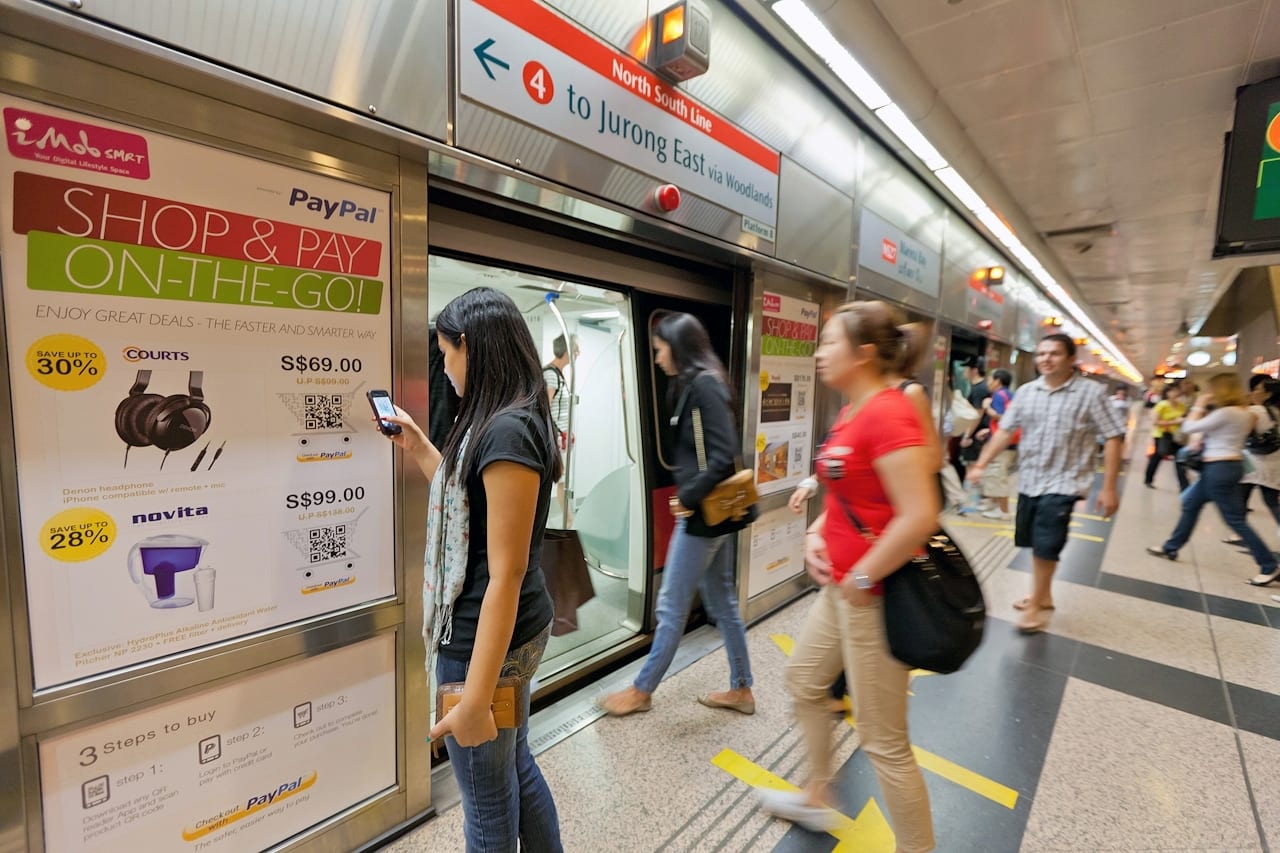
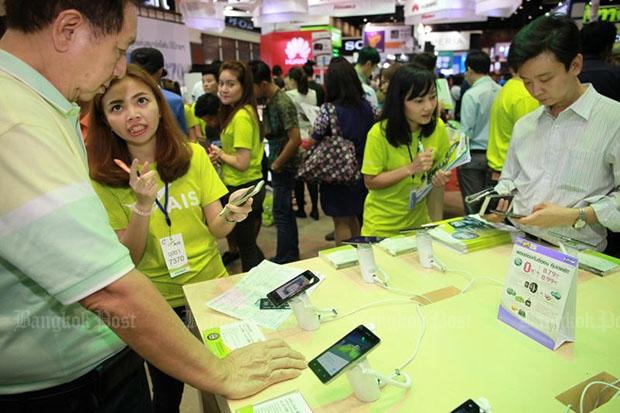
    Mobile commerce in Thailand has continued to cement itself as a significant online marketplace thanks to the greater availability of high-speed wireless broadband internet and affordable smartphones, say global internet and online retail companies.

    Attractive mobile commerce campaigns by e-commerce operators is also attributed to the surge in mobile commerce.

    Compared with the US, Japan and South Korea, Thailand’s online retail industry remains tiny, accounting for less than 1% of the total retail market, Lazada Thailand chief executive Alessandro Piscini told a seminar yesterday entitled “E-Commerce: The Secret Success for the Online Generation”.

    However, he said imminent fourth-generation commercial wireless broadband service was expected to boost the number of mobile internet users and lower mobile tariff rates.

    “Half of Lazada Thailand’s total online sales came from mobile phones, a five-fold increase from last year,” Mr Piscini said, adding that health and beauty products, mobile devices and fashion items were the top-three sellers.

    To further boost sales, Lazada Southeast Asia and its partners will hold its biggest sale of the year, Online Festival, from Nov 11 to Dec 12, providing up to 10 million products in 13 categories.

    Ratthasart Korrasud, senior director of the Electronic Transactions Development Agency (ETDA), said it encouraged retailers and manufacturers to comply with the UN Standard Products and Services Code, a taxonomy of products and services for use in e-commerce, for more efficient and accurate classification of products and services.

    The ETDA is also promoting the use of its online complaint centre among e-commerce users to ensure consumers’ trust and confidence in e-commerce.

    Wanna Swuddigul, director of digital and online business at Ek-Chai Distribution System, said local retailers must quickly expand to the online channel to accommodate rapidly changing consumer lifestyles.

    Thailand’s e-commerce is among Southeast Asia’s top three for growth potential thanks to its population, greater development of wireless infrastructure and Thais being highly engaged online.

    Tesco Thailand’s online sales, expected to account for less than 1% of total sales this year, are forecast to rise to 5% of the total by 2020, said Ms Wanna.

    Deepesh Trivedi, Facebook’s head of retail and e-commerce for Southeast Asia, said Thailand’s e-commerce would continue growing, driven mainly by the increasing number of mobile internet users.

  • Wumei seals majority stake in B&Q China

    Wumei seals majority stake in B&Q China

    Beijing based supermarket chain Wumei Holdings will pay CNY1.4 billion (USD225 million) for a majority stake in home decorating chain B&Q China whose parent Kingfisher failed to spur growth in the home decoration market in the world’s second-largest economy.

    The all-cash takeover will be subject to approval from China’s Ministry of Commerce, and is set to complete in the first half of 2015, Kingfisher said in a statement yesterday.

    Xu Zhicheng, an analyst with Guotai Junan Securities, said Wumei could leverage its overall data management system and dealers’ network within the country to boost B&Q’s performance.