Tag: commercial vehicles

  • BYD Launches C12 DUO Electric Coach in UK with 547-Kilometre Range

    BYD Launches C12 DUO Electric Coach in UK with 547-Kilometre Range

    BYD unveiled its C12 DUO battery-electric coach at the Euro Bus Expo in Birmingham, entering the British long-distance passenger transport sector with a claimed range of up to 547 kilometres (340 miles). The 12.3-metre vehicle seats up to 57 passengers and runs on the Chinese manufacturer’s lithium-iron-phosphate Blade battery technology.

    Frank Thorpe, Managing Director of BYD UK Commercial Vehicles, announced that the high-decker was developed specifically for the UK market. It targets tour operators, school transport, and scheduled services between cities, towns, airports, and event venues. BYD offers the model with two battery options, a 429 kWh pack and a 495 kWh pack, capable of charging at up to 215 kW.

    This week’s world premiere follows earlier announcements outlining the Chinese automotive giant’s entry into the UK coach segment. The expansion builds on BYD’s established presence in Britain, where the company has delivered or secured orders for more than 3,000 electric buses across single-deck and double-decker categories.

    Chassis Integration and Operating Specs

    Power comes from two wheel-hub motors generating 150 kW each, matching the drivetrain layout of BYD’s existing urban and intercity bus lines. Integrating the battery cells directly into the vehicle frame increases torsional rigidity while reducing the vehicle’s weight.

    Luggage capacity measures up to four cubic metres, which is slightly less than in conventional coaches of this size. However, the C12 DUO preserves a full 57-passenger seating capacity without compromise. BYD backs the integrated traction battery with a 15-year warranty.

    The platform measures 12.3 metres in length, 2.55 metres in width, and 3.54 metres in height, sitting on a 6.15-metre wheelbase. Build Your Dreams aims to prove that long-distance electric passenger transport is achievable without compromising range, passenger comfort, or operational efficiency.

    Commercial Fleet Expansion Outside China

    Thorpe noted that the success of the company’s battery-electric double-decker and single-decker transit buses in the UK motivated the move into coaches. Across the country, BYD currently offers single-deck buses in lengths of 9.9 m, 10.4 m, 10.8 m, and 11.8 m.

    The manufacturer also supplies the BD11 double-decker in 10.6-metre or 10.9-metre lengths, featuring a maximum battery capacity of 532 kWh.

    “The transition to zero-emission commercial transport is no longer a distant goal, it is an operational reality,” said Frank Thorpe, Managing Director, BYD UK Commercial Vehicles. “With the debut of the C12 DUO, we are demonstrating that sustainable, long-range electric travel is feasible across every transport segment, from dense city centres to intercity corridors across Europe.”
  • Hyundai Deploys 11 Electric Buses for Bali Public Transit Fleet

    Hyundai Deploys 11 Electric Buses for Bali Public Transit Fleet

    Hyundai Motor delivered 11 County EV buses to Bali on October 22, introducing the resort island’s first electric public transit fleet.

    The eight-metre buses carry 20 seats, run on 128 kWh battery packs and cover more than 200 kilometres on a single charge.

    The fleet arrived under the Bali Sustainable Transportation System Official Development Assistance Project. The Global Green Growth Institute manages the programme alongside South Korea’s Ministry of Climate, Energy and Environment and the Indonesian government, having selected Hyundai through a tender floated in late 2025.

    Local Assembly and Vehicle Architecture

    Hyundai supplied the electric bus platforms. Local bodybuilder Laksana constructed the coachwork in Indonesia, pairing the domestic frame with a 150 kW motor.

    Technical specifications indicate the vehicles produce over 30 per cent quicker acceleration between 50 and 80 km/h than equivalent diesel models. Hyundai has opened an on-site field quality monitoring room to track real-time powertrain performance, daily battery degradation and structural wear across the tourist island’s stop-and-start traffic routes.

    Regional transit operators face steep technical tests when transitioning fleets in tropical leisure hubs. Air conditioning loads run continuously at peak capacity, which drains battery range far faster than standard municipal testing suggests. By retaining operational control through its on-site situation centre, Hyundai is underwriting service uptime directly while local maintenance technicians train on high-voltage battery architecture.

    Commercial Expansion Beyond Java

    The Bali contract duplicates Hyundai’s initial commercial transit test in East Java. The manufacturer handed over an identical batch of 11 County EV units to Surabaya in November 2024 to test fleet durability in dense city environments.

    South Korean commercial vehicle makers are establishing fleet positions in Southeast Asia before Chinese rivals take every municipal transit tender. Hyundai is carving out mid-capacity shuttle routes through bilateral development finance and domestic coachbuilding tie-ups. This shields municipal buyers from heavy upfront capital expenditure while securing guaranteed parts inventories.

    The procurement originates from a government memorandum signed between South Korea and Indonesia to decarbonise regional transport links across prime commercial centres. Indonesian officials, including Minister of National Development Planning Rachmat Pambudy and Bali Governor I Wayan Koster, took handover of the keys alongside South Korean Ambassador Soon-gu Yoon.

    Hyundai plans to expand its electrified commercial vehicle network into Jakarta, Semarang and Medan as municipal transport boards prepare follow-up tenders for provincial commuter routes.

  • Jindal Stainless Deploys 10 Heavy-Duty Electric Trucks for Finished Goods

    Jindal Stainless Deploys 10 Heavy-Duty Electric Trucks for Finished Goods

    Jindal Stainless added ten heavy-duty electric trucks to its outbound transport fleet, shifting finished steel onto battery power for the first time.

    The company deployed the 55-tonne vehicles across a corridor of over 350 kilometres linking its manufacturing complex in Jajpur, Odisha, with distribution destinations in Kharagpur and Kolkata in West Bengal.

    Sourced from Blue Energy Motors, all ten units rely on the manufacturer’s 5548e platform. Moving steel from Jajpur to Kharagpur requires roughly 227 kilometres, followed by approximately 131 kilometres to Kolkata.

    Hardware and Corridor Specs

    Blue Energy offers the 5548e line with battery packs ranging from 282 kWh to 423 kWh. The base 282 kWh setup uses a module-to-bracket lithium iron phosphate pack paired with a 480-horsepower permanent magnet synchronous motor and a four-speed automated manual transmission.

    That entry configuration provides up to 200 kilometres of driving range on a single charge and manages road grades of up to 24 per cent. Recharging from 20 to 80 per cent state of charge takes 45 minutes on a direct-current fast charger, while full battery swaps take five minutes at designated stations.

    “The deployment of electric trucks marks an important milestone in our efforts to decarbonise logistics and integrate lower-emission transportation solutions into our operations. Our approach is focused on adopting practical, scalable solutions that reduce our environmental footprint while maintaining operational efficiency.”

    Fleet Mix and Monthly Volume

    The ten battery units form an initial slice of a broader low-carbon fleet operating across Jindal Stainless’s supply network. The wider lineup contains 80 liquefied natural gas trucks, 60 compressed natural gas passenger buses, and a fleet of CNG freight haulers.

    Management calculates the blended gas and electric vehicle fleet will eliminate about 71 tonnes of carbon dioxide each month, a 26 per cent cut across targeted routes. That estimate assumes monthly finished steel dispatches of 8,000 to 9,000 tonnes and roughly 240,000 kilometres of aggregate road travel.

    Heavy Freight Economics

    Industrial supply chains across India face steep operational hurdles when trading diesel for electric powertrains on runs exceeding 200 kilometres. Because the 5548e platform runs out of juice before completing the 350-kilometre transit between Jajpur and Kolkata, Jindal Stainless must establish reliable charging or pack-swapping stops along the route.

    Fleet operators bear the capital exposure when building proprietary charging depots before national highway infrastructure catches up. If turnaround times drag at midway points, turnaround cycles for finished steel deliveries stretch, chewing into the operating cost savings promised by electric traction.

    Building Out the Transition

    The entry into pure battery electric freight follows an earlier rollout of LNG tractors for long-haul routes and CNG vehicles for local transit. By layering heavy electric haulers on top of existing gas assets, the company aims to trim transport emissions without staking its entire outbound distribution on an unproven charging corridor.

    Watch the turnaround times at intermediate recharging points along the Odisha-West Bengal link as monthly tonnage scales toward the 9,000-tonne target.

  • Tata Motors Stands Firm on €14.40 Offer for Iveco Group

    Tata Motors Stands Firm on €14.40 Offer for Iveco Group

    Tata Motors will not raise its €14.40 per share buyout offer for Italian commercial vehicle manufacturer Iveco Group before the tender offer closes on October 26. The revised bid values the transaction at up to €3.91 billion, or approximately ₹41,591 crore.

    Speaking after the company reported September quarter financial results on October 23, Tata Motors managing director and chief executive officer Girish Wagh reaffirmed that the price represents the final terms.

    “The best and final offer is absolutely the best and final offer and it will remain at €14.4 per share.”

    Valuation Pushback from Minority Investors

    Activistic resistance surfaced ahead of the deadline. Petrus Advisers, an investment firm holding a 3.8 per cent stake in Iveco, pushed shareholders to reject the terms.

    The investor presented figures on September 29 arguing that Tata Motors’ initial €14.10 per share bid priced Iveco at roughly two times its estimated 2028 earnings before interest and tax. Global competitors such as Volvo, Daimler Truck, Traton and Paccar trade at an average multiple near seven times EBIT. Petrus Advisers argued that existing shareholders should capture higher synergies from the combination alongside extra payment for procedural delays.

    Tata Motors countered by raising the cash offer on October 9 by €0.30 per share, equivalent to about ₹31.91 at prevailing foreign exchange rates. Wagh described the increase as a goodwill gesture following a four-month transaction delay.

    Global Scale for Commercial Vehicles

    Buying Iveco gives Tata Motors an industrial manufacturing footprint across continental Europe. The arrangement carves out Iveco’s defence vehicle division, combining purely commercial truck and bus operations across global markets.

    Indian commercial vehicle builders face cyclical domestic demand alongside strict capital requirements for alternative-fuel powertrains. Securing Iveco brings engineering centers, established European fleet customer networks and heavy-duty truck platforms that would require years to develop organically. European commercial vehicle operators maintain strict procurement ties, making cross-border acquisitions the fastest route to scale.

    Integration execution carries clear operational risks. Heavy truck operations face slowing European freight demand, high energy costs and capital spending requirements for battery and hydrogen propulsion systems. Merging procurement channels and factory tooling will determine whether the expected cost savings materialize.

    Approvals and Final Tender Count

    Iveco shareholders cleared all procedural resolutions during an extraordinary general meeting on October 16. That vote cleared the board-level pathway for the takeover to proceed under local market regulations.

    Acceptance tallies stood at 35 per cent of eligible shares entering the final weekend of the tender. Tata Motors executives expect total tendering to exceed the 80 per cent threshold before the acceptance window shuts on October 26, noting that institutional holdings typically tender within the final 48 hours.

    Financial settlement is set for October 30 if the transaction crosses the ownership threshold, with operational consolidation scheduled to start in the following quarter.

  • Gaz Vietnam Enters Cambodia with Commercial Fleet Lineup at Cam Auto 2026

    Gaz Vietnam Enters Cambodia with Commercial Fleet Lineup at Cam Auto 2026

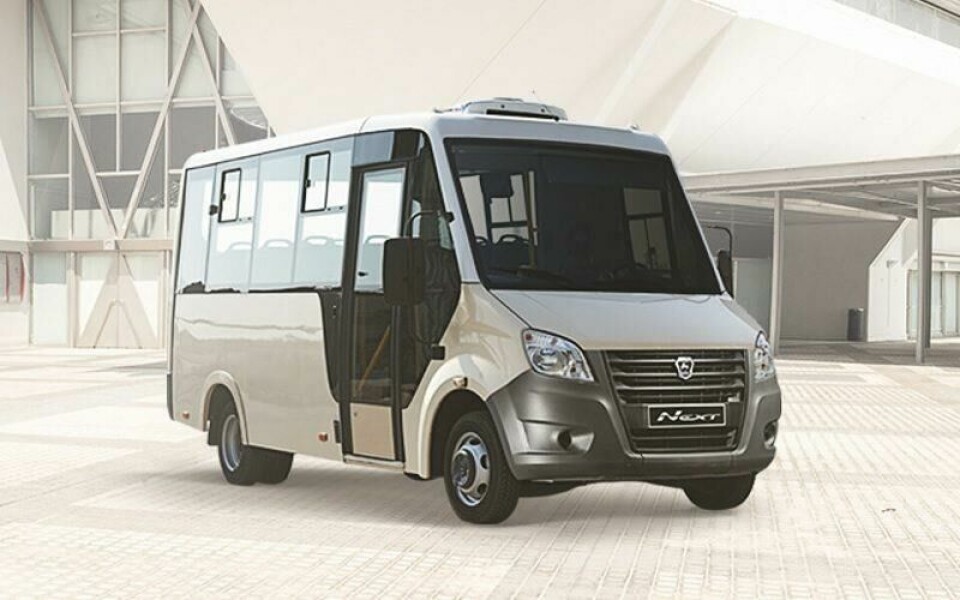
    Gaz Vietnam debuted five commercial and municipal vehicles at the Cam Auto 2026 exhibition in Phnom Penh. The display starts an export push into Cambodia, backed by plans for local dealerships and parts distribution.

    Assembled at its plant in Da Nang, the Russian-designed lineup includes light buses, work trucks and an emergency vehicle. Gaz pitched the platforms directly to Cambodian fleet buyers and transport operators.

    Five platforms pitched to transport and public operators

    Five models on display span the 3.5 to 4.9-ton gross vehicle weight bracket. For public transit routes, the lineup features the Gazelle City. That 26-passenger low-floor bus carries a wheelchair ramp, wide boarding doors, all-wheel disc brakes and an adjustable rear pneumatic suspension. Beside it sits the 20-seat Gazelle Citiline. It targets shorter intercity corridors with a 1.9-meter interior standing height on a traditional body-on-frame chassis.

    For shuttle operators, the display included the 16-seat Gazelle NN. The van runs a 150-horsepower Euro 5 diesel engine paired with a six-speed manual gearbox. Electronic stability control, traction control, brake assist and hill-start assist come standard. Utility crews saw the six-seat Gazelle Double Cab cargo truck, backed by an eight-year anti-perforation warranty on its galvanized cabin structure. Gaz also exhibited a Sobol NN ambulance configured with medical equipment racks and dedicated power feeds.

    Dealership rollout and regional distribution strategy

    Selling across the border requires reliable service. Buyers demand uptime guarantees. Gaz Vietnam plans to establish an authorized dealership network in Cambodia to handle vehicle servicing, technical maintenance and warranty work. A dedicated spare parts supply chain will support the network to limit repair turnaround times for fleet owners.

    Through Cam Auto 2026, Gaz Vietnam aims to offer transport solutions that combine proven durability, operating efficiency, and modern technology.

    These platforms compete directly against established Japanese and Chinese builders that dominate Indochina’s logistics and transport sectors. Japanese brands command fleet loyalty, but rising replacement costs push budget operators toward alternatives. Chinese commercial vans offer low upfront pricing. Gaz Vietnam bets its corrosion-treated steel framing, mechanical layouts and factory warranty packages will appeal to private transport companies and municipal fleets seeking predictable running costs.

    the competitive market in Indochina logistics

    Regional trade integration aids cross-border vehicle sales within ASEAN, but success in Cambodia depends on after-sales execution. Small logistics operators and provincial transport cooperatives cannot afford days of downtime waiting for parts from Vietnam. The manufacturer combines central parts warehousing with local dealer partnerships. This approach aims to counter gray-market importers who sell vehicles without technical backing.

    Government purchasing offers another sales channel. The Phnom Penh exhibition drew official interest from Cambodian government figures, including General Yont Min, Secretary of State at Cambodia’s Ministry of National Defense, and Anatoly Borovik, Russia’s Ambassador to Cambodia. Securing institutional orders for emergency medical transport and municipal utility work provides immediate volume while private dealer sales ramp up.

    Da Nang manufacturing base powers cross-border sales

    Gaz Vietnam opened its Da Nang manufacturing plant in 2019 to build light commercial vehicles, passenger vans and medium-duty trucks for Southeast Asian markets. The Vietnamese operation maintains parts distribution hubs in Hanoi, Da Nang and Ho Chi Minh City. These facilities support an authorized service network spanning 14 provinces.

    This domestic footprint provides the base for cross-border supply. Sourcing vehicles from central Vietnam rather than Russia cuts shipping lead times for Indochina buyers. It also simplifies parts interchangeability between the two countries.

    Next, the automaker must appoint its first certified Cambodian retail partners and confirm delivery timelines for commercial fleet orders booked during the Phnom Penh trade fair.

  • Toyota Unveils 10-Passenger Tamaraw Jeepney in Philippines

    Toyota Unveils 10-Passenger Tamaraw Jeepney in Philippines

    Toyota Motor introduced a 10-passenger Tamaraw jeepney in the Philippines this week, expanding its multipurpose vehicle lineup into everyday public transportation.

    Built at the automaker’s plant in Laguna province, the new model complies with Philippine government standards for Class 1 modern public utility vehicles.

    Hardware and route capacity

    The vehicle features air conditioning, Wi-Fi connectivity and automated fare collection systems. Unlike larger Class 2 jeepneys that link central Manila with peripheral towns, this Class 1 version handles shorter neighborhood routes and lighter passenger volumes. Toyota builds the model on its modular IMV truck platform, the same architecture underpinning the Hilux Champ sold in Thailand.

    The provincial fleet market

    Local transport operators face steep capital replacement costs under national fleet overhaul mandates. Toyota is directing its sales efforts toward cooperatives and private fleet owners outside Manila, pitching the Tamaraw jeepney alongside available state purchase subsidies. Securing volume orders in regional provinces will test whether small-scale transport cooperatives can absorb commercial financing rates compared to traditional, low-cost backyard-built vehicles.

    Platform scale across Southeast Asia

    The Laguna rollout fits into Toyota’s wider defensive playbook across Southeast Asia. Japanese automakers continue to rely on utilitarian, internal-combustion commercial platforms to protect market share against incoming Chinese electric commercial van makers. By adapting a shared regional chassis into localized utility bodies, Toyota spreads manufacturing costs while locking in transport operators accustomed to its provincial parts supply network.

    Laguna assembly line roots

    Toyota revived the Tamaraw nameplate in January 2025 as a multipurpose platform for light trucks and ambulances. The badge first gained widespread adoption in the Philippines during the 1970s as an affordable domestic workhorse.

    Masando Hashimoto, president of Toyota Motor Philippines, described the jeepney model as a central step in expanding the vehicle’s domestic role.

    “Today, we add an important missing piece, a jeepney,” Masando Hashimoto, president of Toyota Motor Philippines said this week. “By becoming part of everyday public transportation, the Tamaraw becomes a true national car, a vehicle for all Filipinos.”

    Government subsidy rollout

    Operator uptake now hinges on how quickly regional transport franchises qualify for state subsidy disbursements. Commercial deliveries will begin through Toyota’s domestic dealer network, with order volumes in provincial transport cooperatives providing the first test of whether the Class 1 format can displace aging utility fleets.

  • BYD Builds 150,000Th Commercial NEV as Heavy Truck Output Ramps Up

    BYD Builds 150,000Th Commercial NEV as Heavy Truck Output Ramps Up

    BYD rolled out its 150,000th commercial new energy vehicle at its Huai’an factory in Jiangsu on October 9. The milestone vehicle was a Q3 electric semi-truck.

    Commercial vehicle sales climbed 28.46 per cent year-on-year to 53,032 units across the first nine months of the year. That growth accelerates an operational pivot toward long-haul freight.

    Power Specs and Heavy Freight Demand

    The Q3 tractor unit uses a Blade Battery setup with peak motor output of 600 kW and dual-gun fast charging. Downtime on intercity logistics routes is critical. Battery replenishment speeds determine whether zero-emission heavy haulage can compete on operating margins with diesel equivalents.

    Long-distance road freight demands sustained power output and dense charging support. These requirements create high technical barriers for battery-electric platforms. The company plans to allocate additional capital expenditure to its long-haul heavy truck lines to expand across primary arterial freight corridors.

    Diverging Growth in Vehicle Lines

    Commercial vehicle volumes are outpacing the rest of the manufacturer’s catalog. Deliveries reached 6,848 commercial units in September alone. That figure rose 113.33 per cent from a year earlier, despite easing 0.88 per cent from August.

    Total group deliveries, including passenger cars, slipped 3.94 per cent to 3,131,576 units through September. Institutional fleet replacement cycles and decarbonisation mandates are cushioning commercial transport. These fleet contracts shield heavy vehicles from retail price wars curbing broader consumer demand.

    Logistics Fleet Shifts Across Asia

    Fleet operators across Asia-Pacific face tightening emissions regulations in urban centres and regional shipping hubs. These rules compel logistics providers to electrify their middle-mile and port-drayage fleets. BYD is positioning its heavy-duty trucks against regional diesel incumbents, shifting electrification from municipal transit to private commercial transport.

    Infrastructure hurdles now outweigh vehicle availability constraints for suppliers and fleet managers. Operators adopting 600 kW dual-gun heavy haulers must secure dedicated grid allocations and depot charging hardware. This requirement concentrates operational risk around depot power supply rather than vehicle range alone.

    Global Expansion Beyond Bus Fleets

    Truck production builds on an eighteen-year commercial vehicle programme that started with municipal electric buses. Dedicated truck research began in 2012. The programme gradually broadened into urban parcel delivery vans, cold-chain trucks and heavy port hauliers with battery-electric and hybrid powertrains.

    Production of the T5 light-duty truck crossed the 10,000-unit threshold in 2025, while the smaller T4 platform debuted in export markets. Commercial operations now span more than 70 countries and territories. These global operations include bundled fleet management software, maintenance contracts and depot charging equipment.

    Factory lines at Huai’an are scaling Q3 output as regional logistics firms begin scheduled fourth-quarter fleet replacements across eastern China.

  • Chery Delivan Targets 100 UK Dealerships for Electric Van Expansion

    Chery Delivan Targets 100 UK Dealerships for Electric Van Expansion

    Chery Commercial Vehicle brand Delivan plans to establish more than 100 UK dealership sites over the next five years to sell electric delivery vans.

    The Chinese automotive group unveiled its production van range at the IAA Transportation show in Hanover, preparing for commercial deliveries in 2027 across Britain, Germany, France, Spain, Italy and the Nordic region.

    Hardware specifications and conversions

    Delivan built its launch lineup on a single electric architecture, offering battery capacities between 50.4 kilowatt-hours and 97.4 kilowatt-hours. The vehicles deliver up to 426 kilometres of WLTP combined range with speed capped at 100 kilometres per hour, while direct-current fast charging takes the battery from 15 percent to 80 percent in roughly 22 minutes.

    The range includes the L1H1 panel van with a 1,400-kilogram payload, the larger L2H3 panel van offering 11.6 cubic metres of cargo capacity, and the L3 chassis cab supporting payloads up to 2,120 kilograms. Both panel vans carry a 2,500-kilogram towing rating. Delivan also displayed four specialist conversion bodies developed with European bodybuilders: a crew van, a refrigerated box, an integrated tool storage layout and a three-way tipper.

    Fleet software and uptime service

    Commercial operations will run on a package the company calls its 1+3 proposition, combining vehicle hardware with three digital support layers. Delivan I handles telematics, route efficiency and real-time energy usage tracking, while Delivan PRO links operators to an uptime centre for predictive maintenance and remote diagnostics. Delivan X oversees third-party vehicle conversions and bodybuilder certifications.

    Software integration has become a primary sales mechanism for Chinese commercial vehicle exporters targeting overseas corporate buyers. Fleets evaluate total cost of ownership through vehicle availability and software integration rather than purchase price alone. Delivan is attempting to bypass typical import friction by embedding diagnostics and bodybuilding approvals directly into European fleet workflows.

    Dealership network strategy

    Distribution in Britain will combine franchised car retailers with dedicated commercial vehicle centres. Chery plans to convert selected existing passenger-car showrooms to carry Delivan while appointing independent commercial vehicle specialists to cover high-density logistics corridors.

    Establishing physical workshops and rapid parts supply presents the main execution hurdle for new commercial vehicle brands in Europe. Delivery companies cannot absorb prolonged vehicle downtime. While Chinese electric passenger cars rely heavily on direct retail or light dealer agreements, light commercial vehicles require round-the-clock maintenance agreements and guaranteed replacement turnarounds to win institutional fleet tenders.

    European expansion timeline

    Delivan initiated its Western European rollout in April at the Commercial Vehicle Show in Birmingham, where Chery first introduced the commercial sub-brand. The company subsequently established regional operating headquarters and technical teams in the UK and Germany to adjust suspension, cargo packaging and cab ergonomics for local delivery routes.

    “Using real-time connected-vehicle data, our in-house smart system applies AI to connect the entire operational chain, from individual vehicles to fleet management,” said Yueqiong Gong, vice president of Chery Holding Group and general manager of Chery Commercial Vehicle.

    Chery will finalize its initial UK dealer appointments over the coming months before opening order books ahead of customer deliveries in 2027.

  • Geely Farizon Expands European Van Network with Six Partners

    Geely Farizon Expands European Van Network with Six Partners

    Geely commercial vehicle brand Farizon presented partnerships with AMF-Bruns, Allianz Partners, BNP Paribas, CATL, Bosch, and ZF at the IAA Transportation in Hanover to expand operations across Europe.

    The agreements underpin European sales for the Chinese group’s Farizon SV electric van, priced from 44,900 euros net, and the smaller V7E model starting at 32,600 euros.

    Farizon, officially represented in Germany since May 2026, announced plans to establish dedicated subsidiaries in Germany and France alongside a European headquarters.

    Component supply and vehicle engineering remain anchored by long-running ties with battery manufacturer CATL, chassis specialist ZF and tier-one supplier Bosch. Farizon already operates a central spare parts distribution warehouse in Germany, which works alongside a dedicated European engineering division formed earlier in 2026 to handle local homologation and fleet customization.

    Expanding Direct Operations in Germany and France

    Farizon plans to incorporate wholly owned operational subsidiaries in Germany and France to anchor its European business. The company is currently selecting a site for its regional European headquarters as it expands beyond early distribution channels in Britain, Spain, Serbia and the Benelux region.

    Fleet operators in Germany can order the SV van with either a 67 kilowatt-hour or 83 kilowatt-hour lithium iron phosphate battery pack sourced from CATL. The larger battery pack delivers a driving range of up to 376 kilometers under WLTP testing standards. For inner-city delivery routes, the smaller V7E transporter comes fitted with 50 kilowatt-hour or 67 kilowatt-hour batteries, yielding a maximum driving range of 328 kilometers between charges.

    Platform Applications and Autonomous Production

    The SV platform also serves as the structural base for specialized autonomous transport. Chinese autonomous driving developer WeRide placed an order for 2,000 units of its GXR robotaxi, built directly on the Farizon SV architecture.

    Production for the WeRide GXR run is scheduled to start in the third quarter of 2026. At the Hanover exhibition, Farizon also presented the Homtruck, a heavy-duty battery-electric tractor unit developed for regional freight and long-distance hauling routes.

    Commercial Fleet Pressures and Chinese Expansion

    For European logistics operators, Farizon offers an alternative to legacy European van makers at a lower acquisition cost, but the real test lies in parts availability and residual values. Fleet buyers cannot tolerate stranded vehicles waiting weeks for imported Chinese components. Establishing local financing and insurance through BNP Paribas and Allianz directly addresses fleet credit and residual risk, removing two primary barriers that have slowed Chinese commercial vehicles in the European market.

    European manufacturers such as Stellantis and Renault face intensified price competition in the light commercial sector as Chinese electric platforms scale up. Farizon uses the manufacturing scale and battery supply chains of Zhejiang Geely Holding Group to price its mid-size electric delivery vans well below comparable European rivals. The main operational hurdle remains long-term resale value, where unproven Chinese commercial nameplates still face steeper depreciation curves than established brands.

    Preceding European Entry and Next Steps

    Farizon formally entered the German market in May 2026 after completing initial safety and homologation testing for the SV and V7E. The SV van secured a five-star Euro NCAP commercial safety rating and finished as a runner-up in the International Van of the Year 2026 evaluations, giving the platform regulatory validation before commercial deployment.

    Engineering teams are preparing an updated version of the Farizon SV featuring an all-wheel-drive powertrain, revised electric motors and higher-capacity battery options tailored for winter driving and unpaved terrain. Farizon has not yet disclosed technical specifications or pricing for the four-wheel-drive model, which will roll out as European legal entities in Germany and France complete their formal incorporation.

  • Toyota Trims Philippine Production Target to 60,000 Units

    Toyota Trims Philippine Production Target to 60,000 Units

    Toyota Motor Philippines expects assembly at its Santa Rosa plant to drop to roughly 60,000 units in 2026. That falls short of last year’s record volume. Weak consumer demand and macroeconomic pressures have slowed sales across the country. As a result, the carmaker is scaling back factory runs in Laguna.

    Plant output reached 63,804 vehicles in 2025, an all-time high for the local unit. Through August this year, assembly lines built 38,221 vehicles. That represents a 10 percent drop from the 42,469 units assembled during the same eight-month period last year.

    Production Mix Shifts at Santa Rosa

    Workers at the facility build three models: the Vios sedan, the Tamaraw utility vehicle, and the Innova compact multi-purpose vehicle. The Vios accounted for 18,321 units, or 48 percent of local output through August. The Tamaraw followed with 12,468 units, or 33 percent. Innova production dropped to 7,432 units, making up the remaining 19 percent.

    Output rebounded briefly in July to 5,540 units before sliding to 4,540 units in August. Deliveries mirrored the slowdown. Total sales declined from 17,797 units in July to 14,594 units in August.

    Rebalancing factory lines is difficult. Santa Rosa shares capacity across all three nameplates simultaneously. Because of that shared setup, the plant cannot easily raise volume for one model when demand for the other two cools.

    Commercial Segment Drops While Sedans Hold

    Overall sales dropped 9 percent year on year during the first eight months to 133,300 vehicles, down from 146,357 units a year earlier. Commercial vehicle deliveries fell 15 percent to 98,531 units. Passenger car retail sales told a different story, rising 15 percent to 34,769 units over the same period.

    Shifts occurred within the passenger car lineup as well. Toyota introduced the imported Yaris Ativ to capture buyers who previously chose higher-specification Vios variants. That change protected overall sedan market share while reducing assembly pressure on the locally built Vios.

    Even with lower volumes, the brand maintained its commanding market lead. Through July, Toyota sold 118,706 vehicles, capturing nearly half of the Philippine automotive market. Mitsubishi Motors Philippines Corp placed second with 42,592 units sold.

    Expanding Tamaraw Conversions for Fleets

    Management has positioned the Tamaraw as a core pillar of its local manufacturing plan. The model has already overtaken the Innova in total units assembled this year. Steady orders from commercial businesses and local government fleets fueled the climb.

    To broaden customer appeal, Toyota Motor Philippines developed 13 body conversions with seven accredited local body builders. These configurations target delivery operators, municipal public services, and utility fleets across regional provinces.

    Commercial buyers are now weighing whether local conversions reduce acquisition and maintenance costs compared to imported platforms. High domestic fuel prices have forced logistics companies and distributors to trim replenishment budgets. Modular utility vehicles offer an economical alternative.

    Policy Support and Assembly Outlook

    Government policy will shape the next phase. The carmaker plans to enroll the Tamaraw under the revived Revitalizing the Automotive Industry for Competitiveness Enhancement program once officials finalize the framework. Qualifying for state manufacturing incentives will dictate whether Toyota expands local parts procurement for the platform.

    Meeting the year-end goal will require a steep ramp up. Toyota Motor Philippines must assemble nearly 22,000 vehicles between September and December to hit its revised 60,000-unit target. The final outcome hinges on whether commercial fleet orders pick up in the fourth quarter.

  • Carris Adds 29 Electric Buses to Expand Lisbon Fleet to 103

    Carris Adds 29 Electric Buses to Expand Lisbon Fleet to 103

    Lisbon public transport operator Carris has expanded its electric bus fleet with 29 Yutong U12 vehicles, lifting its total to 103 electric buses as part of an investment programme of more than €31 million.

    A total of €17.05 million is financed through the Recovery and Resilience Plan (PRR), according to Portuguese Secretary of State for Energy Jean Barroca, following the commissioning of 15 electric minibuses in 2026.

    Delivery Bottlenecks Open Doors For Chinese Makers

    Carris CEO Rui Lopo highlighted the delivery capacity of the European bus industry as a challenge for the fleet transition, as the municipal operator aims to procure and operate up to 150 new buses annually over the long term.

    The deployment delivers immediate commercial scale for Yutong in southern Europe, where municipal operators face rigid decarbonisation deadlines. For European fleet operators and component suppliers, Lisbon’s reliance on Chinese manufacturing shows an ongoing mismatch between local transit procurement timetables and domestic assembly throughput.

    Charging Network Investment

    Fleet expansion is running alongside depot grid upgrades. Carris will spend approximately €2 million on charging infrastructure at bus stops by the end of 2026, followed by more than €10 million scheduled for 2027 to install energy management systems and high-voltage grid connections.

    Under the national resilience funding framework, the municipal operator has installed 25 dedicated charging stations since 2022 alongside orders for 29 minibuses and 49 standard electric buses, investing €15 million from its own capital.

    Phasing Out Diesel Before 2030

    Lisbon has cut its operational diesel fleet from 524 to 379 vehicles, putting zero-emission units on more than half of all scheduled route kilometres. Earlier in 2026, Carris commissioned 15 electric minibuses ahead of the Yutong single-deck batch, following earlier procurements from domestic builder CaetanoBus in 2019 and 2023.

    Portugal and the European Commission are preparing a wider procurement programme to tender 1,006 zero-emission buses across 70 municipalities, with Carris targeting a full phase-out of fossil-fuel passenger vehicles by 2030.

  • BYD Unveils 44-Tonne ETT 44 Electric Truck with 651-kWh Battery

    BYD Unveils 44-Tonne ETT 44 Electric Truck with 651-kWh Battery

    BYD unveiled its 44-tonne ETT 44 electric tractor unit at Hanover’s IAA Transportation show in September 2026. The vehicle enters Europe’s heavy-duty truck market with a 651-kilowatt-hour battery.

    The flagship model delivers peak output of 1,000 horsepower. It claims a driving range of nearly 600 kilometres on a single charge.

    Built on a 4×2 tractor configuration, the ETT 44 uses BYD’s proprietary lithium iron phosphate Blade Battery chemistry. Standard drive power sits at 743 horsepower. The unladen tractor unit weighs between 10.95 and 11.14 tonnes depending on final equipment trim. The company includes a 10-year or 1.2 million-kilometre warranty on the battery pack.

    Megawatt Charging and Fleet Hardware

    Charging hardware is built for high-throughput commercial fleet depots. Using standard CCS2 connectors, the truck draws up to 420 kilowatts to charge from 20 per cent to 80 per cent in 60 minutes. Connecting via the Megawatt Charging System lifts input capacity above 1.5 megawatts. That cuts the charging window to 20 minutes and recovers roughly 400 kilometres of operating range.

    The heavy tractor heads an expanded commercial transport lineup. In Hanover, the Chinese manufacturer also introduced rigid 4×2 and 6×2 chassis models, including a 26-tonne swap-body platform and a hooklift variant. Together with the smaller E-Vali electric van, the range covers logistics weights from 3.5 tonnes to 44 tonnes.

    Rivalry in Long-Haul Logistics

    For European logistics operators and Asian export supply chains, fleet electrification is shifting from urban delivery vans into heavy regional freight. Chinese truckmakers are moving into the European heavy-vehicle market as legacy manufacturers defend their home turf. BYD faces established heavy-duty models from Volvo, Daimler Truck and MAN. Volvo claims up to 700 kilometres on its FH Aero Electric.

    Competition from Chinese heavy-vehicle peers is accelerating. Manufacturers including Sany, Sinotruk and Skyworth displayed competing heavy-duty electric tractor units at Hanover to secure European logistics contracts. BYD counters with in-house battery cell production and bundled ancillary services, packaging vehicles alongside proprietary charging hardware, stationary energy storage systems and fleet financing.

    Commercial Vehicle Expansion

    Overseas expansion began with municipal electric transit buses before expanding into light delivery vans across international markets. Moving into long-haul freight exposes the brand to stricter uptime demands. Commercial hauliers also require higher charging infrastructure support.

    BYD will now roll out commercial fleet trials across European logistics corridors. Initial customer deliveries and depot charging installations are scheduled to begin across core transport hubs.

  • Yutong Deploys 50 Electric Articulated Buses in Thessaloniki

    Yutong Deploys 50 Electric Articulated Buses in Thessaloniki

    Chinese commercial vehicle maker Yutong delivered 50 electric articulated buses to Thessaloniki, expanding the Greek city’s battery-powered transit fleet to roughly 160 vehicles. The 18-meter units entered commercial service across four municipal routes at the start of September.

    City transit agency OASTH hired 170 drivers to run the expanded schedule and increase trip frequencies across western Thessaloniki routes X1, 12, 27 and 32. Each vehicle carries up to 130 passengers and delivers an operating range of 300 kilometres on a single charge.

    Fleet Specifications and Route Coverage

    The buses feature air conditioning, ventilation units and tilt-and-turn passenger windows. Authorities did not release the exact model name, though the technical footprint points to Yutong’s U18 platform, which carries battery packs between 528 and 704 kilowatt-hours.

    Operating these articulated models across western routes targets heavy commuter corridors that link residential districts with commercial hubs. Deploying high-capacity zero-emission buses on fixed schedules allows municipal operators to cut fuel bills while meeting European urban emissions mandates.

    Chinese Bus Exports Push into Southern Europe

    For Chinese automotive exporters, fleet procurement contracts across Southern Europe provide steady volume outside domestic assembly markets. Yutong and its domestic competitors continue to win municipal tenders by bundling high battery capacities with prompt delivery timelines that European legacy coachbuilders struggle to match.

    The risk for Chinese suppliers sits in political scrutiny over European Union transit procurement and long-term depot maintenance. Winning tenders requires solid local aftersales partnerships, spare parts distribution hubs and dedicated charging support to avoid costly downtime for municipal operators.

    Expansion Following 2024 Joint Tender

    This deployment builds on an earlier procurement round in 2024, when transport authorities in Athens and Thessaloniki jointly bought 250 electric buses from Yutong. That delivery formed the core of Greece’s state-backed plan to replace ageing diesel fleets in its two largest metropolitan areas.

    OASTH plans to introduce additional routes and increase departure frequencies as the 170 newly recruited drivers complete route training during the winter timetable.

  • UltraTech Cement to Add 600 Electric Trucks to Indian Logistics Fleet

    UltraTech Cement to Add 600 Electric Trucks to Indian Logistics Fleet

    UltraTech Cement will deploy more than 600 heavy-duty electric trucks across its Indian supply chain by December 2026. The fleet will haul over five million metric tonnes of clinker and raw materials annually across seven states.

    Operations will span industrial corridors in Gujarat, Uttar Pradesh, Madhya Pradesh, Rajasthan, Chhattisgarh, Maharashtra and Odisha. The company calculated that replacing diesel prime movers at this scale cuts net carbon emissions by more than 117,000 tonnes annually, eliminating the consumption of roughly 39 million litres of diesel fuel each year.

    Fleet suppliers and regional deployment

    Procurement contracts have been split among domestic and international commercial vehicle builders. Suppliers include Tata Motors, Ashok Leyland, IPLTech, Sany and Energy In Motion, alongside third-party logistics operators.

    The heavy vehicles will manage mine-to-plant transport as well as inter-plant transfers of clinker. UltraTech currently runs more than 850 alternative-fuel commercial vehicles, a tally that blends compressed natural gas units with battery-electric haulers.

    Scaling heavy-duty electric freight

    Electrifying heavy industrial freight remains rare across Asian emerging markets, where high battery pack costs and limited mega-watt charging infrastructure keep most operators tied to diesel. UltraTech tested the waters in June when it put 45 electric trucks into service on a 250-kilometre clinker route between Rajasthan and Uttar Pradesh with Energy In Motion, bringing its dedicated electric fleet to 89 units at the time. Expanding that base almost sevenfold indicates commercial confidence in operating economics on fixed factory-to-mine loops.

    Delivery schedules for the new vehicle batches begin over the coming quarters, with all 600 prime movers scheduled to enter full revenue service before the end of 2026.

  • BYD and Bus Cap Plan Electric Commercial Vehicle Plant in Malaysia

    BYD and Bus Cap Plan Electric Commercial Vehicle Plant in Malaysia

    BYD Malaysia and local manufacturer Bus Cap signed an agreement in Shenzhen to develop a joint electric commercial vehicle platform in Perak. The deal targets local electric bus assembly and manufacturing. It also covers sales and after-sales operations.

    Under the exclusive memorandum, the partners are evaluating assembly sites and supply chains across the northwestern state. Capital commitments and operating structures depend on definitive contracts.

    Expanding Beyond Bus Fleets

    Bus Cap listed on Bursa Malaysia’s ACE Market in June 2026. Its coach-building roots date back to 1968 through subsidiary Sin Hock Leong Coach Works. BYD commercial vehicle division general manager Luo Zhongliang said the venture could broaden into electric trucks, vans, forklifts, and rail transit hardware. These would serve Malaysia and neighboring Southeast Asian markets.

    Executive director Bernard Ng Chong Yan said the alliance pairs BYD vehicle technology with local engineering. It also uses existing fleet customer relationships.

    Questions Over Passenger Plant

    The commercial venture gives BYD another production foothold in Malaysia as uncertainty surrounds its separate passenger car plans. In August 2025, BYD announced a 600,000-square-metre Tanjung Malim assembly plant scheduled for the second half of 2026. Malaysia’s Ministry of Investment, Trade and Industry said earlier this month that it has received no confirmation that BYD will proceed with that project as planned.

    Negotiators must now finalize binding agreements to lock in the Perak project’s investment budget and production start date.