Retail News CRM

Tag: competition

  • Meituan Faces Second Quarter Loss Amid Intense Food Delivery Competition in China

    Meituan Faces Second Quarter Loss Amid Intense Food Delivery Competition in China

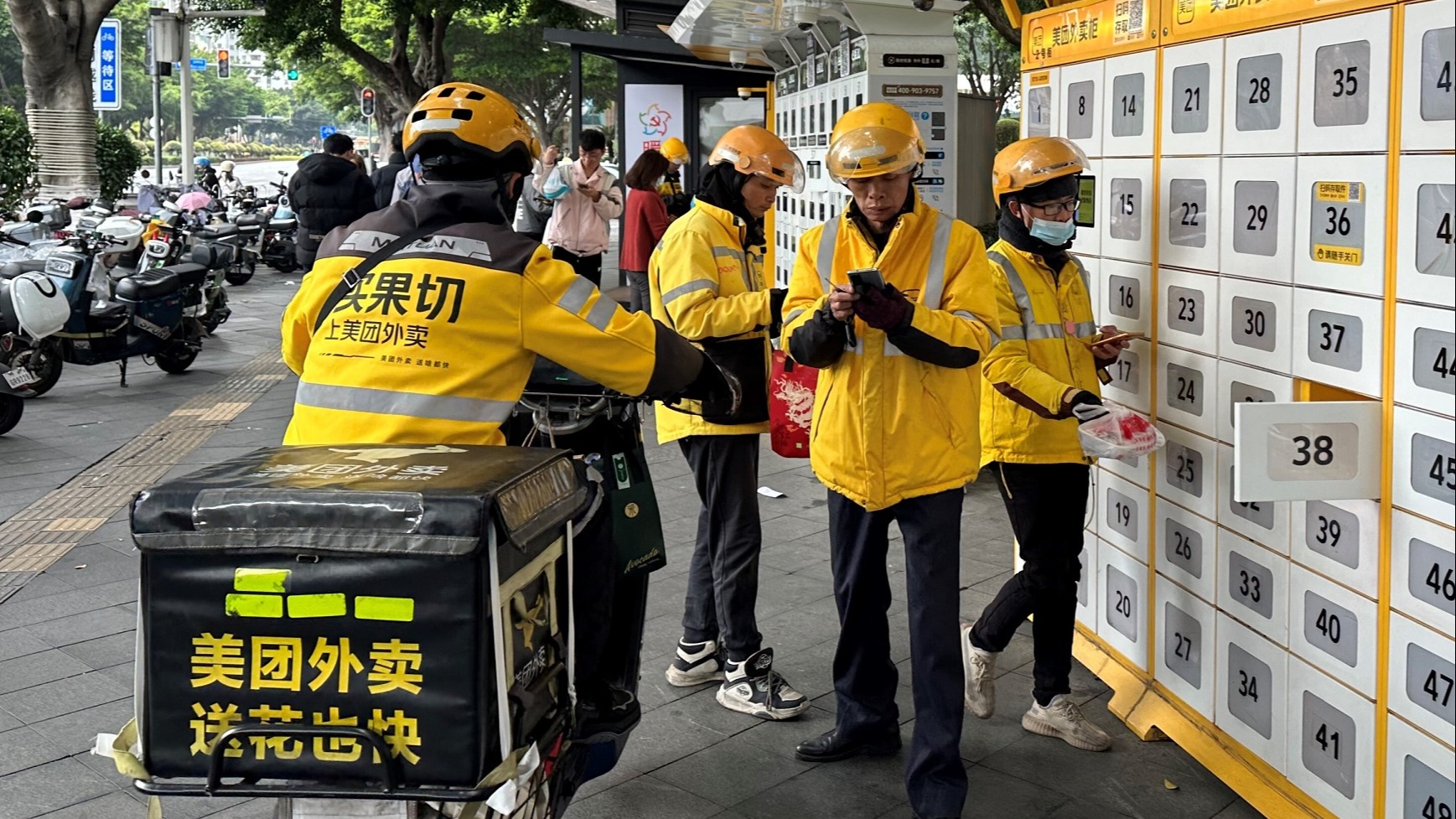
    In a fiercely competitive market, Chinese food delivery titan Meituan has reported a second consecutive quarterly loss, slightly missing projected revenue growth. Over the past year, the company has weathered intense competition sparked by aggressive subsidy tactics in China’s burgeoning one-hour delivery sector.

    The Rivals and the Battle

    The company’s profit margins and revenue growth have faced significant challenges following the emergence of ‘instant retail’ platforms introduced by e-commerce behemoths Taobao and JD, both subsidiaries of Alibaba, in early 2025. Instant retail, also known as quick commerce, is characterized by online orders—typically food, bubble tea, or daily essentials—delivered to customers within an hour.

    A Glimmer of Hope in 2026

    Despite the tough conditions, the early months of 2026 have shown promising signs that the cutthroat price competition in the instant retail sector may be easing. This phenomenon, which has been disparaged by Chinese regulators as a destructive ‘race to the bottom’, has begun to show signs of abating.

    Meituan’s Financial Status

    Meituan’s revenue for the quarter ending December 31 amounted to 92.1 billion yuan (US$13.3 billion), marking a 4.1% increase over the previous year. This figure fell slightly short of the 92.2 billion yuan forecasted by industry analysts. Meanwhile, the company’s adjusted net loss narrowed to 15.1 billion yuan from 16 billion yuan in the previous quarter. A year earlier, Meituan had reported a profit of 9.8 billion yuan.

    Regulatory Guidance and Market Health

    During a post-earnings call with analysts, Meituan’s CEO, Wang Xing, stated that the regulatory guidance regarding the price war in the instant retail sector is “already quite clear.” He also noted that regulators strongly oppose the relentless ‘neijuan’, or involution, competition and are focused on fostering a healthy, orderly market. The term ‘neijuan’ represents a form of competition where entities are forced to engage in increasingly intense rivalry that yields minimal benefits.

    In the wake of a state media editorial calling for an end to China’s food delivery price wars being republished by Chinese regulators, Meituan’s shares experienced a significant 14% surge. Industry observers viewed this as a sign of official approval.

    Questions & Answers

    What is the instant retail or quick commerce model?
    This refers to online purchases, often consisting of food, bubble tea, and daily necessities, which are delivered to customers within 60 minutes.

    What is meant by ‘neijuan’ competition?
    ‘Neijuan’, or involution, indicates a situation where individuals or companies are compelled into increasingly intense competition that offers little benefits.

    How did the market respond to regulatory intervention in the price war?
    Following a state media editorial urging an end to the food delivery price wars being republished by Chinese regulators, Meituan’s shares saw a significant 14% increase, signaling market approval of regulatory intervention.
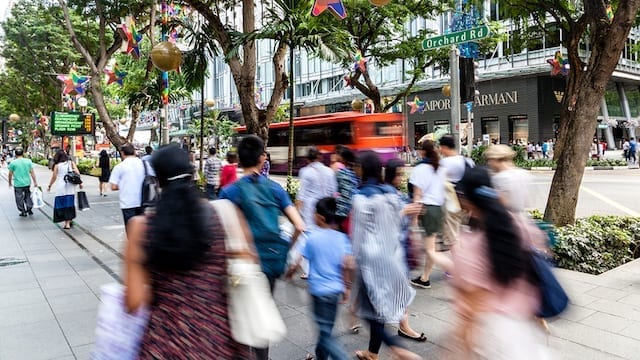

  • Singapore Retailers Seek Increased Budget Support for Enhanced Competition and Sustainability in 2026

    Singapore Retailers Seek Increased Budget Support for Enhanced Competition and Sustainability in 2026

    In Singapore, the lifestyle industry, particularly retailers, has expressed the need for continuous support from the Budget allocation due to mounting challenges such as elevated costs, labour shortages, and fierce competition.

    According to the Singapore Retailers Association (SRA), the retail sector in the country continually faces obstacles that include labour shortages, high rents and operating costs, competition from the e-commerce sector, and evolving consumer preferences.

    The SRA cautioned that without ongoing support, local businesses could find themselves trailing behind their well-funded international competitors.

    Retail Sales Figures Reflect Struggles

    The tough conditions being faced by the industry are evident in the 2025 retail sales figures. Segments such as clothing and footwear have seen a continuous decrease, while other sectors such as supermarkets have managed to maintain their resilience, stated Ernie Koh, the president of the SRA.

    The retail market has also experienced a split-speed with well-funded global brands controlling high-traffic locations. This has put smaller local operators under pressure, added Koh.

    Joint Call for Support

    In an alliance with other lifestyle trade bodies including the Restaurant Association of Singapore and the Singapore Fashion Council, the SRA has marked several recommendations for the 2026 Budget to address the ongoing and future challenges facing the retail industry.

    The recommendations focus on three major areas: enhancing the competitiveness of SMEs, addressing labour issues, and promoting sustainability efforts.

    To boost the competitiveness of local SMEs, the groups suggest introducing a scale-up programme that provides them with capital for growth acceleration, as well as access to strategic guidance, mentorship, partnerships, and commercial opportunities.

    Proposed Measures

    The groups have also suggested a franchise and licensing accreditation system to gain more transparent insights into the entry of foreign brands. This would allow stakeholders to better forecast market shifts and protect local businesses.

    Refining the Community Development Council (CDC) voucher system was another suggestion, aiming to channel government support directly to essential items, thereby balancing the cost-of-living relief with support for local retailers.

    To address the labour shortage issue, the groups recommend extending the Progressive Wage Credit Scheme for the retail and food service industries until 2028, and increasing the co-funding for the retail industry from 20 per cent to 75 per cent this year.

    Further suggestions to tackle manpower shortages include reducing the cost of hiring foreign staff for frontline retail roles, encouraging the hiring of PMETs (professionals, managers, executives, and technicians) over 50, improving the career conversion programme, and implementing trade testing for new foreign workers.

    To accelerate sustainable retail, the group recommends expanding the Climate Vouchers scheme to include companies with trusted green certifications, such as B-Corp, Singapore Furniture Industries Council’s Sustainability Furniture Mark or Green Mark.

    The Future of Retail

    The SRA emphasised that the future of retail hinges on the seamless integration of omnichannel strategies, leveraging AI and personalisation, enhancing experiential retail, prioritising sustainability, and upskilling the workforce to overcome the challenges faced by the industry. These challenges include high costs and labour shortages, with growth being supported by tourism and technological adoption, despite short-term economic uncertainties.

    Questions & Answers

    What are the major challenges faced by the retail industry in Singapore?
    The key challenges faced by the industry mainly include high rents and operating costs, labour shortages, competition from e-commerce platforms, and shifting consumer demands.

    What are the recommendations made by the SRA for the 2026 Budget?
    The SRA has recommended actions in three key areas – enhancing SME competitiveness, addressing labour issues, and supporting sustainability efforts. These include a scale-up programme for SMEs, extension of the Progressive Wage Credit Scheme, and expanding the Climate Vouchers scheme.

    How does the SRA suggest dealing with labour shortages and high costs?
    The SRA suggests that extending the Progressive Wage Credit Scheme until 2028 and increasing co-funding for the retail industry could help with manpower shortages. To deal with high costs, the association recommends refining the CDC voucher system to balance cost-of-living relief with support for local retailers.

  • Vietnamese Dragon Fruit Exports Hit 11-Year Low Amidst Rising Global Competition

    Vietnamese Dragon Fruit Exports Hit 11-Year Low Amidst Rising Global Competition

    Dragon fruit exports from Vietnam, which historically garnered more than $1 billion annually, have plummeted to their lowest levels in over a decade. The first eleven months of last year saw exports decrease by 0.8% to $485.2 million, a low not seen since 2014, according to the Vietnam Customs.

    Dwindling Dragon Fruit Exports

    Annual exports between 2014 and 2018 regularly exceeded $1 billion, peaking at $1.3 billion in 2018. However, shifts in international competition and consumption markets led to a stagnation and eventual decline in dragon fruit exports.

    China remains the primary recipient of Vietnamese dragon fruit, with more than $301.7 million worth of exports recorded in the first 11 months, a figure that represents around 62% of total exports. Nevertheless, a decrease of 4.5% year on year revealed a slowing demand as China’s domestic supply becomes increasingly abundant.

    The Rise of New Markets

    While the key market dwindles, several new markets are demonstrating growth. Exports to India neared $41.8 million, marking a 6.4% increase, and exports to Thailand rocketed by 71.1% year on year. Despite this growth, the scale of these emerging markets is not yet sufficient to balance the decline in the main market.

    Exporters attribute the fall in exports to rapidly increasing global supply and intensifying competition. China has dramatically expanded its dragon fruit cultivation area, with an output of around 1.6 million tonnes annually, hundreds of thousands of tonnes more than Vietnam. This expansion has substantially reduced China’s import demand.

    Global Competition

    India is also emerging as a dragon fruit producer, with an estimated 3,000–4,000 hectares dedicated to its cultivation, according to the Indian Council of Agricultural Research and industry reports. While India’s current output is a modest 12,000 tonnes annually, it displays a clear upward trend.

    Mexico has successfully entered the dragon fruit market, directly contesting Vietnam’s dominance in the U.S. and Canadian markets. During the early 2010s, Vietnamese dragon fruit was smoothly exported to the U.S. However, Mexico’s geographic proximity to the North American market and expanded production from 2019 have significantly impacted Vietnam’s export of white-fleshed dragon fruit to these regions.

    Industry representatives predict that dragon fruit output and export revenues are unlikely to rebound quickly, especially if China and India continue to expand production. Dang Phuc Nguyen, secretary-general of the Vietnam Fruit and Vegetable Association, highlighted the need for farmers and businesses to reevaluate markets and competitive advantages. He recommended improvements in product quality and presentation and adjustments in cultivation timing to boost off-season production.

    Questions & Answers

    Why have dragon fruit exports from Vietnam decreased?
    Exports have fallen due to shifts in international competition and consumption markets, along with an increase in global supply, particularly from China and India.

    Which countries are emerging as new markets for Vietnamese dragon fruit?
    India and Thailand have demonstrated significant growth as new markets for Vietnamese dragon fruit.

    What strategies are being suggested to improve the dragon fruit sector in Vietnam?
    Industry experts advocate for improvements in product quality and presentation, reevaluating markets and competitive advantages, and adjusting cultivation timing to augment off-season production.

  • Chagee Holdings Stands Firm On Premium Pricing Amid Falling Sales And Rising Competition

    Chagee Holdings Stands Firm On Premium Pricing Amid Falling Sales And Rising Competition

    Chinese beverage company Chagee Holdings is maintaining its focus on premium products, even in the face of falling sales and profits as customers turn to more affordable competitors. The company’s co-founder, Shang Xiangmin, stated in a recent interview, “We haven’t been fully engaged in the price wars. Price wars may be a way to compete but we want to stick to our long-term strategy to build a premium brand.”

    Unchanged Pricing Strategy Amidst Competition

    Despite the growing competition from domestic companies like Luckin Coffee and Mixue Group, who are offering subsidized, deeply discounted beverages, Chagee Holdings remains firm on its pricing strategy. These competitors have teamed up with China’s tech giants to sell drinks at a fraction of Chagee’s price.

    Chagee’s flagship store in Hong Kong is experimenting with a new selection of drinks made from premium Chinese tea leaves. These drinks are brewed in-store by specialists and are sold at prices that are on par with single-origin coffee sold at Starbucks Reserve outlets in the city, ranging from HKD40 to HKD50 (US$5.2-6.4).

    Second Quarter Sales and Future Outlook

    The company’s adherence to its pricing strategy has seen second-quarter sales growth slow to 10%, down from 35% in the previous period. Adjusted operating income has also dropped by 10%, compared to the double-digit increases seen in the first quarter. This weak performance has wiped out nearly a quarter of its market value. Despite this, the company remains optimistic and is not deterred by the decrease in competitiveness. Chagee has decided to follow a development path similar to that of American coffee giant, Starbucks.

    “We’ve always wanted to go down the same path to take tea further,” said Shang, comparing Chagee’s ambitions to those of Starbucks.

    Expansion Plans

    Chagee opened its first U.S. store in Los Angeles in May, following its debut on the Nasdaq. The company operates more than 200 international outlets as part of its network of over 7,000 stores. It reported a 70% jump in overseas sales in the second quarter, with Southeast Asia being a key target for expansion.

    Questions & Answers

    What is Chagee Holdings’ strategy in the face of competition?
    Despite falling sales and profits, Chagee Holdings is maintaining its focus on premium products and has not engaged in price wars with its competitors.

    What are some of the offerings at Chagee’s flagship store in Hong Kong?
    The flagship store in Hong Kong offers drinks made from premium Chinese tea leaves, brewed in-store by specialists, and priced similarly to single-origin coffee at Starbucks Reserve outlets.

    What are Chagee’s future plans for expansion?
    Chagee plans to follow a development path similar to that of Starbucks. The company recently opened its first U.S. store in Los Angeles and is targeting Southeast Asia for further expansion.

  • South Korea’s Retail Industry Expands Private Label Business Beyond Food And Household Items

    South Korea’s Retail Industry Expands Private Label Business Beyond Food And Household Items

    South Korea’s retail industry is swiftly growing its private label (PB) business by extending beyond food and household items to include clothing, innovative digital platforms, and even international markets. This expansion comes as firms ranging from convenience stores and hypermarkets to e-commerce businesses vie to fortify their brand identities and profitability.

    Private Label Sales on the Rise

    BGF Retail, the parent company of the CU convenience store chain, reported noteworthy growth in PB sales. The years 2023 and 2024 saw increases of 17.6 percent and 21.8 percent, respectively, followed by an additional 19.1 percent surge during the first nine months of 2025.

    GS25, another retail chain, offers around 800 PB items via the YouUs line, which now make up nearly 30 percent of total sales. Their affordable Real Price range saw a significant year-on-year increase of 125 percent.

    Leading supermarkets are also jumping on the bandwagon. Approximately 8 percent of Emart’s sales and 10 percent of Lotte Mart’s sales come from private-label goods. Emart boasts well-known PB labels such as No Brand, Peacock, 5K Price, and Days, while Lotte Mart promotes Today’s Good and Cookit.

    Online retailers aren’t left behind either. Kurly, for example, reported a year-on-year increase of over 10 percent in sales of its flagship PB lines, echoing the growing consumer demand for retailer-exclusive products.

    Expanding Across Platforms and Borders

    The once rigid boundaries between retailers are now blurring as PB products start to appear across rival platforms. Even Coupang, an e-commerce platform, sells Lotte Mart’s Today’s Good and Homeplus’s Simplus brands, while Emart’s Peacock products can be found on Kurly’s online marketplace.

    Convenience chains are also making their mark on the global stage. GS25 exports PB products to 33 countries, including the United States, Australia, Japan, and China. CU also sells its own-label items in more than 20 countries, through outlets such as Japan’s Don Quijote stores.

    Earlier this year, BGF Retail forged a partnership with China’s Ningxing Youbei, a prominent importer and distributor. The partnership’s goal is to introduce CU-branded sections on Chinese e-commerce platforms and operate pop-up stores that showcase its products.

    In addition, 7-Eleven Korea ventured into the clothing sector in April, launching its own line of socks, underwear, and T-shirts, and recently, knitwear.

    A spokesperson from the retail industry emphasizes that selling robust PB products via external channels provides both marketing and revenue advantages. The more positive experiences that customers have with a retailer’s PB products, the more likely they are to become loyal to that retailer’s own platform.

    The Challenges and Risks of Brand Identity

    Despite the success of the PB trend, it has stirred concerns about potential conflict with national brands. For instance, Coupang was previously accused of allegedly manipulating search rankings to favor its own PB products.

    Experts also caution that expanding PB lines too broadly across platforms could blur brand identity and complicate logistics and inventory management, thereby undermining the very benefits that PB lines are intended to provide.

    Kurly, which previously sold select CU PB products, reverted to an in-house-only model. A spokesperson stated that the company is more interested in preserving brand integrity than achieving broader exposure, and has no plans to offer its PB products on external platforms.

    Questions & Answers

    What is the trend of private label sales growth in South Korea’s retail industry?
    The trend shows consistent growth, with companies like BGF Retail reporting significant year-on-year increases in private label sales.

    How is the expansion of private labels affecting the retail industry?
    The expansion is blurring boundaries between retailers, causing them to compete on multiple platforms. It’s also leading retailers to venture into new markets like clothing and international sales.

    What are the potential risks associated with the expansion of private label lines?
    Potential risks include conflicts with national brands, the blurring of brand identity, and complications with logistics and inventory management.

  • Alibaba Leverages Ai To Expand Cloud Business, Despite Falling Short Of Revenue Projections

    Alibaba Leverages Ai To Expand Cloud Business, Despite Falling Short Of Revenue Projections

    Alibaba, the Chinese multinational, has highlighted the significance of artificial intelligence (AI) in its plans to broaden its cloud computing business. This comes as the company experienced robust quarterly development in the sector, although its broader operations fell short of revenue projections.

    The Market Reaction

    Alibaba’s shares listed in the U.S. rose by 8% at the opening of the New York market on Friday after the results were announced.

    The revenue for Alibaba’s cloud division experienced a surge of 26% to a total of 33.40 billion yuan (equivalent to US$4.67 billion). This significant increase outpaced the anticipated rise of 18.4%. Yet, the weaker-than-expected progress in its e-commerce business overshadowed this achievement, with the total revenue falling short of estimates by 2%.

    Alibaba’s Position in AI

    Alibaba has emerged as one of the most competitive players in China’s AI sector, frequently introducing updates.

    In the past year, the company has invested over 100 billion yuan in AI infrastructure and product research and development, according to Group CEO, Eddie Wu.

    Wu stated that their investments in AI are beginning to bear fruit. He sees a clear trajectory for AI to power Alibaba’s robust growth in the future.

    Overall Performance and Revenue

    The overall revenue for the company for the quarter ending on June 30 was 247.65 billion yuan. This fell short of the average estimate of 252.92 billion yuan as calculated by LSEG.

    Alibaba reported its revenue from its China E-commerce Group for the first time, which includes platforms like Taobao and Tmall, its new instant commerce business, a food delivery app called Ele.me, and a travel agency called Fliggy. The group reported a revenue growth of 10%.

    On the other hand, Alibaba’s operational income saw a decrease of 3% year on year. The adjusted earnings before interest, tax and amortization dropped 14%, primarily due to investments in the instant commerce sector.

    Response from Rivals and Analysts

    The business rivals of Alibaba, PDD Holdings and Meituan, which are currently vying for market share in the instant retail space, issued warnings that rising investments could impact profits in the upcoming quarters.

    Analysts and executives from both companies have noted that competition has been escalating over the period.

    Analyst Angelo Zino from CFRA commented that while the shift towards quick commerce and AI investments had brought about meaningful operational changes, profitability was affected by growth initiatives such as user acquisition and technology infrastructure expenditure.

    Future Plans for Alibaba

    Alibaba plans to utilize its quick commerce business to broaden its overall e-commerce consumer base. The company aims to target a 30 trillion yuan addressable market. Jiang Fan, the CEO at Alibaba’s e-commerce business group, has projected that the quick commerce segment could contribute 1 trillion yuan in yearly incremental gross merchandise volume over the following three years.

    The revenue from international commerce saw a rise of 19%, propelled by expansion in crucial markets like Europe and the Middle East.

    Alibaba also announced its repurchase of shares in its logistics unit Cainiao from Fosun International. The transaction amounted to $349.8 million.

    Questions & Answers

    What is Alibaba’s recent investment in AI?
    Alibaba has invested over 100 billion yuan in AI infrastructure and product research and development in the past year.

    What is the expected contribution of the quick commerce segment to Alibaba’s revenues?
    The quick commerce segment is projected to contribute 1 trillion yuan in annualized incremental gross merchandise volume over the next three years.

    What was Alibaba’s recent significant transaction?
    Alibaba repurchased shares in its logistics unit Cainiao from Fosun International, amounting to $349.8 million.

  • Meituan’s Profit Plummets Amid Intense Competition In China’s ‘instant Retail’ Sector

    Meituan’s Profit Plummets Amid Intense Competition In China’s ‘instant Retail’ Sector

    Meituan, China’s top food delivery company, has reported an 89 per cent decrease in its net profit during the second quarter. The company attributes this major drop to escalating competition in the ‘instant retail’ sector, which specializes in delivering goods within an hour.

    Meituan boasts almost 70 per cent of China’s delivery market. However, the company has expressed concerns that maintaining this dominance will prove costly. The fierce competition is putting the company’s profit margins under significant pressure, at least in the short term. This has led to a fall in the company’s shares, which have declined by over 20 per cent this year.

    The Battle for Market Dominance

    According to analysts, the food delivery sector in China is now in the middle of a full-blown delivery war in which Meituan cannot afford to be defeated. They expect the intensity of the subsidy to gradually decrease after the third quarter. The focus will then shift towards unit economic discipline in the coming year.

    In addition to delivering food, Meituan offers services ranging from bike-sharing to ticket-booking and map services. The company’s CEO, Wang Xing, acknowledges the intense competition, emphasizing that the company will continue to prioritize doing the right things such as ensuring quality selection, competitive pricing, superior service, and prompt delivery.

    New Competitors and Regulatory Challenges

    This year, online retailer JD made its move against Meituan’s attempt to expand beyond meals by aggressively entering the food delivery business, which is Meituan’s core operation. Alibaba, which operates Ele.me, the second-largest food delivery app, also increased its investment in instant retail. Both JD and Alibaba have promised billions of yuan in subsidies to increase sales.

    Future challenges may arise from regulatory adjustments. Chinese authorities are planning to implement new rules for pricing following complaints from merchants and customers about misleading or unfair pricing on major internet platforms. Meituan, alongside Alibaba and JD, released statements last month committing to end price wars. However, Wang Xing has stated that they will stand their ground and defend their market position as the competition becomes even more intense.

    Despite the heightened competition in China, Meituan is broadening its horizons with overseas expansion. The company has boosted the global presence of its Keeta app in Hong Kong, Qatar, and Saudi Arabia. They have also made a significant investment of US$1 billion in Brazil.

    Questions & Answers

    What factors contributed to Meituan’s drop in net profit during the second quarter?
    The 89 per cent drop in Meituan’s net profit was primarily due to increased competition in China’s ‘instant retail’ sector.

    How is Meituan responding to the increasing competition in the market?
    Meituan’s strategy focuses on doing the right things such as ensuring quality selection, competitive pricing, superior service, and prompt delivery. They have also committed to ending price wars.

    What plans does Meituan have for international expansion?
    Meituan has expanded its Keeta app to markets in Hong Kong, Qatar, and Saudi Arabia. The company has also invested US$1 billion in Brazil.

  • Pinduoduo Surpasses Revenue Expectations But Faces Profit Decline Amid Aggressive Market Competition

    Pinduoduo Surpasses Revenue Expectations But Faces Profit Decline Amid Aggressive Market Competition

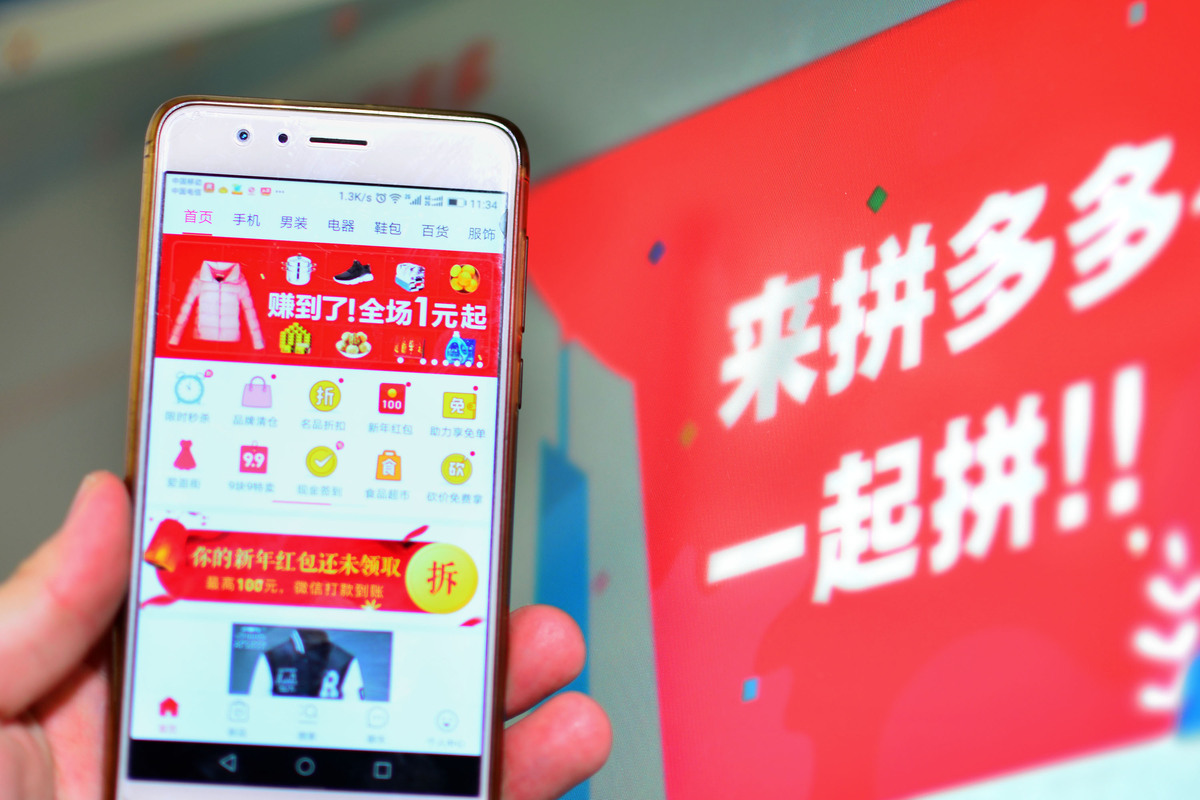
    Pinduoduo (PDD Holdings), a prominent e-commerce firm operating economical platforms in China and internationally, surpassed quarterly revenue expectations. However, its net income plummeted as a result of investments made to compete in an increasingly aggressive market.

    Share Performance and Economic Climate

    Shares of PDD Holdings, listed in the US, rose by 1%, with an 11% surge in premarket trading. This was spurred by the company executives’ remarks about escalated investments leading to fluctuations in its short-term financial performance. Concurrently, the Chinese government is implementing strategies to stimulate domestic consumer spending, aiming to rejuvenate a sluggish economy grappling with multiple challenges. These include a languid property sector and ongoing international trade issues resulting from US policies.

    In an effort to invigorate demand, e-commerce giants such as Pinduoduo, JD.com, and Alibaba have turned to deep discounts and promotional offers, inadvertently triggering a price war. Alongside the obligation to maintain low prices in China, PDD’s profit margins have recently suffered due to a multibillion-dollar investment in merchant support programs and elevated costs related to international shipping driven by US tariffs.

    Increased Spending and Intensified Competition

    PDD’s second-quarter earnings revealed an upsurge in spending on various fronts, from server costs to sales and marketing expenditures. This is part of the firm’s strategy to enhance its ecosystem for both merchants and consumers. Jiazhen Zhao, co-CEO of PDD, noted that the recent spike in industry competition has decelerated their revenue growth and substantially reduced operating profit.

    The company expects profit levels from this quarter to be unsustainable, anticipating irregularities in future quarters’ profits. To ameliorate these pressures, PDD’s international platform, Temu, has been promoting products situated in US warehouses and is striving to engage more local sellers. However, it continues to face stiff competition from Amazon, which leverages its extensive scale to secure advantageous pricing from suppliers.

    Changing Business Model and Consumer Perception

    In response to these challenges, Temu is transitioning to a “fully-managed” model, allowing it to exercise greater control over product selection, pricing, and logistics. The platform aims to utilize its substantial supply-chain network to maintain competitive prices. However, a recent survey by an online marketing firm revealed that 30% of American shoppers have noticed price increases on Temu.

    Despite these obstacles, PDD’s revenue experienced a 7% increase, reaching 103.98 billion yuan ($14.53 billion) for the quarter ending in June, surpassing analysts’ predictions. Meanwhile, its operating profit dropped by 21%. Adjusted earnings per American depository share stood at 22.07 yuan, exceeding the projected 15.74 yuan.

    Questions & Answers

    How did PDD’s shares perform recently?
    PDD’s US-listed shares witnessed a 1% increase, driven by an 11% surge in premarket trading triggered by company executives’ comments on future investments.

    What impacts did increased spending have on PDD’s second-quarter earnings?
    PDD’s second-quarter earnings showcased a rise in expenditures across various areas, leading to a slowdown in revenue growth and a significant reduction in operating profit.

    How is PDD’s international platform, Temu, responding to market pressures?
    Temu is transitioning to a “fully-managed” model to exert more control over product selection, pricing, and logistics. The platform aims to use its large supply-chain network to keep prices low, despite facing competition from global e-commerce giant Amazon.

  • China Implements Ban on Excessive Discounting Practices by Online Retailers to Promote Fair Competition

    China Implements Ban on Excessive Discounting Practices by Online Retailers to Promote Fair Competition

    In a decisive move signaling a shift in China’s retail landscape, authorities are gearing up to impose stricter regulations on online retail platforms that have been compelling third-party merchants into a relentless price-cutting frenzy. This comes as part of an updated unfair competition law, set to take effect on October 15.

    Under the revised legislation, online retailers will face prohibitions against pressuring vendors to sell products and services at prices below their cost. Moreover, any actions that “disrupt market order” will also come under scrutiny. This change aims to protect smaller merchants from the aggressive tactics employed by larger platforms that have historically prioritized profit margins over fair competition.

    This announcement reflects growing concerns about the sustainability of the retail environment in an era where price wars can lead to significant losses for vendors and a decrease in the overall quality of products available to consumers. As the race to the bottom intensifies, many are left wondering: who really wins? Perhaps it’s time for a check-up on the retail pulse, as the law attempts to balance the scales in favor of fair trading practices.

    With the clock ticking down to the law’s implementation, the retail sector is buzzing with anticipation. Will this reform change the game for how business is conducted online? Only time will tell, but one thing is clear: the days of reckless discounting might just be numbered.

    Questions & Answers

    What does the amended unfair competition law entail?
    The law prohibits online retailers from forcing third-party merchants to price their products below cost and engaging in practices that disrupt market order, effective October 15.

    What is the aim of these new regulations?
    These regulations aim to create a fairer retail environment, protecting smaller merchants from aggressive pricing strategies employed by larger platforms.

    How might this law impact consumers?
    While consumers may see some initial price increases as vendors adjust, the law could ultimately lead to a more stable market with improved product quality and service levels.

  • Vietnamese Retailers Sprint to Enhance In-Store Experience Amid Growing Competition

    Vietnamese Retailers Sprint to Enhance In-Store Experience Amid Growing Competition

    Vietnam’s retail landscape is flourishing, driven by a burgeoning middle class and a spirited demand for both online and in-store shopping experiences. As e-commerce is projected to soar to an impressive US$50 billion by 2025, it’s clear that physical retail remains at the heart of the consumer experience—and retailers are eagerly adapting to capitalize on this trend.

    Retail Expansion: A Booming Landscape

    Last year, Vietnam’s total retail sales reached around US$260 billion, buoyed by rising incomes and a rapidly growing middle and affluent class, according to Luan Nguyen, Principal at Boston Consulting Group (BCG). He noted, “By 2030, the middle and affluent classes are expected to account for 50% of Vietnam’s population, a figure 1.5 times greater than today.” This rising consumer base is prompting both domestic and international retailers to ramp up their presence throughout the country.

    A Wave of New Retail Formats

    Nguyen points out the sprawl of new supermarkets, convenience stores, and shopping malls emerging from urban centres to rural locales. He highlights, “With urbanization and enhanced retail infrastructure, we have a perfect recipe for robust offline retail growth.”

    Smart Pricing Strategies in a Competitive Market

    In this highly price-sensitive environment, Vietnam’s retailers are honing their pricing and promotional strategies. Reflecting on consumer habits, Nguyen remarked, “Vietnamese shoppers are price-conscious and always on the hunt for promotions.” A recent BCG survey revealed that an impressive 44% of customers actively seek promotions when contemplating major purchases.

    “It’s not just about low prices everywhere,” he elaborated. “With AI, we can simulate demand, which ultimately enhances our return on investment.”

    Elevating the In-Store Experience

    As competition heats up, the emphasis on in-store experience is becoming paramount. Nguyen asserted, “Retailers need to create an engaging in-store environment to entice customers back.” He mentioned the rise of in-store amenities like cozy mini coffee shops offering free Wi-Fi and ready-to-eat meals integrated into the shopping experience.

    Moreover, large retailers are investing in child-friendly play zones and hosting regular community events. “These added elements foster a community feeling that online shopping simply can’t replicate,” he noted.

    In an age where online shopping is just a click away, could the tactile pleasures of in-person shopping spark a revival in brick-and-mortar retail? Who knows, maybe the return of the shopping mall could become the next big trend in retail tourism!

    Questions & Answers

    What is driving the growth of Vietnam’s retail market? The growth is largely fueled by a young, affluent population and increasing demand for both online and offline shopping experiences.

    How significant is the role of promotions in Vietnamese retail? Promotions play a crucial role, with 44% of consumers actively seeking them before making significant purchases.

    What differentiates the in-store experience in Vietnam’s retail landscape? An enhanced in-store experience, including amenities like coffee shops, free Wi-Fi, and community events, creates a welcoming atmosphere that online platforms struggle to replicate.

  • Amazon Surpasses eBay as Leading Australian Marketplace for First Time

    Amazon Surpasses eBay as Leading Australian Marketplace for First Time

    In an industry first, Amazon has overtaken eBay to become the leading marketplace in Australia according to new research from global ecommerce accelerator, Pattern.

    Marketplace shopping has also become mainstream in Australia, with research highlighting 93% of people shopped on a marketplace in 2023 and 94% plan to buy from platforms like Amazon, Catch, Temu, and eBay over the coming year.

    The findings were revealed as part of Pattern’s sixth annual Marketplace Consumer Trends Report – 2024,’ which researched Australian shoppers’ changing ecommerce habits and the latest marketplace trends.

    Australian marketplace sector experiences major disruption

    The Australian marketplace sector is expanding and being disrupted. Emerging platforms Temu and Shein have rapidly gained significant market share, with 25% of shoppers buying from Temu and 21% from Shein, while established platforms like Catch and eBay underperformed in 2023.

    Amazon has grown to become the dominant local marketplace and is projected to reach $5.5 billion in Australian turnover by the end of the current financial year. Amazon now outperforms all other marketplaces on average monthly site visits, including eBay by a significant 48% over the last three months of 2023, to achieve an average of 75.2 million monthly site visits.

    “New marketplace entrants into Australia, like Temu, are shaking-up the sector and quickly attracting consumer interest. However, it’s expected that Amazon’s leading market position will only grow, as the platform wins shoppers with competitive prices, the widest product range and ease-of-use shopping via Prime,” said Merline McGregor, General Manager, Pattern Australia.

    Amazon is also on track to achieve the highest growth rate of any marketplace in 2024, with 63% of Australians planning on buying from the site (+6% annual growth) compared to a projected 8% decrease in people planning to buy from eBay. Notably, 80% of shoppers who were in the $200k income bracket bought on Amazon, reflecting its strong reach among higher-income consumers.

    Ecommerce shopping habits evolve in the face of cost-of-living challenges

    Despite the increased pressure on Australian consumers’ discretionary spending, research shows that shoppers will continue to buy online. The ecommerce market is projected to reach AU$64.14bn this year, with the share of retail goods purchased online set to increase from 15.6% in 2023 to 17% by the end of 2024.

    Nevertheless, cost-of-living pressures will impact consumer budgets in 2024, with many looking to stabilise their retail spending. This is represented by a significant decline (-29%) in those intending to spend more online this year.

    “With cost-of-living pressures and an uncertain economic outlook, many consumers will cut costs and evolve their shopping habits this year. For instance, shoppers are more likely to take advantage of major sales events, following a 20% growth in consumer participation in Black Friday / Cyber Monday in 2023. Research also shows that shoppers are opting to visit retail stores for a hands-on evaluation of products. This trend suggests a more thorough pre-purchase assessment, evidenced by a notable 36% decrease in consumers intending to buy products online that can typically be found in-store,” observed McGregor.

    The evolution of product discovery

    Google’s product search supremacy is slipping, with a year-on-year decrease in the percentage of people using it to research products. Shoppers are now also going direct to retailers for inspiration (+6%), along with marketplaces, such as Amazon, which has grown by 59% in popularity. However, marketplaces rising as a research tool is not uniform, with eBay dropping by 19%.

    “Marketplaces today have an abundant volume of goods for consumers to search. These platforms build confidence with shoppers to research and purchase new products through enhanced transparency and credibility. This is achieved by providing real-world product reviews and informative answers to product page questions,” said McGregor.

    What products will consumers buy from which marketplace in 2024?

    Pattern’s research asked consumers what they were likely to buy in 2024 and through which marketplace, with the results indicating:

    • Amazon’s key shopper categories are Books & eBooks (26%), Electronics & Computer (24%) and Home & Kitchen (24%).
    • eBay is competitive across a range of categories, including Electronics & Computer (17%), Home & Kitchen (16%) and Clothes, Shoes & Accessories (16%).
    • Catch is popular for Toys, Kids & Baby (12%), Home & Kitchen (10%).
    • Kogan will remain strong in Electronics & Computer (11%), Home & Kitchen (9%).
    • Shein is set to grow through Clothing, Shoes & Accessories (16%).
    • Temu attracts shoppers with Clothing, Shoes & Accessories (10%), Home & Kitchen (7%).
    • My Deal’s sales will come from Home & Kitchen (5%) and DIY Home Improvement (4%).

    “The popularity of key product categories across marketplaces is linked to numerous sellers offering similar items which brings about fierce competition, ongoing promotions, and aggressive pricing. In this dynamic and challenging landscape, brands must implement an effective marketplace strategy and collaborate with the right partners to attract business and thrive,” concluded McGregor.

    For more information and to download the full report please click here: Australian Marketplace Consumer Trends Report – 2024

    Latest research from Pattern reveals current Australian consumer trends, with 94% of shoppers to buy from a marketplace over the coming year


  • Apple manipulated App Store search to favor its own apps over the competition

    Apple manipulated App Store search to favor its own apps over the competition

    Back in 2019, after investigations done by the New York Times and the Wall Street Journal, it appeared that Apple was ranking its own apps ahead of competitors’ similar apps in the App Store search feature. This is an issue that lawmakers are seriously concerned with and it has been associated with other companies that sell their own products alongside third-party brands such as Google and Amazon. Apple denied that it had done anything wrong. The company pointed to a secret algorithm it uses with 42 variables to prevent it from manipulating the App Store search results.

    But now it appears that Apple did boost App Store search results. Email that was released during the Epic vs. Apple lawsuit showed that the tech giant apparently admitted that it had boosted the placement of its own Files app above listings for the competition during a time period that lasted 11 months. Apple app search lead Debankur Naskar hinted that some hanky panky was going on at Apple when he wrote in an email “We are removing the manual boost and the search results should be more relevant now.”

    Naskar was responding to an email from Epic Games CEO Tim Sweeney who was a major Apple partner at the time. Sweeney had “confronted” Apple after the latter’s Files app landed first in the App Store’s search results when he searched for Dropbox. While you might not be able to tell the executive’s tone from written words, you can imagine Sweeney sounding incredulous when he emailed Apple to say that “Dropbox wasn’t even visible on the first page of search results.”

    Apple explained away the issue by telling The Verge that its Files app had a Dropbox integration. Thus, Apple included “Dropbox” in the metadata for its Files app and as a result, Files was always ranked ahead of Dropbox. This response doesn’t match Naskar’s comments about “removing the manual boost.”

    Dropbox has been a problem for Apple going back to 2009 when then Apple CEO Steve Jobs said that iCloud would help kill off Dropbox after Jobs could not convince Dropbox CEO Drew Houston to sell what was then a start-up company to Apple.

    One engineer at Apple changed the algorithm for App Store search in July 2019 dropping the placement of Apple’s own app in the search results. The New York Times back in September 2019 showed how those searching the App Store for “music” would see streamer Spotify at the top of the list with Pandora eighth. Repeating the same search in 2016 resulted in Apple Music appearing at the top of the list with Spotify fourth.

    Two years later, the top six results under “music” consisted of Apple’s own music-based apps. Pandora remained in eighth place. By December 2018, the first eight search results were all for Apple’s own apps, some unrelated to music: (Apple Music, Garage Band, iTunes Remote, Music Memos, Logic Remote, iTunes Store, iMovie, Clips) while Spotify was number 23.

    After Spotify complained to European regulators, the results for April 2019 were much different with iTunes and Apple Music numbers 1-2, but with Spotify fourth and YouTube Music fifth. Apple had no other apps appearing under a search in the App Store under “music.”

    Apple released a statement to The Verge that says, “We created the App Store to be a safe and trusted place for customers to discover and download apps, and a great business opportunity for all developers. App Store Search has only one goal — to get customers what they are looking for. We do that in a way that is fair to all developers and we do not advantage our apps over those of any developer or competitor. Today, developers have many options for distributing their apps and that’s why we work hard to make it easy, fair and a great opportunity for them to develop apps for our customers around the world.”

  • Global Vans shoe design competition kicks off

    Global Vans shoe design competition kicks off

    Sports shoe & apparel brand Vans is launching its interactive “Vans shoe customisation competition”, designed to inspire artists around the world.

    The Global Custom Culture competition aims to provide the means for self-expression through digital and canvas mediums unique to Vans. This is the inaugural year of the Vans shoe customization competition, encouraging artists from around the world to turn a pair of classic Vans shoes into their personal art piece.

    The contest will award three winners – one each from Asia Pacific, North America and Europe –  a US$25,000, and the designers will have their shoes produced and sold by Vans, experience a trip to the Vans design headquarters in Southern California, and have the opportunity to partner with Vans to donate $100,000 to a charity that will further enable creative communities.

    “Our goal through Vans Global Custom Culture is to create a platform that is accessible to everyone,” said Vans senior director of global brand marketing April Vitkus. “A barrier to creativity is having access to the tools needed to create something unique, and as a brand it’s our purpose and commitment to provide a range of platforms to empower and enable individuals.”

    The public will have the chance to vote for their favorite design submissions, helping determine the top 10 finalists from each geographic region, in early October. Once the top 10 have been selected, the Vans shoe customization competition finalists will receive a pair of Era shoes to apply a new design onto Vans’ literal canvas. The top 10 will be announced on December 5, where all the artist’s creations will be displayed online for a public vote.

    On December 19, Vans representatives from the design and marketing teams, as well as selected art ambassadors, will choose one grand prize winner in each region.

    Throughout the month of September, Vans will host creative workshops, as a way to participate and support competition participants in a collaborative environment.

  • Starbucks China sales grow – with a but

    Starbucks China sales grow – with a but

    Net revenues for Starbucks China and Asia-Pacific region soared 45 per cent in the first quarter to US$1.2 billion. While a change of ownership in the East China business at the end of the first quarter of the previous year boosted the figure, the company says the opening of a net 1010 stores during the 12 months – a 13 per cent increase in the network – and a 3 per cent increase in same-store sales also played a part.

    First-quarter Starbucks China operating income rose 13 per cent to US$225.1 million, from $196.8 million. But the company’s operating margin declined 530 basis points to 18 per cent, primarily due to the impact of the East China ownership change.

    CEO Kevin Johnson said the company delivered solid operating results in the first quarter, demonstrating continued momentum in the business, as it drives a growth-at-scale agenda “with focus and discipline”.

    “Comprehensive efforts to streamline our business have allowed us to focus on three key strategic initiatives that position Starbucks for long-term success: accelerating growth in our targeted markets of the US and China, expanding the global reach of the Starbucks brand through our Global Coffee Alliance with Nestle, and increasing shareholder returns.

    “Combined with our efforts to build and amplify the Starbucks brand, we expect these initiatives will position the company to drive predictable, sustainable growth and shareholder returns for years to come,” concluded Johnson.

    In the 13-week first quarter, which ended December 30, global comparable-store sales increased 4 per cent, driven by a 3 per cent increase in the average sale. Americas and US comparable-store sales increased 4 per cent, with transaction numbers flat.

    China-Asia-Pacific comparable-store sales increased 3 per cent, including 1 per cent transaction growth, with China comparable-store sales up 1 per cent, but the number of transactions down 2 per cent.

  • India’s Reliance to take on Walmart and Amazon online

    India’s Reliance to take on Walmart and Amazon online

    South Asia’s richest man Mukesh Ambani is establishing an e-commerce platform to compete with Walmart and Amazon in India. The Reliance Industries chairman will roll out services in Gujarat before extending them nationwide. “Jio and Reliance Retail will launch a unique new commerce platform to empower and enrich our 1.2 million small retailers and shopkeepers in Gujarat,” said Ambani.

    Reliance introduced the 4G Jio network in September 2016, a market disruptor with its free voice calls and cheap data plans. Its move into e-commerce will aggravate an already cut-throat battle between market leader Flipkart, owned by Walmart, and Amazon’s services in the territory.