Retail News CRM

Tag: containers

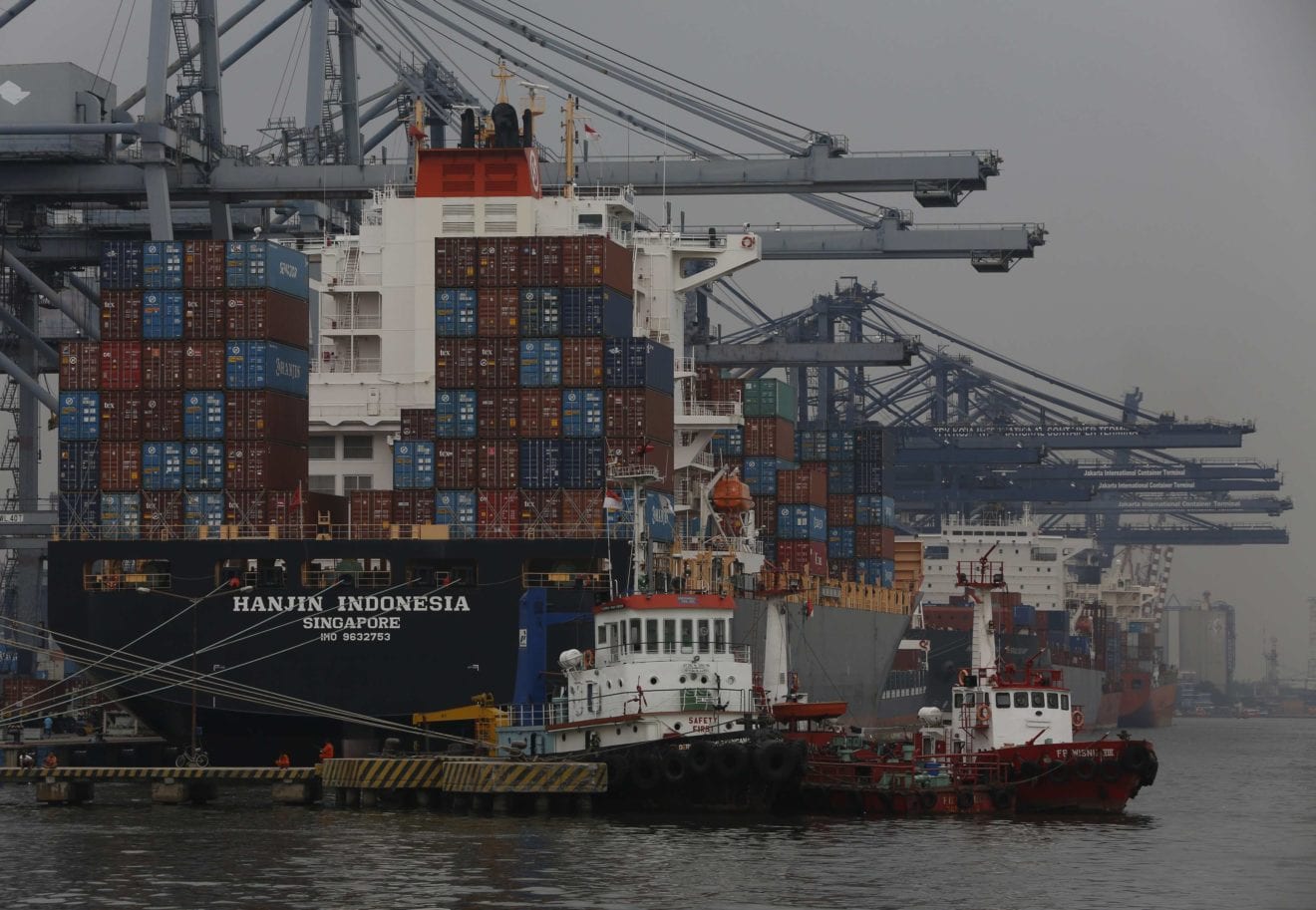
  • Giant ships begin to make a call at Jakarta’s Tanjung Priok

    Giant ships begin to make a call at Jakarta’s Tanjung Priok

    PT Jakarta International Container Terminal (JICT) in Tanjung Priok said it has entered a new era when it succeeded in serving a giant ship, the Otello of Frances Compagnie Maritime dAffretement – Compagnie Generali Maritime (CMA-CGM).

    “The ships of CMA-CGM are the largest ever making a call at Tanjung Priok,” Chief Executive of JICT, Gunta Prabawa, said here on Monday.

    Earlier, JICT was similarly successful in providing fast services for 2 other giant ships of CMA CGM – the Titus and Tancredi – with port productivity at the JICT of 27-30 Mph.

    Gunta described the visits by the giant ships as a new era of the appearance of more giant ships at the Jakarta port indicating that JICT has been ready to provide world class port services.

    “Global shipping companies have allowed their ships to berth at Tanjung Priok as they have confidence in our services,” Gunta said.

    The 334 meter long Otello had unloaded 1,551 TEUs of container goods at Tanjung Priok, he said.

    He said CMA-CGM has reached an agreement with PT JICT by opening new shipping service called the Java South East Asia Express Services/ Java SEA Express Services/ JAX Services.

    The weekly service will take the route of Tanjung Priok – West Coast (Los Angeles & Oakland) of the United States.

    “The first service of JAX Services began on 9 April, 2017 by the Titus of CMA-CGM. Indonesian exporters and importers are expected to utilize the service,” Gunta said.

    Earlier this month, President Joko Widodo said large ships would began to berth at Jakartas Tanjung Priok port after continued improvements in services by the port operator.

    “Soon or next week there will be a ship measuring 10,000 TEUS to call at Tanjung Priok,” Jokowi said when officially commissioning an access toll road to the countrys largest port.

    The president attributed the success in attracting large ships to Tanjung Priok to improved service including a significant cut in dwelling time.

    The dwelling time, needed for unloading, has been cut short to 3.5 days now from earlier up to six days. Long dwelling time had discouraged ships from making a visit to Tanjung Priok as it would mean losing time and an increase in berthing fee.

    The president himself stepped in to improve services, cut the red tape and simplify all procedures that reduce illegal levies earlier rampant at the port.

    The president said he hoped improvement in the port service would make Indonesia more competitive and the seas transport cost would be cheaper to and from Indonesia as large cargo ships could sail directly to and berth at Tanjung Priok.

    “The flows of goods could be much faster via Tajung Priok. Transit is no longer needed for imported container cargoes in Singapore,” he said, adding large container ships could be berthed at Tanjung Priok.

    Previously large ships carrying container goods for Indonesia have to make a transit in Singapore to unload the cargo to be loaded gain on smaller ships as Tanjung Priok could not yet accommodate large container vessels.

    The new access road would contribute to improving services at the port , Jokowi said, adding “This also helps improve the countrys competitiveness.”

    He said an estimated 3,600 containers would be transported via the 11.4 kilometer access road everyday.
  • Papua releases export containers to China

    Papua releases export containers to China

    The Papua provincial government, facilitated by the Indonesian ship management PT. Pelindo IV, has released 100 containers of forest products to China.

    President Director of PT Pelindo IV, Doso Agung, said in a statement received by ANTARA here on Tuesday that the exported containers released by the Governor of Papua, Lukas Enembe, along with the Board of Directors of Pelindo IV, is expected to bring in a revenue to Rp20 billion (or about US$1.5 million).

    Doso stated that Pelindo IV will continue to carry direct export to transport Papua’s commodity crops to a number of countries.

    “Direct export is expected to stimulate the economy in regions where the Pelindo IV operates. We will boost the direct exports, particularly in the ports managed by Pelindo IV,” he noted, adding that the Papua provincial administration will provide ships from Australia to open seaweed markets.

    The release event was followed by a groundbreaking of the Jayapura seaport extension development in order to increase the capacity of the port.

    Enembe appreciated Pelindo IV for engaging in direct overseas export.

    Lukas hoped the direct export will immediately open up overseas market for Papuas commodities, and the area can attract investors.

    He also hoped that the direct export would not only include forest products but also other commodities in Papua such as coffee, cocoa, and fisheries.

  • Logistics association to assist in national plan on competitiveness

    Logistics association to assist in national plan on competitiveness

    The Vietnam Logistics Association (VLA) on Wednesday launched a ceremony to implement the Government’s first national action plan to improve the country’s competitiveness and its logistics sector by 2025.

    Lê Duy Hiệp, VLA chairman, said that VLA had been assigned to complete several tasks of the plan.

    In February, Prime Minister Nguyễn Xuân Phúc approved the action plan, which aims to have the logistics sector contribute 8 to10 per cent to the country’s GDP, with annual growth of 15-20 per cent by 2025.

    The plan also calls for Việt Nam to become one of the world’s 50 leading logistics services providers.

    The plan recommends new policies, more investment in infrastructure development, and better co-operation between local and foreign logistics companies.

    The aim is to have logistics companies that can be competitive in both domestic and international markets.

    Under the plan, Việt Nam will enhance connectivity with neighbouring countries and develop regional and international hubs.

    The plan calls for building level-1 logistics hubs (the highest level) in Hà Nội and HCM City, and level-2 logistic centres in Lạng Sơn, Lào Cai, Hải Phòng, Đà Nẵng, Quy Nhơn, and Cần Thơ.

    Trần Thanh Hải, deputy director of the Ministry of Industry and Trade’s Import-Export Department, said the country’s logistics development has been modest, as there are only 1,300-1,500 firms in the sector.

    More than 70 per cent of the businesses are small- and medium-sized with average capital of about VNĐ7 billion (US$320,000).

    “The country’s logistics effectiveness has been low, while available resources have not been fully exploited,” Hải said.

    The action plan would provide short- and mid-term solutions to improve the logistics sector in the next seven or eight years, he added.

    The initiatives taken by the Government to strengthen the logistics industry and increase efficiency have been supported by industry insiders.

    Christoph Matthes, managing director of logistics firm DB Schenker in Vietnam, said, “We strongly support the plan as the logistics has become more important than ever before.”

    In addition, increasing consumer demand requires a faster and more reliable way of delivery of goods.

    For many customers, logistics is no longer a matter of moving boxes from one location to another, but creating a highly efficient and reliable supply chain which enables them to be competitive in a fast-changing world.

    International trade is growing rapidly as well, and thus, a need to connect to other markets via air, ocean and road freight.

    Some of the largest export markets for Vietnam include the ASEAN region and Europe, where Việt Nam competes with other countries and where logistics costs play a vital role.

    Trade with Europe is expected to increase with the EU-Việt Nam Free Trade Agreement (EVFTA) coming into force next year.

    Experts said more steps were needed for smooth implementation of the agreement and to make sure businesses can fully benefit as soon as the treaty takes effect.

    The commitment of the Vietnamese Government to strengthen the logistics sector is an important step towards making this possible.

    Nestor Scherbey, general director of logistics firm Customs, Trade and Risk Management Services Ltd Việt Nam, said the national action plan would play a critical role in raising competitiveness.

    Logistics costs in Việt Nam are among the world’s highest, at 25 per cent of GDP, which hinders the cost competitiveness of Vietnamese firms, according to Logistics Insight Asia.

    Logistics costs in the US, Europe and the rest of the world are around 9, 13, and 15 per cent, respectively.

    “The efforts necessary to achieve a national action plan for logistics must be undertaken in co-ordination with diligent efforts by Việt Nam to implement the commitments of the World Trade Organisation Trade Facilitation Agreement (WTO TFA),” Scherbey said.

    Many of the major commitments of the WTO TFA were contained in the Trans-Pacific Partnership (TPP) and EVFTA.

    Full implementation of trade facilitation by Việt Nam would reduce the country’s international trade transaction costs by 20 per cent.

    “It is the combination of the benefits of trade facilitation, with the benefit of reducing domestic logistics costs, that will allow Vietnamese products to become fully competitive in global markets,” he said.

  • EU expects free trade pact with Vietnam to take effect early 2018

    EU expects free trade pact with Vietnam to take effect early 2018

    The European Union is trying to capitalize on free-trade interest amid gloom over Trump policies.

    The European Union is seeing increased impetus around the world to move forward with Free Trade Agreements (FTA) with the bloc, which will make the most of uncertainty over the outlook for U.S. trade policy, the EU’s trade envoy said late last week.

    The EU was close to finishing or implementing FTAs with Japan, Vietnam and Singapore and was readying to start talks with Australia, New Zealand and Chile – all members of a U.S-inspired Trans-Pacific Partnership (TPP) devastated by Donald Trump’s decision to pull Washington out of the deal on day three of his presidency.

    “Today, there is political opportunity to say that those of us who believe in open markets and good trade, we are willing to do trade agreements,” EU Trade Commissioner Cecilia Malmstrom told in an interview.

    “Whether that (TPP) is dead, or partially dead, it is not for me to judge. But we have seen an increase of willingness to step up trade agreements.”

    One project thrust back on the table is an FTA between the EU and the Association of Southeast Asian Nations (ASEAN) that was abandoned in 2009 due to disparities in wealth and standards between its 10 markets.

    Malmstrom also said it should not be assumed an EU-U.S. trade deal had collapsed, despite indications the Trump administration would pursue a protectionist agenda.

    EU and U.S. officials were negotiating for more than three years on a Transatlantic Trade and Investment Partnership (TTIP) and that could be easily resumed, she said, and should not be impacted by Britain’s looming departure from the EU.

    “We have left in a tidy order, when we stopped negotiating before the change of administration,” she said. “It makes a lot of sense to facilitate trade between the EU and the U.S.”

    She added: “We need to be patient. But while waiting for more clarity from the American administration, there are lots of other partners as well.”

    Malmstrom said ASEAN, a region with combined $2.6 trillion GDP and some of the world’s fastest-growing economies, had become integrated “in an impressive way.”

    EU figures show trade between the EU and ASEAN region was worth $220 billion last year. The EU is its biggest source of investment, according to the EU-ASEAN business council.

    FTAs with Vietnam and Singapore should come into force early next year, Malmstrom said, while negotiations with Indonesia and the Philippines were “at full speed” and discussions had taken place about reviving plans for an FTA with Malaysia.

    Malmstrom said establishing a bloc-to-bloc trade deal would be a challenge, so an FTA with ASEAN might be less comprehensive that others.

    “There’s still a lot of differences between the richest and poorest countries here, so there will have to be different levels and it will not be as ambitious,” she said.

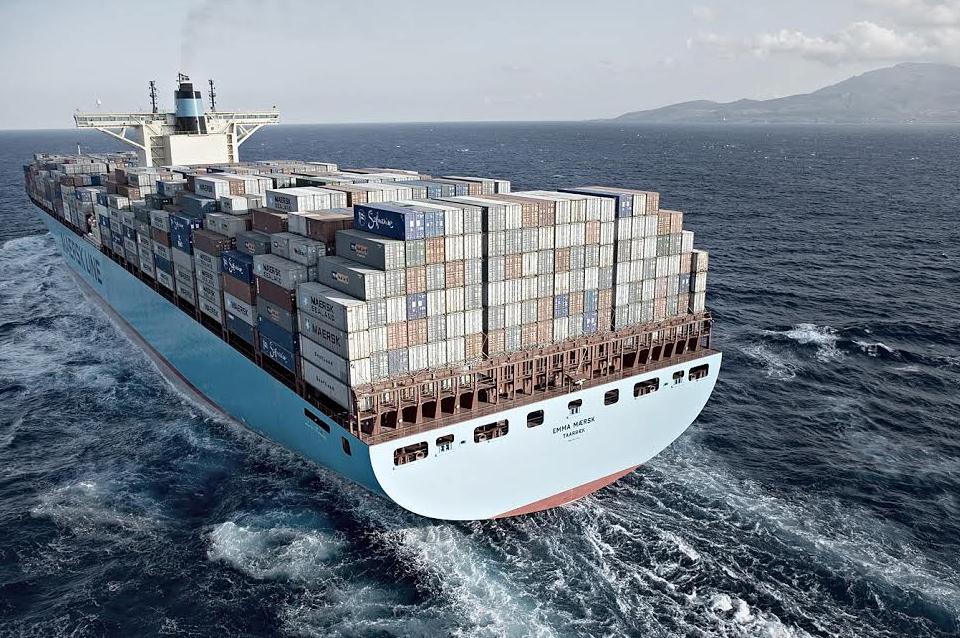
  • Maersk Line has ordered 14,800 additional refrigerated containers, to be delivered in 2017.

    Maersk Line has ordered 14,800 additional refrigerated containers, to be delivered in 2017.

    According to Maersk, which already has a reefer fleet of more than 270,000 containers, some of the new ones will be used as replacements while the rest will be used for expansion.

    “We continue to invest and modernize our reefer fleet to include the latest technologies in supply chain visibility and cargo care,” said Shereen Zarkani, head of reefer management at Maersk Line. “With the new equipment we will offer even stronger products across the reefer portfolio – enhancing transparency and care to our customers’ perishable products across Maersk Line’s extensive network.”

    The new reefers will offer enhanced data visibility and care to customers.

    The investment will lower the average age of the line’s reefer fleet to 7.9 years, according to Maersk.