Retail News CRM

Tag: credit

  • Personal consumer credit becoming lucrative business

    Personal consumer credit becoming lucrative business

    FE Credit is leading the consumer finance market with $1.4 billion worth of loans provided in 2016, accounting for 48 percent of market share.  Its rivals, Home Credit, HD Saison and Prudential, hold 15.7 percent, 12.2 percent and 8.1 percent, respectively, according to StoxPlus. The other well-known names in the market are Mirae Asset Finance, JACCS and Toyota finance.

    The consumer finance market has become bustling thanks to high demand from borrowers and readiness by commercial banks and finance companies. Since customers are in both large cities and rural areas, it is easy for finance institutions to expand the market and disperse risks.

    Lending to fund personal consumption is lucrative, which accounts for 42.5 percent, followed by lending to fund household goods (28 percent), and transport means (19.6 percent).

    Regarding the growth rate, lending to fund transport purchases and house upgrading witnessed the highest growth rate of 42 percent each in 2016.

    Business Monitor International (BMI) predicted that the consumer finance market would perform well in 2016-2019, as personal income has growth rate of 13.2 percent per annum.

    Also according to BMI, consumer finance targets people of working age, expected to reach 56.2 million by 2020. The figure was 54.4 million in 2015.

    The consumer finance assets were reported as making up 12.4 percent of total assets in 2016.

    By the end of the year, the finance consumer value had reached VND598.5 trillion, an increase of 30 percent over 2015. This included VND453.1 trillion worth of loans provided without mortgaged asset requirement.

    Consumer finance in Vietnam in 2016 made up 9.8 percent of GDP. Meanwhile, the figure was 320 basic points higher in regional countries.

    Regarding credit types, the cash is predicted to decrease from 89 percent in 2016 to 81 percent of total outstanding loans by 2019 as the market share will fall into credit cards.

    Regarding the market structure, consumer finance is undertaken by retail banks and finance companies. Commercial banks tend to set up subsidiaries specializing in consumer finance or to take over existing companies.

    MB Bank in March 2016 took over Song Da Finance Company (SDFC) and renamed it MCredit. Later, in November 2016, after joining hands with Shinsei Financial from Japan, MCredit once again changed its name to MB Shinsei with 51 percent of capital contribution from MB Bank.

    In recent years, Vietnam has not granted licenses to companies providing only consumer finance services, which was a barrier to market admission.
  • Credit growth expected to rise 16.33% in 2017

    Credit growth expected to rise 16.33% in 2017

    The total loans of the banking system are expected to grow by 16.33 per cent in 2017 against December last year, lower than the Government’s limit of 18 per cent.

    The State Bank of Viet Nam released the information this week after conducting a survey on business performance trends of credit institutions in the second half of this year.

    The survey also shows that credit institutions forecast the total capital mobilisation of the banking system to rise 16.02 per cent in 2017, of which dong contributes to a rise of 16.59 per cent and foreign currency 1.14 per cent.

    The General Statistics Office (GSO) has reported that credit growth in the first half of this year was 7.54 per cent, the highest in the past six years. The new record, considerably higher than the previous record of 6.28 per cent set in 2015, reflects the market’s significantly improved capacity to absorb capital, the GSO said.

    Loans in the period were mainly focused on prioritised and large projects as instructed by the Government, accounting for roughly 50 per cent of total outstanding loans. Agriculture and rural industries, and small- and medium-sized firms received around 19 per cent and 22 per cent of the total outstanding loans, respectively.

    Lending interest rates were 6-9 per cent per year for short-term loans, and 9-11 per cent per year for medium- and long-term loans. For customers with transparent finances, short-term lending rates ranged from 4-5 per cent per year.

    The banking system’s capital mobilisation in H1 has risen by 5.89 per cent, and deposit interest rates have been relatively stable. Interest rates for dong deposits were 4.5-5.4 per cent per year for short term, 5.4-6.5 per cent per year for medium term, and 6.4-7.2 per cent per year for long-term deposits.

    The Government has targeted credit growth of 18 per cent for 2017, but at the National Assembly meeting recently, some deputies suggested that this limit be raised so as to support economic growth.

    Analysts at Bao Viet Securities (BVS) also recently forecast that the central bank may consider raising credit growth targets for several banks to aid economic growth.

    The Government has been under intense pressure to loosen its monetary policy as the country is determined to meet its GDP growth target of 6.7 per cent for 2017. However, the fiscal policy has been struggling with disbursement of public investment, the BVS analysts said in a report. By end of May, disbursement of public investments had touched VND88 trillion, equal to only 30.6 per cent of the entire year’s estimates.

    The BVS analysts said when fiscal policy does not support growth well, pressure will intensify on monetary policy. Increasing credit growth targets of several banks may be an option worth considering, the analysts said.

  • Indonesia’s Credit Growth in May Fueled by Abundant 3rd Party Fund Placement

    Indonesia’s Credit Growth in May Fueled by Abundant 3rd Party Fund Placement

    Indonesias banking credits grew 8.71 percent in May 2017, up 0.37 percent from 8.34 percent in the same month last year, according to the Financial Service Authority (OJK). However, the May 2017 credit growth fell 0.76 percent from 9.47 percent a month earlier.

    Although the banking credits in May 2017 grew at a slower pace than in April 2017, OJK believes the credit growth until May 2017 was still relevant to the business plans of banks which have set the target of credit growth for 2017 at 9-12 percent.

    “Compared to last year, it (the credit growth) is better,” Chief of OJKs Board of Commissioners Muliaman Hadad said at the Indonesia Stock Exchange (BEI) Building here on Tuesday.

    The May 2017 credit growth was fueled by abundant third party fund placement which grew by 11.18 percent year-on-year, he said. The amount of credits which were extended to the electricity sector grew 31.05 percent, the construction sector 24 percent, the fisheries sector 11.2 percent and the agricultural sector 10.8 percent.

    Muliaman noted that the expansion of four state-owned banks businesses contributed significantly to the credit growth.  The amount of credits extended by the four state banks, Bank Mandiri, Bank Rakyat Indonesia (BRI), Bank Negara Indonesia (BNI) and Bank Tabungan Negara (BTN), until May 2017 reached 14.81 percent, with third party fund placement growing 16.77 percent.

    However, the banking credit growth did not spread evenly as the amount of credits channeled by private banks grew 4-5 percent. The ratio of non-performing loans remained at 3.07 percent until May 2017.

  • AEON Launches “365 Days… Enjoy Shopping with AEON Credit Card”

    AEON Launches “365 Days… Enjoy Shopping with AEON Credit Card”

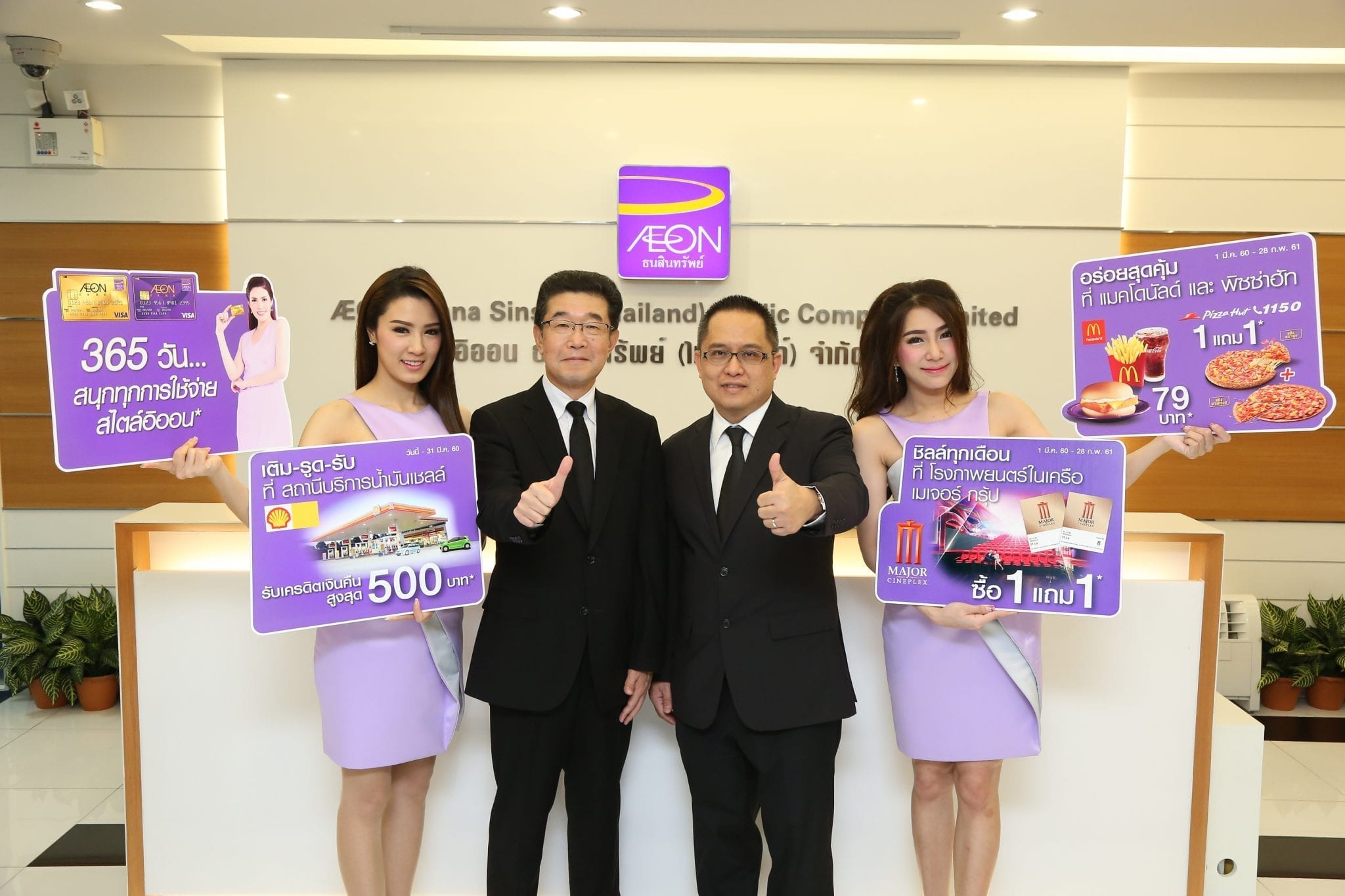
    Mr. Kiyoyasu Asanuma (left), Managing Director of AEON Thana Sinsap (Thailand) Public Company Limited, together with Mr. Nuntawat Chotvijit (right), Director of Marketing, AEON Thana Sinsap (Thailand) Public Company Limited, presided over the recent launch of “365 Days… Enjoy Shopping with AEON Credit Card” campaign. The campaign offers a range of special privileges to AEON Royal Orchid Plus Platinum cardholders, AEON Gold cardholders and AEON Classic cardholders throughout 2017. Cardholders will also be entitled to special promotions from AEON’s partners, including its newest partner, Pizza Hut.

    The first exclusive promotion available to all cardholders is a set of Extra Value Meals worth 79 baht from McDonald’s and a Buy One, Get One Free promotion from Pizza Hut when placing an order at the restaurant or using the delivery service. The second promotion entitles cardholders to a Buy One, Get One Free cinema ticket, or at a special price of 99 baht, when buying a cinema ticket at any Major Cineplex theatre.

    Moreover, for the third benefit, Get up to 500 baht cash back when spending an accumulated amount of 3,000 baht or over with AEON credit cards The fourth promotion entitles AEON credit cardholders to receive a 5% discount on items at MaxValu and MaxValu Tanjai every 1stand 15th of the month. The campaign runs from today until 28th February 2018.

  • Korean firm enters Indonesian credit card market

    Korean firm enters Indonesian credit card market

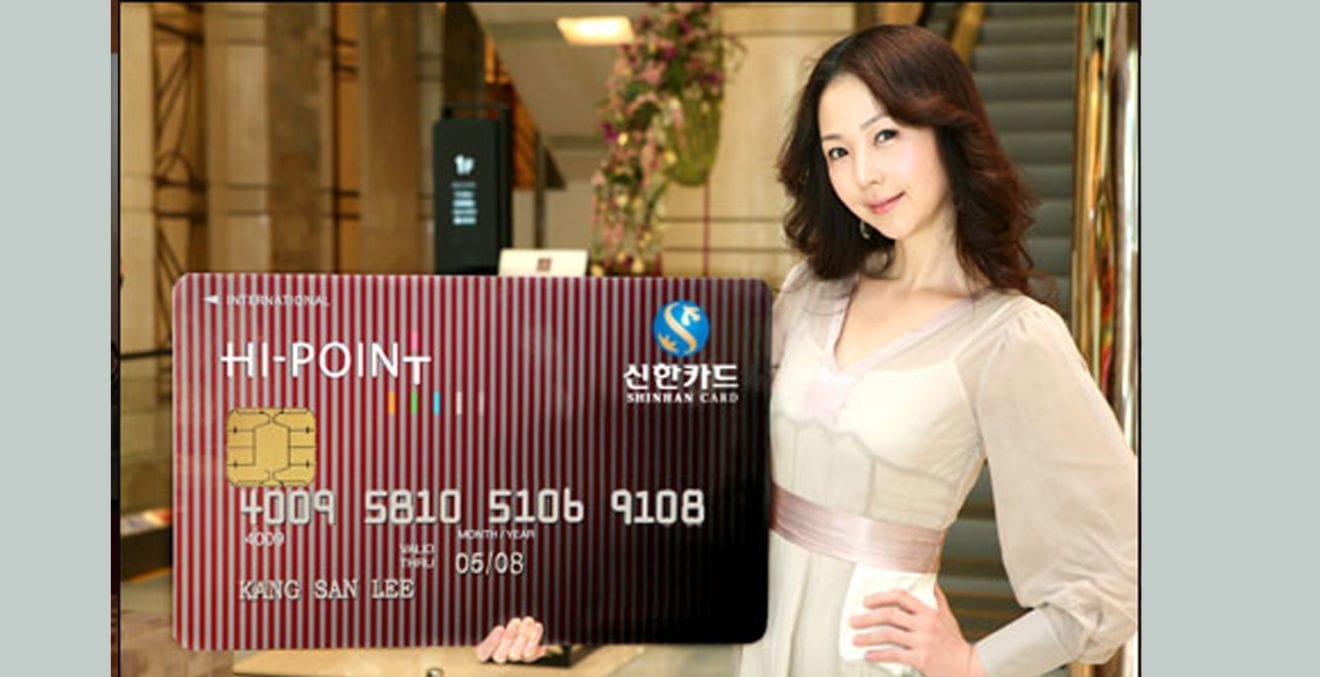
    Shinhan Indo Finance Ltd (SIF), a subsidiary of South Korean credit issuer Shinhan Card, has launched its first credit card on the Indonesian market.

    The “ShinhanIndo Card Hi-Cash” comes in four different types to reach consumers from all segments, especially the millennials.

    In developing its credit card business, SIF is cooperates with Indo-Pack, merchants under Indomobil Group, and K-Pack, merchants from South Korean companies, the company’s vice president Tan Kim Piauw told a press conference after the launching event on Monday.

    SIF was established in December 2015 as a multi-finance joint venture between the Korean credit issuer and two Indonesian firms, Indomobil Group and Asuransi Central Asia (ACA).

    The joint venture obtained permits to issue credit cards from the Financial Services Authority (OJK) and Bank Indonesia in December last year.

    In its initial stage of operation, Indomobil’s 20,000 employees and those of ACA were SIF’s main market target, Tan said, adding that this year the number of credit card holders was expected to reach 80,000.

    “We hope to book Rp 500 billion in transactions in 2017,” he said.

    Speaking at the press conference, Shinhan Card CEO Wi Sung Ho said that with its growing middle class, Indonesia was a market with quite a bit of potential for the credit card business. He said that the number of credit card holders totaled only 17 million despite the country’s large population, far below the South Korean market with 22 million cardholders.

  • Vietnam urges retailers to ditch cash for plastic

    Vietnam urges retailers to ditch cash for plastic

    With online sales booming in the country of 93 million, it’s time for shoppers to embrace e-commerce. Vietnam is trying to convince at least 70 percent of its citizens aged 15 and over to open bank accounts and about 50 percent of urban residents to switch to non-cash payments via debit and credit cards by 2020.

    Online retail revenue is forecast to hit $10 billion in the next four years, accounting for 5 percent of the country’s total retail market, which grew 10.2 percent last year to $118 billion.

    The government has officially rolled out its e-commerce development plan for 2016-2020 to tap into the fast-growing consumer population with a huge demand for online shopping.

    According to one estimate, about 30 percent of the population will buy goods and services over the internet and spend an average of $350 per year online by 2020.

    In 2015, Vietnamese shoppers spent $4.07 billion online, a jump of 37 percent from the previous year, according to the Vietnam E-commerce Report, adding that revenue from online retail accounted for 2.8 percent of the country’s revenue from the sale of goods and services in the same year.

    With a population of 93 million, Vietnam was ranked as the smallest e-commerce market in Southeast Asia in terms of sales just three years ago. Now online retail is gaining momentum with the country’s 49 million internet users increasingly turning to online shopping.

    According to Internet World Stats, Vietnam is currently ranked 18th in the world in terms of the number of internet users, with mobile subscription rates as high as 40 percent.

    In order to increase non-cash transactions, the government will require all supermarkets, shopping malls and convenience stores to accept payments via credit and debit cards.

    It is forecast that in the next four years the number of supermarkets will nearly double to 1,300 and shopping malls to 300, according to the government’s plan.

    Spending at supermarkets, convenience stores and shopping malls is expected to rise to 45 percent of total consumer spending by 2020, up from 25 percent now, government data shows.

    The government also wants 70 percent of utility service providers including telecommunications companies and electricity and water suppliers to move their billing online.

  • Housing credit interest rate predicted to decline in 2017

    Housing credit interest rate predicted to decline in 2017

    Bank Indonesia predicted that the interest rate of consumer credits including housing credits(KPR) would decline in 2017 as a result of the relaxation of its monetary policy.

    Director of Macro prudential Policy of the Central Bank Dwityapoetra S. Besar, said here on Wednesday relaxation already began in the central bank monetary policy in 2016 though not very significant.

    Currently the KPR interest rates average 10.3 percent per year, he said.

    “If the interest rate on KPR at 10.3 percent , the average lending rate would be 11 percent. That shows the transmission,” he said.

    However, a cutback in KPR interest rate would depend much on the ability of each bank to keep the cost of fund down, he said.

    The central bank has issued a stimulus in monetary policy in a bid to push down bank lending rate with a 150 basis point cut in its benchmark interest rate (BI 7-Day Reverse Repo Rate) to 4.75 percent.

    Meanwhile, the Financial Service Authority (OJK) cut the Minimum Reserve Requirement by 150 basis point to 6.5 percent in December, 2015 to help bank in improving their liquidity.

    Dwitya , however, said banks have yet to face many hurdles in cutting the lending rate . One of the hurdles is potential increase in inflation as a result of the increase in the electricity tariff for 900 VA subscribers.

    “Yes, we have to see that it will depend also on the macro economic condition,” he said.

  • MasterCard eyes Indonesians craving exclusivity

    MasterCard eyes Indonesians craving exclusivity

    Global payments and technology company MasterCard is intensifying efforts to tap opportunities in the Indonesian premium market segments by offering a variety of exclusive rewards and services for its premium card holders.

    Among the select opportunities are wine privileges for the holders of MasterCard Platinum cards, access to passenger lounges at 750 airports for MasterCard World card holders and concierge services and exclusive dining for holders of MasterCard World Elite cards.

    “Premium customers currently want payment solutions that provide exclusivity and special access, and can be accepted globally and providing a variety of special services,” MasterCard’s president for Indonesia, Malaysia and Brunei, Safdar Khan, said recently.

    MasterCard is aiming for double-digit growth in debit and credit cards users in Indonesia next year, amid low credit card penetration in the country.

    Data from Bank Indonesia show that, as of September, there were around 123 million active ATM cards and debit cards in Indonesia. The number of credit card holders, meanwhile, reached 17.22 million in October, up 2.85 percent on the year.

    MasterCard has also recently sealed collaboration with domestic lender Bank Negara Indonesia (BNI) Syariah to provide ATM cards for the bank’s customers who go on the haj and umrah. They have cooperated with a private bank in Saudi Arabia to provide special ATMs to better assist Indonesian pilgrims.

    As the country with the largest Muslim population, Indonesia sees nearly 200,000 people go on the haj every year.

  • Co-Operative Bank to issue JCB Debit Card in Myanmar

    Co-Operative Bank to issue JCB Debit Card in Myanmar

    Co-Operative Bank (CB Bank), a major commercial bank in the Republic of the Union of Myanmar (Myanmar), Myanmar Payment Union Public Co.,Ltd (MPU), and JCB International Co. Ltd. (JCBI), the international operations subsidiary of JCB Co., Ltd., today announced that CB Bank will start to issue JCB debit card in December 2016.

    The CB MPU-JCB Co-Brand Card combines the MPU brand and JCB brand. Cardmembers can use MPU’s nation-wide merchant network in Myanmar and JCB’s international merchant network with over 31 million locations globally.

    The Card offers 3 different card types, Platinum debit card, Gold debit card, Standard debit card. All the cardmembers can enjoy JCB privileges such as JCB Plaza, staffed service counters for JCB cardmembers located around the world. Also cash back and discounts at selected CB merchants will be offered to Platinum and Gold CB MPU-JCB Co-Brand Cardmembers. JCB offers Platinum cardmembers exclusive JCB Platinum services, such as JCB Platinum airport lounge service, JCB Platinum Concierge Desk, and Special JCB Platinum Hotel Services.

    Kimihisa Imada, Deputy President of JCB International said, “I am delighted to have a partnership with CB Bank as the second JCB card issuer in Myanmar. JCBI entered into the market in 2012, and we have been committed to providing support to the expansion of the Myanmar payment market in cooperation with MPU. I am confident that the issuance of CB MPU/JCB Co-badged Card will grow the market even further and will contribute to the financial inclusion.”

    U Kyaw Lynn, Executive Vice Chairman & CEO of CB Bank commented, “On behalf of Co-operative bank, I am very pleased to announce that we are issuing CB-JCB debit card. This partnership between CB and JCB will strengthen ties between our business and our countries. Our customers here in Myanmar can enjoy all the benefits developed by CB and JCB when using in Myanmar and using in oversea countries.”

  • India grants demonetization exemption for prepaid credit

    India grants demonetization exemption for prepaid credit

    The Indian government has made a special exception to temporarily allow demonetized 500 rupee notes for the purchase of prepaid top ups in response to a sharp decline in purchases.

    The government enacted legislation earlier this month to declare the use of 500 rupee and 1000 rupee banknotes invalid as part of a crackdown on counterfeiting and black market money.

    New 500 rupee and 2000 rupee banknotes have been issued to exchange the old currency, but the policy led to a cash shortage in the country.

    In response to lobbying from GSM industry body the Cellular Operators’ Association of India (COAI), the government has added prepaid top-ups up to the list of essential services allowed to accept the old banknotes.

    Consumers will be able to pay for top-ups up to a maximum of 500 rupees using the old notes until December 15.

    The mobile industry had been seeking for the exemption to apply to both prepaid and postpaid services, and for the old 1000 and 500 rupee notes, but the government has approved the exemption only for prepaid purchases and 500 rupee notes, the report adds.

  • BRI Launches JCB Platinum Credit Card for Travelers

    BRI Launches JCB Platinum Credit Card for Travelers

    PT Bank Rakyat Indonesia (Persero) Tbk. (BRI) and PT JCB International Indonesia, a subsidiary of JCB International Co., Ltd., the international operations subsidiary of JCB Co., Ltd. (collectively “JCB”), today announced the launch of the BRI JCB Platinum Credit Card in the BRI JCB Indonesia Open 2016. The card will be ready in the market in the next spring 2017.

    Bank BRI is a leading bank in Indonesia with an extended network of more than 10,000 outlets and more than 100,000 e-Channel outlets. JCB brand cards are currently issued in 21 countries and territories with 95 million cardmembers around the globe. BRI has cooperated with JCB for JCB card acceptance at BRI merchants with BRI EDC machines since April 2016. The launch of this new product is the next step of the partnership.

    BRI JCB Platinum Credit Card is a strategic complement to the BRI product line for the consumer segment, especially as a credit card product to tap the traveler segment.

    BRI JCB Platinum Cardmembers can enjoy special features such as:

    1. Double BRI points at all merchants such as restaurants, airlines, golf courses and car rental.

    2. Triple BRI points for transactions overseas.

    3. 0% installment conversion for all transactions overseas for the first 12 months.

    BRI points earned by BRI JCB Platinum Cardmembers can be converted into airline miles, exemptions of card annual fees and a variety of other exciting promos.

    “We are optimistic about issuing 50,000 cards from early Q1 2017 until Q4 2017,” said Sis Apik, Managing Director of BRI.

    “BRI believes that this JCB brand credit card will grab the travel segment, increase the BRI number of cards and card usage for travel, for both domestic and overseas destinations,” he added.

    To give extra convenience to BRI JCB Platinum Cardmembers who travel abroad, JCB provides a variety of features that support travel needs such as free access to 28 airport lounges in Japan, 26 lounges in China, 2 lounges in Korea, and 1 lounge each in Singapore, Thailand, and Hong Kong.

    Besides that JCB provides JCB Plaza Lounge in several world-class business and travel destinations: Tokyo, Paris, Honolulu, Hong Kong, Guam, and Singapore. Last but not the least JCB also provides free wifi hotspot access and discounts at many selected merchants in Japan.

    “JCB is very excited and proud to have a partnership with BRI for the issuance of BRI JCB Platinum Credit Card that means JCB market share expansion in the premium credit card segment in Indonesia. Our strategy to tap the premium segment has resulted in 60% growth in the number of JCB cards in the market since 2014,” said Koichiro Wada, Director PT. JCB International Indonesia.

    “As you may know traveling overseas is increasing year on year especially to Asian countries, therefore we are confident that the BRI JCB Platinum Credit Card with special features for travelers will be very interesting for Indonesians who love to travel, and increase the cashless society in Indonesia,” he added.

    The uniqueness of the BRI JCB Platinum Credit Card is not only the card features, there is also the card design of the Nuri Irian bird which is an exotic bird from the jungle of Papua, East of Indonesia. It expertly mimics diverse sounds and has charming feathers, ranging from blue, red, and green that dominate the whole body as well as black on the head, back and neck.

    In addition to beauty, the Nuri Irian bird also illustrates openness and freedom as the species loves being outdoors and singing beautifully. This is in line with the purpose of the BRI JCB Platinum Credit Card issuance for the traveler as well as the spirit of BRI and JCB to always develop and present new products and give the best service to their customers.

  • Consumer credit seen to grow in Philippines

    Consumer credit seen to grow in Philippines

    Consumer credit demand in the Philippines remains strong, supported by President Rodrigo Duterte’s push to sustain economic growth, a loan provider said Friday.

    Home Credit Philippines expects to hit its target 500,000 clients this year and double its client base to one million in 2017, according to its chief executive, Annica Witschard.

    “Obviously, there’s going to be some ups and downs in the global economy but the Philippines has a strong track record of growth and I don’t seen anything that’s going to stop that in the coming years,” she told ANC’s “Market Edge with Cathy Yang.”

    Companies like Home Credit thrive with only three out of every 10 Filipinos having access to banks and only five percent with credit cards, she said.

    Home Credit Philippines, the local unit of Home Credit Group, plans to expand to more retail stores in 17 provinces nationwide to offer non-cash, no-collateral in-store financing.

  • Security is key for mobile wallet adoption in Thailand

    Security is key for mobile wallet adoption in Thailand

    Whether paying with contactless cards or mobile wallets, Thais prioritize security over convenience and are more likely to use contactless payment methods when they know strong security measures are in place, according to a recent study conducted by Visa.

    The Visa Mobile Wallet and Contactless Study found that the majority of Thais (82 percent) believe security is more important than convenience when it comes to mobile and contactless payments.[1] With accelerated growth in financial technology (FinTech), public and private sectors are grappling with ways to increase consumer confidence in electronic payments, particularly when it comes to transactions carried out on mobile devices.

    The average Thai spends around 160 minutes a day on their mobile devices.[2] By the end of 2016, it is estimated that around 20 million people will own smartphones in Thailand, a figure expected to rise to 24.8 million by 2019.[3] Although internet access and mobile device ownership among Thais are on the rise, uptake of mobile financial services has been gradual, partly due to Thai consumers being unaware of advancements in cyber security, and technology. 

    Suripong Tantiyanon, Visa Country Manager, Thailand said: “Based on our study, the more secure the mobile payment experience is, the more willing Thai consumers will be to use it. We’re confident this cautious yet optimistic attitude, coupled with Visa’s multilayered approach to security, will drive the uptake of mobile transactions in Thailand.” 

    The Visa study, independently conducted by YouGov on behalf of Visa, examines Thais’ attitudes towards mobile and contactless payments alongside those of other Southeast Asian markets, namely Singapore and Malaysia. It finds that the three biggest fears in mobile wallet security are hacking of mobile phone (73 percent), theft of mobile phone (65 percent) and getting charged for unintended purchases (63 percent). 

    “Among the respondents, only 39 percent said they would consider using third-party mobile wallets. But within this particular group of potential adopters 74 percent are already aware of how encrypted tokens eliminate the risk of personal data theft,” added Mr. Suripong.

    Visa Token Service (VTS) ensures mobile and contactless payments are secure as well as convenient. VTS replaces cardholder information, such as account numbers and expiration dates, with a unique digital identifier (a “token”) that can be used for payment, via a user’s mobile wallet, without exposing the cardholders’ more sensitive account information.

    Tokenization hides consumers’ confidential account information during digital transactions, making digital payments more secure. According to the study, approximately 55 percent of Thais are familiar with VTS, with awareness highest among those that are also familiar with mobile wallet technology.

    Just under half of Thais (46 percent) believe paying with a mobile device is as safe as with physical cards; a figure likely to increase in the future, as people become more familiar with advancements in Visa’s mobile payment systems. 

    Three in five Thais (61 percent) believe that one day they will no longer need to carry a card or cash and will instead be able to use their mobile wallets for everyday spending.

    “Once Thais become familiar with innovative security measures, such as encrypted tokens, they are much more likely to use mobile and contactless payments more regularly,” said Mr. Suripong.

  • BI Targets 11% Credit Growth

    BI Targets 11% Credit Growth

    Governor of central bank Bank Indonesia Agus Martowardojo said that BI is targeting bank credit growth by 11 percent next year.

    According to him, the target is expected to be reached due to the influx of fresh funds into financial institutions through the tax amnesty.

    “We consider that the tax amnesty will bring enough funds,” he said in Jakarta on Friday.

    The estimate, however, is lower than that of the original target of 12.7 percent.

    According to Agus, the change coincided with the approval of the 2017 economic growth target of 5.1 percent.

    Assumptions credit growth of 12.7 percent, he said, is met if the government and the House of Representatives agreed on economic growth target of 5.2 percent.

    The cause of the slow growth of credit is the weakening global economic growth, which is below 3.5 percent, he added.

  • HSBC Going Solo in China Credit Cards Gives Boost to Expansion

    HSBC Going Solo in China Credit Cards Gives Boost to Expansion

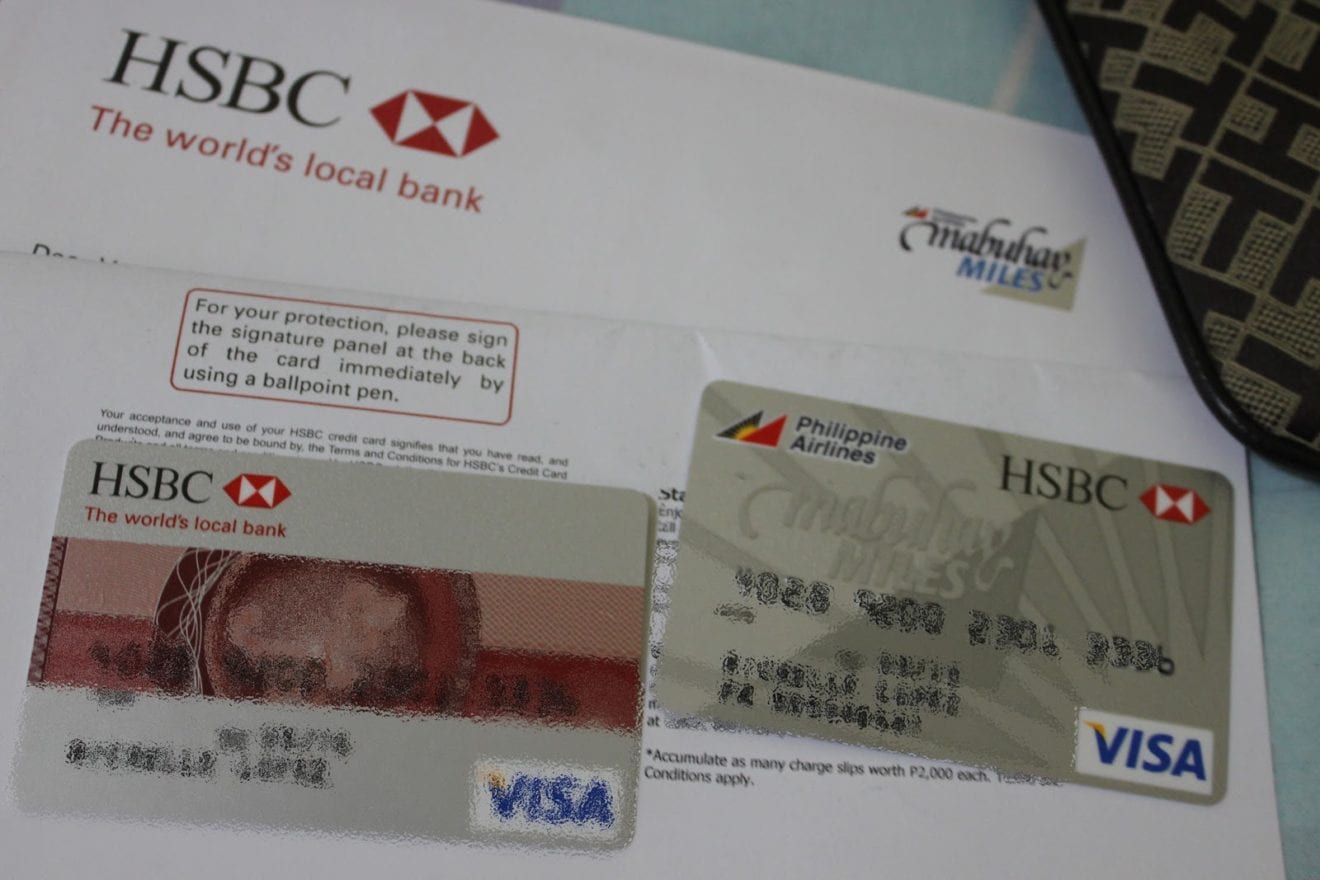
    HSBC Holdings Plc winning approval to start a credit-card business in China’s $1 trillion market offers Chief Executive Officer Stuart Gulliver added flexibility in his push into the nation’s retail banking and wealth-management industries.

    The approval from Chinese authorities came as HSBC ended a card venture with Bank of Communications Co., the bank’s Asia-Pacific head Peter Wong said in a weekend interview, paving the way for the U.K. company to join Citigroup Inc. and Bank of East Asia Ltd. as the only foreign credit-card issuers on the mainland. Wong didn’t say when HSBC won the nod from regulators, or provide any specifics on how the business will be rolled out.

    Gulliver’s Asian ambitions have been dealt a setback by crashing commodity prices, a slowing Chinese economy and a pretax loss in the fourth quarter. An independent card unit in China would improve HSBC’s access to a fast-growing market that had 449 million cards on issue as of September and allow the bank to find new clients for its retail bank.

    Getting approved for its own operation in China “is a meaningful step for HSBC as it gives the bank the autonomy to run the business,” said Chen Xingyu, a Shanghai-based analyst at Phillip Securities Research. “Since the Pearl River Delta is HSBC’s focus, having its own credit-card business can help the bank expand in the region.”

    Credit-card offerings can act as a springboard for drawing customers to other parts of the business such as private banking, Chen said. HSBC is getting a license for a planned brokerage venture with Shenzhen Qianhai Financial Holdings Co.

    The Pearl River Delta, located to the north of Hong Kong and centered around the city of Guangzhou, is home to more than 40 million people. HSBC plans to add 4,000 jobs in that area as the bank shifts about $100 billion of investment to Asia in an effort to expand retail banking and wealth management. The bank will slow the pace of thathiring amid China’s economic downturn, but HSBC won’t alter its strategy, Gulliver said last month.

    Good Relations

    While the bank has ended its card venture with Bank of Communications, HSBC intends to maintain its roughly 19 percent stake in the Chinese lender, Asia-Pacific Chief Executive Officer Wong said Saturday in an interview on the sidelines of China’s annual congress of lawmakers in Beijing.

    “We still have a lot of other initiatives” with Bank of Communications, Wong said. “We have a very good relationship.”

    HSBC’s card offerings would compete with its old venture partner, which had 40 million domestic cards as of June, while Industrial & Commercial Bank of China Ltd. had 108 million, according to their 2015 interim reports.

    The London-based company has been working with Bank of Communications, China’s fifth-largest lender by assets, since 2004 on businesses including credit cards. The Chinese bank announced the establishment of the credit-card venture — with 2.5 billion yuan of capital — in an October 2009 statement to Hong Kong’s stock exchange.

    HSBC shares in Hong Kong fell 0.3 percent on Tuesday to HK$49.50 as of 1:31 p.m. local time, compared with the benchmark Hang Seng Index’s 0.8 percent loss. The bank’s stock dropped 20 percent this year.

    The number of Chinese credit cards in circulation at the end of the third quarter had nearly doubled to 449 million since 2010, central bank data show. That total is about the same as the combined populations of the U.S. and Japan. The outstanding balance on those cards was 6.7 trillion yuan, up 26 percent from a year earlier, according to the People’s Bank of China data.