Tag: credit

  • HSBC Going Solo in China Credit Cards Gives Boost to Expansion

    HSBC Going Solo in China Credit Cards Gives Boost to Expansion

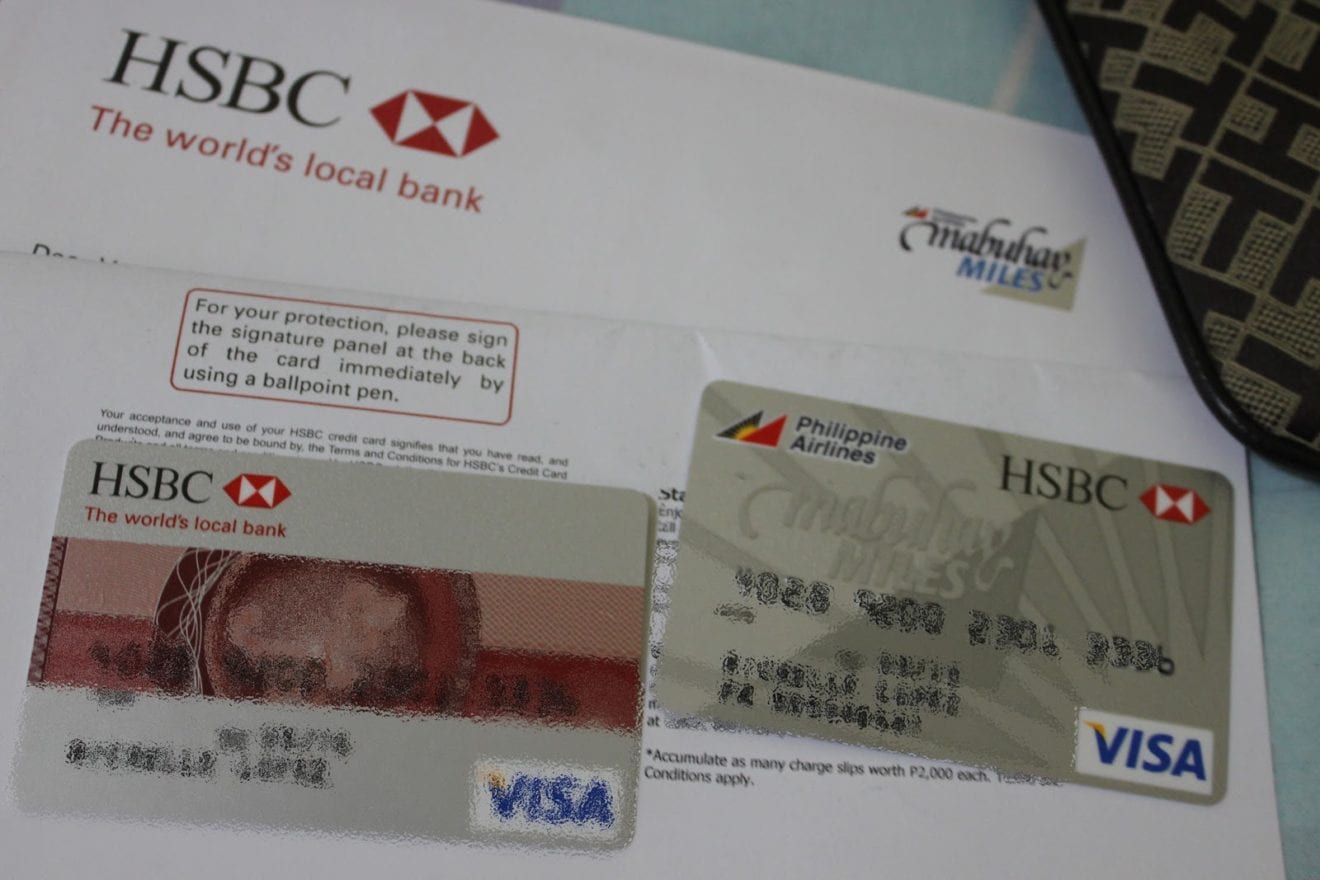
    HSBC Holdings Plc winning approval to start a credit-card business in China’s $1 trillion market offers Chief Executive Officer Stuart Gulliver added flexibility in his push into the nation’s retail banking and wealth-management industries.

    The approval from Chinese authorities came as HSBC ended a card venture with Bank of Communications Co., the bank’s Asia-Pacific head Peter Wong said in a weekend interview, paving the way for the U.K. company to join Citigroup Inc. and Bank of East Asia Ltd. as the only foreign credit-card issuers on the mainland. Wong didn’t say when HSBC won the nod from regulators, or provide any specifics on how the business will be rolled out.

    Gulliver’s Asian ambitions have been dealt a setback by crashing commodity prices, a slowing Chinese economy and a pretax loss in the fourth quarter. An independent card unit in China would improve HSBC’s access to a fast-growing market that had 449 million cards on issue as of September and allow the bank to find new clients for its retail bank.

    Getting approved for its own operation in China “is a meaningful step for HSBC as it gives the bank the autonomy to run the business,” said Chen Xingyu, a Shanghai-based analyst at Phillip Securities Research. “Since the Pearl River Delta is HSBC’s focus, having its own credit-card business can help the bank expand in the region.”

    Credit-card offerings can act as a springboard for drawing customers to other parts of the business such as private banking, Chen said. HSBC is getting a license for a planned brokerage venture with Shenzhen Qianhai Financial Holdings Co.

    The Pearl River Delta, located to the north of Hong Kong and centered around the city of Guangzhou, is home to more than 40 million people. HSBC plans to add 4,000 jobs in that area as the bank shifts about $100 billion of investment to Asia in an effort to expand retail banking and wealth management. The bank will slow the pace of thathiring amid China’s economic downturn, but HSBC won’t alter its strategy, Gulliver said last month.

    Good Relations

    While the bank has ended its card venture with Bank of Communications, HSBC intends to maintain its roughly 19 percent stake in the Chinese lender, Asia-Pacific Chief Executive Officer Wong said Saturday in an interview on the sidelines of China’s annual congress of lawmakers in Beijing.

    “We still have a lot of other initiatives” with Bank of Communications, Wong said. “We have a very good relationship.”

    HSBC’s card offerings would compete with its old venture partner, which had 40 million domestic cards as of June, while Industrial & Commercial Bank of China Ltd. had 108 million, according to their 2015 interim reports.

    The London-based company has been working with Bank of Communications, China’s fifth-largest lender by assets, since 2004 on businesses including credit cards. The Chinese bank announced the establishment of the credit-card venture — with 2.5 billion yuan of capital — in an October 2009 statement to Hong Kong’s stock exchange.

    HSBC shares in Hong Kong fell 0.3 percent on Tuesday to HK$49.50 as of 1:31 p.m. local time, compared with the benchmark Hang Seng Index’s 0.8 percent loss. The bank’s stock dropped 20 percent this year.

    The number of Chinese credit cards in circulation at the end of the third quarter had nearly doubled to 449 million since 2010, central bank data show. That total is about the same as the combined populations of the U.S. and Japan. The outstanding balance on those cards was 6.7 trillion yuan, up 26 percent from a year earlier, according to the People’s Bank of China data.
  • China’s February New Credit Plunged From Prior Month Record

    China’s February New Credit Plunged From Prior Month Record

    China’s broadest measure of new credit dropped sharply after a record surge a month earlier.

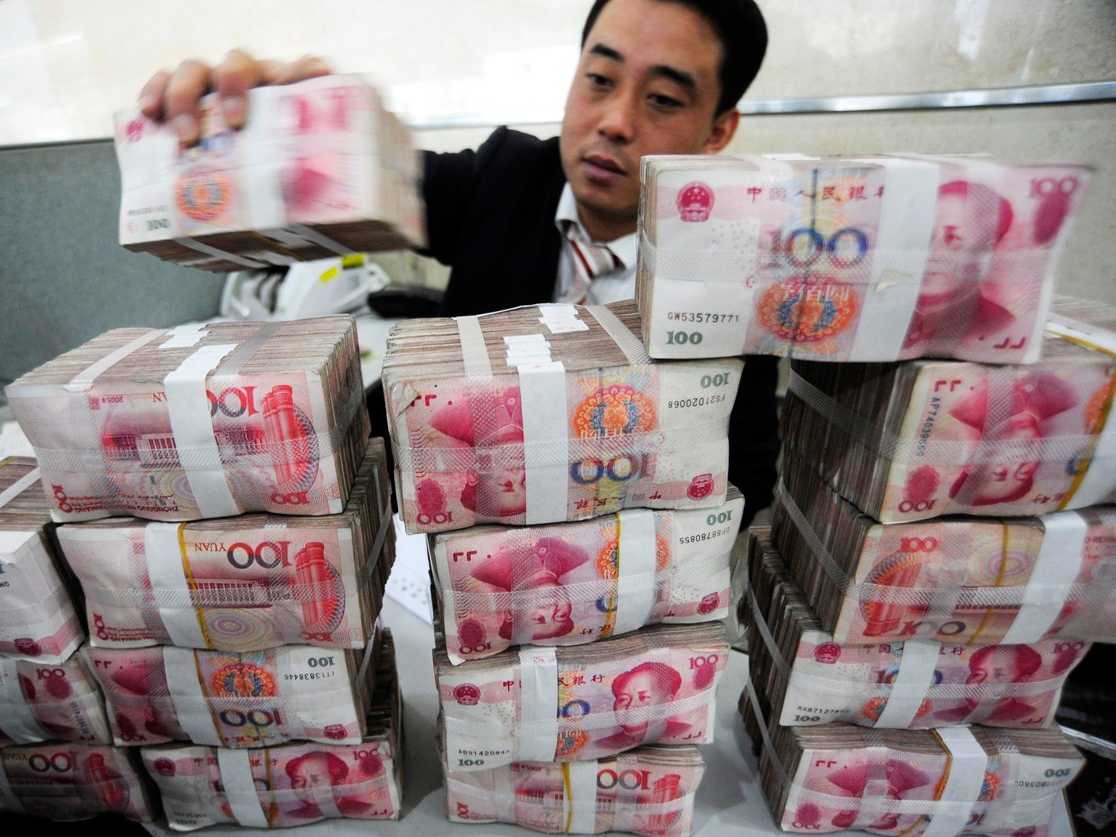
    Aggregate financing was at 780.2 billion yuan ($120 billion) in February, according to a report from the People’s Bank of China on Friday, compared with the median forecast of 1.84 trillion yuan in a Bloomberg survey. New yuan loans were 726.6 billion yuan, compared to the estimate of 1.2 trillion yuan.

    China’s money supply increased 13.3 percent from a year earlier, the PBOC said, less than the 14 percent gain in the prior month and below the 13.7 percent economists projected. The numbers may reflect some distortions arising from the week-long lunar new year holiday in early February.

    “February is a short month due to Chinese New Year, so that there were fewer working days for banks and other financial institutions,” Iris Pang, senior economist for greater China at Natixis SA in Hong Kong, wrote in a report. “Banks usually book most of the loans for the year in January, and fewer loans are booked in February and March.”

    The central bank cut the proportion of deposits the nation’s biggest lenders need to lock away effective March 1 in an effort to keep credit flowing to the real economy. China increased its full-year M2 money-supply target, signaling that supporting economic growth has taken over as the top priority over reducing financial risks.

    In January, aggregate financing soared to a record 3.42 trillion yuan, while new yuan loans also hit an unprecedented level of 2.51 trillion yuan. The strong figures were helped by banks front loading their 2016 lending targets, strong corporate bond issuance, and companies switching foreign currency loans into yuan ones.

    “China’s credit data show some extreme swings in the past two months which are the result of seasonal factors,” said Mark Williams, chief Asia economist for Capital Economics Ltd. in London, who previously worked on China issues at the U.K. Treasury. “Despite the relative weakness in February, the underlying picture is of lending picking up.”

    The lending drop was “a dramatic slump but it is very likely due to seasonal factors, with banks and many businesses closed for an extended period” for the holiday, he said.

    Friday’s data along with the industrial production data due for release Saturday will be key to determining the immediate policy outlook, according to Tom Orlik and Fielding Chen, economists at Bloomberg Intelligence. The government releases the latest industrial output, retail sales and fixed-asset investment data Saturday at 1:30 p.m. Beijing time.

    “The Lunar New Year holiday and payback for January’s record credit surge meant a downside surprise was always a possibility,” Orlik and Chen wrote in a note Friday. “Looking at the data for the first two months of the year together, loan growth remains on a rapid upward trend, and the government is targeting a faster credit expansion for 2016 as a whole.”

    Industrial production and fixed-asset investment are forecast to show a continued slowdown, while retail sales probably showed improvement with a 10.9 percent gain from a year earlier, according to a Bloomberg survey of economists.

    Also on Saturday People’s Bank of China Governor Zhou Xiaochuan and his top deputies hold a press conference, the chairman of state-owned asset regulator and owner SASAC will speak, and the leaders of the three main financial regulators will give a briefing.