Retail News CRM

Tag: Daimler

  • Daimler To Produce First In-House Electric Motor At Berlin Plant

    Daimler To Produce First In-House Electric Motor At Berlin Plant

    Daimler will produce the first in-house electric motor at its oldest plant in Berlin, the carmaker said on Thursday, providing relief to workers worried that the diesel motor production site was on the brink of deep job cuts.

    Workers who feared for their positions after Daimler said in September 2020 its Berlin site would end production of the 6-cylinder diesel motor within a year would also be offered retraining in software and coding, the German company said.

    Around 450 of the plant’s 2,300-odd workers have applied to attend a pilot 160-hour training course in software development, works council chairman Michael Rahmel said on a press call, with around fifteen selected for the first round of training.

    Investment in the 120-year-old Berlin-Marienfelde plant, previously pinned at a two-digit million euro amount, will rise to a low three-digit million euro amount in the next six years, Daimler said.

    The motor, known as an axial-flux motor and designed by the British startup YASA which Daimler acquired earlier this year, weighs a fraction of its diesel equivalent and can boost the range of an EV by up to 7%, YASA’s founder Tim Woolmer told Reuters in July.

    Woolmer said at the time that Daimler had briefed YASA to bring costs down in future iterations of its motor so the carmaker could use them across its entire EV range.

    The e-motor is simpler to produce than its diesel equivalent, meaning the plant will eventually require less workers – but the exact number of future job losses was not yet clear, head of production Joerg Burzer said on a press call. A start date for the production of the motor was not provided.

    The factory’s employees are guaranteed their positions until the beginning of 2030 under an existing union agreement.

    The digital training campus, which Daimler partnered with Siemens in March to develop and which will go live in 2022, would also create new jobs, Burzer said.

    “If we make an effort here in coming years, there could even be more jobs than before,” head of IG Metall Berlin Jan Otto said.

    Production of the 6-cylinder diesel motor and some components would continue at the factory in the short-term but was being wound down, Burzer and union representatives said.

    The factory’s employees are guaranteed their positions until the beginning of 2030 under an existing union agreement.

    “A year ago, we didn’t know what would happen at the plant. Today we’re embarking on what will hopefully be a successful transformation with our heads held high,” Michael Rahmel, works council chairman at Berlin-Marienfelde, said in a statement
  • Daimler Cuts Hours For Up To 18,500 Workers Over Chip Shortage

    Daimler Cuts Hours For Up To 18,500 Workers Over Chip Shortage

    Daimler will cut working hours for up to 18,500 employees and temporarily halt production at two plants in Germany due to a shortage of semiconductor chips that has hit global car production, it said on Wednesday.

    “Currently, there is a worldwide supply shortage of certain semiconductor components,” a spokeswoman said. “We continue to play things by ear.”

    “The situation is volatile, so it is not possible to make a forecast about the impact,” she added.

    Daimler, which makes Mercedes-Benz cars, said workers at its plants in Bremen and Rastatt would have their hours shortened.

    The global shortage stems from a confluence of factors as carmakers, which shut plants during the COVID-19 pandemic last year

    The move will halt production at the factories but allow staff to continue working on special projects. The production halt will take effect from April 23 for one week, initially.

    The global shortage stems from a confluence of factors as carmakers, which shut plants during the COVID-19 pandemic last year, compete with the sprawling consumer electronics industry for chip supplies.

    Cars have become increasingly dependent on chips – for everything from computer management of engines for better fuel economy to driver-assistance features such as emergency braking.

    The shortage of chips has hurt vehicle production at carmakers including General Motors Co, Volkswagen AG and Ford Motor Co.

    Earlier on Wednesday, automaker Stellantis said it would replace digital speedometers with more old-fashioned analogue ones in one of its Peugeot models, in a fallout from the shortage of semiconductor chips.

  • Daimler AG And Infosys Announce Strategic Partnership For IT Infrastructure

    Daimler AG And Infosys Announce Strategic Partnership For IT Infrastructure

    Daimler AG and Infosys announced a long-term strategic partnership for a technology-driven IT infrastructure transformation. After the receipt of all regulatory approvals, Daimler AG will transform its IT operating model and infrastructure landscape across workplace services, service desk, data center, networks and SAP Basis together with Infosys. The partnership will enable the company to deepen its focus on software engineering and to establish a fully scalable on-demand digital IT infrastructure and anytime-anywhere workplace. The collaboration will empower Daimler to strengthen its IT capabilities, and Infosys, its automotive expertise.

    As software becomes modular, digital infrastructure continues to play an important role in defragmentation. Daimler will work towards a model that ensures a robust IT infrastructure across its plants and regions and supports consolidation of its data centers, scaling its IT operations, and bringing innovations to the fore. Some of the key deliverables from this partnership include – a smart hybrid cloud, leveraging Infosys Cobalt and leading cloud providers, accelerating the multi-cloud journey with a focus on open source adoption. A carbon-neutral solution, by consolidating and rationalizing data centers across all regions. Standardized technology stack by bringing in an eco-system of best of breed partners. Creation of a state of the art Zero Trust network with seamless technology upgrades. Persona-driven and cognitive, AI-powered anytime-anywhere workplace solution that empowers the end-users.

    As a part of this partnership, automotive IT infrastructure experts based out of Germany, wider Europe, the U.S., and the APAC region will transition from Daimler AG to Infosys. Infosys is well placed to realize this transition as an expert having integrated more than 16,000 employees through other partnerships in recent years with a high acceptance, retention, and satisfaction rate. The transfer will also enable Infosys to bolster and grow its automotive business while offering employees strong prospects for long-term career growth and development.

    Talking about the partnership, Jan Brecht, Chief Information Officer (CIO) of Daimler and Mercedes-Benz, said, “Software becomes modular and IT infrastructure becomes big. Daimler will take three steps at once to transform its IT infrastructure: consolidation, scaling, and modernization. We need to think of infrastructure beyond the size of our company. With Infosys we found a partner to scale, to innovate and to speed up. Moreover, this is a strategic partnership for Daimler’s IT capabilities and Infosys’ automotive expertise. Infosys wants to grow with us in the automotive industry, which gives career opportunities for our employees. With this partnership, Daimler also strengthens its overall technology investment and partnership strategy.”

  • Daimler Aims To Double Sales Of Mercedes-Benz’s Maybach Vehicles

    Daimler Aims To Double Sales Of Mercedes-Benz’s Maybach Vehicles

    German luxury carmaker Daimler on Thursday said it plans to double sales of its Maybach-branded Mercedes-Benz vehicles, after selling 12,000 vehicles last year.

    Daimler unveiled its new flagship vehicle, which is based on a Mercedes-Benz S-Class limousine, and which retails starting at $173,000 but can quickly add up to more than $250,000 once options like $3,200 silver champagne flutes are added.

    Daimler plans to make a range of Maybach models, including fully electric variants, Chief Executive Ola Kaellenius said during a virtual presentation of the car.

  • Waymo And Daimler Are Partnering For Self Driving Trucks

    Waymo And Daimler Are Partnering For Self Driving Trucks

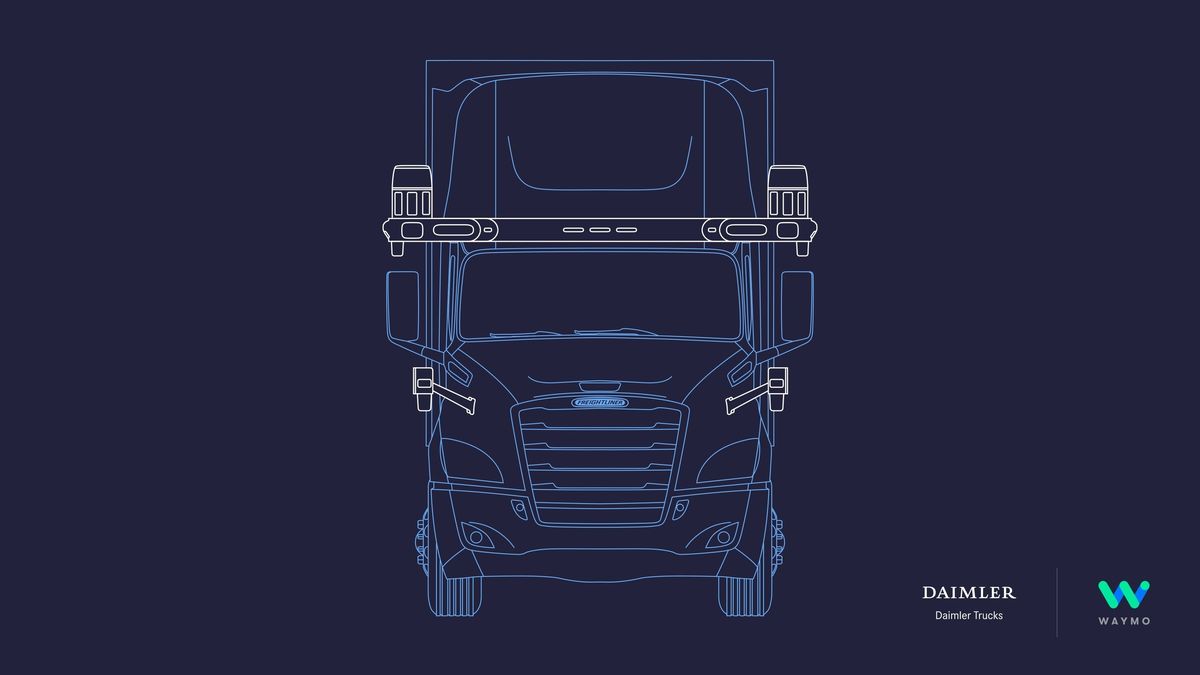
    Recently few reports emerged which said that Mercedes was scaling back from developing autonomous driving technology which was quickly buried by the company’s head of digital transformation. Now Alphabet-owned Waymo and Daimler have officially announced a partnership in which the German company will be teaming up with the pioneering self-driving company to sell autonomous trucks in the US. This partnership will see the Waymo One technology make its way to Daimler’s trucks – it is the same technology that Alphabet has deployed in Phoenix, Arizona which forms the world’s first self-driving ride-hailing service.

    “The autonomous Freightliner Cascadia truck, equipped with the Waymo Driver, will be available to customers in the U.S. in the coming years,” the two companies said in a statement. “Waymo and Daimler Trucks will investigate expansion to other markets and brands in the near future,” the statement added without outlining an actual timeline.

    The deal is particularly with Daimler North America ties in soundly with Waymo’s vision of graduating to larger vehicles like trucks. Daimler also has tested its own self-driving trucks in the past. Mercedes recently also introduced autonomous driving technology to the S-class and has also partnered with the airport in Stuttgart to provide a self droving car valet service in partnership with Bosch.

    “We have the highest regard for Daimler’s engineering skills and broad global truck product portfolio, and so we look forward to scaling the Waymo Driver, together with our new partner, to improve road safety and logistics efficiency on the worlds’ roadways,” said John Krafcik, Waymo’s CEO.

    Adding to this Martin Daum, chairman of the board of management of Daimler Truck AG and Member of the Board of Management of Daimler AG said, “As the leader of our industry, Daimler Trucks is the pioneer of automated trucking. In recent years, we have achieved significant progress on our global roadmap to bringing series-produced highly automated trucks to the road. With our strategic partnership with Waymo as the leader in autonomous driving, we are taking another important step towards that goal. This partnership complements Daimler Trucks’ dual strategy approach, of working with two strong partners to deliver autonomous L4 solutions that are seamlessly integrated with our best-in-class trucks, to our customers.”

    The Freightliner Cascadia truck will be the primary focus of this deal. It will be outfitted with the Waymo driver platform. It is a class 8 vehicle and comes with a hefty safety suite called the Detroit assurance 5.0 which includes active safety technology including active brake assistance, adaptive cruise control, lane departure warning and lane-keeping systems as options.

    The Waymo Driver platform will elevate the ADAS capability of this truck beyond level 4. They will be able to handle most driving conditions including heavy inclement weather. This comes with the credence of the Waymo driverless platform being able to handle alternative climates something Waymo has tested for more than half a decade as the pioneer of driverless technology ever since it graduated out of Google Skunkworks R&D unit called Google X and then was spun off into a separate company called Waymo.

  • Daimler Posts Forecast-Beating Results For Q3 2020 As Demand Rebounds

    Daimler Posts Forecast-Beating Results For Q3 2020 As Demand Rebounds

    Daimler shares surged 4.5 percent on Friday after the luxury carmaker posted forecast-beating third-quarter results, buoyed by a better-than-expected rebound in sales of luxury cars in September. European car registrations rose slightly in September, the first increase this year, industry data showed on Friday, suggesting a recovery in the auto sector in some European markets where coronavirus infections were lower. Swedish truckmaker AB Volvo also posted third-quarter core earnings well above forecasts thanks to a healthy jump in orders.

    Daimler’s third-quarter earnings before interest and tax reached 3.07 billion euros ($3.59 billion), it said late on Thursday, beating the 2.14 billion euro Refinitiv consensus.

    The Stuttgart-based company is due to publish further financial details on Oct. 23 and said it would publish updated guidance for the full year at that time.

    Analysts had expected premium carmakers to benefit from a rebound in demand and welcomed Daimler’s strong cash flow during the quarter.

    “Free cash flow beat is a solid surprise,” Philippe Houchois, an analyst at Jefferies, said in a note.

    Daimler said it expected the positive momentum to continue in the fourth quarter, assuming there are no further coronavirus lockdowns.

    The COVID-19 pandemic had led to a slump in sales, pushing the company to operate losses in the first and second quarters.

    To counter losses, Daimler’s Mercedes-Benz has stopped building sedans in the United States to focus on more profitable SUVs, combined its fuel cell development with Volvo Trucks, and halted an automated development alliance with BMW..

    Earlier this month, Daimler said it will cut fixed costs, capex, and research and development spending at Mercedes-Benz by more than 20% by 2025 as part of a strategy overhaul to take the brand further upmarket.

    The move will see Mercedes-Benz, currently, the world’s top-selling premium car brand, turn its back on a decades-old strategy of chasing sales volume to focus on the industry’s most profitable segments: limousines and sport-utility vehicles.

  • Daimler Chief Eyes China Growth As Trade Tensions Rise

    Daimler Chief Eyes China Growth As Trade Tensions Rise

    Daimler’s Chief Executive said China will remain Mercedes-Benz’s biggest growth market in the next decade and the German carmaker will adjust production locations to capture shifts in demand as global trade tensions continue to rise.

    The remarks by Ola Kaellenius come against a backdrop of increasingly strained relations between the United States, China and Europe after almost a decade of growth that has helped Mercedes to emerge as the world’s biggest-selling luxury car brand.

    “The situation has become much rougher, with a tendency toward rougher talks, right up to and including trade conflicts,” Kaellenius told the Frankfurt-based ICFW Journalists association late on Monday. “We need to look at our production footprint and where it makes sense, shift our production,” he said during the video call meeting.

    “Last year we sold around 700,000 passenger cars in China. The next biggest market is the U.S. with between 320,000 and 330,000 cars.”

    Thanks in large part to a strong rebound in demand from China, Daimler and German rival BMW both pre-released forecast-beating third-quarter results.

    “In the next 10 years we also expect the biggest growth in China,” Kallenius added, explaining that the luxury carmaker will follow the market.

    But with international trade tensions on the rise, the outlook for global sales remains uncertain.

    Britain’s Brexit negotiations could end without tariff-free trade with the European Union and serves as an example of how things can go wrong, the Swedish executive explained.

    If Britain and the European Union fail to clinch a deal, World Trade Organization (WTO) rules would apply, resulting in tariffs.

    “In the event of a so-called hard Brexit, we would not open factories, because this would not be worth it, given our sales numbers,” Kaellenius said, referring to sales in Britain. “We would have to learn to live with WTO rules.”

    Increasingly fragmented global markets make it harder to build cars at a profit because it reduces economies of scale in production, he said.

    Mercedes-Benz, for example, only builds its top-of-the-line S-Class model in Germany. With global sales of only 100,000 vehicles, it hardly makes business sense to build new production lines in the United States and China to build these cars locally, he said.

    However, tensions between the United States and the rest of the world are likely to remain, regardless of whether the Republicans or Democrats win the U.S. election next month.

    “What the two (presidential) candidates are saying is that they have an interest in improving the trade balance, and we need to be ready for that,” Kaellenius said.

  • Daimler Talks With Workers Heat Up, With 15,000 Jobs At Risk

    Daimler Talks With Workers Heat Up, With 15,000 Jobs At Risk

    Labour representatives at German carmaker Daimler said on Monday that discussions with management over cost cuts had become “rougher”, after a board member said over the weekend that more than 15,000 jobs were at risk. The auto industry has been hit hard by the coronavirus pandemic, which shuts factories and showrooms forcing traditional carmakers to seek deeper cuts.

    Daimler had already said in November, before the pandemic started, that it would cut at least 10,000 jobs worldwide over the following three years, following peers as they cut costs to invest in electric vehicles while grappling with weakening sales.

    Daimler says it will deepen cost-cutting measures ahead of an expected loss in the second quarter.

    The owner of the Mercedes-Benz brand had stuck with a pledge at the time to avoid forced redundancies at its German workforce until 2029.

    Daimler board member Wilfried Porth told Stuttgarter Zeitung over the weekend, however, that more than 15,000 workers would now have to take a buyout or retire to avoid forced layoffs.

    The works council for Daimler said on Monday it was aware of the seriousness of the situation.

    The owner of the Mercedes-Benz brand had stuck with a pledge at the time to avoid forced redundancies at its German workforce until 2029

    “The tone of our discussion is getting rougher and is putting our cooperation to the test,” it said.

    Daimler managed to come through a crisis in the past, the works council said, adding it had always found a way forward, and did not expect the situation to be any different this time around.

    Daimler reiterated on Monday the company wanted to avoid forced redundancies, but for this to happen the carmaker needed to find alternative ways of cutting costs.

  • Daimler Says China Business Picks Up Again

    Daimler Says China Business Picks Up Again

    Mercedes-Benz maker Daimler has seen business stabilize in China after the country ended coronavirus lockdowns, a senior manager at the German carmaker told a newspaper on Sunday. Mercedes-Benz delivered a total of approximately 477,400 passenger cars worldwide between January and March. The report did not say how many of those went to customers in China, who bought 694,200 Mercedes-Benz cars last year, 29% of total sales. China is the largest market for the S-Class built in Sindelfingen. Normally several hundred vehicles roll off the assembly line in Sindelfingen every day.

    Mercedes-Benz maker Daimler has seen business stabilize in China after the country ended coronavirus lockdown

    “In China alone, we sold around 50,000 vehicles again in March. That makes us confident,”, said Markus Schaefer, a managing board member for production, told Bild am Sonntag newspaper. Starting Monday, cars are set to roll off Daimler’s assembly line again in Germany. The Sindelfingen and Bremen passenger-car plants will start production of E- and S-Class vehicles.”We won’t reach this number right away when production starts next week,” said Schaefer.

    Daimler reported a plunge of nearly 70% in first-quarter operating profit on Thursday due to the pandemic and warned that the cash flow it uses to pay dividends would fall this year.

  • Daimler To Restart German Factories From April 20

    Daimler To Restart German Factories From April 20

    Mercedes-Benz maker Daimler said Wednesday it plans to restart work at factories in Germany from April 20, after a weeks-long interruption due to the coronavirus pandemic. “In a few selected factories, we are implementing a coordinated restart of production,” the group said in a statement. “From April 20 this will affect the car motor factories in Germany, Mercedes-Benz car factories in Sindelfingen and Bremen and the vans factories.” Truck and bus sites will also open from the same date.

    But Daimler also said that it would extend shorter hours for its German workers until April 30, impacting “the majority of production… as well as administration”.

    In the first quarter, Daimler’s worldwide sales slumped 15 percent year-on-year, with Mercedes-Benz cars alone seeing a 20-percent drop in China and 16 percent in Europe.

    Coronavirus “heavily impacts sales on a global scale,” finance chief Harald Wilhelm said in a conference call Wednesday, adding “the overall economic impact cannot yet be assessed with sufficient certainty”.

    Meanwhile, Volkswagen said Wednesday that it would begin increasing production from April 14 in “a few” factories building car components, which are currently operating at much-reduced capacity.

    Most of the auto behemoth’s sites are closed until at least April 19, but the group wants “to safeguard the supply of components to plants in China” after the Easter weekend.

    “Further details of the mode of operation are expected after Easter” for other components and vehicle sites, VW said.

    Daimler rival BMW said Tuesday that it would extend a production stop until April 30, while Ford’s European factories are on hold until at least May 4.

    Car sales plummeted in several European countries in March as far-reaching restrictions on daily life to limit the spread of the coronavirus bit.

    Experts expect still-worse performance in April, while rating agency Moody’s forecast a 14-percent contraction in the global car market for 2020 as a whole.

    But the picture is brightening in Asia, with “significant growth in demand” in China and South Korea, Mercedes-Benz sales director Britta Seeger said in a statement.

    BMW also sees “first signs of a rebound” in China, sales chief Pieter Nota said Tuesday.

  • BMW, Daimler Aim To Cut Emissions 20% This Year With New Electric Models

    BMW, Daimler Aim To Cut Emissions 20% This Year With New Electric Models

    New electric models will help BMW and Daimler cut emissions from the cars they sell by an average of 20% this year, the German automakers predicted on Tuesday, as they strive to meet tough new European pollution rules.

    In a live-streamed event, following the cancellation of this week’s Geneva motor show due to the coronavirus epidemic, BMW presented the i4 four-door coupe with a driving range of up to 600 kilometers, one of a number of new electric models it hopes will stimulate demand for battery-driven cars.

    In a separate webcast, Mercedes-Benz owner Daimler was also bullish about prospects for its growing range of electric cars.

    The European Union set automakers a target to cut carbon dioxide (CO2) emissions by 40% between 2007 and 2021, and has demanded a further 37.5% reduction by 2030.

    But pollution levels from cars have been rising as customers increasingly chose to buy gas-guzzling sport-utility vehicles (SUV), meaning automakers need to ramp up sales of electric cars if they are to avoid hefty fines from 2021.

    They have a mountain to climb. Average fleet emissions for cars in Europe rose for the third year in a row in 2019, with electric vehicles making up only 6% of overall registrations, analysts at JATO Dynamics said on Tuesday.

    BMW already has 500,000 electric and hybrid cars on the road and plans to double that number by the end of next year, including through the launch of the i4 and an iX3 SUV as well as an electric version of its Mini.

    Sales of battery-electric and hybrid vehicles are already up by 43% so far this year, BMW Chief Executive Oliver Zipse said.

    “We believe that we can keep the impact on profits under control,” he added, pledging that every car sold would be profitable.

    BMW stuck to its outlook even as second-quarter earnings fell 20%, hit by currency headwinds and the rising cost of manufacturing electric and hybrid cars to help the carmaker meet stricter emissions limits.

    Electric cars are generally more expensive to build than petrol or diesel-powered vehicles. But BMW said it was saving money, including by delaying the development of a next-generation Mini, to free up resources for the electric campaign.

    “If a vehicle architecture does not need to be renewed, then we do not do it,” Zipse said, adding the Mini was being renewed constantly by updating the powertrain and infotainment options. Around 7,000 electric Mini’s have been ordered so far, he added.

    Daimler, meanwhile, is promoting hybrid cars including a new CLA Shooting Brake, as well as the Mercedes-Benz EQC electric SUV and an electric van, the V-class, as part of its drive to reduce emissions by 20% this year.

    “We are within striking distance of meeting the target,” Chief Executive Ola Kaellenius said. Mercedes-Benz plans to build 50,000 EQC vehicles this year.

    Kaellenius declined to comment on the profitability of electric vehicles. “We don’t communicate individual margins. Electrification is a headwind,” he said.

    Separately, Volkswagen announced the launch of the ID4, a fully electric SUV with an operating range of up to 500 kilometres, which will go on sale in Europe, China and the United States, and start production this year.

  • 2020 Mercedes-Benz E-Class Teased

    2020 Mercedes-Benz E-Class Teased

    The Mercedes-Benz E-Class has been one of the most successful models from Mercedes, globally. And for 2021, the company is all set to reveal the latest E-Class model. It was supposed to happen at the 2020 Geneva Motor Show but as the show stands canceled, Mercedes-Benz will be revealing the car digitally around the globe, very soon.

    The company released a few teasers along the way and from the looks of it, the new E-Class does seem to be a good-looking car. The front end gets slight tweaks with new, sharply designed LED headlamps and a slightly revised grille. We expect some changes at the rear as well. In terms of powertrains, the new E-Class finally gets a hybrid engine setup, the details of which will be revealed later.

    Expect the new Mercedes-Benz E-Class to get features similar to the current model such as a twin-screen setup, smartphone connectivity and of course, the MBUX infotainment system. Being a Mercedes, we also expect it to get a bunch of active and passive safety systems and a whole range of driver-assist systems as well.

    Will the updated Mercedes-Benz E-Class come to India? We believe it will come sooner than later and once it does, it will take on its traditional rivals, the Audi A6 and the BMW 5-Series. Keep watching this space as the car will be revealed very soon.

  • Daimler Slims Down Mercedes Management In Efficiency Drive

    Daimler Slims Down Mercedes Management In Efficiency Drive

    German cars and trucks maker Daimler said it would revamp the management of its finance, production and development portfolios to remove duplicate layers between Mercedes-Benz and Daimler AG.

    As a result, Daimler’s Chief Financial Officer Harald Wilhelm will take over responsibility as finance chief at Mercedes-Benz AG from April 1 and Mercedes-Benz Chief Financial Officer Frank Lindenberg will leave, the company said.

    Wolf-Dieter Kurz will take on responsibility for product strategy and steering at Mercedes-Benz Cars. He is currently responsible for the business cases of product projects.

    Daimler Chief Executive Ola Kaellenius will take over responsibility for Mercedes Vans from Wilfried Porth, who retains his role as head of human resources, Daimler said.

    Markus Schaefer, currently a management board member for Research and Mercedes-Benz Cars development, will become a chief operating officer at Daimler AG, the Stuttgart-based company said.

  • Daimler’s Mercedes Sales Drive Higher But Charges Put Brakes On Profit

    Daimler’s Mercedes Sales Drive Higher But Charges Put Brakes On Profit

    Daimler reported its biggest drop in annual profit in a decade on Tuesday, a 64% fall reflecting more than 5 billion euros in charges as well as an investment as Mercedes-Benz pushes into electric and hybrid vehicles. Mercedes saw record sales to retain its title as the world’s top-selling premium automaker but net profit fell to 2.7 billion euros from 7.6 billion hurt by 4.2 billion euros in charges related to diesel-related probes and legal proceedings. To offset its extra costs Daimler is restructuring, scrapping its Mercedes-Benz X-Class pick-up truck and downsizing its mobility services unit last year, meaning further charges of 828 million and 405 million euros, respectively.

    Alongside the hefty charges, the company slashed its dividend by 72% to 0.90 euros per share. The earnings had been flagged in preliminary figures on Jan. 22. Kaellenius said restructuring at the vans division would deliver results this year but cautioned Daimler’s passenger car operations face a tough couple of years as the company launches electric and hybrid vehicles.

    “We are going to restore the financial health of this company and take the measures we have to take to get back on track,” Kaellenius said. “Yes, it will take some time on some of the issues. There are no quick fixes.”

    The 50-year-old Swede, formerly the company’s research and development chief, took over as CEO last May.

    He said the carmaker was offering staff buyouts and working on next-generation models that will be less complex to produce.

    Kaellenius is tasked with safeguarding Daimler’s success as the industry undergoes sweeping changes including tougher environmental rules and a costly shift to electric power.

    That challenge is seen in Daimler’s share performance: its stock is down 12% year to date versus an 84% rise in electric car producer Tesla, Refinitiv Eikon data shows.

    “There is very little scope for optimism at Daimler. It will take years until margins recover to levels worthy of a premium manufacturer,” said Michael Muders, fund manager at Union Investment.

    Mercedes-Benz is readying a major push into electric and hybrid cars, with the proportion of electrified vehicles in its fleet set to jump to 9% from 2% in 2020 with a production of an electric A-Class, electric van and electric SUV.

    Pressure is mounting on carmakers to build low emission vehicles to avert heavy European Union (EU) pollution fines as customers gravitate towards buying larger and heavier sports utility vehicles.

    Mercedes-Benz’s push into electric and hybrid cars will see the proportion of electrified vehicles in its fleet jump to 9% from 2% in 2020 with the launch an electric A-Class and an electric van.

    “In the medium term I am confident. 2020 and 2021 will be a challenge,” Kaellenius said about the prospect of EU fines.

    Mercedes-Benz is also working on developing its own software vehicle operating system, a project that will require significant investment and take up to four years to go into production, Kaellenius said.

    The company said it aims to keep property, plants and equipment and R&D spending at roughly the same level as last year.

    It will look for savings of more than 1.4 billion euros by the end of 2022 through cuts in administrative and personnel costs and expects a significant rise in operating profit and free cash flow this year.

    “Our goal is to ensure solid net liquidity to protect the necessary investments, and at the same time to pay attractive dividends,” Chief Financial Officer Harald Wilhelm said.

  • Daimler Sued For $1 Billion In German Court Over Diesel Cheating

    Daimler Sued For $1 Billion In German Court Over Diesel Cheating

    Investors have sued Daimler for 896 million euros ($1 billion) in a regional court in Stuttgart, accusing the carmaker of concealing its use of emissions cheating software, German law firm TILP said on Tuesday.

    The suit was filed on behalf of institutional investors who accuse Daimler of failing to inform investors about the risks and costs of using such devices, which amounts to a violation of capital markets law, the law firm said.

    In a statement, attorney Andreas Tilp said: “This means that the plaintiffs bought the Daimler stock at too high a price, and it is our conviction that Daimler is liable to them for compensation of damages.”

    Daimler said it had not yet been formally notified of the lawsuit adding it believed that the lawsuit was without merit.

    “We will defend ourselves against the accusations with all legal means,” a spokeswoman said on Tuesday.