Retail News CRM

Tag: dairy

  • Singapore company seeks to increase stake in Vietnam’s largest dairy firm

    Singapore company seeks to increase stake in Vietnam’s largest dairy firm

    A Singaporean shareholder in Vinamilk is seeking to increase its stake in Vietnam’s largest dairy firm. Jardine Cycle & Carriage Ltd has registered to buy 17.41 million shares between January 9 and February 7 through its wholly-owned local subsidiary, Platinum Victory, which will enable it to increase its ownership in Vinamilk from over 10 percent to 11.62 percent.

    At a proposed price of VND125,000 ($5.38) per share, the transaction will be worth VND2.17 trillion ($94.42 million).

    Last year Jardine, Vinamilk’s third largest shareholder, had registered on six different occasions to buy 14-17 million shares to increase its stake to above 11 percent, but was unsuccessful due to unfavorable market conditions.

    It first bought a 3.3 percent stake in Vinamilk in November 2017. Within a month it raised its ownership to over 10 percent.

    In April last year a representative of Jardine’s parent company, Jardine Matheson, became a Vinamilk board member.

    Hong Kong-based Jardine Matheson is one of Asia’s biggest conglomerates with interests in luxury hotels, motor vehicles, property, food retail, transport financial services, and agribusiness and revenues of almost $16 billion in 2017.

    F&N Dairy Investments, a subsidiary of Singapore-based Fraser & Neave Ltd, which is backed by Thai tycoon Charoen Sirivadhanabhakdi, owns a 17.31 percent stake in Vinamilk.

    Vietnam’s dairy industry reported revenues of more than VND100 trillion ($4.4 billion) in 2017, with Vinamilk commanding more than a 50 percent market share.

    According to a report by the EU-Vietnam Business Network, the market is expected to double in size by 2020 as the country’s population, personal incomes and dairy consumption increase.

  • SEA gives struggle to Dairy Farm International

    SEA gives struggle to Dairy Farm International

    “Significant challenges” across the Southeast Asian supermarket business are continuing to test Hong Kong-listed multi-format retailer Dairy Farm International. In a management statement discussing the company’s third-quarter performance – which did not include any figures – Dairy Farm said its businesses produced “mixed results” with a strong performance in health and beauty and good results from home furnishings and restaurants divisions. However, the performance of the Hong Kong supermarkets business has softened.

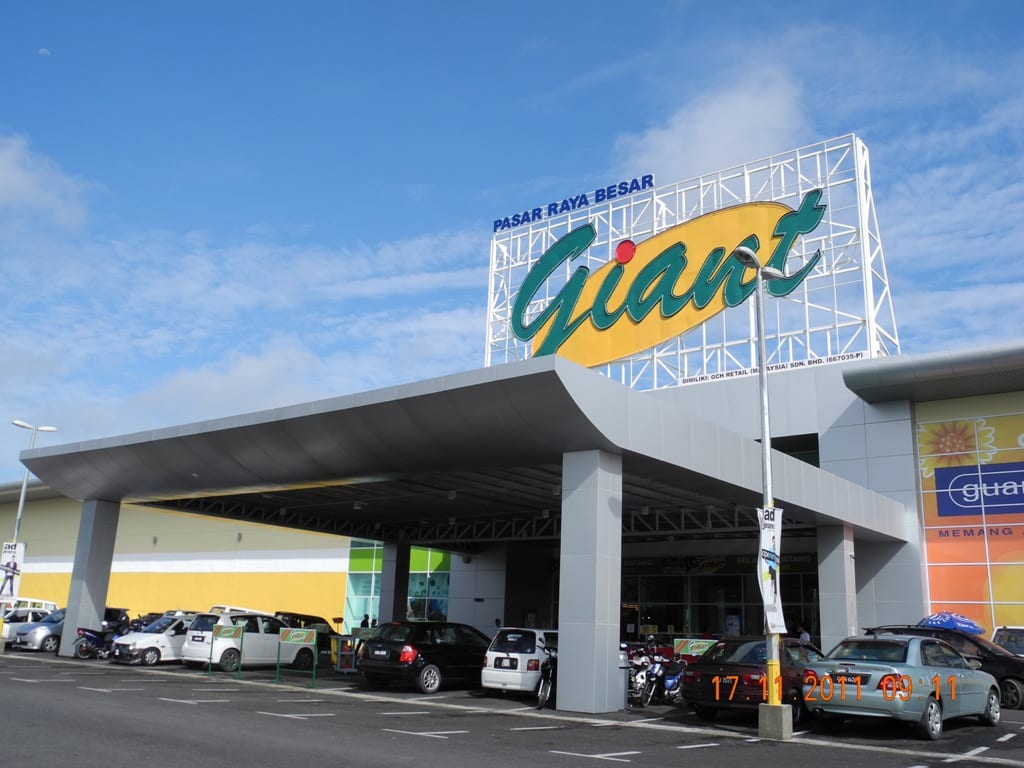
    The company said the Southeast Asian grocery store business – Cold Storage and Giant stores in Singapore and Malaysia – is expected to continue for the remainder of the year with the group’s full year results expected to be impacted by increasing costs from ongoing investment in technology, supply chain infrastructure, stores and people in order to improve the long-term performance of the business. Sales and profits fell in its supermarkets in both countries. Falling sales in Indonesia were mitigated by management action which resulted in reduced losses there.

    In North Asia, sales from the food businesses were slightly ahead of the same period last year, but profits were lower as a result of weakening margins and continued cost pressures, particularly from increased rents.

    However, the health and beauty businesses in Hong Kong and Macau (Guardian stores) delivered “strong sales and profit growth”.

    The Philippines food business showed good sales growth, benefitting from the opening of several new stores, but profit was slightly behind the prior year due to increased operating costs. There was continuing good sales and profit improvement in the group’s health and beauty businesses, notably in Malaysia and Indonesia.

    Ikea’s sales and profits were ahead of last year in Taiwan and Indonesia. In Hong Kong, sales were higher, supported by the new store which opened last year; however profits were lower as a result of higher operating costs.

    In Hong Kong, Maxim’s delivered another record-breaking mooncake sales performance during Mid-Autumn Festival, which was earlier than last year, and helped drive sales and profit higher during the period. Supermarket Yonghui reported strong sales growth in the quarter but profit was lower than the prior year due to investment in new formats and the additional costs of the new employee incentive scheme.

    Approval was received from the Philippines Competition Commission in August for the combination of Dairy Farm’s Food business in the Philippines with Robinsons Retail Holdings, with completion expected to take place within weeks.

    In early October Dairy Farm agreed to acquire the remaining 51 per cent interest in Rose Pharmacy in the Philippines, which is now subject to regulatory approvals.

    Dairy Farm, together with its associates and joint ventures, operate more than 7400 outlets, including supermarkets, hypermarkets, convenience stores, health and beauty stores, home furnishings stores and restaurants – employing more than 200,000 people. Total sales last year exceeded US$21 billion.

  • Nestle Malaysia earnings up 15.7% in Q3, declares 70 sen dividend

    Nestle Malaysia earnings up 15.7% in Q3, declares 70 sen dividend

    Nestle (Malaysia) Bhd’s net profit for the third quarter ended September 30, 2018 rose 15.7% to RM137.69 million from RM119.01 million a year ago, underpinned by higher sales on the back of strong marketing and promotional activities.

    Revenue for the quarter under review increased 8.3% to RM1.43 billion from RM1.32 billion in the same quarter last year, driven by stronger domestic and export sales as well as the zero-rating of the Goods and Services Tax (GST), which boosted consumer spending.

    Nestle has proposed to declare an interim dividend of 70 sen per share for the quarter under review.

    For the cumulative period of nine months, the group’s net profit grew 4.7% to RM535.06 million from RM511.14 million, while revenue expanded 4.8% to RM4.17 billion from RM3.98 billion.

    “Against the backdrop of a more encouraging year for the Malaysian economy, we remain committed to our long-term strategy to ‘Fuel the Growth’ via our innovative drive and enhancing our strong brand portfolio,” Nestle said on its prospects.

    “We are confident that our investments, including the new Nestlé distribution centre, will enable us to maintain our solid growth momentum. In line with this commitment, the group has recently announced the RM100 million investment in Milo manufacturing making the Chembong factory the largest Milo manufacturing centre of excellence in the world. The company strives to improve efficiencies across our supply chain and reinvest savings to achieve sustainable and profitable growth,” it added.

    Nestle’s shares dipped RM1.50 or 1% to close at RM143.50 on 111,600 shares traded.

  • ‘Solid’ profit growth for Dairy Farm International

    ‘Solid’ profit growth for Dairy Farm International

    Dairy Farm International Holdings had solid profit growth in the first half despite lower sales in its supermarkets and hypermarkets, says chairman Ben Keswick.

    “While the rest of the year is expected to stay challenging for supermarket and hypermarket activities in Southeast Asia, the group’s other businesses continue to make steady progress.”

    Overall profits increased with strong results from Maxim’s and Yonghui as well as good performances from the health-and-beauty and home-furnishings divisions, more than compensating for the lower earnings in the food division.

    Sales for the period by the group’s subsidiaries of US$5.5 billion were marginally behind last Year’s first half, but flat at constant exchange rates. Total sales, including associates and joint ventures, were 3 per cent higher at $10.4 billion. The underlying net profit was $211 million, up 6 per cent.

    Supermarket and hypermarket sales declined 3 per cent lower at constant exchange rates, and profits fell because of continuing softness in some key markets. Trading continued steadily in Hong Kong, but difficult trading conditions in Malaysia, Singapore and Taiwan resulted in lower sales and profits.

    In Indonesia, better margin management enabled profits to be maintained despite lower sales, while profitability improved in the Philippines even though sales were flat following the closure of a hypermarket.

    Yonghui had 15 per cent growth in revenue and a 57 per cent jump in profit, thanks to higher store numbers and margin improvement from more effective merchandising.

    China underpins growth

    Dairy Farm’s convenience stores performed well. Hong Kong and Macau were ahead of last year, supported in part by a modest increase in tourist numbers. In Singapore, sales were lower as some stores were closed, although earnings benefited as several had not been profitable. Store expansion in Mainland China continued to underpin sales growth.

    In the health and beauty division, good sales and profit growth were achieved in Hong Kong, Macau and Indonesia.

    In Malaysia and Singapore, sales and profits fell as consumer confidence remained low. Mainland China sales were enhanced with successful promotions, and in the Philippines, improved systems following the integration of Rose Pharmacy started to yield positive results.

    In home furnishings, Ikea’s performance was driven by strong sales in Indonesia and Taiwan, despite a soft performance in Hong Kong. Store expansion continues with a fourth Ikea store opening in Hong Kong later this year and a site secured for a second store in Jakarta. Meanwhile, e-commerce activities are showing encouraging results in all three markets.

    In the restaurants division, Maxim’s (which operates Starbucks in Hong Kong and Vietnam, and other food brands across Southeast Asia) delivered a strong performance as its expansion continued. There are now more than 1000 outlets across Greater China and Southeast Asia.

    Dairy Farm last month agreed to take over Rustan’s in the Philippines by acquiring the remaining 34 per cent stake from its JV partner.

    Maxim’s opened its first The Cheesecake Factory in Hong Kong in May, and in July announced the franchise to run American burger-and-fries restaurant Shake Shack in Hong Kong and Macau. The first store opens next year.

    At the end of June, the Dairy Farm group had more than 6600 outlets across all formats, compared with 6548 at the end of last year.

    Meanwhile, group CEO Graham Allan steps down at the end this month after five years of introducing changes that have laid the foundation for growth, says Keswick. He will be succeeded by Ian McLeod, who has had more than 30 years’ experience in retail.

  • Vietnam’s appetite for foreign baby formula is making US giant Abbott rich

    Vietnam’s appetite for foreign baby formula is making US giant Abbott rich

    Abbott is widely known as a formula milk supplier, and bagged more than $1 billion in sales from 2014-2016 in Vietnam.

    Abbott, a U.S.-based global healthcare company, said its net sales in Vietnam last year jumped 31 percent from 2015 to $434 million, ranking the country as the fastest growing among the firm’s top 10 markets based on revenue.

    Sales growth in the Southeast Asian nation surpassed major markets such as the U.K., Canada, Colombia and Italy, bringing Abbott’s total revenue last year to $20.85 billion, or 2 percent up from 2015, the firm said in its 2016 annual report.

    In Vietnam, where the firm arrived in 1995, Abbott is widely known as a formula milk supplier, and bagged more than $1 billion in sales from 2014-2016.

    Last year, the firm expanded its commercial presence into Vietnam’s pharmaceutical business by acquiring two manufacturing facilities. This deeper penetration was among the company’s business highlights of 2016, Abbott said in the report.

    Established in 1995, Glomed has two plants in the southern province of Binh Duong and five branches across the country.In August 2016, Abbott acquired Glomed Pharmaceutical Company Inc (Glomed), a leading Vietnamese drug manufacturer.

    A month later, Abbott’s subsidiary CFR International SPA raised its ownership in Vietnamese drug firm Domesco Medical Import Export Joint Stock Corporation (Domesco) to 51.7 percent from 45.9 percent.

    Formed in 1888, Abbot has about 100 manufacturing facilities globally with 94,000 employees.

    The Vietnam Dairy Association (VDA) said foreign firms, led by Abbott, Mead Johnson, Dutch Lady, and Nestlé, dominated the domestic powdered milk market, holding up to a 75 percent of market share as of 2013.

    The developing country with more than 90 million people is now home to 60 dairy firms that produce and trade more than 300 dairy brands.

    Last year, revenue in the dairy sector edged up 3.3 percent from 2015 to more than VND95 trillion ($4.2 billion), 45 percent of which came from Vinamilk, the Industry and Trade Ministry cited VDA data as showing.

    The ministry estimates that Vietnam’s dairy industry grew on average 17 percent annually from 2011-2015, while per capita consumption of milk is forecast to rise 9 percent per year to 27-28 liters by 2020 from around 20 liters now.

  • Vietnam moves ceiling price mechanism for dairy products

    Vietnam moves ceiling price mechanism for dairy products

    The Government removed price ceilings on dairy products for children under six from April 1, 2017 according to the Ministry of Industry and Trade’s proposal.

    The Government has direct the ministry, other ministries and related agencies to manage prices of dairy products for children under six according to the Law on Price and other legal documents. They were also told to enhance State management in price control, anti-speculation and monopoly controls.

    After three years of use, the mechanism had many limitations so abolishing the mechanism was necessary and suitable with price management measures in a market economy.

    Experts said after removing the ceiling price mechanism, the State should encourage competition and a healthy business environment. They also suggested the State regulate the price if a firm gains a monopoly of dairy products or if dairy firms violate the Law on Competition.

    The most important task of the price management agency should be to follow the development of factors used to calculate the selling price. The agency should manage the prices of dairy products according to market rules, the experts said.

    Price ceilings were put in place in May 2014 by the Ministry of Finance. At the end of the second quarter of 2015, the ministry extended the price ceiling to March 1, 2017.

    The Ministry of Finance’s Pricing Management Department said after stabilising milk prices, the prices dropped by between 0.1 per cent and 34 per cent for milk products for under six year-olds.

    Experts said in the short term, buyers have enjoyed lower prices thanks to the price ceiling. But in the mid and long term, the mechanism would hinder the development of milk firms and reduce competition.

    They said the price ceiling for dairy products of children under six would not be for the long term because Việt Nam signed free trade agreements that forbade it from using price ceilings to manage the market.

    At present, 877 milk products for children under six have their prices listed on the websites of the Finance Ministry and local finance departments across the nation.

  • HSC estimates Vinamilk shares worth $6.70

    HSC estimates Vinamilk shares worth $6.70

    According to HSC, Vinamilk’s shares are valued at VND152,000 ($6.7), higher than the current price of VND130,000 ($5.7). A representative from HSC, however, told that its price is only a forecast based on the price of raw milk and may change.

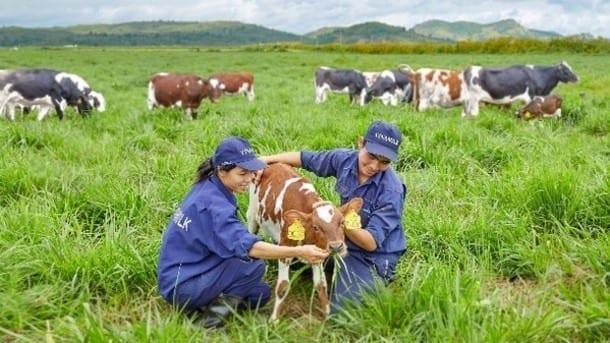
    Vinamilk owns ten farms around the country with over 17,000 heads of cattle. HSC estimates that, in 2016, its farms supplied 42,654 tons of raw milk, up 13 per cent and contributing 7 per cent of the company’s raw milk input.

    HSC also estimates that Vinamilk’s total raw milk from its farms and from buying from dairy farmers reached 221,433 tons in 2016, up 10.6 per cent against 2015. Net revenue is expected to reach over VND53.1 trillion ($2.3 billion) this year, up 13.6 per cent, and after-tax profit VND10.1 trillion ($444.4 million).

    According to HSC, Vinamilk will maintain stable growth thanks to the potential of its core business. It can maintain double-digit revenue growth in 2017 and the dairy sector will continue to grow at an average rate of over 10 per cent.

    It forecast that Vinamilk’s average annual growth rate in net sales from 2017 to 2020 will be 10.9 per cent and after-tax profit 9.3 per cent.

    Vietnam’s largest dairy producer began operating the country’s first-ever organic dairy farm under European standards in the central highlands province of Lam Dong on March 14.

    The farm has investment capital of $8.7 million, is certified by the Netherlands-based global network of inspection operations, Control Union, and has a herd of 500 imported cows. “We apply close monitoring measures to ensure the herd only produces high-quality milk,” said Ms. Mai Kieu Lien, Vinamilk’s CEO.

    The farm reflects the company’s commitment to clean and sustainable production, she added, with Vinamilk wishing to make high-quality products available to Vietnamese consumers at reasonable prices.

    Vinamilk’s revenue was estimated at $2 billion in 2016, up 15 per cent compared to 2015. Pre-tax profit stood at VND11.2 trillion ($492.8 million) and after-tax profit VND9.3 trillion ($409.2 million).

    It targets revenue of $3 billion this year. If reached, Vinamilk would break into the Top 50 milk producers in the world.

  • Yakult Indonesia still relies on imported milk for dairy drinks

    Yakult Indonesia still relies on imported milk for dairy drinks

    Yakult Indonesia Persada, one of the major producers of fermented milk products, still relies on imported raw materials for its production in Indonesia.

    Yakult Indonesia vice president and director Hiroyuki Kawada said the company had to import ingredients because local milk had yet to meet the standards for the company’s fermented milk |production.

    “We mostly import the skimmed milk from Australia, and the rest is from Belgium,” he said.

    Yakult Indonesia Persada, a subsidiary of Japan-based Yakult Honsha, was established in1990. The company operates a factory in Sukabumi, West Java, and another in Mojokerto, East Java.

    The factories can produce 6.6 million 65-millilitre bottles of cultured dairy drink a day. The company sells its fermented milk through supermarkets and through “Yakult Lady”, a sales force of women who sell the product door-to-door in many parts of the country.

    “There are 7,600 Yakult Ladies now, and they can reach 30 houses per day each,” said Antonius Nababan, the companies marketing communication and commercial (MCC) director. Zulkarnain, the MCC’s senior assistant manager, said sales averaged 5 million bottles a day.

    Indonesia was the second-biggest market for Yakult products after Japan, which has 10.18 million consumers.

  • Lao Dairy Farm carves out healthy market niche

    Lao Dairy Farm carves out healthy market niche

    The farm is located in Naxineua village, Naxaithong district. It keeps a variety of animals, including goats, pigs, ducks, chicken, and fish, but its mainstay is ists herd of dairy cows.

    Farm Director Sengmany Yathotou told last week that they began in 2014 with 16 cows which they kept for the family’s use and tended to after work because the family enjoyed agricultural activities.

    To start with, they never thought about how much milk they obtained from the cows each day and didn’t think about selling it. They used it only for their own consumption, sometimes giving some to their neighbours, friends or relatives.

    After a year, people in the neighbourhood and nearby shops started asking them to provide milk for sale because they had tried it and liked the taste.

    They started to sell the milk in markets and shops in Vientiane such as M-Point Mart, and coffee and cake shops, and have since expanded their distribution from four to eight minimarts.

    Their 16 original cows were bred in Australia but were imported from Thailand. The family now has 110 cows including some calves that were born on the farm.

    Sengmany says the farm is equipped with modern technology that ensures all the milk is hygienically produced and the milk-based products are made on the premises.

    The farm is now promoting its “Crysta” brand and hopes it will become widely recognised and be able to compete with overseas milk brands.

    The cows are milked twice a day, with each giving 10 to 15 litres, making a daily total of about 450 litres.

    Sengmany plans to expand her milk market in the provinces of Luang Prabang, Xieng Khuang and Attapeu, and is currently looking at transport costs.

    “Keeping a dairy herd is still something new for us, especially getting the cows pregnant so that they produce calves. It’s very difficult as we’re not very familiar with this and run the risk of the newborn being a male rather than a female, and of course we would prefer females,” she says.

    “The second challenge is that we have to get more people interested in eating and drinking food produced in Laos. But we’re sure that if they try our products they will find that the taste and quality is the same as international brands.”

    The farm covers more than 10 hectares, including fields of Napier grass and sweetcorn for the cows to eat.

    The family makes pasteurised milk, yogurt, and yogurt drinks.

    The milk is popular with expatriates and is also used to make cheese, which is sold to shops.

    The Lao Dairy Farm employs 40 people including two specialists from Thailand and Vietnam who studied milk production in Denmark.

    “Some of our cows are pregnant and there are three or four births each month, so that means we will have more cows and we’re sure to get at least 700 litres of milk a day in the next three months and then we will expand our market to the provinces,” Sengmany says.

    The cows’ pregnancy lasts for nine months after which they produce milk. The calves can become pregnant when they are one year old.

    Some of her customers ask Sengmany why her products are not cheaper since they are made in Laos. But she explains that everything on the farm is new and imported, especially the medicines and vitamins that are given to the cows. They use high quality materials but she points out that their retail prices are no higher than anyone else’s.

    The Lao Dairy Farm plans to open a cafe on the first floor of Lao-ITECC, which will feature milk and yogurt, as part of its market expansion plans.
  • Australia Introduces Premium Dairy Products to Indonesian Chefs

    Australia Introduces Premium Dairy Products to Indonesian Chefs

    Australia’s Victorian Agricultural Minister Jaala Pulford collaborated with Podomoro University’s culinary students, Indonesian vocational schools and Dairy Australia to showcase Victorian  premium dairy products during a cooking demo held at Podomoro University in Jakarta.

    Victoria State’s Commissioner to Indonesia Brett Stevens said that Indonesian chefs are expected to acquire skills to creatively and innovatively process dairy products since demands on such products from domestic and foreign markets are increasing.

    “Therefore, we are happy to support this event,” Stevens said in a press release received by Tempo on Tuesday, September 27, 2016.

    The event was held as a part of Victoria State administration’s commitment to work with Indonesia’s education and hospitality sectors to develop both sides’ competitiveness and to transfer skills and knowledge.

    Minister Pulford’s visit to Indonesia was aimed to strengthen trade cooperation and investment between the two countries, in addition to improve cooperation in major sectors, such as education and professional service.

    Victora State is the largest Australian dairy producer well-known for its safe and high-quality products.

    The cooperation is expected to improve the quality of Indonesian professionals in the culinary sector by introducing them to new culinary techniques.