Tag: DAISO

  • Critics slam Miniso for Japanese image

    Critics slam Miniso for Japanese image

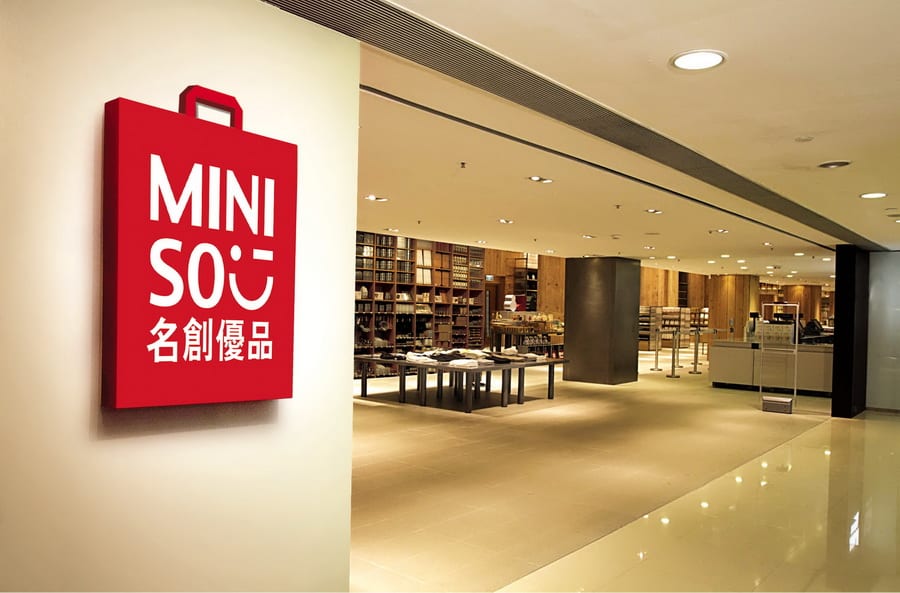
    Controversies continue to hound Miniso, a retail chain in mainland China that projects the image of a Japanese fashion brand.

    Critics have accused it of piggybacking on Japanese retail giants Daiso, Muji and Uniqlo, reports the Hong Kong Economic Journal Monthly.

    Also, the Guangzhou-based vendor of household and consumer items, which has already penetrated the Hong Kong market, has been accused by a Hong Kong designer of stealing his original design of stickers, which he says he found on smartphone cases sold in Miniso stores. But Miniso regional manager Mike Wong says there must be a misunderstanding as his company has no intention of infringing on others’ intellectual property as it can well afford the licensing fee.

    Miniso opened its first Hong Kong store in downtown Yuen Long in November 2014, expanding since into Tsuen Wan, Kwun Tong and Yau Ma Tei, boosting its network to 35 stores in less than two years. Its employee headcount is 450 and growing, with Wong aiming to double the number by the year’s end.

    By comparison, Muji and Uniqlo together have no more than 36 outlets in Hong Kong.

    A typical Miniso store is around 200 sqm and sells such goods as cosmetics, stationery, toys and kitchenware at prices as low as HK$15 (US$1.93). Most items are sourced from China.

    Sales are brisk enough that the brand needs less than eight months to recoup the initial investment, around HK$3 million, for each new store.

    Since 2013, Miniso has opened 1600 stores, with more than 1000 in mainland China and others in Hong Kong, Singapore, Taiwan, Thailand, the Philippines and the UAE. Aggregate sales will double from last year’s HK$5 billion.

    Wong, who once worked as a procurer for Swarovski, says the first time he visited a Miniso store he thought it was another brand under Muji. Now, with Miniso hiring Japanese designers and advocating a simple, low-carbon lifestyle, he says he sees no problem if customers “sometimes can’t tell us from other Japanese brands”.

    He also says that all items in its Hong Kong stores conform to intellectual property regulations. “You can’t say we are copycats.”

    However, he cannot deny the fact that customers in Hong Kong and the mainland trust a Japanese brand more than their homegrown offerings, and many find Miniso’s corporate identity misleading. Nevertheless, the group has four stores in Tokyo’s Harajuku, Ikebukuro and Shibuya districts.
  • Daiso wins Manila court battle

    Daiso wins Manila court battle

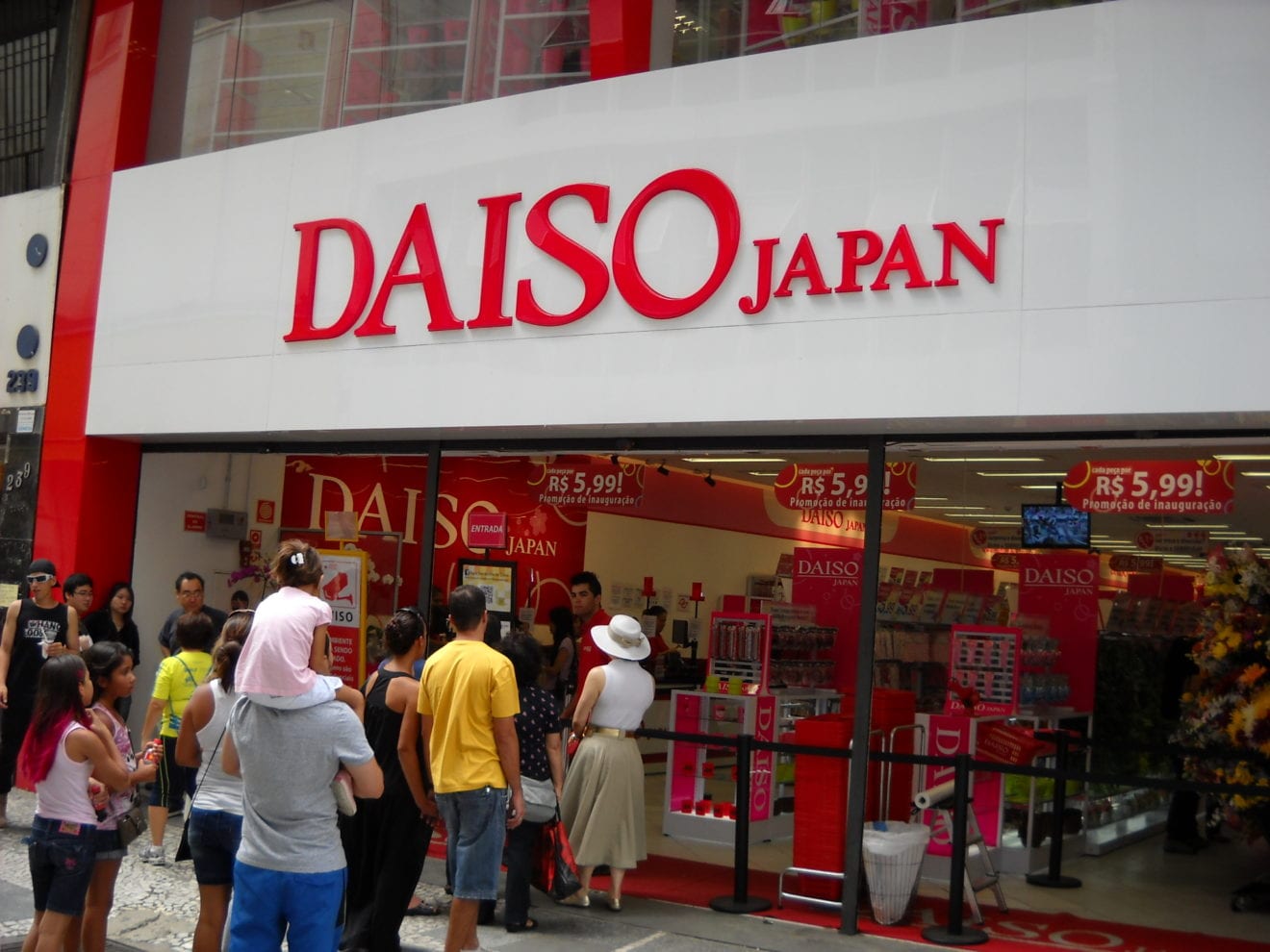
    Japanese discount retailer Daiso has won the right to use its name in the Philippines after a hearing in the Supreme Court.

    In a final ruling just issued, the court has blocked Filipino company Japan Home Center from using the trademark Daiso, confirming an earlier ruling by the Court of Appeals.

    The judges ruled that Japan Home Center had registered the name in “bad faith” in 2005 – largely to prevent the Japanese Daiso or its local franchisee from using it.

    Daiso Industries of Japan first filed a complaint with the Intellectual Property Office back in 2009 after it appointed Robinsons Retail Holdings as its local distributor and retail partner. Daiso Industries owns the brand name.

    This week’s Supreme Court decision thus ends a six year long legal battle to give Daiso and Robinson the legal right to use the brand.

    Robinsons currently operates 38 Daison stores in the Philippines.

    In another case in January this year, the Intellectual Property Office blocked MySmart One-Shop Daiso from using the brand name.

  • DAISO Japan under investigation, say Taipei prosecutors

    DAISO Japan under investigation, say Taipei prosecutors

    Well-known Japanese store, DAISO Japan (大創), was raided by investigators yesterday for failing to report its mislabeled Japanese food products back to the government, according to the Taipei District Prosecutors Office.

    Taipei City’s Health Bureau sent officials to investigate DAISO Japan headquarters yesterday, after Taoyuan’s Health Burearu discovered restricted products in the city’s Luchu District (桃園市蘆竹區) warehouses on Saturday.

    Taipei officials report having uncovered 28 products at the headquarters, among which 13 are said to come from nuclear-stricken areas and 15 are of unknown origin.

    Investigation teams found 13 products that came from nuclear-stricken prefectures in the Luchu District warehouses. DAISO Japan had silently pulled restricted products from shelves, but never reported back to the government, officials said.

    Taipei Department of Health official Wang Ming-li (王明理) said they are inspecting DAISO Japan’s headquarters and chain stores. Penalty fines will be discussed once its import declarations are finalized.

    No High-level Residue Detected in Japanese Food Products: AEC

    Atomic Energy Council (AEC, 原能會) Deputy Minister Huang Tsing-tung (黃慶東) said at the Legislative Yuan yesterday that among the 451 food products that passed radiation residue tests, he also promised not a single imported product was detected to have exceeded radiation standards.

    “200 becquerels (BQ) was the highest detected radiation residue level, but none of the products since 2011 had exceeded the international standard 370 BQ” Huang said, emphasizing that most detected products had relatively low residue levels and were harmless to human beings.

    Lift Ban on Nuclear-stricken Products?

    Minister for Health and Welfare (MHW, 衛福部) Chiang Been-huang (蔣丙煌) said that Japan had proposed Taiwan lift restrictions on products from at least four of the radiation-stricken areas from the Fukushima nuclear disaster. This proposal is under further discussion, Chiang said.

    The lifting of restrictions on food products from the five nuclear-stricken areas in Japan could be discussed, said DPP Legislator Chao Tien-lin (趙天麟) during a meeting of the Legislative Yuan’s Social Welfare and Environmental Hygiene Committee (立法院衛環委員會).

    Apart from the continual restriction on nuclear-stricken prefectures, the plan to require Japan to provide product origin and radiation testing results is undergoing debate, but Chao points out this plan could hinder trade with Japan.

    Chao proposed that Japan should only provide the necessary documents of products from the five disaster-stricken areas. Importing products from nuclear-stricken areas could be discussed by referring to international practices.

    While high-risk areas should still be prioritized and bad suppliers will always exist, Taiwan should not damage friendship ties with Japan by insisting on trade obstacles, Chao stressed.